

Others like the shining man Features >>

The Grace Of Yielding
The Ministry Of Healing
The Life And Death Of Mr. Badman
Paid In Full
-160.webp)
A Father Who Keeps His Promise (God’s Covenant Love In Scripture)
-160.webp)
Why I Believe (A Psychologists Thoughts On Suffering, Miracles, Science, And Faith)
The Cross

What Does It Mean To Be Born Again
The Grace That Makes Us Holy

Seed Time And Harvest
About the Book
"The Shining Man" by E.H. Skolfield is a mystery novel that follows Detective Inspector Tom Shearn as he investigates the murder of a man found in a pile of leaves. As Shearn delves deeper into the case, he uncovers dark secrets and hidden truths that lead to a thrilling conclusion. The novel is a gripping and atmospheric tale that keeps readers guessing until the very end.
Richard Wurmbrand
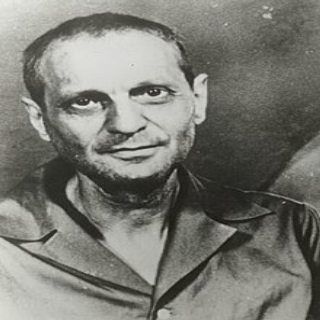 Richard Wurmbrand (1909 – 2001) was born in 1909 in Bucharist in the country of Romania. He was the youngest of four boys born in a Jewish family. He lived with his family in Istanbul for a short time. When he was 9, his father died and the Wurmbrands returned to Romania when he was 15.
He was sent to study Marxism in Moscow. When he returned, he was already a Comintern Agent. A Comintern Agent was a member of the Communist International Organisation which intended to fight:
Like other Romanian Communists, he was arrested and released several times.
He married Sabina Oster on 26th October 1936. Wurmbrand and his wife went to live in an isolated village high in the mountains of Romania. But, as a athiest there was no peace to be found in his heart. So one day, when his heart was in a state of turmoil he cried out:
“God, if perchance you exist, it is Your duty to reveal yourself to me.”
Shorthly after he prayed that prayer, he met a German carpenter in his village who gave him a bible. The carpenter and his wife had been praying earnestly that God would bring a Jew to his village, because the carpenter wanted to bring a Jew to Christ, because Jesus was a Jew. So the carpenter gave him a Bible to read. Wurmbrand said, when he opened that Bible he could not stop weeping. He had read the Bible before but it had meant nothing to him. This time when he opened the Bible he could barely read it because of the copious amount of tears that filled his eyes. Sometime later he found out the carpenter and his wife had been praying earnestly for him. Wurnbrand said that every word that he read were like flames of love burning in his heart. He realized for the first ime in his life that there was a God of love who loved him, even though he had beeen living a bad life and had nurtured a hated towards the concept of a ‘loving’ God.
The Power of Intercessory Prayer
But now for the first time he knew that Jesus had suffered at the cross of Calvary for his sins and he was loved and accepted of God. Richard and his wife became believers in Jesus the Messiah. All the hatred that he had formerly held toward God was washed away under the blood of Christ and Richard and his wife Sabrina were born of the Spirit. That is the power of intercessory prayer!
Richard prepared himself for the ministry. He was ordained as an Anglican minister in 1938 at the start of world war 2. Both Richard and his wife were arrested several times. They were beaten and hauled before a Nazi court. They suffered under the Nazi regime throughout world war 2. But Richard said, it was only a taste of what was to come.
Russian Troups Enter Romania
Towards the end of world war 2, Richard Wurmbrand became a Lutheran and he pastored a Lutheran church in Romania. But, the same year, 1 million Russian troups entered and occupied the entire territory of Romania.
Within a very short space of time the Communists took over Romania. The reign of terror began. Out of fear 4,000 priests, pastors & ministers became Communists overnight. They confessed their allegience and loyalty to the new Communist Government because they all feared for their survival.
Romania’s Resistance
Harsh persecutions of any enemies of the Communist government started with the Soviet occupation in 1945. The Soviet army behaved as an occupation force (although theoretically it was an ally against Nazi Germany), and could arrest virtually anyone at will. Shortly after Soviet occupation, ethnic Germans (who were Romanian citizens and had been living as a community in Romania for 800 years) were deported to the Donbas coal mines. Despite the King’s protest, who pointed out that this was against international law, an estimated 70,000 men and women were forced to leave their homes, starting in January 1945, before the war had even ended. They were loaded in cattle cars and put to work in the Soviet mines for up to ten years as “reparations”, where about one in five died from disease, accidents and malnutrition.
Once the Communist government became more entrenched, the number of arrests increased. All strata of society were involved, but particularly targeted were the pre-war elites, such as intellectuals, clerics, teachers, former politicians (even if they had left-leaning views) and anybody who could potentially form the nucleus of anti-Communist resistance. The existing prisons were filled with political prisoners, and a new system of forced labor camps and prisons was created, modeled after the Soviet Gulag. Some of the most notorious prisons included Sighet, Gherla, Piteşti and Aiud, and forced labor camps were set up at lead mines and in the Danube Delta.
Underground Church
Richard and his wife knew that Christianity and Communism were totally opposed to each other. They knew that a true follower of Christ cannot compromise. So they created an “Underground Church” movement to preach the pure gospel of Christ and to reach out to the unsaved people of Romania and secondly to reach out secretly to the Russian soldiers. They secretly printed thousands of Bibles and Christian literature and distributed it to the Russian soldiers. Many of the Russian soldiers were convicted and they gave their life to Christ.
So the underground church grew. But, in 1948 the Secret Police arrested Wurmbrand and he was placed in solitary confinement for 3 years. He was then transferred to a group cell for the next five years. Whilst in prison he continued to win the other prisoners to Christ. After 8 years in prison he was released and he immediately resumed his work with the undergound church. A few years later, 1959, he was arrested again and was sentenced to 25 years in prison. However, after spending 5 years in prison an organisation called the Christian Alliance negotiated with the Communist Government and they managed to secure his release for a fee of $10,000. They quickly got Richard Wurmbrand out of Romania and took him to England, then to the USA.
In 1966, Richard was called to Washington DC to give his testimony before the United States Senate. He took off his shirt to show the Senate the scars and the wounds that he received whilst he served time in prison under the Communist Government in Romania.
The newspapers throughout the USA, Europe and Asia carried his story all across the world. Christian leaders called him the “Voice of the Underground Church.”
In 1967, with a $100 old typewriter and 500 names and addresses, Richard Wurmbrand published the first issue of THE VOICE OF THE MARTYRS newsletter. This newsletter was dedicated to communicating the testimonies and trails facing our brothers and sisters in restricted nations worldwide. Richard wrote:
“The message I bring from the Underground Church is:
“Don’t abandon us!”
“Don’t forget us!”
“Don’t write us off!”
“Give us the tools we need! We will pay the price for using them!”
“This is the message I have been charged to deliver to the free church.”
Richard Wurmbrand and his wife travelled throughout the world to establish a network of over 30 offices. Their primary aim was to call Christians to shoulder their responsibility and to demonstrate the real substance of their faith by supporting their brothers and sisters in Christ who are being persecuted in heathen lands.
The VOICE OF THE MARTYRS newsletter continues to inform, and lead to action, Christians throughout the free world of the plight of those who suffer for their faith in Jesus Christ. Throughout their network of offices around the world, the newsletter is published in over 30 different languages. To this cause, VOICE OF THE MARTYRS presses on, serving in nearly 40 countries around the world where our brothers and sisters are systematically persecuted.
The writer of the Book of Hebrews brings a convicting word to the Christian church:
” Remember them that are in bonds, as bound with them; and them that suffer adversity, as being yourselves also in the body.”
(Hebrews 13:3)
We have a responsibility to those who suffer for their faith in Christ.
Today, there is an estimated 200 million Christians in heathen nations who are suffering persecution for their faith in Christ.
Richard Wurmbrand (1909 – 2001) was born in 1909 in Bucharist in the country of Romania. He was the youngest of four boys born in a Jewish family. He lived with his family in Istanbul for a short time. When he was 9, his father died and the Wurmbrands returned to Romania when he was 15.
He was sent to study Marxism in Moscow. When he returned, he was already a Comintern Agent. A Comintern Agent was a member of the Communist International Organisation which intended to fight:
Like other Romanian Communists, he was arrested and released several times.
He married Sabina Oster on 26th October 1936. Wurmbrand and his wife went to live in an isolated village high in the mountains of Romania. But, as a athiest there was no peace to be found in his heart. So one day, when his heart was in a state of turmoil he cried out:
“God, if perchance you exist, it is Your duty to reveal yourself to me.”
Shorthly after he prayed that prayer, he met a German carpenter in his village who gave him a bible. The carpenter and his wife had been praying earnestly that God would bring a Jew to his village, because the carpenter wanted to bring a Jew to Christ, because Jesus was a Jew. So the carpenter gave him a Bible to read. Wurmbrand said, when he opened that Bible he could not stop weeping. He had read the Bible before but it had meant nothing to him. This time when he opened the Bible he could barely read it because of the copious amount of tears that filled his eyes. Sometime later he found out the carpenter and his wife had been praying earnestly for him. Wurnbrand said that every word that he read were like flames of love burning in his heart. He realized for the first ime in his life that there was a God of love who loved him, even though he had beeen living a bad life and had nurtured a hated towards the concept of a ‘loving’ God.
The Power of Intercessory Prayer
But now for the first time he knew that Jesus had suffered at the cross of Calvary for his sins and he was loved and accepted of God. Richard and his wife became believers in Jesus the Messiah. All the hatred that he had formerly held toward God was washed away under the blood of Christ and Richard and his wife Sabrina were born of the Spirit. That is the power of intercessory prayer!
Richard prepared himself for the ministry. He was ordained as an Anglican minister in 1938 at the start of world war 2. Both Richard and his wife were arrested several times. They were beaten and hauled before a Nazi court. They suffered under the Nazi regime throughout world war 2. But Richard said, it was only a taste of what was to come.
Russian Troups Enter Romania
Towards the end of world war 2, Richard Wurmbrand became a Lutheran and he pastored a Lutheran church in Romania. But, the same year, 1 million Russian troups entered and occupied the entire territory of Romania.
Within a very short space of time the Communists took over Romania. The reign of terror began. Out of fear 4,000 priests, pastors & ministers became Communists overnight. They confessed their allegience and loyalty to the new Communist Government because they all feared for their survival.
Romania’s Resistance
Harsh persecutions of any enemies of the Communist government started with the Soviet occupation in 1945. The Soviet army behaved as an occupation force (although theoretically it was an ally against Nazi Germany), and could arrest virtually anyone at will. Shortly after Soviet occupation, ethnic Germans (who were Romanian citizens and had been living as a community in Romania for 800 years) were deported to the Donbas coal mines. Despite the King’s protest, who pointed out that this was against international law, an estimated 70,000 men and women were forced to leave their homes, starting in January 1945, before the war had even ended. They were loaded in cattle cars and put to work in the Soviet mines for up to ten years as “reparations”, where about one in five died from disease, accidents and malnutrition.
Once the Communist government became more entrenched, the number of arrests increased. All strata of society were involved, but particularly targeted were the pre-war elites, such as intellectuals, clerics, teachers, former politicians (even if they had left-leaning views) and anybody who could potentially form the nucleus of anti-Communist resistance. The existing prisons were filled with political prisoners, and a new system of forced labor camps and prisons was created, modeled after the Soviet Gulag. Some of the most notorious prisons included Sighet, Gherla, Piteşti and Aiud, and forced labor camps were set up at lead mines and in the Danube Delta.
Underground Church
Richard and his wife knew that Christianity and Communism were totally opposed to each other. They knew that a true follower of Christ cannot compromise. So they created an “Underground Church” movement to preach the pure gospel of Christ and to reach out to the unsaved people of Romania and secondly to reach out secretly to the Russian soldiers. They secretly printed thousands of Bibles and Christian literature and distributed it to the Russian soldiers. Many of the Russian soldiers were convicted and they gave their life to Christ.
So the underground church grew. But, in 1948 the Secret Police arrested Wurmbrand and he was placed in solitary confinement for 3 years. He was then transferred to a group cell for the next five years. Whilst in prison he continued to win the other prisoners to Christ. After 8 years in prison he was released and he immediately resumed his work with the undergound church. A few years later, 1959, he was arrested again and was sentenced to 25 years in prison. However, after spending 5 years in prison an organisation called the Christian Alliance negotiated with the Communist Government and they managed to secure his release for a fee of $10,000. They quickly got Richard Wurmbrand out of Romania and took him to England, then to the USA.
In 1966, Richard was called to Washington DC to give his testimony before the United States Senate. He took off his shirt to show the Senate the scars and the wounds that he received whilst he served time in prison under the Communist Government in Romania.
The newspapers throughout the USA, Europe and Asia carried his story all across the world. Christian leaders called him the “Voice of the Underground Church.”
In 1967, with a $100 old typewriter and 500 names and addresses, Richard Wurmbrand published the first issue of THE VOICE OF THE MARTYRS newsletter. This newsletter was dedicated to communicating the testimonies and trails facing our brothers and sisters in restricted nations worldwide. Richard wrote:
“The message I bring from the Underground Church is:
“Don’t abandon us!”
“Don’t forget us!”
“Don’t write us off!”
“Give us the tools we need! We will pay the price for using them!”
“This is the message I have been charged to deliver to the free church.”
Richard Wurmbrand and his wife travelled throughout the world to establish a network of over 30 offices. Their primary aim was to call Christians to shoulder their responsibility and to demonstrate the real substance of their faith by supporting their brothers and sisters in Christ who are being persecuted in heathen lands.
The VOICE OF THE MARTYRS newsletter continues to inform, and lead to action, Christians throughout the free world of the plight of those who suffer for their faith in Jesus Christ. Throughout their network of offices around the world, the newsletter is published in over 30 different languages. To this cause, VOICE OF THE MARTYRS presses on, serving in nearly 40 countries around the world where our brothers and sisters are systematically persecuted.
The writer of the Book of Hebrews brings a convicting word to the Christian church:
” Remember them that are in bonds, as bound with them; and them that suffer adversity, as being yourselves also in the body.”
(Hebrews 13:3)
We have a responsibility to those who suffer for their faith in Christ.
Today, there is an estimated 200 million Christians in heathen nations who are suffering persecution for their faith in Christ.
The Power of a Praying Mother
If you follow the greatest men of God back to their beginnings, you will often find yourself in a hidden closet or lonely pew, where a mother kneels to pray. Look behind Augustine, and you will find Monica. Look behind Spurgeon, and you will find Eliza. Look behind Hudson Taylor, and you will find Amelia. And look at each of these mothers, and you will find earnest prayer. Those who know their Bibles should hardly be surprised. Like the star the wise men saw, the stories of God’s redemptive movements often lead us to a home where a woman, hidden from the great ones of the earth, caresses a heel that will one day crush a serpent. In the prayers of a mother, awakenings are born and peoples won, idols are toppled and devils undone, dry bones are raised and prodigals rescued. Again and again, before God laid his hand on a man, he laid it on his mother. Mother of the Kingdom “The dawn of the great new movements of God repeatedly occurs in women’s spaces,” Alastair Roberts writes. The word repeatedly is right. Over and again, redemptive history turns on a flawed but faithful mother bearing a son: Sarah and Isaac, Rebekah and Jacob, Rachel and Joseph, Ruth and Obed, Elizabeth and John, Eunice and Timothy — and, of course, Mary and Jesus. Among all these stories, however, one in particular illustrates the power of a praying mother. The books of 1 and 2 Samuel tell the story of how God turned Israel into a kingdom — how he sought “a man after his own heart” (1 Samuel 13:14) to sit on the throne and begin a royal line that one day would run to Jesus (2 Samuel 7:13–14). But where does this story of a king and a kingdom begin? With one infertile woman, pleading for a son. [Elkanah] had two wives. The name of the one was Hannah, and the name of the other, Peninnah. And Peninnah had children, but Hannah had no children. (1 Samuel 1:2) “If you follow the greatest men of God back to their beginnings, you will often find a mother kneeling to pray.” A barren woman and a fruitful rival: we’ve been here before (Genesis 16:1–6; 30:1–8). The stage is set for God to make a name for himself through a miraculous birth. And prayer will be his appointed means. Hannah’s Prayer Like Hagar before her, Peninnah can’t help pointing the finger at Hannah’s empty womb: “[Hannah’s] rival used to provoke her grievously to irritate her, because the Lord had closed her womb. So it went on year by year” (1 Samuel 1:6–7). But unlike Sarah before her, Hannah turns to God instead of turning against Peninnah. Listen to the simple prayer of a suffering woman, longing for an open womb: O Lord of hosts, if you will indeed look on the affliction of your servant and remember me and not forget your servant, but will give to your servant a son, then I will give him to the Lord all the days of his life, and no razor shall touch his head. (1 Samuel 1:11) We know the rest of the story. The Lord would hear Hannah and give her a son. And her son, Samuel, would establish Israel’s kingdom (1 Samuel 16:10–13), inaugurate the nation’s prophetic line (Acts 3:24; 13:20), and gain a standing beside Moses as a mediator of God’s people (Jeremiah 15:1). Through prayer, Hannah’s once-barren womb bore a son to rescue Israel. What might mothers learn from Hannah’s prayer today? 1. Anguish can be a good teacher. Years of infertility, joined with Peninnah’s mockery, had finally broken the dam of Hannah’s sorrow. The pain of hope deferred flooded her heart, and the flood could not be hidden. “Hannah wept and would not eat. . . . She was deeply distressed” (1 Samuel 1:7, 10). Yet, as so often happens, Hannah’s tears became a trail that led her to her knees. “After they had eaten and drunk in Shiloh, Hannah rose . . . and prayed to the Lord and wept bitterly” (1 Samuel 1:9–10). We don’t know what Hannah’s prayer life was like before this moment. But here, at least, anguish became her best teacher. In a world as broken as ours, anguish hems a mother in, behind and before. Some, like Hannah, feel the peculiar agony of wished-for motherhood. Others, the pain of pregnancy and childbirth itself. And still others, the sorrow of a child who has not yet been born again. What Augustine once said of his mother holds true for many: She wept and wailed, and these cries of pain revealed what there was left of Eve in her, as in anguish she sought the son whom in anguish she had brought to birth. (Confessions, 5.8.15) “Anguish often leads a mother to a prayer God longs to answer.” Anguish, we know, may tempt a mother toward bitterness, as it did both Sarah and Rachel for a time (Genesis 16:5–6; 30:1). But here, Hannah reveals a surprising truth: anguish often leads a mother to a prayer God longs to answer. 2. God delights in open hands. Two words in Hannah’s prayer rise to the surface through repetition: Lord (twice) and its counterpart, servant (three times). In her anguish, she does not forget that God is her Lord, high and wise above her, nor that she is his servant, bound to do his will. The famous words of Mary over a millennium later — “Behold, I am the servant of the Lord” (Luke 1:38) — are an echo of Hannah’s. Hannah’s open hands also appear in her remarkable vow: “If you will . . . give to your servant a son, then I will give him to the Lord all the days of his life, and no razor shall touch his head” (1 Samuel 1:11). Her promise not to cut her son’s hair refers to the Nazirite vow, by which a person’s life was devoted entirely to God (Numbers 6:1–5). Hannah says, in others words, “Give me a son, and I will give him back to you — heart and soul, body and mind, all the days of his life.” In response, God gives her a son to return to God. We should hesitate, of course, before drawing a straight line between a mother’s heart and how God answers her prayers. Some mothers pray with Hannah-like surrender, and still their wombs stay empty, or their children keep walking to the far country. Hannah’s story does teach us, however, that God loves to put gifts in open hands. He delights when a mother, welling up with maternal affection, wells up still more with desire for Christ and his kingdom. In Hannah’s case, her openhanded motherhood allowed Samuel to spend his days at the temple, where, the narrator tells us, “he worshiped the Lord” (1 Samuel 1:28). May God be pleased to do the same for many mothers’ sons. 3. A mother’s prayers can shake the world. The anguished prayer of 1 Samuel 1:11 is not the only prayer we hear from Hannah. When she brings her freshly weaned son to the temple, she prays again, this time soaring with praise (1 Samuel 2:1–10). And as we listen, we quickly realize that the story of Hannah and Samuel reaches far beyond the four walls of a happy home. Consider just her final words, which offer a fitting ending to a massive prayer: The adversaries of the Lord shall be broken to pieces; against them he will thunder in heaven. The Lord will judge the ends of the earth; he will give strength to his king and exalt the power of his anointed. (1 Samuel 2:10) Hannah, carried along by the Spirit, finds herself caught up in something far greater than her own domestic hopes: under God, her son would deliver Israel from its oppressors and establish a kingdom that one day would cover the earth. Hannah had simply prayed for a son — but in return, God answered far bigger than she asked. And so he still does. Eliza Spurgeon and Amelia Taylor prayed for saved sons, scarcely imagining that God would give a preacher to the masses and a missionary to the nations. And though not every son is a Samuel, or a Spurgeon, or a Taylor, who knows what lovers of orphans, or pastors of churches, or seekers of justice, or fathers of lost ones God is right now raising up through a faithful mother on her knees? With a God like ours, we can dare to dream — and pray. Mother for Every Mother The weeping, anxious Hannah of 1 Samuel 1 is not a woman out of a mother’s reach. She was not a well-known woman. She was not a put-together woman. So far as we know, she was not a particularly strong woman. But she was a praying woman. And through her prayers, God showed his great power. The God who crushed the serpent’s head by the woman’s offspring has more victories to win. Jesus dealt the deathblow, the blow no other son could give. But more of the devil’s kingdom needs crushing. And if we look behind the men who lift their heels, we will often find a mother like Hannah: anguished yet openhanded, praying for her boy. Article by Scott Hubbard