
Others like justification by grace Features >>
Justification By An Imputed Righteousness
Sanctification By Grace
According To Promise Of Salvation, Life, And Eternity
A Treatise On Justification And Regeneration

He Touched Me
God's Geater Glory
The Priesthood And The Blood
Snubbing God: The High Cost Of Rejecting God’s Created Order
Sensitivity Of Heart
Others May I Cannot
About the Book
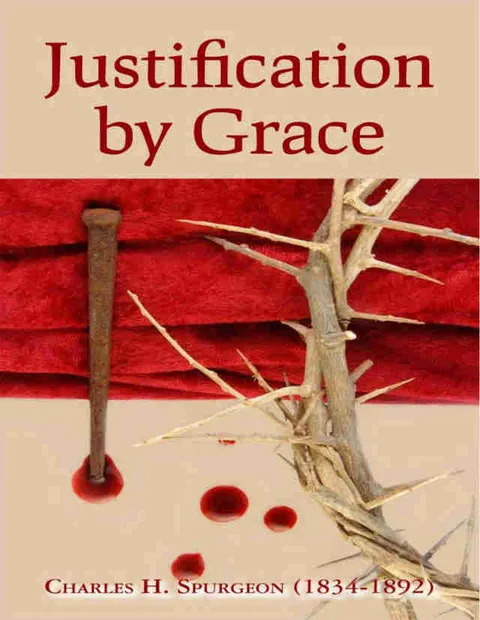
"Justification by Grace" by Charles H. Spurgeon explores the concept of justification through God's grace alone, rather than through our own efforts or works. Spurgeon highlights the biblical teachings on this important theological doctrine and emphasizes the essential role of faith in receiving God's gift of salvation. Through insightful commentary and practical applications, Spurgeon encourages readers to fully trust in God's grace for redemption and reconciliation with him.
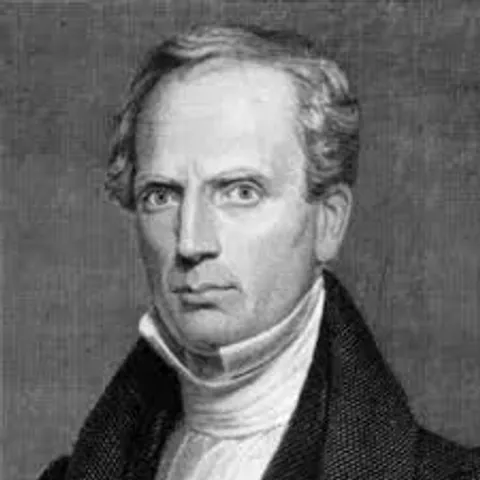
Charles Finney
 Childhood and Teen years
Charles Grandison Finney was born the year after Wesley died on 29th August, 1792 in Warren, Connecticut. In 1794 his family moved to New York state, eventually settling at Henderson, near Lake Ontario. Although he received only a brief formal education he decided to study law and joined the practice of a local lawyer, Benjamin Wright. He was also very musical, played the cello and directed the choir at the local Presbyterian Church pastured by Rev. George Gale.
His conversion
His conversion on October 10th 1821 reads like something out of the book of Acts. Smitten with conviction from Bible reading he decided to ‘settle the question of my soul’s salvation at once, that if it were possible, I would make my peace with God.’ (Autobiography)
This conviction increased to an unbearable level over the next couple of days and came to an head when he was suddenly confronted with an ‘inward voice.’ He was inwardly questioned about his spiritual condition and finally received revelation about the finished work of Christ and his own need to give up his sins and submit to Christ’s righteousness.
As he sought God in a nearby wood he was overwhelmed with an acute sense of his own wickedness and pride but finally submitted his life to Christ. Back at work that afternoon he was filled with a profound sense of tenderness, sweetness and peace. When work was over and he bade his employer goodnight, he then experienced a mighty baptism in the Holy Spirit, which was recorded as vividly as the day he experienced it, though it was penned some fifty years later.
The next morning Finney announced to a customer that he was leaving his law studies to become a preacher of the Gospel.
Charles Finney licensed to preach
He was licensed to preach in 1823 and ordained as an evangelist in 1824. His penetrating preaching was quite different from many local ministers and included an obvious attempt to break away from the traditional and, as he saw it, dead, orthodox Calvinism. He married to Lydia Andrews in October 1824 and was also joined by Daniel Nash (1774-1831), known popularly as ‘Father Nash.’ Undoubtedly Nash’s special ministry of prayer played a great part in Finney’s growing success as an evangelist.
Things really took off when he preached in his old church, where Rev. Gale still ministered. Numerous converts and critics followed! Similar results were experienced in nearby towns of Rome and Utica. Soon newspapers were reporting his campaigns and he began drawing large crowds with dramatic responses.
Soon he was preaching in the largest cities of the north with phenomenal results. Campaign after campaign secured thousands of converts.
The high point of Finney’s revival career was reached at Rochester, New York, during his 1830-1 meetings. Shopkeepers closed their businesses and the whole city seemed to centre on the revivalist. Responding to his irresistible logic and passionate arguments many of his converts were lawyers, merchants and those from a higher income and professional status.
His Preaching
Finney openly preached a modified Calvinism, influenced with his own theology of conversion and used what were perceived to be ‘revivalistic techniques.’
These ‘means’ included the use of the anxious bench (a special place for those under conviction), protracted meetings, women allowed to pray in mixed meetings, publicly naming those present resisting God in meetings and the hurried admission of new converts into church membership. Opponents viewed his preaching of the law as ‘scare tactics’ and his persuasive appeals for sinners to come to Christ for salvation were seen as over-emphasising the responsibility of men and ignoring the sovereignty of God.
His theology and practise soon became known as the ‘New Measures’ and attracted many opponents from the Old School Presbyterians led by Asahel Nettleton (himself no stranger to true revival and , the revivalistic Congregationalists headed by Lyman Beecher.
Pastor at Chatham Street Chapel
Finney accepted an appointment as pastor of Chatham Street Chapel in New York City in 1832 where he remained until 1837. It was during this time that he delivered a series of sermons published in 1835 as ‘Lectures on Revivals of Religion.’ Here he clearly stated his views regarding revivals being products of the correct use of human means. Such was the controversy that he left the Presbyterian denomination and joined the Congregationalists in 1836.
Oberlin College
The next year he became professor of theology at Oberlin College (Ohio) where he taught until his death. He was President here from 1851 until 1866, but still continued regular revival meetings in urban settings (twice in England, 1848, 1851) until 1860. During his stay at Oberlin he produced his, Lectures to Professing Christians (1836), Sermons on Important Subjects (1839) and his famous Memoirs.
The Father of Modern Revivalism
There is no doubt that Charles Grandison Finney well-deserves the title ‘The Father of Modern Revivalism.’ He was an evangelistic pioneer whose model was followed by a long line of revivalists from D. L. Moody to Billy Graham. His writing have made a massive impact on the entire evangelical world and particularly the ‘Lectures on Revivals’ which has, arguably, ignited more fires of revival than any other single piece literature in evangelical history.
This ‘Prince of Revivalists’ passed away peacefully at Oberlin on Sunday, 16th August, 1875 aged almost 83 years.
Bibliography: I Will Pour Out My Spirit, R. E. Davies, 1997; Ed: A. Scott Moreau, Baker Evangelical Dictionary of World Missions, 2000; Dictionary of Evangelical Biography 1730-1860, Vol. 1, 1995.
Tony Cauchi
Childhood and Teen years
Charles Grandison Finney was born the year after Wesley died on 29th August, 1792 in Warren, Connecticut. In 1794 his family moved to New York state, eventually settling at Henderson, near Lake Ontario. Although he received only a brief formal education he decided to study law and joined the practice of a local lawyer, Benjamin Wright. He was also very musical, played the cello and directed the choir at the local Presbyterian Church pastured by Rev. George Gale.
His conversion
His conversion on October 10th 1821 reads like something out of the book of Acts. Smitten with conviction from Bible reading he decided to ‘settle the question of my soul’s salvation at once, that if it were possible, I would make my peace with God.’ (Autobiography)
This conviction increased to an unbearable level over the next couple of days and came to an head when he was suddenly confronted with an ‘inward voice.’ He was inwardly questioned about his spiritual condition and finally received revelation about the finished work of Christ and his own need to give up his sins and submit to Christ’s righteousness.
As he sought God in a nearby wood he was overwhelmed with an acute sense of his own wickedness and pride but finally submitted his life to Christ. Back at work that afternoon he was filled with a profound sense of tenderness, sweetness and peace. When work was over and he bade his employer goodnight, he then experienced a mighty baptism in the Holy Spirit, which was recorded as vividly as the day he experienced it, though it was penned some fifty years later.
The next morning Finney announced to a customer that he was leaving his law studies to become a preacher of the Gospel.
Charles Finney licensed to preach
He was licensed to preach in 1823 and ordained as an evangelist in 1824. His penetrating preaching was quite different from many local ministers and included an obvious attempt to break away from the traditional and, as he saw it, dead, orthodox Calvinism. He married to Lydia Andrews in October 1824 and was also joined by Daniel Nash (1774-1831), known popularly as ‘Father Nash.’ Undoubtedly Nash’s special ministry of prayer played a great part in Finney’s growing success as an evangelist.
Things really took off when he preached in his old church, where Rev. Gale still ministered. Numerous converts and critics followed! Similar results were experienced in nearby towns of Rome and Utica. Soon newspapers were reporting his campaigns and he began drawing large crowds with dramatic responses.
Soon he was preaching in the largest cities of the north with phenomenal results. Campaign after campaign secured thousands of converts.
The high point of Finney’s revival career was reached at Rochester, New York, during his 1830-1 meetings. Shopkeepers closed their businesses and the whole city seemed to centre on the revivalist. Responding to his irresistible logic and passionate arguments many of his converts were lawyers, merchants and those from a higher income and professional status.
His Preaching
Finney openly preached a modified Calvinism, influenced with his own theology of conversion and used what were perceived to be ‘revivalistic techniques.’
These ‘means’ included the use of the anxious bench (a special place for those under conviction), protracted meetings, women allowed to pray in mixed meetings, publicly naming those present resisting God in meetings and the hurried admission of new converts into church membership. Opponents viewed his preaching of the law as ‘scare tactics’ and his persuasive appeals for sinners to come to Christ for salvation were seen as over-emphasising the responsibility of men and ignoring the sovereignty of God.
His theology and practise soon became known as the ‘New Measures’ and attracted many opponents from the Old School Presbyterians led by Asahel Nettleton (himself no stranger to true revival and , the revivalistic Congregationalists headed by Lyman Beecher.
Pastor at Chatham Street Chapel
Finney accepted an appointment as pastor of Chatham Street Chapel in New York City in 1832 where he remained until 1837. It was during this time that he delivered a series of sermons published in 1835 as ‘Lectures on Revivals of Religion.’ Here he clearly stated his views regarding revivals being products of the correct use of human means. Such was the controversy that he left the Presbyterian denomination and joined the Congregationalists in 1836.
Oberlin College
The next year he became professor of theology at Oberlin College (Ohio) where he taught until his death. He was President here from 1851 until 1866, but still continued regular revival meetings in urban settings (twice in England, 1848, 1851) until 1860. During his stay at Oberlin he produced his, Lectures to Professing Christians (1836), Sermons on Important Subjects (1839) and his famous Memoirs.
The Father of Modern Revivalism
There is no doubt that Charles Grandison Finney well-deserves the title ‘The Father of Modern Revivalism.’ He was an evangelistic pioneer whose model was followed by a long line of revivalists from D. L. Moody to Billy Graham. His writing have made a massive impact on the entire evangelical world and particularly the ‘Lectures on Revivals’ which has, arguably, ignited more fires of revival than any other single piece literature in evangelical history.
This ‘Prince of Revivalists’ passed away peacefully at Oberlin on Sunday, 16th August, 1875 aged almost 83 years.
Bibliography: I Will Pour Out My Spirit, R. E. Davies, 1997; Ed: A. Scott Moreau, Baker Evangelical Dictionary of World Missions, 2000; Dictionary of Evangelical Biography 1730-1860, Vol. 1, 1995.
Tony Cauchi
Love Is the Overflow of Joy in God
More clearly than any other writer in the Bible, the apostle Paul opened up the truth to me that God is most glorified in me when I am most satisfied in him. It was thrilling to discover that glorifying God and satisfying my soul are not at odds. I have told the story of that discovery elsewhere. But there is a second chapter to the story that makes my thankfulness to Paul all the sweeter. I owe to him, more than to anyone else, another crucial, life-changing discovery. If the first discovery was how to resolve the tension between the desire to glorify God and the desire to be happy, the second discovery was how to resolve the tension between the desire to be happy in God and the desire to love other people. Another Unresolved Tension Can you really love people if, in the very act of doing them good, you are seeking the fullness of your own joy? After all, it was Paul himself who said, “Love . . . does not seek its own” (1 Corinthians 13:4–5 NASB). And in another place, “Let no one seek his own good, but the good of his neighbor” (1 Corinthians 10:24). And again, “We . . . have an obligation to bear with the failings of the weak, and not to please ourselves” (Romans 15:1). So how can you claim to love people if, in the very act of loving them, you are seeking your own joy? “On the other side of self-denial — even death — is everlasting joy in the presence of God.” This question felt just as urgent as the first one about how to glorify God while seeking my own joy. Jesus had said that “the great and first” commandment is to love God (Matthew 22:38). But he also said that the commandment to love our neighbor “is like it” (Matthew 22:39). So the question of how to love people out of a heart that could not stop wanting to be happy — indeed, a heart that dare not stop wanting to be happy, lest God be dishonored by my failing to be happy in him — that question was just as urgent as any. So how does the pursuit of joy in God relate to love for other people? Paul showed me that genuine, Spirit-awakened joy in God does not hinder love for people but in fact overflows with love for people. It has a built-in impulse to expand. Joy in God grows as it’s extended into the lives of other people so they can share in it. Paul Points the Way Paul gives us the most explicit illustration of this in the New Testament. It’s found in 2 Corinthians 8:1–2, where Paul is seeking to motivate love in the Corinthians by pointing to the Macedonian Christians and the amazing way they had shown love. We want you to know, brothers, about the grace of God that has been given among the churches of Macedonia, for in a severe test of affliction, their abundance of joy and their extreme poverty have overflowed in a wealth of generosity on their part. . . . I say this not as a command, but to prove by the earnestness of others that your love also is genuine. (2 Corinthians 8:1–2, 8) Note carefully that the “abundance of joy” in the hearts of the Macedonians was not owing to comfortable circumstances. They were in “extreme poverty” and “a severe test of affliction.” “Their abundance of joy” was owing to “the grace of God” that had been “given” (2 Corinthians 8:1). Their sins were forgiven. The wrath of God had been replaced with the divine smile of everlasting favor. Guilt was gone. Hell was closed. Heaven was open. The Spirit was indwelling. Hope had exploded in their hearts. All of this because of Christ, when they deserved none of it. The grace of God had been given (2 Corinthians 8:1). This “abundance of joy” became a fountain of love for people. It could not be clearer: “Their abundance of joy . . . overflowed in a wealth of generosity” (2 Corinthians 8:2). This was love. He called it that in verse 8: “. . . that your love also is genuine.” So Paul’s definition of genuine, God-exalting love would be this: Love is the overflow of joy in God that meets the needs of others. Joy for the Sake of Love This is more profound than what first meets the eye. Paul is not saying, “True happiness requires love for people.” That’s true. An unloving person will not be happy in the long run. But this is an oversimplification that misses the crucial point. The point is not that in order to have the truest pleasure we must love people. Rather, the point is that when joy in God overflows into the lives of others in the form of generosity, that overflow of joy is love. Or to say it another way: we do not merely seek to love in order to be happy, but we seek to be happy in God in order to love. It was “their abundance of joy” that overflowed in love (2 Corinthians 8:2). This thought seemed so radical to me that I wanted to check myself by testing it with the rest of Scripture. Is it true that my joy is that closely connected with my love for people? What I found was a stream of biblical commands to: love kindness, not just do it (Micah 6:8); do acts of mercy with cheerfulness (Romans 12:8); joyfully suffer loss in the service of prisoners (Hebrews 10:34); be a cheerful giver (2 Corinthians 9:7); make our joy the joy of others (2 Corinthians 2:3); tend the flock of God willingly and eagerly (1 Peter 5:2); and keep watch over souls with joy (Hebrews 13:17). To me this was amazing. We are not dealing here with something marginal or clever. This really is soul piercing and radically life changing: the pursuit of authentic love for people includes the pursuit of joy, because joy in God is an essential component of authentic love. This is vastly different from saying, “Let’s all be loving because it will make us happy.” This is saying, “Let’s all seek to be so full of joy in God that it overflows in sacrificial love to other people.” Love That Survives All Sorrow That word sacrificial might sound paradoxical. If we are overflowing in joy to others, and our joy is expanding by drawing others into it, then why talk of sacrifice? The reason is that the path of greatest joy in this life is often the path of great suffering. In the age to come, after Jesus returns, all pain will be gone. But not yet. In this life, love will often demand suffering. It may, in fact, demand that we lay down our lives. But Paul sets the pace for us when he says, “I rejoice in my sufferings for your sake” (Colossians 1:24). “In all our affliction, I am overflowing with joy” (2 Corinthians 7:4). “We rejoice in our sufferings” (Romans 5:3). There are reasons for this strange and wonderful kind of joy that survives and even thrives in affliction. One reason is that Jesus taught us, “It is more blessed to give than to receive” (Acts 20:35). The overflow to others is enriching to us. Another reason is that even though “some of you they will put to death,” in the end “not a hair of your head will perish” (Luke 21:16, 18). Jesus had said, “Everyone who lives and believes in me shall never die” (John 11:26). The world thinks we die. But Jesus takes us so immediately into his care that there is no break in life. A third reason is the promise, “your reward is great in heaven” (Matthew 5:12). Finally, the greatest act of love that was ever performed was sustained by joy in God: “[Look] to Jesus, . . . who for the joy that was set before him endured the cross” (Hebrews 12:2). “We do not merely seek to love in order to be happy, but we seek to be happy in God in order to love.” This is why, during my 33 years as a pastor, the signature text we came back to again and again was 2 Corinthians 6:10: “as sorrowful, yet always rejoicing.” Always. Rejoicing at the same time as sorrowing. Not just sequentially. Simultaneously. Loving others does not have to wait till sorrow passes, because joy does not wait. And during those 33 years, the signature song that the pastoral staff would sing again and again was “It Is Well with My Soul”: When peace like a river attendeth my way, When sorrows like sea billows roll, Whatever my lot, thou hast taught me to say, “It is well, it is well with my soul.” Genuine love makes many sacrifices for the beloved. There is much pain and many sorrows. But in Christ there is no ultimate sacrifice. To be sure, Jesus calls for self-denial. But his argument for self-denial is “whoever loses his life for my sake and the gospel’s will save it” (Mark 8:35). On the other side of self-denial — even death — is everlasting joy in the presence of God. Love Is Not Begrudging I have never met people who are offended because the sacrifices we make for their good bring us joy. In fact, merely dutiful “love” — or worse, begrudging “love” — does not make people feel loved. It makes them feel like a burden. I am sure, therefore, that Paul would agree with the writer to the Hebrews when he tells his hearers to let the leaders keep watch over them “with joy and not with groaning, for that would be of no advantage to you” (Hebrews 13:17). Begrudging ministry is of no advantage to the people. Or to put it positively, finding joy in caring for people is a great advantage to them. It is love. This is surely why Paul said to the Corinthians, “I felt sure of all of you, that my joy would be the joy of you all” (2 Corinthians 2:3). Yes! If you come to me and want me to experience joy — that is, if you want to love me — come with joy. And the best joy of all is joy in God. Bring me that. Overflow on me with that. I will feel loved. And you will be glad. So Paul has done it again. He not only showed me how my pursuit of God’s glory and my pursuit of happiness fit together, but he also showed me how that unquenchable desire for happiness fits together with loving people. Genuine, Christ-exalting, Spirit-empowered, sacrificial love for people is the overflow of joy in God that expands by meeting the needs of others. How can I not love the man who, after the Lord Jesus, showed me, more clearly than anyone else, the beauty of such a way of life? Article by John Piper
-480.webp)