
GIP Library icon

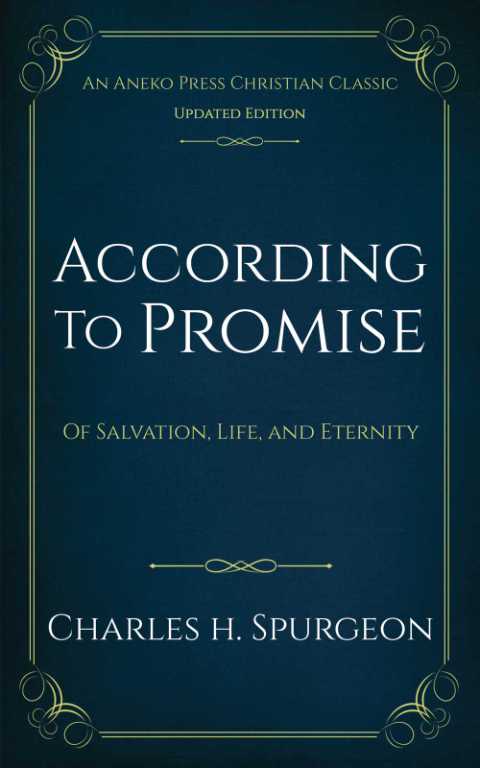
According To Promise Of Salvation, Life, And Eternity According To Promise Of Salvation, Life, And Eternity

According To Promise Of Salvation, Life, And Eternity Order Printed Copy

  • Author: Charles H. Spurgeon
  • Size: 369KB
  • |
Continue with
Google Twitter
LOG IN TO REVIEW
About the Book


"According to Promise: Of Salvation, Life, and Eternity" by Charles H. Spurgeon explores the biblical promises of salvation, eternal life, and the blessings that come from faith in God. Spurgeon's powerful and insightful teachings emphasize the importance of trusting in God's promises and living a life of faith. The book serves as a guide for believers seeking to deepen their understanding of God's promises and grow in their relationship with Him.

Jackie Hill Perry

Jackie Hill Perry Jackie Hill Perry has a way with words, and people can’t stop listening. A gifted poet, rapper, writer, and teacher, she has written books and Bible studies, released hip-hop albums, and taught at events, conferences, colleges, and coliseums all over the nation. Inspired by her powerful testimony of salvation and deliverance from a gay lifestyle and her teaching on the holiness of God, the word is out: God is good, He is Lord, and those who surrender to Him are made new. The Power of God It’s a message Jackie is passionate about because she knows firsthand the transformational power of Jesus Christ. She and her husband — fellow spoken-word artist, Preston Perry — met in 2009 while performing at an artist’s showcase. Impressed with Jackie’s poetry, Preston struck up a friendship that deepened over the years. Eventually, they began dating, which presented significant challenges but also great rewards. The Lord used Preston as a source of healing, and marriage forced Jackie to deal with hurts and fears she’d been reluctant to give to God. The couple, who reside in Atlanta, married in 2014. They are now the parents of three daughters: Eden, Autumn, and Sage; and are expecting a son. A decade ago, Jackie could never have imagined marriage, motherhood, and ministry in her future. Violated and abandoned by men who should have loved and protected her, Jackie was hurting. Fear and distrust kept watch over her heart. Surrender wasn’t an option, even when a loving God promised her new life. Despite some exposure to church and to Scripture, Jackie was adamant that she would never submit to Jesus as Lord. Her attraction to women started in early childhood and intensified during adolescence. Jackie finally gave in to same-sex desires, along with drugs and other habits that brought comfort, pleasure, and an emotional escape. Suppressing her femininity by wearing men’s clothing and assuming the male role in dating relationships, Jackie says every area of her life was characterized by sin and rebellion against God. Then one evening, 19-year-old Jackie felt the conviction of the Holy Spirit. Recalling the experience, she says, ā€œIt was a God thing. No one can ever tell me that I saved myself. I had some understanding of Jesus and obedience and Christianity. But I sincerely wanted nothing to do with God on His terms.ā€ Even as she resisted, Jackie clearly sensed the Lord speaking to her. ā€œWhen He showed me that all of my sin would be the death of me — that it was true that the wages of sin is death, but it was equally true that God offered eternal life if I would repent and believe — I was compelled to trust Him. For the first time in my life, I knew that God was real and He was worth it. Just the day before, my heart was hard as a rock, and now I wanted Jesus. Only the Holy Spirit could have done that.ā€ ā€œFor the first time in my life, I knew that God was real and He was worth it. Just the day before, my heart was hard as a rock, and now I wanted Jesus. Only the Holy Spirit could have done that.ā€ The Power of Words Jackie dove into God’s Word and began discovering the woman He designed her to be — mind, body, and spirit. Seeking to express herself in deeper, more artistic ways, she began writing poetry. Jackie didn’t shy away from revealing her past or the ongoing struggle with temptation and sin. Her poems unflinchingly spoke gospel truth and glorified God as the ultimate source of love and life. After connecting with the Passion for Christ Movement (P4CM), Jackie was asked to write a poem about being an ex-lesbian. Hesitant at first, she felt the Lord prompting her to move forward. Through its confessional lyrics and rock-solid theology, My Life as a Stud shined a spotlight on Jackie’s conversion and marked the beginning of her public ministry. ā€œWhen My Life As a Stud came out in 2009, so many gay and lesbian people who didn’t go to church, didn’t trust Christians, and didn’t want to have anything to do with the Bible clicked on the poem and suddenly wanted Jesus. I realized God had given me this art form where I’m able to speak to people’s hearts.ā€ Since then, she has taken the message of God’s love to artist showcases, faith-based conferences, college campuses, and major media outlets. The foundation of her message is always the Word of God: In His goodness, God created male and female. As the perfect designer of gender and sexuality, God is worthy of trust and obedience. Although same-sex attraction is central to her testimony, Jackie emphasizes that the church should approach the LGBTQ community the same way it approaches other people. Everyone is created to be an image-bearer of the living God with a unique identity and great worth. Rather than labeling someone as ā€œa gay friend,ā€ it’s important to develop genuine, one-on-one relationships the same way Jesus did. By investing in authentic friendships, Christians will be able to share the gospel because they’re actually modeling it. The Power of Redemption Jackie points out that being ā€œdead in sinā€ goes far beyond someone’s sexual preference. Without Christ, people are lost in every way. But when Jesus gives new life, He forgives and redeems the whole person. She says, ā€œGod saved me from sin, not just my sexuality. I was an all-around sinful person. In essence, sin was my lord. As much as I loved women in a lustful way, I also loved pornography and drugs, bitterness and unforgiveness.ā€ Through discipleship, Jackie recognized the holistic nature of God’s redemption. ā€œI’ve learned that pride is one of my greatest struggles, even more so than same-sex attraction,ā€ she explains. ā€œPride manifests itself in so many areas of my life, it’s hard to keep up. God didn’t just rescue me from being gay. He saved me from believing I’m a better lord than He is.ā€ In response to the growing debate over same-sex attraction and the frequent questions she receives when people hear her testimony, Jackie wrote her first book, Gay Girl, Good God, to serve three core groups: people seeking to help and understand those within the LGBTQ community; people within the community who may disagree with some of her conclusions but are still intrigued; and people who are believers, yet have same-sex attraction and are trying to figure out how to love Jesus while dealing with those feelings. When asked what she hopes the church learns from the book, she says, ā€œI want people to see that how you reach the LGBTQ community is the same way you reach anybody — with the gospel. The gospel is about God. The method shouldn’t be any different when you’re speaking to someone who is dealing with gluttony or lying or lust. It’s all the same. God is Lord, He’s Master, He’s King, He’s able to save. And the problem with sin is always a problem between us and God.ā€ "God is Lord, He’s Master, He’s King, He’s able to save. And the problem with sin is always a problem between us and God." The Power of Community Jackie hopes the church will develop greater empathy for same-sex individuals and recognize how difficult it is to walk away from the gay lifestyle. She says, ā€œIt’s not a random sin that is easily put off. The feelings are real, and it takes time and work and a long process of dying to self.ā€ Without a supportive church family to encourage and affirm her, the author might have fallen away. The first couple of years as a Christian were the hardest. Jackie had to learn to put off the old nature and put on Christ. The process required spiritual and physical discipline. She had to shop for women’s clothing, an experience that made her feel strange, vulnerable, and afraid. Temptation was a constant source of condemnation, at times pushing Jackie into depression and doubt as she grieved over her sinful nature. After a decade of growing in Christ, Jackie still faces temptations but says they’re more subtle and easier to flee. Instead of looking at women as objects of lust, she chooses to see them as image-bearers of God. In evaluating her walk with the Lord, she considers whether she is loving people well, growing in holiness, and bearing good fruit. And she looks to Jesus, who endured the horror of the cross because He loved God with all of His heart. Knowing Jesus didn’t want the cup of suffering, yet accepted it with humility, helps Jackie run the Christian race with endurance. Endurance and spiritual growth became the inspiration for Jackie’s second album, Crescendo, which was hailed as ā€œstunning,ā€ ā€œflawless,ā€ and arguably ā€œthe best hip-hop album of the year.ā€ Although she began experimenting with rap simply for creative expression, Jackie soon saw it as another platform to share the gospel. When asked about the album’s title, the talented artist says, ā€œIn music theory, ā€˜crescendo’ means the increase in sound. So I wanted to apply that to faith. When you’re in Christ, as your faith increases, your fruit should get louder. You love more, you’re more generous, more attentive to the needs of people. You listen well. Things begin to change as your faith becomes more evident.ā€ She wrote the album to mimic that spiritual progression. The first track begins on a low note with ā€œLamentations,ā€ a rap about the reality of sin and the tendency for Jackie to forget she’s been forgiven. Taking listeners through an honest exploration of spiritual growth, Crescendo ends on a high note, celebrating how the Lord saved Jackie through His gospel, initiated her Christian walk, and sustains her to this day. The Power of Legacy A gifted communicator and lyricist, Jackie isn’t just impacting culture with wordcraft. She’s also building a spiritual legacy for her children. Because of her childhood trauma, the idea of raising daughters was terrifying. But she’s found so much joy in becoming a mom. Jackie says, ā€œWhen I think of parenthood, I know I’m only called to steward these children and disciple them and hope they will love the Lord with all their hearts, souls, minds, and strength. When I was carrying Eden, Titus 2 really spoke to me about the older women teaching the younger women. "Once I realized what a privilege it would be to raise up a woman in my home, I welcomed the challenge.ā€ As Jackie reflects on the last decade, she gives God all the glory and praise. Without Christ, she wouldn’t have her precious daughters, would have missed out on beautiful friendships, and would never have experienced being loved by a man for the first time in her life. ā€œIf God hadn’t rescued me, none of this would be possible,ā€ Jackie says. ā€œLife still has its challenges, for sure. But it’s better. It’s so much better.ā€ This article courtesy of HomeLife magazine.

Reformation Day: Jesus Came Knocking

Sometime around A.D. 95, Jesus, through the apostle John, came metaphorically knocking on the door of the church in Laodicea with an unsurpassed invitation: ā€œBehold, I stand at the door and knock. If anyone hears my voice and opens the door, I will come in to him and eat with him, and he with me.ā€ (Revelation 3:20) Pulled out of its context, this verse can sound like Jesus was calling softly and tenderly. Paintings inspired by this verse tend to portray a gentle Jesus mildly knocking. In reality, he was anything but soft and tender, gentle and mild. This invitation came on the heels of a bracing rebuke and serious warning. Jesus was pounding on the Laodicean’s door with the urgency of emergency: ā€œI know your works: you are neither cold nor hot. Would that you were either cold or hot! So, because you are lukewarm, and neither hot nor cold, I will spit you out of my mouth. For you say, I am rich, I have prospered, and I need nothing, not realizing that you are wretched, pitiable, poor, blind, and naked. I counsel you to buy from me gold refined by fire, so that you may be rich, and white garments so that you may clothe yourself and the shame of your nakedness may not be seen, and salve to anoint your eyes, so that you may see. Those whom I love, I reprove and discipline, so be zealous and repent.ā€ (Revelation 3:15–19) Jesus was pounding on the door of a church whose trust in an idol put them in grave spiritual danger. Their prosperous tepidness made him want to gag. But because he loved these lukewarm Christians, he lovingly disciplined them with hard words and called them to zealous repentance and reformation. When Jesus Came Knocking in Wittenberg On October 31, 1517, Jesus, through a little-known German priest/professor named Martin Luther, came quite literally knocking on the Wittenberg door of the Roman Catholic Church. Unrestrained corruption of power and wealth was a sin-cancer that had metastasized in the Roman Catholic Church and spread to many of her leaders and, through them, into her doctrines and practices. This cancer was killing the church. She too had grown very prosperous and yet did not realize how wretched, pitiable, poor, blind, and naked she had become. She had not listened sufficiently to Jesus’s authoritative voice in the Scriptures, or to the prophetic voices of warning that he had repeatedly sent to her. The Lord was at the end of his patience. But because he loved his sin-diseased church whose idolatry put her in grave spiritual danger, he sent an unlikely messenger from an unlikely town — so very like the Lord — with a hard word of loving discipline. Professor Luther walked up to the door of the Castle Church in Wittenberg with a hammer, a few nails, and a parchment listing 95 stinging indictments against the Roman Catholic Church. Unlike what the Laodiceans received, Luther’s theses were not inerrant Scripture. In fact, later Luther knew a number of them did not go far enough. But still, they were a largely biblical call to zealous repentance, as the first thesis so clearly captures: When our Lord and Master Jesus Christ said, ā€˜Repent’ (Matthew 4:17), he willed the entire life of believers to be one of repentance. In the pounding of Martin’s hammer, Jesus came knocking. And his knocking set off a chain-reaction that exploded into the Protestant Reformation, a gospel detonation that is still shaking the world nearly 500 years later. A Reformation Detonation As a result of October 31, 1517, hundreds of millions of Christians all over the world have submitted to God’s word as their highest authority (Sola Scriptura) and his teaching that salvation is a gift given by God’s grace alone (Sola Gratia) through the instrument of faith alone (Sola Fide) in the death and resurrection of their one savior and mediator, Jesus Christ (Sola Christus), so that all glory would always redound to the Triune God alone (Sola Deo Gloria). Wherever the church opened the door to Jesus, repentance and reformation was like chemotherapy to the cancer of spiritual corruption and recovered belief in the gospel of Christ spread spiritual health through much of Europe, then on to the New World, Asia, and Africa. It spawned massive evangelism, church planting, Bible translation, and frontier missions efforts. And in its wake it brought about all manner of social good: stronger families, honest commerce, economic empowerment for the poor, hospitals and clinics for the sick, education for the masses, encouragement for the scientific enterprise, democratic forms of civic government, and on and on. When we really comprehend the massive floodgate of mercy that was opened to us because Jesus came knocking in Wittenberg, Reformation Day (October 31st) becomes a thanksgiving day — a day for feasting or perhaps for fasting and prayer for another reformation detonation in our lives and churches and nations. Is Jesus Knocking on Your Door? In fact, given the prosperity that most of us in the West are experiencing and the arid spiritual climate most of us live in, it may be that the best way we can observe Reformation Day is to do some serious, prayerful soul-searching. Have we allowed a Laodicean type of acedia to settle in? We know that significant portions of the Western church are diseased with various heresies. Do they provoke us to earnest prayer? And we should ask ourselves, is Jesus knocking — or pounding — on our door? Are we hearing him? Are we ignoring or even resisting him? Are we tolerating and justifying any idols? One clear symptom of idolatry is spiritual lukewarmness. Tepidness typically does not feel like a grave danger. It can feel like a tolerable and even nearly pleasant malaise. But it is deadly. In this state we do not realize how wretched, pitiable, poor, blind, and naked we are. And because Jesus loves sinful people like us, when we fall into such a state he comes knocking — hard. We often do not recognize it as him at first because he can come in the form of a messenger, sometimes an unlikely one. And the pounding of their hard words can make us defensive and mad. But let us listen carefully and drop our guard. The hard words are painful, especially to our pride. But Jesus (or his imperfect messenger) is not being mean or condemning us. It is the loving discipline of our Savior to warn us. Lukewarmness means spiritual life-threatening idolatry. The cure is for us to ā€œbe zealous and repentā€ (Revelation 3:19). If Jesus is knocking on our door, let us welcome him in fully that we may eat with him and he with us (Revelation 3:20). Accepting his unsurpassed invitation to joy through repentance and reformation may be the greatest way to celebrate Reformation Day. Article by Jon Bloom

Feedback
Suggestionsuggestion box
x