
Found By Love - A Hindu Priest Encounters Jesus Christ Order Printed Copy
- Author: Rahil Patel
- Size: 10.65MB | 260 pages
- |
Others like found by love - a hindu priest encounters jesus christ Features >>

About the Book
"Found By Love" is the story of Rahil Patel, a Hindu priest who has a life-changing encounter with Jesus Christ. Through this experience, he discovers a new understanding of love and spirituality that reshapes his beliefs and challenges his previous worldview. Patel shares his journey of transformation, as he navigates the intersections of his Hindu faith and the teachings of Christianity, ultimately finding a profound sense of peace and connection through his encounter with Jesus.
William Wilberforce
William Wilberforce was born in 1759 in Hull, East Yorkshire. He graduated from Cambridge University with the intention of following a political career, and became Member of Parliament (MP) for Hull in 1780, aged 21. Four years later he became MP for the whole of Yorkshire. It was at this time that he began to work for the abolition of the British trade in enslaved people.
Wilberforce was a deeply spiritual man and later became an Evangelical Christian. He was a popular figure and was known to be charming and witty and a great public speaker. He campaigned for a number of causes: for legislation to improve the lives of the poor, education reform, prison reforms and ending child labour. He was also one of the founders of the Royal Society of the Prevention of Cruelty to Animals (RSPCA).
A Committed Abolitionist
With the backing of his friend William Pitt, who became Prime Minister, Wilberforce became leader of The Society for the Abolition of Slavery. The society campaigned for almost 20 years to bring an end to British involvement in the Transatlantic Slave Trade. The abolition campaign made them many enemies, especially among those who had made huge profits from the trade in enlsaved African people.
Wilberforce left Hull in 1792 and moved to Clapham, London to be closer to his work in Westminster. Within the local community he found friends who shared his interests in religion and politics. They became known as the Clapham Sect and they actively supported the anti-slavery abolitionists.
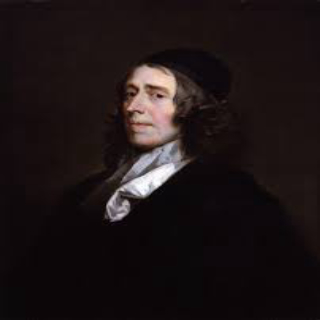
William Wilberforce, oil painting by Karl Anton Hickel, 1793 . Willima has a white scarf tied at his neck and wearing a dark blue coat with a folded collar.
William Wilberforce by Karl Anton Hickel, 1793
Wilberforce married Barbara Spooner in 1797 and they had six children. Historical acounts show that he was a loving and devoted husband and father, and was proud that three of his sons became clergyman.
The Slavery Abolition Bill
Wilberforce attempted several times to bring private members' bills before Parliament to end Britain’s involvement in the slave trade, but the Bill was defeated many times. It was finally passed on 25 March, 1807. However, this only went as far as banning British people from engaging in the slave trade, it did not ban slavery itself. Wilberforce retired from politics in 1825 due to ill health, but he continued to campaign for the abolition of slavery.
Finally, on 26 July 1833, as Wilberforce lay on his deathbed, he was told that the Slavery Abolition Bill, granting freedom to all enslaved people within the British Empire, had been passed by Parliament. He died three days later. As a mark of respect for his achievements, his body was buried in Westminster Abbey.
Childhood and Education
William Wilberforce was born on 24 August, 1759, at 25 High Street, Hull (which is now known as Wilberforce House) to Robert and Elizabeth Wilberforce. He had three sisters, Elizabeth, Ann and Sarah (known as Sally). Of the four children, only William and Sally survived to adulthood.
The Wilberforce family were successful merchants, who traded in imported goods, like wood and cloth, from northern Europe and the Baltic states. The family home reflected the family's wealth and was decorated with fashionable architecture of the day.
William was a small, sickly child with poor eyesight, but this did not stop him from attending Hull Grammar School or taking part in musical activities or sports. William was known to have a beautiful singing voice and had a reputation for telling funny stories and playing practical jokes.
When William was only eight years old, his father died. William's mother then became ill and so she sent him to live with his aunt and uncle, Hannah and William Wilberforce, in London. They sent him to study at a small boarding school in Putney, which he disliked, complaining about the food. Hannah and William were Evangelical Methodists and they took William to church regularly, where he enjoyed listening to bible stories and sermons by prominent figures within the Methodist movement.
William's mother worried about his exposure to such a strong religious influence and arranged for him to come home to Hull. William was sent to board at Pocklington Grammar School, where he studied hard and did well at Latin, English and History. Aged 17 he went to Cambridge University, where he met William Pitt the Younger, who became a lifelong friend. Wilberforce took full advantage of the social life on offer at university, and was well known for attending dinners, gambling, and playing cards. Despite his busy social life, Wilberforce managed to graduate from Cambridge in 1781, determined to have a career as a Member of Parliament.
Religious Beliefs and Influences
William Wilberforce became a deeply religious man who dedicated his life and his work to acting on his beliefs. He had many religious and political influences during his lifetime.
His mother was staunchly Church of England. However, after the death of his father, William spent two years living with his aunt and uncle in London, who were keen Methodists.
They took the young William to church regularly, where he heard important figures like George Whitefield preach. At that time, Methodism was known as a branch within the Church of England that was particularly concerned with social welfare. However, his mother became alarmed at his growing interest in evangelical Christianity, and she brought the young William home again.
Wilberforce's second major religious influence was Isaac Milner, who was a young teacher when Wilberforce attended Hull Grammar School. They were to become lifelong friends and in 1784 they travelled together through Europe.
During the months they spent together, Milner introduced William to his own religious beliefs and encouraged him to read an essay entitled 'The Rise and Progress of Religion in the Soul'. The whole experience had a profound affect on William and he returned home to England a changed man and devout Methodist.
Another influence on William was John Newton, his Aunt Hannah’s half-brother who had previously been involved in the slave trade. Newton was one of the wealthiest men in Europe and a great humanitarian and philanthropist, and gave many gifts to the Evangelical church. Following William's tour of Europe with Milner, he met up with John Newton to discuss his new-found faith.
William wrote in secret to Newton:
Sir, there is no need of apology for intruding on you, when the errand is religion. I wish to have some serious conversation with you… the earlier the more agreeable to me. I have ten thousand doubts within myself, whether or not I should discover myself to you; but every argument against doing it has its foundation in pride. I am sure you will hold yourself bound to let no one living know of this application, or of my visit, till I release you for the obligation…
P.S. Remember that I must be secret, and that the gallery of the House is now so universally attended, that the face of a member of Parliament is pretty well known.
William stuck with his conversion to Methodism and wrote a best-selling book A Practical View of Christianity thirteen years later.
Early Political Life and Influences
After graduating from Cambridge University, William Wilberforce chose to follow a career in politics and stood as Independent candidate, in an election for Hull's Member of Parliament. He won by an overwhelming majority and was elected to represent the citizens of Hull, at the age of just 21.
The young Wilberforce was a natural politician. Following the deaths of his father and his uncle he had inherited enough money to financially support his political career. He was also well liked among Hull's merchant families, who hoped that he would represent their business interests in parliament.
Two of Wilberforce's most appealing qualities were his engaging personality and his eloquent speaking voice - useful traits for a politician. He was so famous for his public speaking that he was nicknamed the 'Nightingale of the Commons'.
On taking up his seat in the House of Commons, Wilberforce met up with his university friend, William Pitt the Younger, who had also chosen a political career. Pitt and Wilberforce spent much time studying the more experienced Members of Parliament from the Commons gallery, and listening to heated political debates of the day.
Pitt enjoyed a very sucessful political career, becoming Prime Minister and the new Tory party leader in 1783, aged just 24. Although not quite as ambitious as Pitt, Wilberforce took the decision to stand as candidate for Member of Parliament for Yorkshire. This was one of only two county seats and on winning it, Wilberforce became a more influential politician.
Following his conversion to Methodism in 1785, Wilberforce considered leaving politics. Yet, Pitt and John Newton convinced him to persevere and use his political work as a way of serving God. Wilberforce saw the campaign to abolish the Transatlantic Slave Trade as a way of following his religious and humanitarian beliefs, as well as his moral conscience.
saved when the lord appears
Texts: Acts 1:11 — "Ye men of Galilee, why stand ye gazing up into heaven? this same Jesus, which is taken up from you into heaven, shall so come in like manner as ye have seen him go into heaven." 1 Thessalonians 4:16-18 — "For the Lord himself shall descend from heaven with a shout, with the voice of the archangel, and with the trump of God: and the dead in Christ shall rise first: Then we which are alive and remain shall be caught up together with them in the clouds, to meet the Lord in the air: and so shall we ever be with the Lord. Wherefore comfort one another with these words." These two texts of Scripture are plainly presented and there can be no question as to their interpretation; they mean just what they say, namely, that the Lord Jesus Christ is coming back again to this earth, and just as He ascended from the midst of His disciples, clothed with his physical body, and a cloud received Him out of their sight, so He will come again. He left a wondering company of disciples when He was on the slopes of Olivet, and from their midst began to ascend up towards heaven, and strange to say He will come back again to a company of disciples, for notwithstanding the plain statements of Scripture with reference to His coming, many in the Church are apparently unacquainted with the fact of His glorious appearing or else are indifferent to it. This may be because those of us who are in the pulpit have not been faithful in teaching the Word of God, or it may be that the rank and file of Christians have studied the Scriptures indifferently, if indeed they have studied them at all. All evangelical Christians believe that Jesus Christ is coming again sometime. We have said it over and over in our repetition of the Apostles Creed, and there can be no question about the fact at all. The only question is as to when He is coming; some say before the millennium, and they are called pre-millenarians; others expect Him after the millennium, and they are spoken of as post-millenarians. But if He comes after the millennium He will come to a world made ready for His appearing by human effort, righteousness will be asserting its power, and have in its control all things. If this position is accepted, then His coming is far removed from the present time, for just when men thought the world was rapidly growing better, the world-war was upon us and today the world is scarred and marred by its effects. If He comes before the millennium, then He will come to set the world right; He will set up His Throne and establish His Kingdom. He himself will work mightily in all ways and it will be a world worth while living in when it is all under the sway of His Almighty Power. As for myself, I prefer the millennium which He makes ready rather than the one which might be set up or prepared by man himself, therefore I am a pre-millenarian. Just what will it mean to be saved when the Lord appears? To be saved at all is the wonder of heaven and earth. We are saved from sin's penalty by His death on the Cross and our personal acceptance of Him. We are saved from sin's practice by the indwelling of His Spirit strengthening our wills. This is what the Apostle Paul meant when he said "I live; yet not I, but Christ liveth in me." We are saved from sin's presence by His coming again, for when He comes the last enemy shall be overthrown, temptation will be a thing of the past, and our deliverance shall last forever. Let us put it in this way: We have been saved by His death on the Cross and our identification with Him; this has to do with the past. We are being saved by His Spirit who makes Christ real to us and makes the Word of God powerful in the changing of our lives; this has to do with the present. We shall be saved when He appears and the body of this humiliation is made like unto His own glorious body; this has to do with the future. In order to prevent confusion, we must keep in mind the fact that there are to be two appearings of our Lord: First — He comes for His Saints. This is what the Apostle Paul meant when in 1 Thessalonians 4:16-18, he said, "For the Lord himself shall descend from heaven with a shout, with the voice of the archangel, and with the trump of God: and the dead in Christ shall rise first: Then we which are alive and remain shall be caught up together with them in the clouds, to meet the Lord in the air: and so shall we ever be with the Lord. Wherefore comfort one another with these words." Second — He comes with His Saints. When the time is up and Scripture has had its fulfillment, he will set up His Kingdom on the earth; His sway will be almighty and His power irresistible. This truth has always been of the greatest possible inspiration to me. I learned it when I was a young minister, and it changed my whole conception of Christ and my interpretation of the Scripture, and filled me with a zeal to attempt at least to do His Will. It has never made me fanatical, and I am sure that it has not made me listless, and from the first day I received the truth until this present time, it has been to me "the blessed hope." In common with other Christians, I believe the Church to be the body of Christ and that as individuals we go to make up that body and as men are won to Christ and they surrender to Him, they are parts of that body. So of necessity, one day the body will be completed — the last member will be added to it — and I have always thought that perhaps the one who comes under the influence of my preaching, might be the last, and the skies would brighten and the Lord return, and I have hardly preached an evangelistic sermon for years without this in mind. It is to me a glorious hope. I have frequently been asked "Would you not be startled, indeed, would you not be afraid, if suddenly the skies should brighten and the Lord appear?" And my answer is "I might be, except for the statement made in my first text of Scripture, 'Ye men of Galilee, why stand ye gazing up into heaven? this same Jesus, which is taken up from you into heaven, shall so come in like manner as ye have seen him go into heaven,'" it is "this same Jesus" who is coming back; He who was cradled in the manger and wrapped in swaddling clothes, He who lived in Nazareth as a boy, a youth, and a young man, He who preached in Galilee as never man had spoken before Him, He who suffered in Gethsemane until the blood drops rolled down His face, He who died upon the Cross as my substitute, He who rose from the dead when the time was up and the stone was rolled away from the door, He who ascended up into heaven — He is coming back again. How could I be startled when He appears? So human that He grew weary as He toiled, so human that He fell asleep when He was in the little boat with His disciples, so human that He toiled in the carpenter shop, making this implement and that, and making them well... So divine that the water blushed into wine when He looked at it; so divine that devils feared Him and went rushing into a herd of swine and drove them into the sea; so divine that disease was staid by His presence and His touch; so divine that death was overpowered by Him, and Lazarus, at the sound of His voice, came forth from the tomb bound in his grave clothes. He is coming back again and we shall see Him. "Just to see Jesus once scarred as Redeemer, Jesus, my Lord, from all suffering free, Just to see Jesus transfigured forever, That will be glory, be glory, for me. Just to see Jesus, when saved ones are gathering, Jesus who died upon Calvary's tree, Just to see Jesus with all heaven ringing, That will be glory, be glory, for me." He is surely coming back again and it is well worth while to ask the question as to what this coming will mean to certain classes of people. 1. What will it mean to the saved? 1 Corinthians 15:51-52. — "Behold, I shew you a mystery; We shall not all sleep, but we shall all be changed, In a moment, in the twinkling of an eye, at the last trump: for the trumpet shall sound, and the dead shall be raised incorruptible, and we shall be changed." So many times we hear people use the expression, speaking of certain events, "This is as certain as death," but death is by no means certain, it is not at all sure that we shall all die. St. Paul himself tells us we shall not all sleep, and he is speaking of death; some will be alive when the Lord comes back, and perhaps we who are today in health and strength, shall be of the company. (a) Some day the skies will brighten and He will appear, and just as Saul of Tarsus saw what others did not see, so some eyes will be opened to behold Him, while others will be blinded to His coming, and when those who have their trust in Him are taken away, others will remain behind in wonder and in amazement. (b) Families will be separated. In this household a mother was a humble follower of Jesus Christ and all the others were indifferent to Him. She will be taken; the others left. In another household the father was a saint of God. The Bible and Jesus were his constant delight, but he was unable to lead his children to Christ, and with the godly mother he will be taken and the others left. A Christian business man who has been careful in all his business dealings, and consistent in his following of Jesus Christ, taken, and those with whom he is associated, left behind; perhaps the saved children of a household whose parents were worldly and cared not for Christ and His Church are taken. (c) It should be remembered, however, that before these are taken, the dead in Christ shall rise first; their spirits safe with Him from the moment of their death, their bodies have been resting in the tomb, and when He appears, the tombs of the Christian dead shall be opened, and spirit and body united. They shall go up to be with Him. There are some places I should like to be at that wonderful time. I think I should like to be standing here speaking of Him, or I should like to be pleading with an audience to turn to Him, or I should like to be sitting beside some one who is helpless and hopeless and urging them to accept Him, or I should like to be at the grave of D. L. Moody, and behold his tomb open and see him ascend to meet the Lord whom he so faithfully preached; or I should like to be at my mother's tomb where years ago we placed her and said "goodbye" to her with tears blinding our eyes. To sum it all up, however, I think I should like to be just anywhere, seeking to please Him and trying to find out concerning His Will, that I might do it. I stood one day in Wales before the grave of the famous Welsh preacher, Christmas Evans, and was told that he was buried in the same grave with a friend, a brother minister, whom he loved dearly, and this was all because they wanted to be together when the Lord came and they be caught up. They had agreed that hand in hand they would ascend to greet Him. (d) In the Scriptures we read that we who are alive shall be caught up together with them in the clouds, that is, with our beloved who have gone on before. No more separation, no more fear of the cable's message, no more funerals, no more visits to the cemetery, no more going back to the home that has been made empty because the loved one has departed. "We shall not all sleep, what ineffable bliss, Some living at present may taste even of this, His coming, the rapture, the joyful surprise, One moment a mortal, the next in the skies. Our Saviour will come in the air, He'll descend, The living, the sleeping, to Him shall ascend, Some wait there in heaven, some wait here below, Then raptured in triumph to Him we all go. We shall not all sleep, but changed we shall be, Yes, changed in a moment when Jesus we see, In the blaze of His glory, the flash of an eye, (e) When St. Paul was nearing the end of his remarkable career, he writes, "That I may know him, and the power of his resurrection, and the fellowship of his sufferings, being made conformable unto his death; If by any means I might attain unto the resurrection of the dead." The expression "if by any means I might attain unto the resurrection of the dead" is literally "the out-resurrection from among the dead"! that is, St. Paul knew that the Lord was coming back, that the Christian dead would rise to greet Him, and he wanted to be of the company, and thus expresses his hope and desire... 2. What will it mean to the unsaved for Christ to appear? (a) If they are dead then it will mean that at His appearing their tombs will not be unsealed, they shall wait longer for another great event which is so startling that one shudders even as he reads of it, that is Judgment. (b) If they are living they will be left behind when others ascend to greet Him with their loved ones in the skies. (c) And when the time comes those who have rejected Jesus Christ will face the Judgment. In Revelation 20:11-13, I read, "And I saw a great white throne, and him that sat on it, from whose face the earth and the heaven fled away; and there was found no place for them. And I saw the dead, small and great, stand before God; and the books were opened: and another book was opened, which is the book of life: and the dead were judged out of those things which were written in the books, according to their works. And the sea gave up the dead which were in it; and death and hell delivered up the dead which were in them: and they were judged every man according to their works." It is a white throne, to me, at least, it is significant that when the saved greet Him there will be "a rainbow round about the throne, in sight like unto an emerald." The emerald is green and green rests the eye. In contrast the full blaze of the white of the throne of God's judgment will be torture indeed. He will be upon the throne; the One whom men have rejected and despised in spite of His mercy, and love. "The dead, small and great, shall stand before God." There can be no favoritism there. The books shall be opened and on the basis of one's record, men will be judged. Those who have accepted Christ need have no fear of the judgment of the Great White Throne. "There is therefore now no condemnation to them which are in Christ Jesus," but if he has been rejected, and finally rejected, we know what the end must be, for the word of the Lord hath spoken it. Recently the Honorable Elihu Root, in one of his addresses used this expression: THE TIMETABLE OF THE ALMIGHTY. What a striking sentence, how suggestive, how true it is to these days, how it fits in to my subject. (a) The hour has come. Jesus said that as he was nearing the end of his earthly ministry, and when the price of our redemption was to be paid in full. (b)"Behold, now is the accepted time; behold, now is the day of salvation." (c) The door of mercy is open; it may close at any moment. "Seek ye the LORD while He may be found, call ye upon Him while He is near." From Evangelistic Sermons by J. Wilbur Chapman. New York: Fleming H. Revell Company, ©1922.