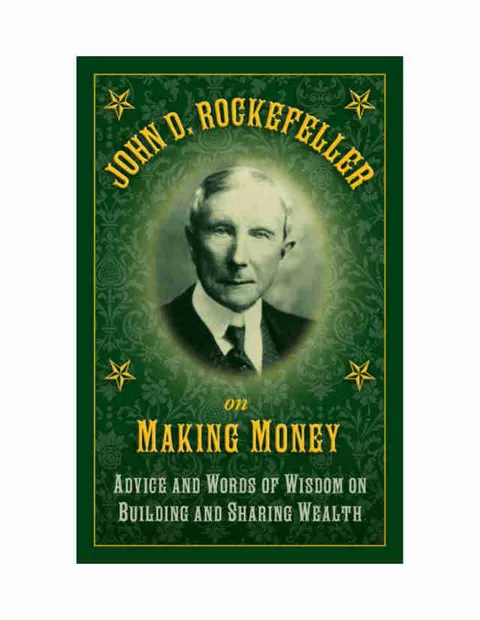

John D. Rockefeller On Making Money Order Printed Copy
- Author: John D. Rockefeller
- Size: 809KB | 56 pages
- |
Others like john d. rockefeller on making money Features >>

Golden Rules Of Making Money

Help, God! I'm Broke!

Ten Lies People Believe About Money

The Richest Man Who Ever Lived

The Wealth And Poverty Of Nations - Why Some Are So Rich And Some So Poor

Everyday Millionaire

Total Life Prosperity

Are Tithes And Offerings The Same

Business Secrets From The Bible
About the Book
"John D. Rockefeller on Making Money" is a collection of excerpts from letters and speeches by the famous American businessman, providing insight into his views on achieving financial success through hard work, discipline, and strategic thinking. The book offers practical advice and timeless wisdom for anyone looking to build wealth and achieve success in business.
Maria Woodworth-Etter
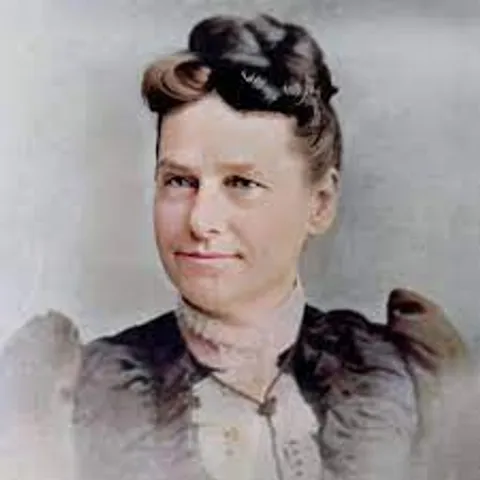 Maria Woodworth-Etter’s Early life
Maria’s early life was plagued with tragedies. Her father died of sunstroke when she was 11 years old leaving her mother with eight children to provide for. She married at 16 but fought a continual battle with ill-health, losing five of her six children. During her sickness she had visions of children in heaven and the lost suffering in hell.
She promised God, that if He would heal her, she would serve Him completely. She asked God for same apostolic power He gave the disciples and was gloriously baptized in the Holy Spirit. “It felt like liquid fire, and there were angels all around.”
The call to preach
Despite her personal struggles with ‘women in ministry’ and the prevailent hostile attitudes to female preachers, she felt compelled by God to accept the invitation to preach in the United Brethren in Christ (Friends) in 1876 and later associated with the Methodist Holiness church.
Evangelism with signs and wonders
Though simply evangelistic in the early days she was unusually successful and in 1885 supernatural signs began to accompany her ministry. Her ministry resurrected dead churches, brought salvation to thousands of unconverted and encouraged believers to seek a deeper walk with God.
She descibes one of her meetings
She described an 1883 meeting in Fairview, Ohio: “I felt impressed God was going to restore love and harmony in the church..… All present came to the altar, made a full consecration, and prayed for a baptism of the Holy Ghost and fire. That night it came. Fifteen same to the altar screaming for mercy.
Men and women fell and lay like dead. I felt it was the work of God, but did not know how to explain it or what to say. I was a little frightened . . . after lying for two hours all, one after another, sprang to their feet as quick as a flash with shining faces and shouted all over the house. I had never seen such bright conversions or such shouting….
The ministers and old saints wept and praised the Lord …..they said it was the Pentecost power, that the Lord was visiting them in great mercy and power …..(they) experienced visions of heaven and hell, collapsed on the floor as if they’d been shot or had died.” Subsequently, thousands were healed of a wide variety of sicknesses and diseases and many believers, even ministers, received mighty baptisms of the Holy Spirit. She soon became a national phenomenon.
1,000 seater tent
In 1889, she purchased a tent that could seat eight thousand people and set it up in Oakland, California. “The power of God was over all the congregation; and around in the city of Oakland. The Holy Ghost would fall on the people while we were preaching. The multitude would be held still, like as though death was in their midst.
Many of the most intelligent and best dressed men would fall back in their seats, with their hands held up to God. being held under the mighty power of God. Men and women fell, all over the tent, like trees in a storm; some would have visions of God. Most all of them came out shouting the praises of God.”
She declared that if 19th-century believers would meet God’s conditions, as the 120 did on the Day of Pentecost, they would have the same results. “A mighty revival would break out that would shake the world, and thousands of souls would be saved. The displays of God’s power on the Day of Pentecost were only a sample of what God designed should follow through the ages. Instead of looking back to Pentecost, let us always be expecting it to come, especially in these days.”
Her views of Pentecostalism
Initially she had grave concerns about the burgeoning Pentecostal movement, mainly because of some unbalanced teaching and reported extremism. Soon she came to believe it was an authentic move of the Holy Spirit and was enthusiastically welcomed within its ranks. She became both a model and a mentor for the fledgling movement. This association elicited another wave of revival between 1912 and her death in 1924 as she ministered throughout the country and her books were read across the world.
Etter Tabenacle
In 1918, she built Etter Tabernacle as her home church base and affiliated with the Assemblies of God. In her closing years she still ministered with a powerful anointing despite struggling with gastritis and dropsy. On occasion she would be carried to the podium, preach with extraordinary power, then be carried home again!
Her demise
Her health continued to decline and she died on September 16, 1924. She is buried in a grave in Indianapolis next to her daughter and son-in-law. Her inscription reads “Thou showest unto thousands lovingkindness.”
In conclusion
Without doubt Maria Woodworth-Etter was an amazing woman blessed with an astonishing ministry. Rev. Stanley Smith – one of the famous “Cambridge Seven” and for many years a worker with “The China Inland Mission” wrote this about her autobiography:
“I cannot let this opportunity go by without again bringing to the notice of my readers, ‘Acts of the Holy Ghost,’ or ‘Life and Experiences of Mrs. M. B. Woodworth-Etter.’ It is a book I value next to the Bible. In special seasons of waiting on God I have found it helpful to have the New Testament on one side of me and Mrs. Etter’s book on the other; this latter is a present-day record of ‘the Acts’ multiplied.
Mrs. Etter is a woman who has had a ministry of healing since 1885, her call as an evangelist being some years previous to this. I venture to think that this ministry is unparalleled in the history of the Church, for which I give all the glory to the Lord Jesus Christ, as Mrs. Etter would, I know, wish me to do. This ministry should be made known, for the glory of the Triune God and the good of believers.”
We agree and pray that such an anointing will rest upon God’s end-time people so that ‘this Gospel of the Kingdom will be preached in all the world before the end comes!’ Matthew 24:14
Tony Cauchi
Maria Woodworth-Etter’s Early life
Maria’s early life was plagued with tragedies. Her father died of sunstroke when she was 11 years old leaving her mother with eight children to provide for. She married at 16 but fought a continual battle with ill-health, losing five of her six children. During her sickness she had visions of children in heaven and the lost suffering in hell.
She promised God, that if He would heal her, she would serve Him completely. She asked God for same apostolic power He gave the disciples and was gloriously baptized in the Holy Spirit. “It felt like liquid fire, and there were angels all around.”
The call to preach
Despite her personal struggles with ‘women in ministry’ and the prevailent hostile attitudes to female preachers, she felt compelled by God to accept the invitation to preach in the United Brethren in Christ (Friends) in 1876 and later associated with the Methodist Holiness church.
Evangelism with signs and wonders
Though simply evangelistic in the early days she was unusually successful and in 1885 supernatural signs began to accompany her ministry. Her ministry resurrected dead churches, brought salvation to thousands of unconverted and encouraged believers to seek a deeper walk with God.
She descibes one of her meetings
She described an 1883 meeting in Fairview, Ohio: “I felt impressed God was going to restore love and harmony in the church..… All present came to the altar, made a full consecration, and prayed for a baptism of the Holy Ghost and fire. That night it came. Fifteen same to the altar screaming for mercy.
Men and women fell and lay like dead. I felt it was the work of God, but did not know how to explain it or what to say. I was a little frightened . . . after lying for two hours all, one after another, sprang to their feet as quick as a flash with shining faces and shouted all over the house. I had never seen such bright conversions or such shouting….
The ministers and old saints wept and praised the Lord …..they said it was the Pentecost power, that the Lord was visiting them in great mercy and power …..(they) experienced visions of heaven and hell, collapsed on the floor as if they’d been shot or had died.” Subsequently, thousands were healed of a wide variety of sicknesses and diseases and many believers, even ministers, received mighty baptisms of the Holy Spirit. She soon became a national phenomenon.
1,000 seater tent
In 1889, she purchased a tent that could seat eight thousand people and set it up in Oakland, California. “The power of God was over all the congregation; and around in the city of Oakland. The Holy Ghost would fall on the people while we were preaching. The multitude would be held still, like as though death was in their midst.
Many of the most intelligent and best dressed men would fall back in their seats, with their hands held up to God. being held under the mighty power of God. Men and women fell, all over the tent, like trees in a storm; some would have visions of God. Most all of them came out shouting the praises of God.”
She declared that if 19th-century believers would meet God’s conditions, as the 120 did on the Day of Pentecost, they would have the same results. “A mighty revival would break out that would shake the world, and thousands of souls would be saved. The displays of God’s power on the Day of Pentecost were only a sample of what God designed should follow through the ages. Instead of looking back to Pentecost, let us always be expecting it to come, especially in these days.”
Her views of Pentecostalism
Initially she had grave concerns about the burgeoning Pentecostal movement, mainly because of some unbalanced teaching and reported extremism. Soon she came to believe it was an authentic move of the Holy Spirit and was enthusiastically welcomed within its ranks. She became both a model and a mentor for the fledgling movement. This association elicited another wave of revival between 1912 and her death in 1924 as she ministered throughout the country and her books were read across the world.
Etter Tabenacle
In 1918, she built Etter Tabernacle as her home church base and affiliated with the Assemblies of God. In her closing years she still ministered with a powerful anointing despite struggling with gastritis and dropsy. On occasion she would be carried to the podium, preach with extraordinary power, then be carried home again!
Her demise
Her health continued to decline and she died on September 16, 1924. She is buried in a grave in Indianapolis next to her daughter and son-in-law. Her inscription reads “Thou showest unto thousands lovingkindness.”
In conclusion
Without doubt Maria Woodworth-Etter was an amazing woman blessed with an astonishing ministry. Rev. Stanley Smith – one of the famous “Cambridge Seven” and for many years a worker with “The China Inland Mission” wrote this about her autobiography:
“I cannot let this opportunity go by without again bringing to the notice of my readers, ‘Acts of the Holy Ghost,’ or ‘Life and Experiences of Mrs. M. B. Woodworth-Etter.’ It is a book I value next to the Bible. In special seasons of waiting on God I have found it helpful to have the New Testament on one side of me and Mrs. Etter’s book on the other; this latter is a present-day record of ‘the Acts’ multiplied.
Mrs. Etter is a woman who has had a ministry of healing since 1885, her call as an evangelist being some years previous to this. I venture to think that this ministry is unparalleled in the history of the Church, for which I give all the glory to the Lord Jesus Christ, as Mrs. Etter would, I know, wish me to do. This ministry should be made known, for the glory of the Triune God and the good of believers.”
We agree and pray that such an anointing will rest upon God’s end-time people so that ‘this Gospel of the Kingdom will be preached in all the world before the end comes!’ Matthew 24:14
Tony Cauchi
Mercy at the Bottom
Jonah is a fascinating case study in the mercy of God. He is a no-good, rotten man who resents God for his mercy. Jonah would rather see his enemies destroyed and annihilated than forgiven. Nestled within the story of this rotten man, though, is his prayer in the second chapter. The prayer gives insight into Jonah’s inner struggle and plays no small part in the development of the story. It also tells us much about the God to whom we pray. Perhaps you’ve breezed through the prayer in a previous reading of the book, but let’s slow down to see what we can learn from his cry for help from within the belly of the great fish. Most Reluctant Prayer Imagine the flannel graph with me. God sends his prophet to a wicked people to proclaim the judgment of God. Jonah, instead of going to Nineveh, runs from God by sailing in the opposite direction. Jonah — God’s chosen instrument — is a leaky vessel. Despite the futility, he seeks to run “away from the presence of the Lord” (Jonah 1:3). Clearly, he wants no part of Nineveh, but we’re not yet told why. A storm rages on the high seas, and Jonah is reluctantly thrown into the sea by the sailors. These pagan seafarers call out to God for mercy, yet throughout the storm, Jonah opens not his mouth. He will not mutter even one meager word. Jonah would rather die, it seems, than be an instrument of God’s mercy (to others or even himself). We quickly learn that Jonah is not the hero of the story, and frankly, a bit of a rotten fellow. As we’ll see, however, we find good company in Jonah’s character deficiencies. And we can find solace from the fact that God still heard Jonah’s prayer, the desperate cries of a wayward prophet. Chapter 2 records Jonah’s prayer from the belly of the fish. If there is ever a foxhole cry for help recorded in the Bible, this is it. As Jonah gasps for air, covered in darkness and with death at his door, he finally manages to muster a cry for help. What Was Clear in the Dark What, if anything, can we draw out of Jonah’s prayer? Let me trace three themes and then come back to how we might personally be encouraged for our own prayer lives. GOD STILL LISTENS First, Jonah comes to his senses and prays to God. I imagine a cry of help escaped as Jonah was hoisted into the air and as he plunged in the pitch-black sea. Maybe just a singular yelp, or a thought of “save me, Lord,” but that was all it took. Jonah wakes to the overpowering aroma of rotting fish carcasses, thinking that hell resembles a fish market. But then he regains his senses and realizes he’s alive in the belly of a fish. In this dire and desperate situation, Jonah prays: “I called out to the Lord, out of my distress, and he answered me; out of the belly of Sheol I cried, and you heard my voice” (Jonah 2:2). Despite his disobedience and stubbornness, he calls out to the Maker of heaven and earth. Despite attempting to run from God, he now turns to him for deliverance and help. God is always ready to receive the desperate cries of his children. GOD STILL REIGNS Jonah admits that God is in control. He doesn’t say, “Those rotten sailors, I can’t believe they threw me into the sea!” Instead, he sees the sovereign hand of God at work even in his precarious situation. He confesses, “You cast me into the deep; . . . all your waves and your billows passed over me” (Jonah 2:3). Desperate situations are not a result of God falling asleep at the wheel. Jonah admits that God is in control, and reminds us that we can trust him even in dire circumstances. God is still sovereign when our safety is compromised. GOD STILL DELIVERS Lastly, Jonah concludes that God saved him for a purpose. Jonah is incapacitated, but clearly not yet dead, and so he concludes that God saved him for some divine purpose. “God is still sovereign when our safety is compromised.” He prays, “I shall again look upon your holy temple. . . . You brought up my life from the pit. . . . My prayer came to you, into your holy temple” (Jonah 2:4, 6, 7). God did not satisfy Jonah’s death wish (Jonah 1:12). He has been spared to once again worship God in his holy temple. Jonah rightly concludes that his deliverance has some meaning, and he even begins to declare God’s greatness from the belly of the fish: “Salvation belongs to the Lord!” (Jonah 2:9). Ugliest Kind of Grief We know how the story ends. Jonah’s prayer is heard and answered, and he eventually washes ashore. Jonah relents, goes to Nineveh, preaches, and the people heed his message and repent — and then the surprise comes. Jonah does not rejoice over their repentance; he gets angry (Jonah 4:1). We learn that Jonah wasn’t worried that the Ninevites wouldn’t listen or that they would kill the messenger. Rather, he was worried that the Ninevites would repent. He knew God would be gracious and merciful — and now that God has, he grieves. God’s character is stunningly juxtaposed with the most pathetic display of prophetic sulking in Scripture: [Jonah] prayed to the Lord and said, “O Lord, is not this what I said when I was yet in my country? That is why I made haste to flee to Tarshish; for I knew that you are a gracious God and merciful, slow to anger and abounding in steadfast love, and relenting from disaster. Therefore now, O Lord, please take my life from me, for it is better for me to die than to live.” (Jonah 4:2–3) For all of his sins, at least Jonah is consistent. He would rather die than go preach, he would rather die than pray in the storm, and now he would rather die than see his enemies forgiven. Jonah, however, wasn’t wrong about everything. He wasn’t wrong about God. He knew that God would be gracious and merciful, eager to relent from disaster. The problem was that Jonah didn’t share God’s heart. He was eager for retribution, revenge, and judgment. He wanted to see the people of Nineveh burn for their oppression of Israel. Did Jonah ever become a faithful prophet? Did he ever live up to his task and mission? Did the leaky vessel ever get patched? I’d like to think so, but the author leaves aside any tidy endings. We’re left to ask our own question: Are we like Jonah, or are we like God? Two Lessons for Your Knees How, then, might Jonah’s prayer shape and inspire our prayers today? What might we learn from his cries out of the depths of treacherous seas? See the unrelenting kindness of God. First, we learn that God is still listening. The reality is so simple we might be tempted to overlook it. Even if you just committed a heinous sin — like running away from the living God — he has not decisively closed his ear to you. The intercom to heaven hasn’t been turned off. In the immediate aftermath of sinning against him, we might imagine God exasperated and simmering with anger. We imagine him responding like we would. Jonah, however, reveals that God still waits to receive our desperate and dejected cries, even from the most disobedient among us. He’s eager to receive and welcome our humble and broken prayers for help. As Romans 2:4 reveals, God’s kindness is meant to lead us to repentance. God displays his mercy and forgiveness to Jonah and to the people of Nineveh. We can have confidence, even if we are low-down, dirty, rotten sinners, to come to Jesus with our first or thousandth request for forgiveness — if we humble ourselves and run to him, rather than hiding from him and running away. Resist the urge to run and hide. Second, wherever you are and whatever obedience you’re currently resisting, run to God in prayer. Be persistent in prayer, knowing your God is even more persistent in mercy. Of all the people who shouldn’t have expected their prayers to be answered, it was Jonah. He openly rebelled against God. When God called, he ran in the opposite direction. He jumped aboard a ship and tried to flee the Sovereign of the seas. Even when the storms raged, he refused to pray for deliverance. He would have rather drowned than repented. And yet, out of this watery grave, he comes to his senses and cries out — and wonder of wonders, God listens and answers. “Jonah teaches us that God is more merciful, more patient, and more forgiving than we can now imagine.” If we are in a Jonah-like season of rebellion, we too can pray. Even if we’ve been in a decades-long season of fleeing from God, running from his presence, and resisting his call, we’re invited to come, lay down our rebellion, and be immersed, not in judgment, but in love. God wants to pour out mercy on you, and then through you to other sinners, that they too might repent and be delivered. God is not like us. Where we are quick to anger, slow to forgive, easily frustrated, and prone to hold grudges, God is not like us. Jonah teaches us that God is more merciful, more patient, and more forgiving than we can now imagine. The good news of the gospel is far better than we expect. Through Christ, the better Jonah, we call out to God, with confidence that he will overflow with mercy to no-good, rotten people who come with empty hands — and with confidence that his mercy can change our hearts to be like his. Article by Steven Lee