

Others like john newton - life Features >>

The Global War On Christians (Dispatches From The Front Lines Of Anti-Christian Persecution)
The Life Of Christ
-160.webp)
John G. Lake: Apostle To Africa

The Great Life Of St Benedict
Church History - From Pre-Reformation To The Present Day

John G. Lake, The Complete Collection Of His Life Teachings
-160.webp)
The Life And Times Of Jesus Of Nazareth

The Life Of Bunyan, The Pilgrim's Progress And Christiana
-160.webp)
God's Generals (Evan Roberts)
God's Generals: Why They Succeeded And Why Some Failed
William Chalmers Burns
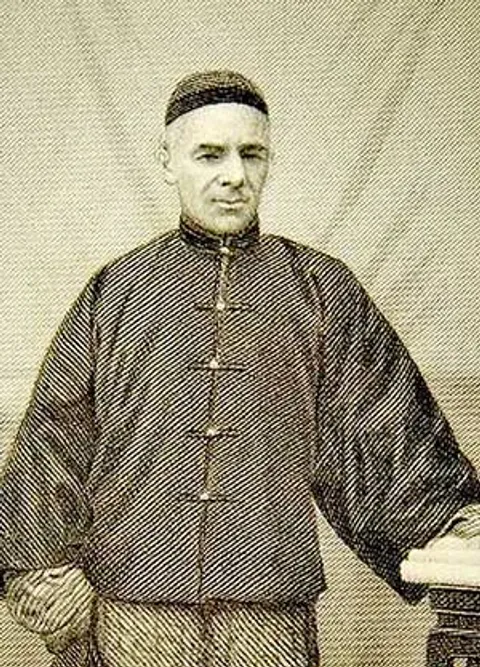 William Chalmers Burns was born in the Manse of Dun, in Angus, on April Ist, 1815. He was the third son of the Parish Church minister there. After leaving school, he went to Edinburgh to be apprenticed with an uncle to the legal profession. His eldest sister, a gay young lady, was converted to God, and became a bright witness for the Lord Jesus in 1831, and it was by means of her decided testimony that William was first awakened to a sense of his need of salvation, and led to put his trust in the Son of God, as his Redeemer and Saviour.
It was shortly after his conversion that he walked into the manse of Kilsyth, where the family then resided, having walked on foot the thirty-six miles from Edinburgh, to tell his mother and his sisters the glad news of his conversion, and to say that his desire now was to relinquish his study of law, and devote himself entirely to the preaching of the Gospel of God’s grace to his fellowmen.
And this he did heartily and with all his might, first in the neglected Parts of Scotland, and latterly among many heathen millions of the great Chinese Empire, then scarcely touched by the feet of God’s messengers of peace.
Mr. Burns’s name came into prominence in connection with a wonderful work of grace in Dundee, while he was preaching for Robert Murray M’Cheyne, then on a visit to Palestine, for the evangelization of the Jews. During Mr. Burns’s preaching in Dundee, a remarkable awakening took place; thousands were aroused to their condition in the sight of God, truly converted, and set on the heavenward way.
Remarkable scenes were witnessed in the old church of St. Peter’s, near to which M’Cheyne’s body now lies, awaiting the first resurrection. It was on the evening of a Lord’s Day in Kilsyth, after preaching to a crowded congregation, that Mr. Burns felt constrained to intimate to the people that he would preach to the people in the open air, before returning to Dundee the following day.
Deeply burdened with the souls of the people, he went into the village and invited the people, who thronged into the old church, until every seat and passage was filled. And the Lord helped His servant to preach straight to the people with great power, with the result that the whole congregation became melted under the message, many weeping aloud and crying to God for mercy. A glorious work of conversion followed.
Meetings for prayer and preaching of the Gospel continued in the churchyard, the market-place and elsewhere for weeks, while Mr. Burns returned to Dundee to resume his ministry. The work progressed in Dundee with increased interest, until the return of Mr. M’Cheyne, who greatly rejoiced in all that the Lord had done during his absence, through the ministry of His servant.
There was no jealousy, but the deepest gratitude, and these two true ministers of Christ rejoiced together over the Lord’s doings, which were indeed marvellous in their eyes.
From that time onward, until the Lord’s call came to go to China, Mr. Burns gave himself almost wholly to itinerant Gospel preaching, through Perthshire, up as far north as Aberdeen, preaching in barns, on market-places, and wherever the people could be gathered together to hear the Word. His message was plain, and to the point; thousands were awakened and many saved. But the adversary opposed. Time and again Mr. Burns was stoned, and bore the marks of these brands of the enemy for many days.
Believing it to be the call of the Lord, he went forth to China as the first missionary of the Presbyterian Church of England, in June, 1847. When questioned by those interested in his out-going, how long it would take him to prepare for the voyage, he replied with all simplicity, “I will be ready to go to-morrow.”
On a brief visit to his home, to take farewell of his sister, he silently wrung her hand, took a last glance around their old home, and with a small bag in his hand and his mother’s plaid across his arm, went forth, in the Name of the Lord with the Gospel to China’s benighted people, of whom it was said “a million a month” were dying without having once heard the Gospel.
For years this solitary witness toiled alone, at times with a few helpers, in the great heathen land, amid overwhelming hindrances, but his faith in God never faltered. On and on he went, sowing the seed which others would reap, until he reached the borders of the great kingdom of Manchuria, where, in a small, comfortless room in Nieu-chang, wearied and worn in labours abundant, he fell asleep on April 4th, 1868, his last audible words being, “For Thine is the Kingdom and the Power and the Glory.”
It is of this great land that the story of grace related in the following pages is told, and those who saw and shared in its joyful results, say that it was no doubt part of the result of William Burns’s sowing, in his earlier years in China.
William Chalmers Burns was born in the Manse of Dun, in Angus, on April Ist, 1815. He was the third son of the Parish Church minister there. After leaving school, he went to Edinburgh to be apprenticed with an uncle to the legal profession. His eldest sister, a gay young lady, was converted to God, and became a bright witness for the Lord Jesus in 1831, and it was by means of her decided testimony that William was first awakened to a sense of his need of salvation, and led to put his trust in the Son of God, as his Redeemer and Saviour.
It was shortly after his conversion that he walked into the manse of Kilsyth, where the family then resided, having walked on foot the thirty-six miles from Edinburgh, to tell his mother and his sisters the glad news of his conversion, and to say that his desire now was to relinquish his study of law, and devote himself entirely to the preaching of the Gospel of God’s grace to his fellowmen.
And this he did heartily and with all his might, first in the neglected Parts of Scotland, and latterly among many heathen millions of the great Chinese Empire, then scarcely touched by the feet of God’s messengers of peace.
Mr. Burns’s name came into prominence in connection with a wonderful work of grace in Dundee, while he was preaching for Robert Murray M’Cheyne, then on a visit to Palestine, for the evangelization of the Jews. During Mr. Burns’s preaching in Dundee, a remarkable awakening took place; thousands were aroused to their condition in the sight of God, truly converted, and set on the heavenward way.
Remarkable scenes were witnessed in the old church of St. Peter’s, near to which M’Cheyne’s body now lies, awaiting the first resurrection. It was on the evening of a Lord’s Day in Kilsyth, after preaching to a crowded congregation, that Mr. Burns felt constrained to intimate to the people that he would preach to the people in the open air, before returning to Dundee the following day.
Deeply burdened with the souls of the people, he went into the village and invited the people, who thronged into the old church, until every seat and passage was filled. And the Lord helped His servant to preach straight to the people with great power, with the result that the whole congregation became melted under the message, many weeping aloud and crying to God for mercy. A glorious work of conversion followed.
Meetings for prayer and preaching of the Gospel continued in the churchyard, the market-place and elsewhere for weeks, while Mr. Burns returned to Dundee to resume his ministry. The work progressed in Dundee with increased interest, until the return of Mr. M’Cheyne, who greatly rejoiced in all that the Lord had done during his absence, through the ministry of His servant.
There was no jealousy, but the deepest gratitude, and these two true ministers of Christ rejoiced together over the Lord’s doings, which were indeed marvellous in their eyes.
From that time onward, until the Lord’s call came to go to China, Mr. Burns gave himself almost wholly to itinerant Gospel preaching, through Perthshire, up as far north as Aberdeen, preaching in barns, on market-places, and wherever the people could be gathered together to hear the Word. His message was plain, and to the point; thousands were awakened and many saved. But the adversary opposed. Time and again Mr. Burns was stoned, and bore the marks of these brands of the enemy for many days.
Believing it to be the call of the Lord, he went forth to China as the first missionary of the Presbyterian Church of England, in June, 1847. When questioned by those interested in his out-going, how long it would take him to prepare for the voyage, he replied with all simplicity, “I will be ready to go to-morrow.”
On a brief visit to his home, to take farewell of his sister, he silently wrung her hand, took a last glance around their old home, and with a small bag in his hand and his mother’s plaid across his arm, went forth, in the Name of the Lord with the Gospel to China’s benighted people, of whom it was said “a million a month” were dying without having once heard the Gospel.
For years this solitary witness toiled alone, at times with a few helpers, in the great heathen land, amid overwhelming hindrances, but his faith in God never faltered. On and on he went, sowing the seed which others would reap, until he reached the borders of the great kingdom of Manchuria, where, in a small, comfortless room in Nieu-chang, wearied and worn in labours abundant, he fell asleep on April 4th, 1868, his last audible words being, “For Thine is the Kingdom and the Power and the Glory.”
It is of this great land that the story of grace related in the following pages is told, and those who saw and shared in its joyful results, say that it was no doubt part of the result of William Burns’s sowing, in his earlier years in China.
Where Does God Want Me to Work
How do I find God’s will for my life? It’s always a pressing question on the college campus, and especially in our day of unprecedented options. Like never before, in an anomaly in world history, students loosened from their community of origin, “going off” to college, now make decisions about their future with minimal influence or limitation from their adolescent context. “God wants to take you by the heart, not twist you by the arm.” Before asking, “Where is God calling me?” we would do well to first ponder, “Where has God already called me?” — not that your current callings won’t change or take a fresh direction in this formative season of life, but for a Christian, our objective calling from God always precedes our consciousness of it. If it is from him, he initiates. He makes the first move. This is true of our calling to salvation, and also true of any “vocational” assignment he gives us in the world. Consider Three Factors For the college student or young adult who may feel like a free agent — considering options and determining for yourself (and often by yourself) which direction to take — it’s important to acknowledge you are already moving in a direction, not standing still. You already have divine callings — as a Christian, as a church member, as a son or daughter, as a brother or sister, as a friend. And from within the matrix of those ongoing, already-active callings, you now seek God’s guidance for where to go from here. Given, then, that you are already embedded in a context, with concrete callings, how should you go about discerning God’s direction after graduation? Or how do you find God’s will for your work-life? Christians will want to keep three important factors in view. 1. What Kind of Work Do I Desire? First, we recognize, contrary to the suspicions that may linger in our unbelief, God is the happy God (1 Timothy 1:11), not a cosmic killjoy. In his Son, by his Spirit, he wants to shape and form our hearts to desire the work to which he’s calling us and, in some good sense, in this fallen world, actually enjoy the work. Sanctified, Spirit-given desire is not a liability, but an asset, to finding God’s will. The New Testament is clear that God means for pastors to aspire to the work of the pastoral ministry. And we can assume, as a starting point, that God wants the same for his children working outside the church. “Desire is a vital factor to consider, but in and of itself this doesn’t amount to a calling.” In 1 Peter 5:2, we find this remarkably good news about how God’s heart for our good and enduring joy stands behind his leading us vocationally. The text is about the pastoral calling, but we can see in it the God who calls us into any carefully appointed station. God wants pastors who labor “not under compulsion, but willingly, as God would have you.” How remarkable is it that working from aspiration and delight, not obligation and duty, would be “as God would have you.” This is the kind of God we have — the desiring (not dutiful) God, who wants workers who are desiring (not dutiful) workers. He wants his people, like their pastors, to do their work “with joy and not with groaning, for that would be of no advantage” to those whom they serve (Hebrews 13:17). So also, when the apostle Paul addresses the qualifications of pastors, he first mentions aspiration. “The saying is trustworthy: If anyone aspires to the office of overseer, he desires a noble task” (1 Timothy 3:1). God wants workers who want to do the work, not workers who do it simply out of a sense of duty. Behold your God, whose pattern is to take you by the heart, not twist you by the arm. Desire, though, does not make a calling on its own. It’s a common mistake to presume that seeming God-given desire is, on its own, a “calling.” Aspiration is a vital factor to consider, but in and of itself this doesn’t amount to a calling. Two additional factors remain in the affirmation of others and the God-given opportunity. 2. Do Others Affirm This Direction? The second question to ask, then, after the subjective one of desire, is the more objective one of ability. Have I seen evidence, small as it may be at first, that I can meet the needs of others by working in this field? And, even more important than my own self-assessment, do others who love me, and seem to be honest with me, confirm this direction? Do they think I’d be a good fit for the kind of work I’m desiring? Here the subjective desires of our hearts meet the concrete, real-world, objective needs of others. Our vocational labors in this world, whether in Christian ministry or not, are not for existential release or our own private satisfaction, but for meeting the actual needs of others. “You may feel called, and others may affirm you, but you are not yet fully called until God opens a door.” Our desires have their part to play, but our true “calling” is not mainly shaped by our internal heart. It is shaped by the world outside of us. We so often hear “follow your heart” and “don’t settle for anything less than your dreams” in society, and even in the church. What’s most important, contrary to what the prevailing cultural word may be, is not bringing the desires of your heart to bear on the world, but letting the real-life needs of others shape your heart. In seeking God’s will for us vocationally, we look for where our developing aspirations match up with our developing abilities to meet the actual needs of others. Over time, we seek to cultivate a kind of dialogue (with ourselves and with others) between what we desire to do and what we find ourselves good at doing for the benefit of others. Delight in certain kinds of labor typically grows as others affirm our efforts, and we see them receiving genuine help. 3. What Doors Has God Opened? Finally, and perhaps the most overlooked and forgotten factor in the discussions on calling, is the actual God-given, real-world open door. You may feel called, and others may affirm your abilities, but you are not yet fully called until God opens a door. Here we glory in the truth of God’s providence, not just hypothetically but tangibly. The real world in which we live, and various options as they are presented to us, are not random or coincidental. God rules over all things — from him, through him, to him (Romans 11:36). And so as real-life options (job offers) are presented that fulfill an aspiration in us, and are confirmed by the company of others, we can take these as confirmation of God’s “calling.” Not that such a calling will never change. But for now, when your own personal sense of God’s leading, and good perspective and guidance from others, align with a real-world opportunity in the form of an actual job offer in front of you, you have a calling from God. “It is finally God, not man who provides the job offer.” And we can say this calling is from him because God himself, in his hand of providence, has done the decisive work. He started the process by planting in us righteous desires to help others; and he affirmed the direction through our lived-out abilities and the affirmation of friends. Now, he confirms that sense of calling by swinging open the right door at the right time. It is finally God, not man who provides the job offer. God not only makes overseers (Acts 20:28) and gives pastors (Ephesians 4:11–12) and sends out laborers into his global harvest (Matthew 9:37–38) and sends preachers (Romans 10:15) and sets wise managers over his household (Luke 12:42), but he makes dentists and plumbers. In his common kindness, he gives school teachers and entrepreneurs and social workers for the just and unjust. He sends executives and service workers. He gives you to the world in the service of others. Article by David Mathis