-480.webp)

Others like john g. lake: apostle to africa Features >>
John G. Lake, The Complete Collection Of His Life Teachings
-160.webp)
God's Generals (William Branham)

Elijah .. The Man Who Did Not Die
The Heroes Of Faith

God's Generals: A. A. Allen
-160.webp)
Abraham: One Nomad's Amazing Journey Of Faith

God’s Generals: John Alexander Dowie
The Spirit Of Prophecy Volume 2

A Joyful Pilgrimage
-160.webp)
The Life And Times Of Jesus Of Nazareth
A piece of the ladder to access the infinite power of the Holy Ghost. When we fall, we have to remember that we are not righteous because of what we did, but because Jesus became sin and we became His righteousness. Though a righteous man falls seven times, he is made to rise again. The total forgiveness of God is the key to whatever need the sons of men may have. Thank you.
- rene abiaziem (9 months ago)
About the Book
"John G. Lake: Apostle to Africa" is a biography that chronicles the life and ministry of John G. Lake, a prominent healing evangelist and missionary to Africa. The book explores Lake's spiritual journey, his miraculous healing ministry, and his impactful work in establishing churches and training pastors in Africa. Written by Gordon Lindsay, a close associate of Lake, this biography offers insights into Lake's powerful faith and his significant contributions to the spread of Christianity in Africa.
J.I. Packer
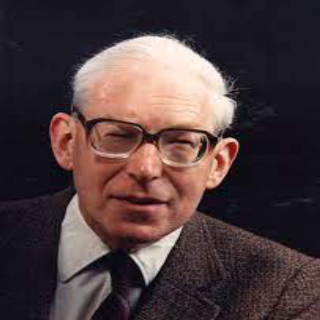
Mastery Clothed in Humility: The Extraordinary Life of John Ryland
John Ryland (1753–1825) published his first book at age 12 — an accomplishment not nearly as impressive as the fact that he had learned to read Hebrew by age 4, had translated the entire Greek New Testament at 8, and was proficient in Latin and French by 11. By any account, his life was astonishingly productive. Ryland pastored two of the most prominent Baptist churches in England, served as a college president and professor, mobilized Dissenting Christians to the cause of abolition with MP William Wilberforce (1759–1833), and founded two missions societies (the Baptist Missionary Society and the interdenominational London Missionary Society) — all before his fortieth birthday. Between his missions advocacy, his passion for theological training, his love for the exposition of Scripture, his zeal for church planting and strengthening, and the invitations from students he shaped at Bristol Academy, Ryland preached no fewer than 8,691 sermons in 286 different locations. Perhaps of greatest consequence, long after his death, Ryland’s family spoke of his unimpeachable integrity and his tender and attentive presence as a husband and father. Yet despite his industrious and tireless efforts, Ryland never ascended to the star status of others in his orbit — George Whitefield (1714–1770), John Wesley (1703–1791) and his brother Charles (1707–1788), Andrew Fuller (1754–1815), or William Carey (1761–1834). In all likelihood, you’ve never heard of him. Ryland, most likely, would have had it so. Auspicious Beginnings It didn’t start out that way, however. Intellectually gifted and curious by nature, Ryland was decidedly on the path to celebrity from his youth. His father, J.C. (1723–1792), an eccentric but personable man, made use of his wide network of prominent friends to fan his son’s talents to public flame. As a child, Ryland’s home was host to Whitefield, John Wesley, inimitable theologian John Gill (1697–1771), and all manner of prominent pastors and thinkers. The elder Ryland, himself an author of seventeen books and numerous articles, was eager to see John ascend to a status and usefulness he himself was never quite able to achieve. So, in 1767, J.C.’s ambition to get his preteen son’s work into print came to fruition. The book, a collection of poems, was the first of five volumes to be published over as many years. The poetry itself is lackluster, but Ryland’s remarkable intellect and profound grasp of the Scriptures shine through. Given John’s talents and formation, though, perhaps it is no surprise that an inordinate pride lurked not far from the surface as well. Spared by Amazing Grace Mercifully, Ryland was spared cataclysm through the kindness of a forthright friend nearly thirty years his senior — a former slave-ship captain turned Anglican pastor named John Newton (1725–1807). Many years before, the young sailor’s detestable ways and arrogant mockery of Christianity had been dramatically upended. Left behind by his ship and crew in West Africa, Newton was himself enslaved and spent three years in bondage, sickness, and poverty. As Newton later recounted, this profound humiliation ultimately delivered him from his arrogance and softened the ground for his conversion. “In all likelihood, you’ve never heard of John Ryland. He, most likely, would have had it so.” Perhaps it was the stark deliverance from a life of high-handed sin that forged Newton’s deep suspicion of pride. Perhaps it was the rescue from slavery or deliverance from near-shipwreck on the open sea. Whatever the cause, Newton was seized by the profound grace of redemption in Christ and struck by the humility that permeated Jesus’s mission and ministry. He marveled over the profound self-humbling of Jesus — that the One worthy of all glory “came not to be served but to serve, and to give his life as a ransom for many” (Mark 10:45). On account of this, humility became the predominate characteristic of his life, and Newton sought every opportunity to cultivate it in the life of fellow Christians. “Above all things,” Newton wrote, “we should pray for humility. It may be called both the guard of all other graces, and the soil in which they grow” (The Works of John Newton, 694). Humility and love, he argued, “are the highest attainments in the school of Christ, and the brightest evidences that he is indeed our Master” (62). Gracious Rebuke In April of 1771, Newton grew concerned about Ryland after several of the teenager’s essays were published in The Gospel Magazine, along with a glowing commendation from the magazine’s editors. Newton wrote that, contrary to appearance, the editors had harmed John by fueling the temptation of pride. “I love you as well and wish you success,” Newton wrote, “but durst not have addressed you in their words, if I had thought ever so highly of your [work].” “As a real friend,” he continued, “I shall mix my approbation with a gentle censure of some things that I wish had been otherwise.” Newton assured his young friend that, with humility, he would have “considerable usefulness” for gospel ministry, and he took direct aim at what threatened to wreck it before it began. You say, “I have aimed to displease the Arminians.” I had rather you had aimed to be useful to them, than to displease them. There are many Arminians who are so only for want of clearer light. . . . Now, these should not be displeased by our endeavoring to declare truth in the terms most offensive to them which we can find, but rather we should seek out the softest and most winning way of encountering their prejudices. . . . You will perhaps say, “An humble Arminian! Surely that is impossible.” I believe that it is not more impossible to find a humble Arminian than a proud and self-sufficient Calvinist. The doctrines of grace are humbling, that is in their power and experience, but a man may hold them all in notion, and be very proud. He certainly is so, if he thinks his assenting to them is a proof to his humility and despises others as proud and ignorant in comparison with himself. (John Newton’s Letters to John Ryland, 15) “Extraordinarily gifted people often collapse under the weight of unchecked hubris. Pride is the fault in our stars.” Two centuries before someone aptly coined the term “cage-stage Calvinist,” such men existed in the world — and young Ryland was one. Newton identifies the unique species of pride that too frequently blinds heirs of the Reformed faith. The gracious nature of God’s unshakable call in election, the irresistible reality of Spirit-transformed affections, the efficacy of Christ’s atoning work to justify all whom he calls, the constancy of God’s preserving grace in the life of faith, should result in profound humility. Yet, as Newton saw in Ryland, sometimes those who see truth most clearly are the most susceptible to blinding pride. Freed from Celebrity Selfish ambition has a way of disordering that which ought to make us humble (James 3:16). But seeing all that we have and all that we are in Christ frees us from clamoring for significance in the eyes of others. When we see the joy to be found in magnifying Christ, we can say with the apostle, “I must decrease” (John 3:30). “I hope your soul prospers,” Newton wrote Ryland, “that is, I hope you are less and less in your own eyes and that your heart is more and more impressed with a sense of the glory and grace of our Lord. . . . Your comfort and success eminently depend upon your being humble, and if the Lord loves you and has sent you, he will find ways and means to humble you” (Letters, 16). Newton’s letter — gracious, yet direct — had profound impact. Renewed in his identity in Christ, Ryland was freed from the need for celebrity. He immediately softened the tone of his essays and sent them for reprinting. It would be the last thing he published for eight years — despite the fact that his pastoral ministry during this period was substantial (he preached 217 times in 1776 alone). Ryland was so concerned that his youthful arrogance not be imitated by others that, near the end of his life, he even asked his family to destroy anything he had written (but held back from publication) before the age of 30. Even when he returned to print in 1780, it was a single sermon issued at the request of fellow pastors in his region addressing — fittingly — God’s gracious purposes in overcoming human pride. Clothed with Humility Apart from his conversion, Ryland’s early lesson in humility was the most significant turning point in his life. Writing to his dear friend and fellow minister, John Sutcliff, Ryland confessed, “You complain of self and pride; I join you in the complaint.” He had learned by experience what he youthfully penned in one of his earlier essays: T’ exalt the great Creator, and abase the haughtiness of man’s polluted race. His gentle and humble ministry would become a striking contrast to the outspoken and unrestrained character of his father’s (and many others of his era). Robert Hall, Ryland’s successor at Broadmead Baptist Church, noted that Ryland’s “disposition to conceal his attainments was nearly as strong as that of some men to display them.” “His mental opulence,” Hall continued, “was much greater than his modesty would permit him to reveal” (Works of Robert Hall, 5:404). Despite Ryland’s impressive administrative, prophetic, literary, and theological mastery, “his religion appeared in its fruits; in gentleness, humility, and benevolence; in a steady, conscientious performance of every duty; and a careful abstinence from every appearance of evil.” Humility was “the most remarkable feature of his character,” Hall wrote, “and he might most truly be said, in the language of Scripture, to be clothed with it” (Works of Robert Hall, 5:392). State of Christian Celebrity History is replete with the stories of gifted men and women whose meteoric ascent to celebrity was followed by an equally dramatic humiliation. In nearly every instance, extraordinarily gifted people collapse under the weight of their own unchecked hubris. Pride is the fault in our stars. “Celebrity is ordinary — anybody can be famous. A lifetime of humble faithfulness is truly extraordinary.” As much as we might hope it weren’t the case, this is just as true in Reformed evangelicalism. One need not look far to see many of our stars’ long fall back to earth. The history of American evangelicalism and the powerful influence of popular culture have cultivated a troubling comfort with Christian celebrity. Additionally, contemporary theological education (and much discipleship) tends to emphasize knowledge acquisition over character formation. Thus, it should not be surprising that we tend to cultivate leaders with big heads and hollow chests. That’s why Ryland’s story is so timely. Newton’s gentle correction helped Ryland check selfish ambition and cultivate gospel-centered humility. Ryland experienced the freedom of not needing to be known — a freedom that fueled a remarkably productive and faithful life. There is nothing essentially wrong with celebrity. Perhaps, in some cases, it may be unavoidable. But celebrity is ordinary — anybody can be famous. A lifetime of humble faithfulness, like the life of John Ryland, is truly extraordinary. Article by Ryan Griffith