-480.webp)

Others like john g. lake: apostle to africa Features >>
John G. Lake, The Complete Collection Of His Life Teachings
-160.webp)
God's Generals (William Branham)
Elijah .. The Man Who Did Not Die
The Heroes Of Faith

God's Generals: A. A. Allen
-160.webp)
Abraham: One Nomad's Amazing Journey Of Faith

God’s Generals: John Alexander Dowie

The Spirit Of Prophecy Volume 2

A Joyful Pilgrimage
-160.webp)
The Life And Times Of Jesus Of Nazareth
A piece of the ladder to access the infinite power of the Holy Ghost. When we fall, we have to remember that we are not righteous because of what we did, but because Jesus became sin and we became His righteousness. Though a righteous man falls seven times, he is made to rise again. The total forgiveness of God is the key to whatever need the sons of men may have. Thank you.
- rene abiaziem (9 months ago)
About the Book
"John G. Lake: Apostle to Africa" is a biography that chronicles the life and ministry of John G. Lake, a prominent healing evangelist and missionary to Africa. The book explores Lake's spiritual journey, his miraculous healing ministry, and his impactful work in establishing churches and training pastors in Africa. Written by Gordon Lindsay, a close associate of Lake, this biography offers insights into Lake's powerful faith and his significant contributions to the spread of Christianity in Africa.
Jim Elliot
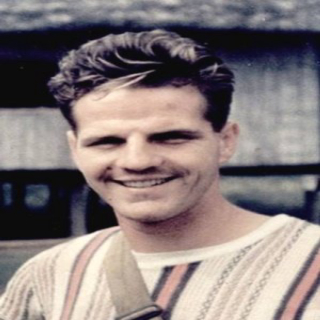 EARLY LIFE
Jim Elliot began his life in Portland, Oregon in the USA. His mother, Clara, was a chiropractor and his father, Fred, was a minister. They married and settled in Seattle, WA where they welcomed their first son, Robert in 1921.
Later they relocated the family to Portland where Herbert arrived in 1924, Jim in 1927, and Jane in 1932.
Jim knew Christ from an early age and was never afraid to speak about Him to his friends. At age six Jim told his mother, “Now, mama, the Lord Jesus can come whenever He wants. He could take our whole family because I’m saved now, and Jane is too young to know Him yet.”
THE YEARS THAT CEMENTED HIS DESIRE TO SERVE THE LORD IN MISSIONS
Jim entered Benson Polytechnic High School in 1941. He carried a small Bible with him and, an excellent speaker; he was often found speaking out for Christ. He and his friends were not afraid to step out and find adventure. One thing Jim didn’t have time for in those early years were girls. He was once quoted as telling a friend, “Domesticated males aren’t much use for adventure.”
In 1945 Jim traveled to Wheaton, IL to attend Wheaton College. His main goal while there was to devote himself to God. He recognized the importance of discipline in pursuing this goal. He would start each morning with prayer and Bible study. In his journal he wrote, “None of it gets to be ‘old stuff’ for it is Christ in print, the Living Word. We wouldn’t think of rising in the morning without a face-wash, but we often neglect the purgative cleansing of the Word of the Lord. It wakes us up to our responsibility.”
Jim’s desire to serve God by taking His gospel to unreached people of the world began to grow while at Wheaton. The summer of 1947 found him in Mexico and that time influenced his decision to minister in Central America after he finished college.
Jim met Elisabeth Howard during his third year at Wheaton. He did ask her for a date which she accepted and then later cancelled. They spent the next years as friends and after she finished at Wheaton they continued to correspond. As they came to know each other there was an attraction, but Jim felt he needed to unencumbered by worldly concerns in order to devote himself completely to God.
In addition to his hope to one day travel to a foreign country to share Christ with the unchurched of the world, he also felt the need to share with people in the United States. On Sundays while at Wheaton he would often ride the train into Chicago and talk to people in the train station about Christ. He often felt ineffective in his work as the times of knowingly leading people to Christ were few. He once wrote, “No fruit yet. Why is that I’m so unproductive? I cannot recall leading more than one or two into the kingdom. Surely this is not the manifestation of the power of the Resurrection. I feel as Rachel, ‘Give me children, or else I die.’”
After college with no clear answer as to working for the Lord in a foreign country, Jim returned home to Portland. He continued his disciplined Bible study as well as correspondence with Elisabeth Howard whom he called Betty.
They both felt a strong attraction to each other during this time, but also felt that the Lord may have been calling them to be unmarried as they served Him.
In June of 1950 he travelled to Oklahoma to attend the Summer Institute of Linguistics. There he learned how to study unwritten languages. He was able to work with a missionary to the Quichuas of the Ecuadorian jungle. Because of these lessons he began to pray for guidance about going to Ecuador and later felt compelled to answer the call there.
Elisabeth Elliot wrote in Shadow of the Almighty:
“The breadth of Jim’s vision is suggested in this entry from the journal:
August 9. “God just now gave me faith to ask for another young man to go, perhaps not this fall, but soon, to join the ranks in the lowlands of eastern Ecuador. There we must learn: 1) Spanish and Quichua, 2) each other, 3) the jungle and independence, and 4) God and God’s way of approach to the highland Quichua. From thence, by His great hand, we must move to the Ecuadorian highlands with several young Indians each, and begin work among the 800,000 highlanders. If God tarries, the natives must be taught to spread southward with the message of the reigning Christ, establishing New Testament groups as they go. Thence the Word must go south into Peru and Bolivia. The Quichuas must be reached for God! Enough for policy. Now for prayer and practice.
THE ECUADOR YEARS
In February 1952 Jim finally left America to travel to Ecuador with Pete Fleming. In May Elisabeth moved to Quito and though they didn’t feel the need to get engaged she and Jim did begin a courtship.
In August Jim left Elisabeth in Quito and travelled with Pete to Shell Mera. At the Mission Aviation Fellowship headquarters in Shell Mera, Jim and Pete learned more about the Acua Indians, a people group that was largely unreached and very savage.
Leaving Shell Mera, Pete and Jim moved on to Shandia where Jim was captivated by the Quichua. He felt very strongly that this was exactly where God intended for him to work to spread the Gospel.
While Jim was in Shandia, Elisabeth was working to learn more about the Colorado Indians near Santa Domingo. In January of 1953 he went to Quito and she met him there and they were finally engaged. They married in October of that year and their only child Valerie was born in 1955.
They settled in Shandia and continued their work with the Quichua Indians. It was Jim’s desire to be able to reach the Waodoni tribe that lived deep in the jungles and had little contact with the outside world. A Waodoni woman who had left the tribe was taken in by the missionaries and helped them to learn the language.
Jim, along with Pete, Ed McCully, Roger Youderian, and their pilot Nate Saint began to search by plane in hopes of finding a way to contact the Waodoni. The found a sandbar in the middle of the Curaray River that worked as a landing strip for the plane and it was there that they first made contact with the Waodoni. They were elated to be able to finally be able to attempt to share the love of Christ with this people group.
After their first meeting, one of the tribe, a man they called George lied to the tribe about the men’s intentions. This lie led the Waodoni warriors to plan an attack for when the missionaries returned. The men did return on January 8, 1956 and were surprised by ten members of the tribe who massacred the missionaries.
Jim’s short life that was filled with the desire to share God’s love can be summed up by a quote that is attributed to him. “He is no fool who gives that which he cannot keep, to gain what he cannot lose.”
EARLY LIFE
Jim Elliot began his life in Portland, Oregon in the USA. His mother, Clara, was a chiropractor and his father, Fred, was a minister. They married and settled in Seattle, WA where they welcomed their first son, Robert in 1921.
Later they relocated the family to Portland where Herbert arrived in 1924, Jim in 1927, and Jane in 1932.
Jim knew Christ from an early age and was never afraid to speak about Him to his friends. At age six Jim told his mother, “Now, mama, the Lord Jesus can come whenever He wants. He could take our whole family because I’m saved now, and Jane is too young to know Him yet.”
THE YEARS THAT CEMENTED HIS DESIRE TO SERVE THE LORD IN MISSIONS
Jim entered Benson Polytechnic High School in 1941. He carried a small Bible with him and, an excellent speaker; he was often found speaking out for Christ. He and his friends were not afraid to step out and find adventure. One thing Jim didn’t have time for in those early years were girls. He was once quoted as telling a friend, “Domesticated males aren’t much use for adventure.”
In 1945 Jim traveled to Wheaton, IL to attend Wheaton College. His main goal while there was to devote himself to God. He recognized the importance of discipline in pursuing this goal. He would start each morning with prayer and Bible study. In his journal he wrote, “None of it gets to be ‘old stuff’ for it is Christ in print, the Living Word. We wouldn’t think of rising in the morning without a face-wash, but we often neglect the purgative cleansing of the Word of the Lord. It wakes us up to our responsibility.”
Jim’s desire to serve God by taking His gospel to unreached people of the world began to grow while at Wheaton. The summer of 1947 found him in Mexico and that time influenced his decision to minister in Central America after he finished college.
Jim met Elisabeth Howard during his third year at Wheaton. He did ask her for a date which she accepted and then later cancelled. They spent the next years as friends and after she finished at Wheaton they continued to correspond. As they came to know each other there was an attraction, but Jim felt he needed to unencumbered by worldly concerns in order to devote himself completely to God.
In addition to his hope to one day travel to a foreign country to share Christ with the unchurched of the world, he also felt the need to share with people in the United States. On Sundays while at Wheaton he would often ride the train into Chicago and talk to people in the train station about Christ. He often felt ineffective in his work as the times of knowingly leading people to Christ were few. He once wrote, “No fruit yet. Why is that I’m so unproductive? I cannot recall leading more than one or two into the kingdom. Surely this is not the manifestation of the power of the Resurrection. I feel as Rachel, ‘Give me children, or else I die.’”
After college with no clear answer as to working for the Lord in a foreign country, Jim returned home to Portland. He continued his disciplined Bible study as well as correspondence with Elisabeth Howard whom he called Betty.
They both felt a strong attraction to each other during this time, but also felt that the Lord may have been calling them to be unmarried as they served Him.
In June of 1950 he travelled to Oklahoma to attend the Summer Institute of Linguistics. There he learned how to study unwritten languages. He was able to work with a missionary to the Quichuas of the Ecuadorian jungle. Because of these lessons he began to pray for guidance about going to Ecuador and later felt compelled to answer the call there.
Elisabeth Elliot wrote in Shadow of the Almighty:
“The breadth of Jim’s vision is suggested in this entry from the journal:
August 9. “God just now gave me faith to ask for another young man to go, perhaps not this fall, but soon, to join the ranks in the lowlands of eastern Ecuador. There we must learn: 1) Spanish and Quichua, 2) each other, 3) the jungle and independence, and 4) God and God’s way of approach to the highland Quichua. From thence, by His great hand, we must move to the Ecuadorian highlands with several young Indians each, and begin work among the 800,000 highlanders. If God tarries, the natives must be taught to spread southward with the message of the reigning Christ, establishing New Testament groups as they go. Thence the Word must go south into Peru and Bolivia. The Quichuas must be reached for God! Enough for policy. Now for prayer and practice.
THE ECUADOR YEARS
In February 1952 Jim finally left America to travel to Ecuador with Pete Fleming. In May Elisabeth moved to Quito and though they didn’t feel the need to get engaged she and Jim did begin a courtship.
In August Jim left Elisabeth in Quito and travelled with Pete to Shell Mera. At the Mission Aviation Fellowship headquarters in Shell Mera, Jim and Pete learned more about the Acua Indians, a people group that was largely unreached and very savage.
Leaving Shell Mera, Pete and Jim moved on to Shandia where Jim was captivated by the Quichua. He felt very strongly that this was exactly where God intended for him to work to spread the Gospel.
While Jim was in Shandia, Elisabeth was working to learn more about the Colorado Indians near Santa Domingo. In January of 1953 he went to Quito and she met him there and they were finally engaged. They married in October of that year and their only child Valerie was born in 1955.
They settled in Shandia and continued their work with the Quichua Indians. It was Jim’s desire to be able to reach the Waodoni tribe that lived deep in the jungles and had little contact with the outside world. A Waodoni woman who had left the tribe was taken in by the missionaries and helped them to learn the language.
Jim, along with Pete, Ed McCully, Roger Youderian, and their pilot Nate Saint began to search by plane in hopes of finding a way to contact the Waodoni. The found a sandbar in the middle of the Curaray River that worked as a landing strip for the plane and it was there that they first made contact with the Waodoni. They were elated to be able to finally be able to attempt to share the love of Christ with this people group.
After their first meeting, one of the tribe, a man they called George lied to the tribe about the men’s intentions. This lie led the Waodoni warriors to plan an attack for when the missionaries returned. The men did return on January 8, 1956 and were surprised by ten members of the tribe who massacred the missionaries.
Jim’s short life that was filled with the desire to share God’s love can be summed up by a quote that is attributed to him. “He is no fool who gives that which he cannot keep, to gain what he cannot lose.”
"Do You Ever Think About Heaven"
Do you ever think about Heaven? The beauty, and how it will be to live in eternity with Jesus? No one knows all about Heaven. And I believe even if we were to see it in person it would be like attempting to define God; overwhelmingly magnificent in so many ways that it would be beyond description. However, some fascinating information about Heaven is in the Bible. So, with the Holy Spirit's prompting, I began to search the scriptures. What I found was a captivating spiritual glimpse of Heaven that I would like to share with you. Mansions I genuinely believe God has provided a home for us in Heaven “In my Father's house are many mansions: if it were not so, I would have told you. I go to prepare a place for you,” (John 14:2). There were "many mansions" in Heaven when Jesus made this statement, and He promised to create more. I believe there will be a place prepared for every child of God. Giving up this body will be painful only so far as it pertains to our earthly life, and even that is not as fearful as is typically portrayed, at least not for Christians. The answer is to have absolute belief in God. Having full confidence in His Word brings freedom, and a new dimension to life, and allows us to look forward to whatever He has for us on this earth and for the rest of eternity. The Beauty of Heaven The earth is beautiful with flowers of every color, and symmetry beyond imagination; beautiful fishes in the sea, and the mountains, valleys, rivers, a fantastic variety of animals, birds, seasons of the year, and yes, people, and they are all beautiful. Sunrises and sunsets, so many things we take for granted. But the beauty of the earth cannot compare with the magnificence of Heaven. When we think of Heaven, gates of pearl often come to mind. Pearls can consist of every color. The streets in Heaven are gold, and there is a crystal river flowing from the Throne of God. Biblical descriptions and experiences of those who have visited or received visions of Heaven report a scene of unimaginable beauty. Colors conveying incredible spiritual sensations, and music of another dimension. Heaven will not be a strange experience, but more natural than life on earth; because our citizenship is in Heaven. This earth is not our home. Our home is in Heaven with our Father and our brothers and sisters, with whom we will spend eternity. "For our citizenship is in heaven, from which we also eagerly wait for the Savior, the Lord Jesus Christ," (Phil 3:20. NKJV). The Father and Son will be there, and our family members and friends who have passed on. There will be Bible people and prophets and Apostles of the Old and New Testament, angels, and other heavenly beings gathered around the Throne of God, (another beauty beyond description). How Will it be to Live in Heaven? I see death as a door we pass through and on the other side a beautiful new way of life beyond comprehension. I believe when we begin to experience the glory of God, we will surely say, "O death, where is thy sting? O grave, where is thy victory?" (1 Cor 15:55). I believe we will have a real lifestyle in Heaven, a home, and that we will know one another: "For now we see in a mirror, dimly, but then face to face. Now I know in part, but then I shall know just as I also am known," (1 Cor 13:12, NKJV). There will be no sickness, heartache, pain, or tears because: "He will wipe away every tear from their eyes, and death shall be no more, neither shall there be mourning, nor crying, nor pain anymore, for the former things have passed away,” (Rev 21:4). Although no one can say with certainty how we will spend our time or what our responsibilities will be, we know that both Jesus and God work, so I believe we will have exciting work: But Jesus answered them, “My Father has been working until now, and I have been working,” (John 5:17). I am sure we will not be sitting on clouds with our feet dangling. I believe we will be busy, and that we will worship God alongside the angels. "And all the angels were standing around the throne and the elders and the four living creatures, and they fell on their faces before the throne and worshiped God," (Rev 7:11-12). There are many things the Bible does not tell us about Heaven. But I am convinced that our lifestyle will be like the other Gifts of God, far beyond anything we can ask or think, and that the parts we have not been told will be the best of all. New Heaven and New Earth "For here we have no lasting city, but we are seeking the city which is to come," (Heb13:14). At some point, there will be a new heaven and a new earth. We will have much to do, and I believe it will be enjoyable and that we will remain young and energetic forever. “In keeping with his promise we are looking forward to a new heaven and a new earth, where righteousness dwells,” (2 Pet 3:13). “The wolf will live with the lamb, the leopard will lie down with the goat, the calf and the lion and the yearling together; and a little child will lead them.” (Isa 11:6). The Apostle Paul's Heavenly Visit The Apostle Paul, speaking of himself in 2 Cor 12, said: "And I know such a man—whether in the body or out of the body I do not know, God knows— how he was caught up into Paradise and heard inexpressible words, which it is not lawful for a man to utter." "And lest I should be exalted above measure by the abundance of the revelations, a thorn in the flesh was given to me, a messenger of Satan to buffet me, lest I be exalted above measure," (2 Cor 12: 3-4, 7) Later, the Apostle Paul said that he was torn between leaving and staying; and that his only desire for remaining on earth was to tell others about the good news/Gospel, so they could also be with the Lord. "But I am hard-pressed between the two. I have the desire to leave [this world] and be with Christ, for that is far, far better; yet to remain in my body is more necessary and essential for your sake, (Phil 1: 23-24, AMP). Thoughts of Heaven should persuade those who hope for eternal life to follow God’s plan of salvation, and to do everything possible to bring their loved ones and others with them to a Heavenly Home prepared just for them. Jesus is With Us All the Way It is impossible to understand eternity. Even a thousand times ten thousand years will hardly be a mark in eternity. God considered it so valuable that He sent His only begotten Son to give His life so that anyone who was born-again would spend eternity with Him in Heaven. Like John Bunyan's "Pilgrim's Progress," the Christian journey to Heaven, except for the Holy Spirit, would be extremely challenging. However, we are not without the Holy Spirit, and Jesus promises to be with us all the way. “Teaching them to observe all things that I have commanded you; and lo, I am with you always, even to the end of the age.” Amen. (Matt 28:20). The sorrows, hardships, disappointments, and pain suffered on earth will be of little importance when we receive the first glimpse of our heavenly home. I often visualize my time of transition into Heaven as an experience so beautiful, fantastic and life-changing that it is difficult to think or concentrate on the troubles that plague humanity. I see my life as a journey, or time of preparation for a big event, the greatest adventure of my life. Although Jesus told us it would be a difficult journey, He also said we should continue and that someday we would hear these beautiful words: “Well done, good and faithful servant! You have been faithful with a few things; I will put you in charge of many things. Come and share your master's happiness!” (Matt 25:21, NLT). Samuel Mills