
Others like freedom of the will Features >>
The Authority Of The Bible And The Rise Of The Modern World
The Ministry Gifts
The Apostolic Ministry
The Crucified God
At The Origins Of Christian Worship
The Fundamentals - A Testimony To The Truth Volume 4

A Preface To Paradise Lost
Supremacy Of Christ In A Post Modern World
With Calvin In The Theatre Of God

Aspersions
About the Book
"Freedom of the Will" by Jonathan Edwards explores the concept of free will and argues that human beings do not have true freedom of choice as their actions are ultimately determined by their desires and beliefs. Edwards asserts that God's sovereignty and foreknowledge shape human decisions, leading to a belief in predestination. The book delves into complex theological ideas and challenges traditional notions of individual autonomy.
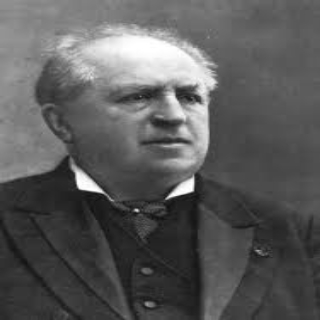
Charles Hodge
Scholar, educator, churchman, and distinguished American Presbyterian systematic theologian of the nineteenth century, Charles Hodge was born in Philadelphia in 1797. Following his father’s untimely death a few years after he was born, Charles and his brother were raised by their godly widowed mother. In 1812 Hodge’s mother moved the family to Princeton in hope of matriculating her sons at Princeton College.
Charles Hodge graduated from Princeton College in 1815. During the 1814-15 school year a revival broke out on the college campus: Charles was one of a number of students converted during this time of spiritual refreshing. At the encouragement of Archibald Alexander, he enrolled at Princeton Theological Seminary, graduating with the class of 1819.
Ordained in 1821, his scholarly gifts led to an appointment by his denomination in 1822 to serve as the seminary’s third faculty member. As Professor of Oriental and Biblical Literature, Hodge’s primary responsibility was instruction in biblical languages, hermeneutics, biblical criticism, and study of Old Testament texts. During 1826-28, he travelled to Europe to study with the leading European biblical and theological scholars. Hodge focused his studies on theology and biblical interpretation, with additional concentration in Semitic and cognate languages. His studies in Europe made him one of the leading Hebraists teaching in an American theological institution in the early nineteenth century. In the coming decade, Hodge would be assisted by the linguistic talent and philological expertise of Joseph Addison Alexander.
With Addison’s arrival, Hodge concentrated his labours on New Testament texts and studies, serving as Professor of Exegetical and Didactic Theology from 1840 to 1854. From 1854 until his death in 1878, he served as Professor of Exegetical, Didactic, and Polemic Theology.
During his half-century tenure at Princeton, Charles Hodge held several chairs, but is probably best remembered for the reputation he established as Professor of Systematic Theology. A stout Calvinist with a deep love for the Reformed confessions, his literary labours often involved a polemical thrust, as he sought to defend and expound the Reformed theology of the Protestant Reformation, and the teachings of the Westminster Confession and the Larger and Shorter Catechisms, as received and adopted by the Presbyterian Church in the United States of America.
A prolific author, Hodge served for many years as editor of the seminary journal, Biblical Repertory and Princeton Review. Under his editorship, it became the leading theological journal of the nineteenth century: Hodge’s personal contributions included articles on biblical studies, spirituality, church history and historical theology, ecclesiological issues, philosophy, politics, slavery, abolition and the Civil War. An active churchman, he was at the forefront of ecclesiastical debates and discussion. In addition to articles and essays, Hodge published commentaries on Romans, 1 and 2 Corinthians, and Ephesians. A major historical work in defence of old-school Presbyterian doctrine and practice, The Constitutional History of the Presbyterian Church in the United States of America, appeared in 1840. His popular work on piety, The Way of Life, was published in 1841. His three-volume magnum opus, Systematic Theology, was published in 1872-73, and confirmed him as the outstanding Calvinistic systematic theologian of the nineteenth century. Additional publications on the relationship between Christianity and science, and a collection of essays delivered at the Sabbath Afternoon Conferences (published by the Trust as Princeton Sermons), served to further confirm the breadth of his academic competency and the depth of his Christian piety.
[James M. Garretson in Princeton and the Work of the Christian Ministry, Volume 2 (Banner of Truth, 2012)]
date differently this year - four resolutions for better relationships
It takes extraordinary courage to change how you date. It’s not easy to reset boundaries, communicate better, flee sexual immorality, confess failures, and end the relationship that needs to end. But you will never regret making the right changes. There were moments through high school and college when I knew with crystal clarity that things needed to change, but the costs kept me from changing sooner. What will others think about me when I confess how I’ve failed? What if I fail again, and things never get better? What if the change I need means I’m single and alone again? Like a merciless lawyer, Satan piled up every conceivable reason not  to do what I knew I had to do — to make excuses, to put off decisions, to be almost honest  with friends and family, to stay in unhealthy relationships, to avoid Christ and indulge in sin. I have prayed that the four resolutions that follow might give some the courage to do what you’ve been afraid to do for weeks, for months, maybe even for years. To lay down your excuses. To take up your cross. To welcome what it will cost you today to pursue love in light of eternity. To date differently this year, in a way that says something stunning about your God. 1. Above all else, I will look for Jesus. “Welcome what it will cost you today to pursue love in light of eternity.” If you resolve to change nothing else about your patterns in relationships, resolve to make Jesus the most important thing in your dating. Raise Philippians 1:21 over your next relationship: “To me to live is Christ, and to die is gain.” If to live is Christ, then to date  is Christ. To marry is Christ. To remain single is Christ. He is our reason for living and working, growing and learning, dating and marrying. Above every other priority in dating, look for Jesus. It may sound simple and easy, but Satan wages an all-out war on our hearts and minds to keep us from single-minded devotion. Nothing could be harder. It is emotionally impossible to put Christ before our desires for intimacy and marriage — unless we have the Spirit of Christ. Unless it is no longer we who live and date, but Christ who lives in and through us (Galatians 2:20). Before you entrust your heart to someone else, resolve to love Jesus with all your heart. Before you let yourself daydream about potential futures with him or her, resolve to love Jesus with all your mind. Before you think about knitting your soul with another, resolve to love Jesus with all of your soul first. Before you risk, sacrifice, and work for love, resolve to love Jesus with all your strength. Resolve to love him more than love. And as you give your heart first and foremost to Christ, make sure your boyfriend (or girlfriend) has too — in the deepest places of who he is and what he wants. His faith is not a box to check along with lots of others; it should be the ink that shapes every other box. Whether you are currently in a relationship or might begin one this year, decide right now to date from a deeper, wider, higher love for the Lord. 2. I will grow where I have failed before. One reason we fail in the same ways year after year is that we fail to admit and address our failures. If you have a sexual past or a trail of mistakes behind you, you need to know there is nowhere safer to deal with your failures than in Christ. Someone may have led you to suspect that how you’ve dated has disqualified you from his love, but Christ came and died precisely for the things you’re most ashamed of. The apostle Paul says, The saying is trustworthy and deserving of full acceptance, that Christ Jesus came into the world to save sinners, of whom I am the foremost. But I received mercy for this reason, that in me, as the foremost, Jesus Christ might display his perfect patience as an example to those who were to believe in him for eternal life. (1 Timothy 1:15–16) “If you resolve to change nothing else, resolve to make Jesus the most important thing in your dating.” Guilt and shame qualify us  for his love. He wants to put his patience and mercy on display for the world by showering you  with mercy and being patient with you . He wants you to step forward, like Paul, to experience what he died to give you. The process begins by boldly bringing our failures before his feet (1 John 1:9), knowing he loves to forgive our wrongs, heal our wounds, and restore our brokenness. If we draw our darkness into his light, he will not only cover our darkness, but dispel it. He will make us someone new, someone different from the stains of our dating history (2 Corinthians 5:17). The process begins at the feet of Jesus, but it does not end there. Those who truly want to change where we have fallen before resolve to seek flesh-and-blood accountability in the specific areas where we have failed (Hebrews 3:12–13). A resolve to grow is a resolve to share with others — to consistently confess our failures, seek out counsel, embrace hard questions, and fold others into our dating relationships. Everyone expects this to happen naturally, and in a few rare instances, it might. In the vast majority of cases, though, this will require extraordinary effort and sacrifice. You will have to care about what other believers think about your relationships more than even they  care about what they think. Resolve to grow where you have failed in relationships — to bring your specific failures to your perfectly patient Savior, to confess your specific failures to another believer, and to pursue specific steps, with God’s help, to overcome temptation and cultivate godliness. 3. I will pursue clarity, and postpone intimacy. Likely you have asked yourself (over and over again) what you’re looking for in a significant other. Most people, no matter who they are or what they believe, ask that question. The more important question that fewer of us ask is this: What am I looking for from dating? “Christ came and died precisely for the things you’re most ashamed of. Guilt and shame qualify you for his love.” For many, the answer is simply intimacy. In the fantasies of our imagination, intimacy may look like a thousand different experiences and sensations, but intimacy is often the grail of great price. Unfortunately, when intimacy becomes the great prize, it also becomes the great price we pay. When intimacy fails to materialize, or fails to satisfy us, or fails to last for long, we have only bartered precious pieces of our hearts for painful regret and deeper longings. Beware of letting your dating be driven by the pursuit of intimacy this year. Date to find precious clarity  from God about whether to marry. The great prize in marriage is Christ-centered intimacy. The great prize in dating is Christ-centered clarity. This does not  mean marry the next person you date, or only date someone you’re certain you would marry; it means make Christ-centered clarity toward marriage the measure of your romance. Am I increasingly confident over time that this is someone I can marry in the Lord? A new resolve to pursue clarity in dating cuts against our impulses toward flirtation, ambiguity, and enticement, and flows into clear and loving communication. Any relationship that cuts against flirtation, ambiguity, and enticement, that intentionally postpones physical intimacy for the covenant of marriage, swims against the current, at least in America today. It will seem strange and awkward to others your age — and beautiful to God. Date for something far more satisfying than physical and emotional intimacy. Date for a deeper purpose. Not because everyone else is doing it. Not because it’s fun. Not because he’s cute. Date because of God. Date for God. Let your love life stem from seeing and enjoying and sharing more of him. 4. I will ask God for help. The most important change in your love life may not be between you and your significant other, but between you and God. Before we try to establish healthy boundaries in our relationship, we need direction from God. Before we go looking for love, we need to seek the Lord. Before we address our communication in dating, we need to address our communication with our Father. Better relationships will begin with God in prayer. “Date for a deeper purpose. Not because everyone else is doing it. Not because it’s fun. Date because of God.” Unless the Lord builds (or rebuilds) our relationships, we date in vain (Psalm 127:1). Unless the Lord watches over you and your girlfriend (or boyfriend), you risk, worry, and date in vain. He knows exactly what you need (Matthew 6:32), where you are weak, and how you will glorify him. Refuse to date anyone unless, like Moses, God goes up with you (Exodus 33:15). And then talk to him about your relationships as much as you talk with anyone else. When passion rises within you, or anxiety creeps in, or confusion clouds your mind and heart, run first to God. No one will help you, keep you, or hear you like him. The best way to discern what God is doing, and how he is directing you, in a relationship this year is to stay close to him. The greater the intimacy you have with him, the greater clarity you will have about who to pursue, what to change, and when to marry.