
Others like forget not his benefits Features >>
Now That I Believe
Occult Grand Master Now In Christ

The Clear Message Of Grace

No Deposit, No Return
The Transforming Power Of The Gospel

God Is Not Mad At You
10 Things Jesus Never Said: And Why You Should Stop Believing Them

Right Place Right Time

Live The Let-Go Life

A Story Of Forgiveness And Healing
About the Book
"Forget Not His Benefits" by Roberts Liardon is a book that explores the importance of gratitude and remembering the blessings and goodness of God in our lives. The author encourages readers to cultivate a spirit of thankfulness in all circumstances and to reflect on the ways in which God has been faithful and provided for them. Through personal anecdotes and biblical teachings, Liardon highlights the power of acknowledging and celebrating God's blessings in our lives.
Kathryn Kuhlman
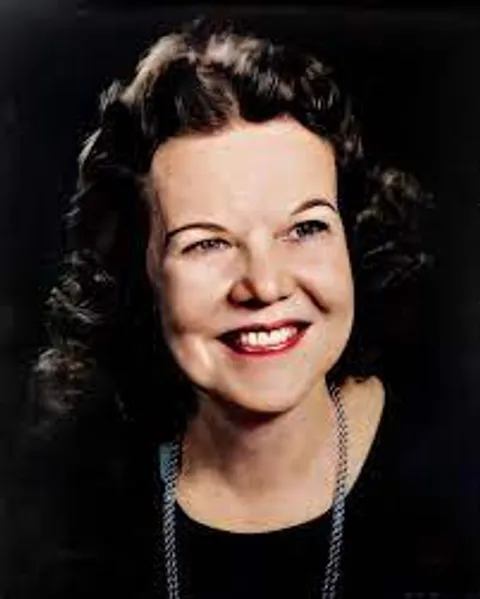 Kathryn Johanna Kuhlman was born on May 9, 1907, in Concordia, Missouri. Her parents were German and she was one of four children. Her mother was a harsh disciplinarian, who showed little love or affection. On the other hand, she had an extremely close and loving relationship with her father. She would describe, as a small child how, her father would come home from work and she would hang on his leg and cling to him. She often said that her relationship with God the Father was extremely real because of her relationship with her own father.
Kuhlman was converted, when she was 14, at an evangelistic meeting held in a small Methodist church. When she was 16 she graduated from high school, which only went to tenth grade in their town. He older sister Myrtle had married an itinerant evangelist, Everett B. Parrott. They spent their time traveling and asked that Kathryn could join them for the summer. Her parents agreed and she went to Oregon to help out. She worked with them, and often gave her testimony. When the summer was over she wanted to stay, and the couple agreed. She ended up working with them for five years.
The evangelistic team was made up of four people, Everette, Myrtle, Kathryn, and pianists named Helen Gulliford. In 1928 Everette missed a meeting in Boise, Idaho. Myrtle and Kathryn preached to cover for Everette. The pastor of the church encouraged Kathryn to step out on her own. Helen agreed to join her. Her first sermon was in a run-down pool hall in Boise, Idaho. The team covered Idaho, Utah, and Colorado for the following five years. In 1933 they moved into Pueblo, Colorado. They set up in an abandoned Montgomery Ward warehouse. They stayed there for six months.
Denver, being a much bigger city, was the next stop. They moved several times but ended up in a paper company's warehouse, which they named the Kuhlman Revival Tabernacle. Then in 1935 they moved once more to an abandoned truck garage they named the Denver Revival Tabernacle. Kathryn was seeing a lot of success in Denver. The church grew to about 2000 members. She began a radio show called "Smiling Through" and invited speakers from all over the country. One of them was Phil Kerr who taught on divine healing. In 1935 another invited evangelist was Burroughs Waltrip.
Waltrip was bad news for Kuhlman. He was a charismatic, handsome man several years older than she was. There was an immediate attraction, and one family claims to have seen the couple embracing in 1935, but he was married and had two children. Waltrip left Denver and went home to Austin, Texas, but the relationship simmered between Kuhlman and Waltrip. In 1937 he was invited back to Denver to take the pulpit for two months. Shortly after he divorced his wife and abandoned his two sons. He then spread the story that his wife had left him. He moved to Mason City, Iowa, where he told everyone he was single, and started a new ministry. Waltrip raised pledges of $70,000 to build a ministry building called Radio Chapel. It was state of the art with a disappearing pulpit and an art deco style. He appeared to be a successful and dynamic preacher.
There was an ongoing relationship between Kuhlman and Waltrip, and they married in September 1938. Kuhlman was naive about the consequences of her choices and the marriage was a disaster. She announced to her church that she and Waltrip were married and they would go between Denver and Mason City preaching at their two churches. Most of the people in her congregation left due to her relationship with Waltrip. She gave up her church in Denver, lost some of her closest associates, and moved to Mason City. Waltrip's success turned out to be a pipe dream as well. The Radio Chapel was completed in June of 1938. By October 1938 Waltrip could not meet his debts. In December Waltrip was demanding a higher salary, even with the shortfall in income. His Board of Directors quit and left him to deal with the finances. His solution was not to pay the mortgage or debts on the Chapel. Radio Chapel went into bankruptcy. Waltrip's last sermon was in May 1939. The Waltrips were on their own. Kathryn's happy vision of she and her husband flying back and forth between Denver and Mason City with a successful preaching careers was utterly demolished.
The next few years were very hard for the couple. They embarked on the road as traveling evangelists, primarily staying in the Midwest. They were not accepted in many places due to their marriage history. Initial advertisements listed Waltrip as the primary evangelist. Then occasionally Mrs. Waltrip was also mentioned. By the early 1940s Kathryn Kuhlman Waltrip was given equal billing. Finally by the mid-1940s Kathryn was using only Kathryn Kuhlman in meetings where she was the primary speaker. In 1944 Kuhlman went on an evangelistic tour on the east coast without Waltrip. It may have been a conscious decision to leave him, or she may also have taken the opportunity to reassess her life. It appears to have been more gradual as Waltrip wrote about them as a couple as late as 1946. Kuhlman never returned to Waltrip and they eventually divorced in 1947. She left her marriage behind and from then on acted as if it never existed in the first place.
In 1946 Kuhlman was asked to speak in Franklin, Pennsylvania. She was well received and decided to stay in the area. Kuhlman began preaching on radio broadcasts in Oil City, Pennsylvania. These became so popular they were picked up in Pittsburgh, and she was preaching throughout the area. She began to preach about the healing power of God. In 1947 a woman was healed of a tumor while listening to Kuhlman preach. Several Sundays later a man was also healed while she was teaching on the Holy Spirit. She was now convinced of God's healing work. One important thing to note is the context and timing of this breakout period in Kuhlman's life. 1947 was the beginning of the Healing Revival (sometimes referred to as the Latter Rain Revival) that would last for the next 10 years. What was happening in Kuhlman's meetings was breaking out across the United States. It was in this time frame that the Voice of Healing Ministry was established and men like William Branham, Oral Roberts, A.A. Allen and many others were propelled onto the public stage. Kuhlman was not associated with those groups, but stepped into the flow of what God's Spirit was doing across the nation and the world.
In 1948 Kuhlman held a series of meetings at Carnegie Hall in Pittsburgh. She eventually moved to Pittsburgh in 1950, and continued to hold meetings at Carnegie Hall until 1971. She was used by God to bring the charismatic message to many denominational churches, including the Catholic Church. (She received a lot of criticism over this and was accused of being a closet Catholic.) These were her best known years. Her style was flamboyant. She would hold her famous miracle services and the auditorium was filled to capacity every time. She was on radio and television shows. She was ordained in 1968 by the Evangelical Church Alliance. Hundreds of people were healed in her meetings, and even while listening to her on the radio or television. People she prayed for would often be hit with the power of God and be "slain in the Spirit." Kuhlman never claimed that she was the healer. She always pointed people to Jesus as their healer.
Kuhlman had been diagnosed with a heart problem in 1955. She kept a very busy schedule and overworked herself, especially in the 1970's. She traveled back and forth from Pittsburgh to Los Angeles frequently, as well as taking trips around the world. Her heart was enlarged and Kuhlman died on February 20, 1976, in Tulsa, following open-heart surgery. Videos of some of her services are still available and continue to be popular today.
Kathryn Johanna Kuhlman was born on May 9, 1907, in Concordia, Missouri. Her parents were German and she was one of four children. Her mother was a harsh disciplinarian, who showed little love or affection. On the other hand, she had an extremely close and loving relationship with her father. She would describe, as a small child how, her father would come home from work and she would hang on his leg and cling to him. She often said that her relationship with God the Father was extremely real because of her relationship with her own father.
Kuhlman was converted, when she was 14, at an evangelistic meeting held in a small Methodist church. When she was 16 she graduated from high school, which only went to tenth grade in their town. He older sister Myrtle had married an itinerant evangelist, Everett B. Parrott. They spent their time traveling and asked that Kathryn could join them for the summer. Her parents agreed and she went to Oregon to help out. She worked with them, and often gave her testimony. When the summer was over she wanted to stay, and the couple agreed. She ended up working with them for five years.
The evangelistic team was made up of four people, Everette, Myrtle, Kathryn, and pianists named Helen Gulliford. In 1928 Everette missed a meeting in Boise, Idaho. Myrtle and Kathryn preached to cover for Everette. The pastor of the church encouraged Kathryn to step out on her own. Helen agreed to join her. Her first sermon was in a run-down pool hall in Boise, Idaho. The team covered Idaho, Utah, and Colorado for the following five years. In 1933 they moved into Pueblo, Colorado. They set up in an abandoned Montgomery Ward warehouse. They stayed there for six months.
Denver, being a much bigger city, was the next stop. They moved several times but ended up in a paper company's warehouse, which they named the Kuhlman Revival Tabernacle. Then in 1935 they moved once more to an abandoned truck garage they named the Denver Revival Tabernacle. Kathryn was seeing a lot of success in Denver. The church grew to about 2000 members. She began a radio show called "Smiling Through" and invited speakers from all over the country. One of them was Phil Kerr who taught on divine healing. In 1935 another invited evangelist was Burroughs Waltrip.
Waltrip was bad news for Kuhlman. He was a charismatic, handsome man several years older than she was. There was an immediate attraction, and one family claims to have seen the couple embracing in 1935, but he was married and had two children. Waltrip left Denver and went home to Austin, Texas, but the relationship simmered between Kuhlman and Waltrip. In 1937 he was invited back to Denver to take the pulpit for two months. Shortly after he divorced his wife and abandoned his two sons. He then spread the story that his wife had left him. He moved to Mason City, Iowa, where he told everyone he was single, and started a new ministry. Waltrip raised pledges of $70,000 to build a ministry building called Radio Chapel. It was state of the art with a disappearing pulpit and an art deco style. He appeared to be a successful and dynamic preacher.
There was an ongoing relationship between Kuhlman and Waltrip, and they married in September 1938. Kuhlman was naive about the consequences of her choices and the marriage was a disaster. She announced to her church that she and Waltrip were married and they would go between Denver and Mason City preaching at their two churches. Most of the people in her congregation left due to her relationship with Waltrip. She gave up her church in Denver, lost some of her closest associates, and moved to Mason City. Waltrip's success turned out to be a pipe dream as well. The Radio Chapel was completed in June of 1938. By October 1938 Waltrip could not meet his debts. In December Waltrip was demanding a higher salary, even with the shortfall in income. His Board of Directors quit and left him to deal with the finances. His solution was not to pay the mortgage or debts on the Chapel. Radio Chapel went into bankruptcy. Waltrip's last sermon was in May 1939. The Waltrips were on their own. Kathryn's happy vision of she and her husband flying back and forth between Denver and Mason City with a successful preaching careers was utterly demolished.
The next few years were very hard for the couple. They embarked on the road as traveling evangelists, primarily staying in the Midwest. They were not accepted in many places due to their marriage history. Initial advertisements listed Waltrip as the primary evangelist. Then occasionally Mrs. Waltrip was also mentioned. By the early 1940s Kathryn Kuhlman Waltrip was given equal billing. Finally by the mid-1940s Kathryn was using only Kathryn Kuhlman in meetings where she was the primary speaker. In 1944 Kuhlman went on an evangelistic tour on the east coast without Waltrip. It may have been a conscious decision to leave him, or she may also have taken the opportunity to reassess her life. It appears to have been more gradual as Waltrip wrote about them as a couple as late as 1946. Kuhlman never returned to Waltrip and they eventually divorced in 1947. She left her marriage behind and from then on acted as if it never existed in the first place.
In 1946 Kuhlman was asked to speak in Franklin, Pennsylvania. She was well received and decided to stay in the area. Kuhlman began preaching on radio broadcasts in Oil City, Pennsylvania. These became so popular they were picked up in Pittsburgh, and she was preaching throughout the area. She began to preach about the healing power of God. In 1947 a woman was healed of a tumor while listening to Kuhlman preach. Several Sundays later a man was also healed while she was teaching on the Holy Spirit. She was now convinced of God's healing work. One important thing to note is the context and timing of this breakout period in Kuhlman's life. 1947 was the beginning of the Healing Revival (sometimes referred to as the Latter Rain Revival) that would last for the next 10 years. What was happening in Kuhlman's meetings was breaking out across the United States. It was in this time frame that the Voice of Healing Ministry was established and men like William Branham, Oral Roberts, A.A. Allen and many others were propelled onto the public stage. Kuhlman was not associated with those groups, but stepped into the flow of what God's Spirit was doing across the nation and the world.
In 1948 Kuhlman held a series of meetings at Carnegie Hall in Pittsburgh. She eventually moved to Pittsburgh in 1950, and continued to hold meetings at Carnegie Hall until 1971. She was used by God to bring the charismatic message to many denominational churches, including the Catholic Church. (She received a lot of criticism over this and was accused of being a closet Catholic.) These were her best known years. Her style was flamboyant. She would hold her famous miracle services and the auditorium was filled to capacity every time. She was on radio and television shows. She was ordained in 1968 by the Evangelical Church Alliance. Hundreds of people were healed in her meetings, and even while listening to her on the radio or television. People she prayed for would often be hit with the power of God and be "slain in the Spirit." Kuhlman never claimed that she was the healer. She always pointed people to Jesus as their healer.
Kuhlman had been diagnosed with a heart problem in 1955. She kept a very busy schedule and overworked herself, especially in the 1970's. She traveled back and forth from Pittsburgh to Los Angeles frequently, as well as taking trips around the world. Her heart was enlarged and Kuhlman died on February 20, 1976, in Tulsa, following open-heart surgery. Videos of some of her services are still available and continue to be popular today.
a marriage of tragedy and triumph: hudson and maria taylor
As the sun rose that morning on Chinkiang, the indomitable light in Maria’s eyes began to dim. On several long nights over their harrowing years in China, Hudson Taylor had feared he might lose his wife as he watched her fight severe illness, but he could see that this day — July 23, 1870 — would be their last, at least for now. That her God had come to bring his daughter home. The heartbroken husband watched as her renowned strength and vitality retreated from her still young body. She was just 33. “My darling, are you conscious that you are dying?” “Dying? Do you think so?” . . . “Yes, you are going home. You will soon be with Jesus.” “I am so sorry.” “You are not sorry to go to be with Jesus?” “Oh no! It’s not that. You know, darling, that for ten years past there has not been a cloud between me and my Savior. I cannot be sorry to go to him. . . . But it does grieve me to leave you alone at such a time. Yet. . . he will be with you and meet all your need.” ( Hudson Taylor & Maria , 229) “There has not been a cloud.” Even when hospitals back in England might have healed her. Even after she had buried her newborn boy, Noel, just three days before, after another grueling pregnancy under oppressive summer heat. Even after she had already buried another son, 5-year-old Sammy, that same year. The Taylors had known one devastating storm after another in 1870, and many more before that, and yet Maria could say with her last breaths, “Not one cloud.” While death stalked Hudson and Maria all their married life, it was not the only opposition they faced and overcame together. From the days they first met, they suffered (and embraced) more adversity and resistance than most marriages could begin to imagine. Many of us might wilt under far less pressure and collapse under far less weight, but God carried Hudson and Maria Taylor as they walked, hand in hand, through darker, deeper, more devastating valleys. Their love became an unusually tragic and triumphant drama of the mystery of marriage, of that sovereign, unshakable love between Christ and his church (Ephesians 5:31–32). Love Begun Hudson first met Maria fourteen years earlier on a missionary compound in Ningpo, China. He had been pioneering the gospel in a different community, Swatow, with his dear friend William Burns. The two were enjoying unexpected receptivity in the previously unplowed mission field until Burns was arrested while Taylor had returned to Shanghai for supplies. The two were forbidden from returning to Swatow. This bitter providence landed Taylor in Ningpo in October of 1856. Maria Dyer was well acquainted with grief long before meeting Hudson. She had been born in China to Samuel and Maria, two of the first Western missionaries to China. Her father, however, died when she was just 6. And her mother, just four years later. Now orphans, she and her sister, Ellie, were left in the care of Miss Mary Ann Aldersley, who ran a school in Ningpo for girls. “Suffering was a dark and persistent thread in the threefold cord of their love.” And then years later, while she taught the girls and evangelized the local Chinese, “he had come — the young missionary who impressed her also shared her longings for holiness, usefulness, and nearness to God. He was different from others. . . . He seemed to live in such a real world and have such a real, great God” ( Spiritual Secret of Hudson Taylor , 62). And she was, no doubt, drawn to him because she herself, despite all she had lost and suffered, lived in that same real world with that same real and great God. A Love Opposed Unfortunately, however much Hudson endeared himself to Maria, others on the compound, especially Miss Aldersley, despised the idea of their newfound love. Some missionaries were offended that Hudson had altered his appearance to look Chinese, a radical (though seemingly effective) departure from missionary practice of that day. In their eyes, the “stunt” was laughable, if not shameful. So when Maria came seeking permission to see Hudson, Aldersley profusely and stubbornly refused for months. How Maria waited displays the same grace that would uphold them through far worse trials: Though I sometimes feel that the greatest earthly pleasure that I desire is to be allowed to love the individual whom I have mentioned so prominently in my letter, and to hold closest and sweetest intercourse with him spiritually as well as temporally that two fellow mortals can hold, I desire that he may not hold the first place in my affections. I desire that Jesus may be to me the chiefest among ten thousand, the altogether lovely. ( Hudson & Maria , 96) Maria’s aunt and uncle in England, her official guardians, finally wrote to grant their blessing on the union. While some still protested, Hudson and Maria were finally married on January 20, 1858. A Work Opposed The fierce opposition they experienced in courtship, however, would prove to be a whisper of what they would suffer in the trenches among the unreached. Even as they prepared to marry, Hudson gave Maria an opportunity to avoid the perils they would undoubtedly face: “I cannot hold you to your promise if you would rather draw back. You see how difficult our life may be at times.” “Have you forgotten?” she replied, “I was left an orphan in a far-off land. God has been my Father all these years. Do you think I shall be afraid to trust him now?” ( Hudson & Maria , 110) And their life was difficult, exceedingly difficult, at times, whether through intense skepticism and persecution by the Chinese, or cynicism and opposition from their critics back home in England, or division and insurrection within their team, or the inevitable illnesses that plagued their family and those they loved, or lack of necessary funds so far from any hope of support. Suffering was a dark and persistent thread in the threefold cord of their love. Yet as Hudson once wrote, “Difficulties afford a platform upon which God can show himself. Without them we could never know how tender, faithful, and almighty our God is” ( Spiritual Secret , 140). The social hostility they felt as they went from town to town eventually climaxed in an especially dangerous scene on August 22, 1868, during the Yangchow Riot. A Riot Erupted What happened in Yangchow could have happened almost anywhere they went in China. The Taylors were ever aware of the threat of a sudden insurrection against their mission. Even if the Chinese were not offended by their message, they knew that Satan certainly was, and would do all he could to destroy their cause. “The source of their strength, sacrifice, and endurance was a profound satisfaction in Jesus above all else.” Awful rumors began spreading throughout Yangchow in August 1868, two years after the Taylors had settled there with a team. The lies accused “the foreigners” of kidnapping children and performing cruel and dishonest medical procedures ( Hudson & Maria , 197). The first rioters gathered one Sunday, a couple hundred rough and enraged men. The missionaries were able to hold them off while they waited for local authorities to intervene, which they eventually did. But three days later, the crowd had grown in size and hatred. Thousands now stormed the compound’s gates. Hudson and another man braved the hostile crowd to seek help from the local governor. Maria (pregnant with her sixth at the time) and the others did the best they could to stay alive while they waited. The mob eventually broke in, stealing whatever they found and setting fire to the rest. As the fire rose and stones flew from every direction, the pregnant Maria was forced to jump from a second story (twelve to fifteen feet above ground), as the missionaries narrowly escaped from their home. Eventually, after much consternation, Hudson prevailed on the local magistrate and the riot was dispersed. When asked what punishment Maria wished to see enforced, she replied, Punishment? I really have not considered the question as it is nothing to do with me. The revenge I desire is the wider opening up of the country to our work. . . . I shall count our physical sufferings light, and our mental anxieties, severe though they were, well repaid if they may work out the further opening up of the country to us for the spread of our Master’s kingdom. ( Hudson & Maria , 207, 209) On November 18, just three months later, Hudson and Maria reentered Yangchow with their team, committed to preaching Christ where he had not already been named, even after all the evil Yangchow had paid them for their compassion and sacrifice. “A wide door for effective work has opened to me,” the Taylors well might have said, “and there are many adversaries” (1 Corinthians 16:9). A Family Bereaved Between the time they landed in Yangchow and the riot of 1868, Hudson and Maria lost their beloved firstborn, Gracie, to illness. Disease had been an ever-present threat, but this was the first death they bore together. In a letter to his mother, Hudson wrote, Our dear little Gracie! How we miss her sweet voice in the morning, one of the first sounds to greet us when we woke, and through the day and at eventide! As I take the walks I used to take with her tripping figure at my side, the thought comes anew like a throb of agony, “Is it possible that I shall nevermore feel the pressure of that little hand . . . nevermore see the sparkle of those bright eyes?” And yet she is not lost. I would not have her back again. I am thankful she was taken, rather than any of the others, though she was the sunshine of our lives. ( Spiritual Secret , 101) Two years later, conditions were so hard that the Taylors decided to send their four eldest remaining children back to England. Sammy, age 5, already weak and fragile, died just before they left. They had now lost three children, including another at birth in 1865. All of this before losing yet another baby, Noel, and then Maria herself the following year, in 1870. “He and he only knew what my dear wife was to me,” Hudson wrote. “He knew how the light of my eyes and the joy of my heart were in her. . . . But he saw that it was good to take her — good indeed for her, and in his love he took her painlessly — and not less good for me who now must toil and suffer alone, yet not alone, for God is nearer to me than ever” ( Spiritual Secret , 133). Losing the light of his eyes and the joy of his heart helped him see and feel the nearness of God. After losing daughter, son, newborn, and then his sweet Maria while carrying the gospel, Hudson wrote to a ministry partner, “What, can Jesus meet my need? Yes, and more than meet it. No matter how intricate my path, how difficult my service; no matter how sad my bereavement, how far away my loved ones; no matter how helpless I am, how deep are my soul-longings — Jesus can meet all, all, and more than meet” ( Spiritual Secret , 130). Spiritual Secrets for Marriage What might we learn from the courageous love of Hudson and Maria Taylor for marriage and ministry today? We can draw at least three enduring lessons. “A truly Christian marriage brings light and refreshment wherever it grows.” First, a truly Christian marriage brings light and refreshment wherever it grows . “Her passionate nature fulfilled his warm-blooded yearning to love and be loved,” John Pollock writes. “She gave him full repose, a fostering and feeding affection so that together they had such a reservoir of love that it splashed over to refresh all, Chinese or European, who came near them” ( Hudson & Maria , 114). Marriages soaked in the gospel cannot help but share the gospel. And more than share, they exude its grace. Those who come close cannot avoid the overflow of Christ in them. So does our marital love splash over and refresh our children, our church family, our neighbors? Does it reach anyone who doesn’t know Jesus? Second, the source of their strength, sacrifice, and endurance was a profound satisfaction in Jesus above all else . In that hardest of all summers, the very summer Maria would give birth, lose her baby, and then herself die, Hudson wrote of her, “I could not but admire and wonder at the grace that so sustained and comforted the fondest of mothers. The secret was that Jesus was satisfying the deep thirst of heart and soul” ( Spiritual Secret , 127). Because Maria lived by the well of living water, she still had love to give while everything around her, even her own body, gave way. Hudson had freshly discovered that same well himself the year before her death, after feeling his spiritual strength and fervor wax and wane for years. After a life-changing exchange of letters with a friend and fellow missionary, Taylor wrote, I seem to have got to the edge only, but of a boundless sea; to have sipped only, but of that which fully satisfies. Christ literally all seems to me, now, the power, the only power for service, the only ground for unchanging joy. . . . The vine is not the root merely, but all — root, stem, branches, twigs, leaves, flowers, fruit. And Jesus is not that alone — he is soil and sunshine, air and showers, and ten thousand times more than we have ever dreamed, wished for, or needed. Oh, the joy of seeing this truth! ( Spiritual Secret , 118, 122) So much changed for Hudson that year that, when the storms of the following year came, it could be said of him, “Hudson Taylor’s newfound joy and his spiritual experience seems to have been deepened rather than hindered by the pressures of these days” ( Spiritual Secret , 129). The satisfaction he experienced not only made his suffering bearable, but actually forced his suffering to deepen his joy in Jesus. So have we drunk from a well like that? Do we make time to drink there with our spouse? Third, they survived on prayerful dependence and patience . As Taylor famously said, “Let us see that we keep God before our eyes; that we walk in his ways and seek to please and glorify him in everything, great and small. Depend on it, God’s work, done in God’s way, will never lack God’s supplies” ( Spiritual Secret , 90–91). What did that look like in their marriage? Those who knew and watched them closely testified, “With Hudson and Maria, together or singly, aloud or unspoken, brief or unhurried, prayer was the unselfconscious response of children to their Father” ( Hudson & Maria , 124). And the intimacy and constancy of their prayer life together was marked and sweetened with a blessed patience . “As a rule prayer is answered and funds come in,” Taylor recalled later in life, “but if we are kept waiting the spiritual blessing that is the outcome is far more precious than exemption from the trial” ( Hudson & Maria , 125). He believed that the blessing of an unanswered prayer (even simply for enough money to eat!) exceeded the blessing of that particular prayer being answered, or answered more quickly. It must, he was convinced, for God would not withhold the greater blessing. So do we lean on prayer for all we need? Do we really believe that God may meet some need because we prayed ? And do we receive unanswered prayers with the kind of hope, gratitude, and even joy that welled up in Hudson and Maria? Once, while Hudson was off forging a new path for the gospel, he sensed the hostility in the air and his utter vulnerability to attack. He wrote to Maria of his impending death, “My darling one, I can now only in imagination hold your loved form in my arms. Perhaps dearie the Lord will account that we do make some little sacrifice for his name and work’s sake” ( Hudson & Maria , 189). Some little sacrifice, indeed. He survived that day, but buried his beloved just three short years later. And yet how glad Hudson and Maria were to risk and lose it all, even each other, for the sake of the name.