

Others like fasting Features >>

Feelings Are Fickle
Trusting God In Times Of Adversity

David - Seeking God Faithfully
Fixing My Eyes On Jesus Daily
Finding Hope In The Last Words Of Jesus
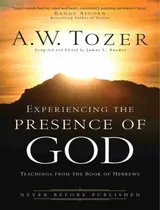
Experiencing The Presence Of God
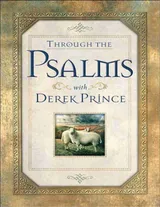
Through The Psalms With Derek Prince
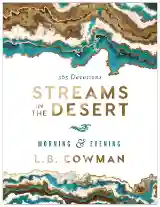
Streams In The Desert: Morning And Evening. 365 Devotions
Practicing The Presence
Jesus, The One And Only
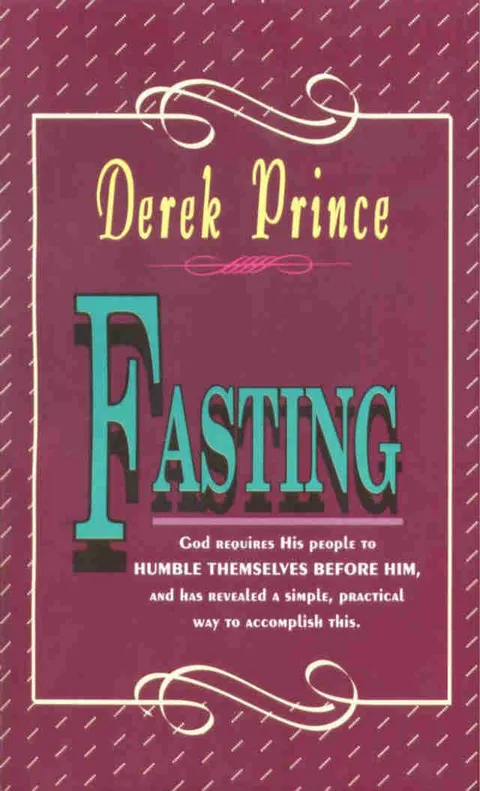
About the Book
"Fasting" by Derek Prince is a practical guide that explores the benefits and purpose of fasting, drawing from biblical principles and personal experiences. The book explains how fasting can deepen one's relationship with God, bring spiritual breakthroughs, and cultivate self-discipline. Prince also provides insights on different types of fasting, common misconceptions, and practical tips for a successful fasting experience.
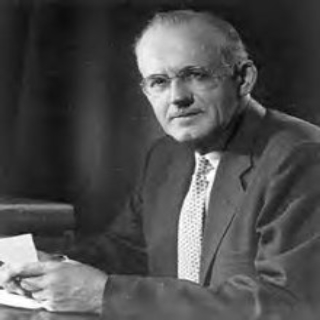
A.W. Tozer (Aiden Wilson Tozer)
 Early life
Tozer hailed from a tiny farming community in western La Jose, Pennsylvania. He was converted to Christianity as a teenager in Akron, Ohio: While on his way home from work at a tire company, he overheard a street preacher say, "If you don't know how to be saved ... just call on God, saying, 'Lord, be merciful to me a sinner.'" Upon returning home, he climbed into the attic and heeded the preacher's advice.
Pastor
In 1919, five years after his conversion and without formal education in Christian theology, Tozer accepted an offer to serve as pastor of his first church. That began 44 years of ministry associated with the Christian and Missionary Alliance (C&MA), a Protestant Evangelical denomination, 33 of them serving as a pastor in several different congregations (his first, a small storefront church in Nutter Fort, West Virginia). Later, he served thirty years (1928 to 1959) as the pastor of Southside Alliance Church in Chicago; the final years of his life he spent as pastor of Avenue Road Church in Toronto, Ontario, Canada. Observing contemporary Christian living, Tozer felt that the church was on a dangerous course toward compromising with "worldly" concerns.
Born into poverty, Tozer was self-educated and taught himself what he missed in high school and university.
Author
Tozer began writing in 1931 for the denominational magazine of the Christian and Missionary Alliance, Alliance Weekly (now Alliance Life), which became the platform from which his writing career emerged. He later wrote the monthly column “There’s Truth in It” (1936–37) and “A Word in Season” (1944–46). In May 1950, he became the editor of the Alliance Weekly, a position he filled until his death in 1963.
At the urging of David W. Fant, publications secretary of the C&MA, Tozer wrote biographies of A. B. Simpson (1943) and Robert A. Jaffray (1947). It was the publication of his third book, The Pursuit of God (1948), that made Tozer a household name among evangelicals. In addition to the 12 books he published in his lifetime, more than 40 other books have been compiled from his magazine features, editorials, and transcribed sermons.
During his lifetime, Tozer’s works were published by Christian Publications, Inc., the denominational press operated by the C&MA. The publishing house declared bankruptcy in 2006 and was purchased by WingSpread Publishers of Camp Hill, Pennsylvania.[8] In November 2013, Moody Publishers acquired Wingspread from parent company Zur Ltd., a transaction that included more than 60 Tozer books and pamphlets. Some of Tozer’s works are now in the public domain and have been issued by multiple publishers.
Personal life
Tozer had seven children, six sons and a daughter. Living a simple and non-materialistic lifestyle, he and his wife, Ada Cecelia Pfautz, never owned a car, preferring bus and train travel. Even after becoming a well-known Christian author, Tozer signed away much of his royalties to those who were in need.
Prayer was of vital personal importance for Tozer. "His preaching as well as his writings were but extensions of his prayer life," comments his biographer, James L. Snyder, in the book In Pursuit of God: The Life Of A.W. Tozer. "He had the ability to make his listeners face themselves in the light of what God was saying to them," writes Snyder.
Death and legacy
Tozer died on May 13, 1963, after suffering a heart attack. He was buried in Chicago, and later the family had his remains reinterred at Ellet Cemetery, Akron, Ohio. A simple marker reads: A. W. Tozer—A Man of God. The Alliance Weekly ran a memorial issue with numerous tributes and excerpts. The same issue also featured “God’s Greatest Gift to Man," a transcription of his final sermon. A few months prior to his death, Tozer had submitted the manuscript to The Christian Book of Mystical Verse, which was released in 1964 as his final book. His official publisher, Christian Publications, released many titles after his death, based on his magazine articles and sermon transcriptions. These continue in print with Moody Publishers. Several other publishers have released his public domain works.
In 2000, The Pursuit of God was named to Christianity Today’s list of 100 “Books of the Century.” In 2006, Knowledge of the Holy was named in “The Top 50 Books That Have Shaped Evangelicals.” Contemporary Christian music artist Lauren Barlow of BarlowGirl later published a compilation of stories told by 59 artists, writers, and leaders about A.W. Tozer’s personal inspiration.
Early life
Tozer hailed from a tiny farming community in western La Jose, Pennsylvania. He was converted to Christianity as a teenager in Akron, Ohio: While on his way home from work at a tire company, he overheard a street preacher say, "If you don't know how to be saved ... just call on God, saying, 'Lord, be merciful to me a sinner.'" Upon returning home, he climbed into the attic and heeded the preacher's advice.
Pastor
In 1919, five years after his conversion and without formal education in Christian theology, Tozer accepted an offer to serve as pastor of his first church. That began 44 years of ministry associated with the Christian and Missionary Alliance (C&MA), a Protestant Evangelical denomination, 33 of them serving as a pastor in several different congregations (his first, a small storefront church in Nutter Fort, West Virginia). Later, he served thirty years (1928 to 1959) as the pastor of Southside Alliance Church in Chicago; the final years of his life he spent as pastor of Avenue Road Church in Toronto, Ontario, Canada. Observing contemporary Christian living, Tozer felt that the church was on a dangerous course toward compromising with "worldly" concerns.
Born into poverty, Tozer was self-educated and taught himself what he missed in high school and university.
Author
Tozer began writing in 1931 for the denominational magazine of the Christian and Missionary Alliance, Alliance Weekly (now Alliance Life), which became the platform from which his writing career emerged. He later wrote the monthly column “There’s Truth in It” (1936–37) and “A Word in Season” (1944–46). In May 1950, he became the editor of the Alliance Weekly, a position he filled until his death in 1963.
At the urging of David W. Fant, publications secretary of the C&MA, Tozer wrote biographies of A. B. Simpson (1943) and Robert A. Jaffray (1947). It was the publication of his third book, The Pursuit of God (1948), that made Tozer a household name among evangelicals. In addition to the 12 books he published in his lifetime, more than 40 other books have been compiled from his magazine features, editorials, and transcribed sermons.
During his lifetime, Tozer’s works were published by Christian Publications, Inc., the denominational press operated by the C&MA. The publishing house declared bankruptcy in 2006 and was purchased by WingSpread Publishers of Camp Hill, Pennsylvania.[8] In November 2013, Moody Publishers acquired Wingspread from parent company Zur Ltd., a transaction that included more than 60 Tozer books and pamphlets. Some of Tozer’s works are now in the public domain and have been issued by multiple publishers.
Personal life
Tozer had seven children, six sons and a daughter. Living a simple and non-materialistic lifestyle, he and his wife, Ada Cecelia Pfautz, never owned a car, preferring bus and train travel. Even after becoming a well-known Christian author, Tozer signed away much of his royalties to those who were in need.
Prayer was of vital personal importance for Tozer. "His preaching as well as his writings were but extensions of his prayer life," comments his biographer, James L. Snyder, in the book In Pursuit of God: The Life Of A.W. Tozer. "He had the ability to make his listeners face themselves in the light of what God was saying to them," writes Snyder.
Death and legacy
Tozer died on May 13, 1963, after suffering a heart attack. He was buried in Chicago, and later the family had his remains reinterred at Ellet Cemetery, Akron, Ohio. A simple marker reads: A. W. Tozer—A Man of God. The Alliance Weekly ran a memorial issue with numerous tributes and excerpts. The same issue also featured “God’s Greatest Gift to Man," a transcription of his final sermon. A few months prior to his death, Tozer had submitted the manuscript to The Christian Book of Mystical Verse, which was released in 1964 as his final book. His official publisher, Christian Publications, released many titles after his death, based on his magazine articles and sermon transcriptions. These continue in print with Moody Publishers. Several other publishers have released his public domain works.
In 2000, The Pursuit of God was named to Christianity Today’s list of 100 “Books of the Century.” In 2006, Knowledge of the Holy was named in “The Top 50 Books That Have Shaped Evangelicals.” Contemporary Christian music artist Lauren Barlow of BarlowGirl later published a compilation of stories told by 59 artists, writers, and leaders about A.W. Tozer’s personal inspiration.
Souls Are Our Reward
Run the race. Fight the good fight. Finish strong. Obtain the prize. Many of the familiar catchphrases for Christian faithfulness and perseverance come from a couple memorable verses: Do you not know that in a race all the runners run, but only one receives the prize? So run that you may obtain it. Every athlete exercises self-control in all things. They do it to receive a perishable wreath, but we an imperishable. (1 Corinthians 9:24–25) When our faith begins to falter, or our spiritual disciplines wane, or our joy fades to a dim flicker, or our love grows cold, we need to be reminded to run. Even when it hurts, even when we want to give up, even when we’d rather do anything else. Any race with Jesus will be hard (Luke 9:23). Faith, hope, love, and joy may come freely by grace, but that does not mean they are always easy. The apostle Paul, knowing the costs and rigors of following Christ, reaches for this kind of rugged and strenuous imagery again and again (Philippians 3:12–14; 2 Timothy 4:7–8). What might surprise us — even those of us who have been running with Christ for decades now — is what race Paul really had in mind, at least in 1 Corinthians 9:24. When he held out that wreath of all wreaths, he had more in mind than our clinging to faith and persisting in private prayer. Run to Win The verses above come immediately after another familiar passage, which ends, I have become all things to all people, that by all means I might save some. I do it all for the sake of the gospel, that I may share with them in its blessings. Do you not know that in a race all the runners run, but only one receives the prize? So run that you may obtain it. (1 Corinthians 9:22–24) The race Paul was running (and calling us to run) was not merely about guarding the faith in our own hearts, but about pursuing that faith and joy in others. The race may look (very) different for us than it did for an unmarried apostle, but the race is still our race. Paul was running to win the lost, despite how much effort it required and how much it cost him. He was talking about aggressive mission, not merely secret devotion. And that race — becoming all things to all people that we might save some — can be even more demanding, confusing, and discouraging than nurturing our own relationship with God. Many more give up trying to win the lost than give up going to church or reading the Bible. “Winning souls fills and waters the soul like nothing else.” Paul knew that winning the lost often feels like the back half of a marathon in the heat of August. So, he reminded the church to keep running — not to lose heart or slow down, but to press through to the end. Keep taking risks and making sacrifices to share, keep enduring the inevitable rejection and hostility, and, above all, keep praying for the lost. Keep running. Four Reasons to Run Well The apostle knew how much resistance we face in evangelism. Remember that he was hunted by murderers, stoned by crowds, beaten with rods, and almost flogged to death for trying to win people to Jesus. More than almost anyone, he knew how many incentives there were not to go and make disciples. But he also knew there were even more incentives to choose faithfulness and embrace suffering along the dangerous roads of soul-winning. He shares at least four of those incentives right here in 1 Corinthians 9. NEW JOY Perhaps nothing drove the soul-winning apostle more than the thought of one more sinner, even just one, being brought from the horrors of death and judgment to the heights of life and joy in Christ (2 Corinthians 1:24). “I have become all things to all people, that by all means I might save some” (1 Corinthians 9:22). Some. Notice how modest he (even he!) is about his goals in evangelism. And yet notice how driven he is: all things to all people by all means. The threefold all expresses the precious worth of the some, the unparalleled reward of seeing someone finally stumble upon their Treasure hidden in a field (Matthew 13:44). Winning souls fills and waters the soul like nothing else. Jesus himself says, “I tell you, there is joy before the angels of God over one sinner who repents” (Luke 15:10). If even one conversion sets heaven afire with joy, should it not thrill and motivate us? SHARED JOY The joy of seeing someone saved, however, is heightened further by the joy of enjoying Jesus with them (2 Timothy 1:4). “I do it all for the sake of the gospel,” Paul continues, “that I may share with them in its blessings” (1 Corinthians 9:23; Philippians 1:25). This incentive is wired into the heart of God himself — Father, Son, and Holy Spirit forever loving, sharing, enjoying, creating, saving together. It’s wired into the creation, which waits to share in “the freedom of the glory” waiting for us (Romans 8:21). And it’s wired into any real joy in us, because real joy is never content just to have, but must give and share. As Jesus says, “It is more blessed to give than to receive” (Acts 20:35). Has anyone modeled the ecstasy of shared joy more than the church in Macedonia? “In a severe test of affliction, their abundance of joy and their extreme poverty have overflowed in a wealth of generosity on their part” (2 Corinthians 8:2). What does abundant joy look like, even in extreme poverty? It looks like sharing. IMPERISHABLE JOY The clearest incentive to run well here, though, is the imperishable wreath waiting at the finish line. “Every athlete exercises self-control in all things. They do it to receive a perishable wreath, but we an imperishable” (1 Corinthians 9:25). So, what is this wreath? While Paul does not mention wreaths anywhere else in his letters, he does tell us more about the prize he covets. “What is our hope or joy or crown of boasting before our Lord Jesus at his coming?” he asks the Thessalonians. “Is it not you? For you are our glory and joy” (1 Thessalonians 2:19–20). And to the church at Philippi: “My brothers, whom I love and long for, my joy and crown, stand firm thus in the Lord, my beloved” (Philippians 4:1). His crown, his prize, his wreath on the last day will not be something he owns or wears; it will be the lives he saved, the joy he shared, the souls he won. And that wreath, unlike any wages or reward we might receive on earth, will live and grow and bloom long into eternity. How many of us spend our best time and effort, year after year, pursuing wreaths that perish, while failing to run for that which lasts forever? ASSURED JOY The last incentive, unlike the others, comes as a warning: “I do not run aimlessly; I do not box as one beating the air. But I discipline my body and keep it under control, lest after preaching to others I myself should be disqualified” (1 Corinthians 9:26–27). Along with the stunning rewards — new joy, shared joy, imperishable joy — fear also inspired Paul to love and pursue the lost. What will happen to me if I fail to prove faithful? He wanted the depth of assurance that comes through faithfully fulfilling his mission. The apostle knew he, even he, would be disqualified if he disobeyed what Jesus had called him to do — if he gave up running. And he knew men, even in ministry, who had been disqualified. He describes such men twice, with one sobering thread between them. He warns, People will be lovers of self, lovers of money, proud, arrogant, abusive, disobedient to their parents, ungrateful, unholy, heartless, unappeasable, slanderous, without self-control, brutal, not loving good, treacherous, reckless, swollen with conceit, lovers of pleasure rather than lovers of God, having the appearance of godliness, but denying its power. . . . These men also oppose the truth, men corrupted in mind and disqualified regarding the faith. (2 Timothy 3:2–5, 8) What’s startling (and frightening) about these men is that they were lovers of self, lovers of money, proud, arrogant, and abusive, yet they still had the appearance of godliness. They looked faithful while secretly indulging sin at the expense of others. They looked like they were running well when they were really only running from God. “Many more give up trying to win the lost than give up going to church or reading the Bible.” Paul mentions similar men elsewhere, who are “insubordinate, empty talkers, and deceivers” (Titus 1:10). “They profess to know God,” he says, “but they deny him by their works. They are detestable, disobedient, unfit” — “disqualified” — “for any good work” (Titus 1:16). The tragic thread between the two passages is that some profess to know Jesus, and even learn to act like Christians, and yet fail to ever truly run — to truly repent, believe, and treasure Jesus, and then make him known to others. And if we live like them, neglecting or ignoring what Christ demands of us, we too will be disqualified. “So,” Paul says, “I do not run aimlessly; I do not box as one beating the air. But I discipline my body and keep it under control” (1 Corinthians 9:26–27). He did everything he could to avoid their awful fate. Fear was not his sole motivation, or even his greatest motivation, but he feared the horrible cost of unfaithfulness — of skipping the race and abandoning the lost. So, he disciplined himself to run hard, and long, and well. And he called us to run with him. Article by Marshall Segal Staff writer, desiringGod.org
-480.webp)