

-160.webp)

-160.webp)

About the Book
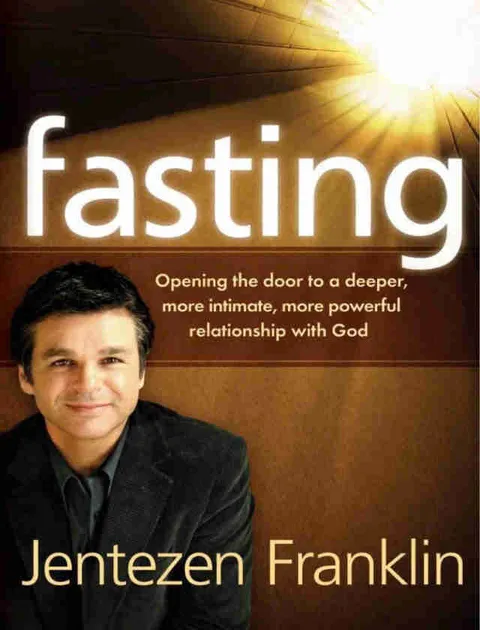
"Fasting" by Jentezen Franklin is a practical guide to the spiritual discipline of fasting. Franklin explains the benefits of fasting, the different types of fasts, and offers tips and strategies for achieving success while fasting. He emphasizes the powerful spiritual breakthroughs and transformation that can occur when fasting is done with intention and faith.
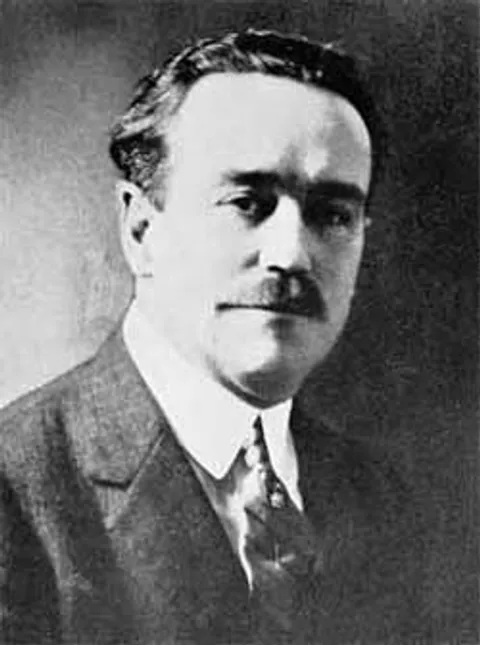
Charles Parham
 Birth and Childhood
Charles Parham was born on June 4, 1873 in Muscatine, Iowa, to William and Ann Maria Parham. As an infant he became infected with a virus that permanently stunted his growth. “At six months of age I was taken with a fever that left me an invalid. For five years I suffered with dreadful spasms, and an enlargement of my head, until my fore head became unusually large.”
The family moved south to Cheney, Kansas where they lived as American pioneers and where his mother died when he was only seven years old. At her deathbed he vowed to meet her in heaven.
He became very ill when he was five and by the time he was nine he had contracted rheumatic fever – a condition that affected him for his entire life. Though unconverted he recollects his earliest call to the ministry, “ …though unconverted I realized as Samuel did that God had laid His hand on me, and for many years endured the feeling of Paul, ‘Woe is me, if I preach not the gospel.’” He began to prepare himself for the ministry by while reading the only appropriate literature he could find – a history book and a Bible.
At thirteen he was converted in a meeting held by a Brother Lippard of the Congregational Church, though he had only ever heard two preachers before. No notable events occurred thereafter but he faithfully served as a Sunday school teacher and church worker. When fifteen years old he held his first public meetings, which were followed by marked results.
At age sixteen he enrolled at Southwest Kansas College with a view to enter the ministry but he struggled with the course and became discouraged by the secular view of disgust towards the Christian ministry and the poverty that seemed to be the lot of ministers. He began contemplating a more acceptable and rewarding profession and began to backslide.
His spiritual condition threw him into turmoil. “For months I suffered the torments of hell and the flames of rheumatic fever, given up by physicians and friends.” His rebellion was cut short when a physician visited him pronounced Parham near death. “The next morning, there came to me so forcibly all those wonderful lessons of how Jesus healed; why could he not do the same today? All through the months I had lain there suffering, the words kept ringing in my ears, “Will you preach? WILL YOU PREACH?”
I had steadfastly refused to do so, if I had to depend upon merchandising for my support. But on the morning when the physician said I would last but a few days, I cried out to the Lord, that if He would let me go somewhere, someplace, where I would not have to take collections or beg for a living that I preach if He would turn me loose.” He cried out to the Lord for healing and suddenly “every joint in my body loosened and every organ in my body was healed.” Only his ankles remained weak.
Following his recovery, he returned to college and prayed continually for healing in his ankles. When asked to hold an evangelistic meeting at Christmastime he renewed his promise to God, and vowed to quit college to enter the ministry if God would heal his ankles. “ Then one night, while praying under a tree ………
God instantly sent the virtue of healing like a mighty electric current through my body and my ankles were made whole, like the man at the Beautiful Gate in the Temple.” Henceforth he would never deny the healing power of the Gospel.
Early Ministry
Parham held his first evangelistic meeting at the age of eighteen, in the Pleasant Valley School House, near Tonganoxie, Kansas. He was a stranger to the country community when he asked permission to hold meetings at their school. He went up on a hillside, stretched his hand out over the valley and prayed that the entire community might be taken for God.
There was little response at first amongst a congregation that was predominantly nominal Friends Church folk. Nevertheless, there were soon many conversions.
The Thistlewaite family, who were amongst the only Christians locally, attended this meeting and wrote of it to their daughter, Sarah, who was in Kansas City attending school. When she returned home, the meeting had closed, but the community arranged for Parham to come back the next Sunday.
At the meeting, the sophisticated Sarah Thistlewaite was challenged by Parham’s comparison between so-called Christians who attend fashionable churches and go through the motions of a moral life and those who embrace a real consecration and experience the sanctifying power of the blood of Christ. Preaching without notes, as was his custom, from 1 Cor 2:1-5 Parham’s words spoke directly to Sarah’s heart. She realised she was following Jesus from afar off, and made the decision to consecrate her life totally to the Lord.
After a total of nineteen revival services at the schoolhouse Parham, at nineteen years of age, was called to fill the pulpit of the deceased Dr. Davis, who founded Baker University. For two years he laboured at Eudora, Kansas, also providing Sunday afternoon pulpit ministry at the M. E. Church at Linwood, Kansas. During this time Miss Thistlewaite and her family regularly visited and she began to cultivate her friendship with Charles.
God so blessed the work here that Parham was earmarked for denominational promotion, but his heart convictions of non-sectarianism become stronger.
“Finding the confines of a pastorate, and feeling the narrowness of sectarian churchism, I was often in conflict with the higher authorities, which eventually resulted in open rupture; and I left denominationalism forever, though suffering bitter persecution at the hands of the church who seemed determined if possible my soul should never find rest in the world or in the world to come. Oh, the narrowness of many who call themselves the Lord’s own!”
When Parham resigned, he was housed by Mr. and Mrs. Tuttle of Lawrence, Kansas, friends who welcomed him as their own son. They gave him a room where he could wait on God without disturbance. He enjoyed times of deep communion with God in this place and felt the Lord was calling him to the undenominational evangelistic field. He held meetings in halls, schoolhouses, tabernacles, churches and a real revival spirit was manifested in these services.
Charles Parham’s Marriage
It was during this time that he wrote to Sarah Thistlewaite and proposed marriage. He warned Sarah that his life was totally dedicated to the Lord and that he could not promise a home or worldly comforts, but he would be happy for her to trust God for their future. They were married six months later, on December 31, 1896, in her grandfather’s home and began their ministry together.
They had many meeting in a variety of places, which were greatly blessed by the Lord. In September 1897 their first son, Claude, was born, but soon after Charles collapsed while preaching and was diagnosed with serious heart disease. At the same time baby Claude became ill and each patient grew progressively weaker.
One day Parham was called to pray for a sick man and while praying the words, ‘Physician, heal thyself,’ came to his mind. He recognised it as the voice of God and began praying for himself, not the man. The power of God touched his body and made him completely well, immediately. He returned home with a fresh commitment to healing prayer, threw away all medicines, gave up all doctors and believed God for Claude’s healing. He was soon completely well and began to grow.
At a friend’s graveside Parham made a vow that “‘Live or die’ I will preach this gospel of healing.” On moving to Ottawa, Kansas, the Parham’s opened their home and a continual stream of sick and needy people found healing through the Great Physician.
Parham was called to speak on healing at Topeka, Kansas and while he was away torrential rain caused devastating floods around their home in Ottawa. When the weather subsided Parham called his family to Topeka. On November 29,1898 on Thanksgiving Day, a new baby called Esther Marie entered the world.
Topeka: Bethel Divine Healing Home
In 1898 Parham opened his divine healing home in Topeka, which he and Sarah named “Bethel.” The purpose was to provide ‘home-like comforts for those who were seeking healing.’
The ground floor housed a chapel, a public reading room and a printing office. The second floor had fourteen rooms with large windows, which were always filled with fresh flowers, adding to the peace and cheer of the home. The third floor was an attic which doubled as a bedroom when all others were full. Each day the Word of God was taught and prayer was offered individually whenever it was necessary.
Bethel also offered special studies for ministers and evangelists which prepared and trained them for Gospel work. The Parhams also found Christian homes for orphans, and work for the unemployed.
Parham’s newsletter, The Apostolic Faith, published bi-weekly, had a subscription price initially. But Parham quickly changed this by referring readers to read Isaiah 55:1, then give accordingly. The Lord wonderfully provided. Each edition published wonderful testimonies of healing and many of the sermons that were taught at Bethel.
As well as conversions and powerful healings the Parhams experienced miraculous provision of finances on a number of occasions. Another son, named Charles, was born in March 1900. Soon after a parsonage was provided for the growing family.
Ever hungry for truth
Mr. Parham wrote: “Deciding to know more fully the latest truths restored by later day movements, I left my work in charge of two Holiness preachers and visited various movements, such as Dowie’s work who was then in Chicago, the Eye-Opener work of the same city; Malone’s work in Cleveland; Dr. Simpson’s work in Nyack, New York; Sandford’s ‘Holy Ghost and Us’ work at Shiloah, Maine and many others.
I returned home, fully convinced that while many had obtained real experience in sanctification and the anointing that abideth, there still remained a great outpouring of power for the Christians who were to close this age.”
It was during this twelve-week trip that Parham heard much about the ‘Latter Rain’ outpouring of the Holy Spirit, reinforcing his conviction that Christ’s premillennial return would occur after an unprecedented world-wide revival. Isolated reports of xenolalic tongues amongst missionaries helped him begin the formulation of his doctrine of the Holy Spirit, spiritual gifts and end time revival.
The Bible School at Topeka
Because of the outstanding success at Bethel, many began to encourage Parham to open a Bible School. “I went to my room to fast and pray, to be alone with God that I might know His will for my future work….. By a series of wonderful miracles we were able to secure what was then known as “Stone’s Folly, a great mansion patterned after an English castle, one mile west of Washburn College in Topeka.”
The builder had wrongly budgeted the building costs and ran out of money before the structure could be completed in the style planned. Nevertheless it was a magnificent building. The beautiful, carved staircases and finished woodwork of cedar of Lebanon, spotted pine, cherry wood, and birds-eye maple ended on the third floor with plain wood and common paint below.
The outside was finished in red brick and white stone with winding stairs that went up to an observatory on the front of the highest part of the building. There was a cupola at the rear with two domes built on either side and in one of these was housed the ‘Prayer Tower.’ Volunteers from among the students took their turn of three hours watch, day and night.
When the building was dedicated, a godly man called Captain Tuttle looked out from this Prayer Tower and saw in a vision above the building “vast lake of fresh water about to overflow, containing enough to satisfy every thirsty soul.” This was later seen as the promise of Pentecostal Baptism that would soon come.
The Bible school welcomed all ministers and Christians who were willing to forsake all, sell what they had, give it away and enter the school for study and prayer. It was to be a faith venture, each trusting God for their personal provision. There were no charges for board or tuition; the poor were fed, the sick were housed and fed, and each day of each month God provided for their every needs.
First Wave of the Holy Spirit
In December of 1900 examinations were held on the subjects of repentance, conversion, consecration, sanctification, healing, and the soon coming of the Lord. But there was the problem of the book of Acts. Parham had always felt that missionaries to foreign lands needed to preach in the native language.
Having heard so much about this subject during his recent travels Parham set the forty students an assignment to determine the Biblical evidence of the baptism in the Holy Spirit and report on their findings in three days, while he was away in Kansas City. He returned on the morning preceding the watch night service 1900-1901.
Parham was astonished when the students reported their findings that, while there were different things that occurred when the Pentecostal blessing fell, the indisputable proof on each occasion was that they spoke in other tongues.
About seventy-five people (probably locals) gathered with the forty students for the watch night service and there was an intense power of the Lord present.
It was here that a student, Agnes Ozman, (later LaBerge) asked that hands might be laid upon her to receive the baptism of the Holy Spirit. She believed she was called to the mission field and wanted to be equipped accordingly. At first Parham refused, as he himself never had the experience. Nevertheless, she persisted and Parham laid his hands upon her head.
“I had scarcely repeated three dozen sentences when a glory fell upon her, a halo seemed to surround her head and face, and she began speaking in the Chinese language, and was unable to speak English for three days. When she tried to write in English… she wrote in Chinese, copies of which we still have in newspapers printed at that time”
Ozman’s later testimony claimed that she had already received a few of these words while in the Prayer Tower but when Parham laid hands on her, she was completely overwhelmed with the supernatural power of the Holy Spirit.
Tongues of Fire
After this incredible deluge of the Holy Spirit, the students moved their beds from the upper dormitory on the upper floor and waited on God for two nights and three days, as an entire body.
On the night of January 3rd 1901, Parham preached at a Free Methodist Church in Topeka, telling them what had happened and that he expected the entire school to be baptized in the Holy Spirit. On returning to the school with one of the students they heard the most wonderful sounds coming from the prayer room.
“The room was filled with a sheen of white light above the brightness of the lamps.” There were twelve denominational ministers who had received the Holy Spirit baptism and were speaking in other tongues. Some were gently trembling under the power of the glory that had filled them. Sister Stanley, an elderly lady, came to Parham, and shared that she saw “tongues of fire” sitting above their heads just moments before his arrival.
“My heart was melted in gratitude to God for my eyes had seen….. I fell to my knees behind a table unnoticed by those on whom the power of Pentecost had fallen to pour out my heart to God in thanksgiving”
Then he asked God for the same blessing, and when he did, Parham distinctly heard God’s calling to declare “this mighty truth to the world. And if I was willing to stand for it, with all the persecutions, hardships, trials, slander, scandal that it would entailed, He would give me the blessing.” It was then that Charles Parham himself was filled with the Holy Spirit, and spoke in other tongues. “Right then and there came a slight twist in my throat, a glory fell over me and I began to worship God in a Swedish tongue, which later changed to other languages and continued so until the morning”
Within a few days about half the student body had received the Holy Spirit with the evidence of tongues.
Soon the news of what God was doing had Stone’s Folly besieged by newspaper reporters, language professors, foreigners and government interpreters and they gave the work the most crucial test. They had to agree that Stone’s Folly’s students were speaking in the languages of the world, with the proper accent and intonation. The newspapers broadcast the headlines “Pentecost! Pentecost!” Newsboys shouted, “Read about the Pentecost!”
On January 21, 1901, Parham preached the first sermon dedicated to the sole experience of the baptism of the Holy Spirit with the evidence of speaking in other tongues at the Academy of music in Kansas City.
Apostle of the Spirit
Parham lost no time in publicizing these events. He went throughout the country, preaching the truths of the baptism of the Holy Spirit with wonderful results, conversions, healings, deliverances and baptisms in the Holy Spirit.
Then, tragedy struck the Parham household once more. Their youngest child, Charles, died on March 16, 1901, just a year old. The family was broken-hearted, even more so when they were criticised and persecuted for contributing to Charles’ death by believing in divine healing and neglecting their child’s health. But, despite these trials Parham continued in an even greater fervency preaching his new message of the Spirit.
To add to the challenge, later that year Stone’s Folly was unexpectedly sold to be used as a pleasure resort. Parham, as a result of a dream, warned the new buyers if they used the building which God had honoured with his presence, for secular reasons, it would be destroyed by fire. A prophetic warning, which later that year came to pass. The building was totally destroyed by a fire.
With no premises the school was forced to close and the Parhams moved to Kansas City, Missouri. Here he penned his first fully Pentecostal book, ‘A Voice Crying in the Wilderness.’ It was filled with sermons on salvation, healing, and sanctification. Many ministers throughout the world studied and taught from it.
Parham began to hold meetings around the country and hundreds of people, from every denomination, received the baptism of the Holy Spirit with tongues, and many experienced divine healing. One Kansas newspaper wrote: “Whatever may be said about him, he has attracted more attention to religion than any other religious worker in years.”
There seems to have been a period of inactivity for a time through 1902, possibly due to increasing negative publicity and dwindling support. Another factor was that another son, Philip Arlington, was born to the Parhams in June 2nd 1902. But another wave of revival was about to crash on the shores of their lives
The Second Wave of Revival
In the autumn of 1903, the Parhams moved to Galena, Kansas, and began meeting in a supporter’s home. Large crowds caused them to erect a large tent which, though it seated two thousand people, was still too small to accommodate the crowds. The blind, lame, deaf and all manner of diseases were marvellously healed and great numbers saved. As winter approached a building was located, but even then, the doors had to be left open during services to include the crowds outside.
The message of Pentecostal baptism with tongues, combined with divine healing, produced a surge of faith and miracles, rapidly drawing massive support for Parham and the Apostolic Faith movement.
The St. Louis Globe reported 500 converts, 250 baptised in water and “Blindness and Cancer Cured By Religion.” The Joplin Herald and the Cincinnati Inquirer reported equally unbiased, objective stories of astounding miracles, stating, “Many.. came to scoff but remained to pray.”
On March 16, 1904, Wilfred Charles was born to the Parhams. A month later, the family moved Baxter Springs, Kansas and continued to hold similar revival meetings around the state.
Late that year successful ministry was conducted at Joplin, Missouri, and the same mighty power of God was manifested. Blind eyes were opened, the sick were healed and many testified of conversion and sanctification by the Spirit. Many more received the Spirit according to Acts 2:4.
The meetings continued four weeks and then moved to a building for many more weeks with revival scenes continuing. So great was the strain that Parham was taken sick with exhaustion and, though near death at one point, he was miraculously raised up through the prayer of faith.
On March 21st 1905, Parham travelled to Orchard, Texas, in response to popular requests from some who had been blessed at Kansas meetings. When ministering in Orchard, there was such a great outpouring of the Spirit, that the entire community was transformed.
The Houston Base
From Orchard Parham left to lay siege to Houston, Texas, with twenty-five dedicated workers. It was July 10th 1905. “Non-denominational” meetings were held at Bryan Hall, anyone who wanted to experience more of the power of God was welcomed. Parham’s interest in the Holy land became a feature in his meetings and the press made much of this and generally wrote favourably of all the healings and miracles that occurred.
After the meetings, Parham and his group held large parades, marching down the streets of Houston in their Holy Land garments. These parades attracted many to the evening services. Extraordinary miracles and Holy Ghost scenes were witnessed by thousands in these meetings.
During these months a string of Apostolic Faith churches were planted in the developing suburbs of Houston, despite growing hostility and personal attacks.
Undaunted by the persecution, Parham moved on to Galveston in October 1905, holding another powerful campaign. Soon after the family moved to Houston, believing that the Holy Spirit was leading them to locate their headquarters and a new Bible school in that city. As at Topeka, the school was financed by freewill offerings. No tuition was charged and each student had to exercise faith for his or her own support. The school opened in December 1905 and each course was ten weeks in duration.
“This was not a ‘Theological seminary’ but a place where the great essential truths of God were taught in the most practical manner to reach the sinner, the careless Christian, the backslider and all in need of the gospel message.”
It was here that Parham first met William J. Seymour, a black Holiness evangelist. The ‘Jim Crow’ laws forbad blacks and whites from mixing, and attending school together was prohibited. But Seymour’s humility and deep interest in studying the Word so persuaded Parham that he decided to offer Seymour a place in the school.
Seymour subsequently carried the new Pentecostal message back to Los Angeles, where through the Azusa Street revival, he carried on the torch, winning many thousands of Pentecostal converts from the U.S. and various parts of the world. (Seymour’s story is recounted in the separate article on Azusa Street History)
The Call to Zion City
The Houston school was only ever designed to be a short-term venture and by mid-summer 1905 the family were on the move again, this time back to Kansas. On June 1, 1906, Robert (their last child) was born and Parham continued his itinerant ministry spreading the Pentecostal message mainly around Houston and Baxter Springs. Anna Hall, a young student evangelist who had been greatly used in the ministry at Orchard, requested leave of absence to help Seymour with the growing work in Los Angeles. He agreed and helped raise the travel costs.
Parham was at the height of his popularity and enjoyed between 8-10,000 followers at this time. He was in great demand. The work was growing apace everywhere, not least of all in Los Angeles, to which he sent five more workers. Sensing the growing momentum of the work at Azusa Street, Seymour wrote to Parham requesting help. He planned to hire a larger building to give full exposure to Parham’s anointed ministry and believed that it would “shake the city once more” with a spiritual “earthquake.”
Seymour also needed help with handling spurious manifestations that were increasing in the meetings. He wrote “urgent letters appealing for help, as spiritualistic manifestations, hypnotic forces and fleshly contortions…. had broken loose in the meetings.
He wanted Mr. Parham to come quickly and help him discern between that which was real and that which was false.” Unfortunately, Parham failed to perceive the potential of the Los Angeles outpouring and continued his efforts in the mid-west, which was the main centre of his ‘Apostolic Faith’ movement. The Azusa Street spiritual earthquake happened without him.
Organisational Efforts
The Apostolic Faith, revived the previous year, became thoroughly Pentecostal in outlook and theology and Parham began an attempt to link the scattered missions and churches. Adopting the name ‘Projector’ he formulated the assemblies into a loose-knit federation of assemblies – quite a change in style and completely different from his initial abhorrence of organised religion and denominationalism.
He also encouraged “Assembly meetings,” weekly meetings of twenty or thirty workers for prayer, sharing and discussion, each with its own designated leader or pastor. Soon he announced the ordination of elders in each major town and the appointment of three state directors. Parham was clearly making efforts to ensure the movement’s continuance and progress. Consequently Seymour and the Azusa Street Mission were somewhat neglected and formed their own “Board of Twelve” to oversee the burgeoning local work.
Labouring at Zion
It was at a camp meeting in Baxter Springs, Kansas, that Parham felt led by God to hold a rally in Zion City, Illinois, despite William Seymour’s continual letters appealing for help, particularly because of the unhealthy manifestations occurring in the meetings.
When he arrived in Zion, he found the community in great turmoil. Kansas newspapers had run detailed accounts of Dowie’s alleged irregularities, including polygamy and misappropriation of funds. To add to his problems Dowie, still suffering the effects a stroke, was engaged in a leadership contest with Wilbur Glen Voliva.
In late July, Dowie was declared bankrupt and a September election was expected to install Voliva as their new overseer. It became a city full of confusion and unrest as thousands had invested their future and their finances in Dowie. But Parham saw this as a wonderful opportunity to bring the baptism of the Holy Spirit to Zion. His visit was designed to involve Zion’s 7,500 residents in the Apostolic Faith’s end-time vision.
When Parham first arrived in Zion, it was impossible to obtain a building for the meetings. He secured a private room at the Elijah Hospice (hotel) for initial meeting and soon the place was overcrowded. Soon Parham began cottage meetings in many of the best homes of the city. One of these homes belonged to the great healing evangelist and author, F. F. Bosworth.
Every night five different meetings were held in five different homes, which lasted from 7:00 p.m. till midnight. When his workers arrived, he would preach from meeting to meeting, driving rapidly to each venue. “Hundreds of backsliders were reclaimed, marvellous healings took place and Pentecost fell profusely.”
But persecution was hovering on the horizon. Secular newspapers gave Parham excellent coverage, praising his meetings, intimating that he was taking ground from Voliva. Consequently, Voliva sought to curb Parham’s influence but when he was refused an audience with the emerging leader, he began to rally supporters to stifle Parham’s ministry. Voliva’s public, verbal attacks followed, claiming Parham was “full of the devil” and with a volley of other unkind comments threw down the gauntlet at the feet of his challenger.
It was at this point that Parham began to preach a distinctively Pentecostal message including that of speaking with other tongues, at Zion. On October the 17th twenty-four people “received” and by soon fifty were known to have experienced the Holy Spirits power with tongues. Parham considered these the first fruits of the entire city – but the press viewed things differently.
They were not impressed. Criticism and ridicule followed and Parham slowly lost his credibility in the city.
Finally, to Azusa Street
In October of 1906, Parham felt released from Zion and hurried to Los Angeles to answer Seymour’s repeated request for help. He was shocked at what he found. “……. to my utter surprise and astonishment I found conditions even worse that I had anticipated…… I saw manifestations of the flesh, spiritualistic controls, people practicing hypnotism at the alter over people seeking the baptism; though many were receiving the real Baptism of the Holy Spirit.”
As Seymour’s “spiritual father” in these things Parham felt responsible for what was happening and spoke out against them. He held two or three services at Azusa, but was unable to convince Seymour to exercise more control. Then, ironically, Seymour had the door to the mission padlocked to prohibit Parham’s couldn’t entry.
Instead of leaving town, Parham rented the W.C.T.U. (Women’s Christian Temperance Union) building on Broadway and Temple Streets and held alternative meetings. There was great blessing and many who had previously attended the Azusa Street meetings experienced deliverance from evil spirits.
Parham believed Seymour was possessed with a spirit of leadership and spiritual pride. He wrote in his newsletter, “Those who have had experience of fanaticism know that there goes with it an unteachable spirit and spiritual pride which makes those under the influences of these false spirits feel exalted and think that they have a greater experience than any one else, and do not need instruction or advice.”
Nevertheless, the die was cast and Parham had lost his control the Los Angeles work. His discouragement may have been the cause of his resignation as Projector of the Apostolic Faith Movement during this time. In January 1907 he reported in the Apostolic Faith published in Zion City, that he “was called a pope, a Dowie, etc., and everywhere looked upon as a leader or a would-be leader and proselyter.”
These designations have always been an abomination to me and since God has given almost universal light to the world on Pentecost there is no further need of my holding the official leadership of the Apostolic Faith Movement……”
He pledged his ongoing support of any who cared to receive it and pledged his commitment to continue his personal ministry until Pentecost was known throughout the nations, but wisely realised that the Movement’s mission was over.
Back to Zion City
Parham returned to Zion from Los Angeles in December of 1906, where his 2000-seater tent meetings were well attended and greatly blessed. On New Year’s Eve, he preached for two hours on the baptism in the Holy Spirit. The revival created such excitement that several preachers approached Parham to become the pastor of this new church. But Parham resisted the very thought and said it was not a thought that came from God. He believed there were had enough churches in the nation already.
His entire ministry life had been influenced by his convictions that church organisation, denominations and human leadership were violations of the Spirit’s desire. Many before him had opted for a leadership position and popularity with the world, but rapidly lost their power. He felt that if his message was from God, then the people would support it without an organization.
Losing ground in Zion City Parham and a handful of followers hit the road again, this time on a three-month evangelistic tour in Canada, New England and back down to Kansas and Missouri.
The Scandal
After a Parham preached a powerful sermon in Missouri, the unknown Mrs. Parham was approached by a lady who stated that “Mr. Parham must have come back to God.” She was questioned on this remark and proceeded to reveal how Mr. Parham had left his wife and children under such sad circumstances. Mrs. Parham protested that this was most certainly untrue and when asked how she was so sure, revealed herself as Mrs. Parham! But this was nothing compared to the greatest public scandal of his life.
Rumours of immorality began circulating as early as January 1907. Local papers suggested that Parhams three-month preaching trip was precipitated by mystery men, probably detectives who sought to arrest him. Unhealthy rumours spread throughout the movement and by summertime he was officially ‘disfellowshipped.’ In July 1907, Parham was preaching in a former Zion mission located in San Antonio when a story reported in the San Antonio Light made national news. Its headline read:
“Evangelist Is Arrested. C. F. Parham, Who Has Been Prominent in Meeting Here, Taken Into Custody.”
The report said Parham, about 40 and J.J. Jourdan, 22, had been charged with committing ‘an unnatural offence’ (sodomy), a felony under Texas statute 524. Faithful friends provided $1,000 bail and Parham was released, announcing to his followers that he had been framed by his Zion City opponent, Wilbur Voliva.
At the time of his arrest Parham was preaching at the San Antonio mission which was pastored by Lemuel C. Hall, a former disciple of Dowie. The church had once belonged to Zion, but left the Zion association and joined Parham’s Apostolic Faith Movement.
Parham pledged to clear his name and refused suggestions to leave town to avoid prosecution. Subsequently, on July 24th the case was dismissed, “the prosecuting attorney declaring that there was absolutely no evidence which merited legal recognition.” Parham’s name disappeared from the headlines of secular newspapers as quickly as it appeared.
There is now overwhelming evidence that no formal indictment was ever filed. There is no record of the incident at the Bexar County Courthouse, as the San Antonio Police Department routinely disposed of such forms in instances of case dismissal.
Nevertheless, the religious newspapers took advantage of their “juicy morsels.” Scandal was always a good seller. The reports were full of rumours and innuendo. These damaging reports included an alleged eyewitness account of Parham’s improprieties and included a written confession, none of which were ever substantiated.
The first such attack came on July 26th from the Zion Herald, the official newspaper of Wilbur Voliva’s church in Zion City and the Burning Bush followed suit. . They both carried alleged quotes from the San Antonio Light, which sounded convincing but when researched it was found the articles were pure fabrication.
Even if Voliva was not guilty of creating such a fantastic story, he did his utmost to exploit the situation. There is considerable evidence that the source of the fabrications were his Zion, Herald, not the unbiased secular paper. Voliva was known to have spread rumours about others in Parham’s camp. One he called “a self-confessed dirty old kisser,” another he labelled “a self-confessed adulterer.”
Though there was not widespread, national reporting on the alleged incident, the Christian grapevine carried the stories far and wide. The inevitable result was that Parham’s dream of ushering in a new era of the Spirit was dashed to pieces. The toll it took on Parham, the man, was immense and the change it brought to his ministry was equally obvious to his hearers. He became harsh and critical of other Pentecostals.
Parham continued to effectively evangelise throughout the nation and retained several thousand faithful followers working from his base in Baxter Springs for the next twenty years, but he was never able to recover from the stigma that had attached itself to his ministry.
In his honour we must note that he never diminished in his zeal for the gospel and he continued to reap a harvest of souls wherever he ministered. Occasionally he would draw crowds of several thousands but by the 1920’s there were others stars in the religious firmament, many of them direct products of his unique and pioneering ministry.
The End of a Great Life
Despite increasing weariness Parham conducted a successful two-week camp meeting in Baxter Springs in 1928. Towards the end of the event he confessed to a brother that he felt that his work was almost done. After a few more meetings in Oklahoma, Texas, Colorado and New Mexico before returning to Kansas.
He was strained and contracted a severe cold and during a meeting in Wichita declared, “Now don’t be surprised if I slip away, and go almost anytime, there seems such a thin veil between.” He wrote a letter saying “I am living on the edge of the Glory Land these days and it’s all so real on the other side of the curtain that I feel mightily tempted to cross over.”
Christmas 1929 was spent with his family, and after the New Year he was booked to preach and show his Holy Land slides in Temple, Texas. Despite failing health he was determined to go and left on January 2nd with two other brothers. On the night Saturday 6th January he collapsed during a meeting while showing his Holy Land slides. Mrs Parham and several of the family arrived at Temple and decided to cancel his itinerary and take Charles home to Kansas by train.
The family gathered and there were some touching scenes around his bed. The most rewarding to Parham was when his son Robert told him he had consecrated himself to the work of the Lord. Wilfred was already involved in the evangelistic ministry. During his last hours he quoted many times, “Peace, peace, like a river.
That is what I have been thinking all day.” During the night, he sang part of the chorus, “Power in the Blood,” then asked his family to finish the song for him. When they had finished, he asked them to, “Sing it again.”
On the afternoon of the next day, on January 29, 1929, Charles Fox Parham went to be with the Lord, aged 56 years and he received his “Well done, good and faithful servant” from the Lord he loved.
Over twenty-five hundred people attended his funeral at the Baxter Theatre. It took over an hour for the great crowd to pass the open casket for their last view of this gift of God to His church. A choir of fifty occupied the stage, along with a number of ministers from different parts of the nation.
Over his casket people who had been healed and blessed under his ministry wept with appreciation. Offerings were sent from all over the United States to help purchase a monument. The family chose a granite pulpit with an open Bible on the top on which was carved “John 15:13,” which was his last sermon text, “Greater love hath no man than this, that a man lay down his life for his friends.”
The Truly Faithful
It is estimated that Charles Parham’s ministry contributed to over two million conversions, directly or indirectly. His congregations often exceeded seven thousand people and he left a string of vibrant churches that embraced Pentecostal doctrines and practices.
In addition he fathered three sons, all of whom entered the ministry and were faithful to God, taking up the baton their father had passed to them. But his greatest legacy was as the “father of the Pentecostal movement.” No other person did more than him to proclaim the truth of speaking in tongues as the evidence of the baptism of the Holy Spirit.
His passion for souls, zeal for missions, and his eschatological hopes helped frame early Pentecostal beliefs and behaviour. He managed to marry a prevailing holiness theology with a fresh, dynamic and accessible ministry of the Holy Spirit, which included divine healing and spiritual gifts.
Charles Fox Parham will forever be one of the bright lights in God’s hall of fame, characterised by a dogged determination and relentless pursuit of God’s best and for God’s glory. Despite personal sickness and physical weakness, continual persecution and unjustified accusation this servant of God was faithful to the heavenly vision and did his part in serving the purpose of God in his generation. May we be as faithful, expectant, hard-working and single-minded.
Bibliography: James R. Goff art. Charles F. Parham, The New International Dictionary of Pentecostal and Charismatic Movements, 2002; James R. Goff , Fields White Unto Harvest: Charles F. Parham and the Missionary Origins of Pentecostalism 1988.
Tony Cauchi
Birth and Childhood
Charles Parham was born on June 4, 1873 in Muscatine, Iowa, to William and Ann Maria Parham. As an infant he became infected with a virus that permanently stunted his growth. “At six months of age I was taken with a fever that left me an invalid. For five years I suffered with dreadful spasms, and an enlargement of my head, until my fore head became unusually large.”
The family moved south to Cheney, Kansas where they lived as American pioneers and where his mother died when he was only seven years old. At her deathbed he vowed to meet her in heaven.
He became very ill when he was five and by the time he was nine he had contracted rheumatic fever – a condition that affected him for his entire life. Though unconverted he recollects his earliest call to the ministry, “ …though unconverted I realized as Samuel did that God had laid His hand on me, and for many years endured the feeling of Paul, ‘Woe is me, if I preach not the gospel.’” He began to prepare himself for the ministry by while reading the only appropriate literature he could find – a history book and a Bible.
At thirteen he was converted in a meeting held by a Brother Lippard of the Congregational Church, though he had only ever heard two preachers before. No notable events occurred thereafter but he faithfully served as a Sunday school teacher and church worker. When fifteen years old he held his first public meetings, which were followed by marked results.
At age sixteen he enrolled at Southwest Kansas College with a view to enter the ministry but he struggled with the course and became discouraged by the secular view of disgust towards the Christian ministry and the poverty that seemed to be the lot of ministers. He began contemplating a more acceptable and rewarding profession and began to backslide.
His spiritual condition threw him into turmoil. “For months I suffered the torments of hell and the flames of rheumatic fever, given up by physicians and friends.” His rebellion was cut short when a physician visited him pronounced Parham near death. “The next morning, there came to me so forcibly all those wonderful lessons of how Jesus healed; why could he not do the same today? All through the months I had lain there suffering, the words kept ringing in my ears, “Will you preach? WILL YOU PREACH?”
I had steadfastly refused to do so, if I had to depend upon merchandising for my support. But on the morning when the physician said I would last but a few days, I cried out to the Lord, that if He would let me go somewhere, someplace, where I would not have to take collections or beg for a living that I preach if He would turn me loose.” He cried out to the Lord for healing and suddenly “every joint in my body loosened and every organ in my body was healed.” Only his ankles remained weak.
Following his recovery, he returned to college and prayed continually for healing in his ankles. When asked to hold an evangelistic meeting at Christmastime he renewed his promise to God, and vowed to quit college to enter the ministry if God would heal his ankles. “ Then one night, while praying under a tree ………
God instantly sent the virtue of healing like a mighty electric current through my body and my ankles were made whole, like the man at the Beautiful Gate in the Temple.” Henceforth he would never deny the healing power of the Gospel.
Early Ministry
Parham held his first evangelistic meeting at the age of eighteen, in the Pleasant Valley School House, near Tonganoxie, Kansas. He was a stranger to the country community when he asked permission to hold meetings at their school. He went up on a hillside, stretched his hand out over the valley and prayed that the entire community might be taken for God.
There was little response at first amongst a congregation that was predominantly nominal Friends Church folk. Nevertheless, there were soon many conversions.
The Thistlewaite family, who were amongst the only Christians locally, attended this meeting and wrote of it to their daughter, Sarah, who was in Kansas City attending school. When she returned home, the meeting had closed, but the community arranged for Parham to come back the next Sunday.
At the meeting, the sophisticated Sarah Thistlewaite was challenged by Parham’s comparison between so-called Christians who attend fashionable churches and go through the motions of a moral life and those who embrace a real consecration and experience the sanctifying power of the blood of Christ. Preaching without notes, as was his custom, from 1 Cor 2:1-5 Parham’s words spoke directly to Sarah’s heart. She realised she was following Jesus from afar off, and made the decision to consecrate her life totally to the Lord.
After a total of nineteen revival services at the schoolhouse Parham, at nineteen years of age, was called to fill the pulpit of the deceased Dr. Davis, who founded Baker University. For two years he laboured at Eudora, Kansas, also providing Sunday afternoon pulpit ministry at the M. E. Church at Linwood, Kansas. During this time Miss Thistlewaite and her family regularly visited and she began to cultivate her friendship with Charles.
God so blessed the work here that Parham was earmarked for denominational promotion, but his heart convictions of non-sectarianism become stronger.
“Finding the confines of a pastorate, and feeling the narrowness of sectarian churchism, I was often in conflict with the higher authorities, which eventually resulted in open rupture; and I left denominationalism forever, though suffering bitter persecution at the hands of the church who seemed determined if possible my soul should never find rest in the world or in the world to come. Oh, the narrowness of many who call themselves the Lord’s own!”
When Parham resigned, he was housed by Mr. and Mrs. Tuttle of Lawrence, Kansas, friends who welcomed him as their own son. They gave him a room where he could wait on God without disturbance. He enjoyed times of deep communion with God in this place and felt the Lord was calling him to the undenominational evangelistic field. He held meetings in halls, schoolhouses, tabernacles, churches and a real revival spirit was manifested in these services.
Charles Parham’s Marriage
It was during this time that he wrote to Sarah Thistlewaite and proposed marriage. He warned Sarah that his life was totally dedicated to the Lord and that he could not promise a home or worldly comforts, but he would be happy for her to trust God for their future. They were married six months later, on December 31, 1896, in her grandfather’s home and began their ministry together.
They had many meeting in a variety of places, which were greatly blessed by the Lord. In September 1897 their first son, Claude, was born, but soon after Charles collapsed while preaching and was diagnosed with serious heart disease. At the same time baby Claude became ill and each patient grew progressively weaker.
One day Parham was called to pray for a sick man and while praying the words, ‘Physician, heal thyself,’ came to his mind. He recognised it as the voice of God and began praying for himself, not the man. The power of God touched his body and made him completely well, immediately. He returned home with a fresh commitment to healing prayer, threw away all medicines, gave up all doctors and believed God for Claude’s healing. He was soon completely well and began to grow.
At a friend’s graveside Parham made a vow that “‘Live or die’ I will preach this gospel of healing.” On moving to Ottawa, Kansas, the Parham’s opened their home and a continual stream of sick and needy people found healing through the Great Physician.
Parham was called to speak on healing at Topeka, Kansas and while he was away torrential rain caused devastating floods around their home in Ottawa. When the weather subsided Parham called his family to Topeka. On November 29,1898 on Thanksgiving Day, a new baby called Esther Marie entered the world.
Topeka: Bethel Divine Healing Home
In 1898 Parham opened his divine healing home in Topeka, which he and Sarah named “Bethel.” The purpose was to provide ‘home-like comforts for those who were seeking healing.’
The ground floor housed a chapel, a public reading room and a printing office. The second floor had fourteen rooms with large windows, which were always filled with fresh flowers, adding to the peace and cheer of the home. The third floor was an attic which doubled as a bedroom when all others were full. Each day the Word of God was taught and prayer was offered individually whenever it was necessary.
Bethel also offered special studies for ministers and evangelists which prepared and trained them for Gospel work. The Parhams also found Christian homes for orphans, and work for the unemployed.
Parham’s newsletter, The Apostolic Faith, published bi-weekly, had a subscription price initially. But Parham quickly changed this by referring readers to read Isaiah 55:1, then give accordingly. The Lord wonderfully provided. Each edition published wonderful testimonies of healing and many of the sermons that were taught at Bethel.
As well as conversions and powerful healings the Parhams experienced miraculous provision of finances on a number of occasions. Another son, named Charles, was born in March 1900. Soon after a parsonage was provided for the growing family.
Ever hungry for truth
Mr. Parham wrote: “Deciding to know more fully the latest truths restored by later day movements, I left my work in charge of two Holiness preachers and visited various movements, such as Dowie’s work who was then in Chicago, the Eye-Opener work of the same city; Malone’s work in Cleveland; Dr. Simpson’s work in Nyack, New York; Sandford’s ‘Holy Ghost and Us’ work at Shiloah, Maine and many others.
I returned home, fully convinced that while many had obtained real experience in sanctification and the anointing that abideth, there still remained a great outpouring of power for the Christians who were to close this age.”
It was during this twelve-week trip that Parham heard much about the ‘Latter Rain’ outpouring of the Holy Spirit, reinforcing his conviction that Christ’s premillennial return would occur after an unprecedented world-wide revival. Isolated reports of xenolalic tongues amongst missionaries helped him begin the formulation of his doctrine of the Holy Spirit, spiritual gifts and end time revival.
The Bible School at Topeka
Because of the outstanding success at Bethel, many began to encourage Parham to open a Bible School. “I went to my room to fast and pray, to be alone with God that I might know His will for my future work….. By a series of wonderful miracles we were able to secure what was then known as “Stone’s Folly, a great mansion patterned after an English castle, one mile west of Washburn College in Topeka.”
The builder had wrongly budgeted the building costs and ran out of money before the structure could be completed in the style planned. Nevertheless it was a magnificent building. The beautiful, carved staircases and finished woodwork of cedar of Lebanon, spotted pine, cherry wood, and birds-eye maple ended on the third floor with plain wood and common paint below.
The outside was finished in red brick and white stone with winding stairs that went up to an observatory on the front of the highest part of the building. There was a cupola at the rear with two domes built on either side and in one of these was housed the ‘Prayer Tower.’ Volunteers from among the students took their turn of three hours watch, day and night.
When the building was dedicated, a godly man called Captain Tuttle looked out from this Prayer Tower and saw in a vision above the building “vast lake of fresh water about to overflow, containing enough to satisfy every thirsty soul.” This was later seen as the promise of Pentecostal Baptism that would soon come.
The Bible school welcomed all ministers and Christians who were willing to forsake all, sell what they had, give it away and enter the school for study and prayer. It was to be a faith venture, each trusting God for their personal provision. There were no charges for board or tuition; the poor were fed, the sick were housed and fed, and each day of each month God provided for their every needs.
First Wave of the Holy Spirit
In December of 1900 examinations were held on the subjects of repentance, conversion, consecration, sanctification, healing, and the soon coming of the Lord. But there was the problem of the book of Acts. Parham had always felt that missionaries to foreign lands needed to preach in the native language.
Having heard so much about this subject during his recent travels Parham set the forty students an assignment to determine the Biblical evidence of the baptism in the Holy Spirit and report on their findings in three days, while he was away in Kansas City. He returned on the morning preceding the watch night service 1900-1901.
Parham was astonished when the students reported their findings that, while there were different things that occurred when the Pentecostal blessing fell, the indisputable proof on each occasion was that they spoke in other tongues.
About seventy-five people (probably locals) gathered with the forty students for the watch night service and there was an intense power of the Lord present.
It was here that a student, Agnes Ozman, (later LaBerge) asked that hands might be laid upon her to receive the baptism of the Holy Spirit. She believed she was called to the mission field and wanted to be equipped accordingly. At first Parham refused, as he himself never had the experience. Nevertheless, she persisted and Parham laid his hands upon her head.
“I had scarcely repeated three dozen sentences when a glory fell upon her, a halo seemed to surround her head and face, and she began speaking in the Chinese language, and was unable to speak English for three days. When she tried to write in English… she wrote in Chinese, copies of which we still have in newspapers printed at that time”
Ozman’s later testimony claimed that she had already received a few of these words while in the Prayer Tower but when Parham laid hands on her, she was completely overwhelmed with the supernatural power of the Holy Spirit.
Tongues of Fire
After this incredible deluge of the Holy Spirit, the students moved their beds from the upper dormitory on the upper floor and waited on God for two nights and three days, as an entire body.
On the night of January 3rd 1901, Parham preached at a Free Methodist Church in Topeka, telling them what had happened and that he expected the entire school to be baptized in the Holy Spirit. On returning to the school with one of the students they heard the most wonderful sounds coming from the prayer room.
“The room was filled with a sheen of white light above the brightness of the lamps.” There were twelve denominational ministers who had received the Holy Spirit baptism and were speaking in other tongues. Some were gently trembling under the power of the glory that had filled them. Sister Stanley, an elderly lady, came to Parham, and shared that she saw “tongues of fire” sitting above their heads just moments before his arrival.
“My heart was melted in gratitude to God for my eyes had seen….. I fell to my knees behind a table unnoticed by those on whom the power of Pentecost had fallen to pour out my heart to God in thanksgiving”
Then he asked God for the same blessing, and when he did, Parham distinctly heard God’s calling to declare “this mighty truth to the world. And if I was willing to stand for it, with all the persecutions, hardships, trials, slander, scandal that it would entailed, He would give me the blessing.” It was then that Charles Parham himself was filled with the Holy Spirit, and spoke in other tongues. “Right then and there came a slight twist in my throat, a glory fell over me and I began to worship God in a Swedish tongue, which later changed to other languages and continued so until the morning”
Within a few days about half the student body had received the Holy Spirit with the evidence of tongues.
Soon the news of what God was doing had Stone’s Folly besieged by newspaper reporters, language professors, foreigners and government interpreters and they gave the work the most crucial test. They had to agree that Stone’s Folly’s students were speaking in the languages of the world, with the proper accent and intonation. The newspapers broadcast the headlines “Pentecost! Pentecost!” Newsboys shouted, “Read about the Pentecost!”
On January 21, 1901, Parham preached the first sermon dedicated to the sole experience of the baptism of the Holy Spirit with the evidence of speaking in other tongues at the Academy of music in Kansas City.
Apostle of the Spirit
Parham lost no time in publicizing these events. He went throughout the country, preaching the truths of the baptism of the Holy Spirit with wonderful results, conversions, healings, deliverances and baptisms in the Holy Spirit.
Then, tragedy struck the Parham household once more. Their youngest child, Charles, died on March 16, 1901, just a year old. The family was broken-hearted, even more so when they were criticised and persecuted for contributing to Charles’ death by believing in divine healing and neglecting their child’s health. But, despite these trials Parham continued in an even greater fervency preaching his new message of the Spirit.
To add to the challenge, later that year Stone’s Folly was unexpectedly sold to be used as a pleasure resort. Parham, as a result of a dream, warned the new buyers if they used the building which God had honoured with his presence, for secular reasons, it would be destroyed by fire. A prophetic warning, which later that year came to pass. The building was totally destroyed by a fire.
With no premises the school was forced to close and the Parhams moved to Kansas City, Missouri. Here he penned his first fully Pentecostal book, ‘A Voice Crying in the Wilderness.’ It was filled with sermons on salvation, healing, and sanctification. Many ministers throughout the world studied and taught from it.
Parham began to hold meetings around the country and hundreds of people, from every denomination, received the baptism of the Holy Spirit with tongues, and many experienced divine healing. One Kansas newspaper wrote: “Whatever may be said about him, he has attracted more attention to religion than any other religious worker in years.”
There seems to have been a period of inactivity for a time through 1902, possibly due to increasing negative publicity and dwindling support. Another factor was that another son, Philip Arlington, was born to the Parhams in June 2nd 1902. But another wave of revival was about to crash on the shores of their lives
The Second Wave of Revival
In the autumn of 1903, the Parhams moved to Galena, Kansas, and began meeting in a supporter’s home. Large crowds caused them to erect a large tent which, though it seated two thousand people, was still too small to accommodate the crowds. The blind, lame, deaf and all manner of diseases were marvellously healed and great numbers saved. As winter approached a building was located, but even then, the doors had to be left open during services to include the crowds outside.
The message of Pentecostal baptism with tongues, combined with divine healing, produced a surge of faith and miracles, rapidly drawing massive support for Parham and the Apostolic Faith movement.
The St. Louis Globe reported 500 converts, 250 baptised in water and “Blindness and Cancer Cured By Religion.” The Joplin Herald and the Cincinnati Inquirer reported equally unbiased, objective stories of astounding miracles, stating, “Many.. came to scoff but remained to pray.”
On March 16, 1904, Wilfred Charles was born to the Parhams. A month later, the family moved Baxter Springs, Kansas and continued to hold similar revival meetings around the state.
Late that year successful ministry was conducted at Joplin, Missouri, and the same mighty power of God was manifested. Blind eyes were opened, the sick were healed and many testified of conversion and sanctification by the Spirit. Many more received the Spirit according to Acts 2:4.
The meetings continued four weeks and then moved to a building for many more weeks with revival scenes continuing. So great was the strain that Parham was taken sick with exhaustion and, though near death at one point, he was miraculously raised up through the prayer of faith.
On March 21st 1905, Parham travelled to Orchard, Texas, in response to popular requests from some who had been blessed at Kansas meetings. When ministering in Orchard, there was such a great outpouring of the Spirit, that the entire community was transformed.
The Houston Base
From Orchard Parham left to lay siege to Houston, Texas, with twenty-five dedicated workers. It was July 10th 1905. “Non-denominational” meetings were held at Bryan Hall, anyone who wanted to experience more of the power of God was welcomed. Parham’s interest in the Holy land became a feature in his meetings and the press made much of this and generally wrote favourably of all the healings and miracles that occurred.
After the meetings, Parham and his group held large parades, marching down the streets of Houston in their Holy Land garments. These parades attracted many to the evening services. Extraordinary miracles and Holy Ghost scenes were witnessed by thousands in these meetings.
During these months a string of Apostolic Faith churches were planted in the developing suburbs of Houston, despite growing hostility and personal attacks.
Undaunted by the persecution, Parham moved on to Galveston in October 1905, holding another powerful campaign. Soon after the family moved to Houston, believing that the Holy Spirit was leading them to locate their headquarters and a new Bible school in that city. As at Topeka, the school was financed by freewill offerings. No tuition was charged and each student had to exercise faith for his or her own support. The school opened in December 1905 and each course was ten weeks in duration.
“This was not a ‘Theological seminary’ but a place where the great essential truths of God were taught in the most practical manner to reach the sinner, the careless Christian, the backslider and all in need of the gospel message.”
It was here that Parham first met William J. Seymour, a black Holiness evangelist. The ‘Jim Crow’ laws forbad blacks and whites from mixing, and attending school together was prohibited. But Seymour’s humility and deep interest in studying the Word so persuaded Parham that he decided to offer Seymour a place in the school.
Seymour subsequently carried the new Pentecostal message back to Los Angeles, where through the Azusa Street revival, he carried on the torch, winning many thousands of Pentecostal converts from the U.S. and various parts of the world. (Seymour’s story is recounted in the separate article on Azusa Street History)
The Call to Zion City
The Houston school was only ever designed to be a short-term venture and by mid-summer 1905 the family were on the move again, this time back to Kansas. On June 1, 1906, Robert (their last child) was born and Parham continued his itinerant ministry spreading the Pentecostal message mainly around Houston and Baxter Springs. Anna Hall, a young student evangelist who had been greatly used in the ministry at Orchard, requested leave of absence to help Seymour with the growing work in Los Angeles. He agreed and helped raise the travel costs.
Parham was at the height of his popularity and enjoyed between 8-10,000 followers at this time. He was in great demand. The work was growing apace everywhere, not least of all in Los Angeles, to which he sent five more workers. Sensing the growing momentum of the work at Azusa Street, Seymour wrote to Parham requesting help. He planned to hire a larger building to give full exposure to Parham’s anointed ministry and believed that it would “shake the city once more” with a spiritual “earthquake.”
Seymour also needed help with handling spurious manifestations that were increasing in the meetings. He wrote “urgent letters appealing for help, as spiritualistic manifestations, hypnotic forces and fleshly contortions…. had broken loose in the meetings.
He wanted Mr. Parham to come quickly and help him discern between that which was real and that which was false.” Unfortunately, Parham failed to perceive the potential of the Los Angeles outpouring and continued his efforts in the mid-west, which was the main centre of his ‘Apostolic Faith’ movement. The Azusa Street spiritual earthquake happened without him.
Organisational Efforts
The Apostolic Faith, revived the previous year, became thoroughly Pentecostal in outlook and theology and Parham began an attempt to link the scattered missions and churches. Adopting the name ‘Projector’ he formulated the assemblies into a loose-knit federation of assemblies – quite a change in style and completely different from his initial abhorrence of organised religion and denominationalism.
He also encouraged “Assembly meetings,” weekly meetings of twenty or thirty workers for prayer, sharing and discussion, each with its own designated leader or pastor. Soon he announced the ordination of elders in each major town and the appointment of three state directors. Parham was clearly making efforts to ensure the movement’s continuance and progress. Consequently Seymour and the Azusa Street Mission were somewhat neglected and formed their own “Board of Twelve” to oversee the burgeoning local work.
Labouring at Zion
It was at a camp meeting in Baxter Springs, Kansas, that Parham felt led by God to hold a rally in Zion City, Illinois, despite William Seymour’s continual letters appealing for help, particularly because of the unhealthy manifestations occurring in the meetings.
When he arrived in Zion, he found the community in great turmoil. Kansas newspapers had run detailed accounts of Dowie’s alleged irregularities, including polygamy and misappropriation of funds. To add to his problems Dowie, still suffering the effects a stroke, was engaged in a leadership contest with Wilbur Glen Voliva.
In late July, Dowie was declared bankrupt and a September election was expected to install Voliva as their new overseer. It became a city full of confusion and unrest as thousands had invested their future and their finances in Dowie. But Parham saw this as a wonderful opportunity to bring the baptism of the Holy Spirit to Zion. His visit was designed to involve Zion’s 7,500 residents in the Apostolic Faith’s end-time vision.
When Parham first arrived in Zion, it was impossible to obtain a building for the meetings. He secured a private room at the Elijah Hospice (hotel) for initial meeting and soon the place was overcrowded. Soon Parham began cottage meetings in many of the best homes of the city. One of these homes belonged to the great healing evangelist and author, F. F. Bosworth.
Every night five different meetings were held in five different homes, which lasted from 7:00 p.m. till midnight. When his workers arrived, he would preach from meeting to meeting, driving rapidly to each venue. “Hundreds of backsliders were reclaimed, marvellous healings took place and Pentecost fell profusely.”
But persecution was hovering on the horizon. Secular newspapers gave Parham excellent coverage, praising his meetings, intimating that he was taking ground from Voliva. Consequently, Voliva sought to curb Parham’s influence but when he was refused an audience with the emerging leader, he began to rally supporters to stifle Parham’s ministry. Voliva’s public, verbal attacks followed, claiming Parham was “full of the devil” and with a volley of other unkind comments threw down the gauntlet at the feet of his challenger.
It was at this point that Parham began to preach a distinctively Pentecostal message including that of speaking with other tongues, at Zion. On October the 17th twenty-four people “received” and by soon fifty were known to have experienced the Holy Spirits power with tongues. Parham considered these the first fruits of the entire city – but the press viewed things differently.
They were not impressed. Criticism and ridicule followed and Parham slowly lost his credibility in the city.
Finally, to Azusa Street
In October of 1906, Parham felt released from Zion and hurried to Los Angeles to answer Seymour’s repeated request for help. He was shocked at what he found. “……. to my utter surprise and astonishment I found conditions even worse that I had anticipated…… I saw manifestations of the flesh, spiritualistic controls, people practicing hypnotism at the alter over people seeking the baptism; though many were receiving the real Baptism of the Holy Spirit.”
As Seymour’s “spiritual father” in these things Parham felt responsible for what was happening and spoke out against them. He held two or three services at Azusa, but was unable to convince Seymour to exercise more control. Then, ironically, Seymour had the door to the mission padlocked to prohibit Parham’s couldn’t entry.
Instead of leaving town, Parham rented the W.C.T.U. (Women’s Christian Temperance Union) building on Broadway and Temple Streets and held alternative meetings. There was great blessing and many who had previously attended the Azusa Street meetings experienced deliverance from evil spirits.
Parham believed Seymour was possessed with a spirit of leadership and spiritual pride. He wrote in his newsletter, “Those who have had experience of fanaticism know that there goes with it an unteachable spirit and spiritual pride which makes those under the influences of these false spirits feel exalted and think that they have a greater experience than any one else, and do not need instruction or advice.”
Nevertheless, the die was cast and Parham had lost his control the Los Angeles work. His discouragement may have been the cause of his resignation as Projector of the Apostolic Faith Movement during this time. In January 1907 he reported in the Apostolic Faith published in Zion City, that he “was called a pope, a Dowie, etc., and everywhere looked upon as a leader or a would-be leader and proselyter.”
These designations have always been an abomination to me and since God has given almost universal light to the world on Pentecost there is no further need of my holding the official leadership of the Apostolic Faith Movement……”
He pledged his ongoing support of any who cared to receive it and pledged his commitment to continue his personal ministry until Pentecost was known throughout the nations, but wisely realised that the Movement’s mission was over.
Back to Zion City
Parham returned to Zion from Los Angeles in December of 1906, where his 2000-seater tent meetings were well attended and greatly blessed. On New Year’s Eve, he preached for two hours on the baptism in the Holy Spirit. The revival created such excitement that several preachers approached Parham to become the pastor of this new church. But Parham resisted the very thought and said it was not a thought that came from God. He believed there were had enough churches in the nation already.
His entire ministry life had been influenced by his convictions that church organisation, denominations and human leadership were violations of the Spirit’s desire. Many before him had opted for a leadership position and popularity with the world, but rapidly lost their power. He felt that if his message was from God, then the people would support it without an organization.
Losing ground in Zion City Parham and a handful of followers hit the road again, this time on a three-month evangelistic tour in Canada, New England and back down to Kansas and Missouri.
The Scandal
After a Parham preached a powerful sermon in Missouri, the unknown Mrs. Parham was approached by a lady who stated that “Mr. Parham must have come back to God.” She was questioned on this remark and proceeded to reveal how Mr. Parham had left his wife and children under such sad circumstances. Mrs. Parham protested that this was most certainly untrue and when asked how she was so sure, revealed herself as Mrs. Parham! But this was nothing compared to the greatest public scandal of his life.
Rumours of immorality began circulating as early as January 1907. Local papers suggested that Parhams three-month preaching trip was precipitated by mystery men, probably detectives who sought to arrest him. Unhealthy rumours spread throughout the movement and by summertime he was officially ‘disfellowshipped.’ In July 1907, Parham was preaching in a former Zion mission located in San Antonio when a story reported in the San Antonio Light made national news. Its headline read:
“Evangelist Is Arrested. C. F. Parham, Who Has Been Prominent in Meeting Here, Taken Into Custody.”
The report said Parham, about 40 and J.J. Jourdan, 22, had been charged with committing ‘an unnatural offence’ (sodomy), a felony under Texas statute 524. Faithful friends provided $1,000 bail and Parham was released, announcing to his followers that he had been framed by his Zion City opponent, Wilbur Voliva.
At the time of his arrest Parham was preaching at the San Antonio mission which was pastored by Lemuel C. Hall, a former disciple of Dowie. The church had once belonged to Zion, but left the Zion association and joined Parham’s Apostolic Faith Movement.
Parham pledged to clear his name and refused suggestions to leave town to avoid prosecution. Subsequently, on July 24th the case was dismissed, “the prosecuting attorney declaring that there was absolutely no evidence which merited legal recognition.” Parham’s name disappeared from the headlines of secular newspapers as quickly as it appeared.
There is now overwhelming evidence that no formal indictment was ever filed. There is no record of the incident at the Bexar County Courthouse, as the San Antonio Police Department routinely disposed of such forms in instances of case dismissal.
Nevertheless, the religious newspapers took advantage of their “juicy morsels.” Scandal was always a good seller. The reports were full of rumours and innuendo. These damaging reports included an alleged eyewitness account of Parham’s improprieties and included a written confession, none of which were ever substantiated.
The first such attack came on July 26th from the Zion Herald, the official newspaper of Wilbur Voliva’s church in Zion City and the Burning Bush followed suit. . They both carried alleged quotes from the San Antonio Light, which sounded convincing but when researched it was found the articles were pure fabrication.
Even if Voliva was not guilty of creating such a fantastic story, he did his utmost to exploit the situation. There is considerable evidence that the source of the fabrications were his Zion, Herald, not the unbiased secular paper. Voliva was known to have spread rumours about others in Parham’s camp. One he called “a self-confessed dirty old kisser,” another he labelled “a self-confessed adulterer.”
Though there was not widespread, national reporting on the alleged incident, the Christian grapevine carried the stories far and wide. The inevitable result was that Parham’s dream of ushering in a new era of the Spirit was dashed to pieces. The toll it took on Parham, the man, was immense and the change it brought to his ministry was equally obvious to his hearers. He became harsh and critical of other Pentecostals.
Parham continued to effectively evangelise throughout the nation and retained several thousand faithful followers working from his base in Baxter Springs for the next twenty years, but he was never able to recover from the stigma that had attached itself to his ministry.
In his honour we must note that he never diminished in his zeal for the gospel and he continued to reap a harvest of souls wherever he ministered. Occasionally he would draw crowds of several thousands but by the 1920’s there were others stars in the religious firmament, many of them direct products of his unique and pioneering ministry.
The End of a Great Life
Despite increasing weariness Parham conducted a successful two-week camp meeting in Baxter Springs in 1928. Towards the end of the event he confessed to a brother that he felt that his work was almost done. After a few more meetings in Oklahoma, Texas, Colorado and New Mexico before returning to Kansas.
He was strained and contracted a severe cold and during a meeting in Wichita declared, “Now don’t be surprised if I slip away, and go almost anytime, there seems such a thin veil between.” He wrote a letter saying “I am living on the edge of the Glory Land these days and it’s all so real on the other side of the curtain that I feel mightily tempted to cross over.”
Christmas 1929 was spent with his family, and after the New Year he was booked to preach and show his Holy Land slides in Temple, Texas. Despite failing health he was determined to go and left on January 2nd with two other brothers. On the night Saturday 6th January he collapsed during a meeting while showing his Holy Land slides. Mrs Parham and several of the family arrived at Temple and decided to cancel his itinerary and take Charles home to Kansas by train.
The family gathered and there were some touching scenes around his bed. The most rewarding to Parham was when his son Robert told him he had consecrated himself to the work of the Lord. Wilfred was already involved in the evangelistic ministry. During his last hours he quoted many times, “Peace, peace, like a river.
That is what I have been thinking all day.” During the night, he sang part of the chorus, “Power in the Blood,” then asked his family to finish the song for him. When they had finished, he asked them to, “Sing it again.”
On the afternoon of the next day, on January 29, 1929, Charles Fox Parham went to be with the Lord, aged 56 years and he received his “Well done, good and faithful servant” from the Lord he loved.
Over twenty-five hundred people attended his funeral at the Baxter Theatre. It took over an hour for the great crowd to pass the open casket for their last view of this gift of God to His church. A choir of fifty occupied the stage, along with a number of ministers from different parts of the nation.
Over his casket people who had been healed and blessed under his ministry wept with appreciation. Offerings were sent from all over the United States to help purchase a monument. The family chose a granite pulpit with an open Bible on the top on which was carved “John 15:13,” which was his last sermon text, “Greater love hath no man than this, that a man lay down his life for his friends.”
The Truly Faithful
It is estimated that Charles Parham’s ministry contributed to over two million conversions, directly or indirectly. His congregations often exceeded seven thousand people and he left a string of vibrant churches that embraced Pentecostal doctrines and practices.
In addition he fathered three sons, all of whom entered the ministry and were faithful to God, taking up the baton their father had passed to them. But his greatest legacy was as the “father of the Pentecostal movement.” No other person did more than him to proclaim the truth of speaking in tongues as the evidence of the baptism of the Holy Spirit.
His passion for souls, zeal for missions, and his eschatological hopes helped frame early Pentecostal beliefs and behaviour. He managed to marry a prevailing holiness theology with a fresh, dynamic and accessible ministry of the Holy Spirit, which included divine healing and spiritual gifts.
Charles Fox Parham will forever be one of the bright lights in God’s hall of fame, characterised by a dogged determination and relentless pursuit of God’s best and for God’s glory. Despite personal sickness and physical weakness, continual persecution and unjustified accusation this servant of God was faithful to the heavenly vision and did his part in serving the purpose of God in his generation. May we be as faithful, expectant, hard-working and single-minded.
Bibliography: James R. Goff art. Charles F. Parham, The New International Dictionary of Pentecostal and Charismatic Movements, 2002; James R. Goff , Fields White Unto Harvest: Charles F. Parham and the Missionary Origins of Pentecostalism 1988.
Tony Cauchi
five ways to build stronger relationships
“That used to be nice.” That was the first response when I recently asked a group of men what comes to mind when they think about friendship. Once they entered their upper twenties and thirties, many of them no longer had close friendships. We mostly laughed when joking about Jesus’s “miracle” of having twelve close friends in his thirties. Many factors combine to make friendship difficult for men. Personally, time for friends seems unrealistic in light of work or family responsibilities. Culturally, we don’t have a shared understanding of what friendships among men should look like. We also find ourselves connecting more digitally than deeply. We’ve lost a vision for strong, warm, face-to-face and side-by-side male friendship. But God made us for more. He made us in his own image, the image of a triune God who exists in communal love. Therefore, friendship is not a luxury; it’s a relational necessity. We glorify God by enjoying him and reflecting his relational love with one another. If you are a man who has struggled to go deeper with other men, here are five concrete steps to cultivate deeper friendships. 1. Establish rhythms for your relationships. Without rhythms in our lives, the important priorities don’t get done. If we value communing with God through his word and prayer, we form a habit. If we want to exercise consistently, we create a pattern. Here’s a proposal for cultivating friendship: Build it into your schedule. Establish a regular rhythm for coffee together. Devote a meal each week — say, Monday breakfasts or Wednesday dinners — to share with others. Plan to meet up to take walks together. Reserve an extended weekend each year to get away and enjoy God’s creation together. 2. Drop each conversation one notch deeper. Conversations about sports and daily activities are worthwhile. But if that’s all we talk about, it’s like snorkeling on the surface while missing the deeper wonders of the ocean. But how do we take our conversations deeper? First, ask thoughtful questions. When you’re driving to meet your friend, think about what you want to learn about him. Think about the main aspects of his life right now — his relationship with the Lord, his family, his work — and ask him about how things are going. When he shares about a challenge, ask how his internal life (his heart, his disposition toward God) is doing in the midst of this. From there, stay curious and ask more questions. Second, talk about what you’re each reading. Ask how God’s word has convicted or encouraged him recently. Ask what book he’s recently read that helped him know God or live more faithfully as a disciple. Consider reading through Scripture or a Scripture-saturated book together and meeting to talk about it. 3. Overcome our cultural aversion to expressing affection. “Love one another with brotherly affection” (Romans 12:10). We don’t usually put those last two words next to one another — brotherly feels masculine; affection feels feminine. But there they are together, inviting us to cultivate genuine, non-weird, affectionate brotherhood. We see this affectionate bond with Jonathan and David: “The soul of Jonathan was knit to the soul of David, and Jonathan loved him as his own soul” (1 Samuel 18:1). We see it with Paul and the Ephesian elders: “And there was much weeping on the part of all; they embraced Paul and kissed him” (Acts 20:37). Expressing affection feels uncomfortable to men today because our culture has slowly shifted its understanding of masculinity. Rather than combining strength and tenderness, we view manhood as muscular and aggressive. Our culture has also sexualized love, interpreting affection between men as something other than friendship. But we can build a better way. 4. Oxygenate your friendships with affirmation. What happens without oxygen? We become sluggish and lethargic. This is what relationships feel like without affirmation. This may be why some of your relationships feel withered, thin, or tired. Affirmation is relational oxygen. One of the most powerful tools for cultivating true friendship is Romans 12:10: “Outdo one another in showing honor.” Men find it hard to give and receive honor and affirmation. It feels uncomfortable at first to tell someone why you thank God for him or why you respect him. But only at first. I’ve seen many men work through their initial hesitations and start cultivating a culture of sincere encouragement around them. And I’ve seen the other men flourish because of it. 5. Invite friends into what you’re already doing. Our schedules are full and we rush from one thing to the next. We don’t see how we can find time for friends. But what if you don’t need to open up your schedule? What if you can include friends into the activities you already do? Here are a few suggestions I’ve seen work: When you plan to watch a sports game or weekly show, find out who else would want to watch it and invite them to join you. If you exercise a few times each week, do it with a friend. Invite friends or family members to join you for dinner or dessert. If you have young kids, let your guests participate in the bedtime routine and then stay around afterward. If you have young kids, invite someone to join your family at the park. Put a few friends on speed dial and call them on your daily commute home. If you have a home project to complete, invite someone to help you and offer to help him with his. Hope and Help for Forging Friendship Jesus is our greatest model of male friendship. He initiated relationships and he invited men to be with him (Mark 3:14). He continually asked thought-provoking questions. He loved his disciples with brotherly affection (John 13:1). He calls us his friends (John 15:13–15). He also gives us the great privilege of reflecting and enjoying this kind of true friendship to other men. Maybe as you consider taking these steps, you look ahead with both hope and hesitancy. Maybe you think back to when you experienced deeper community and think you won’t find that again. Or maybe you still feel pain from failed attempts at connecting with others. You wonder if forging friendship is harder, even impossible, for you. Before you give up, remember two truths: First, Jesus isn’t just the model for true friendship; he is himself our truest friend. He initiates friendship with us, and we receive it on terms of grace. Now “no one need ever say I have no ‘friend’ to turn to, so long as Christ is in heaven” (J.C. Ryle, Expository Thoughts , 3:114). And second, he delights for us to ask for true community in his name. God alone is able to create, renew, and strengthen the deepest human relationships. So, pray. Ask God to make your efforts at friendship fruitful. Then trust him, stay patient, and keep taking steps toward others in the strength he provides.
-480.webp)