
Others like waiting on god Features >>
Getting In God's Face
Fasting For Spiritual Breakthrough
Casting Your Cares Upon The Lord
The Power Of Covenant Prayer
-160.webp)
Carriers Of The Glory (Becoming A Friend Of The Holy Spirit)
-160.webp)
When God Says Yes (His Promise And Provision When You Need It Most)
Secret Power
The Power Of Persistent Prayer
Praying God's Will For Your Life
At The Throne Of Grace- A Book Of Prayers
About the Book
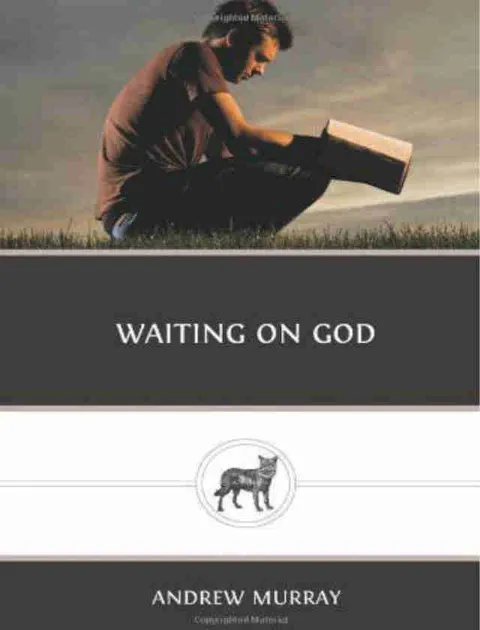
"Waiting on God" by Andrew Murray explores the importance of patiently waiting for God's timing, will, and answers in our lives. Murray discusses the benefits of surrendering our desires and trusting in God's perfect plan, offering insights on how to cultivate a deeper relationship with Him through prayer, faith, and obedience. Ultimately, the book encourages readers to trust in God's wisdom and timing, knowing that He has a purpose and plan for each of us.
C.S. Lewis
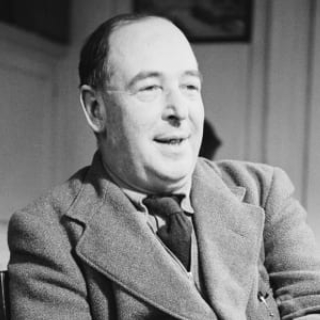 C.S. Lewis was a prolific Irish writer and scholar best known for his 'Chronicles of Narnia' fantasy series and his pro-Christian texts.
Who Was C.S. Lewis?
Writer and scholar C.S. Lewis taught at Oxford University and became a renowned Christian apologist writer, using logic and philosophy to support the tenets of his faith. He is also known throughout the world as the author of The Chronicles of Narnia fantasy series, which have been adapted into various films for the big and small screens.
Early Life
Clive Staples Lewis was born in Belfast, Ireland, on November 29, 1898, to Flora August Hamilton Lewis and Albert J. Lewis. As a toddler, Clive declared that his name was Jack, which is what he was called by family and friends. He was close to his older brother Warren and the two spent much time together as children.
Lewis was enraptured by fantastic animals and tales of gallantry, and hence the brothers created the imaginary land of Boxen, complete with an intricate history that served them for years. Lewis' mother died when he was 10, and he went on to receive his pre-college education at boarding schools and from a tutor. During WWI, he served with the British army and was sent home after being wounded by shrapnel. He then chose to live as a surrogate son with Janie Moore, the mother of a friend of Lewis' who was killed in the war.
Teaching Career at Oxford and Wartime Broadcasts
Lewis graduated from Oxford University with a focus on literature and classic philosophy, and in 1925 he was awarded a fellowship teaching position at Magdalen College, which was part of the university. There, he also joined the group known as The Inklings, an informal collective of writers and intellectuals who counted among their members Lewis' brother Warren and J.R.R. Tolkien. It was through conversations with group members that Lewis found himself re-embracing Christianity after having become disillusioned with the faith as a youth. He would go on to become renowned for his rich apologist texts, in which he explained his spiritual beliefs via platforms of logic and philosophy.
Lewis began publishing work including Spirits in Bondage in 1919 and the satirical Dymer in 1926. After penning other titles — including The Allegory of Love (1936), for which he won the Hawthornden Prize — he released in 1938 his first sci-fi work, Out of the Silent Planet, the first of a space trilogy which dealt sub-textually with concepts of sin and desire. Later, during WWII, Lewis gave highly popular radio broadcasts on Christianity which won many converts; his speeches were collected in the work Mere Christianity.
Books and Film Legacy
Lewis was a prolific author of fiction and nonfiction who wrote dozens of books over the course of his career. His faith-based arguments as seen in texts like The Great Divorce (1946) and Miracles (1947) are held in high regard by many theologians, scholars and general readers. His satirical fiction novel The Screwtape Letters (1942) is also a beloved classic. Lewis also continued his love affair with classic mythology and narratives during his later years: His book Till We Have Faces: A Myth Retold (1956) featured the story of Psyche and Cupid. He also penned an autobiography, Surprised by Joy: The Shape of My Early Life (1955).
Lewis' landmark series, The Chronicles of Narnia, has seen a number of on-screen iterations, including a cartoon version of The Lion, The Witch and the Wardrobe that was released in 1979 and a 1989 film series. Additionally, in 2005, a big-screen adaptation of The Lion, The Witch and the Wardrobe hit movie theaters, starring Tilda Swinton as the witch Jadis and Liam Neeson as the voice of Aslan. Two more Narnia films were brought to theaters as well: Prince Caspian (2008) and The Voyage of the Dawn Treader (2010). A movie version of The Silver Chair was slated to hit theaters in the near future, with filming starting in the winter of 2018.
Lewis' relationship with his wife, Joy, has also been depicted in Shadowlands, presented as a play and two films; one of the film versions was directed by Richard Attenborough and starred Anthony Hopkins as Lewis.
'The Chronicles of Narnia'
During the 1940s, Lewis began writing the seven books that would comprise The Chronicles of Narnia children's series, with The Lion, The Witch and the Wardrobe (1950) being the first release. The story focused on four siblings who, during wartime, walk through an armoire to enter the magical world of Narnia, a land resplendent with mythical creatures and talking animals. Throughout the series, a variety of Biblical themes are presented; one prominent character is Aslan, a lion and the ruler of Narnia, who has been interpreted as a Jesus Christ figure. (Lewis would assert that his Narnia stories weren't a direct allegory to the real world.)
Though the book received some negative reviews, it was generally well-received by readers, and the series retained its international popularity over the following decades.
Marriage
In 1954, Lewis joined the faculty of Cambridge University as a literature professor, and in 1956 he married an American English teacher, Joy Gresham, with whom he had been in correspondence. Lewis was full of happiness during the years of their marriage, though Gresham died of cancer in 1960. Lewis grieved deeply for his wife and shared his thoughts in the book A Grief Observed, using a pen name.
Death
In 1963, Lewis resigned from his Cambridge position after experiencing heart trouble. He died on November 22, 1963, in Headington, Oxford.
C.S. Lewis was a prolific Irish writer and scholar best known for his 'Chronicles of Narnia' fantasy series and his pro-Christian texts.
Who Was C.S. Lewis?
Writer and scholar C.S. Lewis taught at Oxford University and became a renowned Christian apologist writer, using logic and philosophy to support the tenets of his faith. He is also known throughout the world as the author of The Chronicles of Narnia fantasy series, which have been adapted into various films for the big and small screens.
Early Life
Clive Staples Lewis was born in Belfast, Ireland, on November 29, 1898, to Flora August Hamilton Lewis and Albert J. Lewis. As a toddler, Clive declared that his name was Jack, which is what he was called by family and friends. He was close to his older brother Warren and the two spent much time together as children.
Lewis was enraptured by fantastic animals and tales of gallantry, and hence the brothers created the imaginary land of Boxen, complete with an intricate history that served them for years. Lewis' mother died when he was 10, and he went on to receive his pre-college education at boarding schools and from a tutor. During WWI, he served with the British army and was sent home after being wounded by shrapnel. He then chose to live as a surrogate son with Janie Moore, the mother of a friend of Lewis' who was killed in the war.
Teaching Career at Oxford and Wartime Broadcasts
Lewis graduated from Oxford University with a focus on literature and classic philosophy, and in 1925 he was awarded a fellowship teaching position at Magdalen College, which was part of the university. There, he also joined the group known as The Inklings, an informal collective of writers and intellectuals who counted among their members Lewis' brother Warren and J.R.R. Tolkien. It was through conversations with group members that Lewis found himself re-embracing Christianity after having become disillusioned with the faith as a youth. He would go on to become renowned for his rich apologist texts, in which he explained his spiritual beliefs via platforms of logic and philosophy.
Lewis began publishing work including Spirits in Bondage in 1919 and the satirical Dymer in 1926. After penning other titles — including The Allegory of Love (1936), for which he won the Hawthornden Prize — he released in 1938 his first sci-fi work, Out of the Silent Planet, the first of a space trilogy which dealt sub-textually with concepts of sin and desire. Later, during WWII, Lewis gave highly popular radio broadcasts on Christianity which won many converts; his speeches were collected in the work Mere Christianity.
Books and Film Legacy
Lewis was a prolific author of fiction and nonfiction who wrote dozens of books over the course of his career. His faith-based arguments as seen in texts like The Great Divorce (1946) and Miracles (1947) are held in high regard by many theologians, scholars and general readers. His satirical fiction novel The Screwtape Letters (1942) is also a beloved classic. Lewis also continued his love affair with classic mythology and narratives during his later years: His book Till We Have Faces: A Myth Retold (1956) featured the story of Psyche and Cupid. He also penned an autobiography, Surprised by Joy: The Shape of My Early Life (1955).
Lewis' landmark series, The Chronicles of Narnia, has seen a number of on-screen iterations, including a cartoon version of The Lion, The Witch and the Wardrobe that was released in 1979 and a 1989 film series. Additionally, in 2005, a big-screen adaptation of The Lion, The Witch and the Wardrobe hit movie theaters, starring Tilda Swinton as the witch Jadis and Liam Neeson as the voice of Aslan. Two more Narnia films were brought to theaters as well: Prince Caspian (2008) and The Voyage of the Dawn Treader (2010). A movie version of The Silver Chair was slated to hit theaters in the near future, with filming starting in the winter of 2018.
Lewis' relationship with his wife, Joy, has also been depicted in Shadowlands, presented as a play and two films; one of the film versions was directed by Richard Attenborough and starred Anthony Hopkins as Lewis.
'The Chronicles of Narnia'
During the 1940s, Lewis began writing the seven books that would comprise The Chronicles of Narnia children's series, with The Lion, The Witch and the Wardrobe (1950) being the first release. The story focused on four siblings who, during wartime, walk through an armoire to enter the magical world of Narnia, a land resplendent with mythical creatures and talking animals. Throughout the series, a variety of Biblical themes are presented; one prominent character is Aslan, a lion and the ruler of Narnia, who has been interpreted as a Jesus Christ figure. (Lewis would assert that his Narnia stories weren't a direct allegory to the real world.)
Though the book received some negative reviews, it was generally well-received by readers, and the series retained its international popularity over the following decades.
Marriage
In 1954, Lewis joined the faculty of Cambridge University as a literature professor, and in 1956 he married an American English teacher, Joy Gresham, with whom he had been in correspondence. Lewis was full of happiness during the years of their marriage, though Gresham died of cancer in 1960. Lewis grieved deeply for his wife and shared his thoughts in the book A Grief Observed, using a pen name.
Death
In 1963, Lewis resigned from his Cambridge position after experiencing heart trouble. He died on November 22, 1963, in Headington, Oxford.
The Cross and the St. Louis Cardinals
What does Jonathan Edwards have to do with baseball? It relates to how he saw the world. The technical term is typology — the mechanism of his God-entranced vision of all things. He explains, God does purposely make and order one thing to be in agreeableness and harmony with another. And if so, why should not we suppose that he makes the inferior in imitation of the superior, the material of the spiritual, on purpose to have a resemblance and shadow of them? We see that even in the material world God makes one part of it strangely to agree with another; and why it is not reasonable to suppose he makes the whole as a shadow of the spiritual world? . . . ("Images of Diving Things," A Jonathan Edwards Reader, [New Haven: Yale University Press, 1995], 16). Edwards saw it in the experience of walking down a hill, in the diet of ravens, and in the life of silkworms. And sports fans just saw it in the 2011 World Series. The World Series, Really? What made this Series so great wasn’t the mere fact that I love the St. Louis Cardinals and they won. It was the whole manner of how it happened. It's the fact that the Cardinals were trailing 10.5 games on August 25. They had no chance of making the playoffs, it seemed. It was the time to start looking at next year—the time when the "maybe-next-season" wishes are reluctantly announced. But then they started winning. Their late-season success allowed them to slip into the playoffs on the final game of the season. That was amazing enough. Then they beat the league-best Phillies. Then the potent Brewers. And then there they were—like out of no where—in the World Series. Learning from Edwards, let’s keep tracking the "agreeableness and harmony" that goes much deeper than America’s pastime. The Cardinals were the underdog, if there ever were one. They shouldn't even be in the playoffs, not to mention in the World Series competing against the repeat American League champion Texas Rangers. Every commentator wrote them off — "it was nice they made it this far, but they just aren’t championship caliber." Weakness Exposed When Texas won two in a row to take a 3-2 series lead, we expected that the Cards would finally fold. And during Game 6, when they came down to one out and one strike away from losing — twice! — hopes were dashed for Cardinal Nation. The consoling began, remembering the season really should have ended in September, that they really didn't have a World Series-quality team, that it's time again to start the "maybe next season" concessions. The team’s weakness at last was seen as weakness, and the dream of winning the World Series was confronted with the reality that things really don't happen this way. It was like a Friday afternoon wake-up call from Golgotha. But wait a minute. Isn’t this the way all the best stories go? Cue Edwards. Jesus rode into Jerusalem on the foal of a donkey, but it could have been a stallion leading an unbeatable legion of Jewish revolutionaries. He could have been taller, a handsome king that looked more like a Disney prince instead of a Galilean peasant. There could have been no agony, no cross, no tomb. There could have been, but there wasn’t. When Hope Seems Lost And this was God’s design — in his universe, there is more beauty when victory rises out of weakness. The morning shines brighter after a tumultuousness night. The glory is greater at the end of three silent days, when the Lamb has been slain, when all hope seems lost. That’s where this World Series was pointing. Game 6 made this clear. The Cardinals were finished. It was over. Over. Well, over until David Freese's two-run triple in the bottom of the 9th, then Berkman's RBI single in the 10th, then Freese's walk-off homer in the 11th. Almost too good to be true. Like an out-of-breath Mary flinging open the disciples’ door to announce an empty tomb. Then Game 7 came, and the Cards won that one, too. It was an unforgettable Series, one that reaches deep into the human soul, resonating with the imprint of our Creator and reminding us why the good stories are, well, so good. Article by Jonathan Parnell