
Others like earth's final moments Features >>
.epub-160.webp)


About the Book
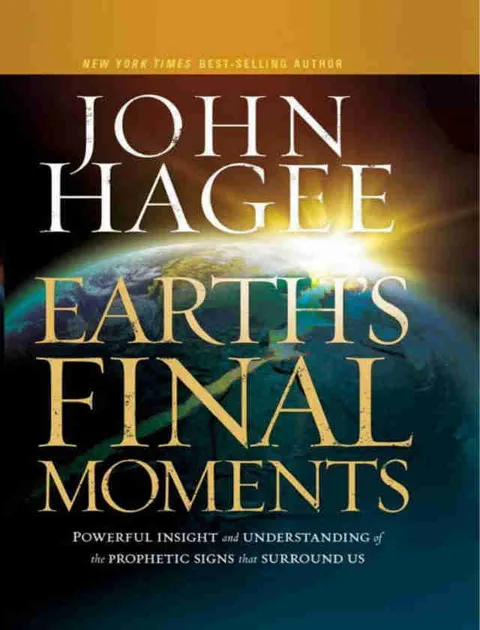
"Earth's Final Moments" by John Hagee discusses the biblical prophecies surrounding the end times and provides insights into the signs that indicate the approaching apocalypse. The book explores topics such as the rise of globalism, the reemergence of Israel, and the role of technology in fulfilling prophesies. Hagee urges readers to prepare spiritually for the final moments of Earth and to be vigilant in their faith.
Henry Alline
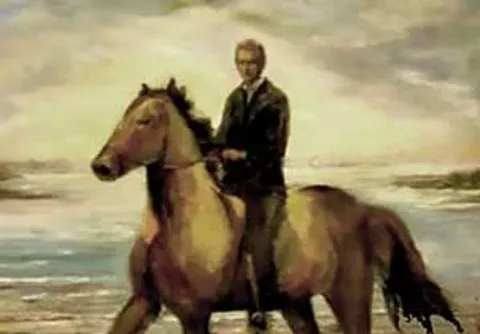 Henry Alline’s early years
He was born and received his early education in Newport, Rhode Island and his family moved to Nova Scotia in 1760, when he was 12 years old. When he was nine he began to read theological works and became somewhat mystical, but after years of soul-searching and spiritual conflict he was powerfully converted in 1775, simultaneously receiving a call to the ministry.
Alone and desperate he prayed until…’redeeming love broke into my soul… with such power that my whole soul seemed to be melted down with love…and my will turned of choice after the infinite God. A year later he began to preach.
His preaching career
His preaching career lasted until his death eight years later. He was an itinerant preacher in Nova Scotia and Prince Edward Island in an ever-widening circuit, beginning what became known as the ‘New Light’ movement and which is still the greatest revival that Canada has ever seen. He preached the new birth powerfully and effectively and his admirers compared him to George Whitefield and John the Baptist.
Considered an emotional and dangerous fanatic by some and a ‘ravager of congregations,’ the Congregationalists withdrew his right to preach in their churches, so he spoke in barns, houses and the open air. In all he began eight ‘New Light’ Congregational churches based on his non-Arminian but anti-Calvinist views of free-will and predestination, and his strong rejection of outward religious form.
Ironically, despite his indifference regarding baptism, his major 19th century influence was amongst the Baptists of eastern Canada, many of whom were his converts.
Despite possibly unorthodox views and methods, his ministry was without doubt that of an extraordinary revivalist.
Alline’s sermon style was always simple and extemporary, using a few simple, understandable points to help the unchurched to grasp the simple truths of the gospel. As with other itinerant revivalists, his objective was to lead the hearers to a point of decision – to accept or reject Christ as Saviour and Lord, which opened the door to the “new birth.”
Doubtless, his sermons were repeated over time, but he was never in one place long enough for his listeners to notice.
Alline also employed the ministry of prayer and of singing, writing many hymns which were helpful in communicating the gospel. A collection was gathered after his death and was reprinted at least four times in the United States, and several were included in the standard hymnals of the 19th century.
Henry Alline’s early years
He was born and received his early education in Newport, Rhode Island and his family moved to Nova Scotia in 1760, when he was 12 years old. When he was nine he began to read theological works and became somewhat mystical, but after years of soul-searching and spiritual conflict he was powerfully converted in 1775, simultaneously receiving a call to the ministry.
Alone and desperate he prayed until…’redeeming love broke into my soul… with such power that my whole soul seemed to be melted down with love…and my will turned of choice after the infinite God. A year later he began to preach.
His preaching career
His preaching career lasted until his death eight years later. He was an itinerant preacher in Nova Scotia and Prince Edward Island in an ever-widening circuit, beginning what became known as the ‘New Light’ movement and which is still the greatest revival that Canada has ever seen. He preached the new birth powerfully and effectively and his admirers compared him to George Whitefield and John the Baptist.
Considered an emotional and dangerous fanatic by some and a ‘ravager of congregations,’ the Congregationalists withdrew his right to preach in their churches, so he spoke in barns, houses and the open air. In all he began eight ‘New Light’ Congregational churches based on his non-Arminian but anti-Calvinist views of free-will and predestination, and his strong rejection of outward religious form.
Ironically, despite his indifference regarding baptism, his major 19th century influence was amongst the Baptists of eastern Canada, many of whom were his converts.
Despite possibly unorthodox views and methods, his ministry was without doubt that of an extraordinary revivalist.
Alline’s sermon style was always simple and extemporary, using a few simple, understandable points to help the unchurched to grasp the simple truths of the gospel. As with other itinerant revivalists, his objective was to lead the hearers to a point of decision – to accept or reject Christ as Saviour and Lord, which opened the door to the “new birth.”
Doubtless, his sermons were repeated over time, but he was never in one place long enough for his listeners to notice.
Alline also employed the ministry of prayer and of singing, writing many hymns which were helpful in communicating the gospel. A collection was gathered after his death and was reprinted at least four times in the United States, and several were included in the standard hymnals of the 19th century.
The Hill We All Must Die On
The doctrine of penal substitution is under attack today — and that’s an understatement. From voices outside of evangelical theology to those within, the historic Reformation view of the cross is claimed to be a “modern” invention from the cultural West. Others criticize the doctrine as sanctioning violence, privileging divine retributive justice over God’s love, condoning a form of divine child abuse, reducing Scripture’s polychrome presentation of the cross to a lifeless monochrome, being too “legal” in orientation, and so on. All of these charges are not new. All of them have been argued since the end of the 16th century, and all of them are false. Yet such charges reflect the corrosive effects of false ideas on theology and a failure to account for how the Bible, on its own terms, interprets the cross. Given the limitations of this article, I cannot fully respond to these charges. Instead, I will briefly state four truths that unpack the biblical-theological rationale of penal substitution. In so doing, my goal is to explain why penal substitution should be embraced as God’s good news for sinners. Four Questions to Get Right It is only in viewing Christ as our penal substitute that we truly understand the depth of God’s holy love for us, the horrendous nature of our sin before God, and the glory of our substitute — Jesus Christ our Lord — whose obedient life and penal death achieved our right standing before God and the full forgiveness of our sins. Let us now turn to these truths that are crucial to affirm and that lead us to glory in our Lord Jesus Christ as our penal substitute. 1. Who Is God? First, we must get right who God is as our triune Creator-Covenant Lord. Mark it well: debates over the nature of the atonement are first and foremost doctrine of God debates. If our view of God is sub-biblical, we will never get the cross right. From the opening verses of Scripture, God is presented as eternal, a se (life from himself), holy love, righteous, and good — the triune God who is complete in himself and who needs nothing from us (Genesis 1–2; Psalm 50:12–14; Isaiah 6:1–3; Acts 17:24–25; Revelation 4:8–11). One crucial implication of this description is that God, in his very nature, is the moral standard of the universe. This is why we must not think of God’s law as something external to him that he may relax at will. Instead, the triune God of Scripture is the law; his will and nature determine what is right and wrong. This view of God is often forgotten in today’s discussion of the atonement. Following the “New Perspective on Paul,” some argue that God’s justice/righteousness is only “God’s covenant faithfulness,” that is, God remaining true to his promises. No doubt this is true. However, what this view fails to see is that “righteousness-justice-holiness” is first tied to God’s nature as God. That is why, in light of sin, God, who is the law, cannot overlook our sin. God’s holy justice demands that he not only punish all sin, but also, if he graciously chooses to justify the ungodly (Romans 4:5), he must do so by fully satisfying his own righteous, holy moral demand. Thus, given our sin and God’s gracious choice to redeem us, the question that emerges across redemptive history is this: How will God demonstrate his holy justice and covenant love and remain true to himself? The answer is only found in the Father’s gift of his Son, Jesus’s obedient life and substitutionary death, that results in our justification before God in Christ (Romans 3:21–26). 2. Who Is Man? Second, we must get right who humans are as God’s image-sons created to be in covenant relationship with God. Specifically, we must grasp who Adam is, not only as a historic person, but also as the covenant representative/head of the human race (Romans 5:12–21; 1 Corinthians 15:21–22). Why is this significant? Because in creation, our triune Creator-Covenant God sets the conditions of the covenant and rightly demands from Adam (and all of us) total trust, love, and obedience — a truth reflected in God’s first command. But the flip side is also true: If there is covenant disobedience, given who God is, there is also his holy judgment against our sin that results in the penalty of physical and spiritual death (Genesis 2:15–17; cf. Romans 6:23). 3. How Can God Justify Sinners? Third, we must get right the serious problem of our sin before God. Sadly, Adam did not love God with full covenant devotion. Instead, he disobeyed God, thus bringing sin, death, and God’s curse into the world. In the Bible’s storyline, Adam’s sin changes everything! From Genesis 3 forward, “in Adam,” the entire human race becomes guilty, corrupted, condemned, and under the judicial sentence of death (Genesis 3; Romans 5:12–21; Ephesians 2:1–3). If God is going to redeem, which he has graciously promised to do (Genesis 3:15), how is he going to do it? Remember, given who God is in all of his moral perfection, and given that he is the standard of holy justice who will not deny himself, how will God declare sinners justified before him apart from the full satisfaction of his moral demand? God must punish sin and execute perfect justice because he is holy, just, and good. He cannot overlook our sin nor relax the demands of his justice, and in truth, thankfully so! But to justify us, our sin must be fully atoned. How, then, can God punish our sin, satisfy his own righteous demand, and justify sinners? Add to this point: To undo, reverse, and pay for Adam’s sin, we need someone who will come from the human race and identify with us (Genesis 3:15), render our required covenantal obedience, and pay the penalty for our sin. We need someone who will become our covenant representative and substitute, and by his obedient life and penal death secure our justification before God. And wonder of wonders, Scripture gloriously announces that there is one man — and only one — who can do this for us, namely our Lord Jesus Christ (Hebrews 2:5–18). 4. Who Is Jesus? Fourth, we must get right who Jesus is, what he does for us, and that he alone can redeem, reconcile, and justify us before God. Who is the Jesus of the Bible? In short, he is God the Son incarnate, the second person of the triune Godhead. He is no abused child or some third-party individual who stands independent of God. We cannot think of his atoning work apart from thinking of the entire triune God accomplishing our salvation. Furthermore, as the eternal Son, eternally loved of his Father and the Spirit, in God’s plan, he voluntarily took on the role of becoming our Redeemer. And in his incarnation, he identified with us in order to represent us before God (Hebrews 5:1). In his obedient human life, Jesus, as the Mediator of the new covenant, obeyed for us as our legal covenant representative. In his obedient death, Jesus, as the divine Son, satisfied his own righteous demand against us by bearing the penalty of our sin as our substitute (Romans 5:18–19; Philippians 2:6–11; Hebrews 5:1–10). And in doing all of this, the Father’s love was revealed in Jesus’s penal substitution because of who Jesus is as the Son incarnate, the Last Adam, and the only Mediator of God’s people (Romans 5:8–11). Don’t Get Bored with the Gospel The truth of the matter is this: penal substitution is not a view to be replaced by something “better” or dismissed as a relic of the past. There is no greater news than this: Christ Jesus, as the divine Son incarnate, perfectly meets our need before God by his obedient life and substitutionary death. In Christ the triune love of God is gloriously revealed because in Christ we receive the gift of righteousness which is now ours by faith in him. In union with his people, Christ, as our new covenant head, obeys in our place, dies our death, and satisfies divine justice, which is evidenced in his glorious resurrection. As a result, by faith alone, in Christ alone, his righteousness is ours — now and forever (Romans 8:1; 2 Corinthians 5:21; Galatians 3:13). By faith-union in Christ, we stand complete: justified before God by the forgiveness of our sins and clothed in his righteousness (Romans 4:1–8; 5:1–2). Following the Bible’s teaching on this matter, may we learn anew to say with Paul, “For I decided to know nothing . . . except Jesus Christ and him crucified” (1 Corinthians 2:2). “Thanks be to God for his inexpressible gift!” (2 Corinthians 9:15). Article by Stephen Wellum