
Others like decently and in order Features >>
Reigning In Life As A King

Lost And Found - Finding Hope In The Detours Of Life
The Power Of Consecration
The Human Spirit

The Order Of Melchizedek
-160.webp)
The Law Of Recognition (The Laws Of Life Series)
Genetic Of Words
Zeal Without Burnout

Recreating Your World
Basic Elements Of The Christian Life Vol II
About the Book
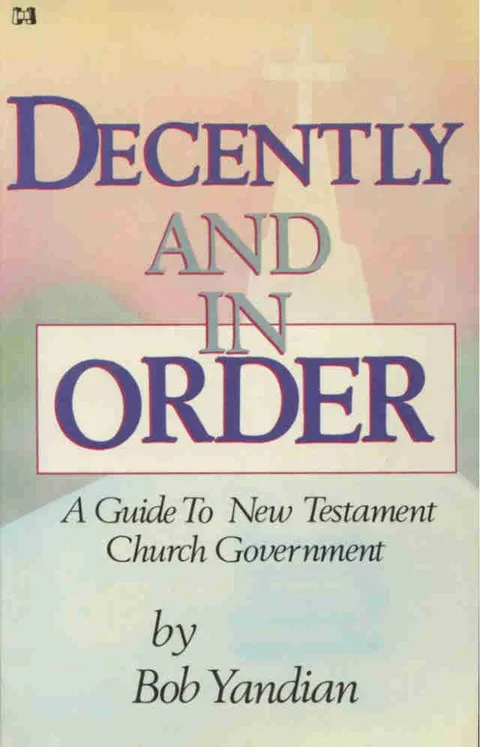
"Decently and In Order" by Bob Yandian explores the biblical principles of order and structure within the church. The book emphasizes the importance of following God's guidelines for leadership, governance, and ministry in order to create a harmonious and effective church community. Yandian provides practical advice and insights for maintaining order and organization in all aspects of church life.
Steven Curtis Chapman
 Steven Curtis Chapman is an American Christian musician, singer, song writer, record producer, actor, author and social activist. He is the only artist in the history of music to have won 56 Gospel Music Association Dove Awards and is also a proud receiver of 5 Grammy Awards. His music is known for being a unique cross between country music, soft rock and orchestrated pop, which made him a prominent artist in the contemporary Christian music circuit of the 1980s. Chapman grew up in a humble environment where he found his calling for music, owing to his father’s inclination towards country music. He learnt to play instruments like guitar and piano just by hanging around in his father’s music store, listening to him play along with his friends. He took up music seriously when he moved to Nashville and got recognized by Sparrow Records, a company he stayed with for a long period in his career. He has released 19 studio albums and has sold over 10 million albums until now. Chapman is a family oriented person just like his father and has a big family comprising of his wife Mary Beth and 3 biological and 2 adopted children. He is a vocal advocate for adoption and has worked socially to eradicate the problem of youth violence.
Childhood & Early Life
Steven Curtis Chapman was born on November 21, 1962 in Paducah, Kentucky, to Herb and Judy Chapman. His father was a country singer and songwriter, who turned down opportunities to become a successful singer to concentrate on his family. His mother was a stay-at-home mom.
His father owned a music store, a business he managed from his basement and used to play music with his friends. Such creative environment at home influenced Chapman’s life from very early on and he bought his first guitar at 6.
Chapman joined as a pre-med student at Georgetown College in Kentucky but after few semesters he moved to Anderson College, Indiana. But he ultimately dropped the idea of studying and went to Nashville to pursue his first love, music.
During 1980s, he wrote a song ‘Built to Last’, which gained huge popularity after getting recorded by a gospel group ‘The Imperials’. The success of the song fetched Chapman a songwriting deal with Sparrow Records.
Career
Chapman’s first official album ‘First Hand’ was released in 1987. The album was an instant hit with singles like ‘Weak Days’ and topped at number 2 on the Contemporary Christian Music chart. The album had a mix of country music with soft rock and pop.
In 1988, following the success of his first album, Chapman released ‘Real Life Conversations’. Its hit single ‘His Eyes’ received the ‘Contemporary Recorded Song of the Year’ award from the ‘Gospel Music Association’. He co-wrote it with James Isaac Elliot.
After a few years, he made a swift turn to mainstream music with his album ‘The Great Adventure’ in 1992. It earned him two Grammy awards for the album and for the title song of the album.
After gaining consistent success with albums like ‘Heaven in the Real World (1994), ‘Signs of Life (1996) and ‘Speechless (1999), Chapman’s next great album ‘Declaration’ came out in 2001, for which he toured 70 cities.
In 2003, ‘All About Love’ was released and it ranked at Top 15 on the Christian Music charts. It was released under Sparrow Records and Chapman very humbly credited his wife Mary Beth for being the inspiration for his album.
‘All Things New’ was released in 2004 and the album added another Grammy to Chapman’s proud award collection. This time he received it in the category of Best Pop/Contemporary Gospel Album. It was also nominated for the Dove Award.
In 2005, ‘All I Really Want for Christmas’ was released, which was Chapman’s another successful Christmas album after ‘The Music of Christmas’. It had traditional holiday tunes and favorites like ‘Go Tell It on the Mountain’ and Silver Bells’.
Chapman took his music to greater levels by taking his concert to South Korea for the U.S. troops who were serving there in 2006. It was the first Christian concert that ever performed for the American army in that country.
In 2007, he released ‘This Moment’ which included hit singles like ‘Cinderella’, for which he was chosen for WOW Hits 2009. He also went on his ‘Winter Jam’ tour and took his sons’, Caleb and Will’s band along.
‘Beauty Will Rise’, Chapman’s seventeenth album, was released in 2009. It is said that he wrote the songs of the album after getting inspired by his daughter Maria Sue’s sad and untimely demise. It included songs like ‘Meant to Be’ and ‘Re:creation’.
In 2012, Chapman finally parted ways with Sparrow Records, the record company that he remained loyal to for so many years. He was signed on by Sony’s Provident Label Group and came out with a Christmas album called ‘JOY’.
‘The Glorious Unfolding’ was released in 2013 under Reunion Records and it peaked on number 27 on the Billboard 200 and was number 1 Top Christian Album. The album was produced by Chapman himself and Brent Milligan.
Major Works
Chapman’s ‘The Great Adventure’ in 1992 was a turning point in his musical career because until now he was making soft and contemporary country music but with ‘The Great Adventure’ he targeted the mainstream audience and tasted huge commercial success for the first time.
Awards & Achievements
Chapman is the winner of five Grammy awards for albums like ‘For the Sake of the Call’ ‘The Great Adventure’ ‘The Live Adventure’, ‘Speechless’ and ‘All Things New’. He has also received 56 Gospel Music Association Dove Awards, more than any other artist.
Personal Life & Legacy
Chapman got married to Mary Beth in 1984 after they first met at Anderson University in Indiana. They have three biological children: Emily, Caleb and Will and three adopted children: Shaohannah, Stevey and Maria, together.
In 2008, Chapman’s youngest son Will ran over his car by accident on his adopted daughter Maria Sue Chunxi Chapman. She was running towards him to meet him but he did not see her and she was pronounced dead on arrival at the hospital.
Trivia
Chapman’s wife Mary Beth Chapman has written and released a book about losing her youngest daughter called ‘Choosing to SEE: A Journey of Struggle and Hope’.
Chapman and his wife have written three children's books with adoption themes: ‘Shaoey And Dot: Bug Meets Bundle’ (2004), ‘Shaoey and Dot: The Christmas Miracle’ (2005), and ‘Shaoey and Dot: A Thunder and Lightning Bug Story’ (2006).
He has received an Honorary Doctorate of Music from Anderson University.
Steven Curtis Chapman is an American Christian musician, singer, song writer, record producer, actor, author and social activist. He is the only artist in the history of music to have won 56 Gospel Music Association Dove Awards and is also a proud receiver of 5 Grammy Awards. His music is known for being a unique cross between country music, soft rock and orchestrated pop, which made him a prominent artist in the contemporary Christian music circuit of the 1980s. Chapman grew up in a humble environment where he found his calling for music, owing to his father’s inclination towards country music. He learnt to play instruments like guitar and piano just by hanging around in his father’s music store, listening to him play along with his friends. He took up music seriously when he moved to Nashville and got recognized by Sparrow Records, a company he stayed with for a long period in his career. He has released 19 studio albums and has sold over 10 million albums until now. Chapman is a family oriented person just like his father and has a big family comprising of his wife Mary Beth and 3 biological and 2 adopted children. He is a vocal advocate for adoption and has worked socially to eradicate the problem of youth violence.
Childhood & Early Life
Steven Curtis Chapman was born on November 21, 1962 in Paducah, Kentucky, to Herb and Judy Chapman. His father was a country singer and songwriter, who turned down opportunities to become a successful singer to concentrate on his family. His mother was a stay-at-home mom.
His father owned a music store, a business he managed from his basement and used to play music with his friends. Such creative environment at home influenced Chapman’s life from very early on and he bought his first guitar at 6.
Chapman joined as a pre-med student at Georgetown College in Kentucky but after few semesters he moved to Anderson College, Indiana. But he ultimately dropped the idea of studying and went to Nashville to pursue his first love, music.
During 1980s, he wrote a song ‘Built to Last’, which gained huge popularity after getting recorded by a gospel group ‘The Imperials’. The success of the song fetched Chapman a songwriting deal with Sparrow Records.
Career
Chapman’s first official album ‘First Hand’ was released in 1987. The album was an instant hit with singles like ‘Weak Days’ and topped at number 2 on the Contemporary Christian Music chart. The album had a mix of country music with soft rock and pop.
In 1988, following the success of his first album, Chapman released ‘Real Life Conversations’. Its hit single ‘His Eyes’ received the ‘Contemporary Recorded Song of the Year’ award from the ‘Gospel Music Association’. He co-wrote it with James Isaac Elliot.
After a few years, he made a swift turn to mainstream music with his album ‘The Great Adventure’ in 1992. It earned him two Grammy awards for the album and for the title song of the album.
After gaining consistent success with albums like ‘Heaven in the Real World (1994), ‘Signs of Life (1996) and ‘Speechless (1999), Chapman’s next great album ‘Declaration’ came out in 2001, for which he toured 70 cities.
In 2003, ‘All About Love’ was released and it ranked at Top 15 on the Christian Music charts. It was released under Sparrow Records and Chapman very humbly credited his wife Mary Beth for being the inspiration for his album.
‘All Things New’ was released in 2004 and the album added another Grammy to Chapman’s proud award collection. This time he received it in the category of Best Pop/Contemporary Gospel Album. It was also nominated for the Dove Award.
In 2005, ‘All I Really Want for Christmas’ was released, which was Chapman’s another successful Christmas album after ‘The Music of Christmas’. It had traditional holiday tunes and favorites like ‘Go Tell It on the Mountain’ and Silver Bells’.
Chapman took his music to greater levels by taking his concert to South Korea for the U.S. troops who were serving there in 2006. It was the first Christian concert that ever performed for the American army in that country.
In 2007, he released ‘This Moment’ which included hit singles like ‘Cinderella’, for which he was chosen for WOW Hits 2009. He also went on his ‘Winter Jam’ tour and took his sons’, Caleb and Will’s band along.
‘Beauty Will Rise’, Chapman’s seventeenth album, was released in 2009. It is said that he wrote the songs of the album after getting inspired by his daughter Maria Sue’s sad and untimely demise. It included songs like ‘Meant to Be’ and ‘Re:creation’.
In 2012, Chapman finally parted ways with Sparrow Records, the record company that he remained loyal to for so many years. He was signed on by Sony’s Provident Label Group and came out with a Christmas album called ‘JOY’.
‘The Glorious Unfolding’ was released in 2013 under Reunion Records and it peaked on number 27 on the Billboard 200 and was number 1 Top Christian Album. The album was produced by Chapman himself and Brent Milligan.
Major Works
Chapman’s ‘The Great Adventure’ in 1992 was a turning point in his musical career because until now he was making soft and contemporary country music but with ‘The Great Adventure’ he targeted the mainstream audience and tasted huge commercial success for the first time.
Awards & Achievements
Chapman is the winner of five Grammy awards for albums like ‘For the Sake of the Call’ ‘The Great Adventure’ ‘The Live Adventure’, ‘Speechless’ and ‘All Things New’. He has also received 56 Gospel Music Association Dove Awards, more than any other artist.
Personal Life & Legacy
Chapman got married to Mary Beth in 1984 after they first met at Anderson University in Indiana. They have three biological children: Emily, Caleb and Will and three adopted children: Shaohannah, Stevey and Maria, together.
In 2008, Chapman’s youngest son Will ran over his car by accident on his adopted daughter Maria Sue Chunxi Chapman. She was running towards him to meet him but he did not see her and she was pronounced dead on arrival at the hospital.
Trivia
Chapman’s wife Mary Beth Chapman has written and released a book about losing her youngest daughter called ‘Choosing to SEE: A Journey of Struggle and Hope’.
Chapman and his wife have written three children's books with adoption themes: ‘Shaoey And Dot: Bug Meets Bundle’ (2004), ‘Shaoey and Dot: The Christmas Miracle’ (2005), and ‘Shaoey and Dot: A Thunder and Lightning Bug Story’ (2006).
He has received an Honorary Doctorate of Music from Anderson University.
God Will Give You the Energy
Do you “manage” your energy? A growing chorus of experts have been pointing out the limits of managing our time and commending we pay more attention to managing our energy. According to Tony Schwartz, one of the leading voices for energy-management, Between digital technology and rising complexity, there’s more information and more requests coming at us, faster and more relentlessly than ever. Unlike computers, however, human beings aren’t meant to operate continuously, at high speeds, for long periods of time. Rather, we’re designed to move rhythmically between high and low electrical frequencies. Our hearts beat at varying intervals. Our lungs expand and contract depending on demand. It’s not sufficient to be good at inhaling. Indeed, the more deeply you exhale, the calmer and more capable you become. (Tony Schwartz, Manage Your Day-to-Day, 51) I don’t know Schwartz’s religious commitments, but I appreciate the acknowledgment that we are “designed.” Yes, we truly are designed: finite creatures fearfully and wonderfully formed by the infinite Creator. Wisdom entails recognizing that we have limits, and locating them. And yet, as Schwartz continues, “Instead, we live linear lives, progressively burning down our energy reservoirs throughout the day. It’s the equivalent of withdrawing funds from a bank account without ever making a deposit. At some point, you go bankrupt.” Supernatural Work Schwartz’s observation may be insightful, but his solution is thin — and inadequate for those of us who not only acknowledge we’re designed, but claim to know our Designer: “The good news is that we can influence the way we manage our energy. By doing so skillfully, you can get more done in less time, at a higher level of quality, in a more sustainable way.” Many of us may have much to learn about better managing our energy in modern times, but as Christians we have much better and deeper good news to offer than influence, management, and greater productivity. “We are not resigned to our energy ups and downs as entirely the product of natural forces, of cause and effect, of rest and recovery, of nourishment and exercise.” To begin with, we do not see our own energy as a closed system. We are not resigned to our energy ups and downs as entirely the product of natural forces, of cause and effect, of rest and recovery, of nourishment and exercise. The natural factors are important; we minimize and ignore them to our detriment, even peril. But as Christians, we are supernaturalists. We know that our world is not a closed system. Neither is our body. God can, and often does, intervene into the normal course of our lives. Jesus Christ upholds the universe, moment by moment, with his powerful word (Hebrews 1:3; Colossians 1:17). And not only can he uphold, and replenish, our energy with his own, but it’s actually a repeated (and often overlooked) theme in the letters of Paul. Fierce Work Ethic The end of the first chapter of Colossians is where it most recently caught my attention. This is a well-worn passage for many of us in which Paul captures the heart of his ministry as an apostle — which, in this instance, is not distinct to his apostleship but shared by us all in some sense, especially pastors and elders: Him [Christ] we proclaim, warning everyone and teaching everyone with all wisdom, that we may present everyone mature in Christ. For this I toil, struggling with all his energy that he powerfully works within me. (Colossians 1:28–29) Paul had a fierce work ethic. No one in the Scripture talks more about work — and specifically hard work — than the apostle Paul. Maybe he would have acknowledged that he had some unusual wiring. Perhaps it was his life of singleness that freed him for extraordinary ministry output. He not only claimed “far greater labors” than his detractors (2 Corinthians 11:23), but compared himself to the other apostles, saying, “I worked harder than any of them” (1 Corinthians 15:10). Again and again, however, Paul puts his uncommon exertions of energy forward not as an exception to admire but as an example to follow — within the capacity God has given each, and with the understanding that every Christian can grow and expand our capacity for productive labor. Christ Who Energizes As he worked harder than anyone, Paul shared “the secret” of his remarkable energy and contentment “in any and every circumstance” (Philippians 4:12). In Colossians 1:29, he says that he labors “with all his energy that he powerfully works within me,” but Philippians 4:13 explains how: “I can do all things through him who strengthens me.” The him is “the Lord,” meaning Christ, from verse 10, which is why some translations make it plain: “through Christ who strengthens me.” Paul identifies Christ here as the particular person of the Godhead who gives him strength. “Jesus knows what it’s like to press up against the limits of our flesh and blood and the bounds of finitude in our created world.” A quick turn to 1 Timothy 1:12 confirms that Paul indeed has Christ Jesus our Lord specifically in mind as the supplier of his strength: “I thank him who has given me strength, Christ Jesus our Lord.” Similarly, Ephesians 6:10 confirms this connection of human strength provided supernaturally by Christ himself, the God-man — the particular person of the Godhead who Christians confess as “Lord”: “be strong in the Lord and in the strength of his might.” Finally, 2 Timothy 2:1 makes the same connection between spiritual strength and Jesus as the source: “be strengthened by the grace that is in Christ Jesus.” Paul not only claims to be strengthened by divine power — infinitely precious as that is. Paul speaks with more specificity. He testifies to divine-human power, to having Jesus’s own energy — “all his energy” — worked in him, and done so “powerfully,” by Christ himself. With His Own Energy When God strengthens us as Christians — when he shatters unbelieving notions of a closed system, not only supplying energy for us through natural means but by supernatural grace — he does so specifically through our brother and fellow human, Jesus Christ, truly God and truly man. The King of kings and Lord of lords, seated in power as sovereign of the universe, is not only God but man. Humanity sits on heaven’s throne. Jesus knows what it’s like to press up against the limits of our flesh and blood and the bounds of finitude in our created world. He knows what it’s like to have limited capacity, and limited time, and end the day with unfinished tasks. He knows what it’s like to be wearied physically (John 4:6) and what it’s like to need and carve out time for rest (Mark 6:31). He knows what it’s like to have work to accomplish (John 4:34; 5:36; 17:4). He had energy enough to work (almost) tirelessly, even on the Sabbath, when he encountered those in need (Luke 13:14–17; John 5:16–17; Mark 2:27–28). Through his works, his output of human energy, he not only bore witness to his Father (John 5:36; 9:3–5) and demonstrated whose he was (John 8:39–41; 10:25, 32) but also presented himself as the giver and focus of our faith (John 10:37–38; 14:10–11). “No one in the Scripture talks more about work — and specifically hard work — than the apostle Paul.” This same Jesus not only calls us his brothers but also fellow “laborers” (Matthew 9:37–38; Luke 10:7) and bids us to work with the energy we have for the good of others (Matthew 5:16). But he also does not leave us to our own energy. He doesn’t abandon us to what verve we can muster on our own, what we can produce merely through wise (and important) energy-management. He works in us — and does so powerfully, Paul says — to give us his own energy for the work to which he calls us. Ask Him for Energy As Christians, we will do well to learn to steward the energy God gives us naturally through diet, exercise, and rest. It would be irresponsible and foolish for us to treat lightly the God-created gifts of food and sleep, and presume that he will energize us apart from these natural means. But oh, how foolish it would be to ignore or neglect Jesus’s amazing offer: that he himself, the God-man, would work his own powerful energy in us. How could we not make this a regular rhythm of our lives, to both faithfully steward and humbly acknowledge the limits of our own energy, and ask Jesus regularly to fill us with his own energy to fulfill the callings which he’s given us? Here, at last, we can lay down our weary sense of independence, and work hard in the strength he supplies. Article by David Mathis