Mary Slessor
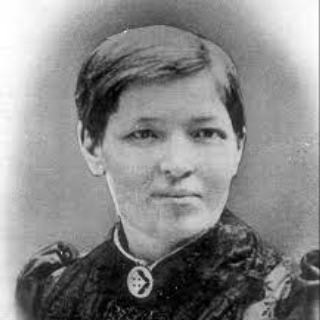 Beyond all question or doubt, Mary Slessor deserves a preeminent place among the great missionaries to Africa. Thirty-nine years of her life she gave to the West Coast of Africa, and when she died, an old converted Negress said, "Kutua oh, kutua oh!" that is to say, "Do not cry, do not cry. Praise God from whom all blessings flow. Ma was a great blessing to Africa." And that, assuredly, this unique woman was! J. H. Morrison thus writes of her:
"To heathen Africa she gave a new conception of womanhood, and to the world at large an imperishable example of Christian devotion."
To this verdict every student of African mission history must agree. Scotland also gave to Africa this devoted servant of her Lord, as she gave to the land of Ham so many great Christian workers. Mary Slessor was born December 2, 1848, in the city of Aberdeen, the second of a family of seven children. Her father was a drunkard, who made life miserable for his entire family, but her mother was a beautiful Christian woman who reared her children in the fear of God. And yet those more rugged traits which made her a great missionary in Africa, Mary inherited from her father, whose death was so great a blessing to the family. For many years her mother had to work in a factory to earn a scant living for her children; but after the death of her father, Mary worked for the family, and even when she was in Africa she supported her mother from her meager salary.
But never would the sunshine of Christian faith and joy pass from the simple home, even in those terrible later years when the father, almost frantic from drunkenness, would cause nights of terror. After the unhappy Saturdays, when Slessor spent his week's wages in drinking, there would come a happy Sunday when the mother with her seven children would hurry to Sunday school where Mary became a teacher when she was yet almost a child. Even then she dreamed of Africa, and her favorite game was to teach an imaginary school of black children. She read avidly, and was a constant student of the Bible and of Milton's Paradise Lost. In spite of this she was a mischievous, impulsive, strong-willed child who was able to beat down any boy that picked a fight with her. Her work in the factory brought her constantly in contact with the roughest element of the city, and this tended to make her a rough and ready antagonist for every one who happened to attempt to oppose her.
In 1874, the Christian world was profoundly moved by the news of Livingstone's death. Everybody spoke of the great missionary hero who by his own choice had died in the jungle of Africa. Now Mary could no longer restrain her passion for missionary work in Africa. She confided her wish to her mother who replied :
"My child, I'll willingly let you go. You'll make a fine missionary, and I'm sure God will be with you."
After some months of special training in missionary work, she was appointed for the West Coast of Africa, the "white man's grave." On August 5, 1876, when Mary was twenty-eight years old, she took the vow to consecrate her whole life for this part of Africa, and immediately sailed from Scotland, her beloved country.
Her field was to be in the city of Calabar, where the United Presbyterian Church had done missionary work for many years. Calabar was the principal coast city of Nigeria, which Great Britain protected by her flag. Nigeria was a part of the slave coast from which each year thousands of slaves were shipped to the west. Some of these slaves, who had been sold to Jamaica, in 1824, conceived of the thought of bringing the Gospel to their home country. The mission was planted and the United Presbyterian Church took charge of it. In 1845, greater interest in the work was aroused by Hope Waddell, who spent some time in Scotland in the interest of African missions.
While the mission was fairly successful, Old Calabar remained what it always had been, a wretched and wicked Sodom, where vice and heathenism flourished. Here all the superstitions and barbarous customs of paganism were practiced, and besides the natives learned from the depraved white people many additional criminal practices. Belief in demons was universal, witchcraft and the horrible poison ordeal were practiced everywhere. Human sacrifices were offered on the river bank for success in fishing. When twin children were born they were buried alive or exposed in the woods, while the unfortunate mother was driven into the bush or even killed; for it was believed that the second child to which she gave birth was the product of her mingling with an evil spirit. When chiefs or other great men died their wives were buried alive with them, while their slaves were slain and their heads thrown into the grave. To these hideous customs must be added the horrors of incessant warfare, of slavery and slave-raiding which made the whole country a veritable hell of degradation. Surely, Mary Slessor could not have chosen a field where missionary work was needed more than right at Calabar!
The horrors of heathenism did not terrify her, since from earliest childhood she had been in contact with vice and sin. She dearly loved the African people for Christ's sake, and at once set out to learn the native language much to the astonishment of the blacks, who said of her that she was gifted "with an Efik mouth." For three years she zealously devoted herself to her new and hard tasks. Then the dreadful coast fever seized her, and she was obliged to return to Scotland for a rest.
But in 1880, Mary Slessor returned to Calabar with new ardor, and now she was allowed to work in Old Town, among the natives, where she employed her own missionary methods. A large part of her meager salary was sent home and she lived largely on native food, which cost her little or nothing. But the chief reason why she preferred living in Old Town, was because she there could become like the natives themselves whom she meant to raise from degradation to purity of life. Her first missionary work was to save the babies that were to be killed or exposed to death. These she gathered and brought to her home, which in a short time became a veritable foundlings' home. But she succeeded in saving also many of the poor mothers who were to be killed, and these together with the children she instructed in the Christian religion. Had she been more inclined to organize her mission work, she might have started a large educational and industrial training school like Lovedale in South Africa, but she was no organizer and was very much averse to routine work. In fact, after a few years' toil in Calabar, she became tired of the humdrum life there, and she begged the Mission Council to permit her to begin work in the interior. For a woman this was a bold and daring venture, and the Mission Council long hesitated before granting her permission. But in 1886, they at last gave consent to her ceaseless requests, and she started off at once for the country of Okoyong, which lies in the angle between the Calabar and the Cross River.
In the district of Okoyong, Mary Slessor encountered a fierce and powerful tribe of Bantu origin, lighter in color than most of the blacks in Nigeria and of finer physique, but thoroughly degraded. Their barbarism was appalling. Head-hunting was one of their favorite pursuits, and between fights they were given to drunkenness and bloody brawls. It was not easy for the white woman to gain permission to settle in the territory of this cruel and oppressive tribe. But in 1888, after many futile attempts, Mary Slessor boldly sailed up the Cross River as far as Ekenge, and begged permission of Chief Edem to establish a mission house in his village. The chief's sister, Ma Eme, at once took a liking to the bold Scottish lass, and induced her brother to permit her to live among the natives. To the end of her life Ma Eme remained a heathen, but she always supported Mary Slessor's work. Mary now returned to Calabar to prepare for a permanent settlement in Okoyong.
On August 3, 1888, her preparations were completed, and in the early hours of a dull gray day Mary Slessor set out for Okoyong. A drizzling rain fell upon the hot country, as a few Christian friends accompanied her to the river and bade her farewell; they said:
"We will pray for you, but you are courting death."
When leaving Calabar, she had five orphan children in her home, the oldest of which was eleven, while the youngest was a babe in arms. No one wanted them and so she took them with her though they added to the hardships of the voyage. Late that night the missionary party were in the Okoyong country, four miles from the village of Ekenge, which was concealed far back in the tropical forest. With her tired and weeping children Mary at once set out for the village where she arrived in a state of complete exhaustion. The oarsmen whom she had commanded to follow, did not arrive, and so alone she went through the forest to the landing place where after a long and severe tongue lashing she finally succeeded in rousing the men from their sleep. By midnight the supplies had been secured in Ekenge.
Mary at once supervised the erection of a mission compound. A mud-walled house was built with several out-stations for the supplies and the women and children whom she might harbor. Unfortunately, the rainy season had set in, so that the whole compound was soon swimming in a pool of muddy water. But Mary was not discouraged. With bare feet and bare head, her hair having been cut short like that of the natives, she worked each day, subsisting on native food, drinking unfiltered water, getting drenched with rain, and doing everything that might have killed an ordinary person. The natives took to her at once, for she perfectly mastered their language, and her fearlessness and good humor made her pleas irresistible. When they fought, she plunged into the midst of the combatants. When they threatened her, she threatened them in turn; when they laughed, she joined in with them. Sometimes she would scold; at other times she would weep; often she would turn her back upon them when they would not obey, but always she kept her commanding attitude which awed the natives into respect. Yet she was no vixen; it was her love for that work that made her so overpoweringly bold. Later, in Scotland, when she was on her furlough, she was so shy that she could not address a meeting as long as a single man was in the audience. But in Africa the chiefs from far and near bowed to her commands and fulfilled her wishes.
Soon the mission compound was full of children who were to be killed, and their mothers driven into the bush. Each day she scoured the woods to find babes exposed and mothers beaten and expelled from the tribal town. These she would bring to the compound, and though by doing this blessed work, she violated every tribal custom, no one dared to interfere with her or molest those whom she sheltered in the compound. Above the house flew the British flag, and in Calabar there were British cannon. Yet, after all, it was her personality which subdued the natives to her will. Of her feats of heroism untold stories are narrated. Once she rescued a babe which had lain exposed in the bush for almost five days, and which she found almost eaten up by the flies and insects. With infinite patience she nursed the little girl back to health. Many years afterwards the young woman was married to an educated native in the service of the Government, and she lived in a fine home and drove around in a motor car. She never forgot the kindness of her good godmother and remained to her end a true Christian. Another time, a son of Chief Edem had been crushed under a heavy log, and upon the advice of a witch doctor, a neighboring tribe was captured to be slaughtered as a propitiatory sacrifice. With great boldness Mary took the burial rites into her own hands, and by her persistent pleas and her irresistible commands saved the victims from a cruel death. In the end, a cow was sacrificed at the grave. It was the first chief's grave in Okoyong which was not saturated with human blood.
In 1891, the British Government appointed her Vice-consul for Okoyong, and though she did not like the routine work connected with it, she readily accepted it because it gave her increased prestige and authority. In 1894, after a service of three years as an official of the Government, she could write in her report:
"No tribe was formerly so feared because of their utter disregard of human life, but human life is now safe in Okoyong. No chief ever died without the sacrifice of many human lives, but this custom has now ceased. Some chiefs, in commenting on the wonderful change, said: `Ma, you white people are God Almighty. No other power could have done this.'"
With the officials of the Government she was always on the best of terms. One of them in later years has given this description of her, as she sat in court and administered justice:
"There was a little frail old lady with a lace shawl over her head and shoulders, swaying herself in a rocking chair and crooning to a black baby in her arms. Her welcome was kind and cordial. I had had a long march on an appallingly hot day, and she insisted upon complete rest before we proceeded to the business of the court. It was held just below her house. Her compound was full of litigants, witnesses, and onlookers, and it was impressive to see with what deep respect she was treated by them all. The litigants emphatically got justice, sometimes, perhaps, like Shylock, 'more than they desired'; and it was essential justice, unhampered by legal technicalities."
Those who sought the settlement of their disputes at the hands and court of Mary Slessor sometimes traveled hundreds of miles and her judgments were never disputed.
However, in spite of her many administrative duties, Mary Slessor never forgot the one great task which had attracted her to Africa. Amid her many labors and difficulties she always testified of Christ. In the mission compound she held services; she daily taught the children at school, and visited the homes of the natives to instruct and comfort them. Sometimes she lost count of the days and on Sundays she would mend the roof of the church with her own hands, while on Mondays she conducted services. But her call to services was always answered by the natives, over whom she exerted perfect control.
In 1896, overcome by ill health, she returned to Scotland on her second furlough, after a stay in Africa of sixteen years. Since she could not entrust her babies to the natives, she brought four of the smallest and most helpless ones with her. She was given one ovation after another, yet she was so shy that she avoided crowds wherever possible, and begged her friends to meet her singly, rather than in groups. While in Scotland, she pleaded with the Mission Council to permit her to open a new mission station farther in the interior of the country. After three years her desire was gratified and a male missionary was appointed in her place in Ekenge. Just then an epidemic of smallpox harassed the whole country. Mary Slessor turned her house in Ekenge into a mission hospital, and leaving it in charge of native helpers, hurried to the more populous town of Akpap, where she fought the disease single-handed. Her old chief, Edem, had caught the infection, and she nursed him faithfully until he died. Then with her own hands she made a coffin, dug the grave, and buried him. When finally two missionaries arrived from Calabar, they found her exhausted from her arduous labors, while her hospital-home in Ekenge was full of corpses, not a single soul having been left to take care of the sick.
Meanwhile the British armies had penetrated the country west of the Cross River, and had even gone beyond the Niger, where mighty cannibal tribes inhabited the Ibo country. At Itu there was a great slave-market from which captives were constantly shipped to Calabar. At Arochuku, thousands of pilgrims worshiped a most terrible idol, called the long Ju-Ju. The British force took Arochuku, subdued the tribes, and demolished Ju-Ju. In this way a vast and populous country was thrown open to the work of Christian missionaries. Mary Slessor could not restrain her desire to follow the missionary call into this wild and unknown territory, and finally the Mission Council permitted her to take up work among the degraded natives of this section of Nigeria. She was now fifty-four years of age, but with fresh vigor she set out on the new venture. Twelve more years she was spared for work and achievement in Nigeria. She established herself first at Itu and, later, when a medical missionary took charge of this important field, she pushed on up country. Everywhere the people received this strange, good woman with joy and respect. In her work she was assisted by Christian boys and girls from Okoyong, and the progress of the missionary enterprise was as rapid as it was encouraging. The old Ju-Ju idol had been overthrown by the Christian God, and so the natives wanted to know who this mighty Lord was. At one unknown place, called Akani Obio, Mary Slessor was kindly received by a chief named Onoyom, who at Calabar had been instructed in the Christian religion, but who later on had returned to heathenism. He now offered to build a church in which Mary Slessor might teach the people, and contributed fifteen hundred dollars for the mission compound which she erected. When, with other converts, he later came to the Lord's Table, he said:
"Akani Obio is now linked on to Calvary. I am sure our Lord will never keep it from my mother."
Her success was so great that the British Government, in 1905, again asked her to administer justice in and around Itu. She consented to do the work, but refused the high salary offered to her, since she was supported by mission funds. With great tact and skill she discharged the duties of this office until ill health obliged her, in 1909, to resign the post. For a number of years she rode from village to village on a bicycle, which her Government friends had bought for her, but toward the end of her life she had to be drawn from place to place in a rickshaw.
In 1912, her health was completely shattered, and her many friends arranged for a short vacation in the Canary Islands. She accepted the offer, hoping that her life might be spared for a few more years of service. She was a frail little lady, with a face wrinkled like yellow parchment, but in spite of her weakness she was full of enterprise and fun. When she returned to Calabar, she received from the King of England the silver cross of the Order of St. John of Jerusalem, which is conferred only on persons who are eminently distinguished for philanthropy. She was glad to escape the publicity connected with this great honor and said, as she returned to the interior, that she could never "face the world again after all this blarney." Her mind was still busy with new missionary projects. Near Itu she founded an industrial home for women and girls. To Scotland she sent letter after letter asking for new workers. She urged the Missionary Council to provide motor cars for their missionaries in order that they might gain more time for missionary work. She herself moved from place to place, opening village after village to the ever increasing number of Christian missionaries that were sent to Nigeria. Finally, only one solitary city, the populous town of Iban, held out, refusing steadfastly to receive the Christian missionaries. But she was undaunted. So long and ardently she pleaded with the town chiefs that at last she gained the victory. That night she wrote a letter to her friends in Scotland, telling them that "she was the happiest and most grateful woman in the world."
But a last heavy blow was to strike this ardent woman missionary. This was the cruel World War, which penetrated also into Africa. When she heard the first news of the great tragedy, she was at Odore Ikpe, where she was building a mission compound. When she heard that Belgium had been invaded and the French armies were on the retreat, and when she learned that her own country was involved in the struggle, she sank back as if struck by lightning. Her native girl helpers put her to bed, where she lapsed into unconsciousness. Afterwards they placed her in a boat and rowed her to Itu. Under the careful medical care she rallied and returned to her mission station, where she taught her classes as usual, though she could no longer stand while conducting the service. But right to the last Sunday of her life and by sheer force of will, she continued in her work. Death claimed her on Wednesday, January 13, 1915, just as the dawn was breaking. Her body was taken to Calabar, where she was buried on Mission Hill, a most beautiful cemetery, which overlooks a large part of the city where she labored so faithfully when she served as a missionary apprentice. For thirty-nine years she had served Africa, bringing to this darkened country the light and life of her Lord.
From Great Missionaries to Africa by J. Theodore Mueller. Grand Rapids, Mich: Zondervan, ©1941.
Beyond all question or doubt, Mary Slessor deserves a preeminent place among the great missionaries to Africa. Thirty-nine years of her life she gave to the West Coast of Africa, and when she died, an old converted Negress said, "Kutua oh, kutua oh!" that is to say, "Do not cry, do not cry. Praise God from whom all blessings flow. Ma was a great blessing to Africa." And that, assuredly, this unique woman was! J. H. Morrison thus writes of her:
"To heathen Africa she gave a new conception of womanhood, and to the world at large an imperishable example of Christian devotion."
To this verdict every student of African mission history must agree. Scotland also gave to Africa this devoted servant of her Lord, as she gave to the land of Ham so many great Christian workers. Mary Slessor was born December 2, 1848, in the city of Aberdeen, the second of a family of seven children. Her father was a drunkard, who made life miserable for his entire family, but her mother was a beautiful Christian woman who reared her children in the fear of God. And yet those more rugged traits which made her a great missionary in Africa, Mary inherited from her father, whose death was so great a blessing to the family. For many years her mother had to work in a factory to earn a scant living for her children; but after the death of her father, Mary worked for the family, and even when she was in Africa she supported her mother from her meager salary.
But never would the sunshine of Christian faith and joy pass from the simple home, even in those terrible later years when the father, almost frantic from drunkenness, would cause nights of terror. After the unhappy Saturdays, when Slessor spent his week's wages in drinking, there would come a happy Sunday when the mother with her seven children would hurry to Sunday school where Mary became a teacher when she was yet almost a child. Even then she dreamed of Africa, and her favorite game was to teach an imaginary school of black children. She read avidly, and was a constant student of the Bible and of Milton's Paradise Lost. In spite of this she was a mischievous, impulsive, strong-willed child who was able to beat down any boy that picked a fight with her. Her work in the factory brought her constantly in contact with the roughest element of the city, and this tended to make her a rough and ready antagonist for every one who happened to attempt to oppose her.
In 1874, the Christian world was profoundly moved by the news of Livingstone's death. Everybody spoke of the great missionary hero who by his own choice had died in the jungle of Africa. Now Mary could no longer restrain her passion for missionary work in Africa. She confided her wish to her mother who replied :
"My child, I'll willingly let you go. You'll make a fine missionary, and I'm sure God will be with you."
After some months of special training in missionary work, she was appointed for the West Coast of Africa, the "white man's grave." On August 5, 1876, when Mary was twenty-eight years old, she took the vow to consecrate her whole life for this part of Africa, and immediately sailed from Scotland, her beloved country.
Her field was to be in the city of Calabar, where the United Presbyterian Church had done missionary work for many years. Calabar was the principal coast city of Nigeria, which Great Britain protected by her flag. Nigeria was a part of the slave coast from which each year thousands of slaves were shipped to the west. Some of these slaves, who had been sold to Jamaica, in 1824, conceived of the thought of bringing the Gospel to their home country. The mission was planted and the United Presbyterian Church took charge of it. In 1845, greater interest in the work was aroused by Hope Waddell, who spent some time in Scotland in the interest of African missions.
While the mission was fairly successful, Old Calabar remained what it always had been, a wretched and wicked Sodom, where vice and heathenism flourished. Here all the superstitions and barbarous customs of paganism were practiced, and besides the natives learned from the depraved white people many additional criminal practices. Belief in demons was universal, witchcraft and the horrible poison ordeal were practiced everywhere. Human sacrifices were offered on the river bank for success in fishing. When twin children were born they were buried alive or exposed in the woods, while the unfortunate mother was driven into the bush or even killed; for it was believed that the second child to which she gave birth was the product of her mingling with an evil spirit. When chiefs or other great men died their wives were buried alive with them, while their slaves were slain and their heads thrown into the grave. To these hideous customs must be added the horrors of incessant warfare, of slavery and slave-raiding which made the whole country a veritable hell of degradation. Surely, Mary Slessor could not have chosen a field where missionary work was needed more than right at Calabar!
The horrors of heathenism did not terrify her, since from earliest childhood she had been in contact with vice and sin. She dearly loved the African people for Christ's sake, and at once set out to learn the native language much to the astonishment of the blacks, who said of her that she was gifted "with an Efik mouth." For three years she zealously devoted herself to her new and hard tasks. Then the dreadful coast fever seized her, and she was obliged to return to Scotland for a rest.
But in 1880, Mary Slessor returned to Calabar with new ardor, and now she was allowed to work in Old Town, among the natives, where she employed her own missionary methods. A large part of her meager salary was sent home and she lived largely on native food, which cost her little or nothing. But the chief reason why she preferred living in Old Town, was because she there could become like the natives themselves whom she meant to raise from degradation to purity of life. Her first missionary work was to save the babies that were to be killed or exposed to death. These she gathered and brought to her home, which in a short time became a veritable foundlings' home. But she succeeded in saving also many of the poor mothers who were to be killed, and these together with the children she instructed in the Christian religion. Had she been more inclined to organize her mission work, she might have started a large educational and industrial training school like Lovedale in South Africa, but she was no organizer and was very much averse to routine work. In fact, after a few years' toil in Calabar, she became tired of the humdrum life there, and she begged the Mission Council to permit her to begin work in the interior. For a woman this was a bold and daring venture, and the Mission Council long hesitated before granting her permission. But in 1886, they at last gave consent to her ceaseless requests, and she started off at once for the country of Okoyong, which lies in the angle between the Calabar and the Cross River.
In the district of Okoyong, Mary Slessor encountered a fierce and powerful tribe of Bantu origin, lighter in color than most of the blacks in Nigeria and of finer physique, but thoroughly degraded. Their barbarism was appalling. Head-hunting was one of their favorite pursuits, and between fights they were given to drunkenness and bloody brawls. It was not easy for the white woman to gain permission to settle in the territory of this cruel and oppressive tribe. But in 1888, after many futile attempts, Mary Slessor boldly sailed up the Cross River as far as Ekenge, and begged permission of Chief Edem to establish a mission house in his village. The chief's sister, Ma Eme, at once took a liking to the bold Scottish lass, and induced her brother to permit her to live among the natives. To the end of her life Ma Eme remained a heathen, but she always supported Mary Slessor's work. Mary now returned to Calabar to prepare for a permanent settlement in Okoyong.
On August 3, 1888, her preparations were completed, and in the early hours of a dull gray day Mary Slessor set out for Okoyong. A drizzling rain fell upon the hot country, as a few Christian friends accompanied her to the river and bade her farewell; they said:
"We will pray for you, but you are courting death."
When leaving Calabar, she had five orphan children in her home, the oldest of which was eleven, while the youngest was a babe in arms. No one wanted them and so she took them with her though they added to the hardships of the voyage. Late that night the missionary party were in the Okoyong country, four miles from the village of Ekenge, which was concealed far back in the tropical forest. With her tired and weeping children Mary at once set out for the village where she arrived in a state of complete exhaustion. The oarsmen whom she had commanded to follow, did not arrive, and so alone she went through the forest to the landing place where after a long and severe tongue lashing she finally succeeded in rousing the men from their sleep. By midnight the supplies had been secured in Ekenge.
Mary at once supervised the erection of a mission compound. A mud-walled house was built with several out-stations for the supplies and the women and children whom she might harbor. Unfortunately, the rainy season had set in, so that the whole compound was soon swimming in a pool of muddy water. But Mary was not discouraged. With bare feet and bare head, her hair having been cut short like that of the natives, she worked each day, subsisting on native food, drinking unfiltered water, getting drenched with rain, and doing everything that might have killed an ordinary person. The natives took to her at once, for she perfectly mastered their language, and her fearlessness and good humor made her pleas irresistible. When they fought, she plunged into the midst of the combatants. When they threatened her, she threatened them in turn; when they laughed, she joined in with them. Sometimes she would scold; at other times she would weep; often she would turn her back upon them when they would not obey, but always she kept her commanding attitude which awed the natives into respect. Yet she was no vixen; it was her love for that work that made her so overpoweringly bold. Later, in Scotland, when she was on her furlough, she was so shy that she could not address a meeting as long as a single man was in the audience. But in Africa the chiefs from far and near bowed to her commands and fulfilled her wishes.
Soon the mission compound was full of children who were to be killed, and their mothers driven into the bush. Each day she scoured the woods to find babes exposed and mothers beaten and expelled from the tribal town. These she would bring to the compound, and though by doing this blessed work, she violated every tribal custom, no one dared to interfere with her or molest those whom she sheltered in the compound. Above the house flew the British flag, and in Calabar there were British cannon. Yet, after all, it was her personality which subdued the natives to her will. Of her feats of heroism untold stories are narrated. Once she rescued a babe which had lain exposed in the bush for almost five days, and which she found almost eaten up by the flies and insects. With infinite patience she nursed the little girl back to health. Many years afterwards the young woman was married to an educated native in the service of the Government, and she lived in a fine home and drove around in a motor car. She never forgot the kindness of her good godmother and remained to her end a true Christian. Another time, a son of Chief Edem had been crushed under a heavy log, and upon the advice of a witch doctor, a neighboring tribe was captured to be slaughtered as a propitiatory sacrifice. With great boldness Mary took the burial rites into her own hands, and by her persistent pleas and her irresistible commands saved the victims from a cruel death. In the end, a cow was sacrificed at the grave. It was the first chief's grave in Okoyong which was not saturated with human blood.
In 1891, the British Government appointed her Vice-consul for Okoyong, and though she did not like the routine work connected with it, she readily accepted it because it gave her increased prestige and authority. In 1894, after a service of three years as an official of the Government, she could write in her report:
"No tribe was formerly so feared because of their utter disregard of human life, but human life is now safe in Okoyong. No chief ever died without the sacrifice of many human lives, but this custom has now ceased. Some chiefs, in commenting on the wonderful change, said: `Ma, you white people are God Almighty. No other power could have done this.'"
With the officials of the Government she was always on the best of terms. One of them in later years has given this description of her, as she sat in court and administered justice:
"There was a little frail old lady with a lace shawl over her head and shoulders, swaying herself in a rocking chair and crooning to a black baby in her arms. Her welcome was kind and cordial. I had had a long march on an appallingly hot day, and she insisted upon complete rest before we proceeded to the business of the court. It was held just below her house. Her compound was full of litigants, witnesses, and onlookers, and it was impressive to see with what deep respect she was treated by them all. The litigants emphatically got justice, sometimes, perhaps, like Shylock, 'more than they desired'; and it was essential justice, unhampered by legal technicalities."
Those who sought the settlement of their disputes at the hands and court of Mary Slessor sometimes traveled hundreds of miles and her judgments were never disputed.
However, in spite of her many administrative duties, Mary Slessor never forgot the one great task which had attracted her to Africa. Amid her many labors and difficulties she always testified of Christ. In the mission compound she held services; she daily taught the children at school, and visited the homes of the natives to instruct and comfort them. Sometimes she lost count of the days and on Sundays she would mend the roof of the church with her own hands, while on Mondays she conducted services. But her call to services was always answered by the natives, over whom she exerted perfect control.
In 1896, overcome by ill health, she returned to Scotland on her second furlough, after a stay in Africa of sixteen years. Since she could not entrust her babies to the natives, she brought four of the smallest and most helpless ones with her. She was given one ovation after another, yet she was so shy that she avoided crowds wherever possible, and begged her friends to meet her singly, rather than in groups. While in Scotland, she pleaded with the Mission Council to permit her to open a new mission station farther in the interior of the country. After three years her desire was gratified and a male missionary was appointed in her place in Ekenge. Just then an epidemic of smallpox harassed the whole country. Mary Slessor turned her house in Ekenge into a mission hospital, and leaving it in charge of native helpers, hurried to the more populous town of Akpap, where she fought the disease single-handed. Her old chief, Edem, had caught the infection, and she nursed him faithfully until he died. Then with her own hands she made a coffin, dug the grave, and buried him. When finally two missionaries arrived from Calabar, they found her exhausted from her arduous labors, while her hospital-home in Ekenge was full of corpses, not a single soul having been left to take care of the sick.
Meanwhile the British armies had penetrated the country west of the Cross River, and had even gone beyond the Niger, where mighty cannibal tribes inhabited the Ibo country. At Itu there was a great slave-market from which captives were constantly shipped to Calabar. At Arochuku, thousands of pilgrims worshiped a most terrible idol, called the long Ju-Ju. The British force took Arochuku, subdued the tribes, and demolished Ju-Ju. In this way a vast and populous country was thrown open to the work of Christian missionaries. Mary Slessor could not restrain her desire to follow the missionary call into this wild and unknown territory, and finally the Mission Council permitted her to take up work among the degraded natives of this section of Nigeria. She was now fifty-four years of age, but with fresh vigor she set out on the new venture. Twelve more years she was spared for work and achievement in Nigeria. She established herself first at Itu and, later, when a medical missionary took charge of this important field, she pushed on up country. Everywhere the people received this strange, good woman with joy and respect. In her work she was assisted by Christian boys and girls from Okoyong, and the progress of the missionary enterprise was as rapid as it was encouraging. The old Ju-Ju idol had been overthrown by the Christian God, and so the natives wanted to know who this mighty Lord was. At one unknown place, called Akani Obio, Mary Slessor was kindly received by a chief named Onoyom, who at Calabar had been instructed in the Christian religion, but who later on had returned to heathenism. He now offered to build a church in which Mary Slessor might teach the people, and contributed fifteen hundred dollars for the mission compound which she erected. When, with other converts, he later came to the Lord's Table, he said:
"Akani Obio is now linked on to Calvary. I am sure our Lord will never keep it from my mother."
Her success was so great that the British Government, in 1905, again asked her to administer justice in and around Itu. She consented to do the work, but refused the high salary offered to her, since she was supported by mission funds. With great tact and skill she discharged the duties of this office until ill health obliged her, in 1909, to resign the post. For a number of years she rode from village to village on a bicycle, which her Government friends had bought for her, but toward the end of her life she had to be drawn from place to place in a rickshaw.
In 1912, her health was completely shattered, and her many friends arranged for a short vacation in the Canary Islands. She accepted the offer, hoping that her life might be spared for a few more years of service. She was a frail little lady, with a face wrinkled like yellow parchment, but in spite of her weakness she was full of enterprise and fun. When she returned to Calabar, she received from the King of England the silver cross of the Order of St. John of Jerusalem, which is conferred only on persons who are eminently distinguished for philanthropy. She was glad to escape the publicity connected with this great honor and said, as she returned to the interior, that she could never "face the world again after all this blarney." Her mind was still busy with new missionary projects. Near Itu she founded an industrial home for women and girls. To Scotland she sent letter after letter asking for new workers. She urged the Missionary Council to provide motor cars for their missionaries in order that they might gain more time for missionary work. She herself moved from place to place, opening village after village to the ever increasing number of Christian missionaries that were sent to Nigeria. Finally, only one solitary city, the populous town of Iban, held out, refusing steadfastly to receive the Christian missionaries. But she was undaunted. So long and ardently she pleaded with the town chiefs that at last she gained the victory. That night she wrote a letter to her friends in Scotland, telling them that "she was the happiest and most grateful woman in the world."
But a last heavy blow was to strike this ardent woman missionary. This was the cruel World War, which penetrated also into Africa. When she heard the first news of the great tragedy, she was at Odore Ikpe, where she was building a mission compound. When she heard that Belgium had been invaded and the French armies were on the retreat, and when she learned that her own country was involved in the struggle, she sank back as if struck by lightning. Her native girl helpers put her to bed, where she lapsed into unconsciousness. Afterwards they placed her in a boat and rowed her to Itu. Under the careful medical care she rallied and returned to her mission station, where she taught her classes as usual, though she could no longer stand while conducting the service. But right to the last Sunday of her life and by sheer force of will, she continued in her work. Death claimed her on Wednesday, January 13, 1915, just as the dawn was breaking. Her body was taken to Calabar, where she was buried on Mission Hill, a most beautiful cemetery, which overlooks a large part of the city where she labored so faithfully when she served as a missionary apprentice. For thirty-nine years she had served Africa, bringing to this darkened country the light and life of her Lord.
From Great Missionaries to Africa by J. Theodore Mueller. Grand Rapids, Mich: Zondervan, ©1941.



-160.webp)

-160.webp)