-480.webp)

Collaborating With The Enemy (How To Work With People You Don’t Agree With Or Like Or Trust) Order Printed Copy
- Author: Adam Kahane
- Size: 2.37MB | 148 pages
- |
Others like collaborating with the enemy (how to work with people you don’t agree with or like or trust) Features >>
Tough Times Never Last, But Tough People Do

How To Live An Extraordinary Life

An Unquiet Mind

The Difference Maker

7 Laws You Must Honor To Have Uncommon Success

None Of These Diseases
-160.webp)
Get Smart! How To Think And Act Like The Most Successful And Highest-Paid People In Every Field

101 Activities For Teaching Creativity And Problem Solving

Personal Development All-In-One For Dummies
About the Book
"Collaborating with the Enemy" by Adam Kahane is a guide on how to effectively work with individuals you may not necessarily agree with, like, or trust. The author offers practical strategies and techniques for overcoming obstacles and creating successful collaborations, emphasizing the importance of communication, empathy, and finding common ground. Kahane draws on his own experiences as a mediator and facilitator to provide valuable insights and tools for navigating challenging working relationships.
William Still
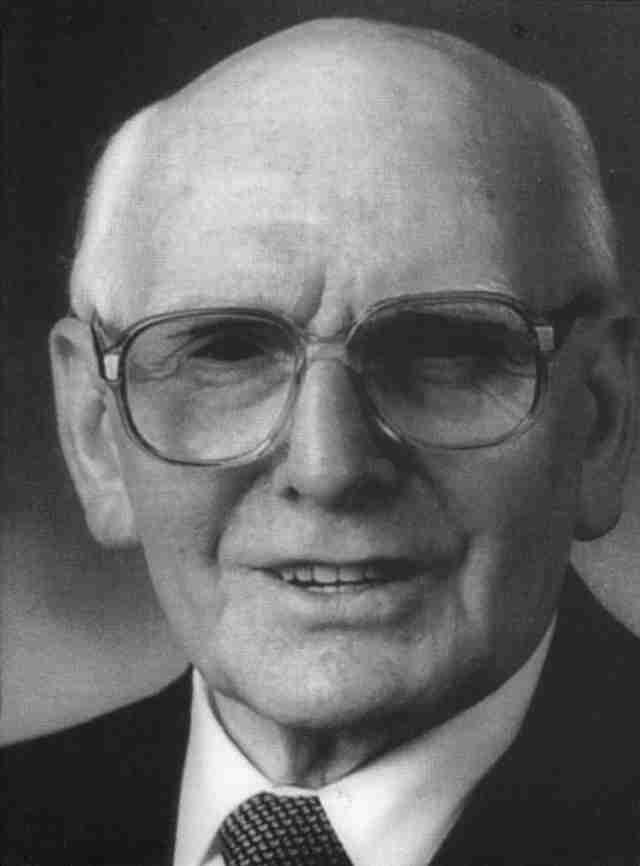 I recently read Dying to Live (Christian Focus, 1991), the autobiography of Scottish pastor William Still. I became interested in Still after reading his book The Work of the Pastor earlier this year.
The first half of Dying to Live tells about Still’s early years into young adulthood and his beginning in pastoral ministry. Still had an unsettled childhood. His parents were separated in his early years, and his father was an alcoholic. He was a sickly child who took refuge in music and became an accomplished pianist. He was part of the Salvation Army as a young man but then entered ministry in the Church of Scotland and served at the Gilcomston Church in his hometown of Aberdeen from 1945-1997.
The second half of the book deals with various aspects of Still’s pastoral ministry. Still was an evangelical. In his early ministry he worked with Billy Graham, Alan Redpath, and others in evangelistic events. With time, however, he moved away from what he came to call “evangelisticism” to develop a solid expositional ministry.
Still faced his fair share of hardships during the course of his ministry. When he moved away from pragmatic evangelistic methods, for example, more than two hundred people stopped attending his church almost overnight. In the preface, he references Martin Luther’s observation that there are three things which make a minister: study, prayer, and afflictions. He observes, “He who is not prepared to make enemies for Christ’s sake by the faithful preaching of the Word will never make lasting friends for Christ, either” (p. 93).
He describes one particularly difficult controversy early in his ministry when he confronted a group of disgruntled elders. At the end of one Sunday service, he read a statement confronting these men, which ended, “There you sit, with your heads down, guilty men. What would you say if I named you before the whole congregation? You stand condemned before God for your contempt of the Word and of his folk.” He adds, “The moment I had finished, I walked out of the pulpit. There was no last hymn—no benediction. I went right home. It was the hardest and most shocking thing I ever had to do in Gilcomston” (p. 124). That same week seven of his elders resigned and Still was called twice before his Presbytery to answer for the controversy. Yet, he endured.
Still maintains that in light of the unpleasantness one will face in the ministry that the minister of the Word must possess one quality in particular: “…I would say that this quality is courage: guts, sheer lion-hearted bravery, clarity of mind and purpose, grit. Weaklings are no use here. They have a place in the economy of God if they are not deliberate weaklings and stunted adults as Paul writes of both to the Romans and to the Corinthians. But weaklings are no use to go out and speak prophetically to men from God and declare with all compassion, as well as with faithfulness, the truth: the divine Word that cuts across all men’s worldly plans for their lives” (p. 140).
Still was a pioneer in several areas. First, he developed a pattern of preaching and teaching systematically through books of the Bible at a time when this was rarely done. He began a ministry of “consecutive Bible teaching” starting with the book of Galatians in 1947, calling this transition from “evangelisticism to systematic exposition … probably the most significant decision in my life” (p. 191).
He was also a pioneer in simplifying and integrating the ministry of the church. After noting how youth in the church were drifting away, even after extensive involvement in the church’s children’s ministry, Still writes, “I conceived the idea of ceasing all Sunday School after beginners and Primary age (seven years) and invited parents to have their children sit with them in the family pew from the age of eight” (p. 171). He laments “the disastrous dispersion of congregations by the common practice of segregating the church family into every conceivable category of division of ages, sexes, etc.” (p. 173).
Dying to Live is a helpful and encouraging work about the life and work of the minister and is to be commended to all engaged in the call of gospel ministry. As the title indicates, Still’s essential thesis is that in order to be effective in ministry the minister must suffer a series of deaths to himself (cf. John 12:24). On this he writes:
The deaths one dies before ministry can be of long duration—it can be hours and days before we minister, before the resurrection experience of anointed preaching. And then there is another death afterwards, sometimes worse than the death before. From the moment that you stand there dead in Christ and dead to everything you are and have and ever shall be and have, every breath you breathe thereafter, every thought you think, every word you say and deed you do, must be done over the top of your own corpse or reaching over it in your preaching to others. Then it can only be Jesus that comes over and no one else. And I believe that every preacher must bear the mark of that death. Your life must be signed by the Cross, not just Christ’s cross (and there is really no other) but your cross in his Cross, your particular and unique cross that no one ever died—the cross that no one ever could die but you and you alone: your death in Christ’s death (p. 136).
I recently read Dying to Live (Christian Focus, 1991), the autobiography of Scottish pastor William Still. I became interested in Still after reading his book The Work of the Pastor earlier this year.
The first half of Dying to Live tells about Still’s early years into young adulthood and his beginning in pastoral ministry. Still had an unsettled childhood. His parents were separated in his early years, and his father was an alcoholic. He was a sickly child who took refuge in music and became an accomplished pianist. He was part of the Salvation Army as a young man but then entered ministry in the Church of Scotland and served at the Gilcomston Church in his hometown of Aberdeen from 1945-1997.
The second half of the book deals with various aspects of Still’s pastoral ministry. Still was an evangelical. In his early ministry he worked with Billy Graham, Alan Redpath, and others in evangelistic events. With time, however, he moved away from what he came to call “evangelisticism” to develop a solid expositional ministry.
Still faced his fair share of hardships during the course of his ministry. When he moved away from pragmatic evangelistic methods, for example, more than two hundred people stopped attending his church almost overnight. In the preface, he references Martin Luther’s observation that there are three things which make a minister: study, prayer, and afflictions. He observes, “He who is not prepared to make enemies for Christ’s sake by the faithful preaching of the Word will never make lasting friends for Christ, either” (p. 93).
He describes one particularly difficult controversy early in his ministry when he confronted a group of disgruntled elders. At the end of one Sunday service, he read a statement confronting these men, which ended, “There you sit, with your heads down, guilty men. What would you say if I named you before the whole congregation? You stand condemned before God for your contempt of the Word and of his folk.” He adds, “The moment I had finished, I walked out of the pulpit. There was no last hymn—no benediction. I went right home. It was the hardest and most shocking thing I ever had to do in Gilcomston” (p. 124). That same week seven of his elders resigned and Still was called twice before his Presbytery to answer for the controversy. Yet, he endured.
Still maintains that in light of the unpleasantness one will face in the ministry that the minister of the Word must possess one quality in particular: “…I would say that this quality is courage: guts, sheer lion-hearted bravery, clarity of mind and purpose, grit. Weaklings are no use here. They have a place in the economy of God if they are not deliberate weaklings and stunted adults as Paul writes of both to the Romans and to the Corinthians. But weaklings are no use to go out and speak prophetically to men from God and declare with all compassion, as well as with faithfulness, the truth: the divine Word that cuts across all men’s worldly plans for their lives” (p. 140).
Still was a pioneer in several areas. First, he developed a pattern of preaching and teaching systematically through books of the Bible at a time when this was rarely done. He began a ministry of “consecutive Bible teaching” starting with the book of Galatians in 1947, calling this transition from “evangelisticism to systematic exposition … probably the most significant decision in my life” (p. 191).
He was also a pioneer in simplifying and integrating the ministry of the church. After noting how youth in the church were drifting away, even after extensive involvement in the church’s children’s ministry, Still writes, “I conceived the idea of ceasing all Sunday School after beginners and Primary age (seven years) and invited parents to have their children sit with them in the family pew from the age of eight” (p. 171). He laments “the disastrous dispersion of congregations by the common practice of segregating the church family into every conceivable category of division of ages, sexes, etc.” (p. 173).
Dying to Live is a helpful and encouraging work about the life and work of the minister and is to be commended to all engaged in the call of gospel ministry. As the title indicates, Still’s essential thesis is that in order to be effective in ministry the minister must suffer a series of deaths to himself (cf. John 12:24). On this he writes:
The deaths one dies before ministry can be of long duration—it can be hours and days before we minister, before the resurrection experience of anointed preaching. And then there is another death afterwards, sometimes worse than the death before. From the moment that you stand there dead in Christ and dead to everything you are and have and ever shall be and have, every breath you breathe thereafter, every thought you think, every word you say and deed you do, must be done over the top of your own corpse or reaching over it in your preaching to others. Then it can only be Jesus that comes over and no one else. And I believe that every preacher must bear the mark of that death. Your life must be signed by the Cross, not just Christ’s cross (and there is really no other) but your cross in his Cross, your particular and unique cross that no one ever died—the cross that no one ever could die but you and you alone: your death in Christ’s death (p. 136).
Complete Assurance for Incomplete People
By a single offering he has perfected for all time those who are being sanctified. (Hebrews 10:14) Two things here are mightily encouraging for us in our imperfect condition as saved sinners. First, notice that Christ has perfected his people, and it is already complete. “By a single offering he has perfected for all time those who are being sanctified.” He has done it. And he has done it for all time. The perfecting of his people is complete, and it is complete forever. Does this mean that Christians don’t sin? Don’t get sick? Don’t make mathematical errors in school? That we are already perfect in our behavior and attitudes? There is one clear reason in this very verse for knowing that is not the case. What is it? It’s the last phrase. Who are the people that have been perfected for all time? It is those who “are being sanctified.” The ongoing continuous action of the Greek present tense is important. “Those who are being sanctified” are not yet fully sanctified in the sense of committing no more sin. Otherwise, they would not need to go on being sanctified. In What Way Are We Perfect? So here we have the shocking combination: the very people who “have been perfected” are the ones who “are being sanctified.” We can also think back to chapters 5 and 6 to recall that these Christians are anything but perfect. For example, in Hebrews 5:11 he says, “You have become dull of hearing.” So we may safely say that “perfected” in Hebrews 10:14 does not mean that we are sinlessly perfect in this life. Well, what does it mean? The answer is given in the next verses (Hebrews 10:15–18). The writer explains what he means by quoting Jeremiah on the new covenant — namely, that in the new covenant, which Christ has sealed by his blood, there is total forgiveness for all our sins. Hebrews 10:17–18: “I will remember their sins and their lawless deeds no more. Where there is forgiveness of these, there is no longer any offering for sin.” So he explains the present perfection in terms (at least) of forgiveness. Christ’s people are perfected now in the sense that God puts away all our sins (Hebrews 9:26), forgives them, and never brings them to mind again as a ground of condemnation. In this sense, we stand before him perfected. When he looks on us, he does not impute any of our sins to us — past, present, or future. He does not count our sins against us. Finding Assurance in Perfection Now notice, second, for whom Christ has done this perfecting work on the cross. Hebrews 10:14 tells us plainly: “By one offering He has perfected for all time those who are being sanctified.” You can put it provocatively like this: Christ has perfected once and for all those who are being perfected. Or you could say, Christ has fully sanctified those who are now being sanctified — which the writer does, in fact, say in Hebrews 10:10: “By that will we have been sanctified through the offering of the body of Jesus Christ once for all.” Thus, verse 10 says we “have been sanctified,” and verse 14 says we “are being sanctified.” What this means is that you can know that you stand perfect in the eyes of your heavenly Father, if you are moving away from your present imperfection toward more and more holiness by faith in his future grace. Let me say that again, because it is full of encouragement for imperfect sinners like us, and full of motivation for holiness. Hebrews 10:14 means that you can have assurance that you stand perfected and completed in the eyes of your heavenly Father, not because you are perfect now, but precisely because you are not perfect now but are “being sanctified” — “being made holy.” You may have assurance of your perfect standing with God because by faith in God’s promises, you are moving away from your lingering imperfections toward more and more holiness. Our remaining imperfection is not a sign of our disqualification, but a mark of all whom God “has perfected for all time” — if we are in the process of “being changed” (2 Corinthians 3:18). So take heart. Fix your eyes on the once-for-all, perfecting work of Christ. And set your face against all known sin. Article by John Piper