

Atheist Delusions - The Christian Revolution And Its Fashionable Enemies Order Printed Copy
- Author: David Bentley Hart
- Size: 734KB | 268 pages
- |
Others like atheist delusions - the christian revolution and its fashionable enemies Features >>

The Global War On Christians (Dispatches From The Front Lines Of Anti-Christian Persecution)
5 Classic Christian Biographies
God's Generals - The Missionaries
Early History Of The Christian Church - The Fourth Century
God's Generals - The Revivalists
A Dictionary Of Early Christian Beliefs
Testimonies To The Church, Vol 1

A Summary Of Christian History
The Early Christians
-160.webp)
By Their Blood (Christian Martyrs From The Twentieth Century And Beyond)
About the Book
"Atheist Delusions" by David Bentley Hart explores the impact of Christianity on Western civilization and challenges contemporary criticisms of religion. Hart argues that Christianity has been essential to the development of liberal democracy, human rights, and modern science, countering the belief that religion is inherently oppressive and irrational. He contends that modern secularism is indebted to Christian values and ideas, and urges readers to reconsider the contributions of Christianity to Western culture.
Jim Elliot
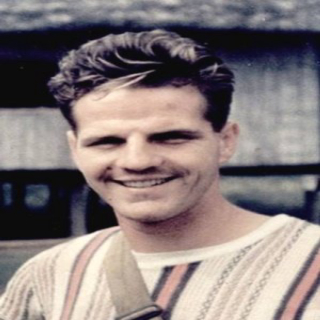 EARLY LIFE
Jim Elliot began his life in Portland, Oregon in the USA. His mother, Clara, was a chiropractor and his father, Fred, was a minister. They married and settled in Seattle, WA where they welcomed their first son, Robert in 1921.
Later they relocated the family to Portland where Herbert arrived in 1924, Jim in 1927, and Jane in 1932.
Jim knew Christ from an early age and was never afraid to speak about Him to his friends. At age six Jim told his mother, “Now, mama, the Lord Jesus can come whenever He wants. He could take our whole family because I’m saved now, and Jane is too young to know Him yet.”
THE YEARS THAT CEMENTED HIS DESIRE TO SERVE THE LORD IN MISSIONS
Jim entered Benson Polytechnic High School in 1941. He carried a small Bible with him and, an excellent speaker; he was often found speaking out for Christ. He and his friends were not afraid to step out and find adventure. One thing Jim didn’t have time for in those early years were girls. He was once quoted as telling a friend, “Domesticated males aren’t much use for adventure.”
In 1945 Jim traveled to Wheaton, IL to attend Wheaton College. His main goal while there was to devote himself to God. He recognized the importance of discipline in pursuing this goal. He would start each morning with prayer and Bible study. In his journal he wrote, “None of it gets to be ‘old stuff’ for it is Christ in print, the Living Word. We wouldn’t think of rising in the morning without a face-wash, but we often neglect the purgative cleansing of the Word of the Lord. It wakes us up to our responsibility.”
Jim’s desire to serve God by taking His gospel to unreached people of the world began to grow while at Wheaton. The summer of 1947 found him in Mexico and that time influenced his decision to minister in Central America after he finished college.
Jim met Elisabeth Howard during his third year at Wheaton. He did ask her for a date which she accepted and then later cancelled. They spent the next years as friends and after she finished at Wheaton they continued to correspond. As they came to know each other there was an attraction, but Jim felt he needed to unencumbered by worldly concerns in order to devote himself completely to God.
In addition to his hope to one day travel to a foreign country to share Christ with the unchurched of the world, he also felt the need to share with people in the United States. On Sundays while at Wheaton he would often ride the train into Chicago and talk to people in the train station about Christ. He often felt ineffective in his work as the times of knowingly leading people to Christ were few. He once wrote, “No fruit yet. Why is that I’m so unproductive? I cannot recall leading more than one or two into the kingdom. Surely this is not the manifestation of the power of the Resurrection. I feel as Rachel, ‘Give me children, or else I die.’”
After college with no clear answer as to working for the Lord in a foreign country, Jim returned home to Portland. He continued his disciplined Bible study as well as correspondence with Elisabeth Howard whom he called Betty.
They both felt a strong attraction to each other during this time, but also felt that the Lord may have been calling them to be unmarried as they served Him.
In June of 1950 he travelled to Oklahoma to attend the Summer Institute of Linguistics. There he learned how to study unwritten languages. He was able to work with a missionary to the Quichuas of the Ecuadorian jungle. Because of these lessons he began to pray for guidance about going to Ecuador and later felt compelled to answer the call there.
Elisabeth Elliot wrote in Shadow of the Almighty:
“The breadth of Jim’s vision is suggested in this entry from the journal:
August 9. “God just now gave me faith to ask for another young man to go, perhaps not this fall, but soon, to join the ranks in the lowlands of eastern Ecuador. There we must learn: 1) Spanish and Quichua, 2) each other, 3) the jungle and independence, and 4) God and God’s way of approach to the highland Quichua. From thence, by His great hand, we must move to the Ecuadorian highlands with several young Indians each, and begin work among the 800,000 highlanders. If God tarries, the natives must be taught to spread southward with the message of the reigning Christ, establishing New Testament groups as they go. Thence the Word must go south into Peru and Bolivia. The Quichuas must be reached for God! Enough for policy. Now for prayer and practice.
THE ECUADOR YEARS
In February 1952 Jim finally left America to travel to Ecuador with Pete Fleming. In May Elisabeth moved to Quito and though they didn’t feel the need to get engaged she and Jim did begin a courtship.
In August Jim left Elisabeth in Quito and travelled with Pete to Shell Mera. At the Mission Aviation Fellowship headquarters in Shell Mera, Jim and Pete learned more about the Acua Indians, a people group that was largely unreached and very savage.
Leaving Shell Mera, Pete and Jim moved on to Shandia where Jim was captivated by the Quichua. He felt very strongly that this was exactly where God intended for him to work to spread the Gospel.
While Jim was in Shandia, Elisabeth was working to learn more about the Colorado Indians near Santa Domingo. In January of 1953 he went to Quito and she met him there and they were finally engaged. They married in October of that year and their only child Valerie was born in 1955.
They settled in Shandia and continued their work with the Quichua Indians. It was Jim’s desire to be able to reach the Waodoni tribe that lived deep in the jungles and had little contact with the outside world. A Waodoni woman who had left the tribe was taken in by the missionaries and helped them to learn the language.
Jim, along with Pete, Ed McCully, Roger Youderian, and their pilot Nate Saint began to search by plane in hopes of finding a way to contact the Waodoni. The found a sandbar in the middle of the Curaray River that worked as a landing strip for the plane and it was there that they first made contact with the Waodoni. They were elated to be able to finally be able to attempt to share the love of Christ with this people group.
After their first meeting, one of the tribe, a man they called George lied to the tribe about the men’s intentions. This lie led the Waodoni warriors to plan an attack for when the missionaries returned. The men did return on January 8, 1956 and were surprised by ten members of the tribe who massacred the missionaries.
Jim’s short life that was filled with the desire to share God’s love can be summed up by a quote that is attributed to him. “He is no fool who gives that which he cannot keep, to gain what he cannot lose.”
EARLY LIFE
Jim Elliot began his life in Portland, Oregon in the USA. His mother, Clara, was a chiropractor and his father, Fred, was a minister. They married and settled in Seattle, WA where they welcomed their first son, Robert in 1921.
Later they relocated the family to Portland where Herbert arrived in 1924, Jim in 1927, and Jane in 1932.
Jim knew Christ from an early age and was never afraid to speak about Him to his friends. At age six Jim told his mother, “Now, mama, the Lord Jesus can come whenever He wants. He could take our whole family because I’m saved now, and Jane is too young to know Him yet.”
THE YEARS THAT CEMENTED HIS DESIRE TO SERVE THE LORD IN MISSIONS
Jim entered Benson Polytechnic High School in 1941. He carried a small Bible with him and, an excellent speaker; he was often found speaking out for Christ. He and his friends were not afraid to step out and find adventure. One thing Jim didn’t have time for in those early years were girls. He was once quoted as telling a friend, “Domesticated males aren’t much use for adventure.”
In 1945 Jim traveled to Wheaton, IL to attend Wheaton College. His main goal while there was to devote himself to God. He recognized the importance of discipline in pursuing this goal. He would start each morning with prayer and Bible study. In his journal he wrote, “None of it gets to be ‘old stuff’ for it is Christ in print, the Living Word. We wouldn’t think of rising in the morning without a face-wash, but we often neglect the purgative cleansing of the Word of the Lord. It wakes us up to our responsibility.”
Jim’s desire to serve God by taking His gospel to unreached people of the world began to grow while at Wheaton. The summer of 1947 found him in Mexico and that time influenced his decision to minister in Central America after he finished college.
Jim met Elisabeth Howard during his third year at Wheaton. He did ask her for a date which she accepted and then later cancelled. They spent the next years as friends and after she finished at Wheaton they continued to correspond. As they came to know each other there was an attraction, but Jim felt he needed to unencumbered by worldly concerns in order to devote himself completely to God.
In addition to his hope to one day travel to a foreign country to share Christ with the unchurched of the world, he also felt the need to share with people in the United States. On Sundays while at Wheaton he would often ride the train into Chicago and talk to people in the train station about Christ. He often felt ineffective in his work as the times of knowingly leading people to Christ were few. He once wrote, “No fruit yet. Why is that I’m so unproductive? I cannot recall leading more than one or two into the kingdom. Surely this is not the manifestation of the power of the Resurrection. I feel as Rachel, ‘Give me children, or else I die.’”
After college with no clear answer as to working for the Lord in a foreign country, Jim returned home to Portland. He continued his disciplined Bible study as well as correspondence with Elisabeth Howard whom he called Betty.
They both felt a strong attraction to each other during this time, but also felt that the Lord may have been calling them to be unmarried as they served Him.
In June of 1950 he travelled to Oklahoma to attend the Summer Institute of Linguistics. There he learned how to study unwritten languages. He was able to work with a missionary to the Quichuas of the Ecuadorian jungle. Because of these lessons he began to pray for guidance about going to Ecuador and later felt compelled to answer the call there.
Elisabeth Elliot wrote in Shadow of the Almighty:
“The breadth of Jim’s vision is suggested in this entry from the journal:
August 9. “God just now gave me faith to ask for another young man to go, perhaps not this fall, but soon, to join the ranks in the lowlands of eastern Ecuador. There we must learn: 1) Spanish and Quichua, 2) each other, 3) the jungle and independence, and 4) God and God’s way of approach to the highland Quichua. From thence, by His great hand, we must move to the Ecuadorian highlands with several young Indians each, and begin work among the 800,000 highlanders. If God tarries, the natives must be taught to spread southward with the message of the reigning Christ, establishing New Testament groups as they go. Thence the Word must go south into Peru and Bolivia. The Quichuas must be reached for God! Enough for policy. Now for prayer and practice.
THE ECUADOR YEARS
In February 1952 Jim finally left America to travel to Ecuador with Pete Fleming. In May Elisabeth moved to Quito and though they didn’t feel the need to get engaged she and Jim did begin a courtship.
In August Jim left Elisabeth in Quito and travelled with Pete to Shell Mera. At the Mission Aviation Fellowship headquarters in Shell Mera, Jim and Pete learned more about the Acua Indians, a people group that was largely unreached and very savage.
Leaving Shell Mera, Pete and Jim moved on to Shandia where Jim was captivated by the Quichua. He felt very strongly that this was exactly where God intended for him to work to spread the Gospel.
While Jim was in Shandia, Elisabeth was working to learn more about the Colorado Indians near Santa Domingo. In January of 1953 he went to Quito and she met him there and they were finally engaged. They married in October of that year and their only child Valerie was born in 1955.
They settled in Shandia and continued their work with the Quichua Indians. It was Jim’s desire to be able to reach the Waodoni tribe that lived deep in the jungles and had little contact with the outside world. A Waodoni woman who had left the tribe was taken in by the missionaries and helped them to learn the language.
Jim, along with Pete, Ed McCully, Roger Youderian, and their pilot Nate Saint began to search by plane in hopes of finding a way to contact the Waodoni. The found a sandbar in the middle of the Curaray River that worked as a landing strip for the plane and it was there that they first made contact with the Waodoni. They were elated to be able to finally be able to attempt to share the love of Christ with this people group.
After their first meeting, one of the tribe, a man they called George lied to the tribe about the men’s intentions. This lie led the Waodoni warriors to plan an attack for when the missionaries returned. The men did return on January 8, 1956 and were surprised by ten members of the tribe who massacred the missionaries.
Jim’s short life that was filled with the desire to share God’s love can be summed up by a quote that is attributed to him. “He is no fool who gives that which he cannot keep, to gain what he cannot lose.”
what happens when you turn 65
Turning 65 in January has me all fired up to get busy. I am close enough to the finish line that the face of Jesus is coming into sharper focus. This is very exciting and makes me want to pick up the pace. Of course, he is not the least impressed with frenzy. Nor is he pleased with Boomer indolence. What his face says to me is: “I am your rest every day, and there is good work to do every day till you’re home.” One Great Thing God has called me to this one great thing, and his face affirms it every day: “With full courage, now (after 65) as always, let Christ be magnified in your body, whether by life or by death” (Philippians 1:20). Live now to make much of Christ. Measure everything by this: Will it help more people admire Jesus more intensely and treasure Jesus more deeply? The Bible says, “The years of our life are seventy, or even by reason of strength eighty” (Psalms 90:10). But of course, “My times are in your hand” (Psalms 31:15). The Lord gives and the Lord takes away. We don’t live one day longer or shorter than God appoints. So at 65, I am still gagging at the pictures of leathery old sunbathers on white shores and green links. For fifteen years, I have thrown hundreds of senior mailings in the recycle bag unopened. Not that I am opposed to saving $0.79 on lunch at Perkins. Just don’t try to sell me heaven before I get there. There is too much hell left to fight. Old Versus Retired Turning 65 has set me to pondering what people have done in their later years. For example, I just received a copy of the first major biography of Charles Hodge in over a century: Paul C. Gutjahr, Charles Hodge: Guardian of American Orthodoxy (Oxford, 2011). On the first page, I read, When people reach their seventies, they often think their work is done. Not so with Hodge. His last years were among this most productive as he sat ensconced in his study, wielding his favorite pen to compose literally thousands of manuscript pages, which would eventually become his monumental Systematic Theology and his incisive What is Darwinism ? (vii) So I started poking around on the Internet. Here’s some of what I found (for example, at www.museumofconceptualart.com/accomplished): At 65 Winston Churchill became Prime Minister of England, and for the next five years led the Western world to freedom. At 69 English writer and lexicographer Samuel Johnson began his last major work, The Lives of the English Poets. At 69 Ronald Reagan became the oldest man ever sworn in as President of the United States. He was reelected at 73. At 70 Benjamin Franklin helped draft the Declaration of Independence. At 77 John Glenn became the oldest person to go into space. At 77 Grandma Moses started painting. At 82 Johann Wolfgang von Goethe finished writing his famous Faust . At 82 Winston Churchill wrote A History of the English-Speaking Peoples . At 88 Michelangelo created the architectural plans for the Church of Santa Maria degli Angeli. At 89 Albert Schweitzer ran a hospital in Africa. At 89 Arthur Rubinstein performed one of his greatest recitals in Carnegie Hall. At 93 Strom Thurmond, the longest-serving senator in U.S. history, won reelection after promising not to run again at age 99. At 93 P.G. Wodehouse worked on his 97th novel, got knighted, and died. Dependant Till the End And don’t forget, if you are running this marathon with Jesus, you have a great advantage. God has promised you: “Even to your old age I am he, and to gray hairs I will carry you. I have made, and I will bear; I will carry and will save” (Isaiah 46:4). Nothing to be ashamed of here. We’ve been dangling in the yoke of Jesus ever since he called us. At out peak, we were totally dependent. So it will be to the end. So, all you Boomers just breaking into Medicare, gird up your loins, pick up your cane, head for the gym, and get fit for the last lap. Fix your eyes on the Face at the finish line. There will plenty of time for R and R in the Resurrection. For now, there is happy work to be done.
-by-franklin-hall.webp)