

Others like 31 secrets for career success Features >>
Critical Success Factors Simplified

The Secrets Of Ceos

30 Secrets To The Top
The Greatest Success Habits On Earth
The Secret: What Great Leaders Know — And Do

7 Steps To Create The Life You Desire
Good To Great

The 80/20 Principle: The Secret To Achieving More With Less

Emotional Intelligence 2.0
Ordering Your Private World
About the Book
"31 Secrets For Career Success" by Mike Murdock outlines practical advice and strategies for achieving success in one's career. The book covers key principles such as setting clear goals, developing strong work habits, building relationships, and maintaining a positive attitude. By following the tips and insights provided in this book, readers can enhance their professional lives and achieve their career aspirations.
John and Betty Stam
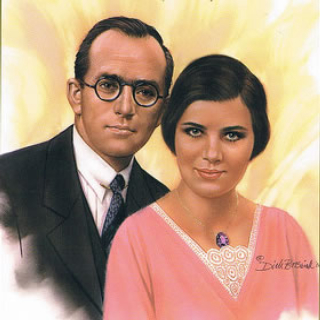 The year 1934. Americans John and Betty Stam were serving as missionaries in China. One morning Betty was bathing her three-month-old daughter Helen Priscilla Stam when Tsingteh's city magistrate appeared. Communist forces were near, he warned, and urged the Stams to flee.
So John Stam went out to investigate the situation for himself. He received conflicting reports. Taking no chances, he arranged for Betty and the baby to be escorted away to safety if need be. But before the Stams could make their break, the Communists were inside the city. By little-known paths, they had streamed over the mountains behind government troops. Now gun shots sounded in the streets as looting began. The enemy beat on the Stams' own gate.
A faithful cook and maid at the mission station had stayed behind. The Stams knelt with them in prayer. But the invaders were pounding at the door. John opened it and spoke courteously to the four leaders who entered, asking them if they were hungry. Betty brought them tea and cakes. The courtesy meant nothing. They demanded all the money the Stams had, and John handed it over. As the men bound him, he pleaded for the safety of his wife and child. The Communists left Betty and Helen behind as they led John off to their headquarters.
Before long, they reappeared, demanding mother and child. The maid and cook pleaded to be allowed to accompany Betty.
"No," barked the captors, and threatened to shoot.
"It is better for you to stay here," Betty whispered. "If anything happens to us, look after the baby."
[When we consecrate ourselves to God, we think we are making a great sacrifice, and doing lots for Him, when really we are only letting go some little, bitsie trinkets we have been grabbing, and when our hands are empty, He fills them full of His treasures. --Betty Stam]
Betty was led to her husband's side. Little Helen needed some things and John was allowed to return home under guard to fetch them. But everything had been stolen. That night John was allowed to write a letter to mission authorities. "My wife, baby and myself are today in the hands of the Communists in the city of Tsingteh. Their demand is twenty thousand dollars for our release. . . . We were too late. The Lord bless and guide you. As for us, may God be glorified, whether by life or by death."
Prisoners in the local jail were released to make room for the Stams. Frightened by rifle fire, the baby cried out. One of the Reds said, "Let's kill the baby. It is in our way." A bystander asked, "Why kill her? What harm has she done?"
"Are you a Christian?" shouted one of the guards.
The man said he was not; he was one of the prisoners just released.
"Will you die for this foreign baby?" they asked. As Betty hugged Helen to her chest, the man was hacked to pieces before her eyes.
Terror in the Streets
The next morning their captors led the Stams toward Miaosheo, twelve miles distant. John carried little Helen, but Betty, who was not physically strong, owing to a youthful bout with inflammatory rheumatitis was allowed to ride a horse part of the way. Terror reigned in the streets of Miaosheo. Under guard, the foreign family was hustled into the postmaster's shop.
"Where are you going?" asked the postmaster, who recognized them from their previous visits to his town. "We do not know where they are going, but we are going to heaven," answered John. He left a letter with the postmaster. "I tried to persuade them to let my wife and baby go back from Tsingteh with a letter to you, but they would not let her. . . ."
That night the three were held in the house of a wealthy man who had fled. They were guarded by soldiers. John was tied to a post all that cold night, but Betty was allowed enough freedom to tend the baby. As it turned out, she did more than that.
Execution
The next morning the young couple were led through town without the baby. Their hands were tightly bound, and they were stripped of their outer garments as if they were common criminals. John walked barefoot. He had given his socks to Betty. The soldiers jeered and called the town’s folk to come see the execution. The terrified people obeyed.
On the way to the execution, a medicine-seller, considered a lukewarm Christian at best, stepped from the crowd and pleaded for the lives of the two foreigners. The Reds angrily ordered him back. The man would not be stilled. His house was searched, a Bible and hymnbook found, and he, too was dragged away to die as a hated Christian.
John pleaded for the man’s life. The Red leader sharply ordered him to kneel. As John was speaking softly, the Red leader swung his sword through the missionary’s throat so that his head was severed from his body. Betty did not scream. She quivered and fell bound beside her husband’s body. As she knelt there, the same sword ended her life with a single blow.
Betty
Betty Scott was born in the United States but reared in China as the daughter of missionaries. She came to the United States and attended Wilson College in Pennsylvania. Betty prepared to follow in her parents’ footsteps and work in China or wherever else the Lord directed her.
But China it proved to be. At a prayer meeting for China, she met John Stam and a friendship developed that ripened into love. Painfully they recognized that marriage was not yet possible. “The China Inland Mission has appealed for men, single men, to work in sections where it would be impossible to take a woman until more settled work has commenced,” wrote John. He committed the matter to the Lord, whose work, he felt, must come before any human affection. At any rate, Betty would be leaving for China before him, to work in an entirely different region, and so they must be separated anyhow. As a matter of fact, John had not yet even been accepted by the China Inland Mission whereas Betty had. They parted after a long tender day, sharing their faith, picnicking, talking, and praying.
Betty sailed while John continued his studies. On July 1, 1932, John, too, was accepted for service in China. Now at least he could head toward the same continent as Betty. He sailed for Shanghai.
Meanwhile, Betty found her plans thwarted. A senior missionary had been captured by the Communists in the region where she was to have worked. The mission directors decided to keep her in a temporary station, and later ill-health brought her to Shanghai. Thus without any choice on her part, she was in Shanghai when John landed in China. Immediately they became engaged and a year later were married, long before they expected it. In October, 1934 Helen Priscilla was born to them. What would become of her now that her parents John and Betty were dead?
In the Hills
For two days, local Christians huddled in hiding in the hills around Miaosheo. Among them was a Chinese evangelist named Mr. Lo. Through informants, he learned that the Communists had captured two foreigners. At first he did not realize that these were John and Betty Stam, with whom he had worked, but as he received more details, he put two and two together. As soon as government troops entered the valley and it was safe to venture forth, Mr. Lo hurried to town. His questions met with silence. Everyone was fearful that spies might report anyone who said too much.
An old woman whispered to Pastor Lo that there was a baby left behind. She nodded in the direction of the house where John and Betty had been chained their last night on earth. Pastor Lo hurried to the site and found room after room trashed by the bandits. Then he heard a muffled cry. Tucked by her mother in a little sleeping bag, Helen was warm and alive, although hungry after her two day fast.
The kindly pastor took the child in his arms and carried her to his wife. With the help of a local Christian family, he wrapped the bodies that still lay upon the hillside and placed them into coffins. To the crowd that gathered he explained that the missionaries had only come to tell them how they might find forgiveness of sin in Christ. Leaving others to bury the dead, he hurried home. Somehow Helen had to be gotten to safety.
Pastor Lo's own son, a boy of four, was desperately ill -- semi-conscious after days of exposure. Pastor Lo had to find a way to carry the children a hundred miles through mountains infested by bandits and Communists. Brave men were found willing to help bear the children to safety, but there was no money to pay them for their efforts. Lo had been robbed of everything he had.
From Beyond the Grave
But from beyond the grave, Betty provided. Tucked in Helen's sleeping bag were a change of clothes and some diapers. Pinned between these articles of clothing were two five dollar bills. It made the difference.
Placing the children in rice baskets slung from the two ends of a bamboo pole, the group departed quietly, taking turns carrying the precious cargo over their shoulders. Mrs. Lo was able to find Chinese mothers along the way to nurse Helen. On foot, they came safely through their perils. Lo's own boy recovered consciousness suddenly and sat up, singing a hymn.
Eight days after the Stams fell into Communist hands, another missionary in a nearby city heard a rap at his door. He opened it and a Chinese woman, stained with travel, entered the house, bearing a bundle in her arms. "This is all we have left," she said brokenly.
The missionary took the bundle and turned back the blanket to uncover the sleeping face of Helen Priscilla Stam. Many kind hands had labored to preserve the infant girl, but none kinder than Betty who had spared no effort for her baby even as she herself faced degradation and death.
Kathleen White has written an excellent and very readable biography John and Betty Stam, available from Bethany House Publishers (1988). She reports that Betty's alma mater, Wilson College in Pennsylvania, took over baby Helen's support and covered the costs of her college education. She added: "Helen is living in this country (USA) with her husband and family but does not wish her identity and whereabouts to be made known."
Resources:
Huizenga, Lee S. John and Betty Stam; Martyrs. Zondervan, 1935.
Pollock, John. Victims of the Long March and Other Stories. Waco, Texas.: Word Publishing, 1970.
Taylor, Mrs. Howard. The Triumph of John and Betty Stam. China Inland Mission, 1935.
The year 1934. Americans John and Betty Stam were serving as missionaries in China. One morning Betty was bathing her three-month-old daughter Helen Priscilla Stam when Tsingteh's city magistrate appeared. Communist forces were near, he warned, and urged the Stams to flee.
So John Stam went out to investigate the situation for himself. He received conflicting reports. Taking no chances, he arranged for Betty and the baby to be escorted away to safety if need be. But before the Stams could make their break, the Communists were inside the city. By little-known paths, they had streamed over the mountains behind government troops. Now gun shots sounded in the streets as looting began. The enemy beat on the Stams' own gate.
A faithful cook and maid at the mission station had stayed behind. The Stams knelt with them in prayer. But the invaders were pounding at the door. John opened it and spoke courteously to the four leaders who entered, asking them if they were hungry. Betty brought them tea and cakes. The courtesy meant nothing. They demanded all the money the Stams had, and John handed it over. As the men bound him, he pleaded for the safety of his wife and child. The Communists left Betty and Helen behind as they led John off to their headquarters.
Before long, they reappeared, demanding mother and child. The maid and cook pleaded to be allowed to accompany Betty.
"No," barked the captors, and threatened to shoot.
"It is better for you to stay here," Betty whispered. "If anything happens to us, look after the baby."
[When we consecrate ourselves to God, we think we are making a great sacrifice, and doing lots for Him, when really we are only letting go some little, bitsie trinkets we have been grabbing, and when our hands are empty, He fills them full of His treasures. --Betty Stam]
Betty was led to her husband's side. Little Helen needed some things and John was allowed to return home under guard to fetch them. But everything had been stolen. That night John was allowed to write a letter to mission authorities. "My wife, baby and myself are today in the hands of the Communists in the city of Tsingteh. Their demand is twenty thousand dollars for our release. . . . We were too late. The Lord bless and guide you. As for us, may God be glorified, whether by life or by death."
Prisoners in the local jail were released to make room for the Stams. Frightened by rifle fire, the baby cried out. One of the Reds said, "Let's kill the baby. It is in our way." A bystander asked, "Why kill her? What harm has she done?"
"Are you a Christian?" shouted one of the guards.
The man said he was not; he was one of the prisoners just released.
"Will you die for this foreign baby?" they asked. As Betty hugged Helen to her chest, the man was hacked to pieces before her eyes.
Terror in the Streets
The next morning their captors led the Stams toward Miaosheo, twelve miles distant. John carried little Helen, but Betty, who was not physically strong, owing to a youthful bout with inflammatory rheumatitis was allowed to ride a horse part of the way. Terror reigned in the streets of Miaosheo. Under guard, the foreign family was hustled into the postmaster's shop.
"Where are you going?" asked the postmaster, who recognized them from their previous visits to his town. "We do not know where they are going, but we are going to heaven," answered John. He left a letter with the postmaster. "I tried to persuade them to let my wife and baby go back from Tsingteh with a letter to you, but they would not let her. . . ."
That night the three were held in the house of a wealthy man who had fled. They were guarded by soldiers. John was tied to a post all that cold night, but Betty was allowed enough freedom to tend the baby. As it turned out, she did more than that.
Execution
The next morning the young couple were led through town without the baby. Their hands were tightly bound, and they were stripped of their outer garments as if they were common criminals. John walked barefoot. He had given his socks to Betty. The soldiers jeered and called the town’s folk to come see the execution. The terrified people obeyed.
On the way to the execution, a medicine-seller, considered a lukewarm Christian at best, stepped from the crowd and pleaded for the lives of the two foreigners. The Reds angrily ordered him back. The man would not be stilled. His house was searched, a Bible and hymnbook found, and he, too was dragged away to die as a hated Christian.
John pleaded for the man’s life. The Red leader sharply ordered him to kneel. As John was speaking softly, the Red leader swung his sword through the missionary’s throat so that his head was severed from his body. Betty did not scream. She quivered and fell bound beside her husband’s body. As she knelt there, the same sword ended her life with a single blow.
Betty
Betty Scott was born in the United States but reared in China as the daughter of missionaries. She came to the United States and attended Wilson College in Pennsylvania. Betty prepared to follow in her parents’ footsteps and work in China or wherever else the Lord directed her.
But China it proved to be. At a prayer meeting for China, she met John Stam and a friendship developed that ripened into love. Painfully they recognized that marriage was not yet possible. “The China Inland Mission has appealed for men, single men, to work in sections where it would be impossible to take a woman until more settled work has commenced,” wrote John. He committed the matter to the Lord, whose work, he felt, must come before any human affection. At any rate, Betty would be leaving for China before him, to work in an entirely different region, and so they must be separated anyhow. As a matter of fact, John had not yet even been accepted by the China Inland Mission whereas Betty had. They parted after a long tender day, sharing their faith, picnicking, talking, and praying.
Betty sailed while John continued his studies. On July 1, 1932, John, too, was accepted for service in China. Now at least he could head toward the same continent as Betty. He sailed for Shanghai.
Meanwhile, Betty found her plans thwarted. A senior missionary had been captured by the Communists in the region where she was to have worked. The mission directors decided to keep her in a temporary station, and later ill-health brought her to Shanghai. Thus without any choice on her part, she was in Shanghai when John landed in China. Immediately they became engaged and a year later were married, long before they expected it. In October, 1934 Helen Priscilla was born to them. What would become of her now that her parents John and Betty were dead?
In the Hills
For two days, local Christians huddled in hiding in the hills around Miaosheo. Among them was a Chinese evangelist named Mr. Lo. Through informants, he learned that the Communists had captured two foreigners. At first he did not realize that these were John and Betty Stam, with whom he had worked, but as he received more details, he put two and two together. As soon as government troops entered the valley and it was safe to venture forth, Mr. Lo hurried to town. His questions met with silence. Everyone was fearful that spies might report anyone who said too much.
An old woman whispered to Pastor Lo that there was a baby left behind. She nodded in the direction of the house where John and Betty had been chained their last night on earth. Pastor Lo hurried to the site and found room after room trashed by the bandits. Then he heard a muffled cry. Tucked by her mother in a little sleeping bag, Helen was warm and alive, although hungry after her two day fast.
The kindly pastor took the child in his arms and carried her to his wife. With the help of a local Christian family, he wrapped the bodies that still lay upon the hillside and placed them into coffins. To the crowd that gathered he explained that the missionaries had only come to tell them how they might find forgiveness of sin in Christ. Leaving others to bury the dead, he hurried home. Somehow Helen had to be gotten to safety.
Pastor Lo's own son, a boy of four, was desperately ill -- semi-conscious after days of exposure. Pastor Lo had to find a way to carry the children a hundred miles through mountains infested by bandits and Communists. Brave men were found willing to help bear the children to safety, but there was no money to pay them for their efforts. Lo had been robbed of everything he had.
From Beyond the Grave
But from beyond the grave, Betty provided. Tucked in Helen's sleeping bag were a change of clothes and some diapers. Pinned between these articles of clothing were two five dollar bills. It made the difference.
Placing the children in rice baskets slung from the two ends of a bamboo pole, the group departed quietly, taking turns carrying the precious cargo over their shoulders. Mrs. Lo was able to find Chinese mothers along the way to nurse Helen. On foot, they came safely through their perils. Lo's own boy recovered consciousness suddenly and sat up, singing a hymn.
Eight days after the Stams fell into Communist hands, another missionary in a nearby city heard a rap at his door. He opened it and a Chinese woman, stained with travel, entered the house, bearing a bundle in her arms. "This is all we have left," she said brokenly.
The missionary took the bundle and turned back the blanket to uncover the sleeping face of Helen Priscilla Stam. Many kind hands had labored to preserve the infant girl, but none kinder than Betty who had spared no effort for her baby even as she herself faced degradation and death.
Kathleen White has written an excellent and very readable biography John and Betty Stam, available from Bethany House Publishers (1988). She reports that Betty's alma mater, Wilson College in Pennsylvania, took over baby Helen's support and covered the costs of her college education. She added: "Helen is living in this country (USA) with her husband and family but does not wish her identity and whereabouts to be made known."
Resources:
Huizenga, Lee S. John and Betty Stam; Martyrs. Zondervan, 1935.
Pollock, John. Victims of the Long March and Other Stories. Waco, Texas.: Word Publishing, 1970.
Taylor, Mrs. Howard. The Triumph of John and Betty Stam. China Inland Mission, 1935.
Walk the War Before You - What It Means to Live by the Spirit
Walk by the Spirit, and you will not gratify the desires of the flesh. For the desires of the flesh are against the Spirit, and the desires of the Spirit are against the flesh, for these are opposed to each other, to keep you from doing the things you want to do. –Galatians 5:16–17 In seminary, this passage reshaped my vision of the Christian life. At one level, the passage is simple. It contains an exhortation (“walk by the Spirit”), a promise (“and you will not gratify the desires of the flesh”), and an explanation or rationale (the conflict described in verse 17). But as we meditate on this passage, we discover that it also offers a threefold vision for the Christian life as a whole. Acknowledge the War Within First, Paul insists that the starting point for the Christian life is recognizing the war between the flesh and the Spirit. I say “starting point” because of the logic of verses 16 and 17. In seminary, I was taught that one way to clarify the logic of a passage like this is to read the verses in reverse order while keeping the logical relationship intact. In other words, turn an “A, because B” argument into a “B, therefore A” argument. “I eat, because I am hungry” becomes “I am hungry, therefore I eat.” When we do that, the passage looks like this: (Verse 17) The desires of the flesh are against the Spirit, and the desires of the Spirit are against the flesh, for these are opposed to each other, to keep you from doing the things you want to do. (Verse 16) Therefore (that’s the logical connection) walk by the Spirit, and you will certainly not gratify the desires of the flesh. As Christians, we wake up every day in the midst of a war. Fleshly desires pull us in one direction; the desires of the Spirit pull us in the other. The status quo is a frustrated stalemate in which we are kept from doing what we want to do. Spiritual desires frustrate fleshly desires, and fleshly desires frustrate spiritual desires. Starting with this recognition means we can be realistic about the difficulty of the war. The frustration we feel in the face of the passions of the flesh is real, and Paul encourages us to be honest about it. That’s where we begin as Christians. Staggering Promise of Not But according to Paul, we don’t have to stay there, because, second, we have a new destination. We don’t have to surrender. We can live a life in which we absolutely don’t gratify the desires of the flesh. This is a staggering promise. The “not” in verse 16 is intensified in the original Greek; it’s what’s called an emphatic negation. Paul essentially says, “If you walk by the Spirit, you will absolutely and certainly not gratify the desires of the flesh.” Now, it’s important to be clear about what Paul is and isn’t promising. He’s not saying that our fleshly desires disappear altogether. Instead, he promises that we will not gratify or complete those desires. In other words, the desires may still be present and still at war with our spiritual desires, but now, as we walk by the Spirit, we won’t indulge them. The basic idea is that all desires have a direction, a destination, a trajectory. They incline us towards some perceived good, some object that we believe will satisfy. In short, desires want to take us somewhere. Where Do Desires Lead? In Galatians 5, the desires of the flesh lead to the works of the flesh: “sexual immorality, impurity, sensuality, idolatry, sorcery, enmity, strife, jealousy, fits of anger, rivalries, dissensions, divisions, envy, drunkenness, orgies, and things like these.” Paul is clear that those who practice such things — by habitually gratifying those desires — will not inherit God’s kingdom. On the other hand, the desires of the Spirit lead to the fruit of the Spirit: “love, joy, peace, patience, kindness, goodness, faithfulness, gentleness, self-control.” So again, desires, whether of the Spirit or the flesh, have a destination, and when that destination is reached, the desire has been gratified. The itch has been scratched. Notice, however, the critical assumption Paul makes: the presence of the fleshly desire doesn’t mean that we have to indulge it. It’s possible to resist where our desires want to take us. For Paul, walking by the Spirit doesn’t remove all fleshly tendencies and inclinations in this life. Instead, it interrupts them. It redirects them and reorders them so that they no longer dishonor God or harm people. It’s important to be clear on this point so that we don’t erect impossible and unrealistic expectations for the Christian life. In this life, the desires may still rise up, but according to Paul, they don’t have to master us. They don’t have to rule us. We don’t have to gratify or indulge them. We don’t have to scratch. We can be free. But only if we walk by the Spirit. Essential Bridge Walking by the Spirit is the third element in this vision of the Christian life, and the bridge between our present struggle and the future victory. It’s the path that gets us from frustration to freedom. Which means that the pressing question for us is this: What exactly does it mean to “walk by the Spirit”? The image is clear enough. Walking is a form of movement. It’s neither standing still nor running. It’s steady movement, in a particular direction, under a particular power (in this case, the Spirit). Galatians 5:24–25 sheds further light on the image: And those who belong to Christ Jesus have crucified the flesh with its passions and desires. If we live by the Spirit, let us also keep in step with the Spirit. “Walk by the Spirit” corresponds to “keep in step with the Spirit.” It’s as though the Spirit sets the pace and we keep up. There’s a rhythm to our walking. Like a drummer, the Spirit lays down the beat, and we march along. This basic idea appears in various forms throughout Paul’s letters: Walk rightly with the truth of the gospel (Galatians 2:13). Walk by the Spirit (Galatians 5:16). Be led by the Spirit (Galatians 5:18). Keep in step with the Spirit (Galatians 5:26). Walk in a manner worthy of the calling to which you have been called (Ephesians 4:1). Walk in a manner worthy of the Lord (Colossians 1:10). “Walking by the Spirit is the bridge between our present struggle and the future victory.” Other phrases that appear throughout the New Testament include walking in love, walking in the light, walking as children of the light, walking according to Paul’s example, and walking in the truth. In all of these examples, the idea is the same: there is a conduct, a “walking,” that accords with the gospel, the Spirit, and the truth. There is a way of life that fits the gospel. Before We Can Walk Walking by the Spirit flows from something more fundamental, though, and this is crucial. Before we can keep in step with the Spirit, we must first “live by the Spirit.” That is, we must possess life by the Spirit. The life in question is resurrection life. We possess it because we belong to Jesus and have crucified the flesh with its passions and desires. It’s what Paul elsewhere describes as “being made alive with Christ” (Ephesians 2:4). This is conversion, when God raises us from spiritual death by grace through faith in Christ. He elaborates on this reality in the great gospel passage of Galatians 2:19–20: I have been crucified with Christ. It is no longer I who live, but Christ who lives in me. And the life I now live in the flesh I live by faith in the Son of God, who loved me and gave himself for me. “The Spirit is the animating power in our lives, shaping our daily decisions as we wake up in spiritual war.” Crucified with Christ so that the flesh has been killed. Raised with Christ so that he lives on our behalf and we possess life by his Spirit. This is the good news which so transformed Paul and is able to transform us. So, then, walking by the Spirit refers to our daily conduct, rooted in our union with Christ in his death and resurrection and empowered by the Spirit who redirects our desires to godly fruitfulness. The Spirit is the animating power in our lives, shaping our daily decisions as we wake up in the midst of the spiritual war. Paul’s call is for us to daily take up arms in the battle, to encourage and gratify our spiritual desires, and to keep in step with the Spirit because we belong to Jesus. Article by Joe Rigney Teacher, desiringGod.org