
Others like 10,000 miles for a miracle Features >>
Daughter Of Destiny: Kathryn Kuhlman
Dr. David Yonggi Cho
The Apostolic Fathers II
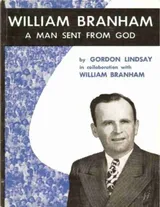
William Branham: A Man Sent By God
Appointment In Jerusalem

Maria Woodworth-Etter
God's Generals - The Missionaries
Son Of The Underground (The Life Of Issac Liu, Son Of Brother Yun, The Heavenly Man)

The Keys Of This Blood: The Struggle For World Dominion Between Pope John Paul II, Mikhail Gorbachev And The Capitalist West

Pedalling Backwards
About the Book
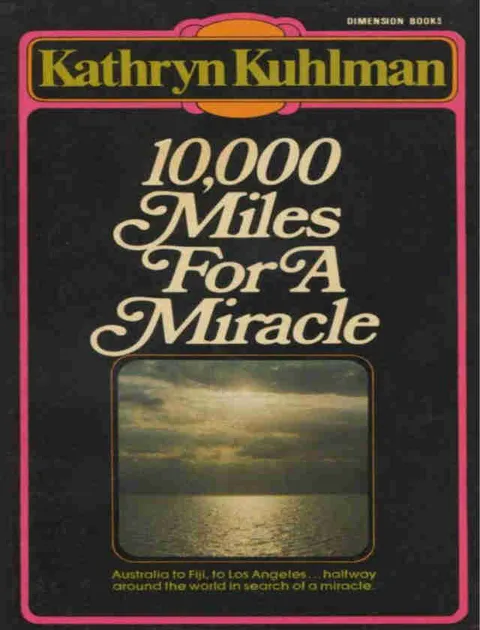
"10,000 Miles for a Miracle" by Kathryn Kuhlman is a book that tells the story of the author's journey to faith and her experiences as a renowned faith healer. Kuhlman shares powerful testimonies of miraculous healings and divine interventions that she witnessed during her ministry, and offers insights into the power of faith and the miraculous workings of God.
John Alexander Dowie
By John Alexander Dowie (1847 – 1907)
I sat in my study in the parsonage of the Congregational Church at Newtown, a suburb of the beautiful city of Sydney, Australia. My heart was very heavy, for I had visited the sick and dying beds of more than thirty of my flock, and I had cast the dust to its kindred dust into more than forty graves within a few weeks. Where, oh where, was He Who used to heal His suffering children? No prayer for healing seemed to reach His ear, and yet I knew His hand had not been shortened. Still it did not save from death even those for whom there was so much in life to live for God and others. Strong men, fathers, good citizens, and more than all, true Christians sickened with a putrid fever, suffered nameless agonies, passed into delirium, sometimes with convulsions, and then died.
Oh, what aching voids were left in many a widowed or orphaned heart. There were many homes where, one by one, the little children, the youths and the maidens lay stricken, and after a hard struggle with the foul disease, they too, lay cold and dead. It seemed sometimes as if I could almost hear the triumphant mockery of evil ringing in my ear whilst I spoke to the bereaved ones the words of Christian hope and consolation. Disease, the foul offspring of its father, Satan, and its mother Sin, was defiling and destroying the earthly temples of God’s children and there was no deliverance.
There I sat with sorrow-bowed head for my afflicted people, until the bitter tears came to relieve my burning heart. Then I prayed for some message, and oh, how I longed to hear some words from Him Who wept and sorrowed for the suffering long ago, a Man of Sorrows and Sympathies. The words of the Holy Ghost inspired In Acts 10:38, stood before me all radiant with light, revealing Satan as the Defiler, and Christ as the Healer. My tears were wiped away, my heart strong, I saw the way of healing, and the door thereto was opened wide, so I said, “God help me now to preach the Word to all the dying around, and tell them how Satan still defiles, and Jesus still delivers, for He is just the same today.”
A loud ring and several raps at the outer door, a rush of feet, and there at my door stood two panting messengers who said, “Oh, come at once, Mary is dying; come and pray. “With just a feeling as a shepherd has who hears that his sheep are being torn from the fold by a cruel wolf, I rushed from my house, ran without my hat down the street, and entered the room of the dying maiden. There she lay groaning and grinding her clenched teeth in the agony of the conflict with the destroyer. The white froth, mingled with her blood, oozing from her pale and distorted mouth. I looked at her and then my anger burned. “Oh,” I thought, “for some sharp sword of heavenly temper keen to slay this cruel foe who is strangling that lovely maiden like an invisible serpent, tightening his deadly coils for a final victory.”
In a strange way, It came to pass; I found the sword I needed was in my hands, and in my hand I hold it still and never will I lay It down. The doctor, a good Christian man, was quietly walking up and down the room, sharing the mother’s pain and grief. Presently he stood at my side and said, “Sir, are not God’s ways mysterious?” Instantly the sword was flashed in my hand, the Spirit’s sword, the Word of God. “God’s way?!” I said, pointing to the scene of conflict, “How dare you call that God’s way of bringing His children home from earth to Heaven? No sir, that is the devil’s work and it is time we called on Him Who came to destroy the work of the devil, to slay that deadly foul destroyer, and to save this child. Can you pray, Doctor, can you pray the prayer of faith that saves the sick?” At once, offended at my words, my friend was changed, and saying,” You are too much excited, sir, it is best to say ‘God’s will be done,’” and he left the room.
Excited?! The word was quite inadequate for I was almost frenzied with divinely imparted anger and hatred of that foul destroyer, disease, which was doing Satan’s will. “It is not so,” I exclaimed, “no will of God sends such cruelty, and I shall never say ‘God’s will be done’ to Satan’s works, which God’s own Son came to destroy, and this is one of them.” Oh, how the Word of God was burning in my heart: “Jesus of Nazareth went about doing good, and healing all that were oppressed of the devil; for God was with Him.” And was not God with me? And was not Jesus there and all His promises true? I felt that it was even so, and turning to the mother I inquired,” Why did you send for me?” To which she answered, “Do pray, oh pray for her that God may raise her up.” So we prayed.
What did I say? It may be that I cannot recall the words without mistake, but words are in themselves of small importance. The prayer of faith may be a voiceless prayer, a simple heartfelt look of confidence into the face of Christ. At such moment, words are few, but they mean much, for God is looking at the heart. Still, I can remember much of that prayer unto this day, and asking God to aid, I will attempt to recall it. I cried, “Our Father, help! and Holy Spirit, teach me how to pray. Plead Thou for us, oh, Jesus, Savior, Healer, Friend, our Advocate with God the Father. Hear and heal, Eternal One! From all disease and death, deliver this sweet child of yours. I rest upon the Word. We claim the promise now. The Word is true, ‘I am the Lord that heals thee.’ Then heal her now. The Word is true, ‘I am the Lord, I change not.’ Unchanging God, then prove Yourself the healer now. The Word is true. ‘These signs shall follow them that believe in My Name, they shall lay hands on the sick, and they shall recover.’ And I believe and I lay hands in Jesus’ Name on her and claim this promise now. Your Word is true. ‘The prayer of faith shall save the sick. Trusting in You alone. I cry. Oh, save her now, for Jesus’ sake. Amen!”
Then, the maid lay in sleep so deep and sweet that the mother asked in a low whisper, “Is she dead?” “No,” I answered, in a whisper lower still. “Mary will live; the fever is gone. She is perfectly well and sleeping as an infant sleeps.” I was smoothing the long dark hair from her now peaceful brow, and feeling the steady pulsation of her heart and cool moist hands. I saw that Christ had heard, and that once more, as long ago in Peter’s house, “He touched her and the fever left her.” Turning to the nurse, I said, “Get me at once, please, a cup of cocoa and several slices of bread and butter.” Beside the sleeping maid we sat quietly and almost silently until the nurse returned, and then I bent over her and snapping my fingers called, “Mary!”
Instantly she woke, smiled and said, “Oh, sir, when did you come? I have slept so long;” then stretching her arms out to meet her mother’s embrace, she said, “Mother, I feel so well.” “And hungry, too?” I asked, pouring some of the cocoa in a saucer and offering it to her when cooled by my breath. “Yes, hungry too,” she answered with a little laugh, and drank and ate again, and yet again until all was gone. In a few minutes, she fell asleep, breathing easily and softly. Quietly thanking God. We left her bed and went to the next room where her brother and sister also lay sick of the same fever. With these two, we prayed and they were healed too. The following day all three were well and in a week or so they brought me a little letter and a gift of gold, two sleeve links with my monogram, which I wore for many years. As I went away from the home where Christ as the Healer had been victorious, I could not but have somewhat in my heart of the triumphant song that rang through Heaven, and yet I was not a little amazed at my own strange doings, and still more at my discovery that He is just the same today.
Excerpt from the Sermons of John Alexander Dowie Champions of Faith by Gordon Lindsay
Death Is Not the End
“And they lived happily ever after. The end.” That’s a common way to end a story that begins “Once upon a time.” We call those stories fairy tales. Fairy tales are imaginary stories for children, filled with magic and with fanciful people and places. We love a good fairy tale because it echoes the real story of the Bible. God has wired us to love stories that resolve — stories that end with not only justice but with exuberant joy. “God will transform your natural, earthly body into a supernatural, heavenly body.” This conviction was held by two friends who wrote some of the most iconic fiction of the twentieth century: C.S. Lewis and J.R.R. Tolkien. After the great battle at the end of Lewis’s Chronicles of Narnia, the characters discover that the new Narnia has been their real country the whole time, and they have nothing left now but to travel further up and further in. Tolkien, in Lord of the Rings, enlists Sam Gamgee to ask, after the ring has been destroyed, whether everything sad would come untrue. Tolkien even coined a term for a sudden happy turn in the story toward this blissful resolve: eucatastrophe. We can summarize the story line of the Bible as “Kill the dragon, and get the girl.” That joyful resolution is what the final two phrases of the Apostles’ Creed capture: “the resurrection of the body” and “the life everlasting.” Resurrection of the Body God will raise the corpses of Christians. That is the main point of 1 Corinthians 15, the Bible’s most famous passage on the resurrection of believers. “How can some of you say,” Paul asks the Corinthians, “that there is no resurrection of the dead?” (1 Corinthians 15:12). The Corinthians believed that God resurrected Christ (1 Corinthians 15:1–2, 4, 11), but some of them denied that God will resurrect the corpses of Christians. “Resurrection” translates the Greek word anastasis (1 Corinthians 15:12–13, 21, 42), which does not ambiguously refer to “life after death,” as if it could be a non-bodily existence. It specifically refers to bodily life after a person has died. The idea that God would resurrect a human corpse revolted Greco-Roman pagans (Acts 17:32). They believed that the material body has no future beyond the grave and that only the immaterial soul is immortal. They valued the soul over the physical body. Consequently, some applied that philosophy to ethics — namely, that what you do now in your physical body does not matter (1 Corinthians 15:32–34). So, Paul corrects the Corinthians who had adopted worldly assumptions about resurrection from their pagan culture. He asserts that God will certainly resurrect the corpses of believers (1 Corinthians 15:12–34). Such a belief is reasonable given two analogies from nature: seeds that die and rise to life, and different kinds of bodies, like the sun and the moon, heavenly and earthly (1 Corinthians 15:35–44). He argues that the analogy of Adam and Christ proves that resurrecting the corpses of believers is certain (1 Corinthians 15:45–49). Finally, he writes that God must transform the perishable, mortal bodies of dead and living believers into imperishable, immortal bodies to triumphantly defeat death (1 Corinthians 15:50–58). God created a material universe. He created humans with physical bodies. Jesus took on flesh and will have his physical, resurrected body forever. God will transform the current physical earth into a new and better one. And God will transform your natural, earthly body into a supernatural, heavenly body. “‘The life everlasting’ is so glorious and satisfying because we get to enjoy the triune God more and more. Forever!” That is wonderful news for us believers in earthly bodies, because our bodies are deteriorating and groaning (1 Corinthians 15:42–44; Romans 8:18–25). Your earthly body is perishable, but your heavenly body will be “imperishable” (1 Corinthians 15:42, 50, 52–54). Christ’s resurrection guarantees that death will die. So, we look forward to enjoying a supernatural body like Christ’s resurrected body: “Our citizenship is in heaven, and from it we await a Savior, the Lord Jesus Christ, who will transform our lowly body to be like his glorious body, by the power that enables him even to subject all things to himself” (Philippians 3:20–21). Life Everlasting All humans will exist forever, but only some will enjoy what the Apostles’ Creed calls “the life everlasting.” That refers specifically to the resurrection life of the age to come, which believers experience in some measure now (John 3:15; 17:3). We will fully experience “the life everlasting” after Jesus says to each of us, “Well done, good and faithful servant. . . . Enter into the joy of your master” (Matthew 25:23). In his book God Is the Gospel, John Piper asks a piercing question, If you could have heaven, with no sickness, and with all the friends you ever had on earth, and all the food you ever liked, and all the leisure activities you ever enjoyed, and all the natural beauties you ever saw, all the physical pleasures you ever tasted, and no human conflict or any natural disasters, could you be satisfied with heaven, if Christ were not there? (15) The gospel is good news not merely because God will rescue us from hell and because we can enjoy the pleasures of heaven. It is good news ultimately because we can enjoy God himself like we never could in our shackles of sin. “The life everlasting” is so glorious and satisfying because we get to enjoy the triune God more and more. Forever! We can experience now what David wrote in Psalm 16:11, You make known to me the path of life; in your presence there is fullness of joy; at your right hand are pleasures forevermore. We long for the resurrection of the body and the life everlasting because then we will eternally and increasingly experience Psalm 16:11 like never before. Only the Beginning In C.S. Lewis’s The Last Battle (the seventh and final book of The Chronicles of Narnia), Aslan explains, “The term is over: the holidays have begun. The dream is ended: this is the morning.” Lewis continues, And as He spoke He no longer looked to them like a lion; but the things that began to happen after that were so great and beautiful that I cannot write them. And for us this is the end of all the stories, and we can most truly say that they all lived happily ever after. But for them it was only the beginning of the real story. All their life in this world and all their adventures in Narnia had only been the cover and the title page: now at last they were beginning Chapter One of the Great Story which no one on earth has read: which goes on forever: in which every chapter is better than the one before. (210–11) “The end” of the story of the Bible is “the beginning of a never-ending, ever-increasing happiness in the hearts of the redeemed, as God displays more and more of his infinite and inexhaustible greatness and glory for the enjoyment of his people” (Desiring God: An Affirmation of Faith 14.3). For now, we need not fear death. Indeed, we should be able to say with the apostle Paul, “My desire is to depart and be with Christ, for that is far better” (Philippians 1:23). And if it is far better even now than remaining in a natural, earthly, non-glorified body, it will be far better still to experience the resurrection of the body and the life everlasting with Christ in the new heavens and new earth. So, we pray, “Now to him who is able to keep [us] from stumbling and to present [us] blameless before the presence of his glory with great joy, to the only God, our Savior, through Jesus Christ our Lord, be glory, majesty, dominion, and authority, before all time and now and forever. Amen” (Jude 24–25). Article by Andy Naselli Professor, Bethlehem College & Seminary