

Others like the millionaire fastlane Features >>

The Millionaire Masterclass Plan

The Millionaire Next Door

The Miracle Of Debt Release
31 Reasons People Do Not Receive Their Financial Harvest
Financial Stewardship

The Road To Wealth
The Total Money Makeover
John D. Rockefeller On Making Money

The 10 Pillars Of Wealth: Mind-Sets Of The World's Richest People
About the Book
"The Millionaire Fastlane" by MJ Demarco is a guide to achieving financial success and building wealth quickly by focusing on creating a successful business that provides value to others. The book emphasizes the importance of taking control of your finances, investing in assets that generate passive income, and avoiding traditional routes to wealth that rely on saving and working a job until retirement. Demarco argues that the key to becoming wealthy is to build a business that can scale and generate income without constant effort, allowing you to live life on your own terms.
William Booth
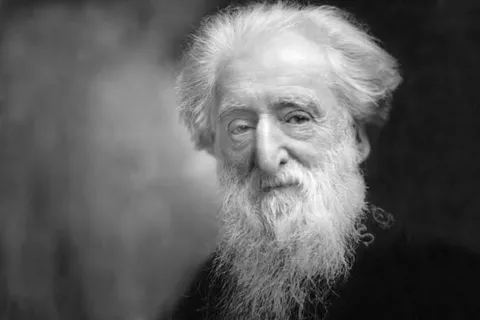 General William Booth’s early life
William Booth was born in Nottingham in 1829 of well-bred parents who had become poor. He was a lively lad nicknamed Wilful Wil. At the age of fifteen he was converted in the Methodist chapel and became the leader of a band of teenage evangelists who called him Captain and held street meetings with remarkable success.
In 1851 he began full-time Christian work among the Methodist Reformers in London and later in Lincolnshire. After a period in a theological college he became a minister of the Methodist New Connexion. His heart however was with the poor people unreached by his church, and in 1861 he left the Methodists to give himself freely to the work of evangelism. Joined by Catherine, his devoted wife, they saw their ministry break out into real revival, which in Cornwall spread far and wide.
One memorable day in July 1865, after exploring the streets in an East End district where he was to conduct a mission, the terrible poverty, vice and degradation of these needy people struck home to his heart. He arrived at his Hammersmith home just before midnight and greeted his waiting Catherine with these words: “Darling, I have found my destiny!” She understood him. Together they had ministered God’s grace to God’s poor in many places.
Now they were to spend their lives bringing deliverance to Satan”s captives in the evil jungle of London”s slums. One day William took Bramwell, his son, into an East End pub which was crammed full of dirty, intoxicated creatures. Seeing the appalled look on his son”s face, he said gently, “Bramwell, these are our people—the people I want you to live for.”
William and Catherine loved each other passionately all their lives. And no less passionately did they love their Lord together. Now, although penniless, together with their dedicated children, they moved out in great faith to bring Christ”s abundant life to London”s poverty-stricken, devil-oppressed millions.
At first their organisation was called the Christian Mission. In spite of brutal opposition and much cruel hardship, the Lord blessed this work, and it spread rapidly.
William Booth was the dynamic leader who called young men and women to join him in this full-time crusade. With enthusiastic abandon, hundreds gave up all to follow him.
“Make your will, pack your box, kiss your girl and be ready in a week”, he told one young volunteer.
Salvation Army born
One day as William was dictating a report on the work to George Railton, his secretary, he said, “We are a volunteer army,”
“No”, said Bramwell, “I am a regular or nothing.”
His father stopped in his stride, bent over Railton, took the pen from his hand, and crossing out the word “volunteer”, wrote “salvation”. The two young men stared at the phrase “a salvation army”, then both exclaimed “Hallelujah”. So the Salvation Army was born.
As these dedicated, Spirit-filled soldiers of the cross flung themselves into the battle against evil under their blood and fire banner, amazing miracles of deliverance occurred. Alcoholics, prostitutes and criminals were set free and changed into workaday saints.
Cecil Rhodes once visited the Salvation Army farm colony for men at Hadleigh, Essex, and asked after a notorious criminal who had been converted and rehabilitated there.
“Oh”, was the answer, “He has left the colony and has had a regular job outside now for twelve months.”
“Well” said Rhodes in astonishment, “if you have kept that man working for a year, I will believe in miracles.”
Slave traffic
The power that changed and delivered was the power of the Holy Spirit. Bramwell Booth in his book Echoes and Memories describes how this power operated, especially after whole nights of prayer. Persons hostile to the Army would come under deep conviction and fall prostrate to the ground, afterward to rise penitent, forgiven and changed. Healings often occurred and all the gifts of the Spirit were manifested as the Lord operated through His revived Body under William Booth’s leadership.
Terrible evils lay hidden under the curtain of Victorian social life in the nineteenth century. The Salvation Army unmasked and fought them. Its work among prostitutes soon revealed the appalling wickedness of the white slave traffic, in which girls of thirteen were sold by their parents to the pimps who used them in their profitable brothels, or who traded them on the Continent.
“Thousands of innocent girls, most of them under sixteen, were shipped as regularly as cattle to the state-regulated brothels of Brussels and Antwerp.” (Collier).
Imprisoned
In order to expose this vile trade, W. T. Stead (editor of The Pall Mall Gazette) and Bramwell Booth plotted to buy such a child in order to shock the Victorians into facing the fact of this hidden moral cancer in their society. This thirteen-year-old girl, Eliza Armstrong, was bought from her mother for £5 and placed in the care of Salvationists in France.
W. T. Stead told the story in a series of explosive articles in The Pall Mall Gazette which raised such a furore that Parliament passed a law raising the age of consent from thirteen to sixteen. However, Booth and Stead were prosecuted for abduction, and Stead was imprisoned for three months.
William Booth always believed the essential cause of social evil and suffering was sin, and that salvation from sin was its essential cure. But as his work progressed, he became increasingly convinced that social redemption and reform should be an integral part of Christian mission.
So at the age of sixty he startled England with the publication of the massive volume entitled In Darkest England, and the Way Out. It was packed with facts and statistics concerning Britain’s submerged corruption, and proved that a large proportion of her population was homeless, destitute and starving. It also outlined Booth’s answer to the problem — his own attempt to begin to build the welfare state.
All this was the result of two years” laborious research by many people, including the loyal W. T. Stead. On the day the volume was finished and ready for publication, Stead was conning its final pages in the home of the Booths. At last he said, “That work will echo round the world. I rejoice with an exceeding great joy.”
“And I”, whispered Catherine, dying of cancer in a corner of the room, “And I most of all thank God. Thank God!” As the work of the Salvation Army spread throughout Britain and into many countries overseas, it met with brutal hostility. In many places Skeleton Armies were organised to sabotage this work of God. Hundreds of officers were attacked and injured (some for life). Halls and offices were smashed and fired. Meetings were broken up by gangs organised by brothel keepers and hostile publicans.
One sympathiser in Worthing defended his life and property with a revolver. But Booth’s soldiers endured the persecution for many years, often winning over their opponents by their own offensive of Christian love.
The Army that William Booth created under God was an extension of his own dedicated personality. It expressed his own resolve in his words which Collier places on the first page of his book:
“While women weep as they do now, I’ll fight; while little children go hungry as they do now, I’ll fight; while men go to prison, in and out, in and out, as they do now, I’ll fight—I’ll fight to the very end!”
Toward the end of his life, he became blind. When he heard the doctor’s verdict that he would never see again, he said to his son: “Bramwell, I have done what I could for God and the people with my eyes. Now I shall see what I can do for God and the people without my eyes.”
But the old warrior had finally laid down his sword. His daughter, Eva, head of the Army’s work in America, came home to say her last farewell. Standing at the window she described to her father the glory of that evening’s sunset.
“I cannot see it,” said the General, “but I shall see the dawn.”
General William Booth’s early life
William Booth was born in Nottingham in 1829 of well-bred parents who had become poor. He was a lively lad nicknamed Wilful Wil. At the age of fifteen he was converted in the Methodist chapel and became the leader of a band of teenage evangelists who called him Captain and held street meetings with remarkable success.
In 1851 he began full-time Christian work among the Methodist Reformers in London and later in Lincolnshire. After a period in a theological college he became a minister of the Methodist New Connexion. His heart however was with the poor people unreached by his church, and in 1861 he left the Methodists to give himself freely to the work of evangelism. Joined by Catherine, his devoted wife, they saw their ministry break out into real revival, which in Cornwall spread far and wide.
One memorable day in July 1865, after exploring the streets in an East End district where he was to conduct a mission, the terrible poverty, vice and degradation of these needy people struck home to his heart. He arrived at his Hammersmith home just before midnight and greeted his waiting Catherine with these words: “Darling, I have found my destiny!” She understood him. Together they had ministered God’s grace to God’s poor in many places.
Now they were to spend their lives bringing deliverance to Satan”s captives in the evil jungle of London”s slums. One day William took Bramwell, his son, into an East End pub which was crammed full of dirty, intoxicated creatures. Seeing the appalled look on his son”s face, he said gently, “Bramwell, these are our people—the people I want you to live for.”
William and Catherine loved each other passionately all their lives. And no less passionately did they love their Lord together. Now, although penniless, together with their dedicated children, they moved out in great faith to bring Christ”s abundant life to London”s poverty-stricken, devil-oppressed millions.
At first their organisation was called the Christian Mission. In spite of brutal opposition and much cruel hardship, the Lord blessed this work, and it spread rapidly.
William Booth was the dynamic leader who called young men and women to join him in this full-time crusade. With enthusiastic abandon, hundreds gave up all to follow him.
“Make your will, pack your box, kiss your girl and be ready in a week”, he told one young volunteer.
Salvation Army born
One day as William was dictating a report on the work to George Railton, his secretary, he said, “We are a volunteer army,”
“No”, said Bramwell, “I am a regular or nothing.”
His father stopped in his stride, bent over Railton, took the pen from his hand, and crossing out the word “volunteer”, wrote “salvation”. The two young men stared at the phrase “a salvation army”, then both exclaimed “Hallelujah”. So the Salvation Army was born.
As these dedicated, Spirit-filled soldiers of the cross flung themselves into the battle against evil under their blood and fire banner, amazing miracles of deliverance occurred. Alcoholics, prostitutes and criminals were set free and changed into workaday saints.
Cecil Rhodes once visited the Salvation Army farm colony for men at Hadleigh, Essex, and asked after a notorious criminal who had been converted and rehabilitated there.
“Oh”, was the answer, “He has left the colony and has had a regular job outside now for twelve months.”
“Well” said Rhodes in astonishment, “if you have kept that man working for a year, I will believe in miracles.”
Slave traffic
The power that changed and delivered was the power of the Holy Spirit. Bramwell Booth in his book Echoes and Memories describes how this power operated, especially after whole nights of prayer. Persons hostile to the Army would come under deep conviction and fall prostrate to the ground, afterward to rise penitent, forgiven and changed. Healings often occurred and all the gifts of the Spirit were manifested as the Lord operated through His revived Body under William Booth’s leadership.
Terrible evils lay hidden under the curtain of Victorian social life in the nineteenth century. The Salvation Army unmasked and fought them. Its work among prostitutes soon revealed the appalling wickedness of the white slave traffic, in which girls of thirteen were sold by their parents to the pimps who used them in their profitable brothels, or who traded them on the Continent.
“Thousands of innocent girls, most of them under sixteen, were shipped as regularly as cattle to the state-regulated brothels of Brussels and Antwerp.” (Collier).
Imprisoned
In order to expose this vile trade, W. T. Stead (editor of The Pall Mall Gazette) and Bramwell Booth plotted to buy such a child in order to shock the Victorians into facing the fact of this hidden moral cancer in their society. This thirteen-year-old girl, Eliza Armstrong, was bought from her mother for £5 and placed in the care of Salvationists in France.
W. T. Stead told the story in a series of explosive articles in The Pall Mall Gazette which raised such a furore that Parliament passed a law raising the age of consent from thirteen to sixteen. However, Booth and Stead were prosecuted for abduction, and Stead was imprisoned for three months.
William Booth always believed the essential cause of social evil and suffering was sin, and that salvation from sin was its essential cure. But as his work progressed, he became increasingly convinced that social redemption and reform should be an integral part of Christian mission.
So at the age of sixty he startled England with the publication of the massive volume entitled In Darkest England, and the Way Out. It was packed with facts and statistics concerning Britain’s submerged corruption, and proved that a large proportion of her population was homeless, destitute and starving. It also outlined Booth’s answer to the problem — his own attempt to begin to build the welfare state.
All this was the result of two years” laborious research by many people, including the loyal W. T. Stead. On the day the volume was finished and ready for publication, Stead was conning its final pages in the home of the Booths. At last he said, “That work will echo round the world. I rejoice with an exceeding great joy.”
“And I”, whispered Catherine, dying of cancer in a corner of the room, “And I most of all thank God. Thank God!” As the work of the Salvation Army spread throughout Britain and into many countries overseas, it met with brutal hostility. In many places Skeleton Armies were organised to sabotage this work of God. Hundreds of officers were attacked and injured (some for life). Halls and offices were smashed and fired. Meetings were broken up by gangs organised by brothel keepers and hostile publicans.
One sympathiser in Worthing defended his life and property with a revolver. But Booth’s soldiers endured the persecution for many years, often winning over their opponents by their own offensive of Christian love.
The Army that William Booth created under God was an extension of his own dedicated personality. It expressed his own resolve in his words which Collier places on the first page of his book:
“While women weep as they do now, I’ll fight; while little children go hungry as they do now, I’ll fight; while men go to prison, in and out, in and out, as they do now, I’ll fight—I’ll fight to the very end!”
Toward the end of his life, he became blind. When he heard the doctor’s verdict that he would never see again, he said to his son: “Bramwell, I have done what I could for God and the people with my eyes. Now I shall see what I can do for God and the people without my eyes.”
But the old warrior had finally laid down his sword. His daughter, Eva, head of the Army’s work in America, came home to say her last farewell. Standing at the window she described to her father the glory of that evening’s sunset.
“I cannot see it,” said the General, “but I shall see the dawn.”
If God Approves, Let Men Condemn
It may appear, at first glance, to be an odd text to hang in your bedroom: Blessed are ye, when men shall revile you, and persecute you, and shall say all manner of evil against you falsely, for my sake. Rejoice, and be exceeding glad: for great is your reward in heaven: for so persecuted they the prophets which were before you. (Matthew 5:11–12 KJV) Whereas others might draw from a thousand wells before this one, Susannah Spurgeon framed Jesus’s words to remind her husband, Charles, of Jesus’s upside-down perspective. When his disciples face bitter opposition for his name’s sake, the proper response should be joy. “Spurgeon was slandered in the newspapers, ridiculed by his opponents, and censured by many evangelical ministers.” When we consider this Baptist giant, when we read his stirring sermons, when we remember that his life’s work rivaled that of one hundred men, when we read of the revival and the winning of countless souls to Christ, we can imagine the Prince of Preachers encountering little but unbroken success. Compared with so many of our ministries, his seemed to soar high in the clouds. We rarely consider, as Iain Murray contends, The Forgotten Spurgeon — the Spurgeon who needed Matthew 5:11–12 hanging on his wall. Forgotten Prince The forgotten Spurgeon stood among the tornadoes of several great controversies in his day. His protestation against Arminianism, his disgust at baptismal regeneration, and his resistance to an evangelical unity founded upon fragments of Christian doctrine (known as the Downgrade Controversy) made him the target for many arrows. This Spurgeon, especially at the beginning and end of his ministry, had reason to reckon himself as “the scum of the earth” (24–25). The name Spurgeon, which we regard fondly, was, by estimation of its owner, “kicked about the street like a football” (28). He had occasion to remark in a sermon, “Scarce a day rolls over my head in which the most villainous abuse, the most fearful slander is not uttered against me both privately and by the public press; every engine is employed to put down God’s minister — every lie that man can invent is hurled at me” (63). This Spurgeon was slandered in the newspapers, ridiculed by his opponents, and censured by many evangelical ministers who he anticipated would be his allies. This Spurgeon was a living example of the happy — but often hated — man of God to whom Jesus spoke in the Sermon on the Mount. Fleeing Compromise What can we learn from this forgotten Spurgeon? This Spurgeon can teach us to handle controversy manfully and without compromising. His convictions, which he held to his dying day, cost him dearly. He did not practice that vice he so clearly preached against: “I think there is scarcely a Christian man or woman that has been able to go all the way to heaven and yet quietly hide himself and run from bush to bush, skulking into glory. Christianity and cowardice? What a contradiction in terms!” (“Speak for Yourself — a Challenge”). If we would cast away the temptation to tiptoe into glory, and be of real benefit for Christ’s name in this world, Spurgeon teaches us that we would do well to resist loving our own names, be comfortable in the minority, and recognize (and reject) false unity. 1. Don’t fall in love with your own name. “Let my name perish, but let Christ’s name last forever! Jesus! Jesus! Jesus! Crown him Lord of all!” (43) Spurgeon warns us of falling in love with our own reputations and influence. This self-love, he identified, is a main ingredient in the undoing of the best of us. He exposes the steps to compromise of the person initially used by God: The temptation comes to be careful of the position he has gained, and to do nothing to endanger it. The man, so lately a faithful man of God, compromises with worldlings, and to quiet his own conscience invents a theory by which such compromises are justified and even commended. He receives the praises of “the judicious”; he has, in truth, gone over to the enemy. The whole force of his former life now tells upon the wrong side. (170) How many times have we seen or experienced this drift? First, we are somehow exalted for special use. Then we quietly begin to notice it and relish the attention. Falling in love with recognition, we tighten our grip around our platforms in fear of losing them. We then calculate what we say, filtering out anything that may weaken our influence — including the unfavorable truths of Scripture. And finally, faced with the thing we used to call compromise, we invent reasons to support what we’ve become — why we’ve beaten the sword into a plowshare. “When we begin sharing truth based on how well that truth will be received, we are halfway to compromise.” Fierce loves fixed on unworthy objects mold Christians into cowards. If we have begun to love the music of our own name, manage our brand, or consider our popularity as necessary to the advancement of Christ’s kingdom, we have begun building our own kingdoms. May we say with Spurgeon, “I count my own character, popularity, and usefulness to be as the small dust of the balance compared with fidelity to the Lord Jesus” (219). It is Christ we proclaim, not ourselves (2 Corinthians 4:5). 2. Be comfortable in the minority. “Long ago I ceased to count heads. Truth is usually in the minority in this evil world. I have faith in the Lord Jesus for myself, a faith burned into me as with a hot iron. I thank God, what I believe I shall believe, even if I believe it alone.” (146) Have you ever felt the temptation to count heads — or followers, likes, and shares — to see what you should or should not say? I have. When we begin sharing truth based on how well that truth will be received, we are halfway to compromise. Spurgeon counsels us to consider the cost beforehand: truth is often in the minority; to stand with it means you may stand alone. Yet those who stand for Christ’s truth never truly stand alone. You may go as Esther before the king without kin beside you, resolved that if you perish, you perish; you may preach like Stephen, as crowds press in around you, shutting their ears and hurling stones; you may rebuke King Herod’s adultery alone or say with Paul, “At my first defense no one came to stand by me” (2 Timothy 4:16) — but Christ shall be with you, even until the end of the age (Matthew 28:20). And if your cause is true, you will find, like Elijah, you are not the only one not to bow the knee to Baal (1 Kings 19:14, 18). 3. Recognize false unity. “It is, of course, the most easy to flesh and blood to deal in generalities, to denounce sectarianism, and claim to be of an ultra-catholic spirit; but though rough and rugged, it is required of the loyal servant of King Jesus to maintain all his crown rights and stand up for every word of his laws. Friends chide us and foes abhor us when we are very jealous for the Lord God of Israel, but what do these things matter if the Master approves?” (18) Error loves vagueness. As in Spurgeon’s day, the temptation to tolerate all positions and accept all perspectives on truth is strong in ours. We are told it is prejudiced, narrow, and even unchristian to draw lines. But to Spurgeon, promoting a type of “Christian unity” whose common denominator sinks lower than genuine Christianity in the first place is unacceptable. Unity of Jew and Gentile into one new man is bought with the blood of Christ; unity of gospel truth and gospel untruth is unity brought about by Satan. Orthodox Christianity, he argued, is distinct. Not all views can be true. When the only standard left is for all in the flock to have four legs, wolves and goats stand at ease among us. The trend toward an undoctrinal, atheological, shapeless evangelicalism, beginning in Spurgeon’s day and seemingly ripening in ours, is one of the quickest ways to compromise our fidelity to Christ and witness in the world. “Truth is often in the minority; to stand with it means you may stand alone.” In saying this, Spurgeon did not intend to divide over every possible theological difference — lest every man be an island unto himself. But Spurgeon chafed at minimizing Christian zeal and truth in order to bring together contrasting theologies and to mix liberalism with historic Christianity. We may be called particular or dogmatic, but what do we care if what we promote is the Master’s truth? Though the Heavens Fall “It is yours and mine to do the right though the heavens fall, and follow the command of Christ whatever the consequence may be. “That is strong meat,” do you say? Be strong men, then, and feed thereon.” (171) His beloved wife, who hung Matthew 5:11–12 in their bedroom, said after his death at the age of 57, “His fight for the faith . . . cost him his life.” He fought the good fight of faith, he kept the faith, he finished the race (2 Timothy 4:7), claiming before his death, “My work is done” (173). He lived for his Lord, and now he basks in his presence. To those of us who lag behind him, traversing our own times with all of their challenges and opportunities, temptations and labors, take up his oft-quoted hymn as we continue on in our race of faith: Must I be carried to the skies On flowery beds of ease, While others fought to win the prize And sailed through bloody seas? Since I must fight if I would reign, Increase my courage, Lord! I’ll bear the toil, endure the pain, Supported by thy word. Though the heavens fall, though the earth gives way, though controversy and temptations of spiritual compromise stand before us, may we heed this forgotten Spurgeon, hang Matthew 5:11–12 in our hearts, and live before men and devils with the courage and hope that only Christ supplies. Article by Greg Morse