
GIP Library icon

LOG IN TO REVIEW
About the Book


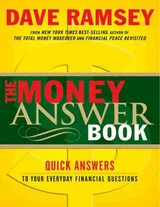
"The Total Money Makeover" by Dave Ramsey is a step-by-step guide to achieving financial freedom and living debt-free. Ramsey outlines a plan for taking control of your finances through eliminating debt, saving for emergencies, investing wisely, and living within your means. The book offers practical advice and tools to help readers create a solid financial foundation and build wealth over time.

David Livingstone

David Livingstone "[I am] serving Christ when shooting a buffalo for my men or taking an observation, [even if some] will consider it not sufficiently or even at all missionary." With four theatrical words, "Dr. Livingstone, I presume?"—words journalist Henry Morton Stanley rehearsed in advance—David Livingstone became immortal. Stanley stayed with Livingstone for five months and then went off to England to write his bestseller, How I Found Livingstone. Livingstone, in the meantime, got lost again—in a swamp literally up to his neck. Within a year and a half, he died in a mud hut, kneeling beside his cot in prayer. Berlin Congress spurs African independent churches The whole civilized world wept. They gave him a 21-gun salute and a hero's funeral among the saints in Westminster Abbey. "Brought by faithful hands over land and sea," his tombstone reads, "David Livingstone: missionary, traveler, philanthropist. For 30 years his life was spent in an unwearied effort to evangelize the native races, to explore the undiscovered secrets, and to abolish the slave trade." He was Mother Teresa, Neil Armstrong, and Abraham Lincoln rolled into one. Highway man At age 25, after a childhood spent working 14 hours a day in a cotton mill, followed by learning in class and on his own, Livingstone was captivated by an appeal for medical missionaries to China. As he trained, however, the door to China was slammed shut by the Opium War. Within six months, he met Robert Moffat, a veteran missionary of southern Africa, who enchanted him with tales of his remote station, glowing in the morning sun with "the smoke of a thousand villages where no missionary had been before." For ten years, Livingstone tried to be a conventional missionary in southern Africa. He opened a string of stations in "the regions beyond," where he settled down to station life, teaching school and superintending the garden. After four years of bachelor life, he married his "boss's" daughter, Mary Moffat. From the beginning, Livingstone showed signs of restlessness. After his only convert decided to return to polygamy, Livingstone felt more called than ever to explore. During his first term in South Africa, Livingstone made some of the most prodigious—and most dangerous—explorations of the nineteenth century. His object was to open a "Missionary Road"—"God's Highway," he also called it—1,500 miles north into the interior to bring "Christianity and civilization" to unreached peoples. Explorer for Christ On these early journeys, Livingstone's interpersonal quirks were already apparent. He had the singular inability to get along with other Westerners. He fought with missionaries, fellow explorers, assistants, and (later) his brother Charles. He held grudges for years. He had the temperament of a book-reading loner, emotionally inarticulate except when he exploded with Scottish rage. He held little patience for the attitudes of missionaries with "miserably contracted minds" who had absorbed "the colonial mentality" regarding the natives. When Livingstone spoke out against racial intolerance, white Afrikaners tried to drive him out, burning his station and stealing his animals. He also had problems with the London Missionary Society, who felt that his explorations were distracting him from his missionary work. Throughout his life, however, Livingstone always thought of himself as primarily a missionary, "not a dumpy sort of person with a Bible under his arms, [but someone] serving Christ when shooting a buffalo for my men or taking an observation, [even if some] will consider it not sufficiently or even at all missionary." Though alienated from the whites, the natives loved his common touch, his rough paternalism, and his curiosity. They also thought he might protect them or supply them with guns. More than most Europeans, Livingstone talked to them with respect, Scottish laird to African chief. Some explorers took as many as 150 porters when they traveled; Livingstone traveled with 30 or fewer. On an epic, three-year trip from the Atlantic Ocean to the Indian Ocean (reputedly the first by a European) Livingstone was introduced to the 1,700-mile-long Zambezi. The river was also home to Victoria Falls, Livingstone's most awe-inspiring discovery. The scene was "so lovely," he later wrote, that it "must have been gazed upon by angels in their flight." Despite its beauty, the Zambezi was a river of human misery. It linked the Portuguese colonies of Angola and Mozambique, the main suppliers of slaves for Brazil, who in turn sold to Cuba and the United States. Though Livingstone was partially driven by a desire to create a British colony, his primary ambition was to expose the slave trade and cut it off at the source. The strongest weapon in this task, he believed, was Christian commercial civilization. He hoped to replace the "inefficient" slave economy with a capitalist economy: buying and selling goods instead of people. The ill-fated Zambezi expedition After a brief heroic return to England, Livingstone returned to Africa, this time to navigate 1,000 miles up the Zambezi in a brass-and-mahogany steamboat to establish a mission near Victoria Falls. The boat was state-of-the-art technology but proved too frail for the expedition. It leaked horribly after repeatedly running aground on sandbars. Livingstone pushed his men beyond human endurance. When they reached a 30-foot waterfall, he waved his hand, as if to wish it away, and said, "That's not supposed to be there." His wife, who had just given birth to her sixth child, died in 1862 beside the river, only one of several lives claimed on the voyage. Two years later, the British government, which had no interest in "forcing steamers up cataracts," recalled Livingstone and his mission party. A year later, he was on his way back to Africa again, this time leading an expedition sponsored by the Royal Geographical Society and wealthy friends. "I would not consent to go simply as a geographer," he emphasized, but as biographer Tim Jeal wrote, "It would be hard to judge whether the search for the Nile's source or his desire to expose the slave trade was his dominant motive." The source of the Nile was the great geographical puzzle of the day. But more important to Livingstone was the possibility of proving that the Bible was true by tracing the African roots of Judaism and Christianity. For two years he simply disappeared, without a letter or scrap of information. He reported later that he had been so ill he could not even lift a pen, but he was able to read the Bible straight through four times. Livingstone's disappearance fascinated the public as much as Amelia Earhart's a few generations later. When American journalist Henry Stanley found Livingstone, the news exploded in England and America. Papers carried special editions devoted to the famous meeting. In August 1872, in precarious health, Livingstone shook Stanley's hand and set out on his final journey. When Livingstone had arrived in Africa in 1841, it was as exotic as outer space, called the "Dark Continent" and the "White Man's Graveyard." although the Portuguese, Dutch, and English were pushing into the interior, African maps had blank unexplored areas—no roads, no countries, no landmarks. Livingstone helped redraw the maps, exploring what are now a dozen countries, including South Africa, Rwanda, Angola, and the Republic of the Congo (formerly Zaire). And he made the West aware of the continuing evil of African slavery, which led to its being eventually outlawed.

Am I Really a Christian

Am I really a Christian? Perhaps for you, that question looms like a shadow in the back of the soul, threatening your dearest hopes and peace. Others may struggle to understand why. You bear all the outward marks of a Christian: You read, pray, and gather with your church faithfully. You serve and sacrifice your time. You look for opportunities to share Christ with neighbors. You hide no secret sins. But “the heart knows its own bitterness” (Proverbs 14:10), and so too its own darkness. No matter how much you obey on the outside, when you look within you find a mass of conflicting desires and warring ambitions. Every godly impulse seems mixed with an ungodly one; every holy desire with something shameful. You can’t pray earnestly without feeling proud of yourself afterward. You can’t serve without some part of you wanting to be praised. You remember Judas and Demas, men whose outward appearance deceived others and deceived themselves. You know that on the last day many will find themselves surprised, knocking on the door of heaven only to hear four haunting words: “I never knew you” (Matthew 7:23; 25:11–12). And so, in the stillness before sleep, in quiet moments of the day, and sometimes in the middle of worship itself, the shadow returns: Am I real — or am I just deceiving myself? ‘With You There Is Forgiveness’ Sometimes, the most apt answers to our most pressing questions are buried hundreds of years ago. And when it comes to assurance in particular, we may never surpass the pastoral wisdom of those seventeenth-century soul physicians, the Puritans. Assurance proved to be a common struggle for the Christians of that era, such that John Owen devoted over three hundred pages to the topic in his masterful Exposition of Psalm 130, most of which addresses a single verse: “With you there is forgiveness, that you may be feared” (Psalm 130:4). “When it comes to assurance, what matters most is not sin’s persistence, but our resistance.” With God there is forgiveness — free forgiveness, abundant forgiveness, glad forgiveness, based on the blood and righteousness of Jesus Christ. But Owen knew that some Christians would hesitate to believe that forgiveness was for them. He knew that some introspective believers, bruised with a sense of their indwelling sin, would respond, “Yes, there is forgiveness with God, but I see so much darkness within myself — is there forgiveness for me?” In a way, Owen’s entire book is his answer to that question. But he devotes special attention to such believers in one brief section — not aiming, necessarily, to remove every doubt (something only God can do), but merely to help readers see themselves from a new, more gracious angle. Grief can be a good sign. When some Christians search their hearts, they have eyes only for their sin. Their highest worship seems tainted with self-focus; their best obedience seems spoiled by strains of insincerity. They are ready to sigh with David, “My iniquities have overtaken me, and I cannot see; they are more than the hairs of my head; my heart fails me” (Psalm 40:12). But such grief can be a good sign. Owen asks us to imagine a man with a numb leg. As long as his leg has lost sensation, the man “endures deep cuts and lancings, and feels them not.” Yet as soon as his nerves awake, he “feels the least cut, and may think the instruments sharper than they were before, when all the difference is, that he hath got a quickness of sense” (Works of John Owen, 6:604). Outside of Christ, our souls are numb to the evil of sin. The guilt and the consequences of sin may have wounded us from time to time, but its evil we could hardly feel (if at all) — no matter how often it thrust us through. But once our souls come alive, we need only a paper cut to wince. Sin burdens us, oppresses us, grieves us, not because we are worse than we were before, but because we finally feel sin for what it is: the thorns that crowned our Savior’s head, the spear that pierced our Lord. So, Owen writes, “‘Oh wretched man that I am! who shall deliver me from the body of this death?’ [Romans 7:24] is a better evidence of grace and holiness than ‘God, I thank thee I am not as other men’ [Luke 18:11]” (601). Grief over our sin, far from disqualifying us from the kingdom, suggests that comfort is on the way (Matthew 5:4). Your resistance, not sin’s persistence, matters most. Temptation is frustratingly persistent. Sin would grieve us less if it left us alone more often: if pride were not ready to rise on all occasions, if anger did not flame up from the smallest sparks, if foolish thoughts did not fill our minds so often. Can we have any confidence of assurance if we find sin so relentlessly tempting? Owen takes us to 1 Peter 2:11, where the apostle writes, “Abstain from the passions of the flesh, which wage war against your soul.” He comments, “Now, to war is not to make faint or gentle opposition, . . . but it is to go out with great strength, to use craft, subtlety, and force, so as to put the whole issue to a hazard. So these lusts war” (605). “God’s ‘well done’ says less about the worth of our works than about the wonder of his mercy.” Sin wars — and not against those whom it holds captive, but against those who have been rescued from its authority and now fight below Christ’s banner. When it comes to assurance, then, what matters most is not sin’s persistence, but our resistance. Or as Owen puts it, “Your state is not at all to be measured by the opposition that sin makes to you, but by the opposition you make to it” (605). Sin may burden and tempt you, oppose and oppress you. Every army does. But do you, for your part, resist? Do you run up the watchtower and raise an alarm? Do you grip your shield and swing your sword? Do you labor, strive, watch, pray, and keep close to your Captain? Then sin’s warfare against you may be a sign that you are in Christ’s service. Christ purifies our obedience. The most sensitive Christians, Owen writes, often “find their hearts weak, and all their duties worthless. . . . In the best of them there is such a mixture of self, hypocrisy, unbelief, vain-glory, that they are even ashamed and confounded with the remembrance of them” (600). Whatever fruit they bear seems covered with the mold of indwelling sin. But often, God sees more grace in his sin-burdened people than they see in themselves. Remember Sarah, Owen says: even when she was walking in unbelief, God took notice of the fact — a trifle in our eyes — that she called her husband “lord” (Genesis 18:12; 1 Peter 3:6). So too, on the last day, Jesus will commend his people for good works they have long forgotten and struggle even to recognize (Matthew 25:37–40). Of course, God’s “well done” says less about the worth of our works than about the wonder of his mercy. Our Father hangs our pictures upon his wall because Christ adorns them with the jewels of his own crown. Owen writes, Jesus Christ takes whatever is evil and unsavoury out of them, and makes them acceptable. . . . All the ingredients of self that are in them on any account he takes away, and adds incense to what remains, and presents it to God. . . . So that God accepts a little, and Christ makes our little a great deal. (603) The only works that God accepts are those that have been washed in the blood of Jesus (Revelation 7:14). And any work that is washed in the blood of Jesus becomes transfigured, a small but resplendent reflection of “Christ in you, the hope of glory” (Colossians 1:27). And therefore God, in unspeakable grace, “remembers the duties which we forget, and forgets the sins which we remember” (603). Assurance arises from faith. Owen’s final piece of counsel may feel counterintuitive to the unassured heart. Many who struggle with assurance hesitate to rest their full weight on Christ’s saving promises until they feel some warrant from within that the promises belong to them. They wait to come boldly to the throne of grace until they find something to bring with them. But this gets the order exactly backward. Owen writes, “Do not resolve not to eat thy meat until thou art strong, when thou hast no means of being strong but by eating” (603). When we wait to focus our gaze on Christ’s promises until we are holy enough, we are like a man waiting to eat until he becomes strong, or waiting to sleep until he feels energized, or waiting to study until he grows wise. Sinclair Ferguson, a modern-day pupil of Owen, puts it this way: Believing [gives] rise to obedience, not obedience . . . to assurance irrespective of believing. Such faith cannot be forced into us by our efforts to be obedient; it arises only from larger and clearer views of Christ. (The Whole Christ, 204) The faith that nourishes both obedience and assurance arises only from larger and clearer views of Christ. If we stay away from Jesus until we are holy enough, we will stay away forever. But if we come to him right now and every morning hereafter, no matter how dead we feel, looking for welcome on the basis of his blood rather than our efforts, then we can hope, in time, to find faith flowering in fuller obedience and deeper assurance. But we will come only if we know, with Owen, that “with you there is forgiveness, that you may be feared” (Psalm 130:4). All who come to Christ, trust in Christ, and embrace Christ find the forgiveness that is with Christ. And you are no exception. Article by Scott Hubbard

Feedback
Suggestionsuggestion box
x