
Others like harnessing your emotions Features >>
Kingdom Living
Finishing Our Course With Joy

Facing Your Giants
-160.webp)
Leading On Empty (Refilling Your Tank And Renewing Your Passion)
Sharpen Your Discernment
%20-%20Patricia%20King-160.webp)
Activating Your God-Given Power To Create Realms And Atmospheres (Create Your World)

Angelic Visitations And Supernatural Encounters
Flourishing Churches And Communities

Finishing Well In Life And Ministry
Crushing: God Turns Pressure Into Power
About the Book
"Harnessing Your Emotions" by Andrew Wommack discusses the importance of controlling and managing emotions in order to live a fulfilling and rewarding life. Wommack provides practical advice and strategies for understanding and regulating emotions in order to experience greater peace, joy, and success in all areas of life.
William Chalmers Burns
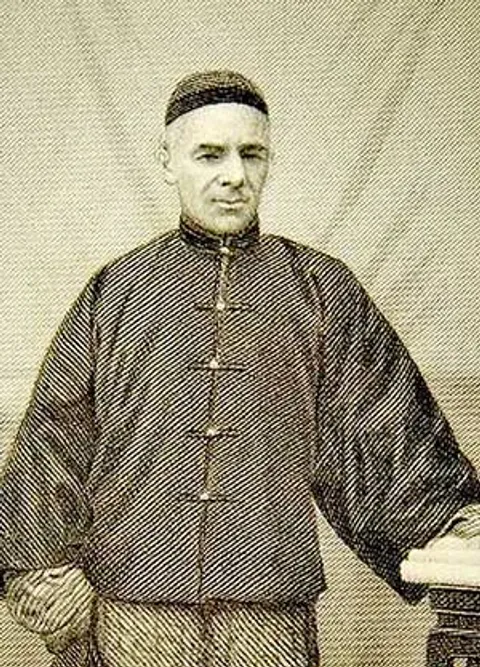 William Chalmers Burns was born in the Manse of Dun, in Angus, on April Ist, 1815. He was the third son of the Parish Church minister there. After leaving school, he went to Edinburgh to be apprenticed with an uncle to the legal profession. His eldest sister, a gay young lady, was converted to God, and became a bright witness for the Lord Jesus in 1831, and it was by means of her decided testimony that William was first awakened to a sense of his need of salvation, and led to put his trust in the Son of God, as his Redeemer and Saviour.
It was shortly after his conversion that he walked into the manse of Kilsyth, where the family then resided, having walked on foot the thirty-six miles from Edinburgh, to tell his mother and his sisters the glad news of his conversion, and to say that his desire now was to relinquish his study of law, and devote himself entirely to the preaching of the Gospel of God’s grace to his fellowmen.
And this he did heartily and with all his might, first in the neglected Parts of Scotland, and latterly among many heathen millions of the great Chinese Empire, then scarcely touched by the feet of God’s messengers of peace.
Mr. Burns’s name came into prominence in connection with a wonderful work of grace in Dundee, while he was preaching for Robert Murray M’Cheyne, then on a visit to Palestine, for the evangelization of the Jews. During Mr. Burns’s preaching in Dundee, a remarkable awakening took place; thousands were aroused to their condition in the sight of God, truly converted, and set on the heavenward way.
Remarkable scenes were witnessed in the old church of St. Peter’s, near to which M’Cheyne’s body now lies, awaiting the first resurrection. It was on the evening of a Lord’s Day in Kilsyth, after preaching to a crowded congregation, that Mr. Burns felt constrained to intimate to the people that he would preach to the people in the open air, before returning to Dundee the following day.
Deeply burdened with the souls of the people, he went into the village and invited the people, who thronged into the old church, until every seat and passage was filled. And the Lord helped His servant to preach straight to the people with great power, with the result that the whole congregation became melted under the message, many weeping aloud and crying to God for mercy. A glorious work of conversion followed.
Meetings for prayer and preaching of the Gospel continued in the churchyard, the market-place and elsewhere for weeks, while Mr. Burns returned to Dundee to resume his ministry. The work progressed in Dundee with increased interest, until the return of Mr. M’Cheyne, who greatly rejoiced in all that the Lord had done during his absence, through the ministry of His servant.
There was no jealousy, but the deepest gratitude, and these two true ministers of Christ rejoiced together over the Lord’s doings, which were indeed marvellous in their eyes.
From that time onward, until the Lord’s call came to go to China, Mr. Burns gave himself almost wholly to itinerant Gospel preaching, through Perthshire, up as far north as Aberdeen, preaching in barns, on market-places, and wherever the people could be gathered together to hear the Word. His message was plain, and to the point; thousands were awakened and many saved. But the adversary opposed. Time and again Mr. Burns was stoned, and bore the marks of these brands of the enemy for many days.
Believing it to be the call of the Lord, he went forth to China as the first missionary of the Presbyterian Church of England, in June, 1847. When questioned by those interested in his out-going, how long it would take him to prepare for the voyage, he replied with all simplicity, “I will be ready to go to-morrow.”
On a brief visit to his home, to take farewell of his sister, he silently wrung her hand, took a last glance around their old home, and with a small bag in his hand and his mother’s plaid across his arm, went forth, in the Name of the Lord with the Gospel to China’s benighted people, of whom it was said “a million a month” were dying without having once heard the Gospel.
For years this solitary witness toiled alone, at times with a few helpers, in the great heathen land, amid overwhelming hindrances, but his faith in God never faltered. On and on he went, sowing the seed which others would reap, until he reached the borders of the great kingdom of Manchuria, where, in a small, comfortless room in Nieu-chang, wearied and worn in labours abundant, he fell asleep on April 4th, 1868, his last audible words being, “For Thine is the Kingdom and the Power and the Glory.”
It is of this great land that the story of grace related in the following pages is told, and those who saw and shared in its joyful results, say that it was no doubt part of the result of William Burns’s sowing, in his earlier years in China.
William Chalmers Burns was born in the Manse of Dun, in Angus, on April Ist, 1815. He was the third son of the Parish Church minister there. After leaving school, he went to Edinburgh to be apprenticed with an uncle to the legal profession. His eldest sister, a gay young lady, was converted to God, and became a bright witness for the Lord Jesus in 1831, and it was by means of her decided testimony that William was first awakened to a sense of his need of salvation, and led to put his trust in the Son of God, as his Redeemer and Saviour.
It was shortly after his conversion that he walked into the manse of Kilsyth, where the family then resided, having walked on foot the thirty-six miles from Edinburgh, to tell his mother and his sisters the glad news of his conversion, and to say that his desire now was to relinquish his study of law, and devote himself entirely to the preaching of the Gospel of God’s grace to his fellowmen.
And this he did heartily and with all his might, first in the neglected Parts of Scotland, and latterly among many heathen millions of the great Chinese Empire, then scarcely touched by the feet of God’s messengers of peace.
Mr. Burns’s name came into prominence in connection with a wonderful work of grace in Dundee, while he was preaching for Robert Murray M’Cheyne, then on a visit to Palestine, for the evangelization of the Jews. During Mr. Burns’s preaching in Dundee, a remarkable awakening took place; thousands were aroused to their condition in the sight of God, truly converted, and set on the heavenward way.
Remarkable scenes were witnessed in the old church of St. Peter’s, near to which M’Cheyne’s body now lies, awaiting the first resurrection. It was on the evening of a Lord’s Day in Kilsyth, after preaching to a crowded congregation, that Mr. Burns felt constrained to intimate to the people that he would preach to the people in the open air, before returning to Dundee the following day.
Deeply burdened with the souls of the people, he went into the village and invited the people, who thronged into the old church, until every seat and passage was filled. And the Lord helped His servant to preach straight to the people with great power, with the result that the whole congregation became melted under the message, many weeping aloud and crying to God for mercy. A glorious work of conversion followed.
Meetings for prayer and preaching of the Gospel continued in the churchyard, the market-place and elsewhere for weeks, while Mr. Burns returned to Dundee to resume his ministry. The work progressed in Dundee with increased interest, until the return of Mr. M’Cheyne, who greatly rejoiced in all that the Lord had done during his absence, through the ministry of His servant.
There was no jealousy, but the deepest gratitude, and these two true ministers of Christ rejoiced together over the Lord’s doings, which were indeed marvellous in their eyes.
From that time onward, until the Lord’s call came to go to China, Mr. Burns gave himself almost wholly to itinerant Gospel preaching, through Perthshire, up as far north as Aberdeen, preaching in barns, on market-places, and wherever the people could be gathered together to hear the Word. His message was plain, and to the point; thousands were awakened and many saved. But the adversary opposed. Time and again Mr. Burns was stoned, and bore the marks of these brands of the enemy for many days.
Believing it to be the call of the Lord, he went forth to China as the first missionary of the Presbyterian Church of England, in June, 1847. When questioned by those interested in his out-going, how long it would take him to prepare for the voyage, he replied with all simplicity, “I will be ready to go to-morrow.”
On a brief visit to his home, to take farewell of his sister, he silently wrung her hand, took a last glance around their old home, and with a small bag in his hand and his mother’s plaid across his arm, went forth, in the Name of the Lord with the Gospel to China’s benighted people, of whom it was said “a million a month” were dying without having once heard the Gospel.
For years this solitary witness toiled alone, at times with a few helpers, in the great heathen land, amid overwhelming hindrances, but his faith in God never faltered. On and on he went, sowing the seed which others would reap, until he reached the borders of the great kingdom of Manchuria, where, in a small, comfortless room in Nieu-chang, wearied and worn in labours abundant, he fell asleep on April 4th, 1868, his last audible words being, “For Thine is the Kingdom and the Power and the Glory.”
It is of this great land that the story of grace related in the following pages is told, and those who saw and shared in its joyful results, say that it was no doubt part of the result of William Burns’s sowing, in his earlier years in China.
God Always Sets the Table
Perhaps no act of divine provision comes and goes so quietly, so predictably, so almost imperceptibly, like our next meal. Now, for millions of people around the world, the weighty miracle is felt and revered. Unlike many of us, when they pray, “Give us this day our daily bread” (Matthew 6:11), they truly do not know if and how that bread will come. They wait for food like many of us never have. When they lie down at night, having eaten enough to quiet their aching stomachs, they marvel that they did not starve today — that God fed them enough to sustain them for another 24 long hours. How slow the rest of us can be to marvel while we eat. We forget to eat. We sometimes think of meals as interruptions to an otherwise productive day. We miss the wonder, like watching three blazing sunrises every day, that the God of heaven and earth feeds us. He Brings Forth Food Psalm 104 does not miss the dumbfounding beauty of daily bread: You cause the grass to grow for the livestock and plants for man to cultivate, that he may bring forth food from the earth and wine to gladden the heart of man, oil to make his face shine and bread to strengthen man’s heart. (Psalm 104:14–15) You, O God, stretch out the infinite heavens as if it were just a tent (Psalm 104:2). You set the layers of the earth on its foundations, carefully wrapping core with mantle, and mantle with 25,000 miles of crust (Psalm 104:5). You lift the mountains with your hands, some of them 20,000 feet high, and you carve out the depths and crevices of all the valleys (Psalm 104:8). And you feed us. Our next meal stands there right alongside Mount Everest, the Grand Canyon, and the Andromeda Galaxy, among the most breathtaking wonders anywhere in creation. Have you, like me, missed the spectacular mystery laid on the plate before you? Food Is No Footnote Jesus sees what the psalmist saw, the God-sized wonder baked into life-sustaining bread. When he teaches his disciples to pray, he says, Pray then like this: “Our Father in heaven, hallowed be your name. Your kingdom come, your will be done, on earth as it is in heaven. Give us this day our daily bread . . .” (Matthew 6:9–11) Our Lord moves seamlessly from the reaches of heaven, and the ends of the earth, to the wheat on our plate. The transition is not jarring from the cosmos to the kitchen, even in his extremely concise prayer, because he sees how powerfully God must act in both. “God bakes something of himself — his worth, his mouthwatering glory — into everything we eat.” When we pause to pray and give thanks for the food before us, we have to resist thinking that these moments are trivial, peripheral, forgettable. Every meal, God sets the table. He is hallowing his name, extending his kingdom, and doing his will (among other ways) by providing his people with food. What we eat is not a footnote or afterthought for Jesus. Because he wants his Father to be glorified, he does not take his (or our) daily bread for granted. Two Great Ingredients God mixes at least two great ingredients into mealtime worship: First, he bakes something of himself — his worth, his mouthwatering glory — into everything we eat. Nothing we consume is silent about God. Every bite beckons us to enjoy something sweeter, more satisfying, more soul-sustaining: him. “The creation of food, tongues, and the human digestive system is the product of infinite wisdom knitting the world together in a harmonious whole,” writes Joe Rigney. “The variety of tastes creates categories and gives us edible images of divine things” ( The Things of Earth , 81). Second, when God prepares our food for us, he nourishes and strengthens us to do his will — to eat or drink, or whatever we do, to his glory (1 Corinthians 10:31). Man does not live by bread alone, but he will not live long without bread. God chooses us from among all the people of the earth, despite how little we deserved his love, and makes us his witnesses to the ends of the earth, and — wonder of wonders — he sustains us each and every day, hour by hour, by bringing food forth from the earth. As Rigney goes on to say, “Yes, food is given to us for our enjoyment, to enlarge our categories for knowing God. But food is also God’s way of providing us with energy and strength for the work” (85). If you have lost your sense of the mystery of your meals, remember that this food did not come ultimately from the pantry or the fridge, the grocery store or the farmer’s market, from the butcher or the harvest, but from the mind and heart of God. And he did not entrust us with mouths and meals simply to survive. He wants us to eat for more of him — to experience and enjoy more of him ourselves, and to share more of him in and for the world. My Portion Forever We will not truly wonder at our daily supply of food if we do not treasure God more than food. “My flesh and my heart may fail” — my water may dry up and my bread may not come — “but God is the strength of my heart and my portion forever” (Psalms 73:26). He is my portion — three full meals (and more) for hundreds of thousands of years (and more). Rigney writes, Our sense of hunger and thirst are divinely designed to highlight the soul’s hunger for spiritual food. . . . Apart from our experience of empty stomachs and parched throats, of full bellies, quenched thirsts, and the incredible variety of taste, our spiritual lives would be impoverished, and we would have no real vocabulary for spiritual desire, no mental and emotional framework for engaging with God. (81) God wants what we eat to make us hungry for him . We often eat just to make our hunger go away. What if we ate, instead, to try to taste and see and enjoy the God who feeds us? “Slow down and savor the majesty in your next meal.” Our God came, took on our flesh, and ate among us, saying, “I am the bread of life; whoever comes to me shall not hunger, and whoever believes in me shall never thirst” (John 6:35). Then the bread of life was broken on the cross, spilling the wine of his precious blood for us — the hungry, the ungrateful, the wandering — to bring us into his new covenant (1 Corinthians 11:24–26), and secure a seat for us at “the marriage supper of the Lamb” (Revelation 19:9). Slow down and savor the majesty in your next meal. However incidental it may feel, the food is pointing to the Provider, telling his story, and anticipating the forever feast we will enjoy with him.