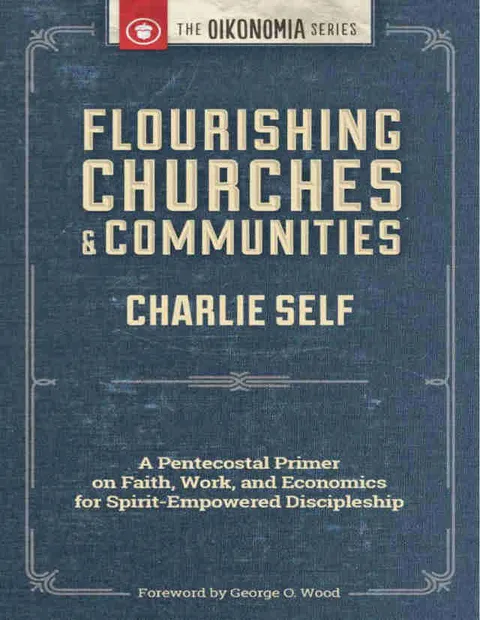

Flourishing Churches And Communities Order Printed Copy
- Author: Charlie Self
- Size: 804KB | 139 pages
- |
Others like flourishing churches and communities Features >>
About the Book
"Flourishing Churches and Communities" by Charlie Self explores the practical ways in which churches can engage with and positively impact their surrounding communities. The book delves into the importance of holistic ministry, social justice, and collaboration in fostering flourishing communities. Self provides insights and strategies for church leaders looking to make a meaningful difference in their local areas.
William Wilberforce
William Wilberforce was born in 1759 in Hull, East Yorkshire. He graduated from Cambridge University with the intention of following a political career, and became Member of Parliament (MP) for Hull in 1780, aged 21. Four years later he became MP for the whole of Yorkshire. It was at this time that he began to work for the abolition of the British trade in enslaved people.
Wilberforce was a deeply spiritual man and later became an Evangelical Christian. He was a popular figure and was known to be charming and witty and a great public speaker. He campaigned for a number of causes: for legislation to improve the lives of the poor, education reform, prison reforms and ending child labour. He was also one of the founders of the Royal Society of the Prevention of Cruelty to Animals (RSPCA).
A Committed Abolitionist
With the backing of his friend William Pitt, who became Prime Minister, Wilberforce became leader of The Society for the Abolition of Slavery. The society campaigned for almost 20 years to bring an end to British involvement in the Transatlantic Slave Trade. The abolition campaign made them many enemies, especially among those who had made huge profits from the trade in enlsaved African people.
Wilberforce left Hull in 1792 and moved to Clapham, London to be closer to his work in Westminster. Within the local community he found friends who shared his interests in religion and politics. They became known as the Clapham Sect and they actively supported the anti-slavery abolitionists.
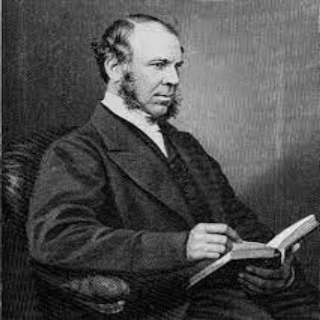
William Wilberforce, oil painting by Karl Anton Hickel, 1793 . Willima has a white scarf tied at his neck and wearing a dark blue coat with a folded collar.
William Wilberforce by Karl Anton Hickel, 1793
Wilberforce married Barbara Spooner in 1797 and they had six children. Historical acounts show that he was a loving and devoted husband and father, and was proud that three of his sons became clergyman.
The Slavery Abolition Bill
Wilberforce attempted several times to bring private members' bills before Parliament to end Britainâs involvement in the slave trade, but the Bill was defeated many times. It was finally passed on 25 March, 1807. However, this only went as far as banning British people from engaging in the slave trade, it did not ban slavery itself. Wilberforce retired from politics in 1825 due to ill health, but he continued to campaign for the abolition of slavery.
Finally, on 26 July 1833, as Wilberforce lay on his deathbed, he was told that the Slavery Abolition Bill, granting freedom to all enslaved people within the British Empire, had been passed by Parliament. He died three days later. As a mark of respect for his achievements, his body was buried in Westminster Abbey.
Childhood and Education
William Wilberforce was born on 24 August, 1759, at 25 High Street, Hull (which is now known as Wilberforce House) to Robert and Elizabeth Wilberforce. He had three sisters, Elizabeth, Ann and Sarah (known as Sally). Of the four children, only William and Sally survived to adulthood.
The Wilberforce family were successful merchants, who traded in imported goods, like wood and cloth, from northern Europe and the Baltic states. The family home reflected the family's wealth and was decorated with fashionable architecture of the day.
William was a small, sickly child with poor eyesight, but this did not stop him from attending Hull Grammar School or taking part in musical activities or sports. William was known to have a beautiful singing voice and had a reputation for telling funny stories and playing practical jokes.
When William was only eight years old, his father died. William's mother then became ill and so she sent him to live with his aunt and uncle, Hannah and William Wilberforce, in London. They sent him to study at a small boarding school in Putney, which he disliked, complaining about the food. Hannah and William were Evangelical Methodists and they took William to church regularly, where he enjoyed listening to bible stories and sermons by prominent figures within the Methodist movement.
William's mother worried about his exposure to such a strong religious influence and arranged for him to come home to Hull. William was sent to board at Pocklington Grammar School, where he studied hard and did well at Latin, English and History. Aged 17 he went to Cambridge University, where he met William Pitt the Younger, who became a lifelong friend. Wilberforce took full advantage of the social life on offer at university, and was well known for attending dinners, gambling, and playing cards. Despite his busy social life, Wilberforce managed to graduate from Cambridge in 1781, determined to have a career as a Member of Parliament.
Religious Beliefs and Influences
William Wilberforce became a deeply religious man who dedicated his life and his work to acting on his beliefs. He had many religious and political influences during his lifetime.
His mother was staunchly Church of England. However, after the death of his father, William spent two years living with his aunt and uncle in London, who were keen Methodists.
They took the young William to church regularly, where he heard important figures like George Whitefield preach. At that time, Methodism was known as a branch within the Church of England that was particularly concerned with social welfare. However, his mother became alarmed at his growing interest in evangelical Christianity, and she brought the young William home again.
Wilberforce's second major religious influence was Isaac Milner, who was a young teacher when Wilberforce attended Hull Grammar School. They were to become lifelong friends and in 1784 they travelled together through Europe.
During the months they spent together, Milner introduced William to his own religious beliefs and encouraged him to read an essay entitled 'The Rise and Progress of Religion in the Soul'. The whole experience had a profound affect on William and he returned home to England a changed man and devout Methodist.
Another influence on William was John Newton, his Aunt Hannahâs half-brother who had previously been involved in the slave trade. Newton was one of the wealthiest men in Europe and a great humanitarian and philanthropist, and gave many gifts to the Evangelical church. Following William's tour of Europe with Milner, he met up with John Newton to discuss his new-found faith.
William wrote in secret to Newton:
Sir, there is no need of apology for intruding on you, when the errand is religion. I wish to have some serious conversation with you⌠the earlier the more agreeable to me. I have ten thousand doubts within myself, whether or not I should discover myself to you; but every argument against doing it has its foundation in pride. I am sure you will hold yourself bound to let no one living know of this application, or of my visit, till I release you for the obligationâŚ
P.S. Remember that I must be secret, and that the gallery of the House is now so universally attended, that the face of a member of Parliament is pretty well known.
William stuck with his conversion to Methodism and wrote a best-selling book A Practical View of Christianity thirteen years later.
Early Political Life and Influences
After graduating from Cambridge University, William Wilberforce chose to follow a career in politics and stood as Independent candidate, in an election for Hull's Member of Parliament. He won by an overwhelming majority and was elected to represent the citizens of Hull, at the age of just 21.
The young Wilberforce was a natural politician. Following the deaths of his father and his uncle he had inherited enough money to financially support his political career. He was also well liked among Hull's merchant families, who hoped that he would represent their business interests in parliament.
Two of Wilberforce's most appealing qualities were his engaging personality and his eloquent speaking voice - useful traits for a politician. He was so famous for his public speaking that he was nicknamed the 'Nightingale of the Commons'.
On taking up his seat in the House of Commons, Wilberforce met up with his university friend, William Pitt the Younger, who had also chosen a political career. Pitt and Wilberforce spent much time studying the more experienced Members of Parliament from the Commons gallery, and listening to heated political debates of the day.
Pitt enjoyed a very sucessful political career, becoming Prime Minister and the new Tory party leader in 1783, aged just 24. Although not quite as ambitious as Pitt, Wilberforce took the decision to stand as candidate for Member of Parliament for Yorkshire. This was one of only two county seats and on winning it, Wilberforce became a more influential politician.
Following his conversion to Methodism in 1785, Wilberforce considered leaving politics. Yet, Pitt and John Newton convinced him to persevere and use his political work as a way of serving God. Wilberforce saw the campaign to abolish the Transatlantic Slave Trade as a way of following his religious and humanitarian beliefs, as well as his moral conscience.
the sluggard in me - four lies that lead to lazy
Come, follow closely, and gaze for a moment upon a rare creature in his native habitat. There he is, drooling upon his pillow an hour before lunchtime, creaking over the bedsprings like a door on its hinges. âHow long will you lie there? When will you arise from your sleep?â his mother shouts from the kitchen. Quiet, now: she has roused him. Here he comes, stumbling into his chair, and begins to feed. âWhatâs wrong with a little sleep, a little slumber?â he mumbles between mouthfuls. A dozen handfuls later, however, he stops, his hand submerged in his cereal like a sunk boat. He breathes heavily, chin against his chest, and begins to snore again. Meet the sluggard (Proverbs 26:14; 6:9â10; 19:24). He is a figure of âtragi-comedy,â Derek Kidner writes ( Proverbs , 39): comedy, because the sluggardâs laziness makes him ludicrous; tragedy, because only sin could so debase a man. The image of God was never meant to yawn through life. Yet those who are paying attention will also see something more in this tragi-comic sloth: themselves. We all have an inner sluggard, counseling us to sleep when we should rise, rest when we should work, eat when we should move. âThe wise man,â Kidner goes on to write, knows that the sluggard is no freak, but, as often as not, an ordinary man who has made too many excuses, too many refusals, and too many postponements. It has all been as imperceptible, and as pleasant, as falling asleep. (40) We donât need to look far, then, to see the sluggard in his native habitat. We only need to hear his âexcuses,â ârefusals,â and âpostponements,â and then listen for their inner echo. âI need just a little more.â A little sleep, a little slumber, a little folding of the hands to rest. (Proverbs 6:10; 24:33) The words sit in the mouth of the sluggard more than once in Proverbs. They are, perhaps, his motto, his favorite response to the wisdom of the diligent. âEarly to rest, early to rise . . .â they tell him; âA little sleep, a little slumber . . .â he answers. âAn ordinary man becomes a sluggard one small surrender at a time.â Sluggishness often hides beneath that eminently reasonable phrase âjust a little more.â What harm could a little  do? Whatâs one more snooze cycle? Whatâs one more show? Whatâs one more refreshing of the timeline? Not much, in itself: but much indeed when piled atop ten thousand other littles  and one mores . They may seem like âsmall surrendersâ (to use a phrase from Bruce Waltke, Proverbs , 131) â and they are. But an ordinary man becomes a sluggard one small surrender at a time. How do the wise respond? They know that diligent Christians are not a special species of saint. Like the sluggard, the diligent daily face unpleasant tasks. Unlike the sluggard, the diligent speak a different motto: âA little labor, a little energy, a little moving of the hands to work.â Instead of building a stack of small surrenders, they build a stack of small successes â taking little step by little step in the strength that God supplies. Over time, how we handle little  is no little matter. Little drudgeries, little tasks, little opportunities: these are the moments when the sluggard gains ground in our souls, or loses it. âThereâs always tomorrow.â The sluggard does not plow in the autumn; he will seek at harvest and have nothing. (Proverbs 20:4) Often enough, âjust a little moreâ achieves the sluggardâs purpose. But if, for some reason, his conscience should protest, he has another word at his disposal that rarely fails: tomorrow . Autumn was the season for plowing and planting in ancient Israel, and summer the season for harvest. We donât know exactly why the sluggard took it easy while his neighbors plowed their fields. Maybe the difficulty of the task daunted him, or maybe, as the King James Version suggests, the seasonâs chill deterred him: âThe sluggard will not plow by reason of the cold .â Either way, he no doubt fell asleep on many autumn nights warmed by the thought, âThereâs always tomorrowâ â until one day he woke up in winter. When the sluggard finally arrived at his chosen tomorrow , the time for plowing and planting had escaped his grasp. How often have we too discovered that tomorrow is too late? The conversation we should have initiated yesterday proves more awkward today. The essay we should have begun last week overwhelms us this week. The forgiveness we should have sought last month feels harder to seek this month. Autumn has passed, winter has come, and opportunity has slipped through our fingers. The wise learn to take the farmerâs view of life: when the time comes to plow, a farmer pays more attention to the season than to his feelings. And when the time comes to tackle our own difficult tasks, the wise do the same. âI would be putting myself at risk.â There is a lion outside! I shall be killed in the streets! (Proverbs 22:13; see also 26:13) Indulging a bad excuse is a little like feeding a pigeon: give bread to one, and twenty more will soon coo at your feet. Bad excuses breed bad excuses â and even worse excuses over time. And so, when a friend, family member, or boss refuses to entertain the sluggardâs littles  and tomorrows , he takes more radical measures: âHavenât you seen the lion roaming the streets? Iâll die!â Did any sluggard ever attempt such an excuse? Maybe. âLaziness is a great lion-maker,â says Charles Spurgeon. âHe who does little dreams much. His imagination could create not only a lion but a whole menagerie of wild beastsâ (âOne Lion: Two Lions: No Lion at Allâ). For our own purposes, however, we can consider a tamer version of the sluggardâs beast: âI would be putting myself at risk.â To our inner sluggard, a scratch in the throat is cause for a sick day, a little tiredness is reason to nap instead of mow, and a long day at work is justification for skipping small group. After all, our bodies and minds need  the rest, donât they? Care is required here, of course. Some people really do  work their bodies into the dust, forsaking the rest God gives and âeating the bread of anxious toilâ (Psalm 127:2). The sluggard, however, is prone to label as âanxious toilâ any work that meets with inner resistance. He forgets that overcoming such resistance is part of what makes diligence diligence . God made our bodies to bend and strain, our minds to crank and labor, our souls to strive and press. The lion called âLazyâ will counsel us to avoid the strain, but diligence will slay the lion. âWhat do you know about the pressures Iâm under?â The sluggard is wiser in his own eyes than seven men who can answer sensibly. (Proverbs 26:16) Confront a sluggard in his sluggishness, and you may find that he has a penchant for euphemisms. âHe has no idea that he is lazy,â writes Kidner on Proverbs 26:13â16. He is not a shirker but a ârealistâ (13); not self-indulgent but âbelow his best in the morningâ (14); his inertia is âan objection to being hustledâ (15); his mental indolence a fine âsticking to his gunsâ (16). ( Proverbs , 156) Our own sluggishness, then, often appears in our defenses against the charge. Once, as a single man, I told a mentor, âI need more time to myself.â âYou donât need  it,â he responded. Immediately, I raised the drawbridge, manned the ramparts, and launched inward mortars against the attack. What could he, a husband and father of three, possibly know about the pressures I was under? The self-defense is laughable now, but back then, wise in my own eyes, I couldnât accept that much of what I called âalone timeâ was better labeled âsluggishness.â The sluggard sees his own work as the hardest work, his own excuses as the best excuses, his own diversions as the most reasonable diversions â no matter what his friends, wife, or pastor may say. But the wise learn to develop a self-distrustful posture. Rather than responding to requests or challenges with an inward Donât you see my burdens?  they remember their proneness to folly, and learn to call the sluggard by his real name. The Christian and the Sluggard Between the Christian and the sluggard, Spurgeon says, âthere should be as wide a division as between the poles.â Heâs right. âChristianâ and âsluggardâ go together like âhusbandâ and âplayboy,â like âjudgeâ and âthiefâ: the latter destroys the integrity of the former. âIn Christ we find our pattern for work. In Christ we find our power for work. And in Christ the sluggard dies.â And why? Because Christians belong to Jesus Christ, and Jesus Christ was not sluggish. He was no workaholic, of course: he could feast, rest, sleep, and develop deep relationships. But oh did he work. In the Gospels we find not the sluggishness but âthe steadfastness  of Christâ (2 Thessalonians 3:5): the diligence of one who never entertained âjust a little moreâ or âtomorrow,â but worked while it was day (John 9:4). He plowed in the autumn cold of life, forsaking every excuse not to save us. And he never cried âlion!â though he walked into the den (Psalm 22:21). Therefore, the apostle Paul can say to the sluggish, âSuch persons we command and encourage in the Lord Jesus Christ  to do their workâ (2 Thessalonians 3:12). In Christ we find our pattern for work. In Christ we find our power for work. And in Christ the sluggard dies.