Isobel Kuhn
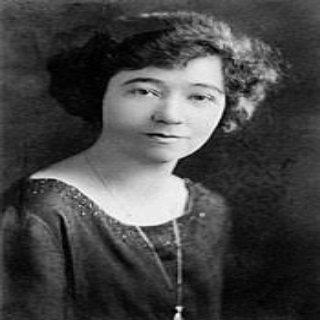 In high school and in college, Isobel Miller was vivacious, pretty, smart, athletic, and known for her skill on the dance floor. She had been convinced by one of her teachers that only superstitious people believed in the truth of the Bible anymore; she loved talking about abstract ideas with the intellectual crowd, and disdained the faith of her parents. Influenced by the poems of Thomas Hardy, she saw life as meaningless and dark. Her response to finding out that her boyfriend had been dating another girl was to contemplate suicide. Only the thought that her father would believe that she had gone to hell stopped her at the last minute from killing herself.
That night, as she lay back down in bed, the words of Dante, “In His will is our peace,” came to her mind. She prayed, “God, if there be a God, if You will prove to me that You are, and if You will give me peace, I will give You my whole life.” (Repp, xvii)
From then on, Isobel began her search for God, though it took several years for her fully to commit her life to Christ. She wavered between God and the world, but slowly gave up her addictions to card-playing, theater and movies, romantic fiction, and dancing, which she loved. A passion to know God had taken possession of her heart, driving out all other delights and desires, and impelling her towards a search for truth and meaning in life.
Moving towards Missions
After graduating from the University of British Columbia in 1922, she spent a year teaching school while living at a boarding house in Vancouver, British Columbia. During that time, she also attended a night class at the Vancouver Bible School and formed the habit of daily Bible reading. Gradually, she had come to trust in God’s faithfulness and his willingness to answer her prayers, influenced by Howard and Gertrude Taylor, the biography of the early life of J. Hudson Taylor. She had also met several missionaries of the China Inland Mission (CIM) and had begun to wonder whether God wanted her to join the CIM.
After hearing J.O. Fraser speak at a Bible conference about his work among the Lisu people in China, Isobel pondered his sobering words about their bondage to fear of demons, and prayed over his solemn call for people to dedicate their lives to helping the Lisu come to know Christ and grow in him, even though Fraser warned that it would entail hard work and sacrifice.
Her sense of a divine imperative to take the love of Christ to the women of China came while reading the second volume of the biography of Hudson Taylor, Growth of a Work of God. Isobel’s growing sense that God wanted her to go to China to serve under Mr. Fraser with the Lisu only deepened when he stayed for a few days in their home, invited by her father. Her mother, however, could not abide the thought of her daughter becoming a missionary. Though chairman of the Women’s Missionary Society in her church, she feared that Isobel would never get married if she went to the mission field; that the family would lose face if she had to ask people for money; that she would throw away a bright future and a comfortable and secure life.
J.O. Fraser had warned her that Satan would oppose any attempt to obey God in order to expand the kingdom among unreached peoples and taught her to pray, as he did, “If this obstacle be from Thee, Lord, I accept it; but if it be from Satan, I refuse him and all his works in the name of Calvary.” The CIM required two years of Bible school before going overseas, but Isobel did not have the funds to attend Moody Bible Institute, which she and Fraser thought would be the best place for her. Then, one of her best friends, who had saved all her money to go to Moody, found she could not become a missionary, so she offered to pay for Isobel’s training.
Her mother’s refusal to allow her to attend Moody remained an obstacle, however, until they learned that a young man whom her mother had wanted her to marry announced that he would be entering Moody that year, so she granted permission for Isobel to attend also. As it turned out, the man later changed his plans, but Isobel was already a student at MBI. When she stepped off the train in Chicago, she was met by Dr. Isaac Page, “Daddy Page,” an old friend of her parents who had, years before, said that he was praying that God would send her to China as a missionary. He and his wife had served there with the CIM for many years before returning to Chicago. Finding out that she didn’t have enough money to buy winter clothes, he gave her enough for a warm coat. She later worked in the school cafeteria as a waitress to earn money for personal needs.
When J.O. Fraser warned her that Satan would oppose her moves toward the mission field, he gave as an example the possibility that she would hear news that one of her parents was about to die, and she would want to rush home. He counseled her to pack her bags, but wait until definitive word had come the next day. In fact, that actually happened when a telegram arrived, saying that her father had been mortally injured in an accident. Isobel get ready to leave, but also asked for further information before booking a ticket home. It turned out that his injuries were minor, and she could stay at school. She did learn that her mother died, however, and grieved that she had never given permission to Isobel to become a missionary to China, until someone told her of a note that her mother had written to a friend saying that she had come to believe that this was God’s will for her daughter.
At Moody, she met a young man name John Kuhn. Their friendship grew into a deep love as they spent time together in prayer with other students committed to foreign missions and on double-dates with good friends. Still, she wasn’t sure John was the one God wanted her to marry, so she did not commit herself to him. He sailed for China in October 1926, while Isobel was still studying at Moody.
After graduating from Moody Bible Institute, Isobel went to Toronto for the CIM missionary training school. Finishing her training there, all she had to do was meet the CIM Council and be accepted by them for deployment to China. She was totally surprised when a Council member told her that one recommendation letter had described her as “proud, disobedient, and resentful,” and that they could only accept her conditionally, pending her growth in Christian character.
She returned to Vancouver to live with her father and brother, earning her keep by doing housework for them. For Christian service, she worked as advisor for the Girls Corner Club, a group of Christian businesswomen who banded together to evangelize the working girls of Vancouver. She organized a singing group for them and, leading with her guitar, took them to various venues in the city to sing Christian songs to young women and others.
Meanwhile, she inadvertently learned that the writer of that recommendation letter was a former teacher of hers who had asked her to spy on the other students. Isobel had refused, and this letter was the teacher’s revenge. Still, she was urged by a friend to take the letter seriously, and to ask God to cause her to grow in humility, charity, and submissiveness to his will.
Correspondence between her and John kept crossing the Pacific, until one day his letter contained a proposal of marriage. She was to respond by cable which, after more prayer, she quickly did. Now they prayed that he would be assigned to Yunnan, the province where Isobel was convinced God wanted her to serve among the Lisu. When his designation was changed from Gansu to Yunnan, they believed even more fully that they were meant to live and work together as missionaries.
Finally, she and other women going to China with the CIM sailed from Vancouver. On the journey, she was told by Miss Ruth Paxson, a noted Bible teacher, that when she lived in China, “all the scum of your nature will rise to the top.” Since she wasn’t aware of any “scum” in her heart, she just filed the comment away for future reference.
Early Days in China
Arriving in China, she spent the first year devoting herself to language study in Kunming, the capital city of Yunnan. John was stationed not far away in Chengchiang. They waited the year that the CIM required before new workers could marry, and then were joined together in a ceremony attended by virtually all the foreigners in the city on November 14, 1929. Immediately, they moved to Chengchiang, where John had found a little place for them to live.
Their upstairs “apartment” was very small, and quite open to passersby to look into if the folding doors were open; if they were closed, it was “like living in a wooden box.” (Repp, 35) They had hung their motto on the wall – “GOD FIRST.” From then on, she would have many opportunities to put that resolve into practice. When the first Chinese women came to visit, Isobel cringed as a baby boy stained her new brown rug. Then she had to decide what was going to come first for her: an attractive living room, or a place to share with the Chinese.
She discovered that the women were covered with bedbugs, fleas, and lice, and she shrunk from them. She remembered Miss Paxson’s warning about the “scum” of her nature coming forth, and had to pray, “Lord, make these souls more important to me than anything else.” (Repp, 36) After some time, she found that she could forget the bugs and love the women.
She found it harder to cope with the laziness, dishonesty, and insubordination of their cook and her husband, but John was reluctant to let them go, for he and the husband had been friends. The cook was not the true Christian she had pretended to be, however, and finally Isobel could take it no longer. After John allowed her to dismiss the couple, housework became a heavy burden for Isobel. They prayed earnestly for a trustworthy housekeeper, and finally Mrs. Chang showed up needing a job. She became a trusted helper and eventually believed in Christ. Slowly, Isobel was learning how to face difficulties with prayer, just as she had at home.
Months later, J.O. Fraser directed them to go to Tali (now Dali) where they would run the mission home and help new workers become established. While John preached in surrounding villages, Isobel studied the language, taught a Bible class for women, and served as hostess for visiting missionaries. They also assisted ten new CIM couples in settling in. Near the end of their first year in Tali, Isobel discovered that she was pregnant. Kathryn Alice-Ann Kuhn was born April 10, 1931; Isobel nicknamed her Rynna.
Two and a half years after they had come to Tali, when they had both passed all the rigorous CIM language examinations, J.O. Fraser assigned them to work among Muslims in the valley of Yungping. As they had expected, the Muslims were not very receptive to the gospel, though they were not inhospitable. Isobel herself visited every village on the plain and shared the gospel with women. They were pitifully poor and illiterate. Not enough villagers believed to form a church.
Isobel wondered why God still had not sent them to serve among the Lisu, who so desperately needed missionaries. Mr. Fraser told them that he didn’t think she was strong enough to handle the hardships of life and travel in the mountainous terrain of Lisu territory. He would re-evaluate their situation after furlough. Though disappointed, they tried to trust God. Then they learned that Isobel was going to have another baby and realized that they couldn’t have gone to Lisu land with a new infant.
Not long afterwards, while John was away preaching, there was a flood, and Isobel had to help move some heavy trunks up to the second floor. The next day she began to feel pain in her abdomen; a few days later, she suffered a miscarriage. When John returned, he could only try to comfort her by saying that God must have something better in store for them. The next day, a letter from Mr. Fraser arrived. Trouble had arisen in two Lisu villages, where the local Chinese warlord was angry with them for refusing to grow opium. CIM missionaries Allyn and Leila Cooke had decided that he would go and live in one village and she would remain in their home in the Oak Flat district, in order to afford some protection, if possible, to the Lisu. This situation being unsustainable, Fraser directed the Kuhns to make the journey to the Salween Valley to relieve the Cookes and help with the ministry to Lisu there.
After an arduous journey over very high mountains on narrow and dangerous trails, during which Isobel suffered what she thought was dysentery, they arrived at Mrs. Cooke’s home, where they were warmly welcomed, not only by the missionary but also by Lisu Christian leaders. Isobel at once noticed several of these strong, handsome, and faithful men, who had dedicated their lives to serve Christ. A month-long stay was enough to convince her that God had indeed called them to serve among the Lisu, and that she was hardy enough to handle the primitive and often perilous conditions in which they would live and work. Carrying in as many supplies as possible, they again traversed lofty mountains and crossed treacherous rivers to return to the Cookes’ former house, where they settled into what would become their lifelong service among the tribal people. On the way, they were met and then joined by a Lisu girl named Hormay, who became their faithful cook and helper in the following years.
Life and Work among the Lisu
After a brief stay in Pine Mountain Village, the Kuhns were asked by the Lisu Christians to move to Oak Flat Village, since the Cookes had moved on to another location. John and Isobel alternated itinerating into the surrounding villages to teach the Bible and evangelize, Isobel being accompanied by Hormay and her daughter Kathryn until it became clear that such trekking in wild country was not good for the child’s health. After that, a Lisu man went with her. Since his name was the same as her husband’s, Isobel called him “Teacher John” to distinguish between the two men. Teacher John asked her countless questions about the few New Testament scriptures that had already been translated into Lisu.
When her husband took Teacher John with him on a long journey, Isobel came down with a fever; red patches and blisters covered her face. Hormay had gone to care for her dying father, but Job, a Lisu leader, visited several times a day, and the Lisu Christians came to sing to her and pray for her, but to no avail. When she returned, Hormay tried her best to nurse Isobel, but she was only getting worse, so Job ran for six days to Baoshan, whence he fetched two CIM nurses to return with him to Oak Flat Village. They decided that Isobel had contracted erysipelas, a skin disease, and saw that she had been, in effect, starving herself, as a consequence of insufficient nourishment for several months. They carried her back to the CIM mission home in Baoshan, where she recuperated for three months.
When she returned to Oak Flat Village, she decided that they had not taken enough time to care for themselves. If they had planted a garden months before, they would not have been without food when the heavy rains caused famine. With Lisu Christian help, they also built a better house, since missionary friends told them that their Lisu-style shanty was not a healthy place for them to live. Slowly, Isobel was learning how to balance her zeal for ministry to Lisu with the realities of being a foreigner, a wife, and a mother.
War Years
The Kuhns went home on furlough in March 1936. When they returned a year and a half later, Japan had already started attacking China, but they were able to make to Yunnan, far to the southwest. Isobel’s first huge disappointment came when she was told that her daughter Kathryn would have to go to the CIM’s Chefoo School, far away in Yantai, Shandong Province, rather than to the school in Kunming, which was much closer. Her mother’s heart broke when Rynna left for school. Who would take care of her? When could they see her next? How would her girl take being separated from her parents for so long? Isobel gradually learned to think about God rather than about her own grief, and to turn her attention to someone else in need rather than focusing on herself.
Another shock hit Isobel when Mr. Fraser assigned John to be assistant superintendent for all of western Yunnan Province. They would live in Baoshan, far from the Lisu Isobel loved so much, and she would not be able to engage in Bible teaching, which she loved and which she did best. On her monthly day of fasting and prayer, God comforted her with the words, “The LORD your God in the midst of you is mighty. At that time I will bring you again … when I turn back your captivity before your eyes.” (Zephaniah 2:27, 20) Trusting that God would take her back to Lisu country, Isobel went to Baoshan happily.
Less than two months later, Fraser assigned them “temporarily” to Oak Flat Village again, where the leaders had run into difficulty and needed missionary help for a while. While they were there, in order to provide training in the Scriptures that they saw the Lisu evangelists greatly needed, the Kuhns began what would become a major part of their contribution to Lisu work, the rainy season Bible schools. These three-month intensive sessions brought Lisu evangelists from far and near to Oak Flat Village, where they were taught a variety of subjects, including music. They loved to sing the hymns they had been taught, with Isobel accompanying them on a small organ.
Hormay both helped with the translation of the rest of the books of the New Testament and typed out portions of the Scriptures for the students to read and have before them during the classes. On weekends, despite the incessant rain, the evangelists went out, two-by-two, to villages in the surrounding mountains for practical service and also to have some ministry to complement the constant study.
After the first rainy season school had concluded, news came of the sudden and totally unexpected death of J.O. Fraser. Isobel grieved the loss of “her friend; her adviser; her spiritual father; the one who had first told her about the Lisu …” (Repp, 81) To console her heart, she thought of Fraser’s wife Roxie, and immediately wrote her a letter, in which she said, “Times like this are when we just have to bare our face to the tempest and go on without seeing clearly, without understanding, without anything but naked faith.” (Repp, 81)
For the next several years, the Kuhns alternated between travel throughout Lisu territory and settled times of intensive Bible schools during the rainy season and in periods of good weather also. Encountering illness, deep and apparently irresolvable conflict and resentment within and between clans, hard and unresponsive hearts, and other obstacles, they wrote letters home asking for their friends to pray, just as J.O. Fraser had done. They gave themselves to prayer as well, of course. When breakthroughs that were nothing short of miraculous occurred, they rendered praise to God and told their prayer partners of what their intercessions had been used to accomplish. On more than one occasion, Isobel would learn later that a few faithful old ladies had prayed at a certain time for a breakthrough, and that God had worked a miracle at precisely that moment.
Throughout her stay among the Lisu, Isobel, as the manager of the household, had to train, guide, supervise, and often disciple young women and men who served as cook, housekeeper, goatherd, and in other capacities. Sometimes, as with Hormay, the relationship was smooth and delightful. Other helpers, however, proved unruly, insubordinate, unteachable, and generally annoying to her, greatly testing her patience, Christian love, and faith. Repeatedly, however, fervent prayer was used by God to change lives that seemed incorrigible. Lisu believers also came alongside her and assisted in the process of bringing out the latent abilities of a few apparently “hopeless” servants. She actually saw them as part of her family, and referred to them affectionately her “Lisu children.”
Isobel loved teaching the Bible, but she also offered English lessons, classes on reading and writing Lisu, hymn singing, and baby care. The Lisu loved to sing, having been trained from the beginning to sing in parts. Isobel translated hymns for them, often for an upcoming Bible school. In these ways and others, she comforted herself during long periods when John, as superintendent, had to travel to distant stations to visit missionaries.
Living in a valley, she longed for the mountain vistas that itineration would afford, but she soon realized that her presence was needed as a buffer between the Christian Lisu, who had refused to plant opium, and the Chinese overlords who oppressed them, as well as their pagan fellow tribesmen. The local Lisu deacons had to handle the matter in John’s absence, but they also asked Isobel to write President Chiang Kai-shek for relief. Even after the president’s letter arrived forbidding the planting of opium, the magistrate refused to enforce it, even altering the wording of the letter on public placards, and continuing to threaten the Christians with punishment if they did not pay more taxes in lieu of opium money. Isobel wrote many letters home begging for prayer, the Lisu prayed together, and finally they were delivered from this burden.
The Rainy Season Bible Schools were a highlight of each year, with dozens coming from distant villages for intensive instruction by John and Isobel. Isobel thanked God as one student after another went on to faithful service. On the other hand, grief overwhelmed her when an older and very faithful Lisu leader died, followed not long afterwards by a promising young graduate of the Bible Schools. As with her household, Isobel took several of these Lisu men into her heart as beloved brothers and coworkers, whose loss she could barely endure. When Hormay’s husband came with the news that she had died, Isobel wondered how God would raise up more workers to take the gospel to the many thousands who had still not heard.
The Japanese invasion in 1939 kept the Kuhns from visiting Kathryn at Chefoo School, but the Rainy Season Bible School was held anyway. This time, Isobel decided to hold a school just for girls. Overcoming considerable opposition, she did so, with very encouraging results. With the deacons’ approval, annual Bible schools for girls during the Chinese Yew Year holiday were conducted thereafter. Graduates of the men’s schools would now find it easier to find women with a biblical education suited to their role as wives of pastors, evangelists, and deacons.
After December 7, 1941, Americans and British, both adults and children, were taken into internment camps by the Japanese. Isobel’s heart churned with fear at the thought of what the Japanese might do to her little girl, but happy letters from Kathryn assured her that they were being treated kindly. J.O. Fraser’s widow Roxie was acting as a surrogate mother, so her daughter was being lovingly cared for. Isobel had other worries, however. An infected tooth forced her to go to Kunming for treatment. When the tooth was pulled, she discovered that she had been close to death, for the poison would soon have spread to her entire body. Meanwhile, Japanese troops were advancing on every front, raining bombs on civilians, destroying roads, and inflicting terrible atrocities upon women. Their onslaught kept her and John separated for months at a time.
When John finally returned to Oak Flat Village in the Salween Canyon, he and Isobel were invited to a lavish dinner by the general commanding the Chinese troops defending that part of the valley. To their surprise, the general asked John and Isobel, who spoke both Lisu and Mandarin fluently, to mobilize the Christian Lisu to assist the Chinese in resisting the Japanese offensive. Pagan Lisu had already been helping the enemy, and the Kuhns knew that the Japanese commander had announced that he would destroy all Christian churches, so they readily agreed.
From then until their second furlough, Isobel and the Lisu church leaders persevered in holding Bible Schools for men and girls (who were now regularly being taught what Isobel called “mother-craft” as well as the Scriptures), despite long absences while John traveled with the Chinese army or to visit missionaries, shortages of vital supplies, illness, deaths among their beloved Lisu, the coming of another baby (Daniel), torrential rains, and frequent bouts of loneliness and near-despair. They named 1944 the “Year of Impossibles” because, looking back, they could see how, when they faced seemingly insuperable obstacles, God had guided, provided, and protected them in answer to prayer.
Furlough and Return
The Kuhns were greatly relieved to learn that Kathryn had been repatriated to the United States and was staying with CIM missionaries who were old friends. A long and difficult journey in wartime brought them back to the United States, where they were re-united with Kathryn, now thirteen, after years of being apart. After six months of deputation, they settled in Dallas, Texas, where Isobel recuperated and then wrote another book, Nests Above the Abyss, about Lisu Christians. Just when she felt she had settled into a comfortable home and family situation, the war ended, passports to China were again available, and the CIM ordered all superintendents back to the field a year ahead of their wives.
Isobel remembered their motto, “GOD FIRST,” and committed her husband and her family to God once more. A year later, she left to join him, taking three-year-old Danny with her but leaving Kathryn behind again to stay with their old friends in Pennsylvania. This separation nearby broke the hearts of both mother and daughter.
When John returned to the Lisu, he found that the war had caused not only physical, but spiritual damage. Some believers had died; a few others had fallen away from the faith. They had much to do in rebuilding the discouraged and scattered churches. They also found that bandits, many of them connected with the Communists, infested the area, sometimes supported by the local warlord. Communist strategy included sending in bandits to terrorize a region, then the Red Army to offer peace and order. With John gone much of the time, Isobel had to trust God to protect her and Danny and to allow them to continue the ministry to the Lisu.
Despite external threats and internal discord among the Lisu believers, they resumed the Rainy Season Bible Schools (RSBS), and started Bible clubs for boys and girls, as well as Sunday school teacher training. Though happy to see the zeal of the students, they were crushed when the new village headman, a former church leader who had turned into a greedy pagan utterly unlike his beloved predecessor, sought repeatedly to intimidate the Christians into accepting an unbeliever as schoolmaster or even pastor in various villages. Sometimes without John, and supported by only a few Lisu men, Isobel had to stand up against him. Though his case seemed hopeless, she did not give up on him, but prayed that he would repent and return to the Lord. Because she was threatened often and bandits were heard near her house, the Lisu Christian men took turns sleeping in her house with a gun each night that John was away.
Finally, Oak Flat Village became too dangerous for them to live in, so they moved across the river to Olives at the invitation of one of the most trusted Lisu church leaders, who built them a house. Still, perils abounded, as the fighting between Communists and government troops intensified, while bandits, including cruel pagan Lisu, terrorized everyone. On several occasions, when her Lisu friends urged her to flee to safety with Danny, Isobel waited upon God for guidance. God seemed to speak to her through his Word, so she stayed put, much to the amazement of the Lisu, whose faith was strengthened by hers.
When they heard that the provincial governor had surrendered all of Yunnan to the Communists, however, they knew the time had come to take Danny back to the United States. Before they left, however, the Lisu church leader who had apparently left the Lord and had been such a cruel and evil headman, returned to the church, publicly confessed his sins and asked forgiveness. Convinced of his sincerity and regeneration, the believers, including Isobel, welcomed him back into the church.
Home and Back Again
The Kuhns knew they had to leave soon, but could not go before holding another Rainy Season Bible School, which turned out to be a great success. Still, they agreed to have John stay behind to teach the new believers, while Lucius, one of the most faithful Lisu believers, accompanied Isobel and Danny to Burma. After a perilous journey through a snow-clogged mountain pass, they were safely in Burma, whence – though not without several tests of faith – Isobel and Danny were able to begin the long trip home. They travelled to Illinois to see Kathryn, now in college, then moved into an apartment in a little town nearby.
She was fifty years old, tired from more than twenty years of pioneer missionary work fraught with difficulties and dangers, and ready to settle down into a normal, quiet life.
That was not to be. John returned home in 1951, after being forced out of China at the point of a bayonet, and then having gone to Thailand to survey the tribal areas in the regions bordering China, where the CIM, now reorganized as the Overseas Missionary Fellowship (OMF), was planning to dispatch missionaries to work among the unevangelized. He was full of enthusiasm because he had discovered at least 5,000 Lisu who had never heard the gospel. They would have to learn Thai and begin an entirely new life and ministry, but Isobel had been reading a book by Amy Carmichael that contained a phrase about mountaineering, “Climb or die.” She knew that God wanted her to keep pressing on, following the footsteps of Jesus wherever they led. To remain where she was would entail spiritual death.
1952-1957
For two years, the Kuhns worked among the Lisu in the mountains of Thailand. Isobel served as a hostess of the CIM base in Chiangmai, providing a home for new missionaries studying Thai, workers departing for tribal areas, and missionaries needing rest and recuperation.
She also made trips into the mountains, both to explore new areas with John and to help women missionaries settle into tribal villages. Though the Lisu dialect in Thailand was different from that in China, she could still communicate the Scriptures to them. New hymns which she introduced to them were warmly received, and soon they were singing like the Lisu in Yunnan.
In 1954, Isobel was diagnosed with cancer and had to return to the United States for treatment. During the next three years, she expanded further the writing ministry begun years before on furloughs, when she had written Precious Things of the Lasting Hill, Above the Abyss, and Second Mile People. After her escape with Danny from the Communists, she composed Stones of Fire, the story of Lucius and Mary, Lisu believers whose lives had been so intertwined with hers. Feeling stronger after initial cancer therapy, she now published her most famous works, Ascent to the Tribes, about the CIM’s work among tribal people in North Thailand; Green Life in Drought Time, describing the experiences of Dr. Rupert Clarke and Arthur Matthews, the last two CIM missionaries to leave Communist China. Finally, By Searching told of her early years, and In the Arena recounted her life as a missionary in China. These gripping books have influenced hundreds of thousands of readers, including the writer of this article.
As in years past, she continued to send vivid prayer letters to the many Christians who had become faithful prayer partners; contributed articles for Spiritual Food, a magazine for Lisu who had fled to Burma; and maintained an extensive correspondence with Lisu Christians who were continuing to serve God amidst fiery trials.
All this writing required strict self-discipline amidst constant weakness. Isobel never wavered from her reliance upon God each day, drawing upon him for strength and believing that God “only chooses what is best for me … When He allows an evil, it is for the purpose of bringing greater blessing than if it had not happened.” (Repp, 163)
Following in her parents’ footsteps, Kathryn joined the OMF/CIM and sailed for North Thailand in 1955, fully aware that she would not see her mother again.
John was always at her bedside in Isobel’s last months, when they could finally enjoy extended time together. Isobel Kuhn died March 20, 1957.
Reflections
Isobel Kuhn is known to us because of her many writings, but she represents thousands of missionaries in China and elsewhere who made “God First” their life motto, and who gave up everything else to serve him.
A formerly shy and reserved girl, Isobel became a gifted Bible teacher; born and bred in a comfortable home, she had described herself as “a stay-at-home body by disposition and a veritable slave to physical comforts. Travel never attracted me, for it meant strange faces and strange ways – in others words, discomfort.” (By Searching, 43) After she became compelled by the love of Christ for lost souls, however, health, comfort, safety, social prestige, even “normal” family life took second place to what she thought was God’s will for her – the evangelization of the countless people who had not heard the Good News of Jesus Christ.
Time and again, Isobel suffered from profound sorrow, grief, and perplexity about God’s providence. Always, she returned to the Bible and its promises of God’s presence, power, provision, and plan to bring greater good out of whatever sufferings she endured. She demonstrated extraordinary courage, perseverance, and love for the Lisu believers, whom she called her “children,” and with some of whom she developed deep bonds affection. Even John’s long absences were to a degree compensated for by the loyal companionship and tender care of several Lisu Christian men, whom she cherished and loved, without any hint of impropriety.
Many have questioned the CIM policy, shared by many other mission societies, of sending children to far-off schools, causing both parents and children heartache and grief, but the alternatives available to them seemed to offer no choice at the time (though some in other missions, like Nelson Bell and his wife, educated their children at home). Whether the CIM practice of having women preach to men and teach them accords with Scripture is another issue that could be discussed. Clearly, however, Isobel sought to equip men to lead the Lisu church, and never usurped their authority.
“By their fruits you shall know them,” said Jesus. The hundreds of thousands of Lisu Christians serving God in Yunnan today in a strong and vibrant church testify to the devotion, skill, spirituality, and prayers of those missionaries and the ones who upheld them in prayer.
Sources
Isobel S. Kuhn, In the Arena. Chicago: Moddy Press, 1958.
Isobel Kuhn, By Searching: My Journey Through Doubt Into Faith. Chicago: Moody Publishers, 1959.
Gloria Repp, Nothing Daunted: The Story of Isobel Kuhn. Greenville, SC: BJU Press, 1994. Based upon letters of Isobel Kuhn as well as her books, Ascent to the Tribes; By Searching; In the Arena; Nests Above the Abyss ; Precious Things of the Lasting Hills; Second Mile People; Stones of Fire, published by OMF Books.
In high school and in college, Isobel Miller was vivacious, pretty, smart, athletic, and known for her skill on the dance floor. She had been convinced by one of her teachers that only superstitious people believed in the truth of the Bible anymore; she loved talking about abstract ideas with the intellectual crowd, and disdained the faith of her parents. Influenced by the poems of Thomas Hardy, she saw life as meaningless and dark. Her response to finding out that her boyfriend had been dating another girl was to contemplate suicide. Only the thought that her father would believe that she had gone to hell stopped her at the last minute from killing herself.
That night, as she lay back down in bed, the words of Dante, “In His will is our peace,” came to her mind. She prayed, “God, if there be a God, if You will prove to me that You are, and if You will give me peace, I will give You my whole life.” (Repp, xvii)
From then on, Isobel began her search for God, though it took several years for her fully to commit her life to Christ. She wavered between God and the world, but slowly gave up her addictions to card-playing, theater and movies, romantic fiction, and dancing, which she loved. A passion to know God had taken possession of her heart, driving out all other delights and desires, and impelling her towards a search for truth and meaning in life.
Moving towards Missions
After graduating from the University of British Columbia in 1922, she spent a year teaching school while living at a boarding house in Vancouver, British Columbia. During that time, she also attended a night class at the Vancouver Bible School and formed the habit of daily Bible reading. Gradually, she had come to trust in God’s faithfulness and his willingness to answer her prayers, influenced by Howard and Gertrude Taylor, the biography of the early life of J. Hudson Taylor. She had also met several missionaries of the China Inland Mission (CIM) and had begun to wonder whether God wanted her to join the CIM.
After hearing J.O. Fraser speak at a Bible conference about his work among the Lisu people in China, Isobel pondered his sobering words about their bondage to fear of demons, and prayed over his solemn call for people to dedicate their lives to helping the Lisu come to know Christ and grow in him, even though Fraser warned that it would entail hard work and sacrifice.
Her sense of a divine imperative to take the love of Christ to the women of China came while reading the second volume of the biography of Hudson Taylor, Growth of a Work of God. Isobel’s growing sense that God wanted her to go to China to serve under Mr. Fraser with the Lisu only deepened when he stayed for a few days in their home, invited by her father. Her mother, however, could not abide the thought of her daughter becoming a missionary. Though chairman of the Women’s Missionary Society in her church, she feared that Isobel would never get married if she went to the mission field; that the family would lose face if she had to ask people for money; that she would throw away a bright future and a comfortable and secure life.
J.O. Fraser had warned her that Satan would oppose any attempt to obey God in order to expand the kingdom among unreached peoples and taught her to pray, as he did, “If this obstacle be from Thee, Lord, I accept it; but if it be from Satan, I refuse him and all his works in the name of Calvary.” The CIM required two years of Bible school before going overseas, but Isobel did not have the funds to attend Moody Bible Institute, which she and Fraser thought would be the best place for her. Then, one of her best friends, who had saved all her money to go to Moody, found she could not become a missionary, so she offered to pay for Isobel’s training.
Her mother’s refusal to allow her to attend Moody remained an obstacle, however, until they learned that a young man whom her mother had wanted her to marry announced that he would be entering Moody that year, so she granted permission for Isobel to attend also. As it turned out, the man later changed his plans, but Isobel was already a student at MBI. When she stepped off the train in Chicago, she was met by Dr. Isaac Page, “Daddy Page,” an old friend of her parents who had, years before, said that he was praying that God would send her to China as a missionary. He and his wife had served there with the CIM for many years before returning to Chicago. Finding out that she didn’t have enough money to buy winter clothes, he gave her enough for a warm coat. She later worked in the school cafeteria as a waitress to earn money for personal needs.
When J.O. Fraser warned her that Satan would oppose her moves toward the mission field, he gave as an example the possibility that she would hear news that one of her parents was about to die, and she would want to rush home. He counseled her to pack her bags, but wait until definitive word had come the next day. In fact, that actually happened when a telegram arrived, saying that her father had been mortally injured in an accident. Isobel get ready to leave, but also asked for further information before booking a ticket home. It turned out that his injuries were minor, and she could stay at school. She did learn that her mother died, however, and grieved that she had never given permission to Isobel to become a missionary to China, until someone told her of a note that her mother had written to a friend saying that she had come to believe that this was God’s will for her daughter.
At Moody, she met a young man name John Kuhn. Their friendship grew into a deep love as they spent time together in prayer with other students committed to foreign missions and on double-dates with good friends. Still, she wasn’t sure John was the one God wanted her to marry, so she did not commit herself to him. He sailed for China in October 1926, while Isobel was still studying at Moody.
After graduating from Moody Bible Institute, Isobel went to Toronto for the CIM missionary training school. Finishing her training there, all she had to do was meet the CIM Council and be accepted by them for deployment to China. She was totally surprised when a Council member told her that one recommendation letter had described her as “proud, disobedient, and resentful,” and that they could only accept her conditionally, pending her growth in Christian character.
She returned to Vancouver to live with her father and brother, earning her keep by doing housework for them. For Christian service, she worked as advisor for the Girls Corner Club, a group of Christian businesswomen who banded together to evangelize the working girls of Vancouver. She organized a singing group for them and, leading with her guitar, took them to various venues in the city to sing Christian songs to young women and others.
Meanwhile, she inadvertently learned that the writer of that recommendation letter was a former teacher of hers who had asked her to spy on the other students. Isobel had refused, and this letter was the teacher’s revenge. Still, she was urged by a friend to take the letter seriously, and to ask God to cause her to grow in humility, charity, and submissiveness to his will.
Correspondence between her and John kept crossing the Pacific, until one day his letter contained a proposal of marriage. She was to respond by cable which, after more prayer, she quickly did. Now they prayed that he would be assigned to Yunnan, the province where Isobel was convinced God wanted her to serve among the Lisu. When his designation was changed from Gansu to Yunnan, they believed even more fully that they were meant to live and work together as missionaries.
Finally, she and other women going to China with the CIM sailed from Vancouver. On the journey, she was told by Miss Ruth Paxson, a noted Bible teacher, that when she lived in China, “all the scum of your nature will rise to the top.” Since she wasn’t aware of any “scum” in her heart, she just filed the comment away for future reference.
Early Days in China
Arriving in China, she spent the first year devoting herself to language study in Kunming, the capital city of Yunnan. John was stationed not far away in Chengchiang. They waited the year that the CIM required before new workers could marry, and then were joined together in a ceremony attended by virtually all the foreigners in the city on November 14, 1929. Immediately, they moved to Chengchiang, where John had found a little place for them to live.
Their upstairs “apartment” was very small, and quite open to passersby to look into if the folding doors were open; if they were closed, it was “like living in a wooden box.” (Repp, 35) They had hung their motto on the wall – “GOD FIRST.” From then on, she would have many opportunities to put that resolve into practice. When the first Chinese women came to visit, Isobel cringed as a baby boy stained her new brown rug. Then she had to decide what was going to come first for her: an attractive living room, or a place to share with the Chinese.
She discovered that the women were covered with bedbugs, fleas, and lice, and she shrunk from them. She remembered Miss Paxson’s warning about the “scum” of her nature coming forth, and had to pray, “Lord, make these souls more important to me than anything else.” (Repp, 36) After some time, she found that she could forget the bugs and love the women.
She found it harder to cope with the laziness, dishonesty, and insubordination of their cook and her husband, but John was reluctant to let them go, for he and the husband had been friends. The cook was not the true Christian she had pretended to be, however, and finally Isobel could take it no longer. After John allowed her to dismiss the couple, housework became a heavy burden for Isobel. They prayed earnestly for a trustworthy housekeeper, and finally Mrs. Chang showed up needing a job. She became a trusted helper and eventually believed in Christ. Slowly, Isobel was learning how to face difficulties with prayer, just as she had at home.
Months later, J.O. Fraser directed them to go to Tali (now Dali) where they would run the mission home and help new workers become established. While John preached in surrounding villages, Isobel studied the language, taught a Bible class for women, and served as hostess for visiting missionaries. They also assisted ten new CIM couples in settling in. Near the end of their first year in Tali, Isobel discovered that she was pregnant. Kathryn Alice-Ann Kuhn was born April 10, 1931; Isobel nicknamed her Rynna.
Two and a half years after they had come to Tali, when they had both passed all the rigorous CIM language examinations, J.O. Fraser assigned them to work among Muslims in the valley of Yungping. As they had expected, the Muslims were not very receptive to the gospel, though they were not inhospitable. Isobel herself visited every village on the plain and shared the gospel with women. They were pitifully poor and illiterate. Not enough villagers believed to form a church.
Isobel wondered why God still had not sent them to serve among the Lisu, who so desperately needed missionaries. Mr. Fraser told them that he didn’t think she was strong enough to handle the hardships of life and travel in the mountainous terrain of Lisu territory. He would re-evaluate their situation after furlough. Though disappointed, they tried to trust God. Then they learned that Isobel was going to have another baby and realized that they couldn’t have gone to Lisu land with a new infant.
Not long afterwards, while John was away preaching, there was a flood, and Isobel had to help move some heavy trunks up to the second floor. The next day she began to feel pain in her abdomen; a few days later, she suffered a miscarriage. When John returned, he could only try to comfort her by saying that God must have something better in store for them. The next day, a letter from Mr. Fraser arrived. Trouble had arisen in two Lisu villages, where the local Chinese warlord was angry with them for refusing to grow opium. CIM missionaries Allyn and Leila Cooke had decided that he would go and live in one village and she would remain in their home in the Oak Flat district, in order to afford some protection, if possible, to the Lisu. This situation being unsustainable, Fraser directed the Kuhns to make the journey to the Salween Valley to relieve the Cookes and help with the ministry to Lisu there.
After an arduous journey over very high mountains on narrow and dangerous trails, during which Isobel suffered what she thought was dysentery, they arrived at Mrs. Cooke’s home, where they were warmly welcomed, not only by the missionary but also by Lisu Christian leaders. Isobel at once noticed several of these strong, handsome, and faithful men, who had dedicated their lives to serve Christ. A month-long stay was enough to convince her that God had indeed called them to serve among the Lisu, and that she was hardy enough to handle the primitive and often perilous conditions in which they would live and work. Carrying in as many supplies as possible, they again traversed lofty mountains and crossed treacherous rivers to return to the Cookes’ former house, where they settled into what would become their lifelong service among the tribal people. On the way, they were met and then joined by a Lisu girl named Hormay, who became their faithful cook and helper in the following years.
Life and Work among the Lisu
After a brief stay in Pine Mountain Village, the Kuhns were asked by the Lisu Christians to move to Oak Flat Village, since the Cookes had moved on to another location. John and Isobel alternated itinerating into the surrounding villages to teach the Bible and evangelize, Isobel being accompanied by Hormay and her daughter Kathryn until it became clear that such trekking in wild country was not good for the child’s health. After that, a Lisu man went with her. Since his name was the same as her husband’s, Isobel called him “Teacher John” to distinguish between the two men. Teacher John asked her countless questions about the few New Testament scriptures that had already been translated into Lisu.
When her husband took Teacher John with him on a long journey, Isobel came down with a fever; red patches and blisters covered her face. Hormay had gone to care for her dying father, but Job, a Lisu leader, visited several times a day, and the Lisu Christians came to sing to her and pray for her, but to no avail. When she returned, Hormay tried her best to nurse Isobel, but she was only getting worse, so Job ran for six days to Baoshan, whence he fetched two CIM nurses to return with him to Oak Flat Village. They decided that Isobel had contracted erysipelas, a skin disease, and saw that she had been, in effect, starving herself, as a consequence of insufficient nourishment for several months. They carried her back to the CIM mission home in Baoshan, where she recuperated for three months.
When she returned to Oak Flat Village, she decided that they had not taken enough time to care for themselves. If they had planted a garden months before, they would not have been without food when the heavy rains caused famine. With Lisu Christian help, they also built a better house, since missionary friends told them that their Lisu-style shanty was not a healthy place for them to live. Slowly, Isobel was learning how to balance her zeal for ministry to Lisu with the realities of being a foreigner, a wife, and a mother.
War Years
The Kuhns went home on furlough in March 1936. When they returned a year and a half later, Japan had already started attacking China, but they were able to make to Yunnan, far to the southwest. Isobel’s first huge disappointment came when she was told that her daughter Kathryn would have to go to the CIM’s Chefoo School, far away in Yantai, Shandong Province, rather than to the school in Kunming, which was much closer. Her mother’s heart broke when Rynna left for school. Who would take care of her? When could they see her next? How would her girl take being separated from her parents for so long? Isobel gradually learned to think about God rather than about her own grief, and to turn her attention to someone else in need rather than focusing on herself.
Another shock hit Isobel when Mr. Fraser assigned John to be assistant superintendent for all of western Yunnan Province. They would live in Baoshan, far from the Lisu Isobel loved so much, and she would not be able to engage in Bible teaching, which she loved and which she did best. On her monthly day of fasting and prayer, God comforted her with the words, “The LORD your God in the midst of you is mighty. At that time I will bring you again … when I turn back your captivity before your eyes.” (Zephaniah 2:27, 20) Trusting that God would take her back to Lisu country, Isobel went to Baoshan happily.
Less than two months later, Fraser assigned them “temporarily” to Oak Flat Village again, where the leaders had run into difficulty and needed missionary help for a while. While they were there, in order to provide training in the Scriptures that they saw the Lisu evangelists greatly needed, the Kuhns began what would become a major part of their contribution to Lisu work, the rainy season Bible schools. These three-month intensive sessions brought Lisu evangelists from far and near to Oak Flat Village, where they were taught a variety of subjects, including music. They loved to sing the hymns they had been taught, with Isobel accompanying them on a small organ.
Hormay both helped with the translation of the rest of the books of the New Testament and typed out portions of the Scriptures for the students to read and have before them during the classes. On weekends, despite the incessant rain, the evangelists went out, two-by-two, to villages in the surrounding mountains for practical service and also to have some ministry to complement the constant study.
After the first rainy season school had concluded, news came of the sudden and totally unexpected death of J.O. Fraser. Isobel grieved the loss of “her friend; her adviser; her spiritual father; the one who had first told her about the Lisu …” (Repp, 81) To console her heart, she thought of Fraser’s wife Roxie, and immediately wrote her a letter, in which she said, “Times like this are when we just have to bare our face to the tempest and go on without seeing clearly, without understanding, without anything but naked faith.” (Repp, 81)
For the next several years, the Kuhns alternated between travel throughout Lisu territory and settled times of intensive Bible schools during the rainy season and in periods of good weather also. Encountering illness, deep and apparently irresolvable conflict and resentment within and between clans, hard and unresponsive hearts, and other obstacles, they wrote letters home asking for their friends to pray, just as J.O. Fraser had done. They gave themselves to prayer as well, of course. When breakthroughs that were nothing short of miraculous occurred, they rendered praise to God and told their prayer partners of what their intercessions had been used to accomplish. On more than one occasion, Isobel would learn later that a few faithful old ladies had prayed at a certain time for a breakthrough, and that God had worked a miracle at precisely that moment.
Throughout her stay among the Lisu, Isobel, as the manager of the household, had to train, guide, supervise, and often disciple young women and men who served as cook, housekeeper, goatherd, and in other capacities. Sometimes, as with Hormay, the relationship was smooth and delightful. Other helpers, however, proved unruly, insubordinate, unteachable, and generally annoying to her, greatly testing her patience, Christian love, and faith. Repeatedly, however, fervent prayer was used by God to change lives that seemed incorrigible. Lisu believers also came alongside her and assisted in the process of bringing out the latent abilities of a few apparently “hopeless” servants. She actually saw them as part of her family, and referred to them affectionately her “Lisu children.”
Isobel loved teaching the Bible, but she also offered English lessons, classes on reading and writing Lisu, hymn singing, and baby care. The Lisu loved to sing, having been trained from the beginning to sing in parts. Isobel translated hymns for them, often for an upcoming Bible school. In these ways and others, she comforted herself during long periods when John, as superintendent, had to travel to distant stations to visit missionaries.
Living in a valley, she longed for the mountain vistas that itineration would afford, but she soon realized that her presence was needed as a buffer between the Christian Lisu, who had refused to plant opium, and the Chinese overlords who oppressed them, as well as their pagan fellow tribesmen. The local Lisu deacons had to handle the matter in John’s absence, but they also asked Isobel to write President Chiang Kai-shek for relief. Even after the president’s letter arrived forbidding the planting of opium, the magistrate refused to enforce it, even altering the wording of the letter on public placards, and continuing to threaten the Christians with punishment if they did not pay more taxes in lieu of opium money. Isobel wrote many letters home begging for prayer, the Lisu prayed together, and finally they were delivered from this burden.
The Rainy Season Bible Schools were a highlight of each year, with dozens coming from distant villages for intensive instruction by John and Isobel. Isobel thanked God as one student after another went on to faithful service. On the other hand, grief overwhelmed her when an older and very faithful Lisu leader died, followed not long afterwards by a promising young graduate of the Bible Schools. As with her household, Isobel took several of these Lisu men into her heart as beloved brothers and coworkers, whose loss she could barely endure. When Hormay’s husband came with the news that she had died, Isobel wondered how God would raise up more workers to take the gospel to the many thousands who had still not heard.
The Japanese invasion in 1939 kept the Kuhns from visiting Kathryn at Chefoo School, but the Rainy Season Bible School was held anyway. This time, Isobel decided to hold a school just for girls. Overcoming considerable opposition, she did so, with very encouraging results. With the deacons’ approval, annual Bible schools for girls during the Chinese Yew Year holiday were conducted thereafter. Graduates of the men’s schools would now find it easier to find women with a biblical education suited to their role as wives of pastors, evangelists, and deacons.
After December 7, 1941, Americans and British, both adults and children, were taken into internment camps by the Japanese. Isobel’s heart churned with fear at the thought of what the Japanese might do to her little girl, but happy letters from Kathryn assured her that they were being treated kindly. J.O. Fraser’s widow Roxie was acting as a surrogate mother, so her daughter was being lovingly cared for. Isobel had other worries, however. An infected tooth forced her to go to Kunming for treatment. When the tooth was pulled, she discovered that she had been close to death, for the poison would soon have spread to her entire body. Meanwhile, Japanese troops were advancing on every front, raining bombs on civilians, destroying roads, and inflicting terrible atrocities upon women. Their onslaught kept her and John separated for months at a time.
When John finally returned to Oak Flat Village in the Salween Canyon, he and Isobel were invited to a lavish dinner by the general commanding the Chinese troops defending that part of the valley. To their surprise, the general asked John and Isobel, who spoke both Lisu and Mandarin fluently, to mobilize the Christian Lisu to assist the Chinese in resisting the Japanese offensive. Pagan Lisu had already been helping the enemy, and the Kuhns knew that the Japanese commander had announced that he would destroy all Christian churches, so they readily agreed.
From then until their second furlough, Isobel and the Lisu church leaders persevered in holding Bible Schools for men and girls (who were now regularly being taught what Isobel called “mother-craft” as well as the Scriptures), despite long absences while John traveled with the Chinese army or to visit missionaries, shortages of vital supplies, illness, deaths among their beloved Lisu, the coming of another baby (Daniel), torrential rains, and frequent bouts of loneliness and near-despair. They named 1944 the “Year of Impossibles” because, looking back, they could see how, when they faced seemingly insuperable obstacles, God had guided, provided, and protected them in answer to prayer.
Furlough and Return
The Kuhns were greatly relieved to learn that Kathryn had been repatriated to the United States and was staying with CIM missionaries who were old friends. A long and difficult journey in wartime brought them back to the United States, where they were re-united with Kathryn, now thirteen, after years of being apart. After six months of deputation, they settled in Dallas, Texas, where Isobel recuperated and then wrote another book, Nests Above the Abyss, about Lisu Christians. Just when she felt she had settled into a comfortable home and family situation, the war ended, passports to China were again available, and the CIM ordered all superintendents back to the field a year ahead of their wives.
Isobel remembered their motto, “GOD FIRST,” and committed her husband and her family to God once more. A year later, she left to join him, taking three-year-old Danny with her but leaving Kathryn behind again to stay with their old friends in Pennsylvania. This separation nearby broke the hearts of both mother and daughter.
When John returned to the Lisu, he found that the war had caused not only physical, but spiritual damage. Some believers had died; a few others had fallen away from the faith. They had much to do in rebuilding the discouraged and scattered churches. They also found that bandits, many of them connected with the Communists, infested the area, sometimes supported by the local warlord. Communist strategy included sending in bandits to terrorize a region, then the Red Army to offer peace and order. With John gone much of the time, Isobel had to trust God to protect her and Danny and to allow them to continue the ministry to the Lisu.
Despite external threats and internal discord among the Lisu believers, they resumed the Rainy Season Bible Schools (RSBS), and started Bible clubs for boys and girls, as well as Sunday school teacher training. Though happy to see the zeal of the students, they were crushed when the new village headman, a former church leader who had turned into a greedy pagan utterly unlike his beloved predecessor, sought repeatedly to intimidate the Christians into accepting an unbeliever as schoolmaster or even pastor in various villages. Sometimes without John, and supported by only a few Lisu men, Isobel had to stand up against him. Though his case seemed hopeless, she did not give up on him, but prayed that he would repent and return to the Lord. Because she was threatened often and bandits were heard near her house, the Lisu Christian men took turns sleeping in her house with a gun each night that John was away.
Finally, Oak Flat Village became too dangerous for them to live in, so they moved across the river to Olives at the invitation of one of the most trusted Lisu church leaders, who built them a house. Still, perils abounded, as the fighting between Communists and government troops intensified, while bandits, including cruel pagan Lisu, terrorized everyone. On several occasions, when her Lisu friends urged her to flee to safety with Danny, Isobel waited upon God for guidance. God seemed to speak to her through his Word, so she stayed put, much to the amazement of the Lisu, whose faith was strengthened by hers.
When they heard that the provincial governor had surrendered all of Yunnan to the Communists, however, they knew the time had come to take Danny back to the United States. Before they left, however, the Lisu church leader who had apparently left the Lord and had been such a cruel and evil headman, returned to the church, publicly confessed his sins and asked forgiveness. Convinced of his sincerity and regeneration, the believers, including Isobel, welcomed him back into the church.
Home and Back Again
The Kuhns knew they had to leave soon, but could not go before holding another Rainy Season Bible School, which turned out to be a great success. Still, they agreed to have John stay behind to teach the new believers, while Lucius, one of the most faithful Lisu believers, accompanied Isobel and Danny to Burma. After a perilous journey through a snow-clogged mountain pass, they were safely in Burma, whence – though not without several tests of faith – Isobel and Danny were able to begin the long trip home. They travelled to Illinois to see Kathryn, now in college, then moved into an apartment in a little town nearby.
She was fifty years old, tired from more than twenty years of pioneer missionary work fraught with difficulties and dangers, and ready to settle down into a normal, quiet life.
That was not to be. John returned home in 1951, after being forced out of China at the point of a bayonet, and then having gone to Thailand to survey the tribal areas in the regions bordering China, where the CIM, now reorganized as the Overseas Missionary Fellowship (OMF), was planning to dispatch missionaries to work among the unevangelized. He was full of enthusiasm because he had discovered at least 5,000 Lisu who had never heard the gospel. They would have to learn Thai and begin an entirely new life and ministry, but Isobel had been reading a book by Amy Carmichael that contained a phrase about mountaineering, “Climb or die.” She knew that God wanted her to keep pressing on, following the footsteps of Jesus wherever they led. To remain where she was would entail spiritual death.
1952-1957
For two years, the Kuhns worked among the Lisu in the mountains of Thailand. Isobel served as a hostess of the CIM base in Chiangmai, providing a home for new missionaries studying Thai, workers departing for tribal areas, and missionaries needing rest and recuperation.
She also made trips into the mountains, both to explore new areas with John and to help women missionaries settle into tribal villages. Though the Lisu dialect in Thailand was different from that in China, she could still communicate the Scriptures to them. New hymns which she introduced to them were warmly received, and soon they were singing like the Lisu in Yunnan.
In 1954, Isobel was diagnosed with cancer and had to return to the United States for treatment. During the next three years, she expanded further the writing ministry begun years before on furloughs, when she had written Precious Things of the Lasting Hill, Above the Abyss, and Second Mile People. After her escape with Danny from the Communists, she composed Stones of Fire, the story of Lucius and Mary, Lisu believers whose lives had been so intertwined with hers. Feeling stronger after initial cancer therapy, she now published her most famous works, Ascent to the Tribes, about the CIM’s work among tribal people in North Thailand; Green Life in Drought Time, describing the experiences of Dr. Rupert Clarke and Arthur Matthews, the last two CIM missionaries to leave Communist China. Finally, By Searching told of her early years, and In the Arena recounted her life as a missionary in China. These gripping books have influenced hundreds of thousands of readers, including the writer of this article.
As in years past, she continued to send vivid prayer letters to the many Christians who had become faithful prayer partners; contributed articles for Spiritual Food, a magazine for Lisu who had fled to Burma; and maintained an extensive correspondence with Lisu Christians who were continuing to serve God amidst fiery trials.
All this writing required strict self-discipline amidst constant weakness. Isobel never wavered from her reliance upon God each day, drawing upon him for strength and believing that God “only chooses what is best for me … When He allows an evil, it is for the purpose of bringing greater blessing than if it had not happened.” (Repp, 163)
Following in her parents’ footsteps, Kathryn joined the OMF/CIM and sailed for North Thailand in 1955, fully aware that she would not see her mother again.
John was always at her bedside in Isobel’s last months, when they could finally enjoy extended time together. Isobel Kuhn died March 20, 1957.
Reflections
Isobel Kuhn is known to us because of her many writings, but she represents thousands of missionaries in China and elsewhere who made “God First” their life motto, and who gave up everything else to serve him.
A formerly shy and reserved girl, Isobel became a gifted Bible teacher; born and bred in a comfortable home, she had described herself as “a stay-at-home body by disposition and a veritable slave to physical comforts. Travel never attracted me, for it meant strange faces and strange ways – in others words, discomfort.” (By Searching, 43) After she became compelled by the love of Christ for lost souls, however, health, comfort, safety, social prestige, even “normal” family life took second place to what she thought was God’s will for her – the evangelization of the countless people who had not heard the Good News of Jesus Christ.
Time and again, Isobel suffered from profound sorrow, grief, and perplexity about God’s providence. Always, she returned to the Bible and its promises of God’s presence, power, provision, and plan to bring greater good out of whatever sufferings she endured. She demonstrated extraordinary courage, perseverance, and love for the Lisu believers, whom she called her “children,” and with some of whom she developed deep bonds affection. Even John’s long absences were to a degree compensated for by the loyal companionship and tender care of several Lisu Christian men, whom she cherished and loved, without any hint of impropriety.
Many have questioned the CIM policy, shared by many other mission societies, of sending children to far-off schools, causing both parents and children heartache and grief, but the alternatives available to them seemed to offer no choice at the time (though some in other missions, like Nelson Bell and his wife, educated their children at home). Whether the CIM practice of having women preach to men and teach them accords with Scripture is another issue that could be discussed. Clearly, however, Isobel sought to equip men to lead the Lisu church, and never usurped their authority.
“By their fruits you shall know them,” said Jesus. The hundreds of thousands of Lisu Christians serving God in Yunnan today in a strong and vibrant church testify to the devotion, skill, spirituality, and prayers of those missionaries and the ones who upheld them in prayer.
Sources
Isobel S. Kuhn, In the Arena. Chicago: Moddy Press, 1958.
Isobel Kuhn, By Searching: My Journey Through Doubt Into Faith. Chicago: Moody Publishers, 1959.
Gloria Repp, Nothing Daunted: The Story of Isobel Kuhn. Greenville, SC: BJU Press, 1994. Based upon letters of Isobel Kuhn as well as her books, Ascent to the Tribes; By Searching; In the Arena; Nests Above the Abyss ; Precious Things of the Lasting Hills; Second Mile People; Stones of Fire, published by OMF Books.