
Others like surviving the anointing Features >>
Understanding The Anointing

The Anointing To Live
Steps To The Anointing

Following The Faith Of Abraham
The Assignment Vol 2: The Anointing And The Adversity

Healing The Orphan Spirit
-160.webp)
Uprooting The Spirit Of Fear

Slaying The Giants In Your Life

Right Thinking In A World Gone Wrong

The Character Of God’s Workman
About the Book
"Surviving The Anointing" by David Ravenhill explores the challenges and responsibilities that come with being anointed by God for ministry. The book offers practical advice and spiritual insights on how to navigate the pitfalls and pressures that often accompany the anointing, helping readers to remain faithful and effective in their calling.
Jack Coe
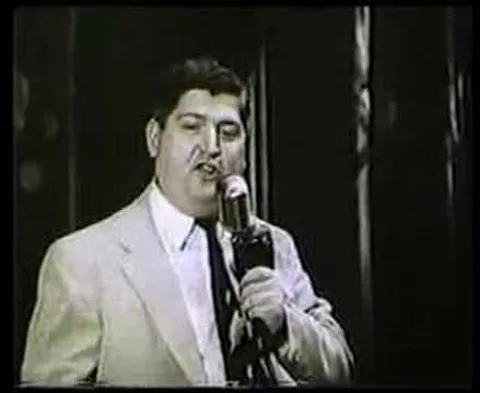 Jack G. Coe was born on March 11, 1918 in Oklahoma City, Oklahoma. His father, George, was a gambler and an alcoholic. His parents, although having been Christians, did not attend church. His grandparents, on his father's side were Christians but they were not able to influence their son's behavior. The couple had seven children in all. When Jack was five his father gambled away all their furniture and their house, leaving his mother Blanche destitute with seven children. They were devastated. His mother tried to make a new life by moving to Pennsylvania, but it was too hard. When Coe's father came to her house promising to change she agreed to reunite. The change did not last, however, and George went back to gambling.
Blanche left George for good, but only took her daughter with her this time. The boys were left with their father, which meant they were essentially left on their own. Often they did not have food to eat. Blanche did return to claim them, but could not care for them on her own. When Jack was nine he and his twelve year old brother was turned over to an orphanage. His older brother ran away, but was hit by a car and died. Jack struggled with rejection and abandonment. At seventeen he left the orphanage and began to drink, becoming an alcoholic like his father. He drank so much he had ulcers and his heart became enlarged. The doctor told him that if he didn't quit drinking he was going to die. Not knowing where else to go he moved to California to be near his mother. When he thought he was near death he promised God he would turn his life around and he was healed for a while. The family moved to Texas and he was drinking again. This time he heard God's voice "This is your last chance". The following Sunday he went to a Nazarene church and accepted Christ. He was radically changed. He went to church meetings almost every night, prayed, and read the Word constantly. After a year and a half he went to a Pentecostal meeting and was filled with the Holy Spirit and had a vision of Jesus.
Jack felt called to the ministry and went to and Assembly of God school called Southwestern Bible Institute, led by P.C. Nelson. He left in 1941 to join the army after the bombing of Pearl Harbor. He was so committed to God's purposes that he went to church every night. His sergeant sent him for psychiatric evaluation This happened several times while he was in the army. One day he was reading a book by P.C. Nelson on Healing when he fell asleep. He had a dream where he saw his sister close to death in a hospital but he saw a bright light come into her room and she was healed. He left immediately to see her and everything was as he'd seen it in a dream. She was healed and he was changed forever.
In 1944 Coe became ill with malaria. He was sent home because the doctors felt they could not help him. He sought the Lord who told him "preach the gospel". God healed him. He went out to preach and three people were saved. That year he was ordained as an Assembly of God minister. His healing experiences caused him to seek God about the gifts of healing. In 1945 he felt God called him to have a healing meeting. He went to Texas and announced in a church that God was going to heal the sick, cause the blind to see, and the deaf to hear. Those were bold words indeed! A woman received her sight that night. His ministry was launched. He began traveling over the country.
In 1946 God spoke to Coe and his wife Juanita to sell their house and start an itinerant ministry. They purchased a beat up truck and a ministry tent and began to live on the road. In 1948 God spoke to Coe to go to Redding, California. A woman, whose leg was about to be amputated, was healed and the news spread throughout the city. God blessed the couple and for the first time had enough money to be ahead on their finances. Healings and miracles regularly occurred in his meetings.
There were some very controversial things about Jack Coe. He believed that he should have a larger tent than other evangelists and went and measured Oral Roberts tent, then he ordered one larger. His style was dramatic and he often hit, slapped, or jerked people. He also would pull people out of wheelchairs. His speaking style was aggressive as he challenged people to believe God. He suggested that people who stood against him would be "struck dead by God". He was anti-medicine and told people not to go to doctors. He also encouraged interracial meetings.
In 1950 Coe began publishing the Herald of Healing magazine. Within six years it was being sent to over 350,000 people. God began to speak to Coe about opening an orphanage. He collected money for the project at every meeting. He sold his own home and began to build the children's home. His own family moved into the partially finished building so they would have a place to live. Coe eventually bought 200 acres outside of Dallas and built four dormitories and established a home farm. They could support 200 abandoned children.
In 1952 Coe began a radio ministry, which eventually was carried on over 100 radio stations. He also began having trouble with the Assembly of God organization. Although initially responsive to suggestions, he felt their goal was to limit the ministry. He suggested that the Assembly of God leadership had lost the belief in the miraculous and felt that they should be replaced. Needless to say this aggravated the situation. In 1953 Coe was expelled from the Assembly of God church. They felt that he was independent, extreme, prone to exaggeration, and they weren't sure about his ministry style. Coe felt that it was an attack against his success. He told people that "one of the officials made the remark to me that he would not rest until every man that was preaching divine healing in a deliverance ministry, separated from the General Council of the Assembly of God."
In 1953 Coe started his own church in Dallas. It was called the Dallas Revival Center. God spoke to him that it was important for those not getting healed to receive teaching about healing from the Word. In 1954 Coe opened a faith home, where people could stay for extended periods of time to receive prayer for healing. Teaching and prayer were given daily. 1956 was a pivotal year. While Coe was preaching in Miami he was arrested for practicing medicine without a license. This brought national attention to him and the ministry, both positive and negative. He was acquitted of practicing medicine without a license when the trial went to court.
At the end of 1956 Coe became ill. He had pushed himself night and day for years. He had poor eating habits and was overweight. He thought it was exhaustion but it was bulbar polio, a form of polio that affects the nerves. He became paralyzed, developed pneumonia, and died December 16, 1956.
Jack G. Coe was born on March 11, 1918 in Oklahoma City, Oklahoma. His father, George, was a gambler and an alcoholic. His parents, although having been Christians, did not attend church. His grandparents, on his father's side were Christians but they were not able to influence their son's behavior. The couple had seven children in all. When Jack was five his father gambled away all their furniture and their house, leaving his mother Blanche destitute with seven children. They were devastated. His mother tried to make a new life by moving to Pennsylvania, but it was too hard. When Coe's father came to her house promising to change she agreed to reunite. The change did not last, however, and George went back to gambling.
Blanche left George for good, but only took her daughter with her this time. The boys were left with their father, which meant they were essentially left on their own. Often they did not have food to eat. Blanche did return to claim them, but could not care for them on her own. When Jack was nine he and his twelve year old brother was turned over to an orphanage. His older brother ran away, but was hit by a car and died. Jack struggled with rejection and abandonment. At seventeen he left the orphanage and began to drink, becoming an alcoholic like his father. He drank so much he had ulcers and his heart became enlarged. The doctor told him that if he didn't quit drinking he was going to die. Not knowing where else to go he moved to California to be near his mother. When he thought he was near death he promised God he would turn his life around and he was healed for a while. The family moved to Texas and he was drinking again. This time he heard God's voice "This is your last chance". The following Sunday he went to a Nazarene church and accepted Christ. He was radically changed. He went to church meetings almost every night, prayed, and read the Word constantly. After a year and a half he went to a Pentecostal meeting and was filled with the Holy Spirit and had a vision of Jesus.
Jack felt called to the ministry and went to and Assembly of God school called Southwestern Bible Institute, led by P.C. Nelson. He left in 1941 to join the army after the bombing of Pearl Harbor. He was so committed to God's purposes that he went to church every night. His sergeant sent him for psychiatric evaluation This happened several times while he was in the army. One day he was reading a book by P.C. Nelson on Healing when he fell asleep. He had a dream where he saw his sister close to death in a hospital but he saw a bright light come into her room and she was healed. He left immediately to see her and everything was as he'd seen it in a dream. She was healed and he was changed forever.
In 1944 Coe became ill with malaria. He was sent home because the doctors felt they could not help him. He sought the Lord who told him "preach the gospel". God healed him. He went out to preach and three people were saved. That year he was ordained as an Assembly of God minister. His healing experiences caused him to seek God about the gifts of healing. In 1945 he felt God called him to have a healing meeting. He went to Texas and announced in a church that God was going to heal the sick, cause the blind to see, and the deaf to hear. Those were bold words indeed! A woman received her sight that night. His ministry was launched. He began traveling over the country.
In 1946 God spoke to Coe and his wife Juanita to sell their house and start an itinerant ministry. They purchased a beat up truck and a ministry tent and began to live on the road. In 1948 God spoke to Coe to go to Redding, California. A woman, whose leg was about to be amputated, was healed and the news spread throughout the city. God blessed the couple and for the first time had enough money to be ahead on their finances. Healings and miracles regularly occurred in his meetings.
There were some very controversial things about Jack Coe. He believed that he should have a larger tent than other evangelists and went and measured Oral Roberts tent, then he ordered one larger. His style was dramatic and he often hit, slapped, or jerked people. He also would pull people out of wheelchairs. His speaking style was aggressive as he challenged people to believe God. He suggested that people who stood against him would be "struck dead by God". He was anti-medicine and told people not to go to doctors. He also encouraged interracial meetings.
In 1950 Coe began publishing the Herald of Healing magazine. Within six years it was being sent to over 350,000 people. God began to speak to Coe about opening an orphanage. He collected money for the project at every meeting. He sold his own home and began to build the children's home. His own family moved into the partially finished building so they would have a place to live. Coe eventually bought 200 acres outside of Dallas and built four dormitories and established a home farm. They could support 200 abandoned children.
In 1952 Coe began a radio ministry, which eventually was carried on over 100 radio stations. He also began having trouble with the Assembly of God organization. Although initially responsive to suggestions, he felt their goal was to limit the ministry. He suggested that the Assembly of God leadership had lost the belief in the miraculous and felt that they should be replaced. Needless to say this aggravated the situation. In 1953 Coe was expelled from the Assembly of God church. They felt that he was independent, extreme, prone to exaggeration, and they weren't sure about his ministry style. Coe felt that it was an attack against his success. He told people that "one of the officials made the remark to me that he would not rest until every man that was preaching divine healing in a deliverance ministry, separated from the General Council of the Assembly of God."
In 1953 Coe started his own church in Dallas. It was called the Dallas Revival Center. God spoke to him that it was important for those not getting healed to receive teaching about healing from the Word. In 1954 Coe opened a faith home, where people could stay for extended periods of time to receive prayer for healing. Teaching and prayer were given daily. 1956 was a pivotal year. While Coe was preaching in Miami he was arrested for practicing medicine without a license. This brought national attention to him and the ministry, both positive and negative. He was acquitted of practicing medicine without a license when the trial went to court.
At the end of 1956 Coe became ill. He had pushed himself night and day for years. He had poor eating habits and was overweight. He thought it was exhaustion but it was bulbar polio, a form of polio that affects the nerves. He became paralyzed, developed pneumonia, and died December 16, 1956.
God Answers Better Than We Ask
A godly king, backed into a deadly corner, teaches us a liberating truth about prayer. In one of the great tragedies in all of Scripture, David’s son Absalom has exploited his father’s love and conspired against him. Now the rebellion has grown strong, and David is left with no option but to flee Jerusalem in hopes of living to fight another day (2 Samuel 15:14). “Prayer is for turning the tide, for changing the seeming course of history.” As he retreats, weeping as he goes, barefoot, with his head covered in shame, it gets worse. He learns that his most prized advisor, Ahithophel — whose counsel “was as if one consulted the word of God” (2 Samuel 16:23) — has joined Absalom (2 Samuel 15:12). Yet in this most desperate of moments, when David could have crumbled, or wallowed in self-pity, his reflex is Godward. He breathes up a prayer: O Lord, please turn the counsel of Ahithophel into foolishness. (2 Samuel 15:31) Unlikely Plea Admittedly, the prayer seems utterly unlikely, if not impossible, humanly speaking. None was wiser than Ahithophel. One might as well ask for the sun to stand still as to pray for Ahithophel’s wise counsel to turn into folly. Yet these are the very moments for which God has given us prayer. He opens his ear to his people. Not for calling down more comforts for an already cushy existence, but precisely for the times when life and death are at stake. Prayer is not an exercise in naming ahead of time what already seems to be the natural course of action. Prayer is not for making an educated guess out loud to God about what seems to be unfolding already. And it’s certainly not for advising God as to how things should go, as if he needed a counselor (Romans 11:33–34). Rather, prayer is for turning the tide, for changing the seeming course of history. Prayer is for desperate times and dire moments, when we’re backed in a corner — when humanly speaking, the desired outcome, and what seems to be our last chance, is painfully unlikely to unfold, and we need God. We need him to intervene. Without the interruptive fingers of Providence reaching down into the details to disturb what seems to be, from our vantage, the natural course of action, we are doomed. But if he is God, and if he is listening, and if he acts, then we have a fighting chance. Cause and effect do not carry the day. God does. So, David prays. God Does the Unthinkable No sooner has David prayed than Hushai the Archite, who is loyal to David, meets him with torn coat and dirt on his head in mourning (2 Samuel 15:32). David has prayed for Ahithophel’s counsel to turn sour, but now David also acts in faith. He sends Hushai to feign fealty to Absalom, serve as a spy, and perhaps even “defeat for me the counsel of Ahithophel” (2 Samuel 15:34). “Prayer is for desperate times and dire moments, when we’re backed in a corner.” Hushai goes, and like Ahithophel, is received into Absalom’s conspiracy. One of the first orders of business is whether to chase David down and overtake him as he retreats. Ahithophel speaks first: “Pursue David tonight . . . while he is weary and discouraged” (2 Samuel 17:1–2). Per normal, this is wise counsel. “And the advice seemed right in the eyes of Absalom and all the elders of Israel” (2 Samuel 17:4). The great sage has spoken, and this looks like a done deal. And such will spell the end of David — were it not for Hushai, who then speaks. “This time the counsel that Ahithophel has given is not good,” says the mole (2 Samuel 17:7). He then paints David not as the weak and discouraged man that he is, but as mighty, enraged, and expert in war. And God does the unthinkable: he turns the hearts of Absalom and all the men of Israel to say, “The counsel of Hushai the Archite is better than the counsel of Ahithophel.” What? This is a stunning turn of events. An impossibility, apart from God. Only God himself can turn the hearts like this. And so, 2 Samuel 17:14 adds the explanation, “For the Lord had ordained to defeat the good counsel of Ahithophel, so that the Lord might bring harm upon Absalom.” No one could have seen this coming. Even David did not at the time of his prayer. Hushai’s deceptive word carries the day, the dominoes begin to fall, and it soon means the end of Absalom, and salvation for David. He Answers Better Than We Ask So, God answered David’s prayer. Or did he? Remember how the king had prayed: “O Lord, please turn the counsel of Ahithophel into foolishness” (2 Samuel 15:31). God had not answered that prayer. In fact, 2 Samuel 17:14 confirms that Ahithophel had given “good counsel.” Yet we find no lament from David that God didn’t answer his prayer. No complaints that the Lord hid his face, or that his ears were stopped, or that he could not see. No mourning. No frustration. No wallowing. David prayed one seemingly impossible prayer, took a modest step in faith, and trusted God to work salvation for him. And David had no sour grapes that God didn’t answer his prayer precisely as he asked. In fact, David delighted to pray to, and to praise, a God who makes a habit of answering better than we ask. No Scriptwriter Could Guess In his commentary on 2 Samuel, Dale Ralph Davis observes, No sooner does [David] pray than Yahweh begins to answer his prayer — and that in a way no scriptwriter could have guessed. Our prayers deal with the what; God’s answers deal with the what and the how and the when. And how the how can surprise us! (160) Our God delights to free us from being the author of our own stories of salvation. When we pray, it is not our job to foresee how God might bring out the rescue and lay out the details for him, even as often as it is our instinct to do precisely this. Most of us fathers would be a little annoyed, if not greatly, if our children not only asked for things but also insisted on laying out exactly how we should go about fulfilling their request. It is a father’s joy to surprise his children with the means, if not with the end. “Our God delights to free us from being the author of our own stories of salvation.” Fortunately, even as we try to counsel him, our Father in heaven is patient. He endures our folly. And he also wants to free us from feeling we need to give him directions. Not only can we not give him directions, but we can trust that his heart is far greater for the holy outcomes we want than our hearts are. And his ways of answering our prayers, according to his good pleasure, are more stunning than we can dream. He loves to answer better than we ask. Not Precisely but Substantially For those who have walked with this God for even a modest measure of time, we have seen him answer far better than we’ve asked. Which, alongside his Father’s heart (Luke 11:11–12) and the gift of his Spirit (Romans 8:26–27), gives us great incentive to pray, and keep praying. In other words, our human instincts, our ignorance, and our inability to counsel him are no disincentives to pray, but rather good reason to keep asking of him who knows how to give better than we know to ask. He knows. “Your Father knows” (Luke 12:30). We do not. “We do not know what to pray for as we ought” (Romans 8:26). His judgments are unsearchable; his ways, inscrutable (Romans 11:33) — which is all the more reason to ask him. Already Answered When Paul celebrates “him who is able to do far more abundantly than all that we ask or think” (Ephesians 3:20), he is no mindless optimist. He’s not asking us to groundlessly expect “the best is yet to come” without solid proof in the past and present. And Paul has provided it, rooting his doxology in the gospel he just rehearsed. We were dead in sins, and God made us alive together with Christ. We were separated and alienated, without hope, and God brought us near by the blood of Christ. In the gospel, our God has already answered better than we could have asked. Christ came, he died, he rose — and though we often don’t know precisely how to pray, we do know that our Father loves to hear our requests, and outdo them. Article by David Mathis