

Following The Faith Of Abraham Order Printed Copy
- Author: Olusola Areogum
- Size: 1.34MB | 511 pages
- |
Others like following the faith of abraham Features >>

Following The Path Of The Eagle

Healing The Orphan Spirit
-160.webp)
Uprooting The Spirit Of Fear

Overcoming The Storms Of Life
Developing Faith For The Working Of Miracles

Slaying The Giants In Your Life

Exposing The Accuser Of The Brethren
Taking The Land - Part One

Holding To The Word Of The Lord

What Is The Fear Of The Lord
About the Book
"Following the Faith of Abraham" by Olusola Areogum explores the life and faith of Abraham as portrayed in the Bible. The author delves into the lessons that can be learned from Abraham's journey of faith and obedience to God, offering practical wisdom and guidance for readers seeking to deepen their own spiritual walk. Through insightful analysis and reflection, Areogum encourages readers to trust in God, pursue righteousness, and live lives of faith that honor God, mirroring the example set by Abraham.
John Alexander Dowie
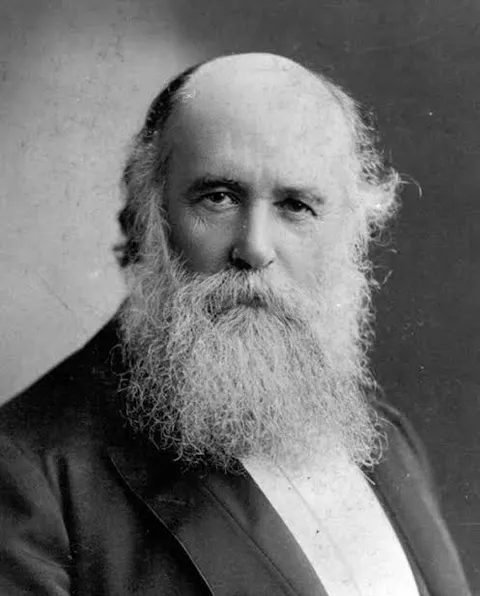 By John Alexander Dowie (1847 – 1907)
I sat in my study in the parsonage of the Congregational Church at Newtown, a suburb of the beautiful city of Sydney, Australia. My heart was very heavy, for I had visited the sick and dying beds of more than thirty of my flock, and I had cast the dust to its kindred dust into more than forty graves within a few weeks. Where, oh where, was He Who used to heal His suffering children? No prayer for healing seemed to reach His ear, and yet I knew His hand had not been shortened. Still it did not save from death even those for whom there was so much in life to live for God and others. Strong men, fathers, good citizens, and more than all, true Christians sickened with a putrid fever, suffered nameless agonies, passed into delirium, sometimes with convulsions, and then died.
Oh, what aching voids were left in many a widowed or orphaned heart. There were many homes where, one by one, the little children, the youths and the maidens lay stricken, and after a hard struggle with the foul disease, they too, lay cold and dead. It seemed sometimes as if I could almost hear the triumphant mockery of evil ringing in my ear whilst I spoke to the bereaved ones the words of Christian hope and consolation. Disease, the foul offspring of its father, Satan, and its mother Sin, was defiling and destroying the earthly temples of God’s children and there was no deliverance.
There I sat with sorrow-bowed head for my afflicted people, until the bitter tears came to relieve my burning heart. Then I prayed for some message, and oh, how I longed to hear some words from Him Who wept and sorrowed for the suffering long ago, a Man of Sorrows and Sympathies. The words of the Holy Ghost inspired In Acts 10:38, stood before me all radiant with light, revealing Satan as the Defiler, and Christ as the Healer. My tears were wiped away, my heart strong, I saw the way of healing, and the door thereto was opened wide, so I said, “God help me now to preach the Word to all the dying around, and tell them how Satan still defiles, and Jesus still delivers, for He is just the same today.”
A loud ring and several raps at the outer door, a rush of feet, and there at my door stood two panting messengers who said, “Oh, come at once, Mary is dying; come and pray. “With just a feeling as a shepherd has who hears that his sheep are being torn from the fold by a cruel wolf, I rushed from my house, ran without my hat down the street, and entered the room of the dying maiden. There she lay groaning and grinding her clenched teeth in the agony of the conflict with the destroyer. The white froth, mingled with her blood, oozing from her pale and distorted mouth. I looked at her and then my anger burned. “Oh,” I thought, “for some sharp sword of heavenly temper keen to slay this cruel foe who is strangling that lovely maiden like an invisible serpent, tightening his deadly coils for a final victory.”
In a strange way, It came to pass; I found the sword I needed was in my hands, and in my hand I hold it still and never will I lay It down. The doctor, a good Christian man, was quietly walking up and down the room, sharing the mother’s pain and grief. Presently he stood at my side and said, “Sir, are not God’s ways mysterious?” Instantly the sword was flashed in my hand, the Spirit’s sword, the Word of God. “God’s way?!” I said, pointing to the scene of conflict, “How dare you call that God’s way of bringing His children home from earth to Heaven? No sir, that is the devil’s work and it is time we called on Him Who came to destroy the work of the devil, to slay that deadly foul destroyer, and to save this child. Can you pray, Doctor, can you pray the prayer of faith that saves the sick?” At once, offended at my words, my friend was changed, and saying,” You are too much excited, sir, it is best to say ‘God’s will be done,’” and he left the room.
Excited?! The word was quite inadequate for I was almost frenzied with divinely imparted anger and hatred of that foul destroyer, disease, which was doing Satan’s will. “It is not so,” I exclaimed, “no will of God sends such cruelty, and I shall never say ‘God’s will be done’ to Satan’s works, which God’s own Son came to destroy, and this is one of them.” Oh, how the Word of God was burning in my heart: “Jesus of Nazareth went about doing good, and healing all that were oppressed of the devil; for God was with Him.” And was not God with me? And was not Jesus there and all His promises true? I felt that it was even so, and turning to the mother I inquired,” Why did you send for me?” To which she answered, “Do pray, oh pray for her that God may raise her up.” So we prayed.
What did I say? It may be that I cannot recall the words without mistake, but words are in themselves of small importance. The prayer of faith may be a voiceless prayer, a simple heartfelt look of confidence into the face of Christ. At such moment, words are few, but they mean much, for God is looking at the heart. Still, I can remember much of that prayer unto this day, and asking God to aid, I will attempt to recall it. I cried, “Our Father, help! and Holy Spirit, teach me how to pray. Plead Thou for us, oh, Jesus, Savior, Healer, Friend, our Advocate with God the Father. Hear and heal, Eternal One! From all disease and death, deliver this sweet child of yours. I rest upon the Word. We claim the promise now. The Word is true, ‘I am the Lord that heals thee.’ Then heal her now. The Word is true, ‘I am the Lord, I change not.’ Unchanging God, then prove Yourself the healer now. The Word is true. ‘These signs shall follow them that believe in My Name, they shall lay hands on the sick, and they shall recover.’ And I believe and I lay hands in Jesus’ Name on her and claim this promise now. Your Word is true. ‘The prayer of faith shall save the sick. Trusting in You alone. I cry. Oh, save her now, for Jesus’ sake. Amen!”
Then, the maid lay in sleep so deep and sweet that the mother asked in a low whisper, “Is she dead?” “No,” I answered, in a whisper lower still. “Mary will live; the fever is gone. She is perfectly well and sleeping as an infant sleeps.” I was smoothing the long dark hair from her now peaceful brow, and feeling the steady pulsation of her heart and cool moist hands. I saw that Christ had heard, and that once more, as long ago in Peter’s house, “He touched her and the fever left her.” Turning to the nurse, I said, “Get me at once, please, a cup of cocoa and several slices of bread and butter.” Beside the sleeping maid we sat quietly and almost silently until the nurse returned, and then I bent over her and snapping my fingers called, “Mary!”
Instantly she woke, smiled and said, “Oh, sir, when did you come? I have slept so long;” then stretching her arms out to meet her mother’s embrace, she said, “Mother, I feel so well.” “And hungry, too?” I asked, pouring some of the cocoa in a saucer and offering it to her when cooled by my breath. “Yes, hungry too,” she answered with a little laugh, and drank and ate again, and yet again until all was gone. In a few minutes, she fell asleep, breathing easily and softly. Quietly thanking God. We left her bed and went to the next room where her brother and sister also lay sick of the same fever. With these two, we prayed and they were healed too. The following day all three were well and in a week or so they brought me a little letter and a gift of gold, two sleeve links with my monogram, which I wore for many years. As I went away from the home where Christ as the Healer had been victorious, I could not but have somewhat in my heart of the triumphant song that rang through Heaven, and yet I was not a little amazed at my own strange doings, and still more at my discovery that He is just the same today.
Excerpt from the Sermons of John Alexander Dowie Champions of Faith by Gordon Lindsay
By John Alexander Dowie (1847 – 1907)
I sat in my study in the parsonage of the Congregational Church at Newtown, a suburb of the beautiful city of Sydney, Australia. My heart was very heavy, for I had visited the sick and dying beds of more than thirty of my flock, and I had cast the dust to its kindred dust into more than forty graves within a few weeks. Where, oh where, was He Who used to heal His suffering children? No prayer for healing seemed to reach His ear, and yet I knew His hand had not been shortened. Still it did not save from death even those for whom there was so much in life to live for God and others. Strong men, fathers, good citizens, and more than all, true Christians sickened with a putrid fever, suffered nameless agonies, passed into delirium, sometimes with convulsions, and then died.
Oh, what aching voids were left in many a widowed or orphaned heart. There were many homes where, one by one, the little children, the youths and the maidens lay stricken, and after a hard struggle with the foul disease, they too, lay cold and dead. It seemed sometimes as if I could almost hear the triumphant mockery of evil ringing in my ear whilst I spoke to the bereaved ones the words of Christian hope and consolation. Disease, the foul offspring of its father, Satan, and its mother Sin, was defiling and destroying the earthly temples of God’s children and there was no deliverance.
There I sat with sorrow-bowed head for my afflicted people, until the bitter tears came to relieve my burning heart. Then I prayed for some message, and oh, how I longed to hear some words from Him Who wept and sorrowed for the suffering long ago, a Man of Sorrows and Sympathies. The words of the Holy Ghost inspired In Acts 10:38, stood before me all radiant with light, revealing Satan as the Defiler, and Christ as the Healer. My tears were wiped away, my heart strong, I saw the way of healing, and the door thereto was opened wide, so I said, “God help me now to preach the Word to all the dying around, and tell them how Satan still defiles, and Jesus still delivers, for He is just the same today.”
A loud ring and several raps at the outer door, a rush of feet, and there at my door stood two panting messengers who said, “Oh, come at once, Mary is dying; come and pray. “With just a feeling as a shepherd has who hears that his sheep are being torn from the fold by a cruel wolf, I rushed from my house, ran without my hat down the street, and entered the room of the dying maiden. There she lay groaning and grinding her clenched teeth in the agony of the conflict with the destroyer. The white froth, mingled with her blood, oozing from her pale and distorted mouth. I looked at her and then my anger burned. “Oh,” I thought, “for some sharp sword of heavenly temper keen to slay this cruel foe who is strangling that lovely maiden like an invisible serpent, tightening his deadly coils for a final victory.”
In a strange way, It came to pass; I found the sword I needed was in my hands, and in my hand I hold it still and never will I lay It down. The doctor, a good Christian man, was quietly walking up and down the room, sharing the mother’s pain and grief. Presently he stood at my side and said, “Sir, are not God’s ways mysterious?” Instantly the sword was flashed in my hand, the Spirit’s sword, the Word of God. “God’s way?!” I said, pointing to the scene of conflict, “How dare you call that God’s way of bringing His children home from earth to Heaven? No sir, that is the devil’s work and it is time we called on Him Who came to destroy the work of the devil, to slay that deadly foul destroyer, and to save this child. Can you pray, Doctor, can you pray the prayer of faith that saves the sick?” At once, offended at my words, my friend was changed, and saying,” You are too much excited, sir, it is best to say ‘God’s will be done,’” and he left the room.
Excited?! The word was quite inadequate for I was almost frenzied with divinely imparted anger and hatred of that foul destroyer, disease, which was doing Satan’s will. “It is not so,” I exclaimed, “no will of God sends such cruelty, and I shall never say ‘God’s will be done’ to Satan’s works, which God’s own Son came to destroy, and this is one of them.” Oh, how the Word of God was burning in my heart: “Jesus of Nazareth went about doing good, and healing all that were oppressed of the devil; for God was with Him.” And was not God with me? And was not Jesus there and all His promises true? I felt that it was even so, and turning to the mother I inquired,” Why did you send for me?” To which she answered, “Do pray, oh pray for her that God may raise her up.” So we prayed.
What did I say? It may be that I cannot recall the words without mistake, but words are in themselves of small importance. The prayer of faith may be a voiceless prayer, a simple heartfelt look of confidence into the face of Christ. At such moment, words are few, but they mean much, for God is looking at the heart. Still, I can remember much of that prayer unto this day, and asking God to aid, I will attempt to recall it. I cried, “Our Father, help! and Holy Spirit, teach me how to pray. Plead Thou for us, oh, Jesus, Savior, Healer, Friend, our Advocate with God the Father. Hear and heal, Eternal One! From all disease and death, deliver this sweet child of yours. I rest upon the Word. We claim the promise now. The Word is true, ‘I am the Lord that heals thee.’ Then heal her now. The Word is true, ‘I am the Lord, I change not.’ Unchanging God, then prove Yourself the healer now. The Word is true. ‘These signs shall follow them that believe in My Name, they shall lay hands on the sick, and they shall recover.’ And I believe and I lay hands in Jesus’ Name on her and claim this promise now. Your Word is true. ‘The prayer of faith shall save the sick. Trusting in You alone. I cry. Oh, save her now, for Jesus’ sake. Amen!”
Then, the maid lay in sleep so deep and sweet that the mother asked in a low whisper, “Is she dead?” “No,” I answered, in a whisper lower still. “Mary will live; the fever is gone. She is perfectly well and sleeping as an infant sleeps.” I was smoothing the long dark hair from her now peaceful brow, and feeling the steady pulsation of her heart and cool moist hands. I saw that Christ had heard, and that once more, as long ago in Peter’s house, “He touched her and the fever left her.” Turning to the nurse, I said, “Get me at once, please, a cup of cocoa and several slices of bread and butter.” Beside the sleeping maid we sat quietly and almost silently until the nurse returned, and then I bent over her and snapping my fingers called, “Mary!”
Instantly she woke, smiled and said, “Oh, sir, when did you come? I have slept so long;” then stretching her arms out to meet her mother’s embrace, she said, “Mother, I feel so well.” “And hungry, too?” I asked, pouring some of the cocoa in a saucer and offering it to her when cooled by my breath. “Yes, hungry too,” she answered with a little laugh, and drank and ate again, and yet again until all was gone. In a few minutes, she fell asleep, breathing easily and softly. Quietly thanking God. We left her bed and went to the next room where her brother and sister also lay sick of the same fever. With these two, we prayed and they were healed too. The following day all three were well and in a week or so they brought me a little letter and a gift of gold, two sleeve links with my monogram, which I wore for many years. As I went away from the home where Christ as the Healer had been victorious, I could not but have somewhat in my heart of the triumphant song that rang through Heaven, and yet I was not a little amazed at my own strange doings, and still more at my discovery that He is just the same today.
Excerpt from the Sermons of John Alexander Dowie Champions of Faith by Gordon Lindsay
A Task Too Big for One - The Third Person in Evangelism
I came to the Quran study prepared, though not without some trepidation. One of the members of the group had invited me to his home on the outskirts of our Central Asian town. We had met the previous week at a park, where I had given him a copy of the Scriptures. That’s when he told me about his men’s group that gathered one night a week to discuss Islam. Having heard me talk about Jesus, he wondered if I’d be willing to do the same for his friends. “Could you come,” he asked, “and explain to us the message of the New Testament?” I readily agreed. Almost instantly, however, I began to question my willing response. If this man or his group wanted to do this foreigner harm, it would be all too easy in an isolated location at night. So, in the days that followed his invitation, my mind scurried after all the reasons why I shouldn’t go. I rehearsed my inadequacies. I questioned my language ability. I thought of my wife and kids. Ultimately, though, I was convinced that I couldn’t turn down such a unique opportunity, so I did the only thing I could do: I asked for help. First, of course, from God. But then I asked a few brothers in Christ to come with me. Evangelism with a Third Person Sometimes when confronting our evangelistic responsibility, our spoken or unspoken response is, How am I supposed to do that? I’m not gifted for evangelism. I don’t know all the answers. What if something goes wrong? Behind those apparently self-effacing lines may lie genuine fear — something akin to what I experienced that night — but they may reveal a hidden assumption of self-sufficient individualism. In order to be a good evangelist, we assume, one must be adequate in and of oneself. You must be bold yet relatable. You need to be an accessible theologian — personable though persuasive. You’re supposed to be both studied apologist and winsome communicator. Yet who among us fits that category? No one. No one individual is sufficient to match our calling. Like Moses, each of us has legitimate cause for doubting our abilities as a spokesperson for God. But in our insufficiency, God reminds us of his power and presence with us — and he gives us helpers. We’re not left alone to accomplish this task. We’re members of Christ’s body, and I believe we need to rediscover the value of doing evangelism in this God-supplied community. Some of my fondest memories from Central Asia were my gospel conversations with Muslims. If possible, I would always arrange for a time to meet when Dave, a Canadian brother, could come along. Dave was more welcoming and friendlier than I was. But I was more comfortable leading a discussion in the local language. As I spoke, Dave was constantly praying and engaging. Invariably, a moment would come in our conversation about Christianity when I’d be stumped. I’d lack a good answer. Or I’d forget a verse. At that moment, without fail, Dave would step in. He’d have just the words, timely and true. For me, the joy of seeing the Spirit use us as a team was thrilling. We, Not I Given our creaturely interdependence, it shouldn’t be surprising that the New Testament regularly portrays witnesses going out in groups. Jesus set the pattern by sending out his first followers two by two (Mark 6:7; Luke 10:1). In the early chapters of Acts, we find Peter and John praying and preaching together (Acts 3–4). At Antioch, the Spirit set apart Saul and Barnabas for a collaborative mission (Acts 13:2). Priscilla and Aquila, wife and husband, worked in tandem to disciple Apollos (Acts 18:26). Early evangelists also ministered in larger groups. The apostles bore witness together at Pentecost (Acts 2:1–4) and regularly at the temple (Acts 5:12–21). Later, when Peter was summoned to preach to Cornelius, he brought along some brothers (Acts 10:23). Paul also, like his Master, gathered disciples around him and traveled with them. He constantly ministered and preached in community (Acts 16:10–13; 19:9). This evangelistic method offers built-in accountability, prayer, assurance, and guidance. Many times, when meeting individually with an unbeliever, I’ve felt the need to speak the gospel only to shy away from doing so. But when meeting non-Christians alongside a brother or sister in Christ, I usually feel more encouraged and compelled to speak. Not only that, but I believe our witness is more persuasive when we evangelize alongside a third person. When done in community — by more than one individual believer — evangelism can expand beyond what “I believe” and “I think.” From my perspective, this was particularly important living as a minority and outsider in a Muslim nation. By working together, either with my wife and kids or other church members, our collective witness lovingly conveyed what we believed, what we experienced, what we shared in Christ. A consistent message from multiple voices is harder to ignore, especially when it comes from a community of joy, fellowship, and conviction. Evangelism for the Third Person But there’s another benefit to conceiving of evangelism carried out in community, especially when we’re talking with more than one person. I like to think of this as doing evangelism for the third person. Here again the Bible gives us examples. When Peter and company visited Cornelius, they preached the gospel to a group of relatives and friends (Acts 10:24). When Paul and Silas spoke with the Philippian jailer, they gathered his whole household to hear the good news (Acts 16:32). In Scripture, we regularly find evangelists meeting in homes, synagogues, at a river’s edge, in community halls, and the marketplace — often in community. More than once, I’ve experienced the unexpected blessing of meeting with someone who was interested in the gospel, only to have the other person in the room respond positively. On different occasions, we’d meet with an individual who had questions about Christianity. As the discussion continued, it became clear that their questions were more like accusations. But since we tried to do evangelism in community — either hosting friends or gathering groups at a café — there were usually other people in the room. And sometimes we would later learn that, even though silent, they were the ones most drawn to Christ. Not only that, but when we do evangelism in our homes, we do so with our children. They listen as well. They observe their parents’ faith made real as we reason with others about the gospel. And in that process, they can be shaped by a secondhand gospel as the third person in the room. In fact, sometimes I wonder if one reason some children grow up and walk away from the faith is because they’ve never heard their parents speak the gospel to anyone else. Another Person at the Table So, whenever you consider an opportunity for evangelism, don’t merely think of it as a one-on-one conversation. Personal evangelism doesn’t have to be individualistic. You don’t have to wait for that perfect moment when you’re alone with a non-Christian. You don’t need to muster up the strength or courage to do it all by yourself. Instead, do evangelism with a third person in mind. When you’re invited by non-Christians to a party — maybe a place you’d hesitate to go alone — take a friend in Christ. When you have unchurched neighbors over for a meal, invite others from church to come as well. When you set out to communicate the gospel to whomever, don’t just focus on your target audience. Think about inviting and including others. Be conscious of the other person at the table. Think about your listening children. Remember to bring along brothers and sisters, the gifts God has given, and experience the mutual encouragement that comes by doing evangelism in community.