

Others like following the river Features >>









About the Book
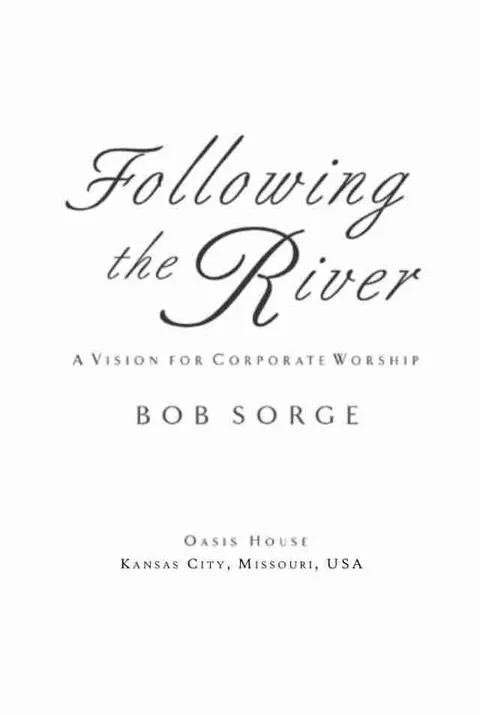
"Following the River" by Bob Sorge is a Christian book that explores the importance of surrendering to God's will and following His leading in our lives. Through personal anecdotes and biblical teachings, Sorge encourages readers to trust in God's plans, even when they may not make sense, and to rely on His strength to guide them through life's challenges. Ultimately, the book emphasizes the transformative power of surrendering to God and allowing Him to direct our paths.
Andrew Fuller
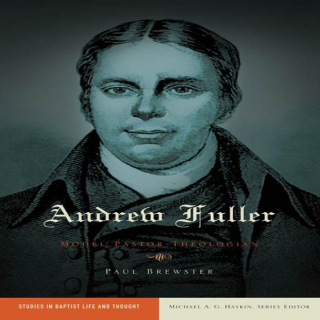 Fuller was born in Soham, Cambridgeshire, England, where in 1775 he was ordained pastor of the Baptist church. Originally schooled in the hyper-Calvinist theology then prevalent in parts of the Particular Baptist denomination, he became convinced in 1775 that the hyper-Calvinist position was not scriptural. In 1785 he published The Gospel Worthy of All Acceptation, which did much to prepare his denomination for accepting this missionary obligation. As pastor in Kettering, Northamptonshire, from 1783, Fuller became firm friends with John Sutcliff of Olney, John Ryland of Northampton, and later the young William Carey. The strengthening missionary vision of this group bore fruit on October 2, 1792, when the Particular Baptist Society for Propagating the Gospel among the Heathen (later known as the Baptist Missionary Society) was formed in the home of one of Fuller’s deacons in Kettering. Fuller was appointed secretary. Until his death he combined the demands of a busy pastorate with managing the affairs of the BMS. He traveled extensively to raise funds for the society, especially in Scotland, which he visited five times.
Brian Stanley, “Fuller, Andrew,” in Biographical Dictionary of Christian Missions, ed. Gerald H. Anderson (New York: Macmillan Reference USA, 1998), 230-231.
This article is reprinted from Biographical Dictionary of Christian Missions, Macmillan Reference USA, copyright © 1998 Gerald H. Anderson, by permission of Macmillan Reference USA, New York, NY. All rights reserved.
Pastor, apologist, and promoter of missions
Though not university trained, Andrew Fuller was recognized by his contemporaries as the preeminent Baptist theologian of their day and was awarded honorary doctor of divinity degrees by both Princeton (1798) and Yale (1805). Fuller’s published works, preaching ministry and churchmanship was, perhaps, the primary mediating agency between the transatlantic evangelical revival and the English Particular (or “Calvinist”) Baptists who had distanced themselves from what was largely at the start an Anglican renewal movement. Fuller was also well known as a co-founder of the Baptist Missionary Society (or, the Particular Baptist Society for the Propagation of the Gospel Amongst the Heathen [est. 1792]), on whose behalf he itinerated regularly in the British Isles, lobbied the East India Company, and wrote numerous letters and magazine articles during his twenty-two year tenure as its first general secretary. He was an opponent of the British slave trade and, though a dissenting non-Anglican, an acquaintance of William Wilberforce and other members of the Clapham sect, who were key allies in Parliament. He was a pastors’ pastor who exerted no small influence for evangelical doctrine and a missionary vision through the many ordination sermons he preached. From 1782 until his death in 1815 he served as pastor of the Kettering Baptist Church and was frequent chairman of the Northamptonshire Association, a consortium which included the likes of William Carey, Samuel Pearce, John Sutcliffe, and John Ryland, Jr.
Fuller was born in 1754 at Wicken, Cambridgeshire, to non-conformist parents who worked a dairy farm. In 1775, six years after his own conversion experience, he was inducted as pastor of the forty-seven member church in Soham, where he had received his baptism and was a member. In 1776 he married his first wife, Sarah Gardiner, with whom he had eleven children, only three surviving beyond early childhood. Sarah would die in 1792, less than two months before the founding of the British Missionary Society (BMS). During this seven year pastorate, Fuller immersed himself in the literary culture of Anglo-American evangelical Calvinism. He cultivated his theological perspective and ministry philosophy by ardently studying the Scriptures alongside the works of the Reformers, seventeenth-century Puritans (especially John Owen), early English Baptists like John Bunyan and John Gill, as well as the writings of American Congregationalist philosopher-theologian and pastor, Jonathan Edwards. Fuller also acknowledged in his most popular book, The Gospel Worthy of All Acceptation (1781), the influence of the lives of John Eliot and David Brainerd, both late missionaries to the native Americans. The Gospel Worthy was Fuller’s remonstration against the hyper-Calvinism that negated the propriety of evangelistic appeals. By the 1790s, evangelical (or “strict”) Calvinism was known in England as “Fullerism” (vs. “High” or hyper-Calvinism). The Gospel its Own Witness (1800) was Fuller’s refutation of Deism. Fuller gained a reputation by these two books, especially, for publically, clearly and systematically opposing in print whatever widely held doctrines he believed were undermining the church and its mission.
In the Northamptonshire Assocation Fuller was a member of a thriving intellectual community most influenced by Edwards. In 1784 John Sutcliff initiated a “concerts of prayer” movement similar to the program suggested by Edwards in An Humble Attempt to Promote Explicit Agreement and Visible Union of God’s People in Extraordinary Prayer (1748). Baptist congregations prayed monthly for the spread of the gospel and the kingdom of Christ to the ends of the earth through all denominations. In 1791, Sutcliff, Fuller and Samuel Pearce each preached at significant events (Sutcliff and Fuller at the association meeting of pastors, Pearce at William Carey’s ordination) on the duty of the church to evangelize the whole inhabitable globe. Fuller based his appeal on the eternal truth of the gospel, the eternal relevance of the gospel, the eternal power of the gospel, and the circumstances of the age that made missionary endeavors possible and obligatory.(1) Carey’s much touted association sermon from Isaiah 54:2-3 in May of 1792 did not arise in a vacuum. The influence was mutual between Carey and Fuller, both being influenced by Robert Hall, Sr. and Samuel Pearce (who had been inspired by the Methodist Thomas Coke in Birmingham).
On October 2, 1792, the BMS was formed with Fuller its first secretary and the assumption that its support would come largely from the churches of the Northamptonshire Association. When the society sent Carey and John Thomas to India the following year, Fuller preached their commissioning service from John 20:21 (“As the Father has sent me, even so I [Christ] am sending you.”). Fuller believed the mission’s raison d’être was the uniqueness of Christ and Christian responsibility to proclaim him. Bible translation and evangelism should take priority. Hindus were not desiring or seeking the Christian Scriptures. But to ignore and neglect anyone in an unconverted state is inconsistent with the love of God and man. In addition, God had promised the messiah the inheritance of the nations (An Apology for the Late Christian Missions to India, 1808). The church is obligated to employ means and make an effort as the means God uses to fulfill that promise to Christ. Obstacles are merely a test to sincerity of faith.
Fuller spent up to ten hours per day in correspondence and reporting for the BMS. He contributed articles to Evangelical Magazine, Missionary Magazine, Quarterly Magazine, Protestant Dissenters’ Magazine, Biblical Magazine, and Theological Miscellany. He sought financial support via letters and by an average of three months of vigorous itineration each year among various evangelical churches in Scotland, Ireland, Wales and England. John Ryland, Jr. wrote of Fuller’s style, that he, “…always disliked violent pressing for contributions, and attempting to outvie other societies: he chose rather to tell a plain, unvarnished tale; and he generally told it with good effect.”(2) Through written correspondence he “pastored” the missionaries in the field while maintaining a decentralized approach to mission administration. He believed the missionaries were more capable of governing themselves and that the time required for correspondence made central control impractical anyway.
The security of the unlicensed Baptist missionary society’s place in the British Empire was frequently tenuous up to 1813. Fuller occasionally had to petition Parliament or the Board of Control for continued tolerance of the BMS. Muslim irritation at the Christian missionary presence and the conversion of some Indians from Islam had been blamed for the Vellore Mutiny of 1806. Thomas Twining had openly claimed efforts at conversion were contradictory to “the mild and tolerant spirit of Christianity.” Fuller responded to Twining and other English defenders of Hinduism with his three-part Apology for the Late Christian Missions to India (1808) in which he argued for a toleration of religion that allows all religious views as well as efforts to persuade through reasonable means. He attributed several social ills, like ritual infanticide and sati, to Hinduism, and commended the missionaries for trying to put an end to such practices. Fuller was also a critic of the “detestable traffic” of the African slave trade, asserting it made England deserving of ruin at the hands of the French (from whose invasion he urged prayer that God would mercifully protect England). The prosperity of the empire should not come at the expense of other human beings. Patriotism must “harmonize” with “good will toward [other] men.”(3) On the other hand, Fuller often counseled BMS missionaries not to become “entangled” in political concerns which were “only affairs of this life” and endangered colonial toleration of the mission.(4) Because Jesus accomplished “moral revolution” in the heart, loyalty to the British government, rather than republicanism, should be encouraged as far as it is compatible with Christian commitments.(5)
Fuller, the pastor of families in England and abroad, counseled missionary families to nurture a deep spirituality for the sake of attaining the character commensurate with the nature of the gospel and their mission. Fuller knew the vicissitudes of even the Christian heart, and the “spiritual advantage” of engaging in mission. Reflecting in his diary on July 18, 1794, he wrote:
Within the last year or two, we have formed a missionary society; and have been enabled to send out two of our brethren to the East Indies. My heart has been greatly interested in this work. Surely I never felt more genuine love to God and to his cause in my life. I bless God that his work has been a means of reviving my soul. If nothing comes of it, I and many others have obtained a spiritual advantage.(6)
Fuller died in 1815. The epitaph stone for Fuller in the Kettering meeting house says he devoted his life for the prosperity of the BMS.(7) One biographer has said Fuller “lived and died a martyr to the mission.”(8) After December, 1794, he was assisted in life by his second wife, Ann Coles. Fuller also spent himself itinerating for the British and Foreign Bible Society after it was founded in 1804. His many occasional writings and sermon manuscripts reveal a love for the gospel message itself and the life-orienting impact of Bible texts such as Matthew 28:16-20 and Mark 16:15-16; John 12:36 and 20:21; and Romans 10:9, 14-17. Fuller is noted today for making a significant contribution to the revitalization of Particular (Calvinist) Baptist life in late eighteenth century England as well as for being a key figure in the historic turn toward a proliferation of free Protestant missionary societies at the beginning of the Great Century.
Fuller was born in Soham, Cambridgeshire, England, where in 1775 he was ordained pastor of the Baptist church. Originally schooled in the hyper-Calvinist theology then prevalent in parts of the Particular Baptist denomination, he became convinced in 1775 that the hyper-Calvinist position was not scriptural. In 1785 he published The Gospel Worthy of All Acceptation, which did much to prepare his denomination for accepting this missionary obligation. As pastor in Kettering, Northamptonshire, from 1783, Fuller became firm friends with John Sutcliff of Olney, John Ryland of Northampton, and later the young William Carey. The strengthening missionary vision of this group bore fruit on October 2, 1792, when the Particular Baptist Society for Propagating the Gospel among the Heathen (later known as the Baptist Missionary Society) was formed in the home of one of Fuller’s deacons in Kettering. Fuller was appointed secretary. Until his death he combined the demands of a busy pastorate with managing the affairs of the BMS. He traveled extensively to raise funds for the society, especially in Scotland, which he visited five times.
Brian Stanley, “Fuller, Andrew,” in Biographical Dictionary of Christian Missions, ed. Gerald H. Anderson (New York: Macmillan Reference USA, 1998), 230-231.
This article is reprinted from Biographical Dictionary of Christian Missions, Macmillan Reference USA, copyright © 1998 Gerald H. Anderson, by permission of Macmillan Reference USA, New York, NY. All rights reserved.
Pastor, apologist, and promoter of missions
Though not university trained, Andrew Fuller was recognized by his contemporaries as the preeminent Baptist theologian of their day and was awarded honorary doctor of divinity degrees by both Princeton (1798) and Yale (1805). Fuller’s published works, preaching ministry and churchmanship was, perhaps, the primary mediating agency between the transatlantic evangelical revival and the English Particular (or “Calvinist”) Baptists who had distanced themselves from what was largely at the start an Anglican renewal movement. Fuller was also well known as a co-founder of the Baptist Missionary Society (or, the Particular Baptist Society for the Propagation of the Gospel Amongst the Heathen [est. 1792]), on whose behalf he itinerated regularly in the British Isles, lobbied the East India Company, and wrote numerous letters and magazine articles during his twenty-two year tenure as its first general secretary. He was an opponent of the British slave trade and, though a dissenting non-Anglican, an acquaintance of William Wilberforce and other members of the Clapham sect, who were key allies in Parliament. He was a pastors’ pastor who exerted no small influence for evangelical doctrine and a missionary vision through the many ordination sermons he preached. From 1782 until his death in 1815 he served as pastor of the Kettering Baptist Church and was frequent chairman of the Northamptonshire Association, a consortium which included the likes of William Carey, Samuel Pearce, John Sutcliffe, and John Ryland, Jr.
Fuller was born in 1754 at Wicken, Cambridgeshire, to non-conformist parents who worked a dairy farm. In 1775, six years after his own conversion experience, he was inducted as pastor of the forty-seven member church in Soham, where he had received his baptism and was a member. In 1776 he married his first wife, Sarah Gardiner, with whom he had eleven children, only three surviving beyond early childhood. Sarah would die in 1792, less than two months before the founding of the British Missionary Society (BMS). During this seven year pastorate, Fuller immersed himself in the literary culture of Anglo-American evangelical Calvinism. He cultivated his theological perspective and ministry philosophy by ardently studying the Scriptures alongside the works of the Reformers, seventeenth-century Puritans (especially John Owen), early English Baptists like John Bunyan and John Gill, as well as the writings of American Congregationalist philosopher-theologian and pastor, Jonathan Edwards. Fuller also acknowledged in his most popular book, The Gospel Worthy of All Acceptation (1781), the influence of the lives of John Eliot and David Brainerd, both late missionaries to the native Americans. The Gospel Worthy was Fuller’s remonstration against the hyper-Calvinism that negated the propriety of evangelistic appeals. By the 1790s, evangelical (or “strict”) Calvinism was known in England as “Fullerism” (vs. “High” or hyper-Calvinism). The Gospel its Own Witness (1800) was Fuller’s refutation of Deism. Fuller gained a reputation by these two books, especially, for publically, clearly and systematically opposing in print whatever widely held doctrines he believed were undermining the church and its mission.
In the Northamptonshire Assocation Fuller was a member of a thriving intellectual community most influenced by Edwards. In 1784 John Sutcliff initiated a “concerts of prayer” movement similar to the program suggested by Edwards in An Humble Attempt to Promote Explicit Agreement and Visible Union of God’s People in Extraordinary Prayer (1748). Baptist congregations prayed monthly for the spread of the gospel and the kingdom of Christ to the ends of the earth through all denominations. In 1791, Sutcliff, Fuller and Samuel Pearce each preached at significant events (Sutcliff and Fuller at the association meeting of pastors, Pearce at William Carey’s ordination) on the duty of the church to evangelize the whole inhabitable globe. Fuller based his appeal on the eternal truth of the gospel, the eternal relevance of the gospel, the eternal power of the gospel, and the circumstances of the age that made missionary endeavors possible and obligatory.(1) Carey’s much touted association sermon from Isaiah 54:2-3 in May of 1792 did not arise in a vacuum. The influence was mutual between Carey and Fuller, both being influenced by Robert Hall, Sr. and Samuel Pearce (who had been inspired by the Methodist Thomas Coke in Birmingham).
On October 2, 1792, the BMS was formed with Fuller its first secretary and the assumption that its support would come largely from the churches of the Northamptonshire Association. When the society sent Carey and John Thomas to India the following year, Fuller preached their commissioning service from John 20:21 (“As the Father has sent me, even so I [Christ] am sending you.”). Fuller believed the mission’s raison d’être was the uniqueness of Christ and Christian responsibility to proclaim him. Bible translation and evangelism should take priority. Hindus were not desiring or seeking the Christian Scriptures. But to ignore and neglect anyone in an unconverted state is inconsistent with the love of God and man. In addition, God had promised the messiah the inheritance of the nations (An Apology for the Late Christian Missions to India, 1808). The church is obligated to employ means and make an effort as the means God uses to fulfill that promise to Christ. Obstacles are merely a test to sincerity of faith.
Fuller spent up to ten hours per day in correspondence and reporting for the BMS. He contributed articles to Evangelical Magazine, Missionary Magazine, Quarterly Magazine, Protestant Dissenters’ Magazine, Biblical Magazine, and Theological Miscellany. He sought financial support via letters and by an average of three months of vigorous itineration each year among various evangelical churches in Scotland, Ireland, Wales and England. John Ryland, Jr. wrote of Fuller’s style, that he, “…always disliked violent pressing for contributions, and attempting to outvie other societies: he chose rather to tell a plain, unvarnished tale; and he generally told it with good effect.”(2) Through written correspondence he “pastored” the missionaries in the field while maintaining a decentralized approach to mission administration. He believed the missionaries were more capable of governing themselves and that the time required for correspondence made central control impractical anyway.
The security of the unlicensed Baptist missionary society’s place in the British Empire was frequently tenuous up to 1813. Fuller occasionally had to petition Parliament or the Board of Control for continued tolerance of the BMS. Muslim irritation at the Christian missionary presence and the conversion of some Indians from Islam had been blamed for the Vellore Mutiny of 1806. Thomas Twining had openly claimed efforts at conversion were contradictory to “the mild and tolerant spirit of Christianity.” Fuller responded to Twining and other English defenders of Hinduism with his three-part Apology for the Late Christian Missions to India (1808) in which he argued for a toleration of religion that allows all religious views as well as efforts to persuade through reasonable means. He attributed several social ills, like ritual infanticide and sati, to Hinduism, and commended the missionaries for trying to put an end to such practices. Fuller was also a critic of the “detestable traffic” of the African slave trade, asserting it made England deserving of ruin at the hands of the French (from whose invasion he urged prayer that God would mercifully protect England). The prosperity of the empire should not come at the expense of other human beings. Patriotism must “harmonize” with “good will toward [other] men.”(3) On the other hand, Fuller often counseled BMS missionaries not to become “entangled” in political concerns which were “only affairs of this life” and endangered colonial toleration of the mission.(4) Because Jesus accomplished “moral revolution” in the heart, loyalty to the British government, rather than republicanism, should be encouraged as far as it is compatible with Christian commitments.(5)
Fuller, the pastor of families in England and abroad, counseled missionary families to nurture a deep spirituality for the sake of attaining the character commensurate with the nature of the gospel and their mission. Fuller knew the vicissitudes of even the Christian heart, and the “spiritual advantage” of engaging in mission. Reflecting in his diary on July 18, 1794, he wrote:
Within the last year or two, we have formed a missionary society; and have been enabled to send out two of our brethren to the East Indies. My heart has been greatly interested in this work. Surely I never felt more genuine love to God and to his cause in my life. I bless God that his work has been a means of reviving my soul. If nothing comes of it, I and many others have obtained a spiritual advantage.(6)
Fuller died in 1815. The epitaph stone for Fuller in the Kettering meeting house says he devoted his life for the prosperity of the BMS.(7) One biographer has said Fuller “lived and died a martyr to the mission.”(8) After December, 1794, he was assisted in life by his second wife, Ann Coles. Fuller also spent himself itinerating for the British and Foreign Bible Society after it was founded in 1804. His many occasional writings and sermon manuscripts reveal a love for the gospel message itself and the life-orienting impact of Bible texts such as Matthew 28:16-20 and Mark 16:15-16; John 12:36 and 20:21; and Romans 10:9, 14-17. Fuller is noted today for making a significant contribution to the revitalization of Particular (Calvinist) Baptist life in late eighteenth century England as well as for being a key figure in the historic turn toward a proliferation of free Protestant missionary societies at the beginning of the Great Century.
Your Body Will Be Whole
During my surgical training, I helped care for an aging professor who bemoaned his declining health. His mind still moved in academic circles, pondering the high points of chemistry and physics, but arthritis had so fused the bones in his neck that he couldn’t nestle into a pillow anymore. Cancer riddled his chest, and squandered nutrients, until his frame wasted to skeletal proportions. The simple routine of enjoying a meal pitched him into coughing, and pneumonia festered from the secretions that pooled in his lungs. One day, after one of many bronchoscopies to clear his airways and ward off a ventilator, he motioned to me and mumbled something. I drew closer, listening for his raspy voice above the hiss of the oxygen mask. “Don’t get old,” he said. Wages of Sin While our medical conditions and paths in life vary, all of us will join this professor in his grief at some point, if our Lord tarries, as we endure the failure of our earthly bodies. “The consequences of sin penetrate even to our vessels and bones.” It’s easy to dismiss this truth when we’re healthy and can so easily enjoy the fruits of God’s exquisite design. When we savor the rush of air through our lungs as we run, or the vigor of our limbs as we dance, the precision and fluidity of God’s creation moves us to thanksgiving. We join with the psalmist in his praise: “You formed my inward parts; you knitted me together in my mother’s womb. I praise you, for I am fearfully and wonderfully made” (Psalm 139:13–14). And yet, our vitality has a time limit. When we neglect the truth that the body is a temple for the Holy Spirit, we prime ourselves for disease (1 Corinthians 6:19–20). The cigarettes we smoke blacken our lungs; our overindulgences at the dinner table coat our arteries in cholesterol; our extra glasses of alcohol inflame and destroy the liver. Even when we aim to steward our bodies well, our health eventually fails, because “the wages of sin is death” (Romans 6:23). The consequences of sin penetrate even to our vessels and bones, unraveling the physiological systems that God has meticulously interwoven. As we age, our immune system deteriorates, and we succumb to infections. Calcium hardens our arteries, driving our blood pressure dangerously high. Our bones thin, our spine weakens, and we stoop toward the dust from which we came. Even our face reveals the march of time, as the production of elastin in our skin dwindles and creases deepen around our eyes. This inching toward death, with our bodies slowly falling apart as the years march by, awaits us all. As Paul reminds us, “Sin came into the world through one man, and death through sin, and so death spread to all men because all sinned” (Romans 5:12). The brokenness that afflicts the world also afflicts our earthly bodies, ushering us from the bloom of youth into pain, fragility, and ultimately the grave. For many of us, humiliation and pain, frustration and grief accompany us on our decline. Redemption of the Body Yet we have hope. As we toil in the shadow of the cross, despising our tally of diagnoses and wrangling with ever-mounting aches and pains, we cling to the promise that when Christ returns, “he will wipe away every tear from [our] eyes, and death shall be no more, neither shall there be mourning, nor crying, nor pain anymore, for the former things have passed away” (Revelation 21:4). We confess our belief in the “resurrection of the body” through the Apostles’ Creed, because the New Testament teaches that the transformation already begun in us through the Holy Spirit will come to completion in the new heavens and the new earth. “We know that the whole creation has been groaning together in the pains of childbirth until now,” Paul writes. “And not only the creation, but we ourselves, who have the firstfruits of the Spirit, groan inwardly as we wait eagerly for adoption as sons, the redemption of our bodies” (Romans 8:22–23). In saving us from all our sins, Christ has also saved us from their wages, including the heavy toll upon our bodies. Christianity, then, doesn’t promise that our souls will float in heaven, wrenched from their corporeal vessels. Instead, when we pine for Christ’s return, we anticipate a complete renewal: a softening of the heart, a sanctification of the mind, and even a renewal of the bodies that in their present form so easily wither and break. And all so we might know God and enjoy him forever, for his glory. Spiritual Body While still tethered to the aches and groans of this mortal coil, it’s hard to envision a body unsullied by sin. “What will it look like?” we may wonder. “How will it be different?” When the church at Corinth raised such questions, they drove Paul to exasperation. Corinth was a metropolis steeped in pagan influences, including a Greek philosophy that viewed the body as debased and corrupt, and the spirit as sublime. This thinking proved a stumbling block to some early Christians in Corinth, who struggled to accept the truth of the resurrection. How, they wondered, could the Son of God rise in the flesh, when the body was material and depraved? Paul balked at such questions, and highlighted that the Corinthians’ thinking reflected the limitations of human experience rather than the wisdom of God: Someone will ask, “How are the dead raised? With what kind of body do they come?” You foolish person! What you sow does not come to life unless it dies. And what you sow is not the body that is to be, but a bare kernel, perhaps of wheat or of some other grain. But God gives it a body as he has chosen, and to each kind of seed its own body. . . . So is it with the resurrection of the dead. What is sown is perishable; what is raised is imperishable. It is sown in dishonor; it is raised in glory. It is sown in weakness; it is raised in power. It is sown a natural body; it is raised a spiritual body. (1 Corinthians 15:35–38, 42–44) “The body will transform from something perishable and weak to something imperishable and powerful.” In this rebuttal, Paul argues that our resurrected, spiritual body will be something totally new, dramatically different from the body we leave in the grave. Just as a plant bursts forth from its seed, so also the resurrection body will arise from the earthly body that is sown, but a radical change will occur. Through the resurrection, the body will transform from something that is perishable, dishonorable, and weak — like a dormant seed — to something wholly new: imperishable, glorious, and powerful. In short, the resurrection will transform us into the image of Christ. A Body Like His Through Christ, God has adopted us as his own children, and shares with us the inheritance of his Son, including a body made new. Paul writes, Our citizenship is in heaven, and from it we await a Savior, the Lord Jesus Christ, who will transform our lowly body to be like his glorious body, by the power that enables him even to subject all things to himself. (Philippians 3:20–21) So also, John writes, See what kind of love the Father has given to us, that we should be called children of God; and so we are. . . . Beloved, we are God’s children now, and what we will be has not yet appeared; but we know that when he appears we shall be like him, because we shall see him as he is. (1 John 3:1–2) While we may struggle to wrap our minds around the resurrection promise, when we look to Christ — risen, glorified, joined with the Father in love for eternity — we see a glimpse of the future that awaits us when he returns and we come before his throne. Paul calls Jesus the “firstfruits” because his resurrection serves as a preamble for the path we will follow (1 Corinthians 15:20). “As in Adam all die, so also in Christ shall all be made alive” (1 Corinthians 15:22). While we cannot wholly understand how our redeemed bodies will look, or how they will feel, we have tremendous hope in the promise that, whatever the details, they will resemble Christ. Our bodies will be like his: clean, new, glorious, powerful, imperishable. Bodies Made New This promise offers a balm for the weary soul. As our earthly bodies bend and break, as our strength wanes and our groans lengthen, we cling to the hope that a day is coming when all the aches will fade away. Jesus has saved us from wrath, both body and soul. He has triumphed even over death (1 Corinthians 15:55). And through the Father’s great mercy, we share in his victory. Our sufferings within these mortal coils may drive us to our knees. But when Christ returns, and we kneel before his throne, by his grace we will “[put] on the imperishable” (1 Corinthians 15:54), raise rejuvenated voices, and praise him with bodies made new. Article by Kathryn Butler

-%20Karen%20Kingsbury-480.webp)