
GIP Library icon

LOG IN TO REVIEW
About the Book


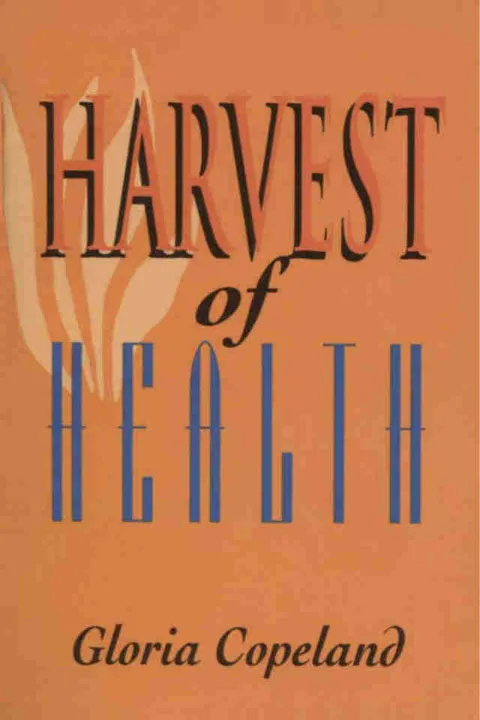
"Harvest of Health" by Gloria Copeland explores the connection between faith and physical health, emphasizing the importance of trusting in God for healing and wellness. Copeland draws on biblical principles and personal experiences to offer practical advice for cultivating a healthy lifestyle. The book encourages readers to trust in God's promises for abundant health and well-being.

Joni Eareckson Tada

Joni Eareckson Tada Joni Eareckson Tada is a remarkable woman. Injured in a diving accident at the age of 17, Joni has had to endure more physical suffering than most of us ever will. Though she suffered a deep depression and lost the will to live in the aftermath of her accident, she gradually came back to a deeper relationship with God. Because of her early struggles, she has become strong in her faith and is a testimony to the world of how when we are weak, God is strong. Her story is not one of bitterness and despair, as we might imagine it to be, but one of love and victory. Joni Eareckson Tada was born in Baltimore, Maryland in 1950 to John and Lindy Eareckson. She was the youngest of four sisters, Linda, Jay, and Kathy. Her name is pronounced “Johnny”, being he named after her father. Joni inherited her father’s athletic and creative abilities, giving father and daughter a special bond. Her childhood was an extremely happy one. She grew into a young adult surrounded by love, happiness, and security in her parent’s home. The Eareckson family shared a great love for the outdoors, which promoted family togetherness. They shared in various outdoor activities such as camping trips, horseback riding, hiking, tennis, and swimming. In 1967, after graduating from high school, Joni had her fateful accident. It was a hot July day and she was to meet her sister Kathy and some friends at the beach on Chesapeake Bay to swim. When she arrived, she dove in quickly, and immediately knew something was wrong. Though she felt no real pain, a tightness seemed to encompass her. Her first thought was that she was caught in a fishing net and she tried to break free and get to the surface. Panic seized her as she realized she couldn’t move and she was lying face down on the bottom of the bay. She realized she was running out of air and resigned herself to the fact that she was going to drown. Her sister, Kathy, called for her. She ran to Joni and pulled her up. To Kathy’s surprise, Joni could not support herself and tumbled back into the water. Kathy pulled her out and Joni gasped for air. Joni was puzzled as to why her arms were still tied to her chest. Then to her dismay, Joni realized they were not tied, but were draped lifelessly across her sister’s back. Kathy yelled for someone to call an ambulance and Joni was rushed to the hospital. Joni’s life was changed forever that July day in 1967. She had broken her neck – a fracture between the fourth and fifth cervical levels. She was now a quadriplegic, paralyzed from the shoulders down. While her friends were busy sending out graduation announcements and preparing to go to college in the fall, Joni was fighting for her very life and having to accept the fact that she would have to live out the rest of her life in a wheelchair. Joni’s rehabilitation was not easy. As you might imagine she was angry and she raged against her fate. She struggled with depression and often times she wanted to end her life. She could not understand how God could let this happen to her. Before the accident she had felt that she wasn’t living the life she should be so she had prayed that God would change her life – that he’d turn it around. After months of staring at the ceiling and wallowing in her depression, Joni began to wonder if this was God’s answer to her prayer. This realization that God was working in her life was the beginning of Joni’s journey to wholeness as a disabled person. She participated in various rehabilitation programs that taught her how to live with her disabilities and she immersed herself in God’s Word to become spiritually strong. Joni’s life has been a full one. She has learned early on to compensate for her handicaps. Being naturally creative, she learned to draw and paint holding her utensils with her teeth. She began selling her artwork and the endeavor was a great success. There was a real demand for her work. She kept herself very busy with her artwork and gained for herself a degree of independence. She was also able to share Christ’s love in her drawings. She always signed her paintings “PTL” which stood for “Praise the Lord”. Joni has also become a sought after conference speaker, author, and actress, portraying herself in the World Wide Pictures production of “Joni”, the life story of Joni Eareckson in 1978. She has written several books including “Holiness in Hidden Places”, “Joni”, which was her autobiography, and many children’s titles. But her most satisfying and far-reaching work is her advocacy on behalf of the disabled. In 1979, Joni moved to California to begin a ministry to the disabled community around the globe. She called it Joni and Friends Ministries (JAF Ministries), fulfilling the mandate of Jesus in Luke 14:13,23 to meet the needs of the poor, crippled, and lame. Joni understood first-hand the loneliness and alienation many handicapped people faced and their need for friendship and salvation. The ministry was soon immersed with calls for both physical and spiritual help for the disabled. JAF Ministries thus uncovered the vast hidden needs of the disabled community and began to train the local church for effective outreach to the disabled, an often overlooked mission field. JAF Ministries today includes local offices in such major cities as Charlotte, Chicago, Dallas/Fort Worth, Phoenix, and SanFrancisco. The goal of the ministry is to have ten such offices in metropolitan areas by the year 2001. Through JAF Ministries, Joni tapes a five-minute radio program called “Joni and Friends”, heard daily all over the world. She has heart for people who, like herself, must live with disabilities. Her role as an advocate for the disabled has led to a presidential appointment to the National Council on Disability for over three years. Joni also serves on the board of the Lausanne Committee for World Evangelization as a senior associate for evangelism among disabled persons. Joni has also begun Wheels for the World, a ministry which involves restoring wheelchairs and distributing them in developing nations. Joni has won many awards and commendations throughout her life. In 1993 she was named Churchwoman of the Year by the Religious Heritage Foundation and the National Association of Evangelicals named her “Layperson of the Year”, making her the first woman ever to receive that honor. Also among the numerous awards she has received are the American Academy of Achievement’s Golden Plate Award, The Courage Award of the Courage Rehabilitation Center, the Award of Excellence from the Patricia Neal Rehabilitation Center, the Victory Award from the National Rehabilitation Hospital, and the Golden Word Award from the International Bible Society. In 1982, Joni married Ken Tada. Today, eighteen years later, the marriage is strong and committed and they are still growing together in Christ. Ken and Joni travel together with JAF Ministries speaking at family retreats about the day to day experiences of living with disabilities. At the helm of JAF Ministries, Ken and Joni strive to demonstrate in tangible ways that God has not abandoned those with disabilities. And they speak from experience.

sacred weapons for spiritual war

Over recent years, there have been many television shows aimed at helping people get properly dressed. Sometimes the premise revolves around experts helping people to pick the right outfit for a wedding. At other times, someone with a woefully poor fashion sense receives a total makeover with the help of fashion gurus and some serious spending. In a similar way, Christianity helps people become properly dressed, although not in the typical sense. Paul advises the Ephesians that there are certain things Christians must put off and others they must put on. More specifically, he tells them (and us) to put on the Christian armor so we can be properly equipped to stand up to the assaults that inevitably come our way in this spiritually dangerous world. God’s Armor According to the Bible, life is not a picnic but a  battle , an armed struggle against a powerful adversary. To engage in that battle properly, we need a spiritual makeover in which our flimsy, inadequate natural attire is replaced by suitable armor and weaponry. So Paul concludes his magnificent, gospel-saturated letter to the Ephesians with a final charge to be prepared to engage with the battle of life in the right way, dressed in the armor of God. Many people assume that, as Wikipedia puts it, the various pieces (the belt of truth, the breastplate of righteousness, the shoes of the gospel of peace, the shield of faith, the helmet of salvation, and the sword of the Spirit) are correlated to what Paul would have witnessed firsthand as the arms and armor of Roman legionaries during his life in the Roman Empire. This assumption, however, misses the fact that each of the pieces of armor has a rich background in the Old Testament, where they describe  God’s  armor — the armor that God himself dons to rescue his people. The Old Testament, not the Roman legionary, provided Paul with his inspiration — and if we miss this background, we may misinterpret and misapply the various pieces of the armor. Breastplate and Helmet The most obvious examples are “the breastplate of righteousness” and “the helmet of salvation” (Ephesians 6:14, 17), both of which are drawn directly from Isaiah 59:17. There the prophet says of God, “He put on righteousness as a breastplate, and a helmet of salvation on his head; he put on garments of vengeance for clothing, and wrapped himself in zeal as a cloak.” In the preceding chapters, Isaiah describes God’s promise to deal with the physical enemies of his people, especially Babylon. But now the prophet describes the divine warrior coming to deal with the far greater and more dangerous enemy of their souls: sin. God’s people have no righteousness of their own to bring; their best righteousness, apart from divine help, is nothing more than filthy garments (Isaiah 64:6). If the Lord were to deal with his people according to their own deeds, there would be nothing to anticipate but fearful judgment. But Isaiah declares that the divine warrior would not come as a wrathful judge; instead, he would come as their Redeemer to bring them salvation. Ready Feet Similarly, Paul’s image of “feet readied with the gospel of peace” (Ephesians 6:15, my translation) does not stem from observing Roman sandals; rather, the picture draws directly on Isaiah 52:7: “How beautiful upon the mountains are the feet of him who brings good news, who publishes peace, who brings good news of happiness, who publishes salvation, who says to Zion, ‘Your God reigns.’” Ephesians 6 and Isaiah 52 (together with Nahum 1) are the only passages in the Bible where the words  feet ,  good news , and  peace  occur together. “According to the Bible, life is not a picnic but a battle, an armed struggle against a powerful adversary.” This Old Testament background clarifies a potential ambiguity in Paul’s words. When Paul speaks of feet shod with “the readiness of the gospel of peace,” does he mean the readiness  given  by the gospel of peace or the readiness to  spread the good news  that brings peace? Many translations and commentaries opt for the former interpretation. But if Paul is thinking about Isaiah 52, then the readiness he has in mind is primarily the readiness to share the good news as heralds of the gospel. Heralds need good shoes to enable them to travel far and fast to bring their message to those hungry to hear good news. Isaiah imagines the watchmen bursting into joyful song on the walls of Jerusalem (Isaiah 52:8). Those who had long strained their eyes with fearful anticipation of an approaching enemy now herald good news of deliverance to the beleaguered citizens of Zion. Paul applies this same image to our privilege of hastening to share the gospel of peace with believers and unbelievers alike. Belt of Truth The belt of truth also comes from Isaiah. In Isaiah 11, God’s people, Israel, had turned their back on the light and chosen to live in darkness, spurning the Lord’s revelation. Yet God promised he would send a messianic figure from the line of David to deliver them. This coming King would wear righteousness as a belt around his waist and “faithfulness” as a belt around his loins (Isaiah 11:5). The Greek translation of the Old Testament uses the same Greek word ( aletheia ) for  faithfulness  in Isaiah 11 that Paul uses in Ephesians 6, where our English versions translate it as  truth . This messianic King will save his people and bring in the final blessing of peace — a peace that extends throughout creation (Isaiah 11:6–9). The toxic effects of the fall, brought about by the first Adam listening to Satan’s lies, would be reversed by this second Adam and heir of the line of David, whose foundational qualities are truth and faithfulness. Sword of the Spirit The sword of the Spirit, the word of God, is drawn from Isaiah 49:2. There the promised servant of the Lord says, “[The Lord] made my mouth like a sharp sword; in the shadow of his hand he hid me; he made me a polished arrow; in his quiver he hid me away.” In other words, the Lord was preparing his servant to come as a warrior with sharp words of judgment. In the original context, the servant was Israel, who was supposed to be God’s faithful servant, equipped by him to bring light to the Gentiles. Yet in Isaiah’s time, there was much that needed to be judged and condemned in Israel and Judah themselves. They were not fit to be the Lord’s servant, so he had to send his servant to bring light to them as well as to the Gentiles. “The armor is first and foremost God’s armor rather than ours.” This promised servant, the new Israel with a mission to historic Israel, is Jesus himself. Yet even though Jesus could have entered this world with sharp words of judgment, condemning all those who fall short of perfect righteousness, in his first coming he came to seek and to save the lost, both those from Israel and from the nations (Luke 19:10). In his second coming, Jesus will return as a warrior riding out on a white horse with a sharp sword coming from his mouth with which to judge all nations (Revelation 19:11–16). Shield of Faith The Old Testament background for the phrase  shield of faith  also clarifies an ambiguity in Paul’s imagery. When he says, “Take up the shield of faith, with which you can extinguish all the flaming darts of the evil one” (Ephesians 6:16), Paul is not saying that faith in itself has remarkable defensive power against Satan. Rather, he is saying that faith protects us from Satan’s attacks because faith takes hold of the power and protection of God himself. Throughout the Old Testament, it is God, not faith, that is repeatedly described as our shield. In Genesis 15:1 the Lord tells Abraham, “I am your shield; your reward shall be very great.” Proverbs 30:5 says, “[God] is a shield to those who take refuge in him.” God is our shield and refuge; he is our hiding place in the day of difficulty; his faithfulness will keep us safe when we are being shot at by arrows, flaming or otherwise (Psalm 91:4–5). Faith becomes our shield in Paul’s imagery because it is the means by which we flee to God for refuge. Christ the Warrior Most importantly, the Old Testament background challenges the common view that the Christian armor is primarily a set of disciplines we must perform to measure up as Christians. It is certainly true that God’s armor describes essential qualities for us to pursue passionately if we are to stand firm under Satan’s assault. Yet the armor is first and foremost God’s armor rather than ours. Through the gospel, the divine warrior gives us his equipment, which he wore first triumphantly in our place in his definitive struggle against the forces of evil. “Through the gospel, the divine warrior gives us his equipment, which he wore first in our place.” Jesus Christ is  the  triumphant warrior over Satan, death, and sin through his faithfulness and righteousness, and his victory is now credited to us as if it were our own. Because he stood firm in his battle, we Christians — weak, fearful, and unprepared as we so often are — also will ultimately stand. By faith, his righteousness becomes ours, and in Christ we have a shield of refuge in God, who will never leave us nor forsake us. This is the good news that we have been given the privilege of heralding far and wide throughout the world, as well as preaching to our own hearts on a daily basis. The armor of God speaks mercy and grace to broken sinners, and a salvation that the combined forces of hell itself can never steal from us, as we rest in him.

Feedback
Suggestionsuggestion box
x