
GIP Library icon

LOG IN TO REVIEW
About the Book


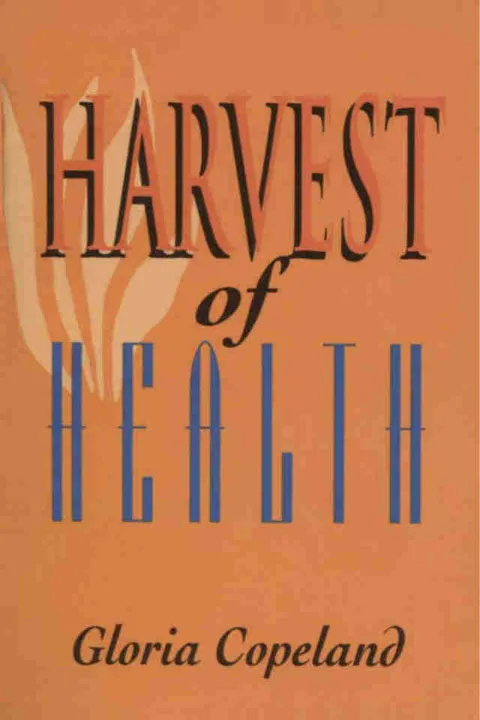
"Harvest of Health" by Gloria Copeland explores the connection between faith and physical health, emphasizing the importance of trusting in God for healing and wellness. Copeland draws on biblical principles and personal experiences to offer practical advice for cultivating a healthy lifestyle. The book encourages readers to trust in God's promises for abundant health and well-being.

Helen Roseveare

Helen Roseveare “If Christ be God and died for me, then no sacrifice can be too great for me to make for him.” That was her mission’s motto. In 1953, Helen sailed for the Congo with hopes of serve Christ as a medical missionary with WEC (Worldwide Evangelization Crusade). For so many years she’d dreamed of being a missionary. As a young girl, she’d hear stories of her aunt and uncle’s experiences on the mission field, and now she was eager to have her own stories to tell. In 1925, Helen Roseveare was born in England. Because education was a high priority for her father, Helen was sent to a prestigious all girls school when she was 12. After that, she went to Cambridge. It was during her time in college that she became a Christian, truly understanding the gospel for the first time. She left her Anglo-Catholic background and became an evangelical. Her focus was to finish her medical degree and prepare herself for the mission field. After she became a doctor, Helen sailed to minister in the Congo. She was highly intelligent and efficient, but her role as a woman created struggles with her fellow missionaries and nationals. In that time period, single missionaries were seen as second-class citizens of the mission station. In the Congo, the medical needs were overwhelming. She couldn’t just stand by and watch all the suffering around her. She was determined to make a difference. She dreamed of establishing a training center where nurses would be taught the Bible and basic medicine and then sent back to their villages to handle routine cases, teach preventive medicine, and serve as lay evangelists. She didn’t have approval from her colleagues, who believed that medical training for nationals was not a valid use of time, evangelism and discipleship were more important. Despite the conflict with them, after only two years after arriving in the Congo, she had build a combination hospital/ training center in Ibambi, and her first four students had passed their government medical exams. Her colleagues weren’t as excited about her progress as she was. They felt that she was wasting time, so they decided that she would better serve the Congo by relocating in Nebobongo, living in an old leprosy camp that had become overgrown by the jungle. Helen argued that she must stay and continue the nursing training in Ibambi, but they insisted that she move. It was a major setback, but she went. Starting from scratch again, she built another hospital there and continued training African nurses. Still, she was strong-willed and seemed to be a threat to many of her male colleagues. In 1957, they decided to relocate John Harris, a young British doctor, and his wife to Nebobongo to make him Helen’s superior. Dr. Harris even took charge of leading the Bible class that she’d taught. She was devastated. She’d been her own boss for too long, and although she tried to let go of control, she just couldn’t. Everything that had been hers was now his. This resulted in tension between them, of course. Her independence was her greatest strength, but also a definite weakness. She did not know how to submit to imperfect leadership. In 1958, after over a year of struggling with who was in control in Nebobongo, Helen left for England for a furlough. She was disillusioned with missionary work and felt like she might not ever go back to the Congo. Back in England, she really struggled with why she had all these issues between herself and the male leaders in the Congo. She began to convince herself that her problem was her singleness. What she needed was a doctor-husband to work with her and be on her side during the power struggles! She didn’t think that was too much to ask. So, she asked God for a husband, and told Him that she wouldn’t go back as a missionary until she was married. She met a young doctor and decided he would be the one. (She wasn’t very patient in waiting on the Lord’s timing.) She bought new clothes, permed her hair, and resigned from the mission, all to try and win his love. He did care for her, but not enough to marry her. Helen was heartbroken, mostly because she’d wasted so much time and money trying to force her plan into reality - without God. Still single, Helen returned to the mission and left for Congo in 1960. It was a tense time for that country. They had been seeking independence for a long time, so a huge civil war was on the verge of beginning. Many missionaries left because the risk was so high. Helen had no plans of going home. She believed that God had truly called her back to Congo and that He would protect her if she stayed. She was joined by a few other single women, who made it difficult for the men, they didn’t want to look like sissies. She was given charge of the medical base in Nebobongo because John Harris and his wife left on furlough. She had so many opportunities to minister in the midst of the turmoil. She was sure that God had her right where He wanted her to be. She continued to learn to see God in the details of her life, to trust him more fully. She had been coming closer to total trust in God all of her life, between bouts of depression, sometimes feeling that she was not really a Christian because she was capable of spells of anger and bitterness and other sins. “I was unable to reach the standard I myself had set, let alone God’s. Try as I would, I met only frustration in this longing to achieve, to be worthy.” She came to recognize that hatred of sin is a gift of the Holy Spirit. Rebels were gaining strength, and there were reports of missionaries being attacked. Helen endured a burglary and an attempted poisoning, but always in her mind the situation was improving. She felt that she had to stay, because there was so much need and so many people depending on her. On August 15, the rebels took control of Nebobongo, and Helen was in captivity for the next 5 months. On the night of October 29, Helen was overpowered by rebel soldiers in her little bungalow. She tried to escape, but they found her and dragged her to her feet, struck her over the head and shoulders, flung her to the ground, kicked her, struck her over and over again. She was pushed back into her house and raped brutally without mercy. Helen suffered more sexual brutality before her release. God used this in her life to minister to other single women missionaries who feared that they’d lost their purity due to a rape and thus their salvation. Helen knew that her relationship with God had not been damaged. She had not failed God in any way because of the rapes. Finally, on December 31, 1964 she was rescued. Helen had a sense of joy and relief, but also a sense of deep sorrow as she heard of many of her friends’ martyrdom. Helen returned to Africa for the third time in March of 1966. She served for 7 more years, but it was full of turmoil and disappointment. The Congo had changed since the war. There was a new spirit of independence and nationalism. They no longer respected the doctor who’d sacrificed so much for them. Helen left Africa in 1973 with a broken spirit. Her 20 years of service in Africa ended in defeat and discouragement. When she got home, she went through a very, very lonely period in her life. She turned to God. He was all she had. Instead of bitterness there was a new spirit of humility and a new appreciation for what Jesus had done for her on the cross. God was molding her for her next ministry. She became an internationally acclaimed spokes-woman for Christian missions. Her candid honesty was refreshing in a profession known as one of super sainthood. Helen mobilized people by showing them that God used imperfect people with real struggles to be his ambassadors to the unreached world. By Rebecca HIckman SOURCES Roseveare, Helen: Give Me This Mountain (1966) Roseveare, Helen: He Gave Us a Valley (1976) Tucker, Ruth A.: From Jerusalem to Irian Jaya

Trade Self-Help for God-Help

They set out to get help from a higher power. The lion needed courage. The tinman needed a heart. The scarecrow needed a brain. The little girl longed to return home. But at journey’s end, they came to the unfortunate discovery: The Wizard of Oz was no wizard at all. He relied on screens and microphones. His wand was broken. He had only pins and needles to give. Yet, all was not lost. Our four heroes realized that what each had sought, each already possessed. Along the way, Tinman loved, Lion risked, Scarecrow thought. Dorothy carried the ability to travel home wherever she went. They discovered that they did not need an all-powerful Oz behind the curtain. What each truly needed he already held within. Whether or not Frank Baum meant it or not, Wizard of Oz is an apt parable of the generations-old self-help movement in our increasingly post-Christian West. The Oz, many say, has nothing to offer. God, the wisdom of modern man finally confirms, is a fraud. Yet, some rush to tell us, all is not lost. After sobering from the opiate of the masses, they tell us to awaken to reality: what we’ve needed all along already resides within each of us. Truth in Self-Help Some professing Christians are promoting self-help resources at alarming rates. As can happen when biting into that pizza roll too quickly, we can lose the ability to taste differences. We chew pop-psychology’s ideology of self-reliance and discern no real difference from Christianity, which builds upon God-dependence. We swallow both indiscriminately and wonder why our stomachs hurt. Before we look at the differences between the ideologies, first a question: Can we learn anything from the self-help movement? Why does this placebo help some? Many will line up to testify of its cure-all power. What’s in the snake oil? At least one true ingredient: self-help acknowledges our personal agency. Self-help assumes that you can indeed do something to help yourself. It too rejects the deceit that we drift helplessly downstream from our past or current circumstances. We are not leaves floating down from trees. The me of yesterday doesn’t have to be the me of tomorrow. We can learn discipline. We can “take control” of various aspects of our lives, escape addictions, and overcome fears. At least self-help affirms what God always has: we can, even now, reap a different harvest by sowing a different crop. It properly highlights the truth that we can — and must — own some measures of responsibility for our lives. We each can choose, as Luther once said, many things under heaven. And each decision will have consequences. Self-help advice rescues some from the fatalistic, paternalistic, dehumanizing worldviews (so common today) that deny a crucial component of God’s world: “So God created man in his own image, in the image of God he created him; male and female he created them” (Genesis 1:27). Diagnosing the Difference The ineptitude of the self-help philosophy becomes apparent when we contrast it with God-help. Note three differences, among others. 1. On Whom Do You Rely? Self-help gurus have little to sell us other than ourselves. In stopping at mere personal agency, they send us to build a new life while denying us straw for our bricks. Sure, they interject themselves to get us going (for a small fee, of course), but the real power resides within. The god they point to stoops down to fit into every mirror we see. Returning to our childhood optimism, “I think I can, I think I can,” this endless search to find your true potential borrows from the oldest heresy: “And you will be like God” (Genesis 3:5). Claiming to be wise, these gurus exchange the glory of the immortal God for images of successful man. Believe in yourself. Clutch the scepter of your life. You can do all things through you who gives you strength. As if God, looking down from heaven without any mercy, thundered, “Just figure it out!” Promoters of self-help have not been tutored in that school that Paul had: We were so utterly burdened beyond our strength that we despaired of life itself. Indeed, we felt that we had received the sentence of death. But that was to make us rely not on ourselves but on God who raises the dead. (2 Corinthians 1:8–9) The illusions of self-help shatter when suffering weighs so heavily on our backs that we despair of life itself. Pain reminds us that we are still but creatures — for the gods do not bleed. But all affliction is a choice friend when it teaches us to sing, “I lift up my eyes to the hills. From where does my help come? My help comes from the Lord, who made heaven and earth” (Psalm 121:1–2). The shoulders of him alone, who carried the cross and willingly bled for the treason of our self-reliance, can bear all of our further needs. 2. What Help Do You Get? When we look within for help, we receive only temporal solutions to what amounts to eternal problems. That alcohol addiction is not first and foremost a sin because it destroys one’s family and poisons oneself. All transgression, as we shall all soon discover, is against God: “Against you, you only, have I sinned and done what is evil in your sight” (Psalm 51:4). God has the first grievance, though the shrapnel certainly strikes others as well. Self-dependence may subdue some of the symptoms of sin — you stop drinking, overeating, or committing adultery — but a life of sin against God remains unaddressed and ultimately unaltered. Whereas self-help can tidy a sinking ship, “godliness is of value in every way, as it holds promise for the present life and also for the life to come” (1 Timothy 4:8). Grace trains the Christian to say “No!” to theft, anger-issues, pornography, pride, laziness, and say, “Yes!” to self-control, uprightness, and godly lives in the present (Titus 2:11–12) — all while steering us home and preparing us for heaven, not hell. 3. Who Gets the Glory? When we trust in self — and actually succeed— we get the glory. I am smarter, more disciplined, better. When we become self-made men and women, and not God-made men and women, we run from disordered lives into the arms of pride. Having escaped the cobra, we encounter the bear. And this tempts the self-reliant to look down on others who aren’t successful, and, whether they ever succumb to temptation or not, they never bother looking up to God. But the man who makes God his trust has a very different victory song: Not in my bow do I trust, nor can my sword save me. But you have saved us from our foes and have put to shame those who hate us. In God we have boasted continually, and we will give thanks to your name forever. (Psalm 44:6–8) The Christian, awake to the reality that he has no good apart from his God (Psalm 16:2), speaks repeatedly, “Not to me, O God, not to me, but to your name give glory” (Psalm 115:1). Christ is his boast. Christ is his refrain. He wants every triumph to add another jewel to the crown of his King. Make the Trade Self-help gives me my own small, fleeting glory. God-help offers us deep, everlasting joy, secure in his unfading glory. Self-help offers a temporal good (at best). God-help gives eternal good with the temporal thrown in. Self-help relies on my discipline, my resolve, and my effort. God-help builds upon a child’s cry to his father, leaning on one’s eternal family, and trusting God’s unfailing promises. God-help sustains me with daily bread from heaven. Self-help cannibalizes me, for it can find no other food. God-help ends in salvation, glory, and the conquering of the world, the flesh, and the devil. Self-help addresses the coughs and sneezes of this life but leaves me, at the end of it, without hope, without forgiveness, and without God in this world. So, trade self-help for God-help. God does not help those who, unmindful of him, help themselves. He works for those who wait for him (Isaiah 64:4). In the end, self-help is sheer folly. It sends us to work on Babel, rent a room in Gomorrah, eat grass with the mad king, and speak over ourselves, “Take up your bed and rise.” The placebo works only for so long, but all shall fall eventually — and “great shall be the fall.” But those who trust in Christ have Almighty God working in them, unsearchable promises to guide them, a heaven to journey to, and a Savior to glorify along the way. Article by Greg Morse

Feedback
Suggestionsuggestion box
x