

Others like the power of simple prayer Features >>
The Power Of A Praying Nation
The Power Of A Praying Life

The Essentials Of Prayer

The Power Of Faith-Filled Words

The Power Of Persistent Prayer
The Hidden Power Of Prayer And Fasting
The Purpose And Power Of Praise And Worship

The Fire Of Delayed Answers

The Power Of Praise And Worship

The Life Of Prayer
About the Book
"The Power of Simple Prayer" by Joyce Meyer is a guide to the transformative impact of prayer in one's life. Meyer emphasizes the importance of building a strong prayer life and offers practical tips on how to cultivate a deeper connection with God through simple, heartfelt prayers. She discusses the benefits of prayer, how to overcome common obstacles to prayer, and how to make prayer a natural part of your daily routine. Meyer's insights and personal anecdotes demonstrate the power of prayer to bring peace, strength, and guidance in challenging times.
John and Betty Stam
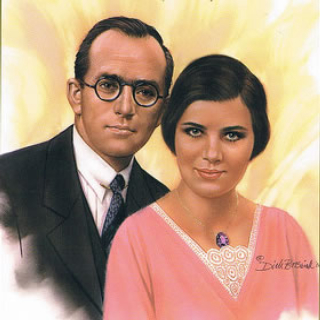 The year 1934. Americans John and Betty Stam were serving as missionaries in China. One morning Betty was bathing her three-month-old daughter Helen Priscilla Stam when Tsingteh's city magistrate appeared. Communist forces were near, he warned, and urged the Stams to flee.
So John Stam went out to investigate the situation for himself. He received conflicting reports. Taking no chances, he arranged for Betty and the baby to be escorted away to safety if need be. But before the Stams could make their break, the Communists were inside the city. By little-known paths, they had streamed over the mountains behind government troops. Now gun shots sounded in the streets as looting began. The enemy beat on the Stams' own gate.
A faithful cook and maid at the mission station had stayed behind. The Stams knelt with them in prayer. But the invaders were pounding at the door. John opened it and spoke courteously to the four leaders who entered, asking them if they were hungry. Betty brought them tea and cakes. The courtesy meant nothing. They demanded all the money the Stams had, and John handed it over. As the men bound him, he pleaded for the safety of his wife and child. The Communists left Betty and Helen behind as they led John off to their headquarters.
Before long, they reappeared, demanding mother and child. The maid and cook pleaded to be allowed to accompany Betty.
"No," barked the captors, and threatened to shoot.
"It is better for you to stay here," Betty whispered. "If anything happens to us, look after the baby."
[When we consecrate ourselves to God, we think we are making a great sacrifice, and doing lots for Him, when really we are only letting go some little, bitsie trinkets we have been grabbing, and when our hands are empty, He fills them full of His treasures. --Betty Stam]
Betty was led to her husband's side. Little Helen needed some things and John was allowed to return home under guard to fetch them. But everything had been stolen. That night John was allowed to write a letter to mission authorities. "My wife, baby and myself are today in the hands of the Communists in the city of Tsingteh. Their demand is twenty thousand dollars for our release. . . . We were too late. The Lord bless and guide you. As for us, may God be glorified, whether by life or by death."
Prisoners in the local jail were released to make room for the Stams. Frightened by rifle fire, the baby cried out. One of the Reds said, "Let's kill the baby. It is in our way." A bystander asked, "Why kill her? What harm has she done?"
"Are you a Christian?" shouted one of the guards.
The man said he was not; he was one of the prisoners just released.
"Will you die for this foreign baby?" they asked. As Betty hugged Helen to her chest, the man was hacked to pieces before her eyes.
Terror in the Streets
The next morning their captors led the Stams toward Miaosheo, twelve miles distant. John carried little Helen, but Betty, who was not physically strong, owing to a youthful bout with inflammatory rheumatitis was allowed to ride a horse part of the way. Terror reigned in the streets of Miaosheo. Under guard, the foreign family was hustled into the postmaster's shop.
"Where are you going?" asked the postmaster, who recognized them from their previous visits to his town. "We do not know where they are going, but we are going to heaven," answered John. He left a letter with the postmaster. "I tried to persuade them to let my wife and baby go back from Tsingteh with a letter to you, but they would not let her. . . ."
That night the three were held in the house of a wealthy man who had fled. They were guarded by soldiers. John was tied to a post all that cold night, but Betty was allowed enough freedom to tend the baby. As it turned out, she did more than that.
Execution
The next morning the young couple were led through town without the baby. Their hands were tightly bound, and they were stripped of their outer garments as if they were common criminals. John walked barefoot. He had given his socks to Betty. The soldiers jeered and called the town’s folk to come see the execution. The terrified people obeyed.
On the way to the execution, a medicine-seller, considered a lukewarm Christian at best, stepped from the crowd and pleaded for the lives of the two foreigners. The Reds angrily ordered him back. The man would not be stilled. His house was searched, a Bible and hymnbook found, and he, too was dragged away to die as a hated Christian.
John pleaded for the man’s life. The Red leader sharply ordered him to kneel. As John was speaking softly, the Red leader swung his sword through the missionary’s throat so that his head was severed from his body. Betty did not scream. She quivered and fell bound beside her husband’s body. As she knelt there, the same sword ended her life with a single blow.
Betty
Betty Scott was born in the United States but reared in China as the daughter of missionaries. She came to the United States and attended Wilson College in Pennsylvania. Betty prepared to follow in her parents’ footsteps and work in China or wherever else the Lord directed her.
But China it proved to be. At a prayer meeting for China, she met John Stam and a friendship developed that ripened into love. Painfully they recognized that marriage was not yet possible. “The China Inland Mission has appealed for men, single men, to work in sections where it would be impossible to take a woman until more settled work has commenced,” wrote John. He committed the matter to the Lord, whose work, he felt, must come before any human affection. At any rate, Betty would be leaving for China before him, to work in an entirely different region, and so they must be separated anyhow. As a matter of fact, John had not yet even been accepted by the China Inland Mission whereas Betty had. They parted after a long tender day, sharing their faith, picnicking, talking, and praying.
Betty sailed while John continued his studies. On July 1, 1932, John, too, was accepted for service in China. Now at least he could head toward the same continent as Betty. He sailed for Shanghai.
Meanwhile, Betty found her plans thwarted. A senior missionary had been captured by the Communists in the region where she was to have worked. The mission directors decided to keep her in a temporary station, and later ill-health brought her to Shanghai. Thus without any choice on her part, she was in Shanghai when John landed in China. Immediately they became engaged and a year later were married, long before they expected it. In October, 1934 Helen Priscilla was born to them. What would become of her now that her parents John and Betty were dead?
In the Hills
For two days, local Christians huddled in hiding in the hills around Miaosheo. Among them was a Chinese evangelist named Mr. Lo. Through informants, he learned that the Communists had captured two foreigners. At first he did not realize that these were John and Betty Stam, with whom he had worked, but as he received more details, he put two and two together. As soon as government troops entered the valley and it was safe to venture forth, Mr. Lo hurried to town. His questions met with silence. Everyone was fearful that spies might report anyone who said too much.
An old woman whispered to Pastor Lo that there was a baby left behind. She nodded in the direction of the house where John and Betty had been chained their last night on earth. Pastor Lo hurried to the site and found room after room trashed by the bandits. Then he heard a muffled cry. Tucked by her mother in a little sleeping bag, Helen was warm and alive, although hungry after her two day fast.
The kindly pastor took the child in his arms and carried her to his wife. With the help of a local Christian family, he wrapped the bodies that still lay upon the hillside and placed them into coffins. To the crowd that gathered he explained that the missionaries had only come to tell them how they might find forgiveness of sin in Christ. Leaving others to bury the dead, he hurried home. Somehow Helen had to be gotten to safety.
Pastor Lo's own son, a boy of four, was desperately ill -- semi-conscious after days of exposure. Pastor Lo had to find a way to carry the children a hundred miles through mountains infested by bandits and Communists. Brave men were found willing to help bear the children to safety, but there was no money to pay them for their efforts. Lo had been robbed of everything he had.
From Beyond the Grave
But from beyond the grave, Betty provided. Tucked in Helen's sleeping bag were a change of clothes and some diapers. Pinned between these articles of clothing were two five dollar bills. It made the difference.
Placing the children in rice baskets slung from the two ends of a bamboo pole, the group departed quietly, taking turns carrying the precious cargo over their shoulders. Mrs. Lo was able to find Chinese mothers along the way to nurse Helen. On foot, they came safely through their perils. Lo's own boy recovered consciousness suddenly and sat up, singing a hymn.
Eight days after the Stams fell into Communist hands, another missionary in a nearby city heard a rap at his door. He opened it and a Chinese woman, stained with travel, entered the house, bearing a bundle in her arms. "This is all we have left," she said brokenly.
The missionary took the bundle and turned back the blanket to uncover the sleeping face of Helen Priscilla Stam. Many kind hands had labored to preserve the infant girl, but none kinder than Betty who had spared no effort for her baby even as she herself faced degradation and death.
Kathleen White has written an excellent and very readable biography John and Betty Stam, available from Bethany House Publishers (1988). She reports that Betty's alma mater, Wilson College in Pennsylvania, took over baby Helen's support and covered the costs of her college education. She added: "Helen is living in this country (USA) with her husband and family but does not wish her identity and whereabouts to be made known."
Resources:
Huizenga, Lee S. John and Betty Stam; Martyrs. Zondervan, 1935.
Pollock, John. Victims of the Long March and Other Stories. Waco, Texas.: Word Publishing, 1970.
Taylor, Mrs. Howard. The Triumph of John and Betty Stam. China Inland Mission, 1935.
The year 1934. Americans John and Betty Stam were serving as missionaries in China. One morning Betty was bathing her three-month-old daughter Helen Priscilla Stam when Tsingteh's city magistrate appeared. Communist forces were near, he warned, and urged the Stams to flee.
So John Stam went out to investigate the situation for himself. He received conflicting reports. Taking no chances, he arranged for Betty and the baby to be escorted away to safety if need be. But before the Stams could make their break, the Communists were inside the city. By little-known paths, they had streamed over the mountains behind government troops. Now gun shots sounded in the streets as looting began. The enemy beat on the Stams' own gate.
A faithful cook and maid at the mission station had stayed behind. The Stams knelt with them in prayer. But the invaders were pounding at the door. John opened it and spoke courteously to the four leaders who entered, asking them if they were hungry. Betty brought them tea and cakes. The courtesy meant nothing. They demanded all the money the Stams had, and John handed it over. As the men bound him, he pleaded for the safety of his wife and child. The Communists left Betty and Helen behind as they led John off to their headquarters.
Before long, they reappeared, demanding mother and child. The maid and cook pleaded to be allowed to accompany Betty.
"No," barked the captors, and threatened to shoot.
"It is better for you to stay here," Betty whispered. "If anything happens to us, look after the baby."
[When we consecrate ourselves to God, we think we are making a great sacrifice, and doing lots for Him, when really we are only letting go some little, bitsie trinkets we have been grabbing, and when our hands are empty, He fills them full of His treasures. --Betty Stam]
Betty was led to her husband's side. Little Helen needed some things and John was allowed to return home under guard to fetch them. But everything had been stolen. That night John was allowed to write a letter to mission authorities. "My wife, baby and myself are today in the hands of the Communists in the city of Tsingteh. Their demand is twenty thousand dollars for our release. . . . We were too late. The Lord bless and guide you. As for us, may God be glorified, whether by life or by death."
Prisoners in the local jail were released to make room for the Stams. Frightened by rifle fire, the baby cried out. One of the Reds said, "Let's kill the baby. It is in our way." A bystander asked, "Why kill her? What harm has she done?"
"Are you a Christian?" shouted one of the guards.
The man said he was not; he was one of the prisoners just released.
"Will you die for this foreign baby?" they asked. As Betty hugged Helen to her chest, the man was hacked to pieces before her eyes.
Terror in the Streets
The next morning their captors led the Stams toward Miaosheo, twelve miles distant. John carried little Helen, but Betty, who was not physically strong, owing to a youthful bout with inflammatory rheumatitis was allowed to ride a horse part of the way. Terror reigned in the streets of Miaosheo. Under guard, the foreign family was hustled into the postmaster's shop.
"Where are you going?" asked the postmaster, who recognized them from their previous visits to his town. "We do not know where they are going, but we are going to heaven," answered John. He left a letter with the postmaster. "I tried to persuade them to let my wife and baby go back from Tsingteh with a letter to you, but they would not let her. . . ."
That night the three were held in the house of a wealthy man who had fled. They were guarded by soldiers. John was tied to a post all that cold night, but Betty was allowed enough freedom to tend the baby. As it turned out, she did more than that.
Execution
The next morning the young couple were led through town without the baby. Their hands were tightly bound, and they were stripped of their outer garments as if they were common criminals. John walked barefoot. He had given his socks to Betty. The soldiers jeered and called the town’s folk to come see the execution. The terrified people obeyed.
On the way to the execution, a medicine-seller, considered a lukewarm Christian at best, stepped from the crowd and pleaded for the lives of the two foreigners. The Reds angrily ordered him back. The man would not be stilled. His house was searched, a Bible and hymnbook found, and he, too was dragged away to die as a hated Christian.
John pleaded for the man’s life. The Red leader sharply ordered him to kneel. As John was speaking softly, the Red leader swung his sword through the missionary’s throat so that his head was severed from his body. Betty did not scream. She quivered and fell bound beside her husband’s body. As she knelt there, the same sword ended her life with a single blow.
Betty
Betty Scott was born in the United States but reared in China as the daughter of missionaries. She came to the United States and attended Wilson College in Pennsylvania. Betty prepared to follow in her parents’ footsteps and work in China or wherever else the Lord directed her.
But China it proved to be. At a prayer meeting for China, she met John Stam and a friendship developed that ripened into love. Painfully they recognized that marriage was not yet possible. “The China Inland Mission has appealed for men, single men, to work in sections where it would be impossible to take a woman until more settled work has commenced,” wrote John. He committed the matter to the Lord, whose work, he felt, must come before any human affection. At any rate, Betty would be leaving for China before him, to work in an entirely different region, and so they must be separated anyhow. As a matter of fact, John had not yet even been accepted by the China Inland Mission whereas Betty had. They parted after a long tender day, sharing their faith, picnicking, talking, and praying.
Betty sailed while John continued his studies. On July 1, 1932, John, too, was accepted for service in China. Now at least he could head toward the same continent as Betty. He sailed for Shanghai.
Meanwhile, Betty found her plans thwarted. A senior missionary had been captured by the Communists in the region where she was to have worked. The mission directors decided to keep her in a temporary station, and later ill-health brought her to Shanghai. Thus without any choice on her part, she was in Shanghai when John landed in China. Immediately they became engaged and a year later were married, long before they expected it. In October, 1934 Helen Priscilla was born to them. What would become of her now that her parents John and Betty were dead?
In the Hills
For two days, local Christians huddled in hiding in the hills around Miaosheo. Among them was a Chinese evangelist named Mr. Lo. Through informants, he learned that the Communists had captured two foreigners. At first he did not realize that these were John and Betty Stam, with whom he had worked, but as he received more details, he put two and two together. As soon as government troops entered the valley and it was safe to venture forth, Mr. Lo hurried to town. His questions met with silence. Everyone was fearful that spies might report anyone who said too much.
An old woman whispered to Pastor Lo that there was a baby left behind. She nodded in the direction of the house where John and Betty had been chained their last night on earth. Pastor Lo hurried to the site and found room after room trashed by the bandits. Then he heard a muffled cry. Tucked by her mother in a little sleeping bag, Helen was warm and alive, although hungry after her two day fast.
The kindly pastor took the child in his arms and carried her to his wife. With the help of a local Christian family, he wrapped the bodies that still lay upon the hillside and placed them into coffins. To the crowd that gathered he explained that the missionaries had only come to tell them how they might find forgiveness of sin in Christ. Leaving others to bury the dead, he hurried home. Somehow Helen had to be gotten to safety.
Pastor Lo's own son, a boy of four, was desperately ill -- semi-conscious after days of exposure. Pastor Lo had to find a way to carry the children a hundred miles through mountains infested by bandits and Communists. Brave men were found willing to help bear the children to safety, but there was no money to pay them for their efforts. Lo had been robbed of everything he had.
From Beyond the Grave
But from beyond the grave, Betty provided. Tucked in Helen's sleeping bag were a change of clothes and some diapers. Pinned between these articles of clothing were two five dollar bills. It made the difference.
Placing the children in rice baskets slung from the two ends of a bamboo pole, the group departed quietly, taking turns carrying the precious cargo over their shoulders. Mrs. Lo was able to find Chinese mothers along the way to nurse Helen. On foot, they came safely through their perils. Lo's own boy recovered consciousness suddenly and sat up, singing a hymn.
Eight days after the Stams fell into Communist hands, another missionary in a nearby city heard a rap at his door. He opened it and a Chinese woman, stained with travel, entered the house, bearing a bundle in her arms. "This is all we have left," she said brokenly.
The missionary took the bundle and turned back the blanket to uncover the sleeping face of Helen Priscilla Stam. Many kind hands had labored to preserve the infant girl, but none kinder than Betty who had spared no effort for her baby even as she herself faced degradation and death.
Kathleen White has written an excellent and very readable biography John and Betty Stam, available from Bethany House Publishers (1988). She reports that Betty's alma mater, Wilson College in Pennsylvania, took over baby Helen's support and covered the costs of her college education. She added: "Helen is living in this country (USA) with her husband and family but does not wish her identity and whereabouts to be made known."
Resources:
Huizenga, Lee S. John and Betty Stam; Martyrs. Zondervan, 1935.
Pollock, John. Victims of the Long March and Other Stories. Waco, Texas.: Word Publishing, 1970.
Taylor, Mrs. Howard. The Triumph of John and Betty Stam. China Inland Mission, 1935.
Lord, Let Me Die - Mercy for Those Tired of Living
Over the years, I have talked with several Christians who have told me they wanted to die. They were of different ages and different ethnicities; they had different personalities and different reasons. But they each concluded that death was better for them now than life. It took courage to bring into the open the secret thoughts of death. Many others could not relate. Most of humanity had only run from the dread that gained on them moment by moment. Few had felt the impulse to stop, turn, and welcome the beast as a friend. Now these, again, were Christian men and women. They knew the horror of self-murder. They knew such a crime was not a romantic gesture between teenage lovers, but a heinous sin against the Author of life. When suicidal ruminations sought to guide them to another exit, even amid debilitating and cruel circumstances, they knew to resist Satan’s suggestions. By faith, they would continue, one foot in front of the other, until their all-wise Father brought them home. And a few had prayed for just that. “If you have asked God to take your life, the first thing to realize is that you are not alone.” If you have asked God to take your life, one of the first truths to realize is that you are not alone. God has heard such petitions before. For different reasons, at different times, from different pits, men and women of God have prayed to be taken away. And the prayers we find in Scripture come not just from normal saints like us, but from the ones we would least expect to struggle with this life: leaders and heroes of God’s people. Consider a few men of God, then, whose prayers the Holy Spirit captured to remind us we are not alone and, more importantly, to witness how our kind and gracious God deals with his own at their lowest. Job: The Despairing Father Oh that I might have my request, and that God would fulfill my hope, that it would please God to crush me, that he would let loose his hand and cut me off! (Job 6:8–9) I wager that anguished prayers for death are the most common. They come in the winter of life, when even songbirds are too cold to sing. Job, a righteous man without rival on earth (Job 1:8), now sits in the ashes, boils rising on his skin, surrounded by accusing friends, and plagued with a heart too heavy to carry. His shards of a prayer rise from the ruins of a former life: all his wealth gone, many of his servants slain, and what was more, all ten of his children buried beneath a house, collapsed by a great wind. Job, staggering with grief, curses the day of his birth: “Let the day perish on which I was born, and the night that said, ‘A man is conceived’” (Job 3:3). He muses aloud, “Why is light given to him who is in misery, and life to the bitter in soul, who long for death, but it comes not, and dig for it more than for hidden treasures, who rejoice exceedingly and are glad when they find the grave?” (Job 3:20–22). Death now glitters as a treasure, wafts as sweetness. He sees no reason to wait. Perhaps you, like Job, know great loss. Perhaps you sit in the rubble, scorned by former days and missing loves. You can’t bear any more; you gaze ahead into an endless night. Hope has turned its back. Consider afresh that God has not. “Continue believing. Continue trusting. This dark night is preparing for you an eternal weight of glory.” The Lord denied Job’s request. He had more compassion to give, more mercy, more communion, more repentance, even more children waiting on the other side. Job couldn’t yet imagine how his life might turn out to glorify God’s grace, as James summarizes: “You have heard of the steadfastness of Job, and you have seen the purpose of the Lord, how the Lord is compassionate and merciful” (James 5:11). Some sufferers may not find comfort in the fairy-tale ending of Job, but his renewed fortunes foreshadow not even half of yours in Christ. Continue believing. Continue trusting. This dark night is preparing for you an eternal weight of glory (2 Corinthians 4:17). Scars will do more than heal there. Moses: The Weary Leader If you will treat me like this, kill me at once. (Numbers 11:15) This is the second prayer for death we overhear from Moses on his long journey with the people. The first comes in his intercession for them following the golden-calf rebellion (Exodus 32:32). Here, he prays for death as an overburdened, fed-up leader. The rescued people of Israel, with sores still mending and Egypt still within view, complain “about their misfortunes.” Oh that we had meat to eat! We remember the fish we ate in Egypt that cost nothing, the cucumbers, the melons, the leeks, the onions, and the garlic. But now our strength is dried up, and there is nothing at all but this manna to look at. (Numbers 11:4–6) Ingratitude has warped their minds. Their memories suggest that slavery included a seafood buffet; meanwhile, the free miracle bread had grown bitter and bland. Did Moses really expect them to settle for second chef? The ingrates fix their eyes on Moses, mutinously mumbling about how much they missed Egypt. Moses looks up to God, and exclaims, I am not able to carry all this people alone; the burden is too heavy for me. If you will treat me like this, kill me at once, if I find favor in your sight, that I may not see my wretchedness. (Numbers 11:14–15) Notice again God’s gracious answer. He does not kill Moses, but instead provides seventy elders to aid him in his work, giving these men some of his Spirit. And for added measure, God promises to feed Israel meat — so much meat that it will come out of their nostrils and they will begin to loathe it (Numbers 11:20). If you weary under burdens too heavy for your feeble arms to carry, and could wish to die at times, see the God of Moses. Lean into him in prayer. Your compassionate Father will provide help to alleviate your load and hold up your arms to give victory. Jonah: The Angry Messenger Please take my life from me, for it is better for me to die than to live. (Jonah 4:3) The merciless prophet Jonah baffles many when they read the book bearing his name. He shows a calloused determination that Nineveh, capital city of Israel’s enemy the Assyrians, not receive mercy from God but rather destruction. He refuses to be an instrument of their salvation. God had renewed him after sailing away from his calling. God had rescued him from drowning in the sea. God had given him refreshing shade as he waited outside the city to watch it burn. Yet Jonah still would not put away his hatred. When he realized no doom would descend, It displeased Jonah exceedingly, and he was angry. And he prayed to the Lord and said, “O Lord, is not this what I said when I was yet in my country? That is why I made haste to flee to Tarshish; for I knew that you are a gracious God and merciful, slow to anger and abounding in steadfast love, and relenting from disaster. Therefore now, O Lord, please take my life from me, for it is better for me to die than to live.” (Jonah 4:1–3) Few in the West today face the temptation to want a whole people destroyed. The Assyrians were a brutal people — brutal to Jonah’s people. But perhaps we often murder in our hearts those who have wronged us. While they live, our life rots. To this, the Lord responds, again, patiently and compassionately, giving us shade while we scorch, asking us as a long-suffering Father, “Do you do well to be angry?” (Jonah 4:4). Most of the time, we do not do well. This prayer for death is foolish. Repentance is required. Go to your Father for help to extend that impossible forgiveness that you most freely received from him, that you might be able to pray, “Forgive us our debts, as we also have forgiven our debtors” (Matthew 6:12). Elijah: The Fearful Prophet [Elijah] was afraid, and he arose and ran for his life. . . . And he asked that he might die, saying, “It is enough; now, O Lord, take away my life, for I am no better than my fathers.” (1 Kings 19:3–4) We can attest truly that here stands one with a like nature to ours (James 5:17). Notice that this moment follows Elijah’s finest hour. The prophet of God won the showdown with Ahab and the 450 prophets of Baal. God rains down fire in front of all Israel to show that a true prophet walks among them. Or runs among them. After Jezebel hears that he had the 450 prophets of Baal killed, she vows to add Elijah to that number. “Then he was afraid, and he arose and ran for his life” (1 Kings 19:3). The hunted prophet hides in the wilderness, sits under a tree, tries to sleep, and prays not to wake: “O Lord, take my life.” Do you pray for death because you fear those living? Jesus tells us, “I tell you, my friends, do not fear those who kill the body, and after that have nothing more that they can do” (Luke 12:4). Beyond this, the story of Elijah invites us to survey our last year or our last week or our yesterday for reasons, often conspicuous, to continue entrusting ourselves to a faithful Creator while doing good. God, again, deals compassionately with Elijah. He calls him to rise and eat, provides a fresh meal for him in the wilderness, and gives provision for the journey ahead (1 Kings 19:5–8). Notice also the smiling kindness of God to Elijah in that the prophet, though threatened with death and praying for death, never dies (2 Kings 2:11–12). Paul: The Eager Apostle My desire is to depart and be with Christ, for that is far better. (Philippians 1:23) God’s predominant response to those men of God who prayed for death is fatherly compassion. Whether you be Jonah-like and tempted to despise God’s mercy toward others, or you cry out under your burdens like Moses, or run for your life like Elijah, or yearn for relief like Job, consider your gracious God. He meets Job with himself and a new beginning, Moses with seventy men to help, Jonah with a plant for shade, Elijah with food and drink for the journey ahead. And God himself, after all, through the finished work of his Son and the recreating work of his Spirit, turns death into an eager expectation for us, does he not? That enemy death must ferry us into that world for which we were remade. The apostle Paul, though not praying for death, shows us a redeemed perspective on our last foe. To me to live is Christ, and to die is gain. If I am to live in the flesh, that means fruitful labor for me. Yet which I shall choose I cannot tell. I am hard pressed between the two. My desire is to depart and be with Christ, for that is far better. (Philippians 1:21–23) We too can turn, face the monster in God’s perfect timing, and embrace it with a peace the world does not know. We too have a healthy longing to depart from this earth and be with Christ. We too have the Spirit, who inwardly groans as we await the consummation of our hope (Romans 8:23). We too pray, “Maranatha!” and long for this world’s last night because we long for this world’s new beginning. We do not long to die for death’s sake, nor merely to escape our troubles, but we do ache for an unending life with Christ that lies on the other side of sleep, and which we can taste more and more, even now, through his word and Spirit.