
GIP Library icon

LOG IN TO REVIEW
About the Book


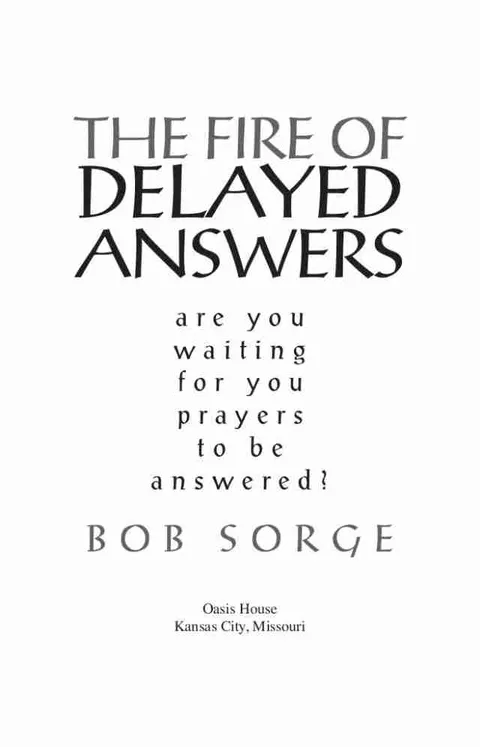
"The Fire of Delayed Answers" by Bob Sorge explores the concept of waiting on God for answers to prayer and the faith and perseverance required during times of waiting. Sorge shares his personal experiences and insights on the purpose and benefits of delayed answers, encouraging readers to trust God's timing and faithfulness.

Lecrae Moore

Lecrae Moore Lecrae Devaughn Moore, or simply Lecrae, is an American Christian rapper, songwriter, and record producer who performs both as a solo artist and as the leader of a group named ‘116 Clique’. He had a troubled beginning in life but all that changed after he found his faith at 19. Heavily influenced by 2Pac Shakur, and motivated by his new found faith, he ventured into a musical career. He and his friend Ben Washer set up their own independent record label ‘Reach Records’ and through it, he released his debut album ‘Real Talk’ in 2004. In the following years, he brought out six more studio albums, three mix tapes, and two EPs as a solo artist and three studio albums, one remix album, and one EP with his group. He has received six ‘GMA Dove Awards’, two Grammys, two ‘BET Awards’ and more. Lecrae is very active in the community and in 2005, he established ‘ReachLife Ministries’, the mission of which was to “bridge the gap between biblical truth and the urban context”. He is a vocal supporter of the preservation of responsibility and believes that fatherhood should be considered as a value to be installed among men in the United States. He has authored several op-ed articles on race relations in the modern-day America which were published by ‘Billboard’. Childhood & Early Life Lecrae Devaughn Moore was born on October 9, 1979, in Houston, Texas, USA. His father had always been absent from his life and later became a drug addict. He was raised by his poor but hardworking mother and grandmother. He attended services with them at their local church but the initial response to religion was indifferent at best. Growing up, he lived in San Diego, Denver, and Dallas. He suffered sexual molestation at the hands of a female baby sitter when he was eight, and according to Lecrae, it left a long-term negative impact on his views on sexuality. In a life full of abuse and violence, hip hop provided him with a refuge. Besides 2Pac who he admired for his rapping skills, he also looked up to his uncle who introduced him to a life of crime. He began doing drugs at 16 and soon started dealing as well. He kept a Bible with him that his grandmother had given him as a good luck charm. The turning point in his life came when he was arrested for drug possession. The officer let him go upon Lecrae’s promising that he would read and follow the Bible. He thus started visiting the church again. Upon an invitation from a friend, he also started attending Bible studies. He was once involved in an accident where he wrecked his car but he himself came out unscathed. This incident further strengthened his belief in Christ and he devoted his life fully to his faith. He returned to his college, the ‘University of North Texas’ and volunteered and sang at a juvenile detention centre. Career Six years after his conversion, Lecrae Moore released the album ‘Real Talk’ (2004) through ‘Reach Records’, a label he had founded with his friend Ben Washer. It reached #29 spot on the ‘Billboard Gospel Album’ chart after being re-released in 2005 by ‘Cross Movement Records’. In 2005, he formed ‘116 Clique’ with other artists who had signed with ‘Reach Records’. The group owes its name to the Bible Verse ‘Romans 1:16’. They debuted with ‘The Compilation Album’ in the same year. They have since released three more albums, ‘The Compilation Album: Chopped & Screwed’ (remix, 2006), ‘13 Letters’ (2007), and ‘Man Up’ (2011), and one EP, ‘Amped’ (2007). He was nominated for a ‘Stellar Award’ for the ‘Rap/Hip-Hop/Gospel CD of the Year’ for his second solo album ‘After the Music Stops’ (2006). In 2008, he put out his third studio album ‘Rebel’. In his fourth studio album, ‘Rehab’ (2010), Lecrae talks about freedom from inhibiting addictions and habits. Both Lecrae and his album received accolades in the 2010 ‘Rapzilla.com staff picks’, being hailed as the ‘Artist of the Year’ and the ‘Album of the Year’, respectively. His fifth studio album, ‘Rehab: The Overdose’ (2011) was a direct follow-up to ‘Rehab’, both being highly conceptual works. While ‘Rehab’ was about the victory over addiction, ‘Rehab: The Overdose’ focused on attaining "grace, love, peace and hope" in Jesus. He won his first two Doves because of this album, one for the ‘Rap/Hip Hop Album of the Year’ and the other for the ‘Rap/Hip Hop Recorded Song of the Year’ for the track, ‘Hallelujah’. ’Gravity’, released on September 4, 2012, was his sixth studio album and had 15 songs with a total runtime of 57 minutes. It peaked on the ‘Rap Albums’, ‘Christian Albums’, ‘Gospel Albums’, and ‘Independent Albums’ charts. Lecrae released his first mixtape ‘Church Clothes’ on May 10, 2012, through digital download for free. It was followed by ‘Church Clothes 2’ (November 7, 2013), and ‘Church Clothes 3’ (January 15, 2016). He has also released two Extended Plays till date, the EP version of ‘Church Clothes’, and ‘Gravity: The Remix EP’, both released in 2012. He has collaborated with the likes of Trip Lee, Tedashii, Canon, Mali Music, and Ty Dolla Sign. ‘Columbia Records’ signed him in May 2016, in a contract between them and his label. His most recent work, a track named ‘Hammer Time’, which is a collaborative effort with 1k Phew, was released on June 23, 2017. On May 3, 2016, he published his memoir titled ‘Unashamed’ through ‘Broadman & Holman Publishers’. It debuted at #19 spot on the ‘New York Times Best Sellers’ list. Philanthropic Works In 2011, Lecrae, through ‘116 Clique’ and the ‘ReachLife Ministries’, instigated the campaign ‘Man Up’, focused on providing guidance to young urban males on fatherhood and Biblical manhood. In March 2015, ReachLife was deactivated and ‘116 Clique’ shifted its attention to contribute to ‘Peace Preparatory Academy’, a Christian school in Atlanta. In May 2013, he worked alongside several other celebrities on a media initiative named ‘This is Fatherhood’. Jay Z, Barack Obama, Joshua DuBois, Lecrae himself, and others have appeared in the initiative’s promotional public service announcement videos. Major Works In a career marked by successful artistic ventures and awards, Lecrae’s greatest musical achievement is unarguably his seventh and the latest studio album ‘Anomaly’, released on September 9, 2014. It was the first album in history to debut at #1 on both ‘Billboard 200’ and ‘Top Gospel Albums’ charts. It was also certified Gold by the RIAA. Awards & Achievements Lecrae Moore received a Grammy in 2013 for the ‘Best Gospel Album’ for his sixth studio album ‘Gravity’. He won his second Grammy in 2015 for the ‘Best Contemporary Christian Music Performance/Song’ for the track ‘Messengers’ which also featured the Christian pop band ‘For King & Country’. He was named the best gospel artist at the ‘2015 BET Awards’. In 2017, he was the recipient of the ‘BET Best Gospel/ Inspirational Award’ for the song ‘Can’t Stop Me Now (Destination)’. On March 14, 2016, he was conferred with an honorary doctorate from ‘Canada Christian College’. Personal Life & Legacy Lecrae Moore met his wife Darragh at a Bible study when they were both teenagers. They have three children together, two sons and a daughter. The family resides in Atlanta, Georgia. In 2002, he was informed by his then girlfriend that she was pregnant with his child. The couple had an abortion, a decision which he has regretted since. The incident was the subject of the song ‘Good, Bad, Ugly’ from ‘Anomaly’. Trivia Lecrae portrayed the character Dr. Darnall Malmquist in the 2014 independent film ‘Believe Me’.

What Dead Abel Speaks to Us

The story of Cain and Abel in Genesis 4 tells much more about Cain than Abel. In fact, not one word is recorded from living Abel. But the author of Hebrews says that, “through [Abel’s] faith, though he died, he still speaks” (Hebrews 11:4). So what is dead Abel speaking to us? It was dusk. Cain was working late. Not wanting to face his parents, he was trying to disguise his guilt-infused fear with a preoccupation with his crops. Then suddenly the unmistakable voice of the Lᴏʀᴅ sent a shock through his core: “Where is Abel, your brother?” Cain had grown to loathe Abel. It had been building for years. No matter what, Abel always seemed to turn a situation to his advantage. Was there a conflict? Abel the Humble loved to be the first to reconcile. Did anyone need help? Abel the Servant loved to be the first to offer it. Was there an injury? Abel the Compassionate loved to be the first to comfort. Even when Cain showed greater endurance and ingenuity in his work, Abel could rob him of any satisfaction with a virtuoso performance of self-effacing virtue. What Cain found most maddening was Abel the Pious, flaunting his tender conscience and precious devotion to God for the admiration of all. Cain could barely stomach how father and mother gushed over that. With every perceived humiliation, Cain caressed the secret suspicion that Abel only used goodness to show himself superior to Cain. But that morning Cain had suffered a crushing blow. The Lᴏʀᴅ had required each brother to present an offering, the first fruits of their labors. Cain saw in this an opportunity. This time Abel would not upstage him. Cain would prove that he too could excel in devotion. So he made sure that his offering lavishly exceeded the required amount of his best produce. But when the Lᴏʀᴅ reviewed Cain’s extravagant offering, he rejected it. Cain was stunned. Then, injury to insult, the Lᴏʀᴅ accepted Abel’s comparatively simple lamb offering. Humiliated by Abel again! But this time before God! Cain was beside himself. Hatred metastasized into horror. Abel had outshined him for the last time. By late afternoon Abel’s lifeless body lay in a remote field, abandoned in the hope that a beast’s hunger would conceal the fratricide. But the Lᴏʀᴅ’s question left Cain naked and exposed (Hebrews 4:13). He lied with the anger of cornered guilt: “I do not know; am I my brother’s keeper?” What it was, in fact, that he did not know was that his silenced brother had not been quiet. The Lᴏʀᴅ replied, “What have you done? The voice of your brother’s blood is crying to me from the ground” (Genesis 4:9–10). Yes, the blood of dead Abel cried out to God for justice (Genesis 4:10; Hebrews 12:24). But the faith of dead Abel “still speaks” (Hebrews 11:4). So what is he saying to us through his faith? “Without faith it is impossible to please God” One thing we hear is that God only accepts faith-fueled offerings. It’s significant that God doesn’t provide details about either Cain’s or Abel’s offerings, the first ever recorded in the Bible. In the story, I imagined Cain trying to win God’s approval with an impressive looking offering. But it could just have easily been a stingy offering or an exactingly precise offering. The point is that right from the beginning God draws our attention away from what fallen humans think is important, namely how our works can make us look impressive, to what God thinks is important, namely how our works reveal who we trust. All of Scripture teaches us that “the righteous shall live by his faith” (Habakkuk 2:4) because “without faith it is impossible to please” God (Hebrews 11:6). Abel was “commended as righteous” by God because he presented his offering in faith (Hebrews 11:4). Cain’s offering was “evil” (1 John 3:12) because without humble trust in God, even our offerings (hear: any work we do for God) are evil to God — no matter if they appear to everyone else as obedient or impressive. “You will be hated by all for my name’s sake” A second thing we hear from Abel is that the world will hate you if you live by faith in Jesus (who the New Testament reveals is YHWH, the Lᴏʀᴅ in Philippians 2:11). The Apostle John makes this clear: “We should not be like Cain, who was of the evil one and murdered his brother. And why did he murder him? Because his own deeds were evil and his brother’s righteous. Do not be surprised, brothers, that the world hates you” (1 John 3:12–13). Abel was the first to discover that “all who desire to live a godly life in Christ Jesus will be persecuted” (2 Timothy 3:12). To “let [our] light shine before others, so that they may see [our] good works” (Matthew 5:16) will at times expose others’ wickedness and arouse their hatred (John 3:20). Jesus himself said, “you will be hated by all for my name's sake,” “some of you they will put to death” — some even at the hands of “parents and brothers and relatives and friends (Luke 21:16–17). Righteous faith arouses evil hatred. A better word than Abel’s blood In the story, though we’d rather see ourselves as Abel, we are all Cain. We were at one time cursed, “hostile to God” and alienated from him (Romans 8:7; Ephesians 4:18). Abel, the first martyr of faith, is a foreshadowing of our Lord Jesus, whose “blood… speaks a better word than the blood of Abel” (Hebrews 12:24). For though Abel’s innocent blood cried out for justice against sin, Jesus’s innocent blood cried out for mercy for sinners. Abel’s blood exposed Cain in his wretchedness. Jesus’s blood covers our wretchedness and cleanses us from all sin (Romans 7:24; 1 John 1:9). So now as we seek to present our bodies as living sacrifices to God, let us remember that the only thing that makes this acceptable to God, the only thing that makes it a spiritual service of worship, is our childlike faith in Jesus (Romans 12:1; 3:26). And let us soberly remember that the only reward this is likely to earn us from the world is its hatred. Article by Jon Bloom

Feedback
Suggestionsuggestion box
x