
Others like the life of prayer Features >>

The Fire Of Delayed Answers
The Power Of A Praying Woman
The Reality Of Prayer
The Hidden Power Of Prayer And Fasting

The Power Of Simple Prayer
The Power Of A Praying Life
The Prayer Warrior's Way

The Power Of Praise And Worship

The Power Of Persistent Prayer
At The Throne Of Grace- A Book Of Prayers
About the Book
"The Life of Prayer" by A.B. Simpson explores the importance of prayer in the Christian life and provides practical guidance on how to develop a strong prayer life. Simpson emphasizes the power of prayer to bring about spiritual growth, strengthen faith, and deepen our relationship with God. The book offers insights on various aspects of prayer, including persistence, faith, and surrender, and encourages readers to make prayer a central part of their daily walk with God.
Amy Carmichael
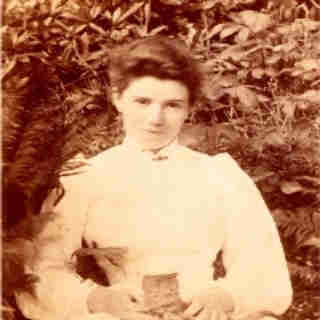 Born in Belfast Ireland, to a devout family of Scottish ancestry, Carmichael was educated at home and in England, where she lived with the familt of Robert Wilson after her father’s death. While never officially adopted, she used the hyphenated name Wilson-Carmichael as late as 1912. Her missionary call came through contacts with the Keswick movement. In 1892 she volunteered to the China Inland Mission but was refused on health grounds. However, in 1893 she sailed for Japan as the first Keswick missionary to join the Church Missionary Society (CMS) work led by Barclay Buxton. After less than two years in Japan and Ceylon, she was back in England before the end of 1894. The next year she volunteered to the Church of England Zenana Missionary Society, and in November 1895 she arrived in South India, never to leave. While still learning the difficult Tamil language, she commenced itinerant evangelism with a band of Indian Christian women, guided by the CMS missionary Thomas Walker. She soon found herself responsible for Indian women converts, and in 1901, she, the Walkers, and their Indian colleagues settled in Dohnavur. During her village itinerations, she had become increasingly aware of the fact that many Indian children were dedicated to the gods by their parents or guardians, became temple children, and lived in moral and spiritual danger. It became her mission to rescue and raise these children, and so the Dohnavur Fellowship came into being (registered 1927). Known at Dohnavur as Amma (Mother), Carmichael was the leader, and the work became well known through her writing. Workers volunteered and financial support was received, though money was never solicited. In 1931 she had a serious fall, and this, with arthritis, kept her an invalid for the rest of her life. She continued to write, and identified leaders, missionary and Indian, to take her place. The Dohnavur Fellowship still continues today.
Jocelyn Murray, “Carmichael, Amy Beatrice,” in Biographical Dictionary of Christian Missions, ed. Gerald H. Anderson (New York: Macmillan Reference USA, 1998), 116.
This article is reprinted from Biographical Dictionary of Christian Missions, Macmillan Reference USA, copyright © 1998 Gerald H. Anderson, by permission of Macmillan Reference USA, New York, NY. All rights reserved.
“Ammai” of orphans and holiness author
Amy Carmichael was born in Ireland in 1867, the oldest of seven children. As a teen, she attended a Wesleyan Methodist girls boarding school, until her father died when she was 18. Carmichael twice attended Keswick Conventions and experienced a holiness conversion which led her to work among the poor in Belfast. Through the Keswick Conventions, Carmichael met Robert Wilson. He developed a close relationship with the young woman, and invited her to live with his family. Carmichael soon felt a call to mission work and applied to the China Inland Mission as Amy Carmichael-Wilson. Although she did not go to China due to health reasons, Carmichael did go to Japan for a brief period of time. There she dressed in kimonos and began to learn Japanese. Her letters home from Japan became the basis for her first book, From Sunrise Land. Carmichael left Japan due to health reasons, eventually returning to England. She soon accepted a position with the Church of England’s Zenana Missionary Society, serving in India. From 1895 to 1925, her work with orphans in Tinnevelly (now Tirunelveli) was supported by the Church of England. After that time, Carmichael continued her work in the faith mission style, establishing an orphanage in Dohnavur. The orphanage first cared for girls who had been temple girls, who would eventually become temple prostitutes. Later the orphanage accepted boys as well.
Carmichael never returned to England after arriving in India. She wrote prolifically, publishing nearly 40 books. In her personal devotions, she relied on scripture and poetry. She wrote many of her own poems and songs. Carmichael had a bad fall in 1931, which restricted her movement. She stayed in her room, writing and studying. She often quoted Julian of Norwich when she wrote of suffering and patience. Many of Carmichael’s books have stories of Dohnavur children, interspersed with scripture, verses, and photographs of the children or nature. Carmichael never directly asked for funding, but the mission continued to be supported through donations. In 1951 Carmichael died at Dohnavur. Her headstone is inscribed “Ammai”, revered mother, which the children of Dohnavur called Carmichael.
Carmichael’s lengthy ministry at Dohnavur was sustained through her strong reliance upon scripture and prayer. Her early dedication to holiness practices and her roots in the Keswick tradition helped to guide her strong will and determination in her mission to the children of southern India.
by Rev. Lisa Beth White
Born in Belfast Ireland, to a devout family of Scottish ancestry, Carmichael was educated at home and in England, where she lived with the familt of Robert Wilson after her father’s death. While never officially adopted, she used the hyphenated name Wilson-Carmichael as late as 1912. Her missionary call came through contacts with the Keswick movement. In 1892 she volunteered to the China Inland Mission but was refused on health grounds. However, in 1893 she sailed for Japan as the first Keswick missionary to join the Church Missionary Society (CMS) work led by Barclay Buxton. After less than two years in Japan and Ceylon, she was back in England before the end of 1894. The next year she volunteered to the Church of England Zenana Missionary Society, and in November 1895 she arrived in South India, never to leave. While still learning the difficult Tamil language, she commenced itinerant evangelism with a band of Indian Christian women, guided by the CMS missionary Thomas Walker. She soon found herself responsible for Indian women converts, and in 1901, she, the Walkers, and their Indian colleagues settled in Dohnavur. During her village itinerations, she had become increasingly aware of the fact that many Indian children were dedicated to the gods by their parents or guardians, became temple children, and lived in moral and spiritual danger. It became her mission to rescue and raise these children, and so the Dohnavur Fellowship came into being (registered 1927). Known at Dohnavur as Amma (Mother), Carmichael was the leader, and the work became well known through her writing. Workers volunteered and financial support was received, though money was never solicited. In 1931 she had a serious fall, and this, with arthritis, kept her an invalid for the rest of her life. She continued to write, and identified leaders, missionary and Indian, to take her place. The Dohnavur Fellowship still continues today.
Jocelyn Murray, “Carmichael, Amy Beatrice,” in Biographical Dictionary of Christian Missions, ed. Gerald H. Anderson (New York: Macmillan Reference USA, 1998), 116.
This article is reprinted from Biographical Dictionary of Christian Missions, Macmillan Reference USA, copyright © 1998 Gerald H. Anderson, by permission of Macmillan Reference USA, New York, NY. All rights reserved.
“Ammai” of orphans and holiness author
Amy Carmichael was born in Ireland in 1867, the oldest of seven children. As a teen, she attended a Wesleyan Methodist girls boarding school, until her father died when she was 18. Carmichael twice attended Keswick Conventions and experienced a holiness conversion which led her to work among the poor in Belfast. Through the Keswick Conventions, Carmichael met Robert Wilson. He developed a close relationship with the young woman, and invited her to live with his family. Carmichael soon felt a call to mission work and applied to the China Inland Mission as Amy Carmichael-Wilson. Although she did not go to China due to health reasons, Carmichael did go to Japan for a brief period of time. There she dressed in kimonos and began to learn Japanese. Her letters home from Japan became the basis for her first book, From Sunrise Land. Carmichael left Japan due to health reasons, eventually returning to England. She soon accepted a position with the Church of England’s Zenana Missionary Society, serving in India. From 1895 to 1925, her work with orphans in Tinnevelly (now Tirunelveli) was supported by the Church of England. After that time, Carmichael continued her work in the faith mission style, establishing an orphanage in Dohnavur. The orphanage first cared for girls who had been temple girls, who would eventually become temple prostitutes. Later the orphanage accepted boys as well.
Carmichael never returned to England after arriving in India. She wrote prolifically, publishing nearly 40 books. In her personal devotions, she relied on scripture and poetry. She wrote many of her own poems and songs. Carmichael had a bad fall in 1931, which restricted her movement. She stayed in her room, writing and studying. She often quoted Julian of Norwich when she wrote of suffering and patience. Many of Carmichael’s books have stories of Dohnavur children, interspersed with scripture, verses, and photographs of the children or nature. Carmichael never directly asked for funding, but the mission continued to be supported through donations. In 1951 Carmichael died at Dohnavur. Her headstone is inscribed “Ammai”, revered mother, which the children of Dohnavur called Carmichael.
Carmichael’s lengthy ministry at Dohnavur was sustained through her strong reliance upon scripture and prayer. Her early dedication to holiness practices and her roots in the Keswick tradition helped to guide her strong will and determination in her mission to the children of southern India.
by Rev. Lisa Beth White
He Called Death Sweet Names
To me Erwin Rudolph will always be Dr. Rudolph. He was my professor and, when I was in college, I revered professors. But with all the reverence, he was a gentle rock of stability for this nervous, insecure sophomore, who that year — 1965 — declared an English major at Wheaton College. One of the reasons I was nervous and insecure was that I read so slowly. I knew I could not read a lot of long books in one semester, so I never took a lit class on “The Novel.” Instead I took poetry classes. That meant three classes with Dr. Rudolph: Pre-Renaissance, English Renaissance, and Eighteenth Century. In these classes, I did not have to read huge books. Instead I had to read poems really carefully — even memorize some. Dr. Rudolph required that we memorize and recite 42 lines of Chaucer in the original Middle English. This was terrifying to me. I was too nervous to speak in front of a whole class. Mercifully and patiently, Dr. Rudolph took the time to let me recite the lines to him alone in his office. He became my faculty adviser in the fall of 1965 and shepherded me through to graduation in the spring of 1968. I loved his classes. One reason is that he cared about substance, not just form. He cared about meaning and truth, great truth. To this day, the poets I love most (George Herbert, John Donne, Alexander Pope) are the ones who care about beauty and truth. Form and substance. Craft and content. I met these masters first in Dr. Rudolph’s classes. He awakened me to a world of truth and beauty in poetry which I did not know existed. I sought his counsel even after I left Wheaton. Although I sensed a vocational call to Scripture and went on to seminary after college, I was not sure if I could be a preacher, and I pondered for a year or two the serious possibility of following in Dr. Rudolph’s steps by getting a Ph.D. in English, and becoming a theologically serious English teacher. That didn’t happen. I think Dr. Rudolph was okay with that choice. His counsel was always balanced. He probably saw that my slow reading ability did not suit me well for an academic career in literature! My dominant memory of Dr. Rudolph is the one most relevant to his own death. Zeke, Dr. Rudolph’s son, was in my wife’s class at Wheaton, a year behind me. Zeke died of Multiple Sclerosis in August of 1969, three months after his graduation. I remember the very room I was in at my parents’ house when I read Dr. Rudolph’s tribute to Zeke. There was one immortal line that I have returned to again and again — as I return to it again now at Dr. Rudolph’s own death: “Near the end Zeke called death sweet names.” It has been almost 50 years, and I have not forgotten these words, nor the man who spoke them. I didn’t know Zeke. But I knew his father. And what an impact his farewell to his son had on me. It was full of sober sorrow in the face of the horrors of death, but also full of confidence that Zeke had not lived in vain, or died without hope. The same is true now for my professor, Dr. Rudolph. He did not live in vain. And he did not die without hope. Perhaps I should let him have the last word of triumph. In his book, Good-by, My Son , he wrote, We do not pretend to understand why God’s time-table differs so markedly from our own. But it was ours which was out of adjustment, not his. . . . I strongly affirm that belief in Divine Providence affords the Christian an undergirding he can ill afford to lose. I also discover that God may personally allow suffering to come upon us for reasons which please him. When he does, we ought not to demur, for God knows what is best for us. With deep love and appreciation, I say, Amen.