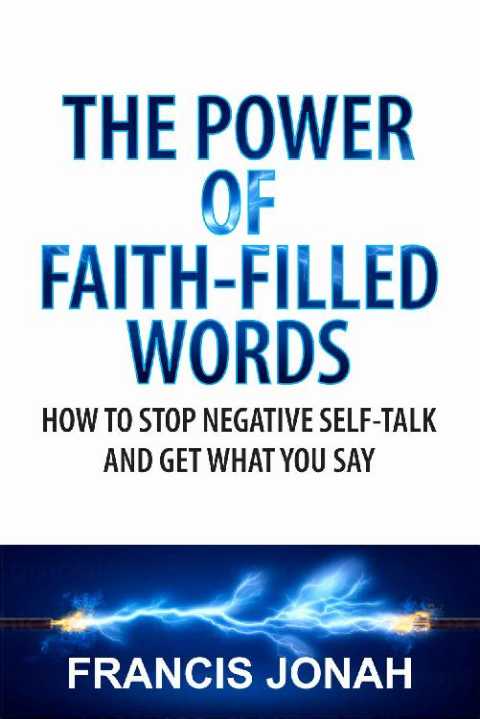

Others like the power of faith-filled words Features >>



About the Book
"The Power Of Faith-Filled Words" by Francis Jonah explores the impact of speaking positively and using faith-filled language in our everyday lives. The author emphasizes the importance of believing in the power of our words to shape our reality and manifest our desires. Through real-life examples and biblical principles, Jonah encourages readers to be mindful of the language they use and to speak words of faith, hope, and positivity to bring about positive change in their lives.
James Petigru Boyce
the great prize in christian dating - pursue clarity and postpone intimacy
I got lots of things wrong in dating, but as I think back over my mistakes and failures — dating too young, jumping from relationship to relationship, not being honest with myself or with others, failing to set or keep boundaries, not listening to friends and family, not prizing and pursuing purity — one error rises above the others, and in many ways explains the others: My dating relationships were mainly a pursuit of intimacy with a girlfriend, not clarity about whether to marry her. In my best moments, I was pursuing clarity through intimacy, but in a lot of other moments, if I’m honest, I just wanted intimacy at whatever cost. “The pursuit of marriage” was a warm and justifying pullover to wear over my conscience when things started to go too far physically and emotionally. But even clarity through intimacy misses the point and gets it backwards. I should have been pursuing clarity in dating, and then intimacy in marriage. That simple equation would have saved me and the girls I dated all kinds of grief, heartache, and regret. Your Last First Kiss Most of us date because we want intimacy. We want to feel close to someone. We want to be known deeply and loved deeply. We want sex. We want to share life with someone of the opposite sex who will be involved and invested in what we’re doing and what we care about. With the right heart, and in the right measure, and at the right time, these are all good desires. God made many of us to want these things, and therefore wants us to want these things — with the right heart, in the right measure, and at the right time. Think about your last first kiss in a relationship (if you’ve already kissed someone). Why did you do it? You knew you were risking something, that this wasn’t the safest way to give yourself to someone. What was driving you most in those brief moments before you let your lips touch? For me, every first kiss was driven more by my own desires than by God’s desires for me. Every first kiss until I kissed my wife for the first time, seconds after asking her to be my wife. Before Faye, I had let what I wanted outweigh what I knew God wanted, and what I knew was best for the girl I was dating. I craved intimacy, and I knew I would find it in marriage. So, I punched “marriage” into Google Maps, jumped on the highway, and ignored the speed limits. Instead of waiting to get to my destination to enjoy emotional and physical intimacy, I pulled over and bought something quicker and cheaper on the side of the road. Intimacy — romantic or otherwise — is a beautiful and precious gift God has given to his children. But like so many of God’s good gifts, because of our sin, intimacy can be dangerous. The human heart is wired to want intimacy, but it is also wired to corrupt intimacy — to demand intimacy in the wrong ways or at the wrong time, and to expect the wrong things from intimacy. That means intimacy between sinners is dangerous, because we’re prone, by nature, to hurt one another — to do what feels good, instead of caring for the other person; to promise too much too soon, instead of being patient and slow to speak; to put our hope, identity, and worth in one another, instead of in God. Intimacy makes us vulnerable, and sin makes us dangerous. The two together, without covenant promises, can be a formula for disaster in dating. Different Prizes in Marriage and Dating God is the greatest prize in life for any believer — at whatever age, in whatever stage of life, and whatever our relationship status. But is there a unique prize for the believer in marriage? Yes, it is Christ-centered emotional and sexual intimacy with another believer. Before God, within the covenant of marriage, two lives, two hearts, two bodies become one . A husband and wife experience everything in life as one new person. “Couple” doesn’t describe them well enough anymore. Yes, they’re each still themselves, but they’re too close now to ever be separated again (Mark 10:9). God has made them one. Their things are not their own. Their time is not their own. Even their bodies are not their own (1 Corinthians 7:4). They share all and enjoy all together now. Sex is the intense experience and picture of their new union, but it’s only a small slice of all the intimacy they enjoy together now. Safety for Intimacy The reason that kind of intimacy is the prize of marriage and not of our not-yet-married relationships is because that kind of intimacy is never safe anywhere outside of the lifelong covenant called marriage. Never . There are lots of contexts in which romantic intimacy feels safe outside of marriage, but it never is. There is too much at stake with our hearts, and too many risks involved, without a ring and public vows. Without promises before God, the further we walk into intimacy with another person, the further we expose ourselves to the possibility of being abandoned, betrayed, and crushed. In a Christ-centered marriage , those same risks do not exist. We are together — in sickness and health, in peace and conflict, in disappointment, tragedy, and even failure — until death do us part. When God unites us, death is the only thing strong enough to separate us. That means intimacy is a safe and appropriate experience in marriage . For sure, marriage is not perfectly safe. Married people are still sinners, capable of hurting one another, even to the point of abuse or divorce. But faithful married people are not leaving people. Just like God is not a leaving God. Dating’s Great Prize While the great prize in marriage is Christ-centered intimacy, the great prize in dating is Christ-centered clarity. Intimacy is safest in the context of marriage, and marriage is safest in the context of clarity. If we want to have and enjoy Christ-centered intimacy, we need to get married. And if we want to get married, we need to pursue clarity about whom to marry. We don’t pursue clarity by diving into intimacy. The right kind of clarity is a means to the right kind of intimacy, not the other way around. Careful, prayerful, thoughtful clarity will produce healthy, lasting, passionate intimacy. Any other road to intimacy will sabotage it, leaving it shallow, fragile, and unreliable. Much of the heartache and confusion we feel in dating stems from treating dating as practice for marriage (clarity through intimacy), instead of as discernment toward marriage (clarity now, intimacy later). In dating, we often experiment with intimacy until it basically feels like marriage, and then we get married. The risks may seem worth it (even necessary) because of how much we want to be married (or at least everything that comes with being married). But in reality, the risks are not worth it, and they’re certainly not necessary. God did not mean for us to risk so much in our pursuit of marriage. For sure, we always make ourselves vulnerable to some degree as we get to know someone and develop a relationship, but God wants us to enjoy the fullness of intimacy within a covenant, not in some science lab of love. In Christian dating, we’re not trying marriage on for size, but trying to find someone to marry. Questions We Ask Pursue clarity, and postpone intimacy. What does that look like practically? One test for whether you are pursuing clarity or intimacy is to study the questions we ask in dating. We ask different questions when we’re pursuing clarity more than intimacy. How far can we go? How late should we hang out? What kind of touching is allowed? Is he Christian enough for me to date him? Versus: Does he love Jesus more than he loves me? Does she follow through on her promises? Do I see him showing self-control, or compromising to get what he wants? Is she willing to lovingly tell me when I’m wrong? Healthy relationships may still need to ask questions in the first set, but they’ll be way down the list. When we’re after intimacy without clarity, we ask the first set and often overlook or minimize the second. But when we’re pursuing clarity, we’ll start asking new questions. Here are some examples of questions you could ask in your pursuit of clarity: What have you learned about each other lately — stories, habits, character traits? How have you each grown in your relationship with Jesus since you started dating? Are you both committed to abstaining from any form of sexual immorality? What flags, if any, have others raised about your relationship? What obstacles are keeping the two of you from getting married? Are you each being driven by your own desires, or by God’s desires for you? In what ways is your relationship different from non-Christian relationships? Questions like these — and countless more like them — uncover what we really want in dating, and where we’re likely to leave Jesus behind. They’re the bumpers that keep us out of the gutter, guarding us from impatience and impurity. But they’re also instruments of true love — the well-made parts that keep our car on the highway to marriage. They keep us focused on where we are headed and what really matters. They’re the agents of clarity.