

Others like the power of faith-filled words Features >>





About the Book
"The Power Of Faith-Filled Words" by Francis Jonah explores the impact of speaking positively and using faith-filled language in our everyday lives. The author emphasizes the importance of believing in the power of our words to shape our reality and manifest our desires. Through real-life examples and biblical principles, Jonah encourages readers to be mindful of the language they use and to speak words of faith, hope, and positivity to bring about positive change in their lives.
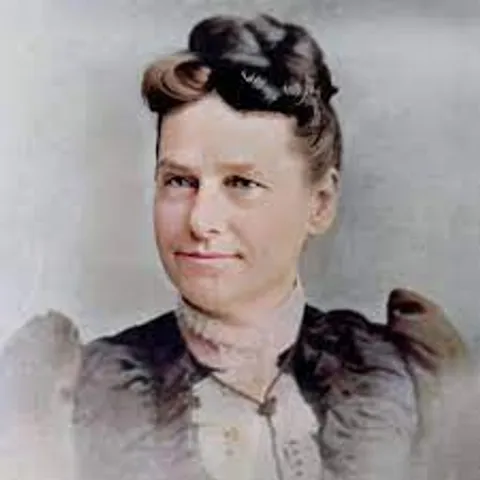
Maria Woodworth-Etter
 Maria Woodworth-Etter’s Early life
Maria’s early life was plagued with tragedies. Her father died of sunstroke when she was 11 years old leaving her mother with eight children to provide for. She married at 16 but fought a continual battle with ill-health, losing five of her six children. During her sickness she had visions of children in heaven and the lost suffering in hell.
She promised God, that if He would heal her, she would serve Him completely. She asked God for same apostolic power He gave the disciples and was gloriously baptized in the Holy Spirit. “It felt like liquid fire, and there were angels all around.”
The call to preach
Despite her personal struggles with ‘women in ministry’ and the prevailent hostile attitudes to female preachers, she felt compelled by God to accept the invitation to preach in the United Brethren in Christ (Friends) in 1876 and later associated with the Methodist Holiness church.
Evangelism with signs and wonders
Though simply evangelistic in the early days she was unusually successful and in 1885 supernatural signs began to accompany her ministry. Her ministry resurrected dead churches, brought salvation to thousands of unconverted and encouraged believers to seek a deeper walk with God.
She descibes one of her meetings
She described an 1883 meeting in Fairview, Ohio: “I felt impressed God was going to restore love and harmony in the church..… All present came to the altar, made a full consecration, and prayed for a baptism of the Holy Ghost and fire. That night it came. Fifteen same to the altar screaming for mercy.
Men and women fell and lay like dead. I felt it was the work of God, but did not know how to explain it or what to say. I was a little frightened . . . after lying for two hours all, one after another, sprang to their feet as quick as a flash with shining faces and shouted all over the house. I had never seen such bright conversions or such shouting….
The ministers and old saints wept and praised the Lord …..they said it was the Pentecost power, that the Lord was visiting them in great mercy and power …..(they) experienced visions of heaven and hell, collapsed on the floor as if they’d been shot or had died.” Subsequently, thousands were healed of a wide variety of sicknesses and diseases and many believers, even ministers, received mighty baptisms of the Holy Spirit. She soon became a national phenomenon.
1,000 seater tent
In 1889, she purchased a tent that could seat eight thousand people and set it up in Oakland, California. “The power of God was over all the congregation; and around in the city of Oakland. The Holy Ghost would fall on the people while we were preaching. The multitude would be held still, like as though death was in their midst.
Many of the most intelligent and best dressed men would fall back in their seats, with their hands held up to God. being held under the mighty power of God. Men and women fell, all over the tent, like trees in a storm; some would have visions of God. Most all of them came out shouting the praises of God.”
She declared that if 19th-century believers would meet God’s conditions, as the 120 did on the Day of Pentecost, they would have the same results. “A mighty revival would break out that would shake the world, and thousands of souls would be saved. The displays of God’s power on the Day of Pentecost were only a sample of what God designed should follow through the ages. Instead of looking back to Pentecost, let us always be expecting it to come, especially in these days.”
Her views of Pentecostalism
Initially she had grave concerns about the burgeoning Pentecostal movement, mainly because of some unbalanced teaching and reported extremism. Soon she came to believe it was an authentic move of the Holy Spirit and was enthusiastically welcomed within its ranks. She became both a model and a mentor for the fledgling movement. This association elicited another wave of revival between 1912 and her death in 1924 as she ministered throughout the country and her books were read across the world.
Etter Tabenacle
In 1918, she built Etter Tabernacle as her home church base and affiliated with the Assemblies of God. In her closing years she still ministered with a powerful anointing despite struggling with gastritis and dropsy. On occasion she would be carried to the podium, preach with extraordinary power, then be carried home again!
Her demise
Her health continued to decline and she died on September 16, 1924. She is buried in a grave in Indianapolis next to her daughter and son-in-law. Her inscription reads “Thou showest unto thousands lovingkindness.”
In conclusion
Without doubt Maria Woodworth-Etter was an amazing woman blessed with an astonishing ministry. Rev. Stanley Smith – one of the famous “Cambridge Seven” and for many years a worker with “The China Inland Mission” wrote this about her autobiography:
“I cannot let this opportunity go by without again bringing to the notice of my readers, ‘Acts of the Holy Ghost,’ or ‘Life and Experiences of Mrs. M. B. Woodworth-Etter.’ It is a book I value next to the Bible. In special seasons of waiting on God I have found it helpful to have the New Testament on one side of me and Mrs. Etter’s book on the other; this latter is a present-day record of ‘the Acts’ multiplied.
Mrs. Etter is a woman who has had a ministry of healing since 1885, her call as an evangelist being some years previous to this. I venture to think that this ministry is unparalleled in the history of the Church, for which I give all the glory to the Lord Jesus Christ, as Mrs. Etter would, I know, wish me to do. This ministry should be made known, for the glory of the Triune God and the good of believers.”
We agree and pray that such an anointing will rest upon God’s end-time people so that ‘this Gospel of the Kingdom will be preached in all the world before the end comes!’ Matthew 24:14
Tony Cauchi
Maria Woodworth-Etter’s Early life
Maria’s early life was plagued with tragedies. Her father died of sunstroke when she was 11 years old leaving her mother with eight children to provide for. She married at 16 but fought a continual battle with ill-health, losing five of her six children. During her sickness she had visions of children in heaven and the lost suffering in hell.
She promised God, that if He would heal her, she would serve Him completely. She asked God for same apostolic power He gave the disciples and was gloriously baptized in the Holy Spirit. “It felt like liquid fire, and there were angels all around.”
The call to preach
Despite her personal struggles with ‘women in ministry’ and the prevailent hostile attitudes to female preachers, she felt compelled by God to accept the invitation to preach in the United Brethren in Christ (Friends) in 1876 and later associated with the Methodist Holiness church.
Evangelism with signs and wonders
Though simply evangelistic in the early days she was unusually successful and in 1885 supernatural signs began to accompany her ministry. Her ministry resurrected dead churches, brought salvation to thousands of unconverted and encouraged believers to seek a deeper walk with God.
She descibes one of her meetings
She described an 1883 meeting in Fairview, Ohio: “I felt impressed God was going to restore love and harmony in the church..… All present came to the altar, made a full consecration, and prayed for a baptism of the Holy Ghost and fire. That night it came. Fifteen same to the altar screaming for mercy.
Men and women fell and lay like dead. I felt it was the work of God, but did not know how to explain it or what to say. I was a little frightened . . . after lying for two hours all, one after another, sprang to their feet as quick as a flash with shining faces and shouted all over the house. I had never seen such bright conversions or such shouting….
The ministers and old saints wept and praised the Lord …..they said it was the Pentecost power, that the Lord was visiting them in great mercy and power …..(they) experienced visions of heaven and hell, collapsed on the floor as if they’d been shot or had died.” Subsequently, thousands were healed of a wide variety of sicknesses and diseases and many believers, even ministers, received mighty baptisms of the Holy Spirit. She soon became a national phenomenon.
1,000 seater tent
In 1889, she purchased a tent that could seat eight thousand people and set it up in Oakland, California. “The power of God was over all the congregation; and around in the city of Oakland. The Holy Ghost would fall on the people while we were preaching. The multitude would be held still, like as though death was in their midst.
Many of the most intelligent and best dressed men would fall back in their seats, with their hands held up to God. being held under the mighty power of God. Men and women fell, all over the tent, like trees in a storm; some would have visions of God. Most all of them came out shouting the praises of God.”
She declared that if 19th-century believers would meet God’s conditions, as the 120 did on the Day of Pentecost, they would have the same results. “A mighty revival would break out that would shake the world, and thousands of souls would be saved. The displays of God’s power on the Day of Pentecost were only a sample of what God designed should follow through the ages. Instead of looking back to Pentecost, let us always be expecting it to come, especially in these days.”
Her views of Pentecostalism
Initially she had grave concerns about the burgeoning Pentecostal movement, mainly because of some unbalanced teaching and reported extremism. Soon she came to believe it was an authentic move of the Holy Spirit and was enthusiastically welcomed within its ranks. She became both a model and a mentor for the fledgling movement. This association elicited another wave of revival between 1912 and her death in 1924 as she ministered throughout the country and her books were read across the world.
Etter Tabenacle
In 1918, she built Etter Tabernacle as her home church base and affiliated with the Assemblies of God. In her closing years she still ministered with a powerful anointing despite struggling with gastritis and dropsy. On occasion she would be carried to the podium, preach with extraordinary power, then be carried home again!
Her demise
Her health continued to decline and she died on September 16, 1924. She is buried in a grave in Indianapolis next to her daughter and son-in-law. Her inscription reads “Thou showest unto thousands lovingkindness.”
In conclusion
Without doubt Maria Woodworth-Etter was an amazing woman blessed with an astonishing ministry. Rev. Stanley Smith – one of the famous “Cambridge Seven” and for many years a worker with “The China Inland Mission” wrote this about her autobiography:
“I cannot let this opportunity go by without again bringing to the notice of my readers, ‘Acts of the Holy Ghost,’ or ‘Life and Experiences of Mrs. M. B. Woodworth-Etter.’ It is a book I value next to the Bible. In special seasons of waiting on God I have found it helpful to have the New Testament on one side of me and Mrs. Etter’s book on the other; this latter is a present-day record of ‘the Acts’ multiplied.
Mrs. Etter is a woman who has had a ministry of healing since 1885, her call as an evangelist being some years previous to this. I venture to think that this ministry is unparalleled in the history of the Church, for which I give all the glory to the Lord Jesus Christ, as Mrs. Etter would, I know, wish me to do. This ministry should be made known, for the glory of the Triune God and the good of believers.”
We agree and pray that such an anointing will rest upon God’s end-time people so that ‘this Gospel of the Kingdom will be preached in all the world before the end comes!’ Matthew 24:14
Tony Cauchi
‘curse god and die’ - satan’s favorite response to suffering
My Dear Globdrop, Regretfully, I have received your last letter. Centuries serving his Lowliness — lifetimes damning souls and training young devils — and yet you still find ways to surprise me. Are you or are you not but one soul away from active duty, from wearing our legion’s darkest colors on the frontlines? If so, what should I expect to find you consumed with? Trapping? Spoiling? Sabotaging? Or, should I — with so much at stake — expect to find you playing with your food like a human child, giggling girlishly about? You have not tasted any meat pierced with your own spear, yet you trifle with the chase. Whatsoever do you mean? I can hear your simple mind ask. Your man, you report, went in for a routine shoulder surgery where, inexplicably , they pierced his lung. This alone causes you great joy, does it? You take great pride that “the fork pierced the prey.” You leave him unattended to tell me all about the victory. Yes, the doctor’s blade took an unexpected (and delicious) detour, but tell me, has the blade yet punctured his soul? Has the wound brought forth an infection of spirit ? Are you so lazy as to hope that the doctor has done your work for you? You have failed miserably to realize that it is not the surgeon’s miscalculations but your patient’s response that gets at the vital thing, the eternal thing. Pierced spirits, seared consciences, scarred hearts, burnt beliefs — these we bend our dark labors toward. Tantalizing trials and savory sufferings serve as an opportunity for this, the real work. Collapsed lungs — or more commonly: sick children, diseased spouses, faltering friendships, ruined romances, cursed careers, even the occasional dead pet — are mere playthings compared to what they can produce: a collapsed faith. This is to strike at the jugular, to slice the major artery. We love the vermin’s squeals and agonies, but never at the expense of our filled bellies. Unpredictable Flame At the expense? you wonder. Suffering, you should know by now, is most unpredictable. Most assuredly it can harden the heart — pushing out the very possibility of a kind, powerful, all-knowing God. Or (as you better hope is not your case) it can be the very thing used by the Enemy to rob our knives and forks of their roast. Have you not glanced over the apostle’s shoulder lately? Not all suffering ends up advancing our cause. We rejoice in our sufferings, knowing that suffering produces endurance, and endurance produces character, and character produces hope, and hope does not put us to shame, because God’s love has been poured into our hearts through the Holy Spirit who has been given to us. (Romans 5:3–5) Who means for suffering to encourage such a horrid thing as endurance, nephew? Do we mean for suffering to produce in them — and I struggle to even write the word — hope ? The punctured lungs, the groans and pains, at every turn, threaten to terribly backfire. The Enemy knows this well enough, and for all his talk, he is as underhanded as any devil. Often, we think we have set the perfect trap, until we discover (too late) that he had tampered with our afflictions and temptations to fit his designs. Making them squeal is pleasurable, watching them squirm under torments make us howl and snort, but it amounts to a mere play if they escape to the Enemy and further enact his dreadful purposes. This, you must ensure, does not happen with your man. Adding Iniquity to Injury Have done, at once, with your prepubescent squeaks and premature gloating. The game is afoot, and the Enemy means to have him as surely as we do. First, make his suffering personal. The question of “How could a good God allow bad things to happen?” is not nearly as useful a question as “How could God allow this bad thing to happen to me ?” This, of course, is the precise question to ask. The Enemy parades himself as the “personal God” at every turn; well, then, let him give his personal defense to the charges. Where was this personal God during his surgery? Give no cover to the Enemy on this point. Press your man, as we have pressed for centuries: Of all people to face this loss, this pain, this nightmare — why me ? Casually point out to your man that his “loving God,” his “refuge,” plays terrible favorites. None of the Christians he knows is facing such “lifelong complications” from such an improbable miscue. Perish any consideration that the Enemy is attempting, at any rate, to twist our bed of thorns into an eternal crown of glory. Hide the Enemy’s lies that such afflictions are precisely measured for their eternal good or in any way purposeful . Second, attend every stab. Never overlook the power of the small inconveniences and stings of discomfort. You must be always on standby for your patient — ready to nurse every flicker of pain toward self-pity, anger, or delectable despair. When he goes to reply to that email one-handed, or has to ask his wife for help to put on his socks, or feels the residual irritations and distresses that will accompany him to the grave — be ready to sow bitterness and pour salt on the wound. No crack, never forget, is too small to exploit. As you attend to his every moan, understand you will not be alone. The Enemy stands by them, always at their beck and call, like a drooling terrier, ready to remind them of his lies and calm them with his presence. In his embarrassing commitment to his fictions, his Spirit stands by to whisper to them. We can’t overhear most of it, but undoubtedly it has to do with Scripture telling them something like he “lovingly” designs their aches, pains, diseases, and deformities in this world, and to persuade them that he is their true comfort, and that this is not their true home. Fight whisper with whisper to keep the dogs from returning to their vomit. Third, hide Tomorrow from him. Finally, conceal any fictions about a Tomorrow that will make all sufferings “untrue.” Of such a Day that beaten, bruised, and bloodied apostle made consistent (and irritating) appeals to, calling the summation of his manifold (and mouthwatering) sufferings as nothing — nothing! — not even worth comparing to that Day of an “eternal weight of glory” which lies ahead (2 Corinthians 4:17) — a “glory” our Father Below weighed and found greatly wanting. Curse God and Die Affliction, nephew, is an uncertain flame, certainly not one to be trifled with. Job and his most useful wife prove a great illustration. Crushed with the fatal blows to property and household, this “upright” man tried to make our Father the fool, shaming us all by responding to murder, devastation, and destruction in such a servile and groveling way: “Job arose and tore his robe and shaved his head and fell on the ground and worshiped ” (Job 1:20). But not all responded in kind. Job’s wife, whom our Master most mercifully and wisely preserved, responded most excellently: “Do you still hold fast your integrity? Curse God and die” (Job 2:9). Curse God and die — I couldn’t have said it any better. Here lies the battlefield, nephew. Not the inflicting of affliction, but the infecting of the soul. We want each man, woman, and child to renounce such a Poser, to spit upon their former loyalties, and curse him before heaven’s eyes. This, nephew, this , is where your man must be led: To much more than a punctured lung But to a depleted faith and denouncing tongue. To teeth tightly clenched and fists held high In flames to curse his god and die. Damnation, Globdrop, damnation. Nothing less. Your most expectant Uncle, Grimgod