







About the Book
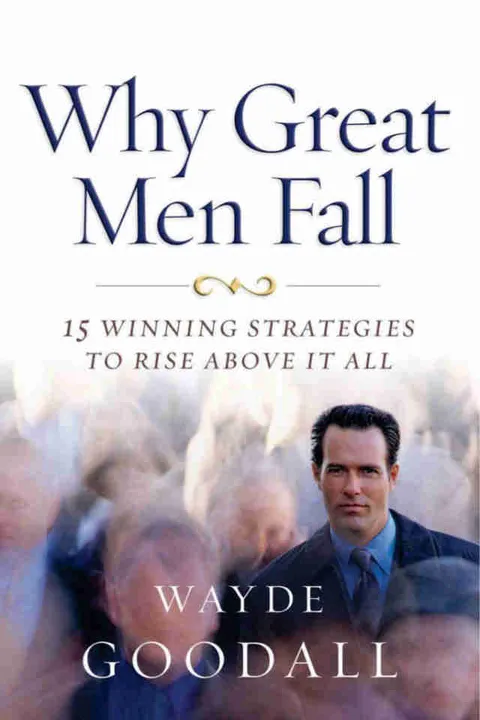
"Why Great Men Fall" by Wayne Goodall explores the common pitfalls and mistakes that lead to the downfall of successful and influential individuals. Goodall discusses the various factors such as arrogance, complacency, and ethical lapses that can contribute to the downfall of great leaders and offers insights on how to avoid these pitfalls. The book serves as a cautionary tale and provides valuable lessons for individuals seeking to maintain their success and integrity in the face of challenges.
William Booth
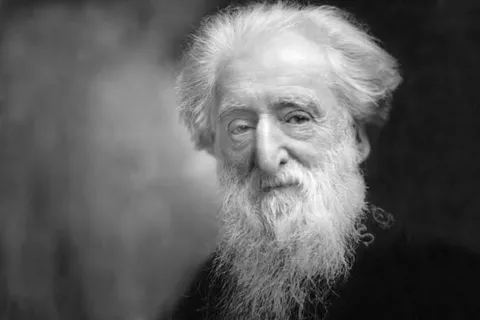 General William Booth’s early life
William Booth was born in Nottingham in 1829 of well-bred parents who had become poor. He was a lively lad nicknamed Wilful Wil. At the age of fifteen he was converted in the Methodist chapel and became the leader of a band of teenage evangelists who called him Captain and held street meetings with remarkable success.
In 1851 he began full-time Christian work among the Methodist Reformers in London and later in Lincolnshire. After a period in a theological college he became a minister of the Methodist New Connexion. His heart however was with the poor people unreached by his church, and in 1861 he left the Methodists to give himself freely to the work of evangelism. Joined by Catherine, his devoted wife, they saw their ministry break out into real revival, which in Cornwall spread far and wide.
One memorable day in July 1865, after exploring the streets in an East End district where he was to conduct a mission, the terrible poverty, vice and degradation of these needy people struck home to his heart. He arrived at his Hammersmith home just before midnight and greeted his waiting Catherine with these words: “Darling, I have found my destiny!” She understood him. Together they had ministered God’s grace to God’s poor in many places.
Now they were to spend their lives bringing deliverance to Satan”s captives in the evil jungle of London”s slums. One day William took Bramwell, his son, into an East End pub which was crammed full of dirty, intoxicated creatures. Seeing the appalled look on his son”s face, he said gently, “Bramwell, these are our people—the people I want you to live for.”
William and Catherine loved each other passionately all their lives. And no less passionately did they love their Lord together. Now, although penniless, together with their dedicated children, they moved out in great faith to bring Christ”s abundant life to London”s poverty-stricken, devil-oppressed millions.
At first their organisation was called the Christian Mission. In spite of brutal opposition and much cruel hardship, the Lord blessed this work, and it spread rapidly.
William Booth was the dynamic leader who called young men and women to join him in this full-time crusade. With enthusiastic abandon, hundreds gave up all to follow him.
“Make your will, pack your box, kiss your girl and be ready in a week”, he told one young volunteer.
Salvation Army born
One day as William was dictating a report on the work to George Railton, his secretary, he said, “We are a volunteer army,”
“No”, said Bramwell, “I am a regular or nothing.”
His father stopped in his stride, bent over Railton, took the pen from his hand, and crossing out the word “volunteer”, wrote “salvation”. The two young men stared at the phrase “a salvation army”, then both exclaimed “Hallelujah”. So the Salvation Army was born.
As these dedicated, Spirit-filled soldiers of the cross flung themselves into the battle against evil under their blood and fire banner, amazing miracles of deliverance occurred. Alcoholics, prostitutes and criminals were set free and changed into workaday saints.
Cecil Rhodes once visited the Salvation Army farm colony for men at Hadleigh, Essex, and asked after a notorious criminal who had been converted and rehabilitated there.
“Oh”, was the answer, “He has left the colony and has had a regular job outside now for twelve months.”
“Well” said Rhodes in astonishment, “if you have kept that man working for a year, I will believe in miracles.”
Slave traffic
The power that changed and delivered was the power of the Holy Spirit. Bramwell Booth in his book Echoes and Memories describes how this power operated, especially after whole nights of prayer. Persons hostile to the Army would come under deep conviction and fall prostrate to the ground, afterward to rise penitent, forgiven and changed. Healings often occurred and all the gifts of the Spirit were manifested as the Lord operated through His revived Body under William Booth’s leadership.
Terrible evils lay hidden under the curtain of Victorian social life in the nineteenth century. The Salvation Army unmasked and fought them. Its work among prostitutes soon revealed the appalling wickedness of the white slave traffic, in which girls of thirteen were sold by their parents to the pimps who used them in their profitable brothels, or who traded them on the Continent.
“Thousands of innocent girls, most of them under sixteen, were shipped as regularly as cattle to the state-regulated brothels of Brussels and Antwerp.” (Collier).
Imprisoned
In order to expose this vile trade, W. T. Stead (editor of The Pall Mall Gazette) and Bramwell Booth plotted to buy such a child in order to shock the Victorians into facing the fact of this hidden moral cancer in their society. This thirteen-year-old girl, Eliza Armstrong, was bought from her mother for £5 and placed in the care of Salvationists in France.
W. T. Stead told the story in a series of explosive articles in The Pall Mall Gazette which raised such a furore that Parliament passed a law raising the age of consent from thirteen to sixteen. However, Booth and Stead were prosecuted for abduction, and Stead was imprisoned for three months.
William Booth always believed the essential cause of social evil and suffering was sin, and that salvation from sin was its essential cure. But as his work progressed, he became increasingly convinced that social redemption and reform should be an integral part of Christian mission.
So at the age of sixty he startled England with the publication of the massive volume entitled In Darkest England, and the Way Out. It was packed with facts and statistics concerning Britain’s submerged corruption, and proved that a large proportion of her population was homeless, destitute and starving. It also outlined Booth’s answer to the problem — his own attempt to begin to build the welfare state.
All this was the result of two years” laborious research by many people, including the loyal W. T. Stead. On the day the volume was finished and ready for publication, Stead was conning its final pages in the home of the Booths. At last he said, “That work will echo round the world. I rejoice with an exceeding great joy.”
“And I”, whispered Catherine, dying of cancer in a corner of the room, “And I most of all thank God. Thank God!” As the work of the Salvation Army spread throughout Britain and into many countries overseas, it met with brutal hostility. In many places Skeleton Armies were organised to sabotage this work of God. Hundreds of officers were attacked and injured (some for life). Halls and offices were smashed and fired. Meetings were broken up by gangs organised by brothel keepers and hostile publicans.
One sympathiser in Worthing defended his life and property with a revolver. But Booth’s soldiers endured the persecution for many years, often winning over their opponents by their own offensive of Christian love.
The Army that William Booth created under God was an extension of his own dedicated personality. It expressed his own resolve in his words which Collier places on the first page of his book:
“While women weep as they do now, I’ll fight; while little children go hungry as they do now, I’ll fight; while men go to prison, in and out, in and out, as they do now, I’ll fight—I’ll fight to the very end!”
Toward the end of his life, he became blind. When he heard the doctor’s verdict that he would never see again, he said to his son: “Bramwell, I have done what I could for God and the people with my eyes. Now I shall see what I can do for God and the people without my eyes.”
But the old warrior had finally laid down his sword. His daughter, Eva, head of the Army’s work in America, came home to say her last farewell. Standing at the window she described to her father the glory of that evening’s sunset.
“I cannot see it,” said the General, “but I shall see the dawn.”
General William Booth’s early life
William Booth was born in Nottingham in 1829 of well-bred parents who had become poor. He was a lively lad nicknamed Wilful Wil. At the age of fifteen he was converted in the Methodist chapel and became the leader of a band of teenage evangelists who called him Captain and held street meetings with remarkable success.
In 1851 he began full-time Christian work among the Methodist Reformers in London and later in Lincolnshire. After a period in a theological college he became a minister of the Methodist New Connexion. His heart however was with the poor people unreached by his church, and in 1861 he left the Methodists to give himself freely to the work of evangelism. Joined by Catherine, his devoted wife, they saw their ministry break out into real revival, which in Cornwall spread far and wide.
One memorable day in July 1865, after exploring the streets in an East End district where he was to conduct a mission, the terrible poverty, vice and degradation of these needy people struck home to his heart. He arrived at his Hammersmith home just before midnight and greeted his waiting Catherine with these words: “Darling, I have found my destiny!” She understood him. Together they had ministered God’s grace to God’s poor in many places.
Now they were to spend their lives bringing deliverance to Satan”s captives in the evil jungle of London”s slums. One day William took Bramwell, his son, into an East End pub which was crammed full of dirty, intoxicated creatures. Seeing the appalled look on his son”s face, he said gently, “Bramwell, these are our people—the people I want you to live for.”
William and Catherine loved each other passionately all their lives. And no less passionately did they love their Lord together. Now, although penniless, together with their dedicated children, they moved out in great faith to bring Christ”s abundant life to London”s poverty-stricken, devil-oppressed millions.
At first their organisation was called the Christian Mission. In spite of brutal opposition and much cruel hardship, the Lord blessed this work, and it spread rapidly.
William Booth was the dynamic leader who called young men and women to join him in this full-time crusade. With enthusiastic abandon, hundreds gave up all to follow him.
“Make your will, pack your box, kiss your girl and be ready in a week”, he told one young volunteer.
Salvation Army born
One day as William was dictating a report on the work to George Railton, his secretary, he said, “We are a volunteer army,”
“No”, said Bramwell, “I am a regular or nothing.”
His father stopped in his stride, bent over Railton, took the pen from his hand, and crossing out the word “volunteer”, wrote “salvation”. The two young men stared at the phrase “a salvation army”, then both exclaimed “Hallelujah”. So the Salvation Army was born.
As these dedicated, Spirit-filled soldiers of the cross flung themselves into the battle against evil under their blood and fire banner, amazing miracles of deliverance occurred. Alcoholics, prostitutes and criminals were set free and changed into workaday saints.
Cecil Rhodes once visited the Salvation Army farm colony for men at Hadleigh, Essex, and asked after a notorious criminal who had been converted and rehabilitated there.
“Oh”, was the answer, “He has left the colony and has had a regular job outside now for twelve months.”
“Well” said Rhodes in astonishment, “if you have kept that man working for a year, I will believe in miracles.”
Slave traffic
The power that changed and delivered was the power of the Holy Spirit. Bramwell Booth in his book Echoes and Memories describes how this power operated, especially after whole nights of prayer. Persons hostile to the Army would come under deep conviction and fall prostrate to the ground, afterward to rise penitent, forgiven and changed. Healings often occurred and all the gifts of the Spirit were manifested as the Lord operated through His revived Body under William Booth’s leadership.
Terrible evils lay hidden under the curtain of Victorian social life in the nineteenth century. The Salvation Army unmasked and fought them. Its work among prostitutes soon revealed the appalling wickedness of the white slave traffic, in which girls of thirteen were sold by their parents to the pimps who used them in their profitable brothels, or who traded them on the Continent.
“Thousands of innocent girls, most of them under sixteen, were shipped as regularly as cattle to the state-regulated brothels of Brussels and Antwerp.” (Collier).
Imprisoned
In order to expose this vile trade, W. T. Stead (editor of The Pall Mall Gazette) and Bramwell Booth plotted to buy such a child in order to shock the Victorians into facing the fact of this hidden moral cancer in their society. This thirteen-year-old girl, Eliza Armstrong, was bought from her mother for £5 and placed in the care of Salvationists in France.
W. T. Stead told the story in a series of explosive articles in The Pall Mall Gazette which raised such a furore that Parliament passed a law raising the age of consent from thirteen to sixteen. However, Booth and Stead were prosecuted for abduction, and Stead was imprisoned for three months.
William Booth always believed the essential cause of social evil and suffering was sin, and that salvation from sin was its essential cure. But as his work progressed, he became increasingly convinced that social redemption and reform should be an integral part of Christian mission.
So at the age of sixty he startled England with the publication of the massive volume entitled In Darkest England, and the Way Out. It was packed with facts and statistics concerning Britain’s submerged corruption, and proved that a large proportion of her population was homeless, destitute and starving. It also outlined Booth’s answer to the problem — his own attempt to begin to build the welfare state.
All this was the result of two years” laborious research by many people, including the loyal W. T. Stead. On the day the volume was finished and ready for publication, Stead was conning its final pages in the home of the Booths. At last he said, “That work will echo round the world. I rejoice with an exceeding great joy.”
“And I”, whispered Catherine, dying of cancer in a corner of the room, “And I most of all thank God. Thank God!” As the work of the Salvation Army spread throughout Britain and into many countries overseas, it met with brutal hostility. In many places Skeleton Armies were organised to sabotage this work of God. Hundreds of officers were attacked and injured (some for life). Halls and offices were smashed and fired. Meetings were broken up by gangs organised by brothel keepers and hostile publicans.
One sympathiser in Worthing defended his life and property with a revolver. But Booth’s soldiers endured the persecution for many years, often winning over their opponents by their own offensive of Christian love.
The Army that William Booth created under God was an extension of his own dedicated personality. It expressed his own resolve in his words which Collier places on the first page of his book:
“While women weep as they do now, I’ll fight; while little children go hungry as they do now, I’ll fight; while men go to prison, in and out, in and out, as they do now, I’ll fight—I’ll fight to the very end!”
Toward the end of his life, he became blind. When he heard the doctor’s verdict that he would never see again, he said to his son: “Bramwell, I have done what I could for God and the people with my eyes. Now I shall see what I can do for God and the people without my eyes.”
But the old warrior had finally laid down his sword. His daughter, Eva, head of the Army’s work in America, came home to say her last farewell. Standing at the window she described to her father the glory of that evening’s sunset.
“I cannot see it,” said the General, “but I shall see the dawn.”
Your First Years of Marriage
In many ways, we were a natural fit. My would-be husband and I both loved Jesus, studied his word, cherished worship through song, desired many children, longed to be hospitable, and valued the home and the wife’s joyful place in it. We both had Scandinavian heritage and understood the barbs that flew between Swedes and Norwegians. We both prized hard work — with an openness to risk-taking endeavors. As an engaged couple, with all we had going for us, it was hard for me to imagine what bumps we might face as we started down the road together. But that’s only because I underestimated how real and stubborn indwelling sin is. I thought external bumps in the road would be the obstacles — circumstances like finances or health issues or job difficulties — when really it was our own flesh that presented the biggest problems. Reflecting back on the first years of marriage and family, I commend three principles to ease the bumps and grease the wheels of joy in Christ in your marriage and family. 1. Let God Define ‘Normal’ We all come from unique backgrounds. Even two people who share a similar heritage, like my husband and I, have had vastly different childhoods. I grew up with 27 first cousins. I became an aunt at 14 and can’t really remember a time we didn’t have young children around our home (even though I was the youngest child in my family). My husband had four cousins and had rarely encountered an infant or toddler at close range prior to marrying into my family. This made for very different ideas of what “normal” felt and sounded like. I grew up on an acreage in a blue-collar town that bordered several rural communities. My mom grew up on a farm. My husband grew up in a first-ring suburb of a major metropolis. His dad grew up in the big city. We had very different conceptions of what the “outdoors” was for. For him, it was mainly for recreation and enjoyment — for hiking or biking or kayaking. For me, it was mainly for work — for mowing or burning the burn pile or doing animal chores. Our former “norms” can enrich our marriage, adding interest and laughter and providing opportunities to take something that’s been passed down and make it new. Or they can threaten the allegiance of our hearts. If what was normal to us in our childhood becomes the ultimate standard for our marriage, we have misplaced our loyalties. We need to be led by the only authoritative and inerrant guide to life and marriage that we have: All Scripture is breathed out by God and profitable for teaching, for reproof, for correction, and for training in righteousness, that the man of God may be complete, equipped for every good work. (2 Timothy 3:16–17) Including every good work in the sometimes thorny first years of marriage. In marriage, God is making something new: a new one-flesh union, that is, a new family. And when a husband and wife let God’s word define normal, the wife willingly comes under the leadership of her husband in submission, as Scripture directs her to reflect Christ’s church (Ephesians 5:22–25). Her family of origin may aid that process or hinder it, but in either case, a reprioritizing happens. For the husband, it means looking to Christ as the standard by which he loves and leads his wife, and adopting his previous family’s practices only inasmuch as they accord with Christ. “If God’s word is the norm, the authority, you will have solid common ground on which to stand, come what may.” When I was young, my mom gave me one primary piece of advice when it came to choosing a husband: “God’s word must be his authority.” It’s key advice for men and women, and I gladly pass it along to you. If God’s word is the norm, the authority — not the culture, not your friends’ opinions or your family’s traditions, not Netflix or social media — you will have solid common ground on which to stand, come what may. 2. Stay in Step with the Spirit Paul tells the Galatians, “If we live by the Spirit, let us also keep in step with the Spirit. Let us not become conceited, provoking one another, envying one another” (Galatians 5:25–26). It may seem unlikely for two people who love each other and have committed their lives to one another “for better or worse” to fall into conceit, envy, and provocation of one another — and yet it’s common enough in marriage. The lies of the world have primed us to believe that men and women are on two separate teams in life. Team Women must advocate for women, and Team Men (in a bit of irony) must also advocate for women (although many rebel against this). This means that, at least for those of us raised in the United States or the West, women are expected to compete with men. From a young age, girls are taught that how they rank is a function of whether or not they are beating the boys. This way of thinking infects both boys and girls. And while that attitude may lie dormant during dating or courtship, it will rear its head if not dealt with. In a husband, this can look like unrealistic expectations for his wife — treating her like another man who shouldn’t have any significant differences from him. For example, he may expect her to earn what he earns, or overlook the inherent vulnerability of pregnancy and caring for small children. In a wife, this can look like pulling out the measuring stick to keep track of all the ways she’s getting a raw deal compared to him. For example, she may envy the occasional out-to-eat work lunches while she eats with the kids at home, or she may resent that the care of small children falls mainly to her. These are deadly attitudes to maintain in a marriage. When we marry, the Spirit of God does something amazing: he makes us part of a new team. I was blessed to join Team Dodds — not Team Women, or Team Men, or Team Me. When something wonderful happens to the husband, the wife rejoices as though it has happened to her, because it has. When something difficult happens to the wife, the husband nurtures and defends her as though it has happened to him, because it has. How do we keep in step with the Spirit in marriage? By prayerfully and regularly confessing our sins, and by setting our minds on the things of the Spirit, with a special focus on Christ — his life, his words, and his ways (1 John 1:9; Romans 8:5). We walk in the Spirit of Christ when we conform to the way he’s designed the marriage: “‘a man shall leave his father and his mother and hold fast to his wife, and the two shall become one flesh.’ So they are no longer two but one flesh. What therefore God has joined together, let not man separate” (Matthew 19:5–6). 3. Share Your New Life with Others My husband and I were married in June 2002. By October, we were taking a class to join our local church. At the same time, we opened our home (the upstairs of a duplex) to host a small group of singles and couples. I was 21 and still finishing college. It may have seemed a bit premature for us to join a church we were so new to, or to host a small group made up of mostly strangers, but the church had a need and we were eager to help. We didn’t join the church or host a small group primarily as ways to establish a stronger marriage, but looking back, they were important in shaping the patterns and priorities of our life. “The hospitable people I know are hospitable with little and with much, in small spaces and in big.” Many young families think that hospitality will sprout when the timing is right — when they get a bigger place, or when the kids aren’t so little, or when the finances aren’t so tight, or when they get that one room cleaned out. I’ve never seen it happen that way. The hospitable people I know are hospitable with little and with much, in small spaces and in big, among babies and boomers, in a dirty kitchen and a clean one. Sharing your home with others — making food for them, stretching your grocery budget on their behalf, letting them into your bathroom, cleaning up after their messes, inviting them into your thoughts through conversation and listening to theirs — is shockingly intimate in a world where embodied presence is becoming rare. Paul tells the Thessalonian church that “being affectionately desirous of you, we were ready to share with you not only the gospel of God but also our own selves, because you had become very dear to us” (1 Thessalonians 2:8). When we invite others into our home, we give them a bit of “our own selves.” When a husband, wife, and their children offer their home and their “own selves” to others through hospitality, they are not robbing time or resources from each other; they are gaining by giving. Hospitality forms a family identity that is not navel-gazing, but focused on sharing the love of God in practical ways with others. I can think of little else that will form and establish a Christian family to be joyful and robust in the Lord for decades to come than to practice sharing your life with others. Don’t let your home or marriage or family be only private. “Welcome one another as Christ has welcomed you, for the glory of God” (Romans 15:7). A husband and wife who have made God’s word their norm and who are keeping in step with the Spirit will have much to share with others. Open your doors and welcome many to come taste of Christ’s goodness at your table. Article by Abigail Dodds
-480.webp)