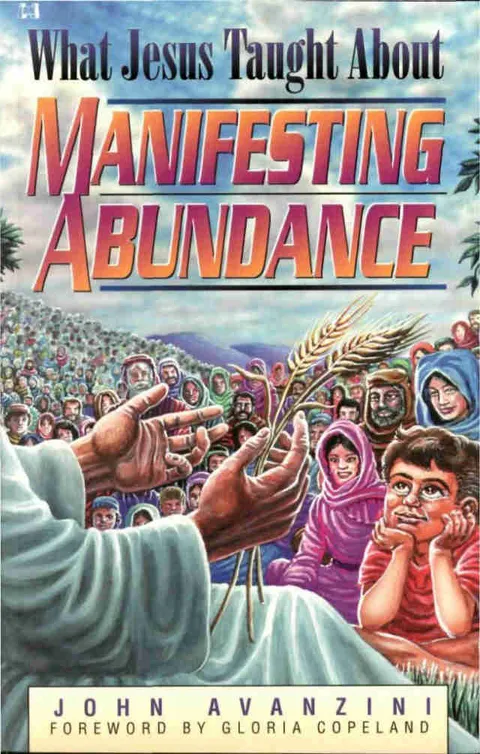

What Jesus Taught About Manifesting Abundance Order Printed Copy
- Author: John Avanzini
- Size: 1.85MB | 108 pages
- |
Others like what jesus taught about manifesting abundance Features >>
How God Taught Me About Prosperity

Financial Breakthrough

Financial Security In The Last Days

Wealth Creation
The Parable Of Dollars
God's Banking System
The Covenant Of Wealth
31 Reasons People Do Not Receive Their Financial Harvest
Are Tithes And Offerings The Same
-160.webp)
Debt-Free Living (Eliminating Debt In A New Economy)
About the Book
"What Jesus Taught about Manifesting Abundance" by John Avanzini explores the teachings of Jesus in relation to creating abundance in one's life. The book delves into biblical principles and practical strategies that can help readers manifest financial blessings and success by following Jesus' teachings on faith, giving, and stewardship. Avanzini emphasizes the power of positive thinking, gratitude, and generosity as key elements in attracting wealth and abundance.
C.S. Lewis
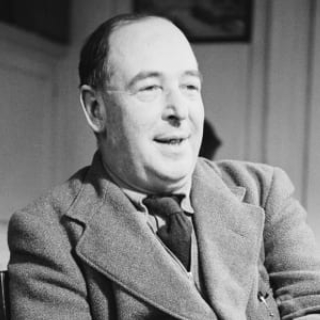 C.S. Lewis was a prolific Irish writer and scholar best known for his 'Chronicles of Narnia' fantasy series and his pro-Christian texts.
Who Was C.S. Lewis?
Writer and scholar C.S. Lewis taught at Oxford University and became a renowned Christian apologist writer, using logic and philosophy to support the tenets of his faith. He is also known throughout the world as the author of The Chronicles of Narnia fantasy series, which have been adapted into various films for the big and small screens.
Early Life
Clive Staples Lewis was born in Belfast, Ireland, on November 29, 1898, to Flora August Hamilton Lewis and Albert J. Lewis. As a toddler, Clive declared that his name was Jack, which is what he was called by family and friends. He was close to his older brother Warren and the two spent much time together as children.
Lewis was enraptured by fantastic animals and tales of gallantry, and hence the brothers created the imaginary land of Boxen, complete with an intricate history that served them for years. Lewis' mother died when he was 10, and he went on to receive his pre-college education at boarding schools and from a tutor. During WWI, he served with the British army and was sent home after being wounded by shrapnel. He then chose to live as a surrogate son with Janie Moore, the mother of a friend of Lewis' who was killed in the war.
Teaching Career at Oxford and Wartime Broadcasts
Lewis graduated from Oxford University with a focus on literature and classic philosophy, and in 1925 he was awarded a fellowship teaching position at Magdalen College, which was part of the university. There, he also joined the group known as The Inklings, an informal collective of writers and intellectuals who counted among their members Lewis' brother Warren and J.R.R. Tolkien. It was through conversations with group members that Lewis found himself re-embracing Christianity after having become disillusioned with the faith as a youth. He would go on to become renowned for his rich apologist texts, in which he explained his spiritual beliefs via platforms of logic and philosophy.
Lewis began publishing work including Spirits in Bondage in 1919 and the satirical Dymer in 1926. After penning other titles — including The Allegory of Love (1936), for which he won the Hawthornden Prize — he released in 1938 his first sci-fi work, Out of the Silent Planet, the first of a space trilogy which dealt sub-textually with concepts of sin and desire. Later, during WWII, Lewis gave highly popular radio broadcasts on Christianity which won many converts; his speeches were collected in the work Mere Christianity.
Books and Film Legacy
Lewis was a prolific author of fiction and nonfiction who wrote dozens of books over the course of his career. His faith-based arguments as seen in texts like The Great Divorce (1946) and Miracles (1947) are held in high regard by many theologians, scholars and general readers. His satirical fiction novel The Screwtape Letters (1942) is also a beloved classic. Lewis also continued his love affair with classic mythology and narratives during his later years: His book Till We Have Faces: A Myth Retold (1956) featured the story of Psyche and Cupid. He also penned an autobiography, Surprised by Joy: The Shape of My Early Life (1955).
Lewis' landmark series, The Chronicles of Narnia, has seen a number of on-screen iterations, including a cartoon version of The Lion, The Witch and the Wardrobe that was released in 1979 and a 1989 film series. Additionally, in 2005, a big-screen adaptation of The Lion, The Witch and the Wardrobe hit movie theaters, starring Tilda Swinton as the witch Jadis and Liam Neeson as the voice of Aslan. Two more Narnia films were brought to theaters as well: Prince Caspian (2008) and The Voyage of the Dawn Treader (2010). A movie version of The Silver Chair was slated to hit theaters in the near future, with filming starting in the winter of 2018.
Lewis' relationship with his wife, Joy, has also been depicted in Shadowlands, presented as a play and two films; one of the film versions was directed by Richard Attenborough and starred Anthony Hopkins as Lewis.
'The Chronicles of Narnia'
During the 1940s, Lewis began writing the seven books that would comprise The Chronicles of Narnia children's series, with The Lion, The Witch and the Wardrobe (1950) being the first release. The story focused on four siblings who, during wartime, walk through an armoire to enter the magical world of Narnia, a land resplendent with mythical creatures and talking animals. Throughout the series, a variety of Biblical themes are presented; one prominent character is Aslan, a lion and the ruler of Narnia, who has been interpreted as a Jesus Christ figure. (Lewis would assert that his Narnia stories weren't a direct allegory to the real world.)
Though the book received some negative reviews, it was generally well-received by readers, and the series retained its international popularity over the following decades.
Marriage
In 1954, Lewis joined the faculty of Cambridge University as a literature professor, and in 1956 he married an American English teacher, Joy Gresham, with whom he had been in correspondence. Lewis was full of happiness during the years of their marriage, though Gresham died of cancer in 1960. Lewis grieved deeply for his wife and shared his thoughts in the book A Grief Observed, using a pen name.
Death
In 1963, Lewis resigned from his Cambridge position after experiencing heart trouble. He died on November 22, 1963, in Headington, Oxford.
C.S. Lewis was a prolific Irish writer and scholar best known for his 'Chronicles of Narnia' fantasy series and his pro-Christian texts.
Who Was C.S. Lewis?
Writer and scholar C.S. Lewis taught at Oxford University and became a renowned Christian apologist writer, using logic and philosophy to support the tenets of his faith. He is also known throughout the world as the author of The Chronicles of Narnia fantasy series, which have been adapted into various films for the big and small screens.
Early Life
Clive Staples Lewis was born in Belfast, Ireland, on November 29, 1898, to Flora August Hamilton Lewis and Albert J. Lewis. As a toddler, Clive declared that his name was Jack, which is what he was called by family and friends. He was close to his older brother Warren and the two spent much time together as children.
Lewis was enraptured by fantastic animals and tales of gallantry, and hence the brothers created the imaginary land of Boxen, complete with an intricate history that served them for years. Lewis' mother died when he was 10, and he went on to receive his pre-college education at boarding schools and from a tutor. During WWI, he served with the British army and was sent home after being wounded by shrapnel. He then chose to live as a surrogate son with Janie Moore, the mother of a friend of Lewis' who was killed in the war.
Teaching Career at Oxford and Wartime Broadcasts
Lewis graduated from Oxford University with a focus on literature and classic philosophy, and in 1925 he was awarded a fellowship teaching position at Magdalen College, which was part of the university. There, he also joined the group known as The Inklings, an informal collective of writers and intellectuals who counted among their members Lewis' brother Warren and J.R.R. Tolkien. It was through conversations with group members that Lewis found himself re-embracing Christianity after having become disillusioned with the faith as a youth. He would go on to become renowned for his rich apologist texts, in which he explained his spiritual beliefs via platforms of logic and philosophy.
Lewis began publishing work including Spirits in Bondage in 1919 and the satirical Dymer in 1926. After penning other titles — including The Allegory of Love (1936), for which he won the Hawthornden Prize — he released in 1938 his first sci-fi work, Out of the Silent Planet, the first of a space trilogy which dealt sub-textually with concepts of sin and desire. Later, during WWII, Lewis gave highly popular radio broadcasts on Christianity which won many converts; his speeches were collected in the work Mere Christianity.
Books and Film Legacy
Lewis was a prolific author of fiction and nonfiction who wrote dozens of books over the course of his career. His faith-based arguments as seen in texts like The Great Divorce (1946) and Miracles (1947) are held in high regard by many theologians, scholars and general readers. His satirical fiction novel The Screwtape Letters (1942) is also a beloved classic. Lewis also continued his love affair with classic mythology and narratives during his later years: His book Till We Have Faces: A Myth Retold (1956) featured the story of Psyche and Cupid. He also penned an autobiography, Surprised by Joy: The Shape of My Early Life (1955).
Lewis' landmark series, The Chronicles of Narnia, has seen a number of on-screen iterations, including a cartoon version of The Lion, The Witch and the Wardrobe that was released in 1979 and a 1989 film series. Additionally, in 2005, a big-screen adaptation of The Lion, The Witch and the Wardrobe hit movie theaters, starring Tilda Swinton as the witch Jadis and Liam Neeson as the voice of Aslan. Two more Narnia films were brought to theaters as well: Prince Caspian (2008) and The Voyage of the Dawn Treader (2010). A movie version of The Silver Chair was slated to hit theaters in the near future, with filming starting in the winter of 2018.
Lewis' relationship with his wife, Joy, has also been depicted in Shadowlands, presented as a play and two films; one of the film versions was directed by Richard Attenborough and starred Anthony Hopkins as Lewis.
'The Chronicles of Narnia'
During the 1940s, Lewis began writing the seven books that would comprise The Chronicles of Narnia children's series, with The Lion, The Witch and the Wardrobe (1950) being the first release. The story focused on four siblings who, during wartime, walk through an armoire to enter the magical world of Narnia, a land resplendent with mythical creatures and talking animals. Throughout the series, a variety of Biblical themes are presented; one prominent character is Aslan, a lion and the ruler of Narnia, who has been interpreted as a Jesus Christ figure. (Lewis would assert that his Narnia stories weren't a direct allegory to the real world.)
Though the book received some negative reviews, it was generally well-received by readers, and the series retained its international popularity over the following decades.
Marriage
In 1954, Lewis joined the faculty of Cambridge University as a literature professor, and in 1956 he married an American English teacher, Joy Gresham, with whom he had been in correspondence. Lewis was full of happiness during the years of their marriage, though Gresham died of cancer in 1960. Lewis grieved deeply for his wife and shared his thoughts in the book A Grief Observed, using a pen name.
Death
In 1963, Lewis resigned from his Cambridge position after experiencing heart trouble. He died on November 22, 1963, in Headington, Oxford.
The Martyred Lover - The Story Behind Saint Valentine’s Day
Of the multitude of feasts celebrated in the popular culture of medieval Europe — wherein lie some of the key roots of the modern West — only two remain in popular North American culture today: Saint Patrick’s Day (March 17) and Saint Valentine’s Day (February 14). With Saint Patrick, we have two important texts by Patrick himself that reveal the true man. But who was Saint Valentine? The name was a popular one in the Roman world, for the adjective valens expressed the idea of being vigorous and robust. In fact, we know of about a dozen early Christians who bore this name. Our Saint Valentine was an Italian bishop who was martyred on February 14, 269, after a trial before the Roman emperor Claudius Gothicus (reign 268–270). According to the meager accounts that we have, Valentine’s body was hastily buried, but a few nights later some of his associates retrieved it and returned it to his home town of Terni in central Italy. Other accounts list him as an elder in Rome. One embellishment has him writing a letter before his death and signing it, “your Valentine.” “Saint Valentine was a martyr — yes, a lover, but one who loved the Lord Jesus to the point of giving his life.” What seems clear, though, from all that we can determine, is that Saint Valentine was a martyr — yes, a lover, but one who loved the Lord Jesus to the point of giving his life for his commitment to Christ. For Christians to adequately remember Saint Valentine, then, we would do well to consider what it meant to be a martyr in the early church. Witnesses and Martyrs Our word martyr is derived from the Greek martys, originally a juridical term that was used of a witness in a court of law. Such a person was one “who has direct knowledge or experience of certain persons, events or circumstances and is therefore in a position to speak out and does so.”1 In the New Testament, the term and its cognates are frequently applied to Christians, who bear witness to Christ, often in real courts of law, when his claims are disputed and their fidelity is tested by persecution. The transition of this word within the early Christian communities from witness to what the English term martyr” entails serves as an excellent gauge of what was happening to Christians as they bore witness to Christ. In Acts 1:8, Jesus tells the apostles that they are to be his “witnesses” (martyres) in Jerusalem, Judea, Samaria, and to the end of the earth. At this point, the word does not have the association of death, although in Acts 22:20 we do read of the “blood of Stephen,” the Lord’s “witness” (Greek martyros), being shed. But it is really not until the end of the writing of the New Testament canon that the term martys acquires the association with death.2 At the very close of the apostolic era, the risen Christ in Revelation 2 commends his servant Antipas, his “faithful witness,” who was slain for his faith at Pergamum, “where Satan dwells” (Revelation 2:12–13). Pergamum, it should be noted, was a key center of emperor worship in Asia Minor, and the first town in that area to build a temple to a Roman emperor, Augustus Caesar. It may well have been Antipas’s refusal to confess Caesar as Lord and worship him that led to his martyrdom.3 It has been estimated that by the mid-first century, eighty or so cities in Asia Minor had erected temples devoted to the cult of the emperor.4 The word martys seems thus to have acquired its future meaning first in the Christian communities in Asia Minor, where the violent encounter between church and empire was particularly intense.5 In this regard, it was certainly not fortuitous that Asia Minor was “unusually fond” of the violent entertainment of the gladiatorial shows. There was, in fact, a training school for gladiators at Pergamum. Along with fascination with such violence, there would have been a demand for victims over and above the requisite gladiators. Thus, recourse was had to Christians, among others.6 And so, the word martys became restricted in its usage to a single signification: bearing witness to the person and work of Christ to the point of death. Stephen and Antipas were the first of many such martyrs in the Roman Empire. Neronian Persecution One of the most memorable clashes between church and empire was what has come to be called the Neronian persecution. In mid-July 64, a fire began in the heart of Rome that raged out of control for nearly a week and gutted most of the city. After it had been extinguished, it was rumored that the emperor Nero (reign 54–68) himself had started it, for it was common knowledge that Nero wanted to level the capital of the empire in order to rebuild the city in a style in keeping with his conception of his own greatness. Conscious that he had to allay suspicions against him, Nero fixed the blame on the Christians. The fullest description that we have of this violence against the church is from the Roman historian Tacitus (about 55–117), who describes the execution of these Christians as follows: To scotch the rumour [that he had started the fire], Nero substituted as culprits, and punished with the utmost refinements of cruelty, a class of men, loathed for their vices, whom the crowd styled Christians. Christus, from whom they got their name, had been executed by sentence of the procurator Pontius Pilate when Tiberius was emperor; and the pernicious superstition was checked for a short time, only to break out afresh, not only in Judaea, the home of the plague, but in Rome itself, where all the horrible and shameful things in the world collect and find a home. First of all, those who confessed were arrested; then, on their information, a huge multitude was convicted, not so much on the ground of incendiarism as for hatred of the human race. Their execution was made a matter of sport: some were sewn up in the skins of wild beasts and savaged to death by dogs; others were fastened to crosses as living torches, to serve as lights when daylight failed. Nero made his gardens available for the show and held games in the Circus, mingling with the crowd or standing in his chariot in charioteer’s uniform. Hence, although the victims were criminals deserving the severest punishment, pity began to be felt for them because it seemed that they were being sacrificed to gratify one man’s lust for cruelty rather than for the public weal.7 A number of Christians — including the apostle Peter, according to an early Christian tradition that seems to be genuine8 — were arrested and executed. Their crime was ostensibly arson. Tacitus seems to doubt the reality of this accusation, though he does believe that Christians are rightly “loathed for their vices.” Tacitus’s text mentions only one vice explicitly: “hatred of the human race.” Why would Christians, who preached a message of divine love and who were commanded to love even their enemies, be accused of such a vice? Well, if one looks at it through the eyes of Roman paganism, the logic seems irrefutable. It was, after all, the Roman gods who kept the empire secure. But the Christians refused to worship these gods — thus the charge of “atheism” that was sometimes leveled at them.9 Therefore, many of their pagan neighbors reasoned, they cannot love the emperor or the empire’s inhabitants. Christians thus were viewed as fundamentally anti-Roman and so a positive danger to the empire.10 ‘Blood of Christians Is Seed’ This attack on the church was a turning-point in the relationship between the church and the Roman state in these early years. It set an important precedent. Christianity was now considered illegal, and over the next 140 years the Roman state had recourse to sporadic persecution of the church. It is noteworthy, though, that no emperor initiated an empire-wide persecution until the beginning of the third century, and that with Septimius Severus (reign 193–211).11 Nonetheless, martyrdom was a reality that believers had to constantly bear in mind during this period of the ancient church. “Instead of stamping out Christianity, persecution often caused it to flourish.” But persecution did not always have the effect the Romans hoped for. Instead of stamping out Christianity, persecution often caused it to flourish. As Tertullian (born about 155), the first Christian theologian to write in Latin, put it, “The more you mow us down, the more we grow: the blood of Christians is seed.”12 And as he said on another occasion: “whoever beholds such noble endurance [of the martyrs] will first, as though struck by some kind of uneasiness, be driven to enquire what is the matter in question, and, then, when he knows the truth, immediately follow the same way.”13 Surpassing All Earthly Loves It was during the Middle Ages that the various stories of Saint Valentine circulated and were embellished, solidifying the remembrance of him as a martyr. But it was a medieval writer, Geoffrey Chaucer (1340s–1400), who explicitly linked romantic love to Saint Valentine in a poem entitled “Parliament of Fowls” that described the gathering of a group of birds on “seynt valentynes day” to choose their mates. To what degree Chaucer influenced the later link between Saint Valentine’s Day and lovers is not exactly clear, but as early as the fifteenth century lovers were sending each other love notes on Saint Valentine’s Day. Of course, with the rise of the commercial cultures of the West in the eighteenth and nineteenth centuries, this practice was commodified and became an important part of the commercial world we see today. There is nothing inherently wrong with modern commercial traditions, but Saint Valentine’s Day is a good day to also remember that there is a love that surpasses all earthly loves: our love for our great God and our Savior, his dear divine Son, Jesus. Allison A. Trites, The New Testament Concept of Witness (Cambridge: Cambridge University Press, 1977), 9. ↩ G.W. Bowersock, Martyrdom and Rome (Cambridge: Cambridge University Press, 1995), 1–21. ↩ Paul Keresztes, “The Imperial Roman Government and the Christian Church. I. From Nero to the Severi” in Aufstieg und Niedergang der römischen Welt, ed. Hildegard Temporini and Wolfgang Haase (Berlin: Walter de Gruyter, 1979), II.23.1, 272; G.K. Beale, The Book of Revelation (Grand Rapids: Eerdmans, 1999), 246. ↩ Christopher A. Frilingos, Spectacles of Empire: Monsters, Martyrs, and the Book of Revelation (Philadelphia: University of Pennsylvania Press, 2004), 22–23. ↩ Theofried Baumeister, “Martyrdom and Persecution in Early Christianity,” trans. Robert Nowell, in Martyrdom Today, ed. Johannes-Baptist Metz and Edward Schillebeeckx (Edinburgh: T&T Clark, 1983), 4. ↩ Bowersock, Martyrdom and Rome, 17–18; Keresztes, “Imperial Roman Government and the Christian Church,” 272. ↩ Tacitus, Annals 15.44.3–8, trans. F.F. Bruce, Paul: Apostle of the Heart Set Free (Grand Rapids: Eerdmans, 1977), 442. ↩ See Tertullian, Scorpiace 15.3. ↩ See Justin Martyr, 2 Apology 3. ↩ W.H.C. Frend, “Persecutions,” in Encyclopedia of the Early Church, ed. Angelo Di Berardino, trans. Adrian Walford (New York: Oxford University Press, 1992), II, 673. Christians were also charged with incest, seemingly a misunderstanding of the common Christian statement about loving their brothers and sisters in Christ, and with cannibalism, a misunderstanding of the Lord’s Table. See, in this regard, Justin Martyr, 2 Apology 12; Theophilus, To Autolycus 3.4, 15; Minucius Felix, Octavius 9.2, 5; 28.2; 30–31. ↩ Some scholars see the first empire-wide persecution initiated by an emperor to be that of Decius (reign 249–251) in the late 240s. ↩ Tertullian, Apology 50.13. ↩ Tertullian, To Scapula 5, in Tertullian: Apologetical Works and Minucius Felix: Octavius, trans. Rudolph Arbesmann, Emily Joseph Daly, and Edwin A. Quain (New York: Fathers of the Church, Inc., 1950), 161. ↩ Article by Michael A.G. Haykin