
GIP Library icon

LOG IN TO REVIEW
About the Book


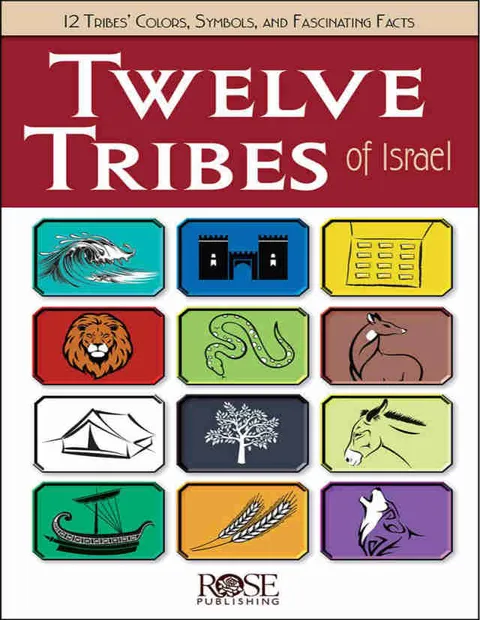
The book "Twelve Tribes of Israel" by Rose Publishing provides a detailed overview of each of the twelve tribes of Israel, their history, characteristics, blessings, and significance in the Bible. The book explores the origins of the tribes, their roles in ancient Israel, and their eventual dispersal throughout history. Additionally, the book highlights the spiritual lessons that can be gleaned from each tribe's story.

Billy Graham

Billy Graham Billy Graham (born November 7, 1918, Charlotte, North Carolina, U.S.—died February 21, 2018, Montreat, North Carolina), American evangelist whose large-scale preaching missions, known as crusades, and friendship with numerous U.S. presidents brought him to international prominence. Conversion and early career The son of a prosperous dairy farmer, Billy Graham grew up in rural North Carolina. In 1934, while attending a revival meeting led by the evangelist Mordecai Ham, he underwent a religious experience and professed his “decision for Christ.” In 1936 he left his father’s dairy farm to attend Bob Jones College (now Bob Jones University), then located in Cleveland, Tennessee, but stayed for only a semester because of the extreme fundamentalism of the institution. He transferred to Florida Bible Institute (now Trinity College), near Tampa, graduated in 1940, and was ordained a minister by the Southern Baptist Convention. Convinced that his education was deficient, however, Graham enrolled at Wheaton College in Illinois. While at Wheaton, he met and married (1943) Ruth Bell, daughter of L. Nelson Bell, a missionary to China. By the time Graham graduated from Wheaton in 1943, he had developed the preaching style for which he would become famous—a simple, direct message of sin and salvation that he delivered energetically and without condescension. “Sincerity,” he observed many years later, “is the biggest part of selling anything, including the Christian plan of salvation.” After a brief and undistinguished stint as pastor of Western Springs Baptist Church in the western suburbs of Chicago, Graham decided to become an itinerant evangelist. He joined the staff of a new organization called Youth for Christ in 1945 and in 1947 served as president of Northwestern Bible College in Minneapolis, Minnesota. Evangelism Graham’s emergence as an evangelist came at a propitious moment for 20th-century Protestants. Protestantism in the United States was deeply divided as a result of controversies in the 1920s between fundamentalism and modernism (a movement that applied scholarly methods of textual and historical criticism to the study of the Bible). The public image of fundamentalists was damaged by the Scopes Trial of 1925, which concerned the teaching of Charles Darwin’s theory of evolution in public schools in Tennessee; in his writings about the trial, the journalist and social critic H.L. Mencken successfully portrayed all fundamentalists as uneducated country bumpkins. In response to these controversies, most fundamentalists withdrew from the established Protestant denominations, which they regarded as hopelessly liberal, and retreated from the larger society, which they viewed as both corrupt and corrupting. Although Graham remained theologically conservative, he refused to be sectarian like other fundamentalists. Seeking to dissociate himself from the image of the stodgy fundamentalist preacher, he seized on the opportunity presented by new media technologies, especially radio and television, to spread the message of the gospel. In the late 1940s Graham’s fellow evangelist in Youth for Christ, Charles Templeton, challenged Graham to attend seminary with him so that both preachers could shore up their theological knowledge. Graham considered the possibility at length, but in 1949, while on a spiritual retreat in the San Bernardino Mountains of southern California, he decided to set aside his intellectual doubts about Christianity and simply “preach the gospel.” After his retreat, Graham began preaching in Los Angeles, where his crusade brought him national attention. He acquired this new fame in no small measure because newspaper magnate William Randolph Hearst, impressed with the young evangelist’s preaching and anticommunist rhetoric, instructed his papers to “puff Graham.” The huge circus tent in which Graham preached, as well as his own self-promotion, lured thousands of curious visitors—including Hollywood movie stars and gangsters—to what the press dubbed the “canvas cathedral” at the corner of Washington and Hill streets. From Los Angeles, Graham undertook evangelistic crusades around the country and the world, eventually earning international renown. Despite his successes, Graham faced criticism from both liberals and conservatives. In New York City in 1954 he was received warmly by students at Union Theological Seminary, a bastion of liberal Protestantism; nevertheless, the theologian Reinhold Niebuhr, a professor at Union and one of the leading Protestant thinkers of the 20th century, had little patience for Graham’s simplistic preaching. On the other end of the theological spectrum, fundamentalists such as Bob Jones, Jr., Carl McIntire, and Jack Wyrtzen never forgave Graham for cooperating with the Ministerial Alliance, which included mainline Protestant clergy, in the planning and execution of Graham’s storied 16-week crusade at Madison Square Garden in New York in 1957. Such cooperation, however, was part of Graham’s deliberate strategy to distance himself from the starchy conservatism and separatism of American fundamentalists. His entire career, in fact, was marked by an irenic spirit. Graham, by his own account, enjoyed close relationships with several American presidents, from Dwight Eisenhower to George W. Bush. (Although Graham met with Harry Truman in the Oval Office, the president was not impressed with him.) Despite claiming to be apolitical, Graham became politically close to Richard Nixon, whom he had befriended when Nixon was Eisenhower’s vice president. During the 1960 presidential campaign, in which Nixon was the Republican nominee, Graham met in Montreaux, Switzerland, with Norman Vincent Peale and other Protestant leaders to devise a strategy to derail the campaign of John F. Kennedy, the Democratic nominee, in order to secure Nixon’s election and prevent a Roman Catholic from becoming president. Although Graham later mended relations with Kennedy, Nixon remained his favourite politician; indeed, Graham all but endorsed Nixon’s reelection effort in 1972 against George McGovern. As Nixon’s presidency unraveled amid charges of criminal misconduct in the Watergate scandal, Graham reviewed transcripts of Oval Office tape recordings subpoenaed by Watergate investigators and professed to be physically sickened by his friend’s use of foul language. Legacy of Billy Graham Graham’s popular appeal was the result of his extraordinary charisma, his forceful preaching, and his simple, homespun message: anyone who repents of sins and accepts Jesus Christ will be saved. Behind that message, however, stood a sophisticated organization, the Billy Graham Evangelistic Association, incorporated in 1950, which performed extensive advance work in the form of favourable media coverage, cooperation with political leaders, and coordination with local churches and provided a follow-up program for new converts. The organization also distributed a radio program, Hour of Decision, a syndicated newspaper column, “My Answer,” and a magazine, Decision. Although Graham pioneered the use of television for religious purposes, he always shied away from the label “televangelist.” During the 1980s, when other television preachers were embroiled in sensational scandals, Graham remained above the fray, and throughout a career that spanned more than half a century few people questioned his integrity. In 1996 Graham and his wife received the Congressional Gold Medal of Honor, the highest civilian award bestowed by the United States, and in 2001 he was made an Honorary Knight Commander of the Order of the British Empire (KBE). Graham concluded his public career with a crusade in Queens, New York, in June 2005. Graham claimed to have preached in person to more people than anyone else in history, an assertion that few would challenge. His evangelical crusades around the world, his television appearances and radio broadcasts, his friendships with presidents, and his unofficial role as spokesman for America’s evangelicals made him one of the most recognized religious figures of the 20th century.

to men who want to marry - how to prepare to lead well

A few months into our marriage, it dawned on me: I was unprepared, as though I had studied for the wrong exam. Before our wedding, I had thought daily devotions, church and small group, and premarital counseling would sufficiently prepare me to be a godly husband. They did not. After a short season of bliss, we began to struggle and argue. So much, in fact, that our counselor literally sat between us and warned us we were in danger of fulfilling Galatians 5:15: “If you bite and devour one another, watch out that you are not consumed by one another.” My lack of preparation showed up in other ways too. I didn’t understand how to lead my wife spiritually, bring up hard conversations, or help us reconcile after an argument. My status as a seminary student and pastoral intern added layers of shame. Worst of all, I had no idea how to make our marriage better. I now know that we were not alone in our experience. My wife and I have walked with many Christian women who are deeply frustrated by the relative lack of marriage-ready Christian men, as well as with many Christian men who either don’t know they need to prepare or have no idea how. If I could go back and give my younger, not-yet-married self some advice, I’d tell him men need a good plan as they prepare for marriage. More specifically, I’d tell him to pursue God above all else and work on growing as a leader, provider, and protector. Pursue God Above All Else Preparing well for marriage begins with regular encounters with God — seeing him in Scripture for who he is in all his glory, greatness, and grace. No matter how many times we’ve read through the Bible, we need to be continually captivated by God again and again. “Great is the Lord, and greatly to be praised, and his greatness is unsearchable” (Psalm 145:3). Similarly, the apostle Paul urges us to follow his example and “count everything as loss because of the surpassing worth of knowing Christ Jesus my Lord” (Philippians 3:8). “Preparing well for marriage begins with regular encounters with God.” As C.S. Lewis famously phrased it, God invites us to “come further up and further in.” An ever-expanding view of God is worth more than a million tips and hacks for marriage. Most of us, however, have had the experience of reading our Bibles and feeling cold and unmoved. Therefore, we meditate on the Bible, slowing down to think about and pray over what we read. When we do, God often brings a new sweetness to our souls. As Psalm 1:2 says, “His delight is in the law of the Lord, and on his law he meditates day and night.” In our distracted age, meditation will be a battle. But we can strive to read our Bibles during our best discretionary time, the time when we are most rested and unhurried. For many of us, this will be first thing in the morning. Before you begin reading, ask God to make something glorious stand out to you. “Open my eyes, that I may behold wondrous things out of your law” (Psalm 119:18). When he answers that prayer, slow down and feast. Lead, Provide, and Protect Preparing well for marriage begins with pursuing God, but it certainly doesn’t end there. Pursuing God provides the strength and fuel men need to keep growing into God’s calling as leaders, providers, and protectors. “Pursuing God provides the strength and fuel men need to keep growing into God’s calling.” God clearly calls men, not just husbands, to these kinds of responsibilities in Scripture. While marriage radically narrows and heightens the responsibilities of leading, providing, and protecting, it does not create them. Before Eve’s creation or the fall, God established Adam as a leader by creating him first, as a provider by commanding him to “work and keep” the garden (Genesis 2:15), and as a protector by commanding him to avoid the tree of the knowledge of good and evil (Genesis 2:17). Every man can practice and grow into these callings now, even before he gets married. In particular, the church is an especially good place for a young man to cultivate the kind of responsibility and initiative that will be required of him in marriage. So what are ways for single men to learn to lead, provide, and protect within the church? 1. Grow As a Leader As a husband, a man will be tasked with sacrificially leading his wife (Ephesians 5:22). God will call him to become the kind of Christlike leader a godly woman can follow wholeheartedly, even as the church follows Christ. Paul says, “The husband is the head of the wife even as Christ is the head of the church, his body, and is himself its Savior” (Ephesians 5:23). Practically, men can grow into this kind of sacrificial leadership by cultivating humble initiative. As both Lion and Lamb (Revelation 5:5–6), Jesus embodies both strength and humility. While Christian men are being renewed, we are still drawn toward arrogant initiative (like Joab in 2 Samuel 3:26–27) or selfish passivity (like Adam in Genesis 3:6). With the help of others, we can see our own particular tendencies, repent, and seek grace to grow in concrete ways. For instance, a man characterized by pride might invite trusted friends to plainly point out selfishness they observe. A man who leans toward selfish passivity might take the initiative to greet people sitting alone at church, rather than merely moving toward those he already knows. 2. Grow As a Provider As a husband, a man will be called to another form of leadership: primary provision for his family. Paul makes this plain in Ephesians 5:28–29: “In the same way husbands should love their wives as their own bodies. He who loves his wife loves himself. For no one ever hated his own flesh, but nourishes and cherishes it, just as Christ does the church.” Just as a man provides for his own needs, God calls him to provide for his wife. This does not mean the husband will be the home’s only breadwinner, or even that he will necessarily earn more than his wife. It simply means he will take ultimate responsibility to ensure his family’s physical and spiritual needs are met. Unmarried men can begin applying this by working hard for the right reasons (Proverbs 14:23; Colossians 3:23–24). Are we essentially working to fund hobbies, experiences, and vacations? Or, believing God has called us to meaningful work, are we actively, tangibly using it to love him and others? 3. Grow As a Protector In marriage, God calls men to accept danger, as necessary, to protect their wives, a third critical dimension of a husband’s calling. Jesus set the ultimate example for men by giving up his life on the cross for his bride’s sanctification (Ephesians 5:25), thereby protecting us from God’s eternal judgment (John 3:36). This does not mean men are fearless or more courageous than their wives. Instead, it involves a willingness, like Jesus in Gethsemane (Luke 22:40), to protect others even if we’re afraid ourselves. Christian men will not need to search very far for opportunities to practice protection. We are surrounded by injustice and people at risk. It’s easy — like the Levite and priest in the Parable of the Good Samaritan (Luke 10:25–37) — to look the other way, but godly men learn to step in. One man I know, for example, keeps granola bars in his car for homeless people, and looks for opportunities to serve and engage them. You might also take the risk to speak up on behalf of others who are being slandered or treated unfairly because of their Christian beliefs. More than that, however, godly men understand protecting others from an eternity without Christ is the greatest service they can render. Such spiritual protection requires a deep belief in God ourselves, and a willingness to accept resistance when we speak the truth in love — as, for example, when we gently warn non-Christian friends of their spiritual danger (1 Peter 3:15) or confront other Christians about their sin (Matthew 18:15–17). Find a Husband to Follow While seeking God first and leaning into his callings for us as men is critical, it’s immensely helpful to find a godly married man to disciple you (1 Corinthians 11:1; 2 Timothy 2:2). Proactively find someone you admire who’s willing to be transparent, and ask to spend time with him and his family. Ask him what he’s learned from the successes and failures in his marriage, and consider how you might incorporate those lessons even now. As men, all of us are called to run hard after Christ (Philippians 3:8–12), regardless of whether we marry one day. But as we pursue Christ and grow as leaders, providers, and protectors, we will be more prepared to date — and ultimately, marry — a godly woman, if God wills.

Feedback
Suggestionsuggestion box
x