

Others like thinking, fast and slow Features >>

Feel The Fear And Do It Anyway

Thinking For A Change

Think And Make Impact

The Principles And Power Of Vision
-160.webp)
The Principles And Power Of Vision (Keys To Achieving Personal And Corporate Destiny)
50 Mindful Steps To Self Esteem

Approval Addiction

How To Stop Worrying And Start Living

Sign Posts On The Road Of Success

Futureboards
About the Book
"Thinking, Fast and Slow" by Daniel Kahneman explores the two systems that drive the way we think: the fast, intuitive System 1 and the slow, deliberate System 2. Kahneman examines how these systems shape our judgments, decisions, and biases, shedding light on the inherent flaws in human cognition and offering insights on how to make better choices. The book explores various psychological phenomena and provides practical strategies for improving decision-making skills.
William Carey
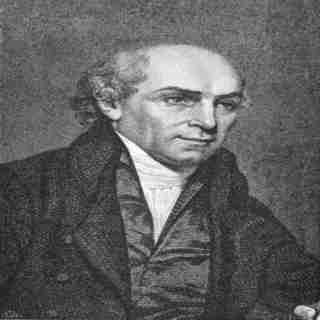 "Expect great things; attempt great things."
At a meeting of Baptist leaders in the late 1700s, a newly ordained minister stood to argue for the value of overseas missions. He was abruptly interrupted by an older minister who said, "Young man, sit down! You are an enthusiast. When God pleases to convert the heathen, he'll do it without consulting you or me."
That such an attitude is inconceivable today is largely due to the subsequent efforts of that young man, William Carey.
Plodder Carey was raised in the obscure, rural village of Paulerpury, in the middle of England. He apprenticed in a local cobbler's shop, where the nominal Anglican was converted. He enthusiastically took up the faith, and though little educated, the young convert borrowed a Greek grammar and proceeded to teach himself New Testament Greek.
When his master died, he took up shoemaking in nearby Hackleton, where he met and married Dorothy Plackett, who soon gave birth to a daughter. But the apprentice cobbler's life was hard—the child died at age 2—and his pay was insufficient. Carey's family sunk into poverty and stayed there even after he took over the business.
"I can plod," he wrote later, "I can persevere to any definite pursuit." All the while, he continued his language studies, adding Hebrew and Latin, and became a preacher with the Particular Baptists. He also continued pursuing his lifelong interest in international affairs, especially the religious life of other cultures.
Carey was impressed with early Moravian missionaries and was increasingly dismayed at his fellow Protestants' lack of missions interest. In response, he penned An Enquiry into the Obligations of Christians to Use Means for the Conversion of the Heathens. He argued that Jesus' Great Commission applied to all Christians of all times, and he castigated fellow believers of his day for ignoring it: "Multitudes sit at ease and give themselves no concern about the far greater part of their fellow sinners, who to this day, are lost in ignorance and idolatry."
Carey didn't stop there: in 1792 he organized a missionary society, and at its inaugural meeting preached a sermon with the call, "Expect great things from God; attempt great things for God!" Within a year, Carey, John Thomas (a former surgeon), and Carey's family (which now included three boys, and another child on the way) were on a ship headed for India.
Stranger in a strange land
Thomas and Carey had grossly underestimated what it would cost to live in India, and Carey's early years there were miserable. When Thomas deserted the enterprise, Carey was forced to move his family repeatedly as he sought employment that could sustain them. Illness racked the family, and loneliness and regret set it: "I am in a strange land," he wrote, "no Christian friend, a large family, and nothing to supply their wants." But he also retained hope: "Well, I have God, and his word is sure."
He learned Bengali with the help of a pundit, and in a few weeks began translating the Bible into Bengali and preaching to small gatherings.
When Carey himself contracted malaria, and then his 5-year-old Peter died of dysentery, it became too much for his wife, Dorothy, whose mental health deteriorated rapidly. She suffered delusions, accusing Carey of adultery and threatening him with a knife. She eventually had to be confined to a room and physically restrained.
"This is indeed the valley of the shadow of death to me," Carey wrote, though characteristically added, "But I rejoice that I am here notwithstanding; and God is here."
Gift of tongues
In October 1799, things finally turned. He was invited to locate in a Danish settlement in Serampore, near Calcutta. He was now under the protection of the Danes, who permitted him to preach legally (in the British-controlled areas of India, all of Carey's missionary work had been illegal).
Carey was joined by William Ward, a printer, and Joshua and Hanna Marshman, teachers. Mission finances increased considerably as Ward began securing government printing contracts, the Marshmans opened schools for children, and Carey began teaching at Fort William College in Calcutta.
In December 1800, after seven years of missionary labor, Carey baptized his first convert, Krishna Pal, and two months later, he published his first Bengali New Testament. With this and subsequent editions, Carey and his colleagues laid the foundation for the study of modern Bengali, which up to this time had been an "unsettled dialect."
Carey continued to expect great things; over the next 28 years, he and his pundits translated the entire Bible into India's major languages: Bengali, Oriya, Marathi, Hindi, Assamese, and Sanskrit and parts of 209 other languages and dialects.
He also sought social reform in India, including the abolition of infanticide, widow burning (sati), and assisted suicide. He and the Marshmans founded Serampore College in 1818, a divinity school for Indians, which today offers theological and liberal arts education for some 2,500 students.
By the time Carey died, he had spent 41 years in India without a furlough. His mission could count only some 700 converts in a nation of millions, but he had laid an impressive foundation of Bible translations, education, and social reform.
His greatest legacy was in the worldwide missionary movement of the nineteenth century that he inspired. Missionaries like Adoniram Judson, Hudson Taylor, and David Livingstone, among thousands of others, were impressed not only by Carey's example, but by his words "Expect great things; attempt great things." The history of nineteenth-century Protestant missions is in many ways an extended commentary on the phrase.
"Expect great things; attempt great things."
At a meeting of Baptist leaders in the late 1700s, a newly ordained minister stood to argue for the value of overseas missions. He was abruptly interrupted by an older minister who said, "Young man, sit down! You are an enthusiast. When God pleases to convert the heathen, he'll do it without consulting you or me."
That such an attitude is inconceivable today is largely due to the subsequent efforts of that young man, William Carey.
Plodder Carey was raised in the obscure, rural village of Paulerpury, in the middle of England. He apprenticed in a local cobbler's shop, where the nominal Anglican was converted. He enthusiastically took up the faith, and though little educated, the young convert borrowed a Greek grammar and proceeded to teach himself New Testament Greek.
When his master died, he took up shoemaking in nearby Hackleton, where he met and married Dorothy Plackett, who soon gave birth to a daughter. But the apprentice cobbler's life was hard—the child died at age 2—and his pay was insufficient. Carey's family sunk into poverty and stayed there even after he took over the business.
"I can plod," he wrote later, "I can persevere to any definite pursuit." All the while, he continued his language studies, adding Hebrew and Latin, and became a preacher with the Particular Baptists. He also continued pursuing his lifelong interest in international affairs, especially the religious life of other cultures.
Carey was impressed with early Moravian missionaries and was increasingly dismayed at his fellow Protestants' lack of missions interest. In response, he penned An Enquiry into the Obligations of Christians to Use Means for the Conversion of the Heathens. He argued that Jesus' Great Commission applied to all Christians of all times, and he castigated fellow believers of his day for ignoring it: "Multitudes sit at ease and give themselves no concern about the far greater part of their fellow sinners, who to this day, are lost in ignorance and idolatry."
Carey didn't stop there: in 1792 he organized a missionary society, and at its inaugural meeting preached a sermon with the call, "Expect great things from God; attempt great things for God!" Within a year, Carey, John Thomas (a former surgeon), and Carey's family (which now included three boys, and another child on the way) were on a ship headed for India.
Stranger in a strange land
Thomas and Carey had grossly underestimated what it would cost to live in India, and Carey's early years there were miserable. When Thomas deserted the enterprise, Carey was forced to move his family repeatedly as he sought employment that could sustain them. Illness racked the family, and loneliness and regret set it: "I am in a strange land," he wrote, "no Christian friend, a large family, and nothing to supply their wants." But he also retained hope: "Well, I have God, and his word is sure."
He learned Bengali with the help of a pundit, and in a few weeks began translating the Bible into Bengali and preaching to small gatherings.
When Carey himself contracted malaria, and then his 5-year-old Peter died of dysentery, it became too much for his wife, Dorothy, whose mental health deteriorated rapidly. She suffered delusions, accusing Carey of adultery and threatening him with a knife. She eventually had to be confined to a room and physically restrained.
"This is indeed the valley of the shadow of death to me," Carey wrote, though characteristically added, "But I rejoice that I am here notwithstanding; and God is here."
Gift of tongues
In October 1799, things finally turned. He was invited to locate in a Danish settlement in Serampore, near Calcutta. He was now under the protection of the Danes, who permitted him to preach legally (in the British-controlled areas of India, all of Carey's missionary work had been illegal).
Carey was joined by William Ward, a printer, and Joshua and Hanna Marshman, teachers. Mission finances increased considerably as Ward began securing government printing contracts, the Marshmans opened schools for children, and Carey began teaching at Fort William College in Calcutta.
In December 1800, after seven years of missionary labor, Carey baptized his first convert, Krishna Pal, and two months later, he published his first Bengali New Testament. With this and subsequent editions, Carey and his colleagues laid the foundation for the study of modern Bengali, which up to this time had been an "unsettled dialect."
Carey continued to expect great things; over the next 28 years, he and his pundits translated the entire Bible into India's major languages: Bengali, Oriya, Marathi, Hindi, Assamese, and Sanskrit and parts of 209 other languages and dialects.
He also sought social reform in India, including the abolition of infanticide, widow burning (sati), and assisted suicide. He and the Marshmans founded Serampore College in 1818, a divinity school for Indians, which today offers theological and liberal arts education for some 2,500 students.
By the time Carey died, he had spent 41 years in India without a furlough. His mission could count only some 700 converts in a nation of millions, but he had laid an impressive foundation of Bible translations, education, and social reform.
His greatest legacy was in the worldwide missionary movement of the nineteenth century that he inspired. Missionaries like Adoniram Judson, Hudson Taylor, and David Livingstone, among thousands of others, were impressed not only by Carey's example, but by his words "Expect great things; attempt great things." The history of nineteenth-century Protestant missions is in many ways an extended commentary on the phrase.
‘happy wife, happy life’ - and other misleading advice to young husbands
The title read, “How Do I Get My Husband to Be Less Passive?” Click. The author, a wife and clinical psychologist, addressed the common complaint that women of various ages bring to her: their husbands lacked passion for anything but the couch and the screen. These wives wanted to know how to get their men to do something other than stare at the television, laptop, or smartphone, and how to get them to initiate something other than physical intimacy. They wanted their men to plan dates, start conversations, play with the kids, stand up for themselves (at work) and for their wife (with the in-laws), or to show concern for daily decisions. The manly intentionality that had pursued these women during dating had dwindled in marriage. Age-Old Problem The complaint, of course, is nothing new. Paradise was lost when the first man took the easy path of appeasement in his marriage. The serpent hissed lies in her ear; he stood silently by. Instead of an uncomfortable moment with his wife, and then crushing the skull of her deceiver, he watched as she took a bite. Compromise bore twins, and he ate too (Genesis 3:6). “Lasting joy in our marriages is found in living out the drama of Christ and his bride, not Adam and his.” And we see Adam’s passivity echoed in countless marriages today. The temptation to be emotionally and spiritually absent, when physically present, has merely changed hairstyles over time. The same unmanly repose still beckons men to recline in the passenger’s seat. God calls out to husbands today with the same question he asked in the garden: “Adam, where are you?” And where are we? Too often giving into the scheme that affords less responsibility and more opportunity to watch the game. Masculinity that leads through loving sacrifice can feel like an endangered species. And some of the mantras given to me as a newly married man may have hurt, instead of helped, my enlistment into the active-duty husbandry put on display in Jesus Christ. Consider four naive, and easily misunderstood, words of counsel given to new husbands, even from well-meaning Christian brothers. ‘Happy Wife, Happy Life’ The advice could be redeemable. The husband should lavish his queen with love, finding a great deal of his joy in hers. And one could say it from an eternal perspective: Happy wife (in the Lord), happy life. But what is most often meant by this phrase cannot be missed: a man’s life is less miserable when his woman gets her way. Such deferment is tempting: no conflict, no unhappy bride, no blame. Just letting her have her way is much more comfortable than making unpopular decisions on weighty matters, that you think (and pray) are spiritually best for her and your family: Whether they be where your children go to school, what church you join, where you live next, when to have children, or countless difficult choices that require spiritual energy, courage, and faith. But Christ created men to initiate and bear responsibility. His glory is to sacrifice. His mission is to lead his wife and his family from the front, on his knees. Although his charge includes the flourishing of the wife, the health of our leadership does not depend solely upon the daily undulations of our bride’s earthly happiness, but on the consistency with which we obey our Master. You can have a happy, governing wife resulting in a shallow, resistance-free life, and end up with an unhappy Lord. In the end, a nearsighted “happy wife, happy life” mentality throws the toys in the closet to go outside and play. Happy wife, easier life does not lead to happiness, but to a closet full of regret, bitterness, and selfishness, which we all must open eventually. It backfires on us, leaving even a growing number of unbelievers wondering how to get their men to be less passive. Lasting joy in our marriages is found in living out the drama of Christ and his bride, not Adam and his. ‘Your Spouse Is Your Best Friend’ “You can have a happy, governing wife resulting in a shallow, resistance-free life, and end up with an unhappy Lord.” She is not just your BFF because marriage is not simply friendship . It isn’t a symmetrical partnership in which the relational patterns are interchangeable. The elegance of the dance consists in the man leading assertively, lovingly, thoughtfully, and the woman following fearlessly, receptively, joyfully — which is much more than mere friendship. The dance is improper when the husband attempts to follow. Now, if we mean that she is the one person with whom you confide most, the one earthly person you treasure most, the one person with whom a day spent doing menial tasks is anything but wasted, then, yes, this is a glory. But our marriages are more than a flat partnership. The glory of a spouse is more than the glory of a friend. The miraculous event of God joining husband and wife together in a bond that none can break is a rose not to be hidden, even in the beautiful tulip-garden of friendship. The marriage drama enacts that of the Great Romance. This flower, by any other name, must smell distinctly sweet. To ballet is not to waltz. The moon is not the sun. The companion is not the spouse. ‘Be a Servant Leader’ For sure, an aspect of this is incredibly right: Jesus came not to be served but to serve and give his life for many (Mark 10:45). That the husband should be like Jesus in such self-giving sacrifice is without question or asterisk. Being a servant leader is great advice — when both words are kept together. Often, however, they are not. The paradox of servant leader devolves, in some minds, into merely meaning servant : You sacrifice your convictions for any and all of her ambitions. You take on her calling, not because of exceptional circumstance but only because you wanted to lay your aspirations down for hers. You coddle her, never asking her to do anything that she does not already want to do — even if you think it best for her ultimate joy in the Lord. The good-intentioned servant (non)leader, in an honest attempt to love and serve his wife well, abdicates to a kind of service that undermines his call to be a husband and bear responsibility, take initiative, and feel the burden of the hardest decisions. I prefer sacrificial leadership instead: “Husbands, love your wives, as Christ loved the church and gave himself up for her” (Ephesians 5:25). It is a leadership that, while not relinquishing its responsibility or apologizing for its authority, sees leadership as a calling to inconvenience self first for the good of one’s family and neighbor. ‘Marriage Is 50/50’ Marriage, for the man especially, is not 50/50. Manhood doesn’t require her to scratch your back before you’ll scratch hers. Headship doesn’t keep score. You don’t go so far, and no farther, until she catches up. You don’t limit your patience, kindness, gentleness, and goodness until she matches. A husband’s love doesn’t bear all things, believe all things, hope all things, endure all things only half the time . Husbands don’t wait for reciprocation to initiate. “The marriage drama enacts that of the Great Romance. This flower, by any other name, must smell distinctly sweet.” Jesus didn’t wait for his bride to meet him halfway. His spouse didn’t take half of the scourging or half of the cross. He, manly he, sacrificed all for her well-being — while she was yet a sinner. He gave all his life for hers. Nothing 50/50 about it. And sacrificial leadership is so happy in this love of Christ that we lay down our lives like he did — even when she isn’t “holding up her end of things.” Husbands, love your wives as Christ loved the church. We do not bring home the paycheck and expect the wife to pick up the remaining fifty percent of the relational tab with the kids. Marriages that start 50/50, often end 50/50 — splitting half of one’s assets in divorce. Play the Man You Are “Why did you wish me milder? Would you have me false to my nature? Rather say I, play the man I am.” —Coriolanus Our feminist-influenced, Bible-ignoring, headship-shaming society wishes real men to be milder. They wish you passive. They wish you silent. But God entrusts you to speak, to sacrifice, to crush serpents. He calls you to be true to your nature — the one he gave you — and play the man that you are. And that man is not timid, not unassertive, not feeble in the faith: “Be watchful, stand firm in the faith, act like men , be strong” (1 Corinthians 16:13). It cannot be asked of that man, “How can I get my husband to be less passive?” That man, as C.S. Lewis depicts, goes into battle first and retreats last. He, for truth’s and honor’s sake, “stands fast and suffers long.” God calls you to increasingly be this man, and provides the strength for you to be him when you feel weak. Stand upright, then, be strong, after the true strength and example of Jesus Christ. For your King, your wife, and your future kin.