
Three Feet From Gold Order Printed Copy
- Author: Sharon L Lechter, Greg S Reid
- Size: 1.73MB | 257 pages
- |





-160.webp)
-160.webp)


About the Book
"Three Feet From Gold" by Sharon L. Lechter and Greg S. Reid is a motivational and inspirational book that narrates the story of a man who gives up on his dreams just three feet away from striking gold. The book emphasizes the importance of perseverance, determination, and the power of never giving up in achieving success and reaching one's goals. Through engaging narratives and practical advice, the authors showcase how resilience and a positive mindset can lead to finding one's own personal treasure.
Amy Carmichael
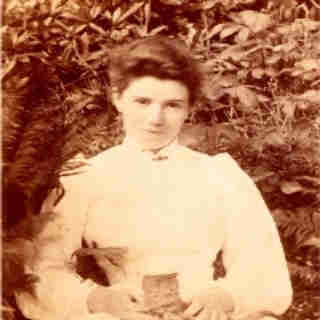 Born in Belfast Ireland, to a devout family of Scottish ancestry, Carmichael was educated at home and in England, where she lived with the familt of Robert Wilson after her father’s death. While never officially adopted, she used the hyphenated name Wilson-Carmichael as late as 1912. Her missionary call came through contacts with the Keswick movement. In 1892 she volunteered to the China Inland Mission but was refused on health grounds. However, in 1893 she sailed for Japan as the first Keswick missionary to join the Church Missionary Society (CMS) work led by Barclay Buxton. After less than two years in Japan and Ceylon, she was back in England before the end of 1894. The next year she volunteered to the Church of England Zenana Missionary Society, and in November 1895 she arrived in South India, never to leave. While still learning the difficult Tamil language, she commenced itinerant evangelism with a band of Indian Christian women, guided by the CMS missionary Thomas Walker. She soon found herself responsible for Indian women converts, and in 1901, she, the Walkers, and their Indian colleagues settled in Dohnavur. During her village itinerations, she had become increasingly aware of the fact that many Indian children were dedicated to the gods by their parents or guardians, became temple children, and lived in moral and spiritual danger. It became her mission to rescue and raise these children, and so the Dohnavur Fellowship came into being (registered 1927). Known at Dohnavur as Amma (Mother), Carmichael was the leader, and the work became well known through her writing. Workers volunteered and financial support was received, though money was never solicited. In 1931 she had a serious fall, and this, with arthritis, kept her an invalid for the rest of her life. She continued to write, and identified leaders, missionary and Indian, to take her place. The Dohnavur Fellowship still continues today.
Jocelyn Murray, “Carmichael, Amy Beatrice,” in Biographical Dictionary of Christian Missions, ed. Gerald H. Anderson (New York: Macmillan Reference USA, 1998), 116.
This article is reprinted from Biographical Dictionary of Christian Missions, Macmillan Reference USA, copyright © 1998 Gerald H. Anderson, by permission of Macmillan Reference USA, New York, NY. All rights reserved.
“Ammai” of orphans and holiness author
Amy Carmichael was born in Ireland in 1867, the oldest of seven children. As a teen, she attended a Wesleyan Methodist girls boarding school, until her father died when she was 18. Carmichael twice attended Keswick Conventions and experienced a holiness conversion which led her to work among the poor in Belfast. Through the Keswick Conventions, Carmichael met Robert Wilson. He developed a close relationship with the young woman, and invited her to live with his family. Carmichael soon felt a call to mission work and applied to the China Inland Mission as Amy Carmichael-Wilson. Although she did not go to China due to health reasons, Carmichael did go to Japan for a brief period of time. There she dressed in kimonos and began to learn Japanese. Her letters home from Japan became the basis for her first book, From Sunrise Land. Carmichael left Japan due to health reasons, eventually returning to England. She soon accepted a position with the Church of England’s Zenana Missionary Society, serving in India. From 1895 to 1925, her work with orphans in Tinnevelly (now Tirunelveli) was supported by the Church of England. After that time, Carmichael continued her work in the faith mission style, establishing an orphanage in Dohnavur. The orphanage first cared for girls who had been temple girls, who would eventually become temple prostitutes. Later the orphanage accepted boys as well.
Carmichael never returned to England after arriving in India. She wrote prolifically, publishing nearly 40 books. In her personal devotions, she relied on scripture and poetry. She wrote many of her own poems and songs. Carmichael had a bad fall in 1931, which restricted her movement. She stayed in her room, writing and studying. She often quoted Julian of Norwich when she wrote of suffering and patience. Many of Carmichael’s books have stories of Dohnavur children, interspersed with scripture, verses, and photographs of the children or nature. Carmichael never directly asked for funding, but the mission continued to be supported through donations. In 1951 Carmichael died at Dohnavur. Her headstone is inscribed “Ammai”, revered mother, which the children of Dohnavur called Carmichael.
Carmichael’s lengthy ministry at Dohnavur was sustained through her strong reliance upon scripture and prayer. Her early dedication to holiness practices and her roots in the Keswick tradition helped to guide her strong will and determination in her mission to the children of southern India.
by Rev. Lisa Beth White
Born in Belfast Ireland, to a devout family of Scottish ancestry, Carmichael was educated at home and in England, where she lived with the familt of Robert Wilson after her father’s death. While never officially adopted, she used the hyphenated name Wilson-Carmichael as late as 1912. Her missionary call came through contacts with the Keswick movement. In 1892 she volunteered to the China Inland Mission but was refused on health grounds. However, in 1893 she sailed for Japan as the first Keswick missionary to join the Church Missionary Society (CMS) work led by Barclay Buxton. After less than two years in Japan and Ceylon, she was back in England before the end of 1894. The next year she volunteered to the Church of England Zenana Missionary Society, and in November 1895 she arrived in South India, never to leave. While still learning the difficult Tamil language, she commenced itinerant evangelism with a band of Indian Christian women, guided by the CMS missionary Thomas Walker. She soon found herself responsible for Indian women converts, and in 1901, she, the Walkers, and their Indian colleagues settled in Dohnavur. During her village itinerations, she had become increasingly aware of the fact that many Indian children were dedicated to the gods by their parents or guardians, became temple children, and lived in moral and spiritual danger. It became her mission to rescue and raise these children, and so the Dohnavur Fellowship came into being (registered 1927). Known at Dohnavur as Amma (Mother), Carmichael was the leader, and the work became well known through her writing. Workers volunteered and financial support was received, though money was never solicited. In 1931 she had a serious fall, and this, with arthritis, kept her an invalid for the rest of her life. She continued to write, and identified leaders, missionary and Indian, to take her place. The Dohnavur Fellowship still continues today.
Jocelyn Murray, “Carmichael, Amy Beatrice,” in Biographical Dictionary of Christian Missions, ed. Gerald H. Anderson (New York: Macmillan Reference USA, 1998), 116.
This article is reprinted from Biographical Dictionary of Christian Missions, Macmillan Reference USA, copyright © 1998 Gerald H. Anderson, by permission of Macmillan Reference USA, New York, NY. All rights reserved.
“Ammai” of orphans and holiness author
Amy Carmichael was born in Ireland in 1867, the oldest of seven children. As a teen, she attended a Wesleyan Methodist girls boarding school, until her father died when she was 18. Carmichael twice attended Keswick Conventions and experienced a holiness conversion which led her to work among the poor in Belfast. Through the Keswick Conventions, Carmichael met Robert Wilson. He developed a close relationship with the young woman, and invited her to live with his family. Carmichael soon felt a call to mission work and applied to the China Inland Mission as Amy Carmichael-Wilson. Although she did not go to China due to health reasons, Carmichael did go to Japan for a brief period of time. There she dressed in kimonos and began to learn Japanese. Her letters home from Japan became the basis for her first book, From Sunrise Land. Carmichael left Japan due to health reasons, eventually returning to England. She soon accepted a position with the Church of England’s Zenana Missionary Society, serving in India. From 1895 to 1925, her work with orphans in Tinnevelly (now Tirunelveli) was supported by the Church of England. After that time, Carmichael continued her work in the faith mission style, establishing an orphanage in Dohnavur. The orphanage first cared for girls who had been temple girls, who would eventually become temple prostitutes. Later the orphanage accepted boys as well.
Carmichael never returned to England after arriving in India. She wrote prolifically, publishing nearly 40 books. In her personal devotions, she relied on scripture and poetry. She wrote many of her own poems and songs. Carmichael had a bad fall in 1931, which restricted her movement. She stayed in her room, writing and studying. She often quoted Julian of Norwich when she wrote of suffering and patience. Many of Carmichael’s books have stories of Dohnavur children, interspersed with scripture, verses, and photographs of the children or nature. Carmichael never directly asked for funding, but the mission continued to be supported through donations. In 1951 Carmichael died at Dohnavur. Her headstone is inscribed “Ammai”, revered mother, which the children of Dohnavur called Carmichael.
Carmichael’s lengthy ministry at Dohnavur was sustained through her strong reliance upon scripture and prayer. Her early dedication to holiness practices and her roots in the Keswick tradition helped to guide her strong will and determination in her mission to the children of southern India.
by Rev. Lisa Beth White
the most wonderful books on earth
As many begin a new year of Bible reading, we would do well to remember one of the chief dangers: searching the Scriptures, and missing the Savior. Recall Jesus’s words to the Jewish leaders of John 5, those most devoted of Bible readers: You search the Scriptures because you think that in them you have eternal life; and it is they that bear witness about me, yet you refuse to come to me that you may have life. (John 5:39–40) Amazingly, it is possible to know your Bible and not know your God. It is possible to study the word and neglect the Word. It is possible to search the Scriptures and miss the Savior. How can we guard ourselves from such a deadly yet subtle danger? Ultimately, we need the Holy Spirit to breathe Christ into the dry bones of our devotions. We need him to come, morning by morning, and turn our living room or desk into a Mount of Transfiguration. And so, we pray. But alongside prayer, we can also resolve to keep one goal of Bible reading high above the rest: Catch as much of Jesus as you can. Know and enjoy him. See and savor him. Study and love him. And to that end, let me offer a modest proposal for your consideration: as you read the Bible this year, plant your soul especially in the Gospels. Keep a Foot in the Four I am not proposing that you read only the Gospels this year, but that you consider finding some special way to plant (and keep) your soul in them. You could, for example, use the one-year Discipleship Journal Bible Reading Plan, which includes a Gospel reading for every day. Or you could memorize an extended portion of the Gospels, like the Sermon on the Mount (Matthew 5–7) or the Upper Room Discourse (John 13–17). Or you could read and reread one of the Gospels, perhaps with journal and commentary in hand. This proposal will not fit every reader. Some, perhaps, have spent most of their Christian life in the Gospels, and this may be the year to wander with Moses in the wilderness, or hear what Ezekiel has to say, or trace the logic of Romans. But I suspect many, like myself, would benefit from the counsel of J.I. Packer and J.C. Ryle. First, hear Packer: We could . . . correct woolliness of view as to what Christian commitment involves, by stressing the need for constant meditation on the four Gospels, over and above the rest of our Bible reading; for Gospel study enables us both to keep our Lord in clear view and to hold before our minds the relational frame of discipleship to him. “We should never let ourselves forget,” Packer continues, “that the four Gospels are, as has often and rightly been said, the most wonderful books on earth” ( Keep in Step with the Spirit , 61). Now listen to Ryle: It would be well if professing Christians in modern days studied the four Gospels more than they do. No doubt all Scripture is profitable. It is not wise to exalt one part of the Bible at the expense of another. But I think it should be good for some who are very familiar with the Epistles, if they knew a little more about Matthew, Mark, Luke, and John. ( Holiness , 247) Neither Packer nor Ryle sought to create red-letter Christians, who treat the words of Jesus as more inspired than the rest of Scripture. All the Bible is God-breathed, and the Son of God speaks as fully in the black syllables as he does in the red. Why then would whole-Bible lovers like these two men counsel Christians to give themselves to the Gospels? Consider four reasons. The Gospels give glory a texture. Matthew, Mark, Luke, and John could have given us a summary of Jesus’s life, death, and resurrection in their own words. Instead, the Gospels take us among the twelve, where we see and hear Jesus for ourselves. Why? John tells us: “The Word became flesh and dwelt among us, and we have seen his glory, glory as of the only Son from the Father, full of grace and truth” (John 1:14). For John and the other disciples, the glory of Christ was not a vague or summarized or paraphrased glory; it was a particular glory, a textured glory, a glory they had “seen and heard” (1 John 1:3) in the specific words, deeds, joys, heartaches, and sufferings of the Word made flesh. And by Gospel’s end, they want us to join them in saying, “We have seen his glory” (John 20:30–31). “Sinners and strugglers like us need more than general notions of Jesus in our most desperate moments.” Sinners and strugglers like us need more than general notions of Jesus in our most desperate moments; we need his particular glories. The fearful soul needs more than to remember that Jesus gives peace — it needs to hear him say in the upper room, “Let not your hearts be troubled” (John 14:1). The oppressed mind needs more than a vague idea of Jesus’s power over darkness — it needs to watch him send demons fleeing (Mark 1:25–26). The guilty heart needs more than to say, “Jesus forgives” — it needs to feel Calvary shake under the force of “It is finished” (John 19:30). Sin is not vague. Sorrow is not vague. Satan is not vague. Therefore, we cannot allow Christ to be. The Gospels shatter false Christs. Ever since the real Jesus ascended, we have been in danger of embracing “another Jesus” (2 Corinthians 11:4) — or at least a distorted Jesus. Some do so deliberately, in search of a more convenient Messiah. Many, however, just struggle to faithfully uphold what Jonathan Edwards calls the “diverse excellencies” of Jesus Christ, the lamblike Lion and lionlike Lamb ( Seeing and Savoring Jesus Christ , 29). We understand lions, and we understand lambs, but what do we make of a Lion-Lamb? Imagine yourself in Peter’s shoes. Just when you think you’ve discovered Jesus’s tenderness, he goes and calls someone a dog (Matthew 15:25–26). Just when you imagine you’ve grasped his toughness, he takes the children in his arms (Mark 10:16). Just when you pride yourself for seeing him clearly, he turns and says, “Get behind me, Satan!” (Mark 8:33). And just when you’re sure you’ve failed beyond forgiveness, he meets you with threefold mercy (John 21:15–19). “We need our vision of Jesus regularly shattered — or at least refined — by the real, unexpected Jesus of the Gospels.” “My idea of God is not a divine idea,” C.S. Lewis writes. “It has to be shattered time after time” ( A Grief Observed , 66). So too with every one of us. We tend to remake the full, surprising, perfect humanity of Jesus in the image of our partial, predictable, distorted humanity. So, like Peter, we need our vision of Jesus regularly shattered — or at least refined — by the real, unexpected Jesus of the Gospels. The Gospels make Bible reading Personal. When we talk of “personal Bible study,” we may say more than we mean. The best Bible study is indeed Personal — centered on the Person of Jesus Christ. His presence rustles through every page of Scripture, Old Testament or New. All the prophets foretell him; all the apostles preach him. And the Gospel writers in particular display him. Yet how easily Bible reading becomes an abstract, impersonal affair — even, at times, when we are reading about Christ . To know Christ doctrinally and theologically is not necessarily to know him personally. To follow old-covenant shadows to their substance is not necessarily to follow him . To grasp the logic of redemption is not necessarily to grasp his love. To be sure, we cannot commune with Christ without knowing something about him. But we can certainly know much about Christ without communing with him. “It is well to be acquainted with the doctrines and principles of Christianity. It is better to be acquainted with Christ himself,” Ryle writes ( Holiness , 247). And nowhere does the Bible acquaint us with Christ the Person better than in the Gospels. Matthew, Mark, Luke, and John especially are written for those who, like the visitors in John 12, come to Scripture saying, “Sir, we wish to see Jesus” (John 12:21). The Gospels are bigger than they look. The four Gospels are relatively small compared to most of the books on our shelves. If we wanted, we could read through each in a single sitting. But like the Narnian stable in The Last Battle , the inside of the Gospels is bigger than the outside. Between their covers lies an infinite glory — a Jesus whose riches are not metaphorically but literally “unsearchable” (Ephesians 3:8). We will never catch all there is to know and love about Jesus, but we can catch something more next year. So come again and walk with him on the waters. Come and watch a few loaves feed five thousand. Come and sing with Zechariah, rise with Lazarus, and walk with the women to the empty tomb. Come and remember why the Gospels are indeed “the most wonderful books on earth” — because they give us the most wonderful Person.