
Others like time power Features >>






About the Book
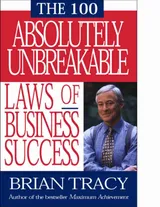
"Time Power" by Brian Tracy is a self-help book that offers practical advice on how to manage time effectively and achieve more in both personal and professional life. Tracy provides strategies for setting priorities, eliminating time-wasting activities, and increasing productivity. The book emphasizes the importance of self-discipline, goal-setting, and focusing on high-value tasks to make the most of each day.
Richard Wurmbrand
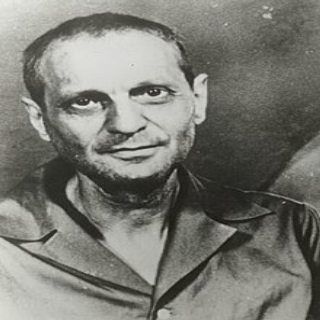 Richard Wurmbrand (1909 – 2001) was born in 1909 in Bucharist in the country of Romania. He was the youngest of four boys born in a Jewish family. He lived with his family in Istanbul for a short time. When he was 9, his father died and the Wurmbrands returned to Romania when he was 15.
He was sent to study Marxism in Moscow. When he returned, he was already a Comintern Agent. A Comintern Agent was a member of the Communist International Organisation which intended to fight:
Like other Romanian Communists, he was arrested and released several times.
He married Sabina Oster on 26th October 1936. Wurmbrand and his wife went to live in an isolated village high in the mountains of Romania. But, as a athiest there was no peace to be found in his heart. So one day, when his heart was in a state of turmoil he cried out:
“God, if perchance you exist, it is Your duty to reveal yourself to me.”
Shorthly after he prayed that prayer, he met a German carpenter in his village who gave him a bible. The carpenter and his wife had been praying earnestly that God would bring a Jew to his village, because the carpenter wanted to bring a Jew to Christ, because Jesus was a Jew. So the carpenter gave him a Bible to read. Wurmbrand said, when he opened that Bible he could not stop weeping. He had read the Bible before but it had meant nothing to him. This time when he opened the Bible he could barely read it because of the copious amount of tears that filled his eyes. Sometime later he found out the carpenter and his wife had been praying earnestly for him. Wurnbrand said that every word that he read were like flames of love burning in his heart. He realized for the first ime in his life that there was a God of love who loved him, even though he had beeen living a bad life and had nurtured a hated towards the concept of a ‘loving’ God.
The Power of Intercessory Prayer
But now for the first time he knew that Jesus had suffered at the cross of Calvary for his sins and he was loved and accepted of God. Richard and his wife became believers in Jesus the Messiah. All the hatred that he had formerly held toward God was washed away under the blood of Christ and Richard and his wife Sabrina were born of the Spirit. That is the power of intercessory prayer!
Richard prepared himself for the ministry. He was ordained as an Anglican minister in 1938 at the start of world war 2. Both Richard and his wife were arrested several times. They were beaten and hauled before a Nazi court. They suffered under the Nazi regime throughout world war 2. But Richard said, it was only a taste of what was to come.
Russian Troups Enter Romania
Towards the end of world war 2, Richard Wurmbrand became a Lutheran and he pastored a Lutheran church in Romania. But, the same year, 1 million Russian troups entered and occupied the entire territory of Romania.
Within a very short space of time the Communists took over Romania. The reign of terror began. Out of fear 4,000 priests, pastors & ministers became Communists overnight. They confessed their allegience and loyalty to the new Communist Government because they all feared for their survival.
Romania’s Resistance
Harsh persecutions of any enemies of the Communist government started with the Soviet occupation in 1945. The Soviet army behaved as an occupation force (although theoretically it was an ally against Nazi Germany), and could arrest virtually anyone at will. Shortly after Soviet occupation, ethnic Germans (who were Romanian citizens and had been living as a community in Romania for 800 years) were deported to the Donbas coal mines. Despite the King’s protest, who pointed out that this was against international law, an estimated 70,000 men and women were forced to leave their homes, starting in January 1945, before the war had even ended. They were loaded in cattle cars and put to work in the Soviet mines for up to ten years as “reparations”, where about one in five died from disease, accidents and malnutrition.
Once the Communist government became more entrenched, the number of arrests increased. All strata of society were involved, but particularly targeted were the pre-war elites, such as intellectuals, clerics, teachers, former politicians (even if they had left-leaning views) and anybody who could potentially form the nucleus of anti-Communist resistance. The existing prisons were filled with political prisoners, and a new system of forced labor camps and prisons was created, modeled after the Soviet Gulag. Some of the most notorious prisons included Sighet, Gherla, Piteşti and Aiud, and forced labor camps were set up at lead mines and in the Danube Delta.
Underground Church
Richard and his wife knew that Christianity and Communism were totally opposed to each other. They knew that a true follower of Christ cannot compromise. So they created an “Underground Church” movement to preach the pure gospel of Christ and to reach out to the unsaved people of Romania and secondly to reach out secretly to the Russian soldiers. They secretly printed thousands of Bibles and Christian literature and distributed it to the Russian soldiers. Many of the Russian soldiers were convicted and they gave their life to Christ.
So the underground church grew. But, in 1948 the Secret Police arrested Wurmbrand and he was placed in solitary confinement for 3 years. He was then transferred to a group cell for the next five years. Whilst in prison he continued to win the other prisoners to Christ. After 8 years in prison he was released and he immediately resumed his work with the undergound church. A few years later, 1959, he was arrested again and was sentenced to 25 years in prison. However, after spending 5 years in prison an organisation called the Christian Alliance negotiated with the Communist Government and they managed to secure his release for a fee of $10,000. They quickly got Richard Wurmbrand out of Romania and took him to England, then to the USA.
In 1966, Richard was called to Washington DC to give his testimony before the United States Senate. He took off his shirt to show the Senate the scars and the wounds that he received whilst he served time in prison under the Communist Government in Romania.
The newspapers throughout the USA, Europe and Asia carried his story all across the world. Christian leaders called him the “Voice of the Underground Church.”
In 1967, with a $100 old typewriter and 500 names and addresses, Richard Wurmbrand published the first issue of THE VOICE OF THE MARTYRS newsletter. This newsletter was dedicated to communicating the testimonies and trails facing our brothers and sisters in restricted nations worldwide. Richard wrote:
“The message I bring from the Underground Church is:
“Don’t abandon us!”
“Don’t forget us!”
“Don’t write us off!”
“Give us the tools we need! We will pay the price for using them!”
“This is the message I have been charged to deliver to the free church.”
Richard Wurmbrand and his wife travelled throughout the world to establish a network of over 30 offices. Their primary aim was to call Christians to shoulder their responsibility and to demonstrate the real substance of their faith by supporting their brothers and sisters in Christ who are being persecuted in heathen lands.
The VOICE OF THE MARTYRS newsletter continues to inform, and lead to action, Christians throughout the free world of the plight of those who suffer for their faith in Jesus Christ. Throughout their network of offices around the world, the newsletter is published in over 30 different languages. To this cause, VOICE OF THE MARTYRS presses on, serving in nearly 40 countries around the world where our brothers and sisters are systematically persecuted.
The writer of the Book of Hebrews brings a convicting word to the Christian church:
” Remember them that are in bonds, as bound with them; and them that suffer adversity, as being yourselves also in the body.”
(Hebrews 13:3)
We have a responsibility to those who suffer for their faith in Christ.
Today, there is an estimated 200 million Christians in heathen nations who are suffering persecution for their faith in Christ.
Richard Wurmbrand (1909 – 2001) was born in 1909 in Bucharist in the country of Romania. He was the youngest of four boys born in a Jewish family. He lived with his family in Istanbul for a short time. When he was 9, his father died and the Wurmbrands returned to Romania when he was 15.
He was sent to study Marxism in Moscow. When he returned, he was already a Comintern Agent. A Comintern Agent was a member of the Communist International Organisation which intended to fight:
Like other Romanian Communists, he was arrested and released several times.
He married Sabina Oster on 26th October 1936. Wurmbrand and his wife went to live in an isolated village high in the mountains of Romania. But, as a athiest there was no peace to be found in his heart. So one day, when his heart was in a state of turmoil he cried out:
“God, if perchance you exist, it is Your duty to reveal yourself to me.”
Shorthly after he prayed that prayer, he met a German carpenter in his village who gave him a bible. The carpenter and his wife had been praying earnestly that God would bring a Jew to his village, because the carpenter wanted to bring a Jew to Christ, because Jesus was a Jew. So the carpenter gave him a Bible to read. Wurmbrand said, when he opened that Bible he could not stop weeping. He had read the Bible before but it had meant nothing to him. This time when he opened the Bible he could barely read it because of the copious amount of tears that filled his eyes. Sometime later he found out the carpenter and his wife had been praying earnestly for him. Wurnbrand said that every word that he read were like flames of love burning in his heart. He realized for the first ime in his life that there was a God of love who loved him, even though he had beeen living a bad life and had nurtured a hated towards the concept of a ‘loving’ God.
The Power of Intercessory Prayer
But now for the first time he knew that Jesus had suffered at the cross of Calvary for his sins and he was loved and accepted of God. Richard and his wife became believers in Jesus the Messiah. All the hatred that he had formerly held toward God was washed away under the blood of Christ and Richard and his wife Sabrina were born of the Spirit. That is the power of intercessory prayer!
Richard prepared himself for the ministry. He was ordained as an Anglican minister in 1938 at the start of world war 2. Both Richard and his wife were arrested several times. They were beaten and hauled before a Nazi court. They suffered under the Nazi regime throughout world war 2. But Richard said, it was only a taste of what was to come.
Russian Troups Enter Romania
Towards the end of world war 2, Richard Wurmbrand became a Lutheran and he pastored a Lutheran church in Romania. But, the same year, 1 million Russian troups entered and occupied the entire territory of Romania.
Within a very short space of time the Communists took over Romania. The reign of terror began. Out of fear 4,000 priests, pastors & ministers became Communists overnight. They confessed their allegience and loyalty to the new Communist Government because they all feared for their survival.
Romania’s Resistance
Harsh persecutions of any enemies of the Communist government started with the Soviet occupation in 1945. The Soviet army behaved as an occupation force (although theoretically it was an ally against Nazi Germany), and could arrest virtually anyone at will. Shortly after Soviet occupation, ethnic Germans (who were Romanian citizens and had been living as a community in Romania for 800 years) were deported to the Donbas coal mines. Despite the King’s protest, who pointed out that this was against international law, an estimated 70,000 men and women were forced to leave their homes, starting in January 1945, before the war had even ended. They were loaded in cattle cars and put to work in the Soviet mines for up to ten years as “reparations”, where about one in five died from disease, accidents and malnutrition.
Once the Communist government became more entrenched, the number of arrests increased. All strata of society were involved, but particularly targeted were the pre-war elites, such as intellectuals, clerics, teachers, former politicians (even if they had left-leaning views) and anybody who could potentially form the nucleus of anti-Communist resistance. The existing prisons were filled with political prisoners, and a new system of forced labor camps and prisons was created, modeled after the Soviet Gulag. Some of the most notorious prisons included Sighet, Gherla, Piteşti and Aiud, and forced labor camps were set up at lead mines and in the Danube Delta.
Underground Church
Richard and his wife knew that Christianity and Communism were totally opposed to each other. They knew that a true follower of Christ cannot compromise. So they created an “Underground Church” movement to preach the pure gospel of Christ and to reach out to the unsaved people of Romania and secondly to reach out secretly to the Russian soldiers. They secretly printed thousands of Bibles and Christian literature and distributed it to the Russian soldiers. Many of the Russian soldiers were convicted and they gave their life to Christ.
So the underground church grew. But, in 1948 the Secret Police arrested Wurmbrand and he was placed in solitary confinement for 3 years. He was then transferred to a group cell for the next five years. Whilst in prison he continued to win the other prisoners to Christ. After 8 years in prison he was released and he immediately resumed his work with the undergound church. A few years later, 1959, he was arrested again and was sentenced to 25 years in prison. However, after spending 5 years in prison an organisation called the Christian Alliance negotiated with the Communist Government and they managed to secure his release for a fee of $10,000. They quickly got Richard Wurmbrand out of Romania and took him to England, then to the USA.
In 1966, Richard was called to Washington DC to give his testimony before the United States Senate. He took off his shirt to show the Senate the scars and the wounds that he received whilst he served time in prison under the Communist Government in Romania.
The newspapers throughout the USA, Europe and Asia carried his story all across the world. Christian leaders called him the “Voice of the Underground Church.”
In 1967, with a $100 old typewriter and 500 names and addresses, Richard Wurmbrand published the first issue of THE VOICE OF THE MARTYRS newsletter. This newsletter was dedicated to communicating the testimonies and trails facing our brothers and sisters in restricted nations worldwide. Richard wrote:
“The message I bring from the Underground Church is:
“Don’t abandon us!”
“Don’t forget us!”
“Don’t write us off!”
“Give us the tools we need! We will pay the price for using them!”
“This is the message I have been charged to deliver to the free church.”
Richard Wurmbrand and his wife travelled throughout the world to establish a network of over 30 offices. Their primary aim was to call Christians to shoulder their responsibility and to demonstrate the real substance of their faith by supporting their brothers and sisters in Christ who are being persecuted in heathen lands.
The VOICE OF THE MARTYRS newsletter continues to inform, and lead to action, Christians throughout the free world of the plight of those who suffer for their faith in Jesus Christ. Throughout their network of offices around the world, the newsletter is published in over 30 different languages. To this cause, VOICE OF THE MARTYRS presses on, serving in nearly 40 countries around the world where our brothers and sisters are systematically persecuted.
The writer of the Book of Hebrews brings a convicting word to the Christian church:
” Remember them that are in bonds, as bound with them; and them that suffer adversity, as being yourselves also in the body.”
(Hebrews 13:3)
We have a responsibility to those who suffer for their faith in Christ.
Today, there is an estimated 200 million Christians in heathen nations who are suffering persecution for their faith in Christ.
host as you are - practicing hospitality as a family
Love God and love your neighbor . This is the Butterfield family motto. It makes us humble, messy, and on the frontline in our neighborhood. And being on the frontline isn’t pretty. “Hospitality means being profoundly unselfish, and small children need help to see the blessing in this.” Take for example last March, when the pandemic hit. We were supposed to batten down the hatches, disinfect everything, including the family cat, and remain socially distanced at all times, but schools closed before parents were home from work. So after the first week of lockdown, I looked like the little old lady who lived in the shoe. Our house was open, boisterous, noisy, and full of students who would have been in class. I could visualize getting arrested in my apron for violating governor’s stay-at-home and social-distancing orders. While that hasn’t happened, other things have happened that have made me realize that children play a vital and central role in Christian hospitality. Indeed, I couldn’t practice hospitality without them. Consider six touch points for children’s central role in Christian hospitality. 1. Hospitality is a mission of the church. Sometimes we American Christians privatize hospitality in false ways. Hospitality isn’t a Butterfield thing. It’s a church thing. And children are a blessed part of our church. Jesus loves children and so do we. As the church seeks to evangelize the world, the homes of church members become gospel outposts, places where we bring the gospel to the neighborhood. This is very good news for people with young children. It means that the burden is not on you to be different. It means that your unsaved neighbors will benefit from seeing that you also decorate with plastic dinosaurs and LEGOs. And it also means that you do not always have to be in hospitality mode. As Edith Schaeffer said, doors have hinges for a reason. 2. Hospitality puts the church on the frontline. When inviting unsaved neighbors over, Kent and I always invite our church family, too. The more the merrier, especially in the summer. Your unsaved neighbors will benefit from seeing many different models of the covenant family, including singles (whose church membership renders them a covenant family) and older people. Many Christian hands make the care of little ones easier. Also, with the church family on deck, your children will not feel neglected or isolated as they participate in hospitality. Hospitality means being profoundly unselfish, and small children need help to see the blessing in this. 3. Hospitality puts hot-button topics on the frontline. Our family is made by adoption and all of our children are biracial. Christians know that oppression, violence, and discrimination are sin, but we do not believe that racism, for example, is itself a “meta-narrative” — a paradigm that declares all white people are racists, all black people victims, all social structures complicit in a white hegemonic hatred machine, and any white family who has adopted children of color as colonizing micro-aggressionists. If these things were true, then the Butterfield family doesn’t exist. And yet here we stand, opening the door to everyone. When your family is on the frontline, it has the opportunity to showcase the love of Christ, the purpose of natural law, the harmony of the biblical callings of male and female, and the shallowness of the modern social construction of race. It exposes idols and tears down strongholds and reveals how the love of Christ transcends sociology (shocking as this may be). 4. Hospitality builds relationships within the family. Hospitality is a joy for small children when they get to have some agency in the process. Especially when you are opening your home to others in the neighborhood with small children, your children should be enlisted as hosts. They can set the kids’ table and make the kids’ menu. And with platters of chicken nuggets, watermelon, and popsicles, don’t be surprised if some of the neighborhood dads are found sampling the children’s fare. Your children can also be prepared to think like Jesus would about having children over who haven’t gone to church and don’t (yet) know Jesus. Your children need to be guided in how to be good hosts who lead and set examples (and don’t follow bad ones). And you should set clear boundaries for safety. In our house, there is no playing in children’s bedrooms. Ever. We have a big back yard with a trampoline, and we think that a knock on the head is safer than anything that happens behind a closed door. Working together to have a hospitable home also puts all hands on deck — from the smallest to the largest. Children can’t clean the house as well as you can, but even a small child can sweep up tumbleweeds of dog hair and throw trash in the kitchen can. Value their contributions. 5. Hospitality cares about what neighbors care about. When you open your home to neighbors, you set a table that welcomes them. You ask them about food allergies and other sensitivities. You remember these things and you go out of your way to care about what they care about. You practice becoming all things to all people in the hopes of saving some (1 Corinthians 9:22). You help your children to respect differences that they don’t understand (yet). 6. Hospitality is all for one and one for all. If you have small children whose bedtime is 7:30, consider having neighbors over for Saturday lunch instead of Saturday dinner. Don’t think of your children as a burden — ever. Work with the capacities, limitations, and skills of each member of your family. Be a team. Be in sync with each other’s rhythms and needs. “Hospitality isn’t a performance. It’s a Christian grace that involves the whole family.” And when guests arrive, don’t segregate the children, but integrate them. We live in a world that segregates everything. Show the beauty in working together. And at the end of the meal, the older children can put the dishes in the sink and distribute the Bibles. The little children can play with LEGOs on the floor while the family patriarch opens the Bible to the watching world and prays for the power of the resurrected Christ to guide, encourage, correct, and save. Your children will grow up watching you plead for your neighbors to put their faith in Christ. They will inherit an integrated faith, not a compartmentalized one, where parents act like Christians from ten to noon on Sunday, but the rest of the time operate in an orbit of selfish ambition. Hospitality isn’t a performance. It’s a Christian grace that involves the whole family.