
Others like the power of vision Features >>
Grit (The Power Of Passion And Perseverance)
The Power Of Servant-Leadership
The Crossroads Of Should And Must
The Power Of Positive Thinking

The Power Of The Mind
The Gifts Of Imperfection: Embrace Who You Are
Power Of Character In Leadership
When Power Meets Potential
The Power Of Self-Confidence
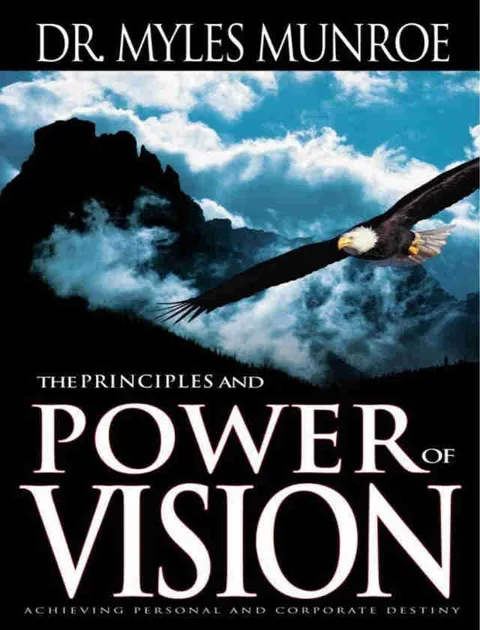
The Principles And Power Of Vision (Keys To Achieving Personal And Corporate Destiny)
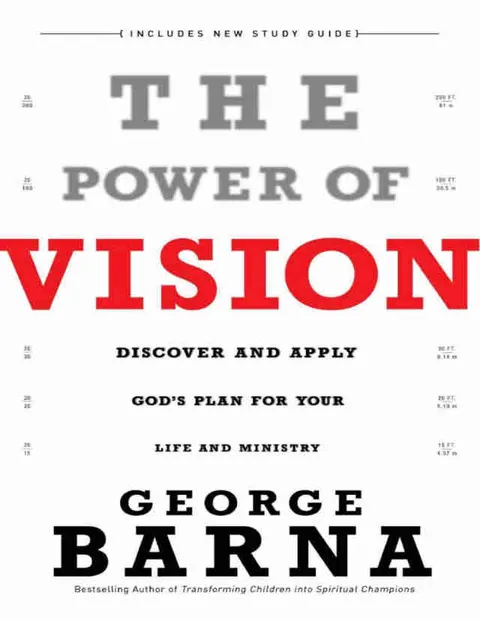
About the Book
"The Power of Vision" by George Barna explores the importance of having a clear, compelling vision for individuals and organizations. Barna argues that vision is essential for guiding decision-making, inspiring motivation, and achieving success in both personal and professional endeavors. Drawing on research and examples from various fields, the book offers practical advice and strategies for developing and implementing a powerful vision.
Fanny Crosby
"Oh, what a happy soul I am, / although I cannot see! / I am resolved that in this world / Contented I will be."
Francis Jane Crosby wrote more than 9,000 hymns, some of which are among the most popular in every Christian denomination. She wrote so many that she was forced to use pen names lest the hymnals be filled with her name above all others. And, for most people, the most remarkable thing about her was that she had done so in spite of her blindness.
"I think it is a great pity that the Master did not give you sight when he showered so many other gifts upon you," remarked one well-meaning preacher.
Fanny Crosby responded at once, as she had heard such comments before. "Do you know that if at birth I had been able to make one petition, it would have been that I was born blind?" said the poet, who had been able to see only for her first six weeks of life. "Because when I get to heaven, the first face that shall ever gladden my sight will be that of my Savior."
Blinded by a quack
Born in Putnam County, New York, Crosby became ill within two months. Unfortunately, the family doctor was away, and another manâpretending to be a certified doctorâtreated her by prescribing hot mustard poultices to be applied to her eyes. Her illness eventually relented, but the treatment left her blind. When the doctor was revealed to be a quack, he disappeared. A few months later, Crosby's father died. Her mother was forced to find work as a maid to support the family, and Fanny was mostly raised by her Christian grandmother.
Her love of poetry began earlyâher first verse, written at age 8, echoed her lifelong refusal to feel sorry for herself:
Oh, what a happy soul I am,
although I cannot see!
I am resolved that in this world
Contented I will be.
How many blessings I enjoy
That other people don't,
To weep and sigh because I'm blind
I cannot, and I won't!
While she enjoyed her poetry, she zealously memorized the Bible. Memorizing five chapters a week, even as a child she could recite the Pentateuch, the Gospels, Proverbs, the Song of Solomon, and many psalms chapter and verse.
Her mother's hard work paid off. Shortly before her fifteenth birthday, Crosby was sent to the recently founded New York Institute for the Blind, which would be her home for 23 years: 12 as a student, 11 as a teacher. She initially indulged in her own poetry and was called upon to pen verses for various occasions. In time the principal asked her to avoid such "distractions" in favor of her general instruction. "We have no right to be vain in the presence of the Owner and Creator of all things," he said.
It was the work of a traveling phrenologist (one who studies the shape and irregularities of the skull for insights into character and mental capacity) that changed the school's mind and again ignited her passion. Though his study is now the ridicule of science, the phrenologist's words were to prove prophetic: "Here is a poetess. Give her every possible encouragement. Read the best books to her and teach her the finest that is in poetry. You will hear from this young lady some day."
Poetry for presidents
It didn't take long. By age 23 Crosby was addressing Congress and making friendships with presidents. In fact, she knew all the chief executives of her lifetime, especially Grover Cleveland, who served as secretary for the Institute for the Blind before his election.
Another member of the institute, former pupil Alexander van Alstine, married Crosby in 1858. Considered one of New York's best organists, he wrote the music to many of Crosby's hymns. Crosby herself put music to only a few of hers, though she played harp, piano, guitar, and other instruments. More often, musicians came to her for lyrics. For example, one day musician William Doane dropped by her home for a surprise visit, begging her to put some words to a tune he had recently written and which he was to perform at an upcoming Sunday School convention. The only problem was that his train to the convention was leaving in 35 minutes. He sat at the piano and played the tune.
"Your music says, 'Safe in the Arms of Jesus,'" Crosby said, scribbling out the hymn's words immediately. "Read it on the train and hurry. You don't want to be late!" The hymn became one of Crosby's most famous.
Though she was under contract to submit three hymns a week to her publisher and often wrote six or seven a day (for a dollar or two each), many became incredibly popular. When Dwight Moody and Ira Sankey began to use them in their crusades, they received even more attention. Among them are "Blessed Assurance," "All the Way My Savior Leads Me," "To God Be the Glory," "Pass Me Not, O Gentle Savior," "Safe in the Arms of Jesus," "Rescue the Perishing," and "Jesus Keep Me Near the Cross."
She could write very complex hymns and compose music with a more classical structure (she could even improvise it), but she preferred to write simple, sentimental verses that could be used for evangelism. She continued to write her poetry up to her death, a month shy of her ninety-fifth birthday. "You will reach the river brink, some sweet day, bye and bye," was her last stanza.
letter to a friend engaged to a nonbeliever
Dear Kelly, I was surprised by the recent news of your engagement. While I wish I could celebrate with you without reservation, I admit I have some. My greatest concern is that your fiancĂ© does not know or love Christ. Because I love you and care about your future, I feel compelled to speak now rather than to hold my peace, knowing full well how you might receive my âpeace.â I expect that, if youâre honest, you may have your own reservations about the upcoming ceremony. I hope you will heed those reservations and reconsider. As I have watched people walk down this road, I have noticed several common ways people justify marrying a nonbeliever. I want to address them in hope that you might experience grace to trust God and his word regarding marriage. âOthers Are Doing It.â âLet me be clear: to marry an unbeliever is to sin against God (1 Corinthians 7:39).â You know my story. My wife began dating me as an unbeliever. But as much as I love her and our marriage, it was wrong for her to do so. While God was gracious to us, and brought me to a saving knowledge of Christ prior to our wedding date, let me be clear: to marry an unbeliever is to sin against God (1 Corinthians 7:39). Furthermore, the difficult path to my own conversion and then to our wedding ceremony is not one I would wish upon others. I fear youâve latched onto Godâs grace in my marriage (and others like mine) as a sort of promise for your own. God has made no such promise. While God was merciful to bring me to himself despite my wifeâs disobedience, we are the exception and not the rule â certainly not the model. I know far more stories that did not play out like ours. The Bible gives us more stories like that (Exodus 34:16; Ezra 9:1â15). Solomon says, âWhoever walks with the wise becomes wise, but the companion of fools will suffer harmâ (Proverbs 13:20). Donât let the mistakes of others serve as a justification for repeating them. âHeâs a Good Guy.â While I do think your fiancĂ© is a great guy by earthly standards, itâs his standing before God that matters most for marriage. You mentioned how important it was to you that he respected your boundaries, particularly after your last boyfriend pushed the boundaries, even while claiming to be Christian. I agree that he certainly seems to outshine your last suitor, but itâs easy to fall into the trap of lateral comparison. We must be careful about making choices today based solely on setting them next to bad choices in the past. Look for a man striving to imitate Jesus (1 Corinthians 11:1). Why did you put your faith in Jesus, and choose to follow him? Are you absolutely sure you wonât regret committing yourself until death to someone who might never  help you see or love Jesus more? If he does not share your captivation with Christ, you and he will always stand on unlevel and unsteady ground as you carry out your vows in marriage. âGive Him a Chance.â Youâve mentioned that your boyfriend is âwarming upâ to the idea of spiritual things. Youâve even thought at times he might be on the verge of conversion. Beware of your heart, which is prone to lie to you (Jeremiah 17:9), and of the butterflies in your stomach that often flutter louder than the Spirit within us. Until you are absolutely sure that he has also been born again by the same Spirit alive in you (John 3:5), heed the warning and conviction the Spirit brings (John 16:8). âIf he has no interest in the things of Christ now, what makes you think things will change after the wedding?â Donât be fooled into thinking he is simply âspiritual, but not religious.â There is no such thing as spiritual neutrality. We are always either with Jesus or against him (Matthew 12:30). Despite his warmth toward you, any attempt to have God on his own terms is an attempt to reject the true God over your life and heart. If he has no interest in the things of Christ now, what makes you think things will change after the wedding? âIâll Die Alone.â I know it can be hard to see other couples getting married, holding hands, and having kids while you remain single. Donât let this serve as a reason to try and seize marriage at the first opportunity. I wish you could see a glimpse of a future in which you remained faithful to your vows to a man who remained faithless toward your Savior. Worse than attending church alone your entire life, while your husband remained at home, is the haunting thought that the man you gave yourself to might spend eternity separated from you and God. Worse yet is the thought that he might lead you or your children down the same path (Matthew 7:13). It really is possible to be more isolated and alone within a marriage than without. Marriage is no savior. It will not ultimately save anyone from sin or loneliness or unhappiness. It cannot bear the weight of those needs and longings. While the single life is not without trials, remember you are not alone. So long as you cling to Jesus, he will be with you (Matthew 28:20). He will never leave you nor forsake you (Hebrews 13:5). Heâs also given you community in the church. Even if your hope for a husband is never fulfilled in this life, you are promised a seat at the great wedding supper of the Lamb (Revelation 19:7), and he will far surpass everything you might have experienced with an earthly husband. âI Already Said âYes.ââ I know that backing out of your engagement at this point may cost you, financially and otherwise. I know it might feel embarrassing. But it would be far better in the long run to lose some money and gain a few months of heartache than to commit the rest of your life to a marriage God does not want for you. Until you say, âI do,â it is not too late to wait. God may even redeem the situation in a surprising way for his glory if it is handled well. Would it not speak volumes about your faith if you told him you were deciding to entrust your future to God? If you were to say, âThe Lord gave, and the Lord has taken away; blessed be the name of the Lordâ (Job 1:21)? Tell him you will settle for nothing less than being married âin the Lord.â Confess your disobedience to God and the sin of misleading him. Your repentance and faith could, by Godâs mysterious grace, be the vehicle God uses to bring him to himself. âIf you truly love him, your concern for his soul should outweigh your hopes for marriage.â Even then, you must make clear to him that a future with you is not promised. Should he come to saving faith, it must be to have God, not to have a wife. Otherwise, he risks making an idol out of you and using Jesus as a means to something else. If you truly love him, your concern for his soul should outweigh your hopes for marriage. I trust that, if you are willing to listen, the Holy Spirit will lead you into the truth that gaining a husband while forsaking your soul is a trade you do not want to make (Mark 8:36). I also pray that you would eventually see any wounds I have caused you as the faithful wounds of a friend (Proverbs 27:6), and not as those of an enemy. As you seek Godâs will, hide yourself in him and his will, and wait with patience for the day he will wipe away every tear. With love and grace, Your Pastor