

Others like thinking, fast and slow Features >>

Feel The Fear And Do It Anyway

Thinking For A Change

Think And Make Impact

The Principles And Power Of Vision
-160.webp)
The Principles And Power Of Vision (Keys To Achieving Personal And Corporate Destiny)
50 Mindful Steps To Self Esteem

Approval Addiction

How To Stop Worrying And Start Living

Sign Posts On The Road Of Success

Futureboards
About the Book
"Thinking, Fast and Slow" by Daniel Kahneman explores the two systems that drive the way we think: the fast, intuitive System 1 and the slow, deliberate System 2. Kahneman examines how these systems shape our judgments, decisions, and biases, shedding light on the inherent flaws in human cognition and offering insights on how to make better choices. The book explores various psychological phenomena and provides practical strategies for improving decision-making skills.
Katharina Luther
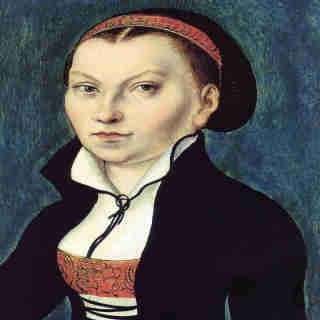 Katharina von Bora (l. 1499-1552, also known as Katherine Luther) was a former nun who married Martin Luther (l. 1483-1546) in 1525. She, along with some fellow nuns, escaped their convent with Luther's help in 1523 in response to his reform movement. Katharina is recognized as the stabilizing force in Luther's life, enabling his later works.
Almost nothing is known of her life prior to 1523, and the details of her married life come mostly from Luther's letters. She was the undisputed administer of their home and finances, tending to all the necessary practical matters and allowing Luther the time and space to write, preach, and lecture. In addition to her domestic duties, she also bore Luther six children, ran their farm, supervised servants, operated a successful brewery, and assisted Luther in developing his Church. Her marriage to Luther – a former nun to a former priest – set the paradigm followed by many others and established the model of an ecclesiastical marriage.
After Luther's death, she was forced to leave Wittenberg during the Schmalkaldic War (1546-1547) and fled to Magdeburg. Upon her return, she found her lands destroyed and struggled to make a living until 1552 when she left for the city of Torgau. She died there on 20 December 1552. She is celebrated annually on 20 December by some, though not all, Lutheran denominations, though all recognize her contributions to the Protestant Reformation.
Katharina von Bora is thought to have been born on 29 January 1499, though her birth date is not recorded. Her parents were untitled lesser nobility, but who they were is debated. Based on different documentation, they were either Johan von Bora (also given as Jan von Bora) and his wife Margarete of Lippendorf or Hans von Bora and his wife Anna von Haugwitz of Hirschfeld. When her mother died c. 1504, her father remarried and sent Katharina to the cloister of Saint Clemens in Brehna to be taken under care and raised as a nun.
Sending one's daughter off to a convent was an option taken by many parents who either had too many girls and not enough resources to provide dowries for them all or who wanted to provide them with security and education, or both. A young girl like Katharina would have been admitted as an oblate, studied to become a novice, and then would take the vows to become a full nun sometime around the age of 20. Many women, of any age, chose the monastic life for themselves, however, preferring it to the uncertainty of married life and the dangers of childbirth. Scholars Frances and Joseph Gies comment:
For upper-class women, the convent filled several basic needs. It provided an alternative to marriage by receiving girls whose families were unable to find them husbands. It provided an outlet for nonconformists, women who did not wish to marry because they felt a religious vocation, because marriage was repugnant, or because they saw in the convent a mode of life in which they could perform and perhaps distinguish themselves. (64)
Convents were also used by the upper class to protect their daughters from political rivals who might try to abduct them and, conversely, to hold powerful or potentially powerful women who had already been abducted, but for many women, the daily life of medieval nuns was freely chosen. In Katharina's case, the decision was made for her. She was educated by the nuns at Brehna until she was around ten years old when she moved to the convent of Marienthorn in Nimbschen, where a maternal aunt was in residency.
Katharina would have had to submit to the authority of the abbess who ran the convent and live the monastic life obediently, which included daily routines of prayers, services, tending gardens, domestic chores, and, in some cases, illuminating manuscripts or preparing prayer books. Nuns were also expected to learn needlework so as to embroider the vestments of priests and, in most cases, perform outreach incentives in the community and tend the sick. Nuns could come and go from the convent, but their interactions with the outside world were strictly monitored.
Based on later evidence from her married life, Katharina became adept at this time in nursing, administration, agriculture, domestic chores, and beer brewing, as she showed exceptional skill in all these areas, and more, shortly after her marriage to Luther. After Martin Luther's 95 Theses had been translated into German and published in 1518, news of his conflict with the Church would have reached Nimbschen in 1518 or 1519 at the latest. The conflict escalated throughout 1520, culminating in Luther's burning of the papal bull in December and his excommunication in January 1521.
Katharina's Escape
After Luther's appearance at the Diet of Worms in April 1521, where he defied papal authority and defended his works criticizing Church policy and practice, his popularity – and notoriety – grew. He was already a well-known figure prior to Worms, and the Church and civil authorities, recognizing him as a threat to the status quo, declared him an outlaw and heretic through the Edict of Worms in May 1521. Luther's regional sovereign, Frederick III (the Wise, l. 1463-1525) secured him in his castle at Wartburg, where Luther continued to write and translated the New Testament into German.
Among his many criticisms of church policy was monastic life, which he claimed was unnatural and unbiblical. These views may have circulated around Marienthorn prior to 1521 but certainly would have afterwards, even if the abbess had tried to silence them. Exactly how Katharina first learned of Luther's criticisms is unknown, but she had embraced them by 1523 when she wrote him directly asking for his help. She and a few other nuns of Marienthorn (the number of them is given at either eight or twelve) wished to leave the convent and required his assistance. This was no small matter since abducting a nun or helping her leave the monastic life was a criminal offense. Scholar Gwen Seabourne comments:
The gates of the convent allowed movement in both directions, and both church and secular authorities had an interest in keeping them under surveillance. Royal concern was with disorderly conduct and security of convents at a time when they might be used to house royal or noble women and also to confine the daughters of dangerous opponents. A statute of 1285 made removal of nuns from their convents an offense which might result in a prison sentence, compensation to the convent, and a payment to the king. The offense was that of the person removing the nun, rather than the nun herself, so liability was incurred whether or not the nun consented to her removal. (2)
This statute could only be enforced by the authorities of the region in which the offense took place, however, and if one could remove the nun to another principality, which chose not to enforce it, punishment could be avoided. Luther arranged to have a well-respected merchant, Leonard Kopp, help free the nuns in the region under Duke George and bring them to Wittenberg, which was controlled by Frederick III. Kopp regularly delivered herring to the convent, and on the Eve of the Resurrection (Easter Eve) 1523, Kopp made his delivery and then hid the nuns in his wagon and rode out through the gates. Scholar Roland H. Bainton, who maintains the number of the nuns was twelve, writes:
Three returned to their own homes. The remaining nine arrived in Wittenberg. A student reported to a friend, "A wagonload of vestal virgins has just come to town, all more eager for marriage than for life. God grant them husbands lest worse befall." Luther felt responsible to find for them all homes, husbands, or positions of some sort. An obvious solution was that he should dispose of one case by marrying himself. (293)
As Luther had hoped, Frederick III did nothing about the statute of 1285, and the newly arrived nuns were free to marry or return to their families. Luther first tried to place them back with their parents, but this did not work as the families refused to be implicated in a crime, and further, many simply could not afford to support a daughter, much less one who had renounced her vows and would be difficult to find a husband for.
Marriage
After exhausting the option of returning the women to their former homes, Luther set about finding them husbands himself. Scholar Lyndal Roper observes:
Luther needed to settle the women in respectable marriages as soon as possible to avoid malicious gossip, and thus found himself in the unexpected position of marriage broker. As a result, the situation forced him to think about female desire…It may have been that the subject came to mind because he was beginning to be tempted himself. (264)
By 1525, Luther had found respectable matches or positions for all of the nuns except Katharina, who was first placed as a servant in the home of the clerk Philipp Reichenback and then of the artist Lucas Cranach the Elder. Luther arranged at least two matches for her, neither of which worked out, and heard from his friend Nikolaus von Amsdorf that she had said she would marry only Amsdorf or Luther, but preferred Luther.
Luther, although he had advocated for the marriage of former priests and nuns, did not consider it an option for himself as he had been condemned as a heretic and an outlaw in 1521, knew there was always the chance he could be arrested and executed, and did not want to inflict that loss on a wife. There was also the concern, voiced by his friend Philip Melanchthon (l. 1497-1560) and others that marriage would detract from his public image as a selfless champion of the faith and possibly derail the reform movement.
Still, some of his friends, like Amsdorf, suggested he marry Katharina to resolve her problem and also make a statement for the new faith on the respectability of a marriage between two former ecclesiastics of the Church. Luther, Amsdorf suggested, should practice what he preached and show others by example how a marriage could work. Bainton notes:
[Luther] did not respond seriously to the suggestion until he went home to visit his parents. What he related, probably as a huge joke, was taken by his father as a realistic proposal. His desire was that his son should pass on the name. The suggestion began to commend itself to Luther for quite another reason. If he was to be burned at the stake within a year, he was hardly the person to start a family. But by marriage he could at once give a status to Katherine and a testimony to his faith. In May 1525 he intimated that he would marry Katie before he died. (294)
Katharina von Bora and Martin Luther were married on 13 June 1525 in a small ceremony and held a larger celebration on 27 June. They were given the former Augustinian dormitory (the so-called Black Cloister) as a home by John, Elector of Saxony, brother of Frederick III. The Black Cloister was a large building surrounded by fertile land, which the Luthers immediately opened to anyone in need of lodging, a policy that would remain in effect for the next 20 years.
Daily Life, Children, & Table Talk
Luther gave three reasons for his marriage: "to please his father, to spite the pope and the Devil, and to seal his witness before martyrdom" (Bainton, 295). At first, he gave no indication that he actually cared for Katharina herself, but soon after their marriage, he declared "I would not exchange Katie for France or for Venice, because God has given her to me" (Bainton, 294). Luther's affection for his wife is evident in his letters in which he praises her as a treasure, as "Doctor Luther," "The Lady of Zulsdorf" (their farm), "My Lord Katie," and "My Katie". Katharina's affection is evident in how she cared for her husband, even though he presented a number of challenges.
Bainton comments:
Marriage brought new financial responsibilities because neither of them started with a cent. Katherine's mother died when she was a baby. Her father consigned her to a convent and married again. He did nothing for her now. Luther had only his books and his clothes. He was not entitled to the revenues of the cloister, since he had abandoned the cowl. He took never a penny from his books and his university stipend was not enough for matrimony. In 1526 he installed a lathe and learned woodworking that in case of need he might be able to support his family. But one may doubt whether he ever took this thought seriously. He was minded to give himself exclusively to the service of the Word and he trusted that the heavenly Father would provide.
His faith in God's providence placed Katharina in the role of provider and sustainer of the household, which would eventually include their six children – Hans, Elizabeth (who died young), Magdalena (who died at age 13), Martin, Paul, and Margarete – four orphans they took in from Katharina's side of the family, and assorted others seeking temporary or long-term shelter. Additionally, there were Luther's friends, students, and admirers, who came to hear him speak around the dinner table and had to be provided with food and drink. Student boarders provided steady income, but at various times, there were as many as 25 people in the home who needed to be fed.
Katharina tended a small farm, cultivated an orchard, created a fishpond for fresh catches, maintained a yard of hens and ducks, and kept cows and pigs, which she slaughtered and dressed herself. She also brewed her own beer, said to be of high quality, which she sold and also used for the household. Further, she took great care of Luther's health which was never robust. Bainton writes:
He suffered at one time or another from gout, insomnia, catarrh, hemorrhoids, constipation, stone, dizziness, and ringing in the ears. Katie was a master of herbs, poultices, and massage. Her son Paul, who became a doctor, said his mother was half one. (299)
She supported her husband completely and was treated by him as an equal, always present at the gatherings which came to be known as Table Talk, during which Luther would hold forth on various issues after dinner and plenty of his wife's beer. Those in attendance would write down anything he said and later edited and published their collected pieces totaling 6,596 entries. Katharina told Luther at the time he should charge them for taking down his words, but he would not allow it. As usual, she complied with his wishes and continued her support, allowing him the intellectual and financial freedom to pursue his work.
Throughout their marriage, Katharina was keenly aware of her husband's importance, but he was equally aware of how her support enabled him to pursue his work. His opponents regularly mocked and insulted Katherina personally and their marriage generally in pamphlets which Luther responded to with far greater wit and insight in defending her. Their happy marriage served as a model and inspiration for many others of the time and afterwards.
Conclusion
Luther died of a stroke on 18 February 1546, and Katharina, in a letter to her brother's wife, Christina von Bora, vented her grief over the loss, saying she could not eat or drink or sleep. Her loss was compounded by financial problems. Luther had left everything to her in his will but had not executed it properly, and she was denied her inheritance. While she was appealing to the authorities to rectify this, the Schmalkaldic War erupted between Luther's followers and the Catholic forces under Charles V, Holy Roman Emperor.
She fled to Magdeburg until the conflict ended with a Lutheran defeat in 1547 and then returned to Wittenberg, only to find the Black Cloister destroyed, her lands torn up, and all the animals gone. She was able to sustain herself there through the generosity of John Frederick I, Elector of Saxony, son of John the Elector who had given the Luthers the cloister when they married. In 1552, the plague reached Wittenberg, and Katharina left for Torgau, where she hoped to find better fortune and safety. She fell from her wagon outside the city's gates, breaking her hip, and then contracted an unknown disease which she died from on 20 December, aged 53.
She was buried in the cemetery of Saint Mary's Church in Torgau and was largely forgotten afterwards as attention continued to be lavished on her husband. Scholarly studies of Katharina Luther in her own right only began in earnest in the 20th century and have been hampered by the scarcity of primary sources concerning her. Even so, her reputation has grown in the past 100 years as she has come to be better recognized. Torgau now hosts the museum dedicated to her as well as preserving the house she died in. Beginning in 2011, Torgau instituted an annual award for outstanding female achievement in social causes in Katharina's name, and she is celebrated as a strong woman of conviction and the emotional and practical support that allowed Marin Luther to fully develop his vision.
Katharina von Bora (l. 1499-1552, also known as Katherine Luther) was a former nun who married Martin Luther (l. 1483-1546) in 1525. She, along with some fellow nuns, escaped their convent with Luther's help in 1523 in response to his reform movement. Katharina is recognized as the stabilizing force in Luther's life, enabling his later works.
Almost nothing is known of her life prior to 1523, and the details of her married life come mostly from Luther's letters. She was the undisputed administer of their home and finances, tending to all the necessary practical matters and allowing Luther the time and space to write, preach, and lecture. In addition to her domestic duties, she also bore Luther six children, ran their farm, supervised servants, operated a successful brewery, and assisted Luther in developing his Church. Her marriage to Luther – a former nun to a former priest – set the paradigm followed by many others and established the model of an ecclesiastical marriage.
After Luther's death, she was forced to leave Wittenberg during the Schmalkaldic War (1546-1547) and fled to Magdeburg. Upon her return, she found her lands destroyed and struggled to make a living until 1552 when she left for the city of Torgau. She died there on 20 December 1552. She is celebrated annually on 20 December by some, though not all, Lutheran denominations, though all recognize her contributions to the Protestant Reformation.
Katharina von Bora is thought to have been born on 29 January 1499, though her birth date is not recorded. Her parents were untitled lesser nobility, but who they were is debated. Based on different documentation, they were either Johan von Bora (also given as Jan von Bora) and his wife Margarete of Lippendorf or Hans von Bora and his wife Anna von Haugwitz of Hirschfeld. When her mother died c. 1504, her father remarried and sent Katharina to the cloister of Saint Clemens in Brehna to be taken under care and raised as a nun.
Sending one's daughter off to a convent was an option taken by many parents who either had too many girls and not enough resources to provide dowries for them all or who wanted to provide them with security and education, or both. A young girl like Katharina would have been admitted as an oblate, studied to become a novice, and then would take the vows to become a full nun sometime around the age of 20. Many women, of any age, chose the monastic life for themselves, however, preferring it to the uncertainty of married life and the dangers of childbirth. Scholars Frances and Joseph Gies comment:
For upper-class women, the convent filled several basic needs. It provided an alternative to marriage by receiving girls whose families were unable to find them husbands. It provided an outlet for nonconformists, women who did not wish to marry because they felt a religious vocation, because marriage was repugnant, or because they saw in the convent a mode of life in which they could perform and perhaps distinguish themselves. (64)
Convents were also used by the upper class to protect their daughters from political rivals who might try to abduct them and, conversely, to hold powerful or potentially powerful women who had already been abducted, but for many women, the daily life of medieval nuns was freely chosen. In Katharina's case, the decision was made for her. She was educated by the nuns at Brehna until she was around ten years old when she moved to the convent of Marienthorn in Nimbschen, where a maternal aunt was in residency.
Katharina would have had to submit to the authority of the abbess who ran the convent and live the monastic life obediently, which included daily routines of prayers, services, tending gardens, domestic chores, and, in some cases, illuminating manuscripts or preparing prayer books. Nuns were also expected to learn needlework so as to embroider the vestments of priests and, in most cases, perform outreach incentives in the community and tend the sick. Nuns could come and go from the convent, but their interactions with the outside world were strictly monitored.
Based on later evidence from her married life, Katharina became adept at this time in nursing, administration, agriculture, domestic chores, and beer brewing, as she showed exceptional skill in all these areas, and more, shortly after her marriage to Luther. After Martin Luther's 95 Theses had been translated into German and published in 1518, news of his conflict with the Church would have reached Nimbschen in 1518 or 1519 at the latest. The conflict escalated throughout 1520, culminating in Luther's burning of the papal bull in December and his excommunication in January 1521.
Katharina's Escape
After Luther's appearance at the Diet of Worms in April 1521, where he defied papal authority and defended his works criticizing Church policy and practice, his popularity – and notoriety – grew. He was already a well-known figure prior to Worms, and the Church and civil authorities, recognizing him as a threat to the status quo, declared him an outlaw and heretic through the Edict of Worms in May 1521. Luther's regional sovereign, Frederick III (the Wise, l. 1463-1525) secured him in his castle at Wartburg, where Luther continued to write and translated the New Testament into German.
Among his many criticisms of church policy was monastic life, which he claimed was unnatural and unbiblical. These views may have circulated around Marienthorn prior to 1521 but certainly would have afterwards, even if the abbess had tried to silence them. Exactly how Katharina first learned of Luther's criticisms is unknown, but she had embraced them by 1523 when she wrote him directly asking for his help. She and a few other nuns of Marienthorn (the number of them is given at either eight or twelve) wished to leave the convent and required his assistance. This was no small matter since abducting a nun or helping her leave the monastic life was a criminal offense. Scholar Gwen Seabourne comments:
The gates of the convent allowed movement in both directions, and both church and secular authorities had an interest in keeping them under surveillance. Royal concern was with disorderly conduct and security of convents at a time when they might be used to house royal or noble women and also to confine the daughters of dangerous opponents. A statute of 1285 made removal of nuns from their convents an offense which might result in a prison sentence, compensation to the convent, and a payment to the king. The offense was that of the person removing the nun, rather than the nun herself, so liability was incurred whether or not the nun consented to her removal. (2)
This statute could only be enforced by the authorities of the region in which the offense took place, however, and if one could remove the nun to another principality, which chose not to enforce it, punishment could be avoided. Luther arranged to have a well-respected merchant, Leonard Kopp, help free the nuns in the region under Duke George and bring them to Wittenberg, which was controlled by Frederick III. Kopp regularly delivered herring to the convent, and on the Eve of the Resurrection (Easter Eve) 1523, Kopp made his delivery and then hid the nuns in his wagon and rode out through the gates. Scholar Roland H. Bainton, who maintains the number of the nuns was twelve, writes:
Three returned to their own homes. The remaining nine arrived in Wittenberg. A student reported to a friend, "A wagonload of vestal virgins has just come to town, all more eager for marriage than for life. God grant them husbands lest worse befall." Luther felt responsible to find for them all homes, husbands, or positions of some sort. An obvious solution was that he should dispose of one case by marrying himself. (293)
As Luther had hoped, Frederick III did nothing about the statute of 1285, and the newly arrived nuns were free to marry or return to their families. Luther first tried to place them back with their parents, but this did not work as the families refused to be implicated in a crime, and further, many simply could not afford to support a daughter, much less one who had renounced her vows and would be difficult to find a husband for.
Marriage
After exhausting the option of returning the women to their former homes, Luther set about finding them husbands himself. Scholar Lyndal Roper observes:
Luther needed to settle the women in respectable marriages as soon as possible to avoid malicious gossip, and thus found himself in the unexpected position of marriage broker. As a result, the situation forced him to think about female desire…It may have been that the subject came to mind because he was beginning to be tempted himself. (264)
By 1525, Luther had found respectable matches or positions for all of the nuns except Katharina, who was first placed as a servant in the home of the clerk Philipp Reichenback and then of the artist Lucas Cranach the Elder. Luther arranged at least two matches for her, neither of which worked out, and heard from his friend Nikolaus von Amsdorf that she had said she would marry only Amsdorf or Luther, but preferred Luther.
Luther, although he had advocated for the marriage of former priests and nuns, did not consider it an option for himself as he had been condemned as a heretic and an outlaw in 1521, knew there was always the chance he could be arrested and executed, and did not want to inflict that loss on a wife. There was also the concern, voiced by his friend Philip Melanchthon (l. 1497-1560) and others that marriage would detract from his public image as a selfless champion of the faith and possibly derail the reform movement.
Still, some of his friends, like Amsdorf, suggested he marry Katharina to resolve her problem and also make a statement for the new faith on the respectability of a marriage between two former ecclesiastics of the Church. Luther, Amsdorf suggested, should practice what he preached and show others by example how a marriage could work. Bainton notes:
[Luther] did not respond seriously to the suggestion until he went home to visit his parents. What he related, probably as a huge joke, was taken by his father as a realistic proposal. His desire was that his son should pass on the name. The suggestion began to commend itself to Luther for quite another reason. If he was to be burned at the stake within a year, he was hardly the person to start a family. But by marriage he could at once give a status to Katherine and a testimony to his faith. In May 1525 he intimated that he would marry Katie before he died. (294)
Katharina von Bora and Martin Luther were married on 13 June 1525 in a small ceremony and held a larger celebration on 27 June. They were given the former Augustinian dormitory (the so-called Black Cloister) as a home by John, Elector of Saxony, brother of Frederick III. The Black Cloister was a large building surrounded by fertile land, which the Luthers immediately opened to anyone in need of lodging, a policy that would remain in effect for the next 20 years.
Daily Life, Children, & Table Talk
Luther gave three reasons for his marriage: "to please his father, to spite the pope and the Devil, and to seal his witness before martyrdom" (Bainton, 295). At first, he gave no indication that he actually cared for Katharina herself, but soon after their marriage, he declared "I would not exchange Katie for France or for Venice, because God has given her to me" (Bainton, 294). Luther's affection for his wife is evident in his letters in which he praises her as a treasure, as "Doctor Luther," "The Lady of Zulsdorf" (their farm), "My Lord Katie," and "My Katie". Katharina's affection is evident in how she cared for her husband, even though he presented a number of challenges.
Bainton comments:
Marriage brought new financial responsibilities because neither of them started with a cent. Katherine's mother died when she was a baby. Her father consigned her to a convent and married again. He did nothing for her now. Luther had only his books and his clothes. He was not entitled to the revenues of the cloister, since he had abandoned the cowl. He took never a penny from his books and his university stipend was not enough for matrimony. In 1526 he installed a lathe and learned woodworking that in case of need he might be able to support his family. But one may doubt whether he ever took this thought seriously. He was minded to give himself exclusively to the service of the Word and he trusted that the heavenly Father would provide.
His faith in God's providence placed Katharina in the role of provider and sustainer of the household, which would eventually include their six children – Hans, Elizabeth (who died young), Magdalena (who died at age 13), Martin, Paul, and Margarete – four orphans they took in from Katharina's side of the family, and assorted others seeking temporary or long-term shelter. Additionally, there were Luther's friends, students, and admirers, who came to hear him speak around the dinner table and had to be provided with food and drink. Student boarders provided steady income, but at various times, there were as many as 25 people in the home who needed to be fed.
Katharina tended a small farm, cultivated an orchard, created a fishpond for fresh catches, maintained a yard of hens and ducks, and kept cows and pigs, which she slaughtered and dressed herself. She also brewed her own beer, said to be of high quality, which she sold and also used for the household. Further, she took great care of Luther's health which was never robust. Bainton writes:
He suffered at one time or another from gout, insomnia, catarrh, hemorrhoids, constipation, stone, dizziness, and ringing in the ears. Katie was a master of herbs, poultices, and massage. Her son Paul, who became a doctor, said his mother was half one. (299)
She supported her husband completely and was treated by him as an equal, always present at the gatherings which came to be known as Table Talk, during which Luther would hold forth on various issues after dinner and plenty of his wife's beer. Those in attendance would write down anything he said and later edited and published their collected pieces totaling 6,596 entries. Katharina told Luther at the time he should charge them for taking down his words, but he would not allow it. As usual, she complied with his wishes and continued her support, allowing him the intellectual and financial freedom to pursue his work.
Throughout their marriage, Katharina was keenly aware of her husband's importance, but he was equally aware of how her support enabled him to pursue his work. His opponents regularly mocked and insulted Katherina personally and their marriage generally in pamphlets which Luther responded to with far greater wit and insight in defending her. Their happy marriage served as a model and inspiration for many others of the time and afterwards.
Conclusion
Luther died of a stroke on 18 February 1546, and Katharina, in a letter to her brother's wife, Christina von Bora, vented her grief over the loss, saying she could not eat or drink or sleep. Her loss was compounded by financial problems. Luther had left everything to her in his will but had not executed it properly, and she was denied her inheritance. While she was appealing to the authorities to rectify this, the Schmalkaldic War erupted between Luther's followers and the Catholic forces under Charles V, Holy Roman Emperor.
She fled to Magdeburg until the conflict ended with a Lutheran defeat in 1547 and then returned to Wittenberg, only to find the Black Cloister destroyed, her lands torn up, and all the animals gone. She was able to sustain herself there through the generosity of John Frederick I, Elector of Saxony, son of John the Elector who had given the Luthers the cloister when they married. In 1552, the plague reached Wittenberg, and Katharina left for Torgau, where she hoped to find better fortune and safety. She fell from her wagon outside the city's gates, breaking her hip, and then contracted an unknown disease which she died from on 20 December, aged 53.
She was buried in the cemetery of Saint Mary's Church in Torgau and was largely forgotten afterwards as attention continued to be lavished on her husband. Scholarly studies of Katharina Luther in her own right only began in earnest in the 20th century and have been hampered by the scarcity of primary sources concerning her. Even so, her reputation has grown in the past 100 years as she has come to be better recognized. Torgau now hosts the museum dedicated to her as well as preserving the house she died in. Beginning in 2011, Torgau instituted an annual award for outstanding female achievement in social causes in Katharina's name, and she is celebrated as a strong woman of conviction and the emotional and practical support that allowed Marin Luther to fully develop his vision.
Lord, Make Us Diligent and Desperate
“Lord, make me as holy as a pardoned sinner can be made.” This prayer, often found on the lips of Robert Murray McCheyne, strikes a chord in every Christian soul. When the Holy Spirit makes his home in us, holiness ceases to be the stuffy obligation we thought it was. All of a sudden, holiness feels like heaven in our hearts, and every earthly longing bows the knee to this burning, bright desire: “Lord, make me holy.” As we look ahead to a new year, how might we expect the Holy Spirit to fulfill that longing? One answer may not be surprising, but it is easily forgotten and neglected. To make us holy, the Spirit leads us on the pathways of Scripture, prayer, and the other means of grace. And along the way, he shapes our posture to align with two fundamental truths: Holiness cannot be found apart from the Spirit’s means of grace; therefore, we must be diligent in the use of them. Holiness cannot be found in the means of grace themselves; therefore, we must be desperate for the Spirit to work through them. Diligence and desperation: these are the postures that honor the Spirit’s means of grace. And by his design, they are our only hope for true holiness. Lord, Make Us Diligent Some of us hesitate to associate the sanctifying work of the Spirit with a word like diligence. We can be prone to think of the Spirit’s ministry in terms of spontaneity and flexibility, not discipline and diligence. But unless we read the Bible attentively, pray devotedly, and gather for worship regularly, the holiness that comes from the Spirit will not be ours. In other words: no diligence, no holiness. “No Christian drifts into holiness. The flesh is too weak, the devil too deceitful, and the world too alluring.” The Bible’s description of the growing Christian hums with activity and effort. Such a Christian does not read the Bible merely when he gets around to it; instead, he aims to meditate “day and night” (Psalm 1:2) — thinking over the word (2 Timothy 2:7), attending to the word (Proverbs 2:2), storing up the word (Psalm 119:11). He does not pray a few vague petitions on his way to work; rather, he endeavors to “continue steadfastly in prayer” (Colossians 4:2), devoting his whole mind to the task (1 Peter 4:7) as he struggles on behalf of himself and others (Colossians 4:12). And he does not simply gather with the church when his schedule allows; he exhorts (and is exhorted) “every day” (Hebrews 3:13), “not neglecting to meet” with his brothers and sisters (Hebrews 10:25). Just as no twig drifts upstream, so no Christian drifts into holiness. The flesh is too weak, the devil too deceitful, and the world too alluring. When it comes to holiness, the Spirit speaks the same command to us as the one he spoke two thousand years ago: strive (Hebrews 12:14). Holy Habits Sometimes, of course, our striving toward holiness does not seem like striving at all. We feel carried along by the Spirit, filled with a power that scorns sin and sends us with joy to the means of grace. These are precious experiences. But they can lead us astray if we begin to expect that the path to holiness will always feel like flying on eagles’ wings. The reality is that much of our progress toward holiness requires painful, painstaking effort — though not joyless — carried along by a stubborn faith that clings to God’s promise. J.I. Packer offers the realism many of us need to hear: “Holiness teaching that skips over disciplined persistence in the well-doing that forms holy habits is . . . weak; habit-forming is the Spirit’s ordinary way of leading us on in holiness” (Keep in Step with the Spirit, 90). In the moment, of course, “habit-forming” may not feel very spiritual — at least if by spiritual we mean an uplifted or ecstatic emotional state. It will probably feel like ordinary hard work. But keeping in step with the Spirit is sometimes as simple as, well, taking the next difficult step in faith: Throw the covers off and get up. Resist the urge to get lost in your phone or email. Push through distractions in your prayers. Whatever it takes, keep the reward in view, and form the habits that put you in the places where the wind of the Spirit blows. So, as we pray for more holiness in the year ahead, we might also ask, “Lord, make us diligent.” Lord, Make Us Desperate And yet, woe to us if diligence is our only watchword in the pursuit of holiness. The Pharisee in Jesus’s parable could claim diligence — far more than many of us can claim. “I am not like other men, extortioners, unjust, adulterers, or even like this tax collector. I fast twice a week; I give tithes of all that I get” (Luke 18:11–12). All the means of grace are on display in this man. He knows the Scriptures. He prays. He gathers in the temple. And he is lost. “Whatever it takes, form the habits that put you in the places where the wind of the Spirit blows.” Diligence, if left without the seasoning of humble desperation, becomes the bitterest of all roots. As John Murray writes, “If we are not keenly sensitive to our own helplessness, then we can make the use of means of sanctification the minister of self-righteousness and pride” (Redemption Accomplished and Applied, 156). If we devote ourselves to the means of grace without depending on the God of grace, then the means may only serve our self-righteousness. In the pursuit of holiness, as in every other area of life, the first of Jesus’s Beatitudes abides: “Blessed are the poor in spirit” (Matthew 5:3). Blessed are those who know they can see nothing on their own (1 Corinthians 2:14). Blessed are those who can say with the apostle, “We do not know what to pray for as we ought” (Romans 8:26). Blessed are those who, like the tax collector in the parable, know that mercy is their only hope (Luke 18:13). Diligence can put our face in front of the Bible, but it cannot show us wonders there (Psalm 119:18). Only the Spirit can do that — and he loves to do so for the desperate. ‘Give Me Life!’ The author of Psalm 119 models what desperate diligence might sound like in practice. All throughout the psalm, notes of diligence and notes of desperation meld into a harmony that can come only from the Holy Spirit. To call the psalmist diligent puts it mildly: “With my whole heart I seek you” (Psalm 119:10). “I will keep your law continually, forever and ever” (Psalm 119:44). “I hasten and do not delay to keep your commandments” (Psalm 119:60). “Your testimonies are my meditation” (Psalm 119:99). “Seven times a day I praise you for your righteous rules” (Psalm 119:164). Here is diligence indeed. Yet it is the diligence of a man who knows, deep down, that he is hopeless apart from his God. Hear his desperation: “My soul clings to the dust; give me life according to your word!” (Psalm 119:25). “Put false ways far from me and graciously teach me your law!” (Psalm 119:29). “Incline my heart to your testimonies, and not to selfish gain!” (Psalm 119:36). “May my heart be blameless in your statutes, that I may not be put to shame!” (Psalm 119:80). “I am your servant; give me understanding, that I may know your testimonies!” (Psalm 119:125). The psalmist knew what we often forget: holiness requires hard work, but it is never the product of mere hard work. From first to last, holiness is a gift of grace. And so, we pray not only, “Lord, make us diligent,” but, “Lord, make us desperate.” Lord, Show Us Christ By diligence and desperation, the Spirit leads us onward to holiness. But if we are going to embody these two postures in the upcoming year, then we need to remember what we really mean by holiness. Too easily, we talk about holiness merely as a set of abstract moral virtues — patience, love, peace, generosity, boldness — and not as what it really is: Christlikeness. To be holy is to be near Christ and like Christ; the pursuit of holiness, therefore, is the pursuit of him. If we conceive of holiness merely as moral virtue, then our diligence and desperation will likely dry up after a time. But if Christ is at the center of our pursuit, then we have a goal glorious enough to summon all of our energy, all of our longings, all of our attention, all through the year. “Diligence can put our face in front of the Bible, but it cannot show us wonders there.” Rise up early for Christ, read and meditate and memorize for Christ, pray and fast for Christ, gather and worship for Christ — not to be more accepted by him than you already are, but to enjoy him more than you already do. Whatever else we gain this year cannot compare with knowing him, loving him, trusting him more dearly than we do now. “Oh, if ye saw the beauty of Jesus, and smelled the fragrance of his love,” Samuel Rutherford once wrote, “you would run through fire and water to be at him” (The Letters of Samuel Rutherford, 111). This, ultimately, is the Holy Spirit’s passion and purpose in all the means of grace: to glorify Christ in our eyes so that we become like him (John 16:14; 2 Corinthians 3:18). So, if we want God to make us as holy as pardoned sinners can be made, we will ask for more diligence and desperation. And underneath both of these, we will say, “God, show us Christ.” Article by Scott Hubbard