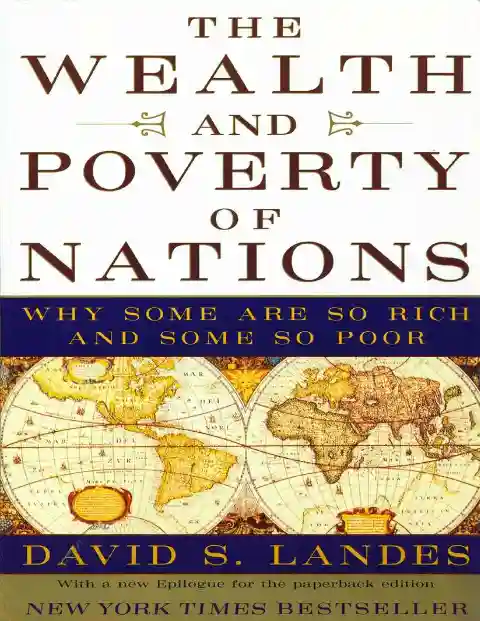

The Wealth And Poverty Of Nations - Why Some Are So Rich And Some So Poor Order Printed Copy
- Author: David S. Landes
- Size: 5.65MB | 957 pages
- |
Others like the wealth and poverty of nations - why some are so rich and some so poor Features >>
Wealth Creation

The Wealth Of The World

Building Wealth One House At A Time
The Law Of Divine Compensation - On Work, Money, And Miracles

The Little Book That Builds Wealth

Do You Fit The Profile Of A Prosperous Believer?

God's Master Key To Prosperity

You Were Born Rich

Thoughts On Stewardship
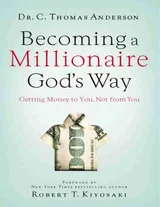
Becoming A Millionaire God's Way
About the Book
"The Wealth and Poverty of Nations" by David S. Landes explores the historical and cultural factors that have influenced the economic success of different nations. Landes argues that a combination of factors such as geography, institutions, and cultural attitudes towards work have played a crucial role in determining the wealth and poverty of nations. He highlights the importance of innovation, education, and technological progress in driving economic growth and prosperity. Ultimately, Landes emphasizes the need for countries to learn from history and adopt policies that promote economic development in order to improve the living standards of their citizens.
Charles Hodge
"Do You Ever Think About Heaven"
Do you ever think about Heaven? The beauty, and how it will be to live in eternity with Jesus? No one knows all about Heaven. And I believe even if we were to see it in person it would be like attempting to define God; overwhelmingly magnificent in so many ways that it would be beyond description. However, some fascinating information about Heaven is in the Bible. So, with the Holy Spirit's prompting, I began to search the scriptures. What I found was a captivating spiritual glimpse of Heaven that I would like to share with you. Mansions I genuinely believe God has provided a home for us in Heaven “In my Father's house are many mansions: if it were not so, I would have told you. I go to prepare a place for you,” (John 14:2). There were "many mansions" in Heaven when Jesus made this statement, and He promised to create more. I believe there will be a place prepared for every child of God. Giving up this body will be painful only so far as it pertains to our earthly life, and even that is not as fearful as is typically portrayed, at least not for Christians. The answer is to have absolute belief in God. Having full confidence in His Word brings freedom, and a new dimension to life, and allows us to look forward to whatever He has for us on this earth and for the rest of eternity. The Beauty of Heaven The earth is beautiful with flowers of every color, and symmetry beyond imagination; beautiful fishes in the sea, and the mountains, valleys, rivers, a fantastic variety of animals, birds, seasons of the year, and yes, people, and they are all beautiful. Sunrises and sunsets, so many things we take for granted. But the beauty of the earth cannot compare with the magnificence of Heaven. When we think of Heaven, gates of pearl often come to mind. Pearls can consist of every color. The streets in Heaven are gold, and there is a crystal river flowing from the Throne of God. Biblical descriptions and experiences of those who have visited or received visions of Heaven report a scene of unimaginable beauty. Colors conveying incredible spiritual sensations, and music of another dimension. Heaven will not be a strange experience, but more natural than life on earth; because our citizenship is in Heaven. This earth is not our home. Our home is in Heaven with our Father and our brothers and sisters, with whom we will spend eternity. "For our citizenship is in heaven, from which we also eagerly wait for the Savior, the Lord Jesus Christ," (Phil 3:20. NKJV). The Father and Son will be there, and our family members and friends who have passed on. There will be Bible people and prophets and Apostles of the Old and New Testament, angels, and other heavenly beings gathered around the Throne of God, (another beauty beyond description). How Will it be to Live in Heaven? I see death as a door we pass through and on the other side a beautiful new way of life beyond comprehension. I believe when we begin to experience the glory of God, we will surely say, "O death, where is thy sting? O grave, where is thy victory?" (1 Cor 15:55). I believe we will have a real lifestyle in Heaven, a home, and that we will know one another: "For now we see in a mirror, dimly, but then face to face. Now I know in part, but then I shall know just as I also am known," (1 Cor 13:12, NKJV). There will be no sickness, heartache, pain, or tears because: "He will wipe away every tear from their eyes, and death shall be no more, neither shall there be mourning, nor crying, nor pain anymore, for the former things have passed away,” (Rev 21:4). Although no one can say with certainty how we will spend our time or what our responsibilities will be, we know that both Jesus and God work, so I believe we will have exciting work: But Jesus answered them, “My Father has been working until now, and I have been working,” (John 5:17). I am sure we will not be sitting on clouds with our feet dangling. I believe we will be busy, and that we will worship God alongside the angels. "And all the angels were standing around the throne and the elders and the four living creatures, and they fell on their faces before the throne and worshiped God," (Rev 7:11-12). There are many things the Bible does not tell us about Heaven. But I am convinced that our lifestyle will be like the other Gifts of God, far beyond anything we can ask or think, and that the parts we have not been told will be the best of all. New Heaven and New Earth "For here we have no lasting city, but we are seeking the city which is to come," (Heb13:14). At some point, there will be a new heaven and a new earth. We will have much to do, and I believe it will be enjoyable and that we will remain young and energetic forever. “In keeping with his promise we are looking forward to a new heaven and a new earth, where righteousness dwells,” (2 Pet 3:13). “The wolf will live with the lamb, the leopard will lie down with the goat, the calf and the lion and the yearling together; and a little child will lead them.” (Isa 11:6). The Apostle Paul's Heavenly Visit The Apostle Paul, speaking of himself in 2 Cor 12, said: "And I know such a man—whether in the body or out of the body I do not know, God knows— how he was caught up into Paradise and heard inexpressible words, which it is not lawful for a man to utter." "And lest I should be exalted above measure by the abundance of the revelations, a thorn in the flesh was given to me, a messenger of Satan to buffet me, lest I be exalted above measure," (2 Cor 12: 3-4, 7) Later, the Apostle Paul said that he was torn between leaving and staying; and that his only desire for remaining on earth was to tell others about the good news/Gospel, so they could also be with the Lord. "But I am hard-pressed between the two. I have the desire to leave [this world] and be with Christ, for that is far, far better; yet to remain in my body is more necessary and essential for your sake, (Phil 1: 23-24, AMP). Thoughts of Heaven should persuade those who hope for eternal life to follow God’s plan of salvation, and to do everything possible to bring their loved ones and others with them to a Heavenly Home prepared just for them. Jesus is With Us All the Way It is impossible to understand eternity. Even a thousand times ten thousand years will hardly be a mark in eternity. God considered it so valuable that He sent His only begotten Son to give His life so that anyone who was born-again would spend eternity with Him in Heaven. Like John Bunyan's "Pilgrim's Progress," the Christian journey to Heaven, except for the Holy Spirit, would be extremely challenging. However, we are not without the Holy Spirit, and Jesus promises to be with us all the way. “Teaching them to observe all things that I have commanded you; and lo, I am with you always, even to the end of the age.” Amen. (Matt 28:20). The sorrows, hardships, disappointments, and pain suffered on earth will be of little importance when we receive the first glimpse of our heavenly home. I often visualize my time of transition into Heaven as an experience so beautiful, fantastic and life-changing that it is difficult to think or concentrate on the troubles that plague humanity. I see my life as a journey, or time of preparation for a big event, the greatest adventure of my life. Although Jesus told us it would be a difficult journey, He also said we should continue and that someday we would hear these beautiful words: “Well done, good and faithful servant! You have been faithful with a few things; I will put you in charge of many things. Come and share your master's happiness!” (Matt 25:21, NLT). Samuel Mills