
Others like the tree and your ministry Features >>

The Torch And The Sword

The Oil And The Mantle
Created For Community - Connecting Christian Belief With Christian Living
The Seven Longings Of The Human Heart
The Ministry Of Angels
The Ministry Of Angels And Believers

The Power Of Your Mind
The Prophetic Ministry
-160.webp)
The Power Of Your Words: How God Can Bless Your Life Through The Words You Speak

The Lamb In The Midst Of The Throne
About the Book
"The Tree And Your Ministry" by Dag Heward-Mills explores the concept of ministry through the analogy of a tree, highlighting the importance of growth, maturity, and bearing fruit in one's spiritual journey. The book encourages readers to reflect on their own ministry and personal growth, offering insights and practical advice for effective and impactful service in the kingdom of God.
Warren Wiersbe
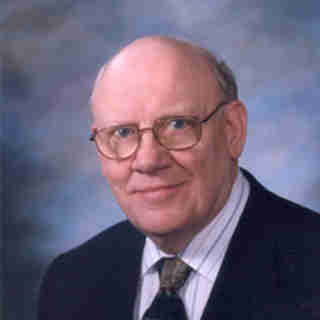 Dr. Warren Wiersbe once described Heaven as “not only a destination, but also a motivation. When you and I are truly motivated by the promise of eternity with God in heaven, it makes a difference in our lives.”
For Wiersbe, the promise of eternity became the motivation for his long ministry as a pastor, author, and radio speaker. Beloved for his biblical insight and practical teaching, he was called “one of the greatest Bible expositors of our generation” by the late Billy Graham.
Warren W. Wiersbe died on May 2, 2019, in Lincoln, Nebraska, just a few weeks shy of his 90th birthday.
“He was a longtime, cherished friend of Moody Bible Institute, a faithful servant of the Word, and a pastor to younger pastors like me,” said Dr. Mark Jobe, president of Moody Bible Institute. “We are lifting up pastor Wiersbe’s family in prayer at this time and rejoicing in the blessed hope that believers share together.”
Wiersbe grew up in East Chicago, Indiana, a town known for its steel mills and hard-working blue-collar families. In his autobiography, he connected some of his earliest childhood memories to Moody Bible Institute; his home church pastor was a 1937 graduate, Dr. William H. Taylor. After volunteering to usher at a 1945 Youth for Christ rally, Wiersbe found himself listening with rapt attention to Billy Graham’s sermon, and responded with a personal prayer of dedication.
In a precocious turn of events, the young Wiersbe was already a published author, having written a book of card tricks for the L. L. Ireland Magic Co. of Chicago. He quickly learned to liven up Sunday school lessons with magic tricks as object lessons (“not the cards!” he would say). After his high school graduation in 1947 (he was valedictorian), he spent a year at Indiana University before transferring to Northern Baptist Seminary in Chicago, where he earned a bachelor of theology degree. His future wife, Betty, worked in the school library, and Wiersbe was a frequent visitor.
While in seminary he became pastor of Central Baptist Church in East Chicago, serving until 1957. During those years he became a popular YFC speaker, which led to a full-time position with Youth for Christ International in Wheaton. He published his first article for Moody Monthly magazine in 1956, about Bible study methods, and seemed to outline his ongoing writing philosophy. “This is more of a personal testimony,” he said, “because I want to share these blessings with you, rather than write some scholarly essay, which I am sure I could not do anyway.”
At a 1957 YFC convention in Winona Lake, Indiana, Wiersbe preached a sermon that was broadcast live over WMBI, his first connection to Moody Radio. “I wish every preacher could have at least six months’ experience as a radio preacher,” he said later (because they would preach shorter).
While working with Youth for Christ, Wiersbe got a call from Pete Gunther at Moody Publishers, asking about possible book projects. First came Byways of Blessing (1961), an adult devotional; then two more books in 1962, A Guidebook for Teens and Teens Triumphant. He would eventually publish 14 titles with Moody, including William Culbertson: A Man of God (1974), Live Like a King (1976), The Annotated Pilgrim’s Progress (1980), and Ministering to the Mourning (2006), written with his son, David Wiersbe.
In 1961, D. B. Eastep invited Wiersbe to join the staff of Calvary Baptist Church in Covington, Kentucky. forming a succession plan that was hastened by Eastep’s sudden death in 1962. Warren and Betty Wiersbe remained at the church for 10 years, until they were surprised by a phone call from The Moody Church. The pastor, Dr. George Sweeting, had just resigned to become president of Moody Bible Institute. Would Wiersbe fill the pulpit, and pray about becoming a candidate?
He was already well known to the Chicago church—and to the MBI community. He continued to write for Moody Monthly and had just started a new column, “Insights for the Pastor.” The monthly feature continued to run during the years Wiersbe served at The Moody Church. Wiersbe would become one of the magazine’s most prolific writers—200 articles during a 40-year span. Meanwhile he also started work on the BE series of exegetical commentaries, books that soon found a place on the shelf of every evangelical pastor.
His ministry to pastors continued as he spoke at Moody Founder’s Week, Pastors’ Conference, and numerous campus events. He also inherited George Sweeting’s role as host of the popular Songs in the Night radio broadcast, produced by Moody Radio’s Bob Neff and distributed on Moody’s growing network of radio stations.
Later in life he would move to Lincoln, Nebraska, where he served as host of the Back to the Bible radio broadcast. He also taught courses on preaching at Trinity Evangelical Divinity School and Grand Rapids Baptist Seminary. He kept writing, eventually publishing more than 150 books and losing track of how many (“I can’t remember them all, and I didn’t save copies of everything,” he said.)
Throughout his ministry, Warren Wiersbe described himself as a bridge builder, a reference to his homiletical method of moving “from the world of the Bible to the world of today so that we could get to the other side of glory in Jesus.” As explained by his grandson, Dan Jacobson, “His preferred tools were words, his blueprints were the Scriptures, and his workspace was a self-assembled library.”
Several of Wiersbe’s extended family are Moody alums, including a son, David Wiersbe ’76; grandson Dan Jacobsen ’09 and his wife, Kristin (Shirk) Jacobsen ’09; and great-nephew Ryan Smith, a current student.
During his long ministry and writing career, Warren Wiersbe covered pretty much every topic, including the inevitability of death. These words from Ministering to the Mourning offer a fitting tribute to his own ministry:
We who are in Christ know that if He returns before our time comes to die, we shall be privileged to follow Him home. God’s people are always encouraged by that blessed hope. Yet we must still live each day soberly, realizing that we are mortal and that death may come to us at any time. We pray, “Teach us to number our days aright, that we may gain a heart of wisdom” (Psalm 90:12).
Dr. Warren Wiersbe once described Heaven as “not only a destination, but also a motivation. When you and I are truly motivated by the promise of eternity with God in heaven, it makes a difference in our lives.”
For Wiersbe, the promise of eternity became the motivation for his long ministry as a pastor, author, and radio speaker. Beloved for his biblical insight and practical teaching, he was called “one of the greatest Bible expositors of our generation” by the late Billy Graham.
Warren W. Wiersbe died on May 2, 2019, in Lincoln, Nebraska, just a few weeks shy of his 90th birthday.
“He was a longtime, cherished friend of Moody Bible Institute, a faithful servant of the Word, and a pastor to younger pastors like me,” said Dr. Mark Jobe, president of Moody Bible Institute. “We are lifting up pastor Wiersbe’s family in prayer at this time and rejoicing in the blessed hope that believers share together.”
Wiersbe grew up in East Chicago, Indiana, a town known for its steel mills and hard-working blue-collar families. In his autobiography, he connected some of his earliest childhood memories to Moody Bible Institute; his home church pastor was a 1937 graduate, Dr. William H. Taylor. After volunteering to usher at a 1945 Youth for Christ rally, Wiersbe found himself listening with rapt attention to Billy Graham’s sermon, and responded with a personal prayer of dedication.
In a precocious turn of events, the young Wiersbe was already a published author, having written a book of card tricks for the L. L. Ireland Magic Co. of Chicago. He quickly learned to liven up Sunday school lessons with magic tricks as object lessons (“not the cards!” he would say). After his high school graduation in 1947 (he was valedictorian), he spent a year at Indiana University before transferring to Northern Baptist Seminary in Chicago, where he earned a bachelor of theology degree. His future wife, Betty, worked in the school library, and Wiersbe was a frequent visitor.
While in seminary he became pastor of Central Baptist Church in East Chicago, serving until 1957. During those years he became a popular YFC speaker, which led to a full-time position with Youth for Christ International in Wheaton. He published his first article for Moody Monthly magazine in 1956, about Bible study methods, and seemed to outline his ongoing writing philosophy. “This is more of a personal testimony,” he said, “because I want to share these blessings with you, rather than write some scholarly essay, which I am sure I could not do anyway.”
At a 1957 YFC convention in Winona Lake, Indiana, Wiersbe preached a sermon that was broadcast live over WMBI, his first connection to Moody Radio. “I wish every preacher could have at least six months’ experience as a radio preacher,” he said later (because they would preach shorter).
While working with Youth for Christ, Wiersbe got a call from Pete Gunther at Moody Publishers, asking about possible book projects. First came Byways of Blessing (1961), an adult devotional; then two more books in 1962, A Guidebook for Teens and Teens Triumphant. He would eventually publish 14 titles with Moody, including William Culbertson: A Man of God (1974), Live Like a King (1976), The Annotated Pilgrim’s Progress (1980), and Ministering to the Mourning (2006), written with his son, David Wiersbe.
In 1961, D. B. Eastep invited Wiersbe to join the staff of Calvary Baptist Church in Covington, Kentucky. forming a succession plan that was hastened by Eastep’s sudden death in 1962. Warren and Betty Wiersbe remained at the church for 10 years, until they were surprised by a phone call from The Moody Church. The pastor, Dr. George Sweeting, had just resigned to become president of Moody Bible Institute. Would Wiersbe fill the pulpit, and pray about becoming a candidate?
He was already well known to the Chicago church—and to the MBI community. He continued to write for Moody Monthly and had just started a new column, “Insights for the Pastor.” The monthly feature continued to run during the years Wiersbe served at The Moody Church. Wiersbe would become one of the magazine’s most prolific writers—200 articles during a 40-year span. Meanwhile he also started work on the BE series of exegetical commentaries, books that soon found a place on the shelf of every evangelical pastor.
His ministry to pastors continued as he spoke at Moody Founder’s Week, Pastors’ Conference, and numerous campus events. He also inherited George Sweeting’s role as host of the popular Songs in the Night radio broadcast, produced by Moody Radio’s Bob Neff and distributed on Moody’s growing network of radio stations.
Later in life he would move to Lincoln, Nebraska, where he served as host of the Back to the Bible radio broadcast. He also taught courses on preaching at Trinity Evangelical Divinity School and Grand Rapids Baptist Seminary. He kept writing, eventually publishing more than 150 books and losing track of how many (“I can’t remember them all, and I didn’t save copies of everything,” he said.)
Throughout his ministry, Warren Wiersbe described himself as a bridge builder, a reference to his homiletical method of moving “from the world of the Bible to the world of today so that we could get to the other side of glory in Jesus.” As explained by his grandson, Dan Jacobson, “His preferred tools were words, his blueprints were the Scriptures, and his workspace was a self-assembled library.”
Several of Wiersbe’s extended family are Moody alums, including a son, David Wiersbe ’76; grandson Dan Jacobsen ’09 and his wife, Kristin (Shirk) Jacobsen ’09; and great-nephew Ryan Smith, a current student.
During his long ministry and writing career, Warren Wiersbe covered pretty much every topic, including the inevitability of death. These words from Ministering to the Mourning offer a fitting tribute to his own ministry:
We who are in Christ know that if He returns before our time comes to die, we shall be privileged to follow Him home. God’s people are always encouraged by that blessed hope. Yet we must still live each day soberly, realizing that we are mortal and that death may come to us at any time. We pray, “Teach us to number our days aright, that we may gain a heart of wisdom” (Psalm 90:12).
do you wish to be pure
Life calls us to do hard things. Athletes push through tremendous pain to gain victories. Doctors perform long, delicate surgeries to save lives. Soldiers overcome insurmountable odds to protect nations. Mothers endure excruciating pain to bring babies into the world. And Jesus calls us to do even harder things — actually, impossible things. He commanded Peter to step out of the boat, and Peter obeyed and walked on water (Matthew 14:29). Jesus commanded Lazarus, who had been dead for four days, “Come out,” and Lazarus rose and came out, still wrapped in burial clothes (John 11:38–44). When Jesus commands, he also empowers believers to obey. Now, consider Jesus’s call for you to be pure (Matthew 5:8). At times, does it feel impossible to win the battle for purity? We can feel so discouraged that Jesus’s question to a lame man might be asked of us, “Do you want to be healed?” (John 5:6). Seems like a strange question to ask someone who had been lame for almost forty years, right? But perhaps after waiting all those years, the lame man was losing hope of ever being made well. Jesus asked because he wanted everyone to know that as the Messiah, the Savior of the world, the Son of God, he could make anyone well. Jesus could do the impossible. Jesus then commanded the lame man to pick up his pallet and walk, and he did . The point for us is clear: No matter how hard or impossible Jesus’s commands seem to us, Jesus as Lord can empower us to obey. This is encouraging news. So, if you are struggling to stop looking at porn, to finally quit masturbating, to repent of living in an impure relationship, Jesus wants you to honestly answer this question: “Do you want to be pure?” Because he can set you free. As a Christian striving to live purely, arm yourself with the following three biblical admonitions in your war against lust. 1. Hate Your Sin No one who still loves sin will genuinely ask Jesus to empower him to slay it. And Jesus doesn’t answer double-minded prayers. He hears and answers cries from broken, contrite hearts. So, pray that the Spirit will convict you (John 16:7–8) and show you the depth of your sin (Psalm 139:23–24). Pray that the Spirit will help you grow in hatred of what God hates: “Through your precepts I get understanding; therefore I hate every false way” (Psalm 119:104). In his chapter of Secret Sex Wars: A Battle Cry for Purity , H.B. Charles tells the following story: A little child was playing with a very valuable vase that he should not have even been touching. And, of course, he put his hand into it and could not get it out. His father also tried in vain to get the boy’s hand free. His parents considered breaking the vase until the father said, “Son, let’s try one more time to get you free. On the count of three, open your hand and hold your fingers as straight as you can, and then pull.” To their astonishment the little fellow said, “Oh no, Daddy, I can’t put my fingers out like that. If I do, I’ll drop my pennies!” The Holy Spirit stirs in the hearts of believers’ hearts to hate our sin so that we renounce it. This hatred is not a hatred that leaves a person self-loathing and longing to do penance. This hatred of sin produced by the Spirit turns us from the grips of sin to the fountain filled with blood drawn from Immanuel’s veins. It is there that Jesus cleanses our hearts and affections so that we lose all our filthy stains. Spirit-convicted Christians cry out to Jesus, like Paul, “Wretched man that I am! Who will deliver me from this body of death?” (Romans 7:24). From that well of despair, we find soul-rejoicing hope in the forgiveness and victory over sin won by Christ. There, we will exclaim with Paul, “Thanks be to God through Jesus Christ our Lord!” (Romans 7:25). So, don’t be self-deceived. No one can repent of a sin and cherish it at the same time. That is the eternal, profound difference between worldly sorrow and genuine, life-giving repentance (2 Corinthians 7:10). 2. Satisfy Your Soul in Christ The Spirit makes the good news real to convicted sinners. He convinces us that through Jesus’s death and resurrection, Christ has become our Lord, that he saves broken sinners, that his death atoned for our sin, that he does not cast away bruised reeds and flickering wicks. He convinces his chosen people that Jesus has saved us and that he empowers us to become more like him (Galatians 5:22–25). “No one who still loves sin will genuinely ask Jesus to empower him to slay it.” He does this by satisfying us through worship. Jesus saved the immoral Samaritan woman, and in doing so, he gave her the living water that would satisfy her thirst so that she wouldn’t have to yield to the desire for immoral relationships again (John 4:13–14). This same Jesus is alive today. He sits at the right hand of the Father with all authority in heaven and on earth. He still gives his Spirit to all whom he saves (1 Corinthians 12:13) and through the Spirit satisfies the souls of repentant sinners. Jesus says, “These things I speak in the world, that they may have my joy fulfilled in themselves” (John 17:13). Therefore, relish and delight your soul in Christ’s gracious, gospel-purchased gifts. If you are a child of God, delight that you have been reconciled to God. You are forgiven. You have eternal life. You have been born again. You have been delivered from the power of the kingdom of darkness. You have overcome the world. You are loved by God. You will never be left alone or separated from his love. You will be made like him when you see him as he is. And in the meantime, you will be purified by fixing your mind on the hope he offers. “Everyone who has this hope fixed on Him purifies himself, just as He is pure” (1 John 3:3 NASB). The Spirit daily wants to fix your hope on Jesus and his gospel. He daily wants to satisfy your soul with the banquet of all these gospel blessings and more. So, eat at the banquet of the redeemed, freely. 3. Put to Death the Deeds of the Flesh The word of God commands that we “put to death . . . what is earthly in you: sexual immorality, impurity, passion, evil desire, and covetousness, which is idolatry” (Colossians 3:5). “This is the will of God, your sanctification: that you abstain from sexual immorality” (1 Thessalonians 4:3). But saying “No!” to sexual temptation might sound as easy as walking on water. So, we must believe that Jesus commands, and empowers, us to do the impossible. Let the Helper help you. Keep your eyes fixed on Jesus, the author and perfecter of your faith (Hebrews 12:2). When Peter took his eyes off of Jesus, he started to sink. But dear saint of God, Peter didn’t drown. He cried out to our Lord, “Save me,” and “Jesus immediately reached out his hand and took hold of him.” Then rebuking him, Jesus said, “O you of little faith, why did you doubt?” (Matthew 14:30–31). Don’t doubt that the Spirit empowers you to do what he calls you to do, and don’t believe he will reject you when you need his help. Fighting for your purity isn’t supposed to be easy; it is war. Picking up your cross and dying daily (Luke 9:23) is a slow, painful process. Yet born-again believers can (and will) because Jesus died our death for us (Romans 6:6–7) and gave us his Spirit to empower us (Romans 8:13). Our War Is Winnable Let’s end by asking our opening question in a slightly different way: Do you believe that Jesus’s death and resurrection and the gift of his Spirit can make you pure? I pray that you do. In an infinitely greater way than D-Day, Jesus’s cross turned the tide for every believer in our war against sin. This is a winnable war — not perfectly winnable, but truly winnable — because of Jesus. Therefore, seek to live by the power of the Spirit today, get accountability, and put to death the deeds of the flesh. Then bask again in Jesus’s gospel-grace tomorrow, and fight for your purity again and for every tomorrow that he gives you. You can win the war for sexual purity.