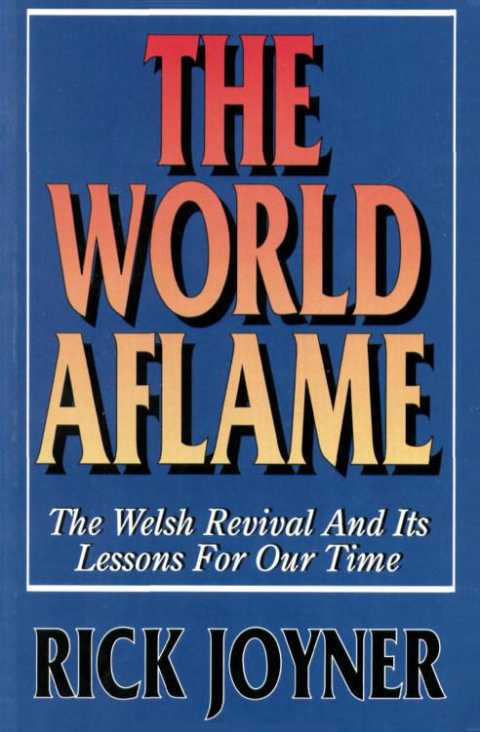

Others like the world aflame Features >>
-160.webp)


About the Book
"The World Aflame" by Rick Joyner is a Christian book that discusses the current state of the world and explores biblical prophecies about the end times. Joyner touches on topics such as natural disasters, political unrest, and moral decay, while offering insight and encouragement for believers to navigate these challenging times with faith and hope. Ultimately, the book emphasizes the importance of living according to God's word and being prepared for the return of Jesus Christ.
A.W. Tozer (Aiden Wilson Tozer)
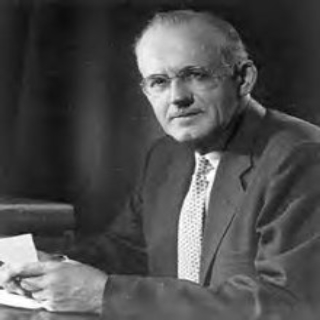 Early life
Tozer hailed from a tiny farming community in western La Jose, Pennsylvania. He was converted to Christianity as a teenager in Akron, Ohio: While on his way home from work at a tire company, he overheard a street preacher say, "If you don't know how to be saved ... just call on God, saying, 'Lord, be merciful to me a sinner.'" Upon returning home, he climbed into the attic and heeded the preacher's advice.
Pastor
In 1919, five years after his conversion and without formal education in Christian theology, Tozer accepted an offer to serve as pastor of his first church. That began 44 years of ministry associated with the Christian and Missionary Alliance (C&MA), a Protestant Evangelical denomination, 33 of them serving as a pastor in several different congregations (his first, a small storefront church in Nutter Fort, West Virginia). Later, he served thirty years (1928 to 1959) as the pastor of Southside Alliance Church in Chicago; the final years of his life he spent as pastor of Avenue Road Church in Toronto, Ontario, Canada. Observing contemporary Christian living, Tozer felt that the church was on a dangerous course toward compromising with "worldly" concerns.
Born into poverty, Tozer was self-educated and taught himself what he missed in high school and university.
Author
Tozer began writing in 1931 for the denominational magazine of the Christian and Missionary Alliance, Alliance Weekly (now Alliance Life), which became the platform from which his writing career emerged. He later wrote the monthly column “There’s Truth in It” (1936–37) and “A Word in Season” (1944–46). In May 1950, he became the editor of the Alliance Weekly, a position he filled until his death in 1963.
At the urging of David W. Fant, publications secretary of the C&MA, Tozer wrote biographies of A. B. Simpson (1943) and Robert A. Jaffray (1947). It was the publication of his third book, The Pursuit of God (1948), that made Tozer a household name among evangelicals. In addition to the 12 books he published in his lifetime, more than 40 other books have been compiled from his magazine features, editorials, and transcribed sermons.
During his lifetime, Tozer’s works were published by Christian Publications, Inc., the denominational press operated by the C&MA. The publishing house declared bankruptcy in 2006 and was purchased by WingSpread Publishers of Camp Hill, Pennsylvania.[8] In November 2013, Moody Publishers acquired Wingspread from parent company Zur Ltd., a transaction that included more than 60 Tozer books and pamphlets. Some of Tozer’s works are now in the public domain and have been issued by multiple publishers.
Personal life
Tozer had seven children, six sons and a daughter. Living a simple and non-materialistic lifestyle, he and his wife, Ada Cecelia Pfautz, never owned a car, preferring bus and train travel. Even after becoming a well-known Christian author, Tozer signed away much of his royalties to those who were in need.
Prayer was of vital personal importance for Tozer. "His preaching as well as his writings were but extensions of his prayer life," comments his biographer, James L. Snyder, in the book In Pursuit of God: The Life Of A.W. Tozer. "He had the ability to make his listeners face themselves in the light of what God was saying to them," writes Snyder.
Death and legacy
Tozer died on May 13, 1963, after suffering a heart attack. He was buried in Chicago, and later the family had his remains reinterred at Ellet Cemetery, Akron, Ohio. A simple marker reads: A. W. Tozer—A Man of God. The Alliance Weekly ran a memorial issue with numerous tributes and excerpts. The same issue also featured “God’s Greatest Gift to Man," a transcription of his final sermon. A few months prior to his death, Tozer had submitted the manuscript to The Christian Book of Mystical Verse, which was released in 1964 as his final book. His official publisher, Christian Publications, released many titles after his death, based on his magazine articles and sermon transcriptions. These continue in print with Moody Publishers. Several other publishers have released his public domain works.
In 2000, The Pursuit of God was named to Christianity Today’s list of 100 “Books of the Century.” In 2006, Knowledge of the Holy was named in “The Top 50 Books That Have Shaped Evangelicals.” Contemporary Christian music artist Lauren Barlow of BarlowGirl later published a compilation of stories told by 59 artists, writers, and leaders about A.W. Tozer’s personal inspiration.
Early life
Tozer hailed from a tiny farming community in western La Jose, Pennsylvania. He was converted to Christianity as a teenager in Akron, Ohio: While on his way home from work at a tire company, he overheard a street preacher say, "If you don't know how to be saved ... just call on God, saying, 'Lord, be merciful to me a sinner.'" Upon returning home, he climbed into the attic and heeded the preacher's advice.
Pastor
In 1919, five years after his conversion and without formal education in Christian theology, Tozer accepted an offer to serve as pastor of his first church. That began 44 years of ministry associated with the Christian and Missionary Alliance (C&MA), a Protestant Evangelical denomination, 33 of them serving as a pastor in several different congregations (his first, a small storefront church in Nutter Fort, West Virginia). Later, he served thirty years (1928 to 1959) as the pastor of Southside Alliance Church in Chicago; the final years of his life he spent as pastor of Avenue Road Church in Toronto, Ontario, Canada. Observing contemporary Christian living, Tozer felt that the church was on a dangerous course toward compromising with "worldly" concerns.
Born into poverty, Tozer was self-educated and taught himself what he missed in high school and university.
Author
Tozer began writing in 1931 for the denominational magazine of the Christian and Missionary Alliance, Alliance Weekly (now Alliance Life), which became the platform from which his writing career emerged. He later wrote the monthly column “There’s Truth in It” (1936–37) and “A Word in Season” (1944–46). In May 1950, he became the editor of the Alliance Weekly, a position he filled until his death in 1963.
At the urging of David W. Fant, publications secretary of the C&MA, Tozer wrote biographies of A. B. Simpson (1943) and Robert A. Jaffray (1947). It was the publication of his third book, The Pursuit of God (1948), that made Tozer a household name among evangelicals. In addition to the 12 books he published in his lifetime, more than 40 other books have been compiled from his magazine features, editorials, and transcribed sermons.
During his lifetime, Tozer’s works were published by Christian Publications, Inc., the denominational press operated by the C&MA. The publishing house declared bankruptcy in 2006 and was purchased by WingSpread Publishers of Camp Hill, Pennsylvania.[8] In November 2013, Moody Publishers acquired Wingspread from parent company Zur Ltd., a transaction that included more than 60 Tozer books and pamphlets. Some of Tozer’s works are now in the public domain and have been issued by multiple publishers.
Personal life
Tozer had seven children, six sons and a daughter. Living a simple and non-materialistic lifestyle, he and his wife, Ada Cecelia Pfautz, never owned a car, preferring bus and train travel. Even after becoming a well-known Christian author, Tozer signed away much of his royalties to those who were in need.
Prayer was of vital personal importance for Tozer. "His preaching as well as his writings were but extensions of his prayer life," comments his biographer, James L. Snyder, in the book In Pursuit of God: The Life Of A.W. Tozer. "He had the ability to make his listeners face themselves in the light of what God was saying to them," writes Snyder.
Death and legacy
Tozer died on May 13, 1963, after suffering a heart attack. He was buried in Chicago, and later the family had his remains reinterred at Ellet Cemetery, Akron, Ohio. A simple marker reads: A. W. Tozer—A Man of God. The Alliance Weekly ran a memorial issue with numerous tributes and excerpts. The same issue also featured “God’s Greatest Gift to Man," a transcription of his final sermon. A few months prior to his death, Tozer had submitted the manuscript to The Christian Book of Mystical Verse, which was released in 1964 as his final book. His official publisher, Christian Publications, released many titles after his death, based on his magazine articles and sermon transcriptions. These continue in print with Moody Publishers. Several other publishers have released his public domain works.
In 2000, The Pursuit of God was named to Christianity Today’s list of 100 “Books of the Century.” In 2006, Knowledge of the Holy was named in “The Top 50 Books That Have Shaped Evangelicals.” Contemporary Christian music artist Lauren Barlow of BarlowGirl later published a compilation of stories told by 59 artists, writers, and leaders about A.W. Tozer’s personal inspiration.
what is the unforgivable sin
“Blasphemy against the Spirit will not be forgiven.” It’s one of Jesus’s most enigmatic, controversial, and haunting statements. In the last two millennia, many a tortured soul have wrestled over this warning. Have I committed “the unforgivable sin”? When I addressed my angry profanity to God, when I spoke rebelliously against him, did I commit unforgivable blasphemy? Or, perhaps more often, especially in today’s epidemic of Internet porn, “Could I really be saved if I keep returning to the same sin I have vowed so many times never to return to again?” Despite the enigma and controversy, we do have a simple pathway to clarity. Jesus’s “blasphemy against the Spirit” statement only appears in the Synoptic Gospels (Matthew, Mark, and Luke). If we get a concrete sense of what he did (and didn’t) mean there, then we’re positioned to answer what such “unforgivable sin” might (and might not) mean for us today. What Jesus Actually Said Jesus hadn’t been teaching in public long when his hearers began comparing him to their teachers, called “the scribes,” part of the conservative Jewish group known as the Pharisees. The growing crowds “were astonished at his teaching, for he taught them as one who had authority, and not as the scribes” (Mark 1:22). The scribes heard the comparison and felt the tension, and soon escalated it (Mark 2:6, 16), as these Bible teachers of the day, with their many added traditions, quickly grew in their envy, and then hatred, for Jesus. The threat is so great these conservatives even are willing to cross the aisle to conspire with their liberal rivals, the Herodians (Mark 3:6). The showdown comes in Mark 3:22–30 (Matthew 12:22–32). Scribes have descended from Jerusalem to set straight the poor, deceived people of backwater Galilee. “He is possessed by Beelzebul,” they say. “By the prince of demons he casts out the demons” (Mark 3:22). Jesus calmly answers their lie with basic logic (verses 23–26) and turns it to make a statement about his lordship (verse 27). Then he warns these liars, who know better deep down, of the spiritual danger they’re in. “Truly, I say to you, all sins will be forgiven the children of man, and whatever blasphemies they utter, but whoever blasphemes against the Holy Spirit never has forgiveness, but is guilty of an eternal sin ” — for they were saying, ‘He has an unclean spirit.’” (Mark 3:28–30) It’s one thing to suppose that Jesus is out of his mind (his family fears as much at this early stage, Mark 3:21), but it’s another thing to attribute the work of God’s Spirit to the devil — to observe the power of God unfolding in and through this man Jesus, be haunted by it in a callous heart, and turn to delude others by ascribing the Spirit’s work to Satan. This evidences such a profound hardness of heart in these scribes that they should fear they are on the brink of eternal ruin — if it’s not already too late. Jesus does not necessarily declare that the scribes are already condemned, but he warns them gravely of their precarious position. Who Did the Scribes Blaspheme? Before we ask about our sin today, let’s gather the pieces in the Gospels. The teachers of God’s covenant people, here at this crucial and unique point in redemptive history, have God himself among them. God’s long-anticipated kingdom is dawning. “If it is by the Spirit of God that I cast out demons, then the kingdom of God has come upon you” (Matthew 12:28). The very day that their stories and prophets and Scriptures have prepared them for is being unveiled before them, and in their hard and impenitent hearts, they are rejecting it. And not only are they cold toward how God is doing it, and murmuring about it to each other, but as teachers of God’s people, they now are speaking up to draw others away from the truth. And they do so by declaring that the power at work in Jesus, manifestly from God, is the power of Satan. Here Jesus warns them, “Whoever blasphemes against the Holy Spirit never has forgiveness, but is guilty of an eternal sin” (Mark 3:29). Why so? Matthew adds a detail we don’t have in Mark. “Whoever speaks a word against the Son of Man will be forgiven, but whoever speaks against the Holy Spirit will not be forgiven, either in this age or in the age to come” (Matthew 12:32). Attacking Jesus is one thing. He refers to himself as “the Son of Man” — God himself among his people, but not yet fully revealed in his death and resurrection. Attack this enigmatic Son of Man, and the Spirit can overcome that. But it’s another thing to see what God is doing and turn to attack his Spirit . Who is left to help these scribes if they’re settling in against the Spirit of God? Insult, dishonor, and make enemies with the Spirit, and who is left to bring you back? The reason these scribes are dangerously close to being guilty of “eternal sin” is because they are evidencing such a settled hardness of heart — not just against this mysterious “Son of Man,” but now explicitly against the Spirit — that their hearts may no longer be capable of repentance. It’s not that they may be genuinely repentant but given the stiff arm, but that they will “never have forgiveness” because they will never meet the simple, invaluable, softhearted condition for it: repentance. Is Anyone Unforgivable Today? When Jesus addresses the scribes in his day, it is on the brink of a seismic redemptive-historical change that comes with his life and ministry. So in what sense might his warning to the scribes about “blasphemy against the Spirit” be uniquely for Jesus’s day, on the cusp of the old covenant being fulfilled and a new covenant being inaugurated? Should these words fall in the same way on our ears twenty centuries later? When we turn forward in the story to Acts and the Epistles, we don’t find anything called “blasphemy against the Spirit.” Which signals our need for exercising care in applying this precise term today. However, we do find a concept similar to “unforgivable sin,” even if the terms are not exactly the same. The essence of Jesus’s warning to the scribes in his day lands on us in some form, even if not in the precise way it did originally for the scribes. Ephesians 4:30 speaks of “grieving the Holy Spirit,” but this is not the same as Jesus’s warning to the scribes. Those who “grieve” the Spirit are reminded that by him they are “sealed for the day of redemption.” However, Hebrews 10:29 speaks of “outraging the Spirit of grace,” and Hebrews 12:17 warns professing Christians not to be like Esau who “found no place of repentance.” Like Jesus’s warning to the scribes, we are not told that Esau asked for forgiveness but was denied. Rather, he “found no place of repentance” — his heart had grown so callous, he was no longer able to genuinely repent and thus meet the condition for the free offer of forgiveness. Throughout his letter, the author of Hebrews warns his audience of this danger. In the past, they have professed faith in Jesus and claimed to embrace him. Now, because of pressure and persecution from unbelieving Jews, they are tempted to abandon Jesus to restore their peace and comfort. They have experienced remarkable measures of grace in association with the new-covenant people of God (Hebrews 6:4–5), but now they are nearing the brink of falling away from Christ — and Hebrews warns them of the peril: having known the truth, and rejected it, are they now coming into a kind of settled hardness of heart from which they no longer will be able to repent and thus be forgiven? For Christians today, we need not fear a specific moment of sin, but a kind of hardness of heart that would see Jesus as true and yet walk away — with a kind of hardness of heart incapable of repenting. Again, it’s not that forgiveness isn’t granted, but that it’s not sought. The heart has become so recalcitrant, and at such odds with God’s Spirit, that it’s become incapable of true repentance. Hope for Those Feeling “Unforgivable” If you do fear you’ve committed some “unforgivable sin,” or even that your heart has already reached such a state of hardness, God does offer you hope. If you worry about unforgivable sin, then most likely you are not there. Not yet. Hearts with settled hardness against Jesus and his Spirit don’t go around worrying about it. It’s easy to get worked up over this enigmatic “unforgivable sin” in the Gospels and miss the remarkable gospel expression of Jesus’s open arms that comes immediately before the warning: “Truly, I say to you, all sins will be forgiven the children of man, and whatever blasphemies they utter” (Mark 3:28). All sins. Whatever blasphemies uttered. Through faith in Jesus. This is where the Gospel accounts all lead: to the cross. This Son of Man, as he progressively demonstrates in the Gospels, is God himself and Lord of the universe. And he became one of us, and died for our sins, and rose to offer full and entire forgiveness for all who repent and embrace him as Lord, Savior, and Treasure. If your worries about “unforgivable sin” relate to a pattern of sin and unrepentance in your life, your very concerns may be God’s Spirit working to keep you from continuing to harden your heart beyond his softening. Don’t despair. And don’t treat it lightly. As the Holy Spirit encourages his hearers on the edge of such danger, “Today, if you hear his voice, do not harden your hearts” (Psalm 95:7–8; Hebrews 3:7–8). You are not guaranteed tomorrow. But you do have today. It’s not too late, if you still have it in you to repent. More Good News However, we should be careful that the enigma and controversy over “unforgivable sin” doesn’t keep us from missing the main reality underneath this episode in Mark 3 and Matthew 12. Jesus’s main point isn’t that there is such a sin as “blasphemy against the Spirit,” but that there is such a person as the Holy Spirit! How remarkable that God has not left us to ourselves in the ups and downs of this life. As he did with his own Son in his full humanity, he makes available to us supernatural power by his Spirit. How did Jesus, as man, perform his miracles? By the power of the Spirit. “It is by the Spirit of God that I cast out demons” (Matthew 12:28). When Jesus hears the scribes say, “By the prince of demons he casts out the demons,” he hears an outrageous attack, not on himself, but on the Spirit. The last word in the story explains it all: “ for they were saying, ‘He has an unclean spirit’” (Mark 3:30). How amazing that the same Spirit who empowered Jesus in his earthly life, and on the path to his sacrificial death, has been given to us today. We “have the Spirit” (Romans 8:9, 15, 23; 1 Corinthians 6:19). What a gift we’ve received (Romans 5:5; 1 Corinthians 2:12; 2 Corinthians 5:5; 1 John 3:24). How much do we underappreciate what power is available to us (and through us) by the Spirit?