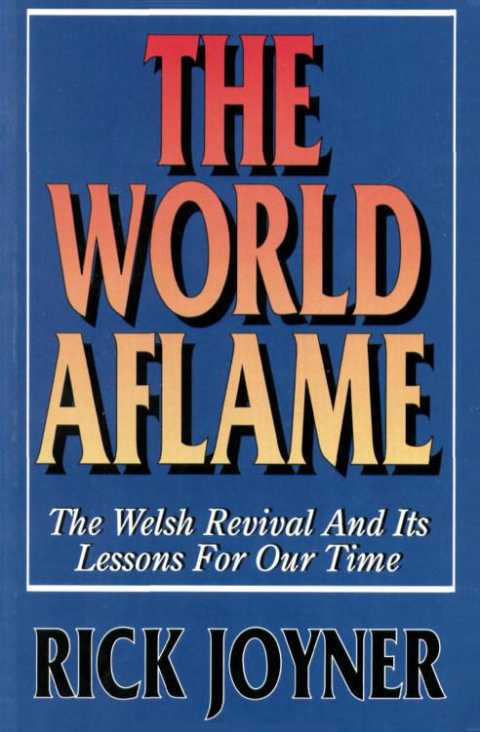

Others like the world aflame Features >>

-160.webp)



About the Book
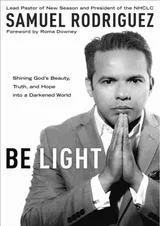
"The World Aflame" by Rick Joyner is a Christian book that discusses the current state of the world and explores biblical prophecies about the end times. Joyner touches on topics such as natural disasters, political unrest, and moral decay, while offering insight and encouragement for believers to navigate these challenging times with faith and hope. Ultimately, the book emphasizes the importance of living according to God's word and being prepared for the return of Jesus Christ.
Gordon Lindsay
 Gordon Lindsay’s Early life
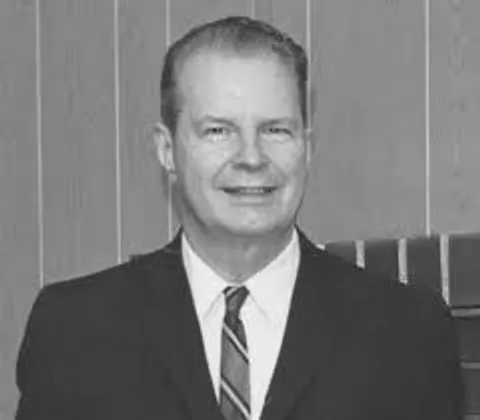
Gordon Lindsay’s parents were members of J. A. Dowie’s Zion City, Illinois when he was born. The city’s financial difficulties forced the family west in 1904, where they temporarily joined another Christian-based community led by Finis Yoakum at Pisgah Grande, California. When similar problems emerged the family moved to Oregon after only a few months. From here the family moved to Portland, Oregon where Lindsay attended high school and was converted during a Charles F. Parham evangelistic campaign.
During his youth he came under the influence of John G. Lake, former resident of Zion City, missionary to South Africa, and founder of the Divine Healing missions in Spokane, Washington, and Portland, Oregon in 1920. Lindsay joined the healing and evangelistic campaigns of Lake, traveling throughout California and the southern states.
Lindsay began his own ministry in California as pastor of small churches in Avenal and San Fernando and for the next eighteen years, he travelled acros s the country holding revivals in full gospel churches. This period of travel prepared him as perhaps no other man in the nation to establish communication among a variety of Pentecostals.
When World War II began, Lindsay felt compelled to give up his evangelistic ministry because its rigorous lifestyle was taking its toll on his young family. He accepted a call to pastor a church in Ashland, Oregon.
William Branham enters Gordon Lindsay’s life
By 1947 he had witnessed the extraordinary ministry of William Branham and responded to the invitation to become Branham’s manager. His managerial skills were soon obvious in the Branham campaigns, and in April 1948, he furthered the cause of the of the revival when he produced the first issue of The Voice of Healing, specifically to promote Branham’s ministry. To Lindsay’s great surprise Branham announced that he “would not continue on the field more than a few weeks more.”
At great financial cost Lindsay decided to continue the publication of the new magazine in cooperation with his long-time friends, Jack Moore and his talented daughter Anna Jeanne Moore. He broadened the scope of the magazine by including more of the lesser known healing evangelists who were beginning to hold campaigns and were drawing large audiences.
One such evangelist was William Freeman who had been holding meetings in small churches. Lindsay visited one of his campaigns and immediately felt it was the will of God to team up with him and organise a series of meetings through 1948. The Voice of Healing featured the miracles of the Freeman campaigns.
Voice of Healing Conventions
By March 1949 The Voice of Healing circulation had grown to nearly 30,000 per month and had clearly become the voice of the healing movement. It’s pages successfully spread the message of the Salvation-Deliverance-Healing revival across the world.
In December 1949, Lindsay arranged the first convention of healing revivalists in Dallas, Texas. The assembly was addressed by Branham, Lindsay, Moore, old-timers such as F. F. Bosworth and Raymond T. Richey, and a number of rising revivalists including O. L. Jaggers, Gayle Jackson, Velmer Gardner, and Clifton Erickson. This historic conference symbolized the vitality and cohesion of the revival.
The following year, the convention, now about 1,000 strong, met in Kansas City, with virtually every important revivalist in the nation, with the notable exceptions of William Branham and Oral Roberts. Lindsay exercised great skill and wisdom exposing several points of danger and tension in the movement proposed guidelines for the future. Lindsay understood the fears of the older Pentecostal denominations and leaders and tried his utmost to deal with the offending issues.
In an article announcing “the purpose, plan and policy of the Voice of Healing Convention,” he denounced “free-lancers who violently and indiscriminately attack organization in general,” and he urged avoidance of “novel prophetic interpretations, dogmatic doctrinal assertions, sectarian predilections, theological hair-splitting.”
The Voice of Healing Association
The 1950 meeting made the Voice of Healing convention into a loose association of healing revivalists. The evangelists officially associated with The Voice of Healing magazine held “family meetings” at the conventions, at the same time maintaining their desire to “prove to the world that those associated with The Voice of Healing have no intention to organize another movement.” Through the decade the Voice of Healing conventions were showcases for healing revivalism.
The conference programs were workshops on the problems of healing evangelists. Typical topics were “prayer and fasting,” “preparation for a campaign,” “the follow-up work after a campaign,” “the system of cards for the prayer tent and the healing line” and the delicate issue of finances. As the association grew in importance in the 1950s, the program was frequently headed by Roberts or Branham; though every new revivalist aspired to be a speaker on the program.
The Voice of Healing family of evangelists flowered in the early 1950s. Lindsay continued to publicize Branham’s work, although he was not formally associated with the organization; the nucleus of the fellowship was an influential clique which included O. L. Jaggers, William Freeman, Jack Coe, T. L. Osborn, A. A. Allen, and Velmer Gardner.
Gradually major ministries began their own magazines and had no further need for Voice of Healing promotion. Nevertheless, by 1954 the “associate editors and evangelists” listed in The Voice of Healing numbered nearly fifty.
Though Lindsay became personally involved with healing evangelism from 1949, especially with other revivalists such as T. L. Osborn, he confined his best work to organization and management of the Voice of Healing magazine. By 1956 the expenses of the Voice of Healing were running $1,000 a day. In addition to the national and regional conventions sponsored by his organization, Lindsay also began to sponsor missions and a radio program.
“Lindsay was more than an advisor during the first decade of the healing revival; he was much like the director of an unruly orchestra. He tried desperately to control the proliferation of ministries in an effort to keep the revival respectable. He repeatedly advised, “It is better for one to go slow. Get your ministry on a solid foundation. . . . By all means avoid Hollywood press agent stuff.”
Many of the new leaders of the early 1950s owed their early success to the literary support of Gordon Lindsay through the Voice of Healing, but by 1958, many of the revivalists believed that Lindsay’s work was over.
An evolving ministry
Lindsay’s efforts to consolidate and coordinate the healing movement and its ministries became an impossible task. The increasing independence of ministries and the burgeoning charismatic movement caused Lindsay to reconsider his goals. He took the example of T. L. Osborn and concentrated on missionary endeavours. He remained the historian and theologian of the healing movement but began to produce teaching and evangelistic materials which were sent across the world.
The Voice of Healing ultimately became Christ for the Nations. Native church programs, literature, teaching tapes and funds were distributed to hundreds of locations. The organization had changed from one of healing revivalists into an important missionary society.
His ministry was always to those involved in the healing revival, independents and mainline Pentecostals, but the new charismatics – Lutherans, Methodists and Baptists – became his new audience. His encouragement of, and involvement with, the Full Gospel Businessmen’s Fellowship was designed to provide teaching and wisdom for charismatic leaders, many of whom held Lindsay in high regard.
His death on April 1st 1971
Suddenly, on April 1, 1973, Gordon Lindsay died. His wife, Freda, stepped into the breach and was able to stabilize and advance the ministry of Christ for the Nations. Lindsay’s death brought unparalleled financial support paying off all debts and expanding most of its programs.
David Harrel summarises the life of Gordon Lindsay perfectly: ‘The death of Gordon Lindsay closed a major chapter in the charismatic revival. No single man knew the revival and its leaders so well. No man understood its origins, its changes, and its diversity as did Lindsay. A shrewd manager and financier, Lindsay had been as nearly the coordinator of the healing revival as any man could be.
When the revival began to wane, Lindsay was faced with a crisis more severe than those of most of the evangelists themselves. Never a dynamic preacher, he found himself virtually abandoned by his most successful protégés. But Lindsay proved able to adapt. Always a balanced person, Lindsay built a balanced and enduring ministry.’
Tony Cauchi
Gordon Lindsay’s Early life
Gordon Lindsay’s parents were members of J. A. Dowie’s Zion City, Illinois when he was born. The city’s financial difficulties forced the family west in 1904, where they temporarily joined another Christian-based community led by Finis Yoakum at Pisgah Grande, California. When similar problems emerged the family moved to Oregon after only a few months. From here the family moved to Portland, Oregon where Lindsay attended high school and was converted during a Charles F. Parham evangelistic campaign.
During his youth he came under the influence of John G. Lake, former resident of Zion City, missionary to South Africa, and founder of the Divine Healing missions in Spokane, Washington, and Portland, Oregon in 1920. Lindsay joined the healing and evangelistic campaigns of Lake, traveling throughout California and the southern states.
Lindsay began his own ministry in California as pastor of small churches in Avenal and San Fernando and for the next eighteen years, he travelled acros s the country holding revivals in full gospel churches. This period of travel prepared him as perhaps no other man in the nation to establish communication among a variety of Pentecostals.
When World War II began, Lindsay felt compelled to give up his evangelistic ministry because its rigorous lifestyle was taking its toll on his young family. He accepted a call to pastor a church in Ashland, Oregon.
William Branham enters Gordon Lindsay’s life
By 1947 he had witnessed the extraordinary ministry of William Branham and responded to the invitation to become Branham’s manager. His managerial skills were soon obvious in the Branham campaigns, and in April 1948, he furthered the cause of the of the revival when he produced the first issue of The Voice of Healing, specifically to promote Branham’s ministry. To Lindsay’s great surprise Branham announced that he “would not continue on the field more than a few weeks more.”
At great financial cost Lindsay decided to continue the publication of the new magazine in cooperation with his long-time friends, Jack Moore and his talented daughter Anna Jeanne Moore. He broadened the scope of the magazine by including more of the lesser known healing evangelists who were beginning to hold campaigns and were drawing large audiences.
One such evangelist was William Freeman who had been holding meetings in small churches. Lindsay visited one of his campaigns and immediately felt it was the will of God to team up with him and organise a series of meetings through 1948. The Voice of Healing featured the miracles of the Freeman campaigns.
Voice of Healing Conventions
By March 1949 The Voice of Healing circulation had grown to nearly 30,000 per month and had clearly become the voice of the healing movement. It’s pages successfully spread the message of the Salvation-Deliverance-Healing revival across the world.
In December 1949, Lindsay arranged the first convention of healing revivalists in Dallas, Texas. The assembly was addressed by Branham, Lindsay, Moore, old-timers such as F. F. Bosworth and Raymond T. Richey, and a number of rising revivalists including O. L. Jaggers, Gayle Jackson, Velmer Gardner, and Clifton Erickson. This historic conference symbolized the vitality and cohesion of the revival.
The following year, the convention, now about 1,000 strong, met in Kansas City, with virtually every important revivalist in the nation, with the notable exceptions of William Branham and Oral Roberts. Lindsay exercised great skill and wisdom exposing several points of danger and tension in the movement proposed guidelines for the future. Lindsay understood the fears of the older Pentecostal denominations and leaders and tried his utmost to deal with the offending issues.
In an article announcing “the purpose, plan and policy of the Voice of Healing Convention,” he denounced “free-lancers who violently and indiscriminately attack organization in general,” and he urged avoidance of “novel prophetic interpretations, dogmatic doctrinal assertions, sectarian predilections, theological hair-splitting.”
The Voice of Healing Association
The 1950 meeting made the Voice of Healing convention into a loose association of healing revivalists. The evangelists officially associated with The Voice of Healing magazine held “family meetings” at the conventions, at the same time maintaining their desire to “prove to the world that those associated with The Voice of Healing have no intention to organize another movement.” Through the decade the Voice of Healing conventions were showcases for healing revivalism.
The conference programs were workshops on the problems of healing evangelists. Typical topics were “prayer and fasting,” “preparation for a campaign,” “the follow-up work after a campaign,” “the system of cards for the prayer tent and the healing line” and the delicate issue of finances. As the association grew in importance in the 1950s, the program was frequently headed by Roberts or Branham; though every new revivalist aspired to be a speaker on the program.
The Voice of Healing family of evangelists flowered in the early 1950s. Lindsay continued to publicize Branham’s work, although he was not formally associated with the organization; the nucleus of the fellowship was an influential clique which included O. L. Jaggers, William Freeman, Jack Coe, T. L. Osborn, A. A. Allen, and Velmer Gardner.
Gradually major ministries began their own magazines and had no further need for Voice of Healing promotion. Nevertheless, by 1954 the “associate editors and evangelists” listed in The Voice of Healing numbered nearly fifty.
Though Lindsay became personally involved with healing evangelism from 1949, especially with other revivalists such as T. L. Osborn, he confined his best work to organization and management of the Voice of Healing magazine. By 1956 the expenses of the Voice of Healing were running $1,000 a day. In addition to the national and regional conventions sponsored by his organization, Lindsay also began to sponsor missions and a radio program.
“Lindsay was more than an advisor during the first decade of the healing revival; he was much like the director of an unruly orchestra. He tried desperately to control the proliferation of ministries in an effort to keep the revival respectable. He repeatedly advised, “It is better for one to go slow. Get your ministry on a solid foundation. . . . By all means avoid Hollywood press agent stuff.”
Many of the new leaders of the early 1950s owed their early success to the literary support of Gordon Lindsay through the Voice of Healing, but by 1958, many of the revivalists believed that Lindsay’s work was over.
An evolving ministry
Lindsay’s efforts to consolidate and coordinate the healing movement and its ministries became an impossible task. The increasing independence of ministries and the burgeoning charismatic movement caused Lindsay to reconsider his goals. He took the example of T. L. Osborn and concentrated on missionary endeavours. He remained the historian and theologian of the healing movement but began to produce teaching and evangelistic materials which were sent across the world.
The Voice of Healing ultimately became Christ for the Nations. Native church programs, literature, teaching tapes and funds were distributed to hundreds of locations. The organization had changed from one of healing revivalists into an important missionary society.
His ministry was always to those involved in the healing revival, independents and mainline Pentecostals, but the new charismatics – Lutherans, Methodists and Baptists – became his new audience. His encouragement of, and involvement with, the Full Gospel Businessmen’s Fellowship was designed to provide teaching and wisdom for charismatic leaders, many of whom held Lindsay in high regard.
His death on April 1st 1971
Suddenly, on April 1, 1973, Gordon Lindsay died. His wife, Freda, stepped into the breach and was able to stabilize and advance the ministry of Christ for the Nations. Lindsay’s death brought unparalleled financial support paying off all debts and expanding most of its programs.
David Harrel summarises the life of Gordon Lindsay perfectly: ‘The death of Gordon Lindsay closed a major chapter in the charismatic revival. No single man knew the revival and its leaders so well. No man understood its origins, its changes, and its diversity as did Lindsay. A shrewd manager and financier, Lindsay had been as nearly the coordinator of the healing revival as any man could be.
When the revival began to wane, Lindsay was faced with a crisis more severe than those of most of the evangelists themselves. Never a dynamic preacher, he found himself virtually abandoned by his most successful protégés. But Lindsay proved able to adapt. Always a balanced person, Lindsay built a balanced and enduring ministry.’
Tony Cauchi
He Dared to Defy the Pope
One of the great rediscoveries of the Reformation — especially of Martin Luther — was that the word of God comes to us in the form of a book, the Bible. Luther grasped this powerful fact: God preserves the experience of salvation and holiness from generation to generation by means of a book of revelation, not a bishop in Rome. The life-giving and life-threatening risk of the Reformation was the rejection of the pope and councils as the infallible, final authority of the church. One of Luther’s arch-opponents in the Roman Church, Sylvester Prierias, wrote in response to Luther’s 95 theses, “He who does not accept the doctrine of the Church of Rome and pontiff of Rome as an infallible rule of faith, from which the Holy Scriptures, too, draw their strength and authority, is a heretic” (Luther: Man Between God and the Devil, 193). In other words, the church and the pope are the authoritative deposit of salvation and the word of God — and the book, the Bible, is derivative and secondary. “What is new in Luther,” biographer Heiko Oberman writes, “is the notion of absolute obedience to the Scriptures against any authorities, be they popes or councils” (Luther, 204). This rediscovery of the word of God above all earthly powers shaped Luther and the entire Reformation. But Luther’s path to that rediscovery was a tortuous one, beginning with a lightning storm at age 21. Fearful Monk In the summer of 1505, the providential Damascus-like experience happened. On the way home from law school on July 2, Luther was caught in a thunderstorm and was hurled to the ground by lightning. He cried out, “Help me, St. Anne! I will become a monk” (Luther, 92). He feared for his soul and did not know how to find safety in the gospel. So he took the next best thing: the monastery. Fifteen days later, to his father’s dismay, Luther left his legal studies and kept his vow. He knocked at the gate of the Augustinian hermits in Erfurt and asked the prior to accept him into the order. Later he said this choice was a flagrant sin — “not worth a farthing” because it was made against his father and out of fear. Then he added, “But how much good the merciful Lord has allowed to come of it!” (Luther, 125). “The Bible had come to mean more to Luther than all the fathers and commentators.” Fear and trembling pervaded Luther’s years in the monastery. At his first mass two years later, for example, he was so overwhelmed at the thought of God’s majesty that he almost ran away. The prior persuaded him to continue. But this incident would not be an isolated one in Luther’s life. Luther would later remember of these years, “Though I lived as a monk without reproach, I felt that I was a sinner before God with an extremely disturbed conscience. I could not believe that he was placated by my satisfaction” (Martin Luther: Selections from His Writings, 12). Luther would not be married for another twenty years — to Katharina von Bora on June 13, 1525 — which means he lived with sexual temptations as a single man until he was 42. But “in the monastery,” he said, “I did not think about women, money, or possessions; instead my heart trembled and fidgeted about whether God would bestow his grace on me” (Luther, 128). His all-consuming longing was to know the happiness of God’s favor. “If I could believe that God was not angry with me,” he said, “I would stand on my head for joy” (Luther, 315). Good News: God’s Righteousness In 1509, Luther’s beloved superior and counselor and friend, Johannes von Staupitz, allowed Luther to begin teaching the Bible. Three years later, on October 19, 1512, at the age of 28, Luther received his doctor’s degree in theology, and von Staupitz turned over to him the chair in biblical theology at the University of Wittenberg, which Luther held the rest of his life. As Luther set to work reading, studying, and teaching Scripture from the original languages, his troubled conscience seethed beneath the surface — especially as he confronted the phrase “the righteousness of God” in Romans 1:16–17. He wrote, “I hated that word ‘righteousness of God,’ which according to the use and custom of all the teachers, I had been taught to understand philosophically regarding the formal or active righteousness, as they called it, with which God is righteous and punishes the unrighteous sinner” (Selections, 11). But suddenly, as he labored over the text of Romans, all Luther’s hatred for the righteousness of God turned to love. He remembers, At last, by the mercy of God, meditating day and night, I gave heed to the context of the words, namely, “In it the righteousness of God is revealed, as it is written, ‘He who through faith is righteous shall live.’” There I began to understand [that] the righteousness of God is that by which the righteous lives by a gift of God, namely by faith. And this is the meaning: the righteousness of God is revealed by the gospel, namely, the passive righteousness with which [the] merciful God justifies us by faith, as it is written, “He who through faith is righteous shall live.” Here I felt that I was altogether born again and had entered paradise itself through open gates. . . . And I extolled my sweetest word with a love as great as the hatred with which I had before hated the word “righteousness of God.” Thus that place in Paul was for me truly the gate to paradise. (Selections, 12). Standing on the Book For Luther, the importance of study was so interwoven with his discovery of the true gospel that he could never treat study as anything other than utterly crucial and life-giving and history-shaping. Study had been his gateway to the gospel and to the Reformation and to God. We take so much for granted today about the truth and about the word that we can hardly imagine what it cost Luther to break through to the truth, and to sustain access to the word. Study mattered. His life and the life of the church hung on it. And so, Luther studied, and preached, and wrote more than most of us can imagine. “An indispensable key to understanding the Scriptures is suffering in the path of righteousness.” Luther was not the pastor of the town church in Wittenberg, but he did share the preaching with his pastor friend, Johannes Bugenhagen. The record bears witness to how utterly devoted he was to the preaching of Scripture. For example, in 1522 he preached 117 sermons, the next year 137 sermons. In 1528, he preached almost 200 times, and from 1529 we have 121 sermons. So the average in those four years was one sermon every two and a half days. And all of it arose from rigorous, disciplined study. He told his students that the exegete should treat a difficult passage no differently than Moses did the rock in the desert, which he smote with his rod until water gushed out for his thirsty people (Luther, 224). In other words, strike the text. In relating his breakthrough with Romans 1:16–17, he wrote, “I beat importunately upon Paul” (Selections, 12). There is a great incentive in this beating on the text: “The Bible is a remarkable fountain: the more one draws and drinks of it, the more it stimulates thirst” (What Luther Says: An Anthology, vol. 1, 67). That is what study was to Luther — taking a text the way Jacob took the angel of the Lord, and saying, “It must yield. I will hear and know the word of God in this text for my soul and for the church!” (see Genesis 32:26). That’s how he broke through to the meaning of “the righteousness of God” in justification. And that is how he broke through tradition and philosophy again and again. Luther had one weapon with which he recovered the gospel from being sold in the markets of Wittenberg: Scripture. He drove out the moneychangers — the indulgence sellers — with the whip of the word of God. Slandered and Struck Down Study was not the only factor that opened God’s word to Luther. Suffering did as well. Trials were woven into life for Luther. Keep in mind that from 1521 on, Luther lived under the ban of the empire. Emperor Charles V said, “I have decided to mobilize everything against Luther: my kingdoms and dominions, my friends, my body, my blood and my soul” (Luther, 29). He could be legally killed, except where he was protected by his prince, Frederick of Saxony. He endured relentless slander of the cruelest kind. He once observed, “If the Devil can do nothing against the teachings, he attacks the person, lying, slandering, cursing, and ranting at him. Just as the papists’ Beelzebub did to me when he could not subdue my Gospel, he wrote that I was possessed by the Devil, was a changeling, my beloved mother a whore and bath attendant” (Luther, 88). Physically, he suffered from excruciating kidney stones and headaches, with buzzing in his ears and ear infections and incapacitating constipation and hemorrhoids. “I nearly gave up the ghost — and now, bathed in blood, can find no peace. What took four days to heal immediately tears open again” (Luther, 328). Oratio, Meditatio, Tentatio In God’s providence, however, these multiplied sufferings did not destroy Luther, but instead turned him into a theologian. Luther noticed in Psalm 119 that the psalmist not only prayed and meditated over the word of God in order to understand it; he also suffered in order to understand it. Psalm 119:67, 71 says, “Before I was afflicted I went astray, but now I keep your word. . . . It is good for me that I was afflicted, that I might learn your statutes.” An indispensable key to understanding the Scriptures is suffering in the path of righteousness. “The rediscovery of the word of God above all earthly powers shaped Luther and the entire Reformation.” Thus, Luther said, “I want you to know how to study theology in the right way. I have practiced this method myself. . . . Here you will find three rules. They are frequently proposed throughout Psalm [119] and run thus: Oratio, meditatio, tentatio (prayer, meditation, tribulation).” And tribulation he called the “touchstone.” “[These rules] teach you not only to know and understand, but also to experience how right, how true, how sweet, how lovely, how mighty, how comforting God’s word is: it is wisdom supreme” (What Luther Says, vol. 3, 1359–60). He proved the value of trials over and over again in his own experience. “For as soon as God’s Word becomes known through you,” he says, “the devil will afflict you, will make a real [theological] doctor of you, and will teach you by his temptations to seek and to love God’s Word. For I myself . . . owe my papists many thanks for so beating, pressing, and frightening me through the devil’s raging that they have turned me into a fairly good theologian, driving me to a goal I should never have reached” (What Luther Says, vol. 3, 1360). Above All Earthly Powers Luther said with resounding forcefulness in 1545, the year before he died, “Let the man who would hear God speak, read Holy Scripture” (What Luther Says, vol. 2, 62). He lived what he urged. He wrote in 1533, “For a number of years I have now annually read through the Bible twice. If the Bible were a large, mighty tree and all its words were little branches, I have tapped at all the branches, eager to know what was there and what it had to offer” (What Luther Says, vol. 1, 83). Oberman says Luther kept to that practice for at least ten years (Luther, 173). The Bible had come to mean more to Luther than all the fathers and commentators. Here Luther stood, and here we stand. Not on the pronouncements of popes, or the decisions of councils, or the winds of popular opinion, but on “that word above all earthly powers” — the living and abiding word of God. Article by John Piper