
Others like the three battlegrounds Features >>

No Handle On The Cross - An Asian Meditation On The Crucified Mind
The Seven Pillars Of Wisdom

River Of Life
When The Righteous Are In Authority
When The Many Are One
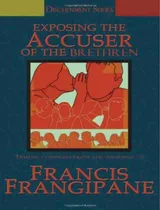
Exposing The Accuser Of The Brethren

The Tree And Your Ministry

The 3 Battle Grounds

This Day We Fight!
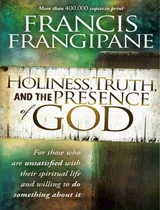
Holiness, Truth And The Presence Of God
About the Book
"The Three Battlegrounds" by Francis Frangipane explores the spiritual warfare that believers face in three main areas: the mind, the church, and the heavenly places. Frangipane emphasizes the importance of overcoming personal struggles and living a life of spiritual victory through dependence on God and submission to His will. The book offers practical insights and strategies for engaging in spiritual warfare and walking in the power of God.
Lee Strobel
Lee Strobel (Lee Patrick Strobel) is a former American investigative journalist and a Christian Author who has written several books, including four which received ECPA (Evangelical Christian Publishers Association) Christian Book Awards (1994, 1999, 2001, 2005) and a series which addresses challenges to the veracity of Christianity. He is a former host of the television program called Faith Under Fire on PAX TV and he runs a video apologetic web site.
Lee Strobel Age
He was born on January 25, 1952 in Arlington Heights, Illinois, U.S.
Lee Strobel Family | Chicago Tribune
Less information has been revealed about his father, mother and siblings if he has any. He attended the University of Missouri where he received a Journalism degree. He later earned his Masters of Studies in Law degree from Yale Law School. He became a journalist for the Chicago Tribune and other newspapers for 14 years. The UPI Illinois Editors Association newspaper award program gave him a first place for public service (the Len H. Small Memorial award) for his coverage of the Pinto crash trial of Ford Motor in Winamac, Indiana in 1980. Later, he became the assistant managing editor of the Daily Herald, before leaving journalism in 1987.
Lee Strobel Wife | Daughter
He married Leslie Strobel and they are blessed with two children; a son called Kyle who is an an Assistant Professor of Spiritual Theology and Formation at the Talbot School of Theology and a daughter called Alison who is a novelist.
Lee Strobel Church
He was an atheist when he began investigating the Biblical claims about Christ after his wife’s conversion. Prompted by the results of his investigation, he became a Christian on November 8, 1981. He was a teaching pastor of Willow Creek Community Church in South Barrington, Illinois, from 1987 to 2000, before shifting his focus to writing and producing his TV show, Faith Under Fire. He later was awarded an honorary doctoral degree by Southern Evangelical Seminary in recognition of his contributions to Christian apologetics in 2007.
Lee Strobel Books
He has written several books just to list a few.
1998 – The Case for Christ: A Journalist’s Personal Investigation of the Evidence for Jesus
2000 – The Case for Faith: A Journalist Investigates the Toughest Objections to Christianity
2004 – The Case for a Creator
2005 – The Case for Christmas: A Journalist Investigates the Identity of the Child in the Manger
2007 – The Case for the Real Jesus
2013 – The Case for Grace: A Journalist Explores the Evidence of Transformed Lives
2014 – The Case for Christianity Answer Book
2015 – The Case for Hope: Looking Ahead with Courage and Confidence
2018 – The Case for Miracles: A Journalist Investigates Evidence for the Supernatural
Lee Strobel Net Worth
From his work as a former investigative journalist and from his work as a Christian apologetic author, he has gained a great fortune. Besides that, he lives with his wife in his home that he bought. He has an estimated net worth of $8 million.
Lee Strobel Movie
His movies include;
2004 – Jesus: Fact or Fiction.
2007 – Jesus: The Great Debate.
2017 – The Case for Christ
Lee Strobel The Case For Christ
The Case For Christ is one of the books that Lee has written. This book summarizes Lee’s interviews with thirteen evangelical Christian scholars—Craig Blomberg, Bruce Metzger, Edwin Yamauchi, John McRay, Gregory Boyd, Ben Witherington III, Gary Collins, D. A. Carson, Louis Lapides, Alexander Metherell, William Lane Craig, Gary Habermas, and J. P. Moreland—in which they defend their views regarding the historical reliability of the New Testament. His personal encounters with these scholars and their beliefs led to the 2017 film of the same name.
Lee Strobel The Case For Miracles
The Case for Miracles: A Journalist Investigates Evidence for the Supernatural is one of the books that he has written. This book starts with an unlikely interview in which America’s foremost skeptic builds a seemingly persuasive case against the miraculous. But then Strobel travels the country to quiz scholars to see whether they can offer solid answers to atheist objections. Along the way, he encounters astounding accounts of healings and other phenomena that simply cannot be explained away by naturalistic causes. The book features the results of exclusive new scientific polling that shows miracle accounts are much more common than people think.
Lee Strobel Testimony
This is a summary of the detailed transcript of his testimony;
For most of my life I was an atheist. I thought the idea of an all-loving, all-powerful creator of the universe–I thought it was stupid. I mean, my background is in journalism and law. I tend to be a skeptical person. I was the legal editor of the Chicago Tribune. So I needed evidence before I’d believe anything.
One day my wife came up to me–she’d been agnostic–and she said after a period of spiritual investigation she had decided to become a follower of Jesus Christ. And I thought, you know, this is the worst possible news I could get. I thought she was going to turn into some sexually repressed prude who was going to spend all her time serving the poor in skid row somewhere. I thought this was the end of our marriage.
But in the ensuing months, I saw positive changes in her values, in her character, in the way she related to me and the children. It was winsome; and it was attractive; and it made me want to check things out. So I went to church one day, ah, mainly to see if I could get her out of this cult that she had gotten involved in.
But I heard the message of Jesus articulated for the first time in a way that I could understand it. That forgiveness is a free gift, and that Jesus Christ died for our sins, that we might spend eternity with Him. And I walked out saying–I was still an atheist–but also saying, “If this is true, this has huge implications for my life.” And so I used my journalism training and legal training to begin an investigation into whether there was any credibility to Christianity or to any other world faith system for that matter.
Lee Strobel The Case For Easter
The Case for Easter: A Journalist Investigates the Evidence for the Resurrection is one of his books that answers the following questions. Did Jesus of Nazareth really rise from the dead?Of the many world religions, only one claims that its founder returned from the grave. The resurrection of Jesus Christ is the very cornerstone of Christianity. But a dead man coming back to life? In our sophisticated age, when myth has given way to science, who can take such a claim seriously? Some argue that Jesus never died on the cross. Conflicting accounts make the empty tomb seem suspect. And post-crucifixion sightings of Jesus have been explained in psychological terms.How credible is the evidence for—and against—the resurrection? and many others.
Lee Strobel Quotes
“Only in a world where faith is difficult can faith exist.”
“If your friend is sick and dying, the most important thing he wants is not an explanation; he wants you to sit with him. He’s terrified of being alone more than anything else. So, God has not left us alone.”
“Faith is only as good as the one in whom it’s invested.”
“To be honest, I didn’t want to believe that Christianity could radically transform someone’s character and values. It was much easier to raise doubts and manufacture outrageous objections that to consider the possibility that God actually could trigger a revolutionary turn-around in such a depraved and degenerate life.”
“Abruptly, Templeton cut short his thoughts. There was a brief pause, almost as if he was uncertain whether he should continue.
‘Uh … but … no,’ he said slowly, ‘he’s the most …’ He stopped, then started again. ‘In my view,’ he declared, ‘he is the most important human being who ever existed.’
That’s when Templeton uttered the words I neer expected to hear from him. ‘ And if I may put it this way,’ he said in a voice that began to crack, ‘I … miss … him!’
With that tears flooded his eyes. He turned his head and looked downward, raising his left hand to shield his face from me. His shoulders bobbed as he wept.”
Lee Strobel Website
His website is leestrobel.com
why join a church
One of the most counter-cultural things you can do is become an engaged member of a faithful local church. In our flighty and noncommittal age, neither non-Christians nor Christians are naturally inclined to find a place to put down roots and make longstanding, objective commitments for the good of others. We want to keep our options open and, above all, preserve our own freedom of choice, rather than make a covenant for the long haul and embrace a framework for real life in all its ups and downs. But what if you went against the grain and became part of the solution to the modern problem of being so noncommittal? What if you joined the rebellion, and pledged your loyalty and engagement to a Bible-believing, gospel-cherishing local church? Does the Bible Even Mention Membership? Most of us have raised eyebrows at some point about the concept of church membership. “Membership” — where do we see that in the New Testament? Is it really essential to join a church? Can’t I get everything I need as a Christian from being a regular attender? “One of the most counter-cultural things you can do is become an engaged member of a faithful local church.” It’s true that the New Testament makes no direct argument for our modern concept of membership. The gospel’s initial advance into a pagan and pre-Christian world was a different situation than we find today in our increasingly post-Christian society. The complexities of life two millennia later make church-belonging as difficult, and as important, as ever. Not only are we less inclined to make firm commitments, but our cities and towns are much bigger, and church options more diverse. But whether you call it “membership,” “partnership,” or something else, the New Testament assumes some form of committed, accountable belonging as a reality for every true follower of Jesus. Each Christian has a definite place of local belonging. To be baptized is to become part of a particular local body. “In the New Testament,” John Piper observes, “to be excluded from the local church was to be excluded from Christ.” Six Reasons to Put Down Roots Here, then, are six reasons, among many, to go against the noncommittal grain, put down roots, join a particular local church, and be as involved as possible in the life of that church. 1. Your Own Assurance Being accepted into membership in a Bible-believing, responsibly-led church rightly gives affirmation and reinforces confidence that your faith is real, that it’s not your own private, self-made religion, but part of “the faith that was once for all delivered to the saints” (Jude 3). Jesus gives his church “the keys of the kingdom of heaven,” and according to Matthew 16:19, “whatever you bind on earth shall be bound in heaven, and whatever you loose on earth shall be loosed in heaven.” It is no small thing for a solid local church to find your profession of faith to be credible, and your lifestyle and conduct not disqualifying, and to accept you into membership. There is more grace to be experienced in this, for our assurance, than most of us know. 2. The Good of Others This is perhaps the most often overlooked reason for joining a church. In our proclivity to self-focus, we consider the reasons relating directly to us, but overlook how our membership relates to others. Our belonging somewhere establishes a base from which we can reliably care for others. There are two sides to church membership, and we can’t keep others accountable for their good to a covenant we ourselves haven’t taken. True love is not only manifest in affection and action, but also allegiance. We do not fully love our brothers and sisters in Christ if we withhold pledging our allegiance to them by covenanting with them in local-church life. Love doesn’t say, “I love these people and don’t need to covenant with them.” Rather, it says, “I love these people enough to covenant with them.” Living the Christian life in community is more than just loose associations, but committing to each other to be there for each other when life is hard, in sickness and in sorrow. 3. Your Own Good On the flip side, it is for your own good to have others committed to genuinely caring for you in Christ. And the people who will care for you best in the long run are those who are willing to commit to it. “The people who will care for you best in the long run are those who are willing to commit to it.” Joining the church also formally identifies you as part of “the flock” which the church’s pastors and elders should “shepherd” (1 Peter 5:2) and to which they should “pay careful attention” (Acts 20:28). It is for your own good to be intentionally thought of and cared for by the leadership. 4. The Good of Your Leaders Connected, then, is the clarity it brings the leadership about who is in their “lot,” who is “in their charge” (1 Peter 5:3), who in particular are they called to serve and shepherd. In other words, your formally joining the church helps the pastors and elders do their job. How are they to shepherd the flock if they don’t know who is in that flock and who is not? It is difficult, if not impossible, to respect and esteem your leaders (1 Thessalonians 5:12–13), and honor them (1 Timothy 5:17), and obey and submit to them (Hebrews 13:17) without identifying yourself to them and submitting to the membership structure that allows them to know and care best for those in their charge. 5. The Good of Unbelievers Another good reason for joining a church is the good of those who are not there yet — even those who don’t yet know Jesus. Because we reach out and show Christ better as part of a committed, stable community. “By this all people will know that you are my disciples, if you have love for one another” (John 13:35). A lone-ranger Christian doesn’t make the best witness for Christ. Rather, someone who is grounded, has a home, and is part of a solid covenant community of support is best prepared to draw others into the kingdom. “The complexities of life in the 21st century make belonging to a local church as difficult, and important, as ever.” Community is increasingly important in our witness today. As Christians who are truly faithful to the voice of Christ find themselves more and more in the minority of society, we need other believers to point to, that we’re not alone in our seemingly strange views, both in history and today. And the whole community together serves to put Christ on display better than individual Christians alone. This happens best not in fly-by-night, uncommitted associations, but in deep, committed, long-standing, life-together relationships in this time-tested arrangement called “the local church,” established and upheld in the wisdom and power of Jesus himself. 6. Your Own Perseverance Finally, covenanting with others now not to let you wander from the gospel, without pressing hard to bring you back, may one day prove priceless for your perseverance in the faith — and your eternity with Christ. It is, after all, as Jesus said, the one who endures to the end who will be saved (Matthew 24:13). In a good church covenant, we yoke ourselves to accountability while we’re in our right minds, in case someday sin gets a foothold in our hearts and blinds us to the truth. Church discipline is hard, but so good. The purpose is always restoration, and God often has been pleased to use this difficult means to pour out his striking grace. My brothers, if anyone among you wanders from the truth and someone brings him back, let him know that whoever brings back a sinner from his wandering will save his soul from death and will cover a multitude of sins. (James 5:19–20)