
Others like the power of thank you Features >>
The Power Of God's Names

What To Do When You Dont Know What To Do
The Sermon On The Mount
The Sermon On The Mount
Center Of The Universe Too

The Shelter Of The Most High
The Pleasures Of God: Meditations On God’s Delight

7 Days Behind The Veil: Throne Room Meditations
Stories Of Great Gospel Hymns

Loneliness - How To Be Alone But Not Lonely
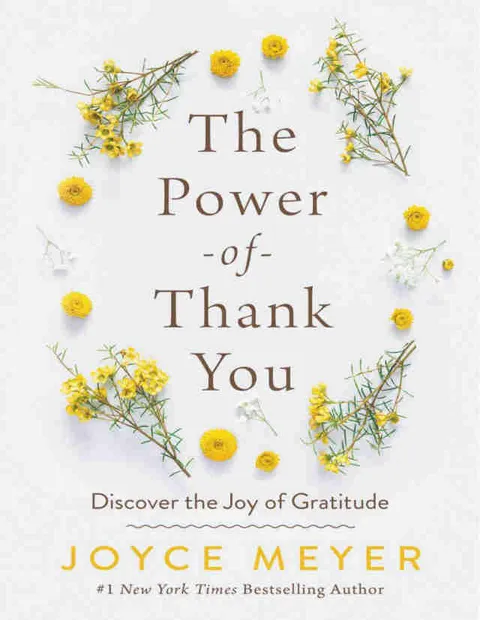
About the Book
"The Power of Thank You" by Joyce Meyer explores the transformative impact of expressing gratitude in our everyday lives. Meyer delves into the benefits of cultivating a thankful attitude, fostering stronger relationships, and experiencing greater joy and fulfillment. Through personal anecdotes and biblical teachings, she emphasizes the importance of appreciation and encourages readers to harness the power of thankfulness in all areas of life.
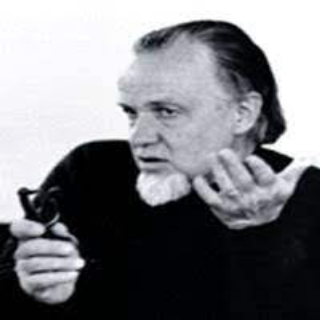
Francis Schaeffer
Do You Exercise for the Wrong Reasons
“When I run, I feel God’s pleasure.” Such were the memorable words of Olympic sprinter and Christian missionary Eric Liddell (1902–1945), at least through the lens of Chariots of Fire , the 1981 Oscar-winning film that told his story. Perhaps you’ve heard his inspiring line in terms of life calling. In what vocation do you feel God’s pleasure? What role or occupation does it seem he made you to fulfill? However, with the last generation of research in view, it might be interesting to introduce Liddell to the fairly recent discovery of endorphins, and ask how much they played a part in his feeling God’s pleasure as a runner. My experience as a very amateur runner is that you don’t have to be a pro to “feel God’s pleasure” in, and because of, intense bodily exertion. God made endorphins to help us feel his joy. God’s Grace in Exercise God made us to move, and to do so vigorously. And he wired our brains to reward and reinforce it. Regular human movement has been assumed throughout history, but the innovations and seeming progress of modern life have made a sedentary lifestyle more typical than ever before. We’ve never needed to state the obvious about exercise as much as we do today — not just for earthly health, but for the sake of spiritual soundness and strength. “Endorphins are a gift from God, put there by him to lead us to himself.” The word endorphins is simply a shortened form of the phrase “endogenous morphine.” In other words, these are morphine-like chemicals that originate within our bodies. They “inhibit the transmission of pain signals; they may also produce a feeling of euphoria.” And they are a gift from God, put there by him to lead us to himself. It wasn’t until as recently as 1974 that two independent groups first discovered and documented this long-undiscovered divine kindness tucked quietly inside the human brain. Endorphins, and their effect of bodily pleasure, subconsciously incline humans toward certain activities, like raucous laughter or spicy foods. But in particular, the most notable and discussed is “vigorous aerobic exercise.” As John Piper cites in When I Don’t Desire God , Either brief periods of intense training or prolonged aerobic workouts raise levels of chemicals in the brain, such as endorphins, adrenaline, serotonin, and dopamine, that produce feelings of pleasure. (203) And the holy pursuit of pleasure is an unblushing Christian concern throughout the pages of Scripture, and most pointedly so in the words of Christ himself. For Joy in God Have you seriously considered how physical exertion can be a means, among others, of your spiritual health and joy? God made our bodies with an enigmatic connection to our souls. How God stirs our souls in worship and Bible meditation often has tangible and unpredictable effects in our bodies. And what we eat and drink, and how we sleep, in our physical bodies affects our level of contentment in the soul. According to professor David Murray, “Exercise and proper rest patterns generate about a 20 percent energy increase in an average day, while exercising three to five times a week is about as effective as anti-depressants for mild to moderate depression” ( Reset , 79). “Glorifying God with our bodies is not mainly about what we don’t do.” God not only means for us to enjoy the long-term benefits of regular bodily exertion, but also the immediate effects that bolster and energize our emotions that day. And having our souls happy in God (with whatever little supplement we can get from exercise) is the premier way to fight and defeat the alluring lies of sin. Author and pastor Gary Thomas testifies, “Understanding my body as an instrument of service to God is giving me renewed motivation to take better care of it in the face of my cravings and laziness” ( Every Body Matters , 20). For Love of Others But regular bodily exertion not only can assist our personal pursuit of joy in God, and fight against joy-destroying sin, but also ready us to move beyond self-focus and have our hearts primed to meet the needs of others. The beneficiary of exercise that is truly Christian is not just me, but my family, my neighbors, my church, my coworkers, and anyone else God puts in my life to bless in word and deed. As Piper explains elsewhere, Today, my main motive for exercise is purity and productivity. By purity, I mean being a more loving person (as Jesus said, “love your neighbor,” Matthew 22:39). By productivity, I mean getting a lot done (as Paul said, “abounding in the work of the Lord,” 1 Corinthians 15:58). . . . In short, I have one life to live for Jesus (2 Corinthians 5:15). I don’t want to waste it. My approach is not mainly to lengthen it, but to maximize purity and productivity now. Precisely because “we are his workmanship, created in Christ Jesus for good works, which God prepared beforehand, that we should walk in them” (Ephesians 2:10), we want to cultivate our bodies so that they are a help, rather than a hindrance, in the cause of love. We want our bodies to be an aid, not a net neutral, in readying us to sacrifice our own comforts to do good for others, at home and around the world. For God’s Own Joy Yet exercise not only can contribute to the matrix of our joy, and in doing so help ready us to meet the needs of others, but what goes unsaid far too often is that glorifying God with our bodies is not mainly about what we don’t do . It’s easy to focus on the many unrighteous acts from which we should abstain, but glorifying him in our bodies is first and foremost a positive pursuit and opportunity. And, as in the parable of the talents, our bodies are gifts from him to grow and develop, not bury and let languish. “The biblical take on exercise is not ‘Life is short; let your body go,’ but, ‘Harness the body God gave you.’” God is not opposed to our bodily existence; neither is he uninterested. He is for the body. “The body is . . . for the Lord, and the Lord for the body” (1 Corinthians 6:13). And not only is he for the body in this age, but also in the age to come. The very next verse reads, “God raised the Lord and will also raise us up by his power” (1 Corinthians 6:14). The creative brilliance and glory of God’s design in the human body will not be discarded at Christ’s second coming. Our future is embodied. Faithful Christian theology does not diminish the importance of our bodies, but heightens it — from God’s creative design, to his ongoing affirmation, to his promise to raise them, to his calling to use them. Feel His Pleasure The biblical take on exercise is not “Life is short; let your body go.” Rather, with God’s revealed truth ringing in our ears, we say, “Life is too short to not harness the body God gave me.” Our assignment in this age is a vapor. We are “a mist that appears for a little time and then vanishes” (James 4:14). Too much is at stake, and our days are too few, to limp our way through by not leveraging our bodies (as we’re able) as the gifts from God they are. Join me in learning what it’s like to feel the pleasure of God.