

The Passion Test Order Printed Copy
- Author: Janet Bray Attwood, Chris Attwood
- Size: 1.89MB | 258 pages
- |








About the Book
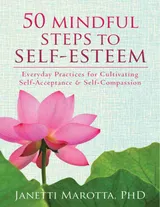
"The Passion Test" by Janet Bray Attwood and Chris Attwood is a guide to discovering your passions and using them to create a life filled with joy and fulfillment. The authors offer a series of simple steps to help readers identify their core passions and align their lives with them. By prioritizing what truly matters to you, the book aims to help you live a more purposeful and satisfying life.
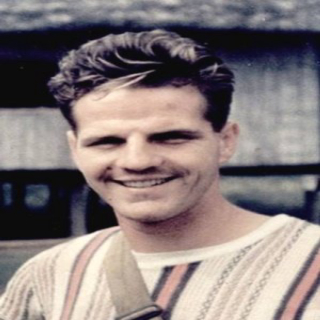
Jim Elliot
 EARLY LIFE
Jim Elliot began his life in Portland, Oregon in the USA. His mother, Clara, was a chiropractor and his father, Fred, was a minister. They married and settled in Seattle, WA where they welcomed their first son, Robert in 1921.
Later they relocated the family to Portland where Herbert arrived in 1924, Jim in 1927, and Jane in 1932.
Jim knew Christ from an early age and was never afraid to speak about Him to his friends. At age six Jim told his mother, “Now, mama, the Lord Jesus can come whenever He wants. He could take our whole family because I’m saved now, and Jane is too young to know Him yet.”
THE YEARS THAT CEMENTED HIS DESIRE TO SERVE THE LORD IN MISSIONS
Jim entered Benson Polytechnic High School in 1941. He carried a small Bible with him and, an excellent speaker; he was often found speaking out for Christ. He and his friends were not afraid to step out and find adventure. One thing Jim didn’t have time for in those early years were girls. He was once quoted as telling a friend, “Domesticated males aren’t much use for adventure.”
In 1945 Jim traveled to Wheaton, IL to attend Wheaton College. His main goal while there was to devote himself to God. He recognized the importance of discipline in pursuing this goal. He would start each morning with prayer and Bible study. In his journal he wrote, “None of it gets to be ‘old stuff’ for it is Christ in print, the Living Word. We wouldn’t think of rising in the morning without a face-wash, but we often neglect the purgative cleansing of the Word of the Lord. It wakes us up to our responsibility.”
Jim’s desire to serve God by taking His gospel to unreached people of the world began to grow while at Wheaton. The summer of 1947 found him in Mexico and that time influenced his decision to minister in Central America after he finished college.
Jim met Elisabeth Howard during his third year at Wheaton. He did ask her for a date which she accepted and then later cancelled. They spent the next years as friends and after she finished at Wheaton they continued to correspond. As they came to know each other there was an attraction, but Jim felt he needed to unencumbered by worldly concerns in order to devote himself completely to God.
In addition to his hope to one day travel to a foreign country to share Christ with the unchurched of the world, he also felt the need to share with people in the United States. On Sundays while at Wheaton he would often ride the train into Chicago and talk to people in the train station about Christ. He often felt ineffective in his work as the times of knowingly leading people to Christ were few. He once wrote, “No fruit yet. Why is that I’m so unproductive? I cannot recall leading more than one or two into the kingdom. Surely this is not the manifestation of the power of the Resurrection. I feel as Rachel, ‘Give me children, or else I die.’”
After college with no clear answer as to working for the Lord in a foreign country, Jim returned home to Portland. He continued his disciplined Bible study as well as correspondence with Elisabeth Howard whom he called Betty.
They both felt a strong attraction to each other during this time, but also felt that the Lord may have been calling them to be unmarried as they served Him.
In June of 1950 he travelled to Oklahoma to attend the Summer Institute of Linguistics. There he learned how to study unwritten languages. He was able to work with a missionary to the Quichuas of the Ecuadorian jungle. Because of these lessons he began to pray for guidance about going to Ecuador and later felt compelled to answer the call there.
Elisabeth Elliot wrote in Shadow of the Almighty:
“The breadth of Jim’s vision is suggested in this entry from the journal:
August 9. “God just now gave me faith to ask for another young man to go, perhaps not this fall, but soon, to join the ranks in the lowlands of eastern Ecuador. There we must learn: 1) Spanish and Quichua, 2) each other, 3) the jungle and independence, and 4) God and God’s way of approach to the highland Quichua. From thence, by His great hand, we must move to the Ecuadorian highlands with several young Indians each, and begin work among the 800,000 highlanders. If God tarries, the natives must be taught to spread southward with the message of the reigning Christ, establishing New Testament groups as they go. Thence the Word must go south into Peru and Bolivia. The Quichuas must be reached for God! Enough for policy. Now for prayer and practice.
THE ECUADOR YEARS
In February 1952 Jim finally left America to travel to Ecuador with Pete Fleming. In May Elisabeth moved to Quito and though they didn’t feel the need to get engaged she and Jim did begin a courtship.
In August Jim left Elisabeth in Quito and travelled with Pete to Shell Mera. At the Mission Aviation Fellowship headquarters in Shell Mera, Jim and Pete learned more about the Acua Indians, a people group that was largely unreached and very savage.
Leaving Shell Mera, Pete and Jim moved on to Shandia where Jim was captivated by the Quichua. He felt very strongly that this was exactly where God intended for him to work to spread the Gospel.
While Jim was in Shandia, Elisabeth was working to learn more about the Colorado Indians near Santa Domingo. In January of 1953 he went to Quito and she met him there and they were finally engaged. They married in October of that year and their only child Valerie was born in 1955.
They settled in Shandia and continued their work with the Quichua Indians. It was Jim’s desire to be able to reach the Waodoni tribe that lived deep in the jungles and had little contact with the outside world. A Waodoni woman who had left the tribe was taken in by the missionaries and helped them to learn the language.
Jim, along with Pete, Ed McCully, Roger Youderian, and their pilot Nate Saint began to search by plane in hopes of finding a way to contact the Waodoni. The found a sandbar in the middle of the Curaray River that worked as a landing strip for the plane and it was there that they first made contact with the Waodoni. They were elated to be able to finally be able to attempt to share the love of Christ with this people group.
After their first meeting, one of the tribe, a man they called George lied to the tribe about the men’s intentions. This lie led the Waodoni warriors to plan an attack for when the missionaries returned. The men did return on January 8, 1956 and were surprised by ten members of the tribe who massacred the missionaries.
Jim’s short life that was filled with the desire to share God’s love can be summed up by a quote that is attributed to him. “He is no fool who gives that which he cannot keep, to gain what he cannot lose.”
EARLY LIFE
Jim Elliot began his life in Portland, Oregon in the USA. His mother, Clara, was a chiropractor and his father, Fred, was a minister. They married and settled in Seattle, WA where they welcomed their first son, Robert in 1921.
Later they relocated the family to Portland where Herbert arrived in 1924, Jim in 1927, and Jane in 1932.
Jim knew Christ from an early age and was never afraid to speak about Him to his friends. At age six Jim told his mother, “Now, mama, the Lord Jesus can come whenever He wants. He could take our whole family because I’m saved now, and Jane is too young to know Him yet.”
THE YEARS THAT CEMENTED HIS DESIRE TO SERVE THE LORD IN MISSIONS
Jim entered Benson Polytechnic High School in 1941. He carried a small Bible with him and, an excellent speaker; he was often found speaking out for Christ. He and his friends were not afraid to step out and find adventure. One thing Jim didn’t have time for in those early years were girls. He was once quoted as telling a friend, “Domesticated males aren’t much use for adventure.”
In 1945 Jim traveled to Wheaton, IL to attend Wheaton College. His main goal while there was to devote himself to God. He recognized the importance of discipline in pursuing this goal. He would start each morning with prayer and Bible study. In his journal he wrote, “None of it gets to be ‘old stuff’ for it is Christ in print, the Living Word. We wouldn’t think of rising in the morning without a face-wash, but we often neglect the purgative cleansing of the Word of the Lord. It wakes us up to our responsibility.”
Jim’s desire to serve God by taking His gospel to unreached people of the world began to grow while at Wheaton. The summer of 1947 found him in Mexico and that time influenced his decision to minister in Central America after he finished college.
Jim met Elisabeth Howard during his third year at Wheaton. He did ask her for a date which she accepted and then later cancelled. They spent the next years as friends and after she finished at Wheaton they continued to correspond. As they came to know each other there was an attraction, but Jim felt he needed to unencumbered by worldly concerns in order to devote himself completely to God.
In addition to his hope to one day travel to a foreign country to share Christ with the unchurched of the world, he also felt the need to share with people in the United States. On Sundays while at Wheaton he would often ride the train into Chicago and talk to people in the train station about Christ. He often felt ineffective in his work as the times of knowingly leading people to Christ were few. He once wrote, “No fruit yet. Why is that I’m so unproductive? I cannot recall leading more than one or two into the kingdom. Surely this is not the manifestation of the power of the Resurrection. I feel as Rachel, ‘Give me children, or else I die.’”
After college with no clear answer as to working for the Lord in a foreign country, Jim returned home to Portland. He continued his disciplined Bible study as well as correspondence with Elisabeth Howard whom he called Betty.
They both felt a strong attraction to each other during this time, but also felt that the Lord may have been calling them to be unmarried as they served Him.
In June of 1950 he travelled to Oklahoma to attend the Summer Institute of Linguistics. There he learned how to study unwritten languages. He was able to work with a missionary to the Quichuas of the Ecuadorian jungle. Because of these lessons he began to pray for guidance about going to Ecuador and later felt compelled to answer the call there.
Elisabeth Elliot wrote in Shadow of the Almighty:
“The breadth of Jim’s vision is suggested in this entry from the journal:
August 9. “God just now gave me faith to ask for another young man to go, perhaps not this fall, but soon, to join the ranks in the lowlands of eastern Ecuador. There we must learn: 1) Spanish and Quichua, 2) each other, 3) the jungle and independence, and 4) God and God’s way of approach to the highland Quichua. From thence, by His great hand, we must move to the Ecuadorian highlands with several young Indians each, and begin work among the 800,000 highlanders. If God tarries, the natives must be taught to spread southward with the message of the reigning Christ, establishing New Testament groups as they go. Thence the Word must go south into Peru and Bolivia. The Quichuas must be reached for God! Enough for policy. Now for prayer and practice.
THE ECUADOR YEARS
In February 1952 Jim finally left America to travel to Ecuador with Pete Fleming. In May Elisabeth moved to Quito and though they didn’t feel the need to get engaged she and Jim did begin a courtship.
In August Jim left Elisabeth in Quito and travelled with Pete to Shell Mera. At the Mission Aviation Fellowship headquarters in Shell Mera, Jim and Pete learned more about the Acua Indians, a people group that was largely unreached and very savage.
Leaving Shell Mera, Pete and Jim moved on to Shandia where Jim was captivated by the Quichua. He felt very strongly that this was exactly where God intended for him to work to spread the Gospel.
While Jim was in Shandia, Elisabeth was working to learn more about the Colorado Indians near Santa Domingo. In January of 1953 he went to Quito and she met him there and they were finally engaged. They married in October of that year and their only child Valerie was born in 1955.
They settled in Shandia and continued their work with the Quichua Indians. It was Jim’s desire to be able to reach the Waodoni tribe that lived deep in the jungles and had little contact with the outside world. A Waodoni woman who had left the tribe was taken in by the missionaries and helped them to learn the language.
Jim, along with Pete, Ed McCully, Roger Youderian, and their pilot Nate Saint began to search by plane in hopes of finding a way to contact the Waodoni. The found a sandbar in the middle of the Curaray River that worked as a landing strip for the plane and it was there that they first made contact with the Waodoni. They were elated to be able to finally be able to attempt to share the love of Christ with this people group.
After their first meeting, one of the tribe, a man they called George lied to the tribe about the men’s intentions. This lie led the Waodoni warriors to plan an attack for when the missionaries returned. The men did return on January 8, 1956 and were surprised by ten members of the tribe who massacred the missionaries.
Jim’s short life that was filled with the desire to share God’s love can be summed up by a quote that is attributed to him. “He is no fool who gives that which he cannot keep, to gain what he cannot lose.”
isn’t she beautiful: the role of physical attraction in dating
How significant should physical attraction be in the pursuit of marriage? Or, what role, if any, should physical appearance play in Christian dating? Guys have come to me over the years asking about this. Usually he respects or admires a godly young woman (or, maybe more often, other people in his life think he should admire her more), and yet he’s not physically attracted to her. She’s not his “type,” he says. “Should I still pursue her?” What would you say to him? I would say, “No.” Or at least, “Not yet.” Given the common assumptions and practices in our society today, including the church, I do not believe a man (or woman) should begin a dating relationship with someone to whom they are not physically attracted. If he admires other things about her, I’m all for him befriending her and getting to know her in safe, unambiguous, non-flirtatious ways (probably in groups). But I believe physical attraction, at least in the vast majority of cases, is one critical piece in discerning whether to date or marry someone. That being said, I also believe that physical attraction is far deeper and more dynamic, even spiritual, than we tend to think. It’s not static or objective. Real, meaningful, durable attraction is far more than physical. A man or woman’s physical appearance only plays one role in what makes them attractive or appealing. Its role is massive initially, say the very first time you see someone, when all you know about them is what you see, before you even know their name or hear their voice. But its role will necessarily evolve the more you learn about someone. After you’ve learned more about them — by asking their friends, or by hearing them talk, or by watching the way they live — you’ll never see them again as just the person you saw at first. The more we learn about them, the more their appearance is filled, for better or for worse, with new and deeper meaning — with their personality, their convictions, their sense of humor, their faith. The once-stunning girl may lose most of her charm, and the easily overlooked girl may become undeniably beautiful. They each look exactly the same as before, and yet they don’t. You see them, even their physical appearance, differently now. Physical (and Flexible) Attraction Don’t believe me? Ask sixty-year-old love birds if they’re still “physically attracted” to each other. Some of them are more attracted to each other than ever, and it’s not because they’re gaining weight, losing their hair, or having more trouble getting around. It’s because their appearance, in the eyes of their beloved, is increasingly filled with a deepening appreciation for the beauty in the other. They see something different in each other’s eyes. The hands are worn, but familiar and safe. The wrinkles are the years of faithfulness and bliss spent together. Their love not only looks beyond the surface, but sees the surface with new eyes. “True love not only looks beyond the surface, but sees the surface with new eyes.” On the other side, that celebrity you think is so hot right now can lose all of his or her appeal overnight, literally in one headline. The heartthrob guy beats his girlfriend, or the magazine-cover woman sleeps with three more guys. It’s suddenly harder to even look at pictures of them anymore. They each look exactly the same, but they don’t. You see the same pictures differently now — same hair, same eyes, same figure — all suddenly unappealing, unattractive. Physical attraction is real, but flexible. God has wired us to appreciate beauty in his design — to find men (for women) or women (for men) physically appealing — and that is a real and important element in our pursuit of marriage, and eventually in our flourishing within the covenant. God gave us physical senses and desires for our good. But that’s only one piece of what makes people attractive, and it is not the main piece — nowhere close. Mutual faith in Jesus Christ should be the most arrestingly attractive thing about any potential spouse. Beauty Is Vain This may be the most important thing to learn about physical (or sexual) attraction: that at its richest and fullest, it is not only or even mainly physical (eyes, hair, and figure). “Charm is deceitful, and beauty is vain, but a woman who fears the Lord is to be praised” (Proverbs 31:30). Why does Solomon even need to say that? Because physical beauty and charm are naturally appealing. But without faith, they’re fading, and fast. You can look at a picture in an ad or on an app and decide whether someone’s physical appearance is appealing to you, but that’s like buying a house based on a picture from the front yard. Most people want to enjoy how the front of their house looks, but that doesn’t typically break the list of the top ten or fifteen things they’re looking for in a home. How many bedrooms and bathrooms? Have the appliances been updated in the last five or ten years? What kind of shape is the foundation in? The outside may be most important to some people, but they’re probably people who haven’t owned a home before. The inside of a house — space, appliances, interior design — can cover a multitude of sins outside. But no amount of paint and creativity outside can fix serious issues inside. “Godliness should be the most attractive thing about the most attractive people.” So, let’s ask the question another way. Should a Christian man pursue a Christian woman to whom he is physically attracted? I might say, “No.” That is, if all you know or like about her is what you see. I would encourage you to befriend her and get to know her in safe, unambiguous, non-flirtatious ways (probably in groups), until you know whether there is real beauty behind her face and everything else anyone can see. Have you seen enough of her faith, her spiritual strength and maturity, her Christlikeness to know if her beauty is real and durable, or superficial and fading? Better with Age I would not encourage a man to pursue a godly woman whom he’s not attracted to physically, but I won’t let the conversation end there, either. I’ll give him a few other questions to ask himself. For instance, if she really is a godly woman, why might you be more attracted to the unbelieving girl in your algebra class? Or (for the women), if he really is a godly man, why might you be more attracted to the ungodly guy at work? As godly men and women, we should find godliness incredibly attractive. In fact, in our eyes and hearts, it should be the most attractive thing about the most attractive people. That doesn’t mean that if you’re a Christian, you should find every Christian man or woman attractive. But it should mean there’s a theme or trend in your attractions. In our day, it seems wise, in general, for men and women to date someone to whom they are attracted. And Christian men and women should be cultivating hearts that are more attracted to faith and character than anything else. The world around us will preach that physical beauty is everything, but we know and desire better. Of all the people in the world, we should be the most free from enslavement to physical appearances and sexual titillation. Our eyes should be increasingly drawn to modesty, not immodesty. As we put on the eyes and heart of Christ, we should increasingly be able to see through all the temporary and fading appearances to the things that are truly beautiful — the qualities in each other that imitate Jesus and anticipate heaven. The qualities that get better with age. My Hope for Men What’s my hope for Christian men? “It is my prayer that your love may abound more and more, with knowledge and all discernment, so that you may approve what is excellent, and so be pure and blameless for the day of Christ, filled with the fruit of righteousness that comes through Jesus Christ, to the glory and praise of God” (Philippians 1:9–11). I want our men (and women) to be known for recognizing and approving what is truly excellent and beautiful, that there would be a strange and durable purity to our pursuits of marriage. What an awesome thing it would be if the world was confused today by your interest in a Christian woman whom they find less physically attractive, only to have it make perfect sense twenty-five years later when you’re happily married (and more attracted to each other than ever) — and they’re five months into their fifth marriage. “Christians should be cultivating hearts that are more attracted to faith and character than anything else.” If you’re a Christian, and you’re not as attracted to godliness as you want to be, or if you feel yourself fixated on physical beauty, what should you do? Confess that to a brother. Bring someone in to sift through those desires with you, someone who can help you apply the gospel with grace and truth. And then start looking for evidences of grace in godly women. It’s easy to notice physical features — almost any man in the world is capable of that — but discipline yourself to notice and appreciate true beauty, which is not flaunted, but buried in a woman’s heart and expressed in things like patience, kindness, and selflessness. Say a prayer of thanks for what you see in women like that, and then share it with your friend. Turn the world’s crude locker-room conversations on their head by commending true and lasting beauty with humility and respect. Learn the vanity of physical beauty (by itself) and the lies lacing flirtatious charm and flattery, and train your heart and mind to praise and desire the woman whose heart is hot for Jesus.